
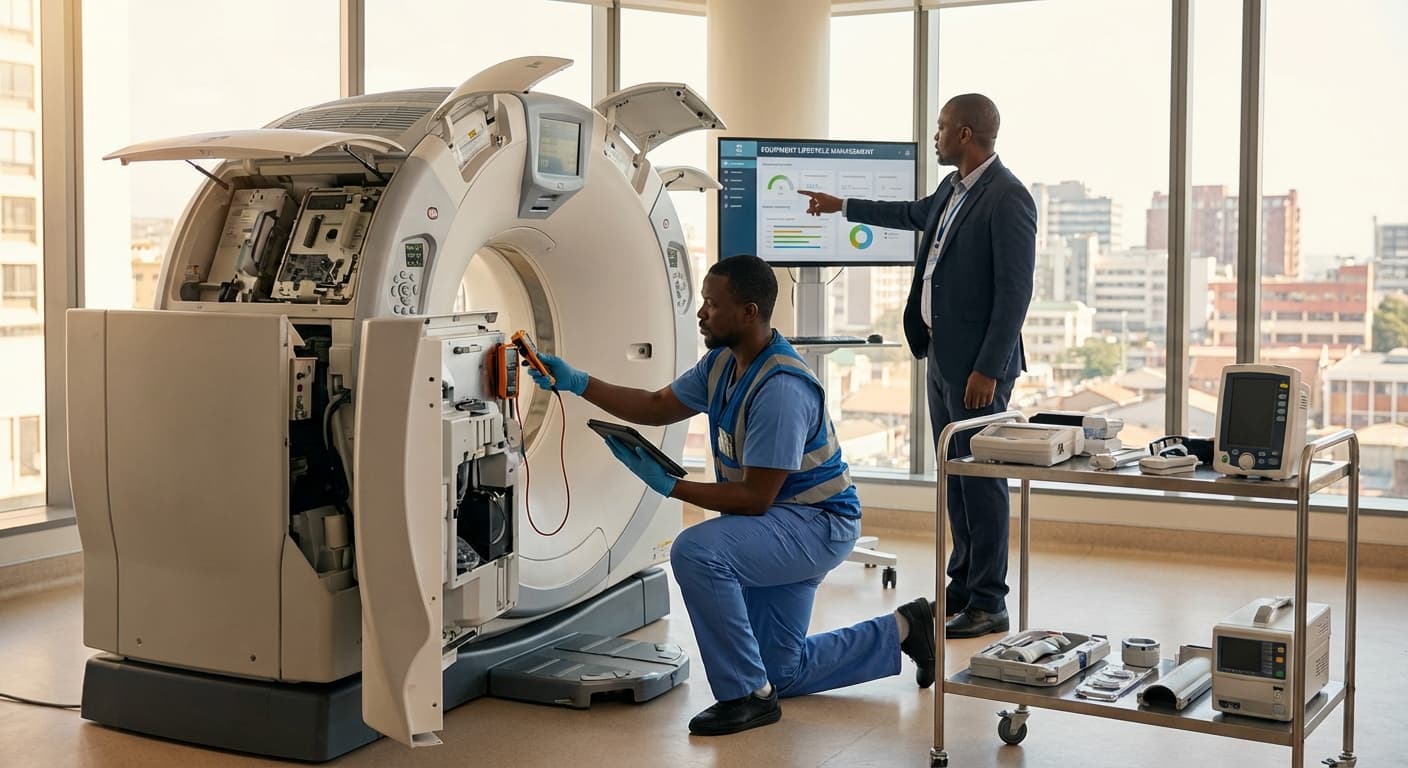
Equipment Replacement Planning & Obsolescence Strategy Service in Togo
Engineering Excellence & Technical Support
Equipment Replacement Planning & Obsolescence Strategy Service High-standard technical execution following OEM protocols and local regulatory frameworks.
Proactive Lifecycle Management
Leverage our data-driven approach to meticulously map the lifecycle of your critical equipment in Togo. We predict end-of-life scenarios and obsolescence risks, enabling informed replacement decisions and minimizing costly downtime.
Supply Chain Resilience & Sourcing
Navigate the complexities of global and local supply chains in Togo. We identify reliable sourcing channels for replacement parts and new equipment, mitigating risks associated with outdated components and ensuring continuous operational capacity.
Optimized Capital Expenditure
Develop strategic capital expenditure plans for equipment upgrades in Togo. Our service ensures you invest in the right technology at the right time, maximizing ROI, reducing total cost of ownership, and aligning with your long-term business objectives.
What Is Equipment Replacement Planning & Obsolescence Strategy Service In Togo?
Equipment Replacement Planning & Obsolescence Strategy Service in Togo refers to a specialized consulting offering focused on helping organizations in Togo proactively manage the lifecycle of their physical assets. This service addresses both the planned retirement and replacement of equipment, as well as strategies to mitigate the risks and costs associated with technological obsolescence. It encompasses a holistic approach to asset management, ensuring that organizations maintain operational efficiency, minimize downtime, and optimize capital expenditure over the long term, while adhering to Togolese regulatory frameworks and economic realities.
| Need For Service | Typical Use Cases | ||||||
|---|---|---|---|---|---|---|---|
| Organizations with significant capital investments in physical assets. | Manufacturing facilities seeking to upgrade outdated production machinery to improve efficiency and reduce downtime. | Telecommunication companies managing the lifecycle of network infrastructure to stay competitive with evolving technologies. | Healthcare institutions requiring regular replacement of medical equipment to ensure patient safety and access to advanced diagnostics. | Energy and utility providers responsible for maintaining critical power generation and distribution assets. | Government agencies managing fleets of vehicles or essential public infrastructure that are subject to wear and obsolescence. | Logistics and transportation companies optimizing their fleet management and vehicle replacement cycles. | Any enterprise in Togo facing challenges with unpredictable equipment failures, high maintenance costs, or the inability to leverage new technologies due to legacy systems. |
Service Components
- Asset Inventory and Auditing: Comprehensive cataloging of all existing equipment, including acquisition dates, condition, performance metrics, and maintenance history.
- Lifecycle Cost Analysis: Evaluation of total cost of ownership (TCO) for each asset, including purchase, operation, maintenance, and disposal costs.
- Performance and Condition Monitoring: Implementation of systems and processes to track asset performance and detect early signs of degradation or impending failure.
- Obsolescence Risk Assessment: Identification of equipment at risk of becoming outdated due to technological advancements, component unavailability, or software support discontinuation.
- Replacement Criteria Development: Establishing objective criteria for determining when equipment should be replaced, based on factors such as age, cost, efficiency, and strategic alignment.
- Technology Trend Analysis: Monitoring emerging technologies relevant to the organization's industry to inform future investment decisions and obsolescence avoidance.
- Capital Expenditure Planning: Development of multi-year capital budgets for equipment replacement, considering financial constraints and strategic priorities.
- Risk Mitigation Strategies: Formulating plans to address obsolescence, such as component sourcing, firmware upgrades, or alternative technology adoption.
- Disposal and Decommissioning Planning: Establishing environmentally sound and compliant procedures for retiring and disposing of obsolete equipment.
- Regulatory Compliance Review: Ensuring all replacement and disposal plans align with Togolese environmental, safety, and industry-specific regulations.
- Business Impact Assessment: Evaluating the potential impact of equipment failure or obsolescence on operational continuity and business objectives.
- Documentation and Reporting: Maintaining detailed records of asset lifecycles, replacement decisions, and obsolescence mitigation efforts.
Who Needs Equipment Replacement Planning & Obsolescence Strategy Service In Togo?
Equipment Replacement Planning & Obsolescence Strategy services are crucial for organizations in Togo to ensure operational continuity, mitigate risks associated with aging assets, and optimize capital expenditure. This service helps businesses proactively identify equipment nearing the end of its lifecycle, assess the risks of obsolescence, and develop strategic plans for replacement or upgrade. This proactive approach minimizes unexpected downtime, costly emergency repairs, and the potential for production or service disruptions due to unavailable spare parts or outdated technology.
| Customer Segment | Key Needs Addressed | Primary Departments Involved |
|---|---|---|
| Manufacturing Firms | Preventing production line stoppages due to aging machinery, optimizing replacement cycles, managing spare parts inventory for older equipment. | Operations, Maintenance, Procurement, Finance |
| Telecommunication Providers | Ensuring network reliability, planning for technology upgrades (e.g., 4G to 5G), managing end-of-life network infrastructure. | Network Operations, Engineering, IT, Procurement, Strategy |
| Energy Sector Companies | Maintaining critical infrastructure uptime, managing regulatory compliance for aging equipment, planning for major overhauls or replacements. | Operations, Engineering, Maintenance, HSE, Finance, Asset Management |
| Mining & Extractives | Optimizing the lifespan of heavy machinery, planning for high-value asset replacement, ensuring operational efficiency in challenging environments. | Operations, Maintenance, Fleet Management, Procurement, Finance |
| Hospitals & Healthcare Facilities | Ensuring the availability and reliability of medical equipment, managing the obsolescence of diagnostic and treatment devices, patient safety. | Biomedical Engineering, Operations, IT, Procurement, Risk Management |
| Government Agencies (Utilities) | Ensuring continuous service delivery (water, electricity), managing large-scale infrastructure replacement programs, budget planning for critical assets. | Operations, Engineering, Asset Management, Finance, Procurement |
Target Customers and Departments in Togo
- {"items":["Manufacturing (textiles, food processing, automotive assembly, etc.)","Telecommunications","Energy (power generation, oil & gas)","Mining and Extractives","Transportation and Logistics","Healthcare (hospitals, clinics)","Agriculture and Agribusiness","Construction and Infrastructure","Water and Wastewater Treatment","Government Agencies (utilities, defense, public services)"],"heading":"Target Customers (Industries)"}
- {"items":["Operations/Production Management","Maintenance & Engineering","Procurement & Supply Chain","Finance & Accounting","IT/Information Technology","Risk Management","Asset Management","Strategic Planning","Quality Assurance"],"heading":"Key Departments within Target Organizations"}
Equipment Replacement Planning & Obsolescence Strategy Service Process In Togo
This document outlines the service process for Equipment Replacement Planning & Obsolescence Strategy in Togo, guiding clients from initial inquiry to successful execution. The process is designed to be transparent, efficient, and tailored to the specific needs of Togolese businesses and organizations.
| Phase | Key Activities | Deliverables | Togo-Specific Considerations |
|---|---|---|---|
| Phase 1: Inquiry and Initial Consultation | Client expresses interest in the service. Initial discussion to understand general needs and objectives. Introduction to the service offering and our approach. Provide preliminary information on service scope and benefits. | Meeting notes and initial understanding of client needs. Information pack on service offerings. | Accessibility of clients for initial meetings (geographic location within Togo). Language considerations (French, local dialects). Understanding of common business sectors and their typical equipment needs in Togo. |
| Phase 2: Needs Assessment and Scope Definition | In-depth interviews with key stakeholders. Detailed discussion of existing equipment inventory, operational criticalities, and budget constraints. Define specific objectives for replacement planning and obsolescence management. Agree on the scope of work, including the types of equipment to be covered, timeline, and performance indicators. | Detailed needs assessment report. Formalized scope of work document. Project charter outlining objectives and responsibilities. | Availability of client personnel for interviews. Understanding of regulatory requirements or standards applicable to specific equipment in Togo. Potential for local data availability or lack thereof for certain equipment types. |
| Phase 3: Data Collection and Analysis | Gathering comprehensive data on existing equipment (age, maintenance history, performance, supplier information, warranty status). Researching market trends, new technology availability, and potential replacement options. Analyzing equipment lifecycle, failure rates, and total cost of ownership (TCO). Identifying critical equipment at risk of obsolescence or failure. | Comprehensive equipment inventory database. Market research report on available technologies and suppliers. Obsolescence risk assessment report. Total Cost of Ownership (TCO) analysis for key equipment. | Access to client's on-site facilities for inspection. Reliability of data provision from client. Availability of local suppliers and their price points for new equipment. Potential for import duties and taxes affecting equipment costs. |
| Phase 4: Strategy Development and Reporting | Developing a prioritized equipment replacement plan. Formulating an obsolescence management strategy (e.g., upgrade, refurbishment, phased replacement). Proposing budget allocations and financial models. Identifying potential risks and mitigation strategies. Preparing a comprehensive report with recommendations. | Equipment replacement roadmap. Obsolescence management strategy document. Financial projections and budget recommendations. Risk assessment and mitigation plan. Final strategy report with actionable recommendations. | Alignment of recommendations with local economic conditions and investment capacity. Consideration of local maintenance and support infrastructure for proposed replacements. Tailoring of recommendations to specific Togolese industry challenges. |
| Phase 5: Implementation and Execution | Assisting the client in procurement processes (vendor selection, negotiation, contract management). Overseeing the installation and commissioning of new equipment. Developing training programs for operational and maintenance staff. Managing disposal or decommissioning of obsolete equipment. | Procurement support documentation. Installation and commissioning reports. Training materials and session reports. Disposal/decommissioning confirmation. Project execution updates. | Facilitation of local procurement and logistics. Coordination with Togolese customs and import authorities. Ensuring compliance with local environmental regulations for disposal. Availability of skilled local technicians for installation and training. |
| Phase 6: Monitoring, Review, and Optimization | Establishing Key Performance Indicators (KPIs) for equipment performance and lifecycle. Regular monitoring of equipment status and performance. Conducting periodic reviews of the replacement plan and obsolescence strategy. Making adjustments based on performance data, technological advancements, and evolving business needs. | Performance monitoring reports. Review meeting minutes. Updated replacement and obsolescence strategy documents. Post-implementation evaluation report. | Ongoing communication channels with the client. Adaptability to changes in the Togolese market or regulatory landscape. Long-term partnership for continuous improvement. |
Equipment Replacement Planning & Obsolescence Strategy Service Workflow in Togo
- Phase 1: Inquiry and Initial Consultation
- Phase 2: Needs Assessment and Scope Definition
- Phase 3: Data Collection and Analysis
- Phase 4: Strategy Development and Reporting
- Phase 5: Implementation and Execution
- Phase 6: Monitoring, Review, and Optimization
Equipment Replacement Planning & Obsolescence Strategy Service Cost In Togo
Planning for equipment replacement and developing obsolescence strategies are crucial for businesses operating in Togo to ensure operational continuity, cost-effectiveness, and technological relevance. This service involves assessing the current state of existing equipment, forecasting its lifespan, identifying potential obsolescence risks, and recommending timely replacement or upgrade strategies. The cost of such a service in Togo is influenced by several factors, leading to a range of potential pricing.
Key Pricing Factors:
- Scope and Complexity of Equipment Inventory: The number and variety of equipment to be assessed significantly impact the service cost. A large and diverse inventory, including IT hardware, machinery, vehicles, and specialized industrial equipment, will naturally require more time and expertise.
- Depth of Analysis and Reporting: The level of detail in the assessment, including detailed technical specifications, maintenance history, usage patterns, and future operational needs, will affect the cost. A comprehensive report with detailed financial projections and risk assessments will be more expensive.
- Consultant Expertise and Reputation: Experienced consultants or specialized firms with a proven track record in asset management and strategic planning will command higher fees. The reputation and credentials of the service provider are key determinants of cost.
- Technology and Tools Used: The use of advanced asset management software, predictive maintenance tools, or specialized obsolescence modeling software can increase the upfront cost of the service, but may offer long-term value through more accurate predictions and efficiency.
- On-site vs. Remote Services: The need for extensive on-site inspections, data collection, and client consultations will increase travel and logistical costs, thus raising the overall service price. Remote assessments might be more cost-effective but may lack the granular detail of an on-site evaluation.
- Project Duration and Urgency: The timeframe allocated for the project and any requirements for expedited delivery will influence pricing. More urgent projects often incur premium charges.
- Client's Industry and Specific Requirements: Different industries have unique equipment needs and regulatory considerations. The complexity of these requirements, such as in the manufacturing, telecommunications, or energy sectors, will affect the cost.
- Level of Customization: A highly customized approach tailored to the client's specific business processes, financial constraints, and strategic objectives will generally be more expensive than a standardized offering.
Cost Ranges in Local Currency (CFA Franc BCEAO - XOF):
It's important to note that these are indicative ranges and actual costs can vary significantly. For a precise quote, a detailed consultation with service providers is recommended.
- Basic Assessment (Small Business/Limited Inventory): This might involve a high-level review of a few key equipment categories with standardized reporting.
* **Range:** 200,000 XOF to 750,000 XOF
- Standard Assessment (Medium-Sized Business/Moderate Inventory): This would include a more detailed analysis of a broader range of equipment, incorporating maintenance data and basic lifecycle forecasting.
* **Range:** 750,000 XOF to 2,500,000 XOF
- Comprehensive & Strategic Planning (Large Enterprise/Complex Inventory): This involves in-depth technical and financial analysis, advanced obsolescence modeling, risk assessment, and a tailored strategic roadmap with multiple scenarios.
* **Range:** 2,500,000 XOF to 10,000,000 XOF+ (potentially higher for very large or complex projects, or those involving specialized industrial machinery).
Note: These figures are estimates and can be influenced by the prevailing economic conditions, the availability of local expertise, and the specific pricing models adopted by consulting firms in Togo. It is always advisable to obtain multiple quotes and carefully review the scope of services included in each proposal.
| Service Level | Indicative Cost Range (XOF) |
|---|---|
| Basic Assessment (Small Business/Limited Inventory) | 200,000 - 750,000 |
| Standard Assessment (Medium-Sized Business/Moderate Inventory) | 750,000 - 2,500,000 |
| Comprehensive & Strategic Planning (Large Enterprise/Complex Inventory) | 2,500,000 - 10,000,000+ |
Factors Influencing Equipment Replacement Planning & Obsolescence Strategy Service Costs in Togo
- Scope and Complexity of Equipment Inventory
- Depth of Analysis and Reporting
- Consultant Expertise and Reputation
- Technology and Tools Used
- On-site vs. Remote Services
- Project Duration and Urgency
- Client's Industry and Specific Requirements
- Level of Customization
Affordable Equipment Replacement Planning & Obsolescence Strategy Service Options
Our Affordable Equipment Replacement Planning & Obsolescence Strategy service empowers organizations to proactively manage their asset lifecycle, mitigating risks and maximizing ROI. We offer flexible value bundles and cost-saving strategies designed to fit diverse operational needs and budgets. Our approach focuses on informed decision-making, extended asset life, and optimized capital expenditure. By understanding your current equipment status and future operational demands, we help you develop a sustainable and cost-effective replacement roadmap.
| Cost-Saving Strategy | Description | Impact |
|---|---|---|
| Extended Asset Lifespan Through Proactive Maintenance | Implementing robust preventative and predictive maintenance programs to identify and address issues before they lead to premature failure. | Reduces frequency of costly emergency replacements and extends useful life of existing equipment. |
| Strategic Standardization of Equipment | Consolidating on fewer equipment models and vendors to simplify maintenance, spare parts inventory, and training. | Leverages bulk purchasing discounts, reduces inventory holding costs, and improves technician efficiency. |
| Phased vs. Immediate Replacement | Developing a phased approach to replacement based on criticality, obsolescence risk, and budget availability, rather than reacting to failures. | Allows for smoother budget allocation, minimizes operational disruption, and avoids unnecessary upfront capital outlay. |
| Lease vs. Buy Analysis | Evaluating the financial implications of leasing versus purchasing new equipment based on usage patterns, technology obsolescence, and capital constraints. | Optimizes cash flow and ensures access to the latest technology without significant capital investment if leasing proves more beneficial. |
| Negotiating Favorable Maintenance & Support Contracts | Securing long-term, predictable maintenance and support agreements at competitive rates during the procurement phase. | Controls operational costs and ensures access to expert support, reducing downtime and repair expenses. |
| Leveraging Refurbished or Second-Life Equipment (Where Applicable) | Identifying opportunities to use certified refurbished equipment for non-critical applications or as interim solutions. | Significant cost reduction compared to new equipment while still meeting operational requirements. |
Value Bundles
- {"title":"Basic Planning Bundle","features":["Initial Equipment Inventory & Data Gathering","Basic Obsolescence Risk Assessment","High-Level Replacement Timeline Projection","Core Maintenance Strategy Recommendations"],"description":"Ideal for organizations needing a foundational understanding of their equipment lifecycle. Includes initial asset assessment and basic replacement timeline projection."}
- {"title":"Standard Strategy Bundle","features":["Detailed Asset Performance Analysis","In-depth Obsolescence Forecasting (Technology & Spares)","Phased Replacement Strategy Development","Total Cost of Ownership (TCO) Modeling for Replacement Options","Budgetary Planning Support"],"description":"A comprehensive solution for proactive management. Builds upon the basic bundle with detailed analysis and strategic planning."}
- {"title":"Premium Integrated Bundle","features":["All features of the Standard Strategy Bundle","Advanced Predictive Maintenance Integration","Supply Chain Risk Assessment for Critical Components","Development of Standardization Strategies","Ongoing Monitoring & Strategy Review Support (Quarterly)","Customized Reporting Dashboards"],"description":"Our most comprehensive offering, integrating replacement planning with broader asset management and risk mitigation."}
Verified Providers In Togo
When seeking reliable healthcare services in Togo, identifying verified providers is paramount. Franance Health stands out as a leader in this regard, offering a robust network of credentialed professionals and facilities. Their rigorous vetting process ensures that all partnered providers meet stringent quality and ethical standards, providing peace of mind to patients. Choosing Franance Health means prioritizing safety, expertise, and a commitment to excellent patient care. Their comprehensive approach to provider verification covers qualifications, licenses, specializations, and patient feedback, making them the indisputable best choice for accessible and trustworthy healthcare in Togo.
| Provider Type | Franance Health Verification Benefits | Why it's the Best Choice |
|---|---|---|
| Doctors | Ensures licensed and qualified medical professionals with verified specializations. | Access to the most competent and experienced physicians for your specific needs. |
| Hospitals & Clinics | Confirms adherence to safety protocols, modern equipment, and qualified staffing. | Guarantees access to well-equipped facilities with a focus on patient safety and comfort. |
| Specialists (e.g., Surgeons, Pediatricians) | Verifies advanced training and proven expertise in niche medical fields. | Connects you with highly skilled specialists for complex or specific health concerns. |
| Diagnostic Centers | Confirms accuracy of equipment and quality of technical staff. | Ensures reliable and precise diagnostic results essential for accurate treatment. |
Why Franance Health Credentials Matter:
- Rigorous Qualification Checks
- License and Certification Verification
- Specialization Confirmation
- Background and Ethical Standard Screening
- Ongoing Performance Monitoring
Scope Of Work For Equipment Replacement Planning & Obsolescence Strategy Service
This Scope of Work (SOW) outlines the services to be provided for Equipment Replacement Planning and Obsolescence Strategy. The objective is to develop a comprehensive strategy and actionable plan to proactively manage equipment lifecycle, mitigate risks associated with obsolescence, and optimize capital expenditure for replacements. The service includes assessment of current equipment inventory, identification of obsolescence risks, development of replacement strategies, and a roadmap for implementation.
| Deliverable | Description | Standard Specification/Content |
|---|---|---|
| Equipment Inventory and Condition Assessment Report | Detailed listing and evaluation of all critical equipment. | Includes equipment ID, manufacturer, model, serial number, installation date, expected lifespan, current condition (rated: excellent, good, fair, poor), maintenance history summary, criticality assessment (e.g., high, medium, low impact on operations). |
| Obsolescence Risk Assessment and Prioritization Matrix | Analysis of potential obsolescence threats and their impact. | Identifies equipment at risk due to technology advancement, component availability, vendor support lifecycle. Matrix prioritizes risks based on likelihood and impact, classifying equipment as high, medium, or low obsolescence risk. |
| Equipment Replacement Strategy Document | Defines optimal approaches for equipment replacement. | Outlines various replacement scenarios (e.g., like-for-like, upgrade, redesign, outsource). Includes justification for recommended strategies, cost-benefit analysis, and consideration of operational continuity. |
| Capital Expenditure (CAPEX) Plan for Equipment Replacement | Projected budget for equipment replacements over a defined period. | Detailed breakdown of estimated costs for recommended replacements, including equipment acquisition, installation, commissioning, and associated training. Typically for a 3-5 year period, aligned with strategic planning cycles. |
| Obsolescence Management Policy Framework | Guidelines and procedures for managing equipment obsolescence. | Establishes principles for proactive monitoring, risk mitigation, procurement, and disposal of obsolete equipment. Defines roles and responsibilities for obsolescence management. |
| Implementation Roadmap and KPIs | Phased plan for executing the replacement strategy and metrics for success. | Sequenced activities, timelines, resource allocation, and key performance indicators to measure the effectiveness of the obsolescence strategy (e.g., reduction in unplanned downtime, cost savings from proactive replacement, percentage of critical equipment with active support). |
Key Deliverables
- Comprehensive Equipment Inventory and Condition Assessment Report
- Obsolescence Risk Assessment and Prioritization Matrix
- Equipment Replacement Strategy Document (including scenarios and recommendations)
- Capital Expenditure (CAPEX) Plan for Equipment Replacement (3-5 year horizon)
- Obsolescence Management Policy Framework
- Implementation Roadmap and Key Performance Indicators (KPIs)
Service Level Agreement For Equipment Replacement Planning & Obsolescence Strategy Service
This Service Level Agreement (SLA) outlines the terms and conditions for the Equipment Replacement Planning & Obsolescence Strategy Service, focusing specifically on response times and uptime guarantees. This service assists clients in proactively managing their IT and operational equipment lifecycle, minimizing risks associated with obsolescence and ensuring timely replacements for optimal performance and cost-efficiency.
| Service Aspect | Service Level Objective (SLO) | Measurement | Remedy/Escalation |
|---|---|---|---|
| Initial Response Time (for inquiries/requests) | Within 4 business hours | Time from client submission to acknowledgement by service provider | If SLO is missed, service provider will provide a status update and re-commit to a response time. Repeated misses may trigger a review of resource allocation. |
| Reporting Delivery (e.g., obsolescence reports) | As per agreed project timelines (typically within 10 business days of data availability) | Time from data availability to report submission | If SLO is missed, client will be notified with a revised delivery date and reasons. Expedited delivery may be arranged upon request and feasibility. |
| Strategy Development/Update | As per agreed project timelines (e.g., within 30 business days for initial strategy) | Time from scope agreement to final strategy document delivery | If SLO is missed, client will be notified with a revised delivery date and reasons. Client can request a review of project scope or resources. |
| Platform/Portal Uptime (if applicable for client access to tools/dashboards) | 99.5% during business hours (9 AM - 5 PM Local Time, Monday-Friday) | Percentage of time the platform is accessible and functional | For every 0.5% decrease in uptime below 99.5% per calendar month, a credit of 1% of the monthly service fee will be applied. |
| Data Accuracy Guarantee | 98% accuracy for reported obsolescence dates and replacement cost estimates | Periodic audit of data points against independent verifiable sources | If accuracy falls below 98% in a quarter, service provider will conduct a root cause analysis and implement corrective actions. Remedial analysis and updates will be provided at no additional cost. |
Service Components:
- Proactive obsolescence identification and reporting.
- Lifecycle management recommendations.
- Replacement planning and budgeting support.
- Risk assessment for end-of-life equipment.
- Strategy development for managing aging assets.
Frequently Asked Questions

Ready when you are
Let's scope your Equipment Replacement Planning & Obsolescence Strategy Service in Togo project in Togo.

Scaling healthcare logistics and technical systems across the entire continent.