
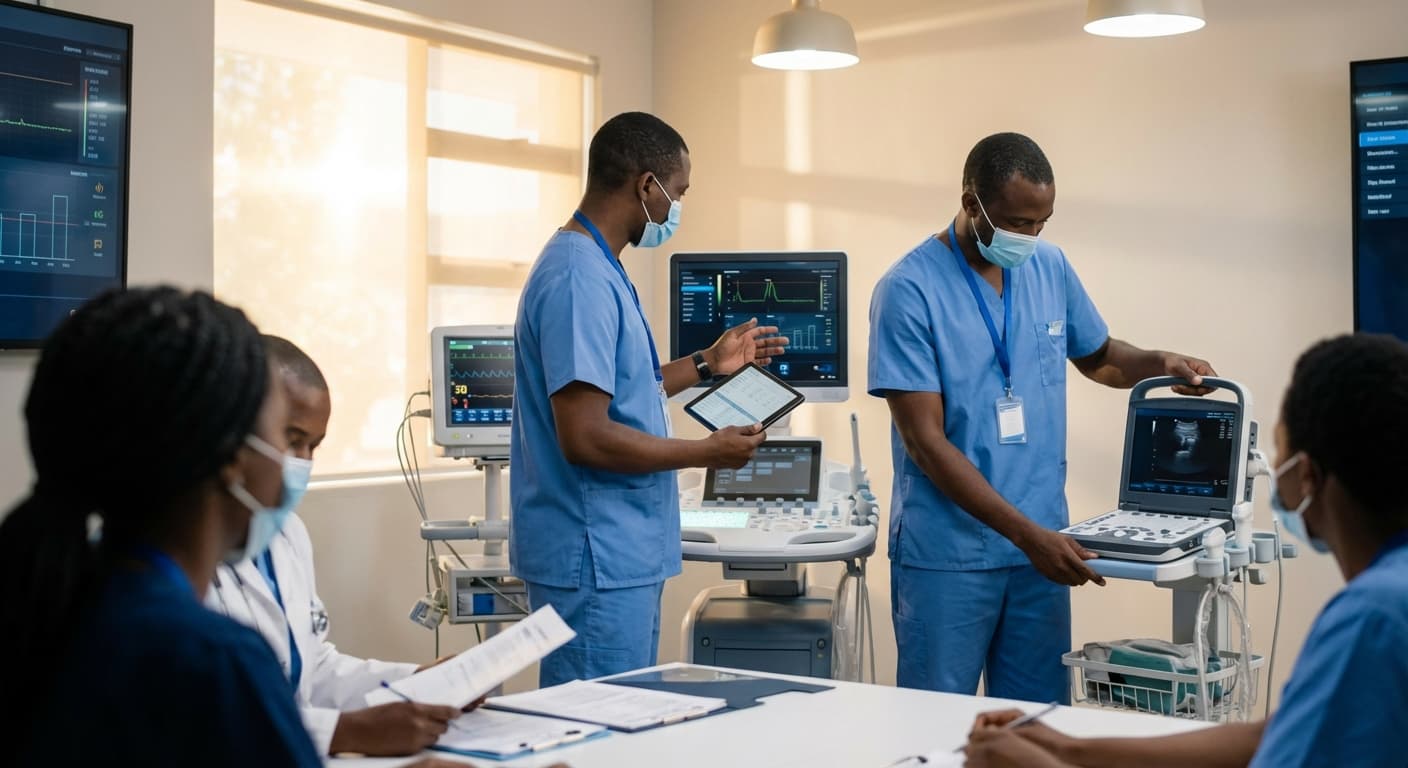
Clinical Needs Assessment for Medical Equipment in Togo
Engineering Excellence & Technical Support
Clinical Needs Assessment for Medical Equipment High-standard technical execution following OEM protocols and local regulatory frameworks.
Strategic Equipment Prioritization
Leveraging data-driven analysis of disease burden, patient demographics, and existing healthcare infrastructure in Togo, we identify and prioritize critical medical equipment needs. This ensures optimal resource allocation and immediate impact on patient care for prevalent conditions like malaria, maternal complications, and chronic diseases.
Integrated Supply Chain Assessment
We conduct a comprehensive review of Togo's medical equipment supply chain, from procurement and importation to distribution, maintenance, and end-of-life disposal. This highlights bottlenecks, identifies areas for efficiency improvements, and recommends sustainable logistics solutions to ensure consistent equipment availability and operational readiness across the nation.
Local Capacity Building & Maintenance Framework
Our needs assessment includes evaluating the existing technical expertise and infrastructure for medical equipment maintenance and repair in Togo. We propose tailored training programs for local biomedical engineers and technicians, and recommend the establishment of robust maintenance frameworks to ensure the longevity and optimal functioning of newly acquired equipment, fostering self-sufficiency.
What Is Clinical Needs Assessment For Medical Equipment In Togo?
A Clinical Needs Assessment for Medical Equipment in Togo is a systematic process to evaluate the current and future requirements for medical devices within healthcare facilities and across the national health system. This assessment quantifies the existing gaps in equipment provision, identifies deficits in functionality, and determines the necessary types, quantities, and specifications of equipment to meet defined clinical objectives and public health priorities. It is an evidence-based approach designed to inform procurement, training, maintenance, and strategic planning for medical technology deployment.
| Who Needs It? | Typical Use Cases |
|---|---|
| Ministry of Health (MoH) of Togo: For national health policy development, strategic planning, resource allocation, and guiding overall health infrastructure investment. | Regional and District Health Directorates: To inform local procurement decisions, plan for the equitable distribution of medical technology, and address specific regional health challenges. |
| Public and Private Healthcare Facilities (Hospitals, Clinics, Health Centers): To justify equipment requests, prioritize upgrades, and ensure the availability of necessary diagnostic, therapeutic, and life-support equipment. | International Development Partners and Donors: To inform their funding strategies, ensure that their investments are aligned with identified needs, and facilitate effective project implementation. |
| Healthcare Procurement Agencies: To develop accurate tender documents, define technical requirements, and ensure value for money in equipment acquisition. | Medical Equipment Manufacturers and Suppliers: To understand the market demand, tailor their product offerings to specific needs, and engage in evidence-based sales and support. |
| Healthcare Professionals (Clinicians, Technicians): To advocate for essential equipment, contribute to needs identification, and ensure that procured equipment meets clinical workflows and patient care standards. | Project Managers for Healthcare Infrastructure Projects: To design new facilities or renovate existing ones with appropriate medical equipment layouts and infrastructure considerations. |
Key Components of a Clinical Needs Assessment for Medical Equipment in Togo:
- Inventory and Audit of Existing Equipment: Documenting all currently available medical equipment, including its condition, operational status, age, maintenance history, and utilization rates.
- Analysis of Current Clinical Services and Patient Demographics: Evaluating the scope and volume of healthcare services provided, disease prevalence, and the demographic characteristics of the patient population served.
- Identification of Gaps and Deficiencies: Pinpointing where existing equipment is insufficient, outdated, non-functional, or absent to adequately support current and projected clinical demands.
- Definition of Future Requirements: Projecting the equipment needs based on anticipated changes in disease patterns, population growth, development of new clinical programs, and alignment with national health policies and international standards.
- Technical Specifications and Quality Assurance: Detailing the precise technical specifications, safety features, and performance standards required for new or replacement equipment.
- Training and Human Resource Needs: Assessing the competency of existing healthcare personnel to operate and maintain the identified equipment and determining the necessity for training programs.
- Maintenance and Support Infrastructure: Evaluating the availability and capacity of maintenance services, spare parts, and technical support to ensure the long-term functionality of the equipment.
- Costing and Budgeting: Estimating the financial implications of acquiring, installing, operating, and maintaining the recommended medical equipment.
Who Needs Clinical Needs Assessment For Medical Equipment In Togo?
Clinical Needs Assessment for Medical Equipment in Togo is crucial for ensuring that healthcare facilities are equipped with the right technology to provide optimal patient care. This process identifies existing gaps, prioritizes procurement, and ensures the sustainable use of medical devices. Understanding who benefits from and participates in this assessment is key to its success.
| Department/Entity | Role in Needs Assessment | Key Contributions |
|---|---|---|
| Clinical Departments (e.g., Surgery, Pediatrics, Cardiology, Radiology, Laboratory) | End-users and Identifiers of Needs | Provide specific clinical requirements, usage patterns, and identify unmet needs for specialized equipment. |
| Hospital Administration/Management | Resource Management and Prioritization | Oversee budget allocation, operational feasibility, and integrate equipment needs with overall hospital strategy. |
| Infection Prevention and Control (IPC) Unit | Safety and Sterilization Requirements | Advise on equipment related to hygiene, sterilization, and infection control protocols. |
| Pharmacy Department | Integration with Drug Delivery and Storage | Assess needs for equipment that complements pharmaceutical services (e.g., infusion pumps, specialized refrigerators). |
| Information Technology (IT) Department (in larger facilities) | Data Management and Interoperability | Ensure new equipment integrates with existing IT systems for data recording and reporting. |
| Ministry of Health - Planning Unit | National Health Priorities and Policy Alignment | Ensure equipment needs align with national health goals, disease burden, and strategic plans. |
| Ministry of Health - Procurement Unit | Market Analysis and Procurement Strategy | Inform tender processes and supplier selection based on assessed technical specifications and volume requirements. |
| Regional Health Offices | Regional Needs Aggregation and Oversight | Consolidate and review needs from facilities within their region, ensuring equitable distribution of resources. |
| Donors/Funding Agencies | Financial Support and Donor Requirements | Provide funding and may have specific requirements or areas of focus for equipment procurement. |
Target Customers and Departments for Clinical Needs Assessment in Togo
- {"item":"Healthcare Facilities:","description":"The primary beneficiaries, ranging from rural health posts to central hospitals."}
- {"item":"Ministry of Health (MoH):","description":"Responsible for national health policy, planning, and resource allocation."}
- {"item":"Regional Health Directorates:","description":"Oversee health services within specific geographic regions."}
- {"item":"Healthcare Professionals:","description":"Doctors, nurses, technicians, and administrators who directly use and manage the equipment."}
- {"item":"Medical Equipment Technicians/Biomedical Engineers:","description":"Essential for assessing the condition of existing equipment and its maintenance needs."}
- {"item":"Procurement Officers:","description":"Involved in the purchasing process based on the assessment's recommendations."}
- {"item":"Development Partners and NGOs:","description":"Often provide funding and technical support for healthcare infrastructure and equipment."}
- {"item":"Training Institutions:","description":"Need to understand equipment requirements for training healthcare professionals."}
Clinical Needs Assessment For Medical Equipment Process In Togo
This document outlines the workflow for a Clinical Needs Assessment (CNA) for Medical Equipment in Togo. The CNA process is crucial for ensuring that healthcare facilities acquire appropriate, functional, and well-maintained medical equipment that aligns with clinical needs, patient populations, and healthcare provider capabilities. The workflow begins with an initial inquiry and progresses through a series of defined steps, culminating in the execution and deployment of recommended equipment.
| Stage | Key Activities | Responsible Parties | Deliverables/Outcomes | Timeline (Indicative) |
|---|---|---|---|---|
| Healthcare facility or Ministry of Health (MoH) expresses a need for new or upgraded medical equipment. Initial contact and understanding of the scope of the assessment. | Healthcare Facility Staff, MoH Officials, Potential Donors/Implementing Partners | Confirmation of assessment request, preliminary understanding of needs. | 1-2 Weeks |
| Conducting site visits, interviewing healthcare professionals, reviewing patient demographics, disease prevalence data, existing infrastructure, and current equipment inventory. Assessing clinical workflows and service delivery gaps. | Assessment Team (Clinical Experts, Biomedical Engineers, Public Health Specialists), Facility Staff | Detailed report on current state, identified gaps, and specific clinical needs for equipment. | 4-8 Weeks |
| Analyzing collected data to identify critical equipment needs based on impact, feasibility, and sustainability. Developing a prioritized list of essential medical equipment, considering technical specifications, maintenance requirements, and availability of consumables. | Assessment Team, MoH Technical Committees, Clinical Advisors | Prioritized list of recommended medical equipment with technical specifications. | 2-4 Weeks |
| Estimating the cost of selected equipment, including procurement, shipping, installation, training, and ongoing maintenance. Identifying potential funding sources and securing budget approvals. | MoH Finance Department, Project Management Unit, Donors | Approved budget for equipment procurement and related expenses. | 3-6 Weeks |
| Developing tender documents, soliciting bids from reputable suppliers, evaluating proposals based on technical and financial criteria, and awarding contracts. Ensuring compliance with procurement regulations. | Procurement Unit, MoH Officials, Legal Department | Procurement contracts signed with selected suppliers. | 8-16 Weeks |
| Receiving, inspecting, and installing the procured equipment at the healthcare facilities. Conducting rigorous testing and calibration to ensure full functionality and safety. | Suppliers, Biomedical Engineering Technicians, Facility Staff | Installed and commissioned medical equipment, ready for clinical use. | 4-12 Weeks (depending on complexity and quantity) |
| Providing comprehensive training to healthcare professionals and technical staff on the operation, maintenance, and troubleshooting of the new equipment. Building local capacity for sustainable use. | Suppliers, Trainers, Clinical Staff, Biomedical Technicians | Trained personnel capable of operating and maintaining the equipment. | 2-6 Weeks (ongoing for specialized equipment) |
| Establishing a system for ongoing monitoring of equipment usage, performance, and maintenance. Collecting feedback to assess the impact of the equipment on service delivery and patient outcomes. Identifying any emerging challenges and planning for future needs. | MoH Monitoring & Evaluation Unit, Facility Management, Project Management Unit | Regular reports on equipment performance, user satisfaction, and impact on healthcare services. Recommendations for future interventions. | Ongoing |
Clinical Needs Assessment Workflow for Medical Equipment in Togo
- Inquiry & Initial Contact
- Needs Identification & Data Collection
- Equipment Prioritization & Selection
- Budgeting & Resource Allocation
- Procurement Process
- Installation & Commissioning
- Training & Capacity Building
- Monitoring & Evaluation
Clinical Needs Assessment For Medical Equipment Cost In Togo
This clinical needs assessment focuses on understanding the cost of essential medical equipment in Togo, a critical step for resource allocation, procurement planning, and ensuring access to quality healthcare. Accurate pricing data in local currency (West African CFA franc, XOF) is crucial for budgeting and identifying areas where cost-effective solutions are most needed. Several factors influence the pricing of medical equipment in Togo, including import duties and taxes, transportation and logistics costs, supplier markups, currency exchange rates, and the specific features and brand of the equipment. Furthermore, availability of spare parts and after-sales service significantly impacts the long-term cost of ownership. This assessment aims to provide a foundational understanding of these pricing dynamics and present typical cost ranges for commonly used medical devices.
Pricing Factors in Togo:
- Import Duties and Taxes: Togo levies various import duties and taxes on medical equipment, which can significantly inflate the final price. These vary based on the type of equipment and its classification.
- Transportation and Logistics: The cost of transporting equipment from international ports to various healthcare facilities across Togo, including remote areas, adds to the overall price. This includes freight, customs clearance, and local delivery.
- Supplier Markups: Local distributors and suppliers add their profit margins, which are influenced by their operating costs, market competition, and the perceived demand for specific equipment.
- Currency Exchange Rates: Fluctuations in the XOF against major international currencies (USD, EUR) directly impact the landed cost of imported equipment.
- Brand and Quality: Renowned international brands with established reputations for durability and advanced features generally command higher prices compared to generic or less-known brands. The quality of materials and manufacturing processes also plays a role.
- Technical Specifications and Features: Advanced diagnostic capabilities, specialized functionalities, and higher precision translate to increased costs.
- After-Sales Service and Maintenance: The availability and cost of qualified technicians for installation, training, maintenance, and repair are crucial considerations. Equipment requiring specialized servicing can have higher operational costs.
- Spare Parts Availability: The ease of obtaining genuine spare parts and their associated costs can influence the long-term economic viability of a piece of equipment.
- Warranty: The duration and coverage of the warranty offered can also be a pricing factor.
| Medical Equipment | Estimated Cost Range (XOF) | Notes |
|---|---|---|
| Blood Pressure Monitor (Manual) | 15,000 - 50,000 | Includes stethoscope. |
| Stethoscope | 10,000 - 30,000 | Professional grade. |
| Thermometer (Digital) | 5,000 - 15,000 | Basic functionality. |
| Pulse Oximeter | 20,000 - 75,000 | Portable, for adults and pediatrics. |
| Weighing Scale (Adult) | 25,000 - 100,000 | Mechanical or digital. |
| Basic First Aid Kit | 10,000 - 40,000 | Contents vary. |
| Examination Table | 100,000 - 300,000 | Simple, non-adjustable to semi-adjustable. |
| Surgical Gloves (Box of 100) | 15,000 - 40,000 | Latex or nitrile. |
| Syringes and Needles (Box of 100) | 8,000 - 25,000 | Various sizes. |
| IV Drip Set | 5,000 - 15,000 | Per unit. |
| Oxygen Concentrator (Portable, 5L) | 400,000 - 1,500,000 | For home use or mobile clinics. Price can vary significantly by brand and features. |
| Infusion Pump | 800,000 - 3,000,000 | Basic to advanced models. Essential for critical care. |
| Portable Ultrasound Machine | 3,000,000 - 15,000,000 | Basic imaging capabilities. Advanced models are significantly more expensive. |
| Basic X-ray Machine (Stationary) | 15,000,000 - 50,000,000 | Includes generator, tube, and basic setup. Digital systems are more costly. |
| Microscope (Basic Compound) | 100,000 - 500,000 | For general laboratory use. |
Common Medical Equipment and Estimated Cost Ranges in XOF (Togo)
- Blood Pressure Monitor (Manual)
- Stethoscope
- Thermometer (Digital)
- Pulse Oximeter
- Weighing Scale (Adult)
- Basic First Aid Kit
- Examination Table
- Surgical Gloves (Box)
- Syringes and Needles (Box)
- IV Drip Set
- Oxygen Concentrator (Portable)
- Infusion Pump
- Portable Ultrasound Machine
- Basic X-ray Machine
- Microscope (Basic)
Affordable Clinical Needs Assessment For Medical Equipment Options
Conducting a thorough clinical needs assessment for medical equipment is crucial for any healthcare facility. This process ensures that investments are aligned with patient care requirements, operational efficiency, and budgetary constraints. Affordable options are readily available through strategic planning and leveraging cost-saving measures. Understanding value bundles and implementing effective cost-saving strategies are key to maximizing return on investment while ensuring optimal patient outcomes.
| Value Bundle Components | Description | Cost-Saving Strategies |
|---|---|---|
| Equipment and Service Packages: | Bundling the purchase of medical equipment with extended warranties, preventative maintenance plans, and on-site support. | Negotiate bundled pricing for reduced overall cost. Leverage bundled maintenance to avoid unexpected repair expenses and downtime. |
| Training and Education: | Including comprehensive user training, technical support, and professional development for staff as part of the equipment acquisition. | Ensuring proper training minimizes errors, improves utilization, and reduces the need for costly re-training or support calls. |
| Consumables and Accessories: | Offering discounted rates or bulk purchasing options for necessary consumables and accessories when purchasing the primary equipment. | Bulk purchasing of consumables through value bundles can lead to significant savings compared to individual purchases. |
| Software and Integration Services: | Bundling the equipment with necessary software licenses, IT integration support, and data management solutions. | Streamlined integration reduces IT burden and potential compatibility issues, leading to long-term efficiency gains. |
| Trade-in Programs: | Allowing healthcare facilities to trade in old or underutilized equipment towards the purchase of new technology. | Reduces the net cost of new equipment and allows for the disposal of obsolete assets. |
Key Components of an Affordable Clinical Needs Assessment
- Define Current and Future Needs: Accurately assess existing equipment capabilities, identify gaps, and project future demands based on service line growth, technological advancements, and evolving patient populations.
- Prioritize Equipment Requirements: Categorize needs based on clinical urgency, impact on patient care, and return on investment. Focus on essential equipment first.
- Explore Diverse Sourcing Options: Beyond traditional purchasing, consider leasing, refurbished equipment, and vendor financing programs.
- Involve Stakeholders: Engage clinicians, IT, biomedical engineering, finance, and procurement teams to ensure a comprehensive and well-received assessment.
- Research Market Pricing and Trends: Understand current market values for desired equipment and stay informed about emerging technologies and their cost implications.
- Quantify Total Cost of Ownership (TCO): Look beyond the initial purchase price to include maintenance, consumables, training, and disposal costs.
- Develop a Phased Implementation Plan: Break down large equipment acquisition projects into manageable phases to spread costs and allow for iterative evaluation.
Verified Providers In Togo
When seeking healthcare in Togo, particularly for specialized or sensitive medical needs, it's crucial to engage with verified providers. Franance Health stands out as a premier credentialing body, ensuring that medical professionals and facilities meet rigorous standards of quality, safety, and ethical practice. Choosing a Franance Health-credentialed provider offers unparalleled peace of mind and guarantees a superior healthcare experience.
| Provider Type | Franance Health Verification Benefits | Why They Are the Best Choice |
|---|---|---|
| Hospitals & Clinics | Ensures adherence to international standards of patient care, infection control, and operational efficiency. | Offer state-of-the-art facilities, advanced medical equipment, and a multidisciplinary team of specialists committed to patient well-being. |
| Specialist Physicians | Confirms advanced training, board certifications, and a proven track record in their respective fields. | Provide in-depth knowledge and experience, delivering precise diagnoses and effective treatment plans tailored to individual needs. |
| Surgeons | Verifies surgical expertise, a history of successful procedures, and commitment to patient safety protocols. | Perform complex surgeries with precision and care, utilizing advanced techniques and minimizing recovery times. |
| Diagnostic Laboratories | Ensures accuracy and reliability of test results through quality control and adherence to international laboratory standards. | Deliver precise and timely diagnostic information crucial for accurate medical assessments and treatment planning. |
| Ancillary Medical Services (e.g., Physiotherapy, Radiology) | Confirms professional qualifications and adherence to best practices in their specialized areas. | Offer essential support services that enhance recovery, diagnosis, and overall patient care, contributing to a comprehensive healthcare approach. |
Why Franance Health Credentials Matter in Togo:
- Unwavering Commitment to Quality: Franance Health meticulously vets all credentialed providers, scrutinizing their educational backgrounds, professional experience, and clinical competencies to ensure they adhere to the highest medical standards.
- Patient Safety as a Priority: Rigorous background checks and continuous monitoring are integral to the Franance Health process, minimizing risks and ensuring a safe environment for all patients.
- Ethical Practice and Integrity: Providers accredited by Franance Health are held to a strict code of conduct, promoting transparency, respect, and compassionate care.
- Access to Expertise: Franance Health's network comprises a diverse range of specialists, guaranteeing access to top-tier medical expertise across various disciplines.
- Trust and Reliability: The Franance Health seal of approval signifies a commitment to excellence, making them a trusted partner for individuals seeking reliable and high-quality healthcare services in Togo.
- Streamlined Healthcare Navigation: By partnering with Franance Health-credentialed providers, patients can navigate the Togolese healthcare system with greater confidence and ease.
Scope Of Work For Clinical Needs Assessment For Medical Equipment
This Scope of Work (SOW) outlines the requirements for conducting a comprehensive clinical needs assessment for medical equipment for [Healthcare Facility Name/Department]. The objective is to identify, prioritize, and specify the medical equipment necessary to support current and future clinical services, enhance patient care, improve operational efficiency, and ensure compliance with relevant standards and regulations. The assessment will involve a detailed review of existing equipment, clinical workflows, patient populations, and strategic growth plans.
| Phase | Activities | Deliverables | Timeline (Weeks) |
|---|---|---|---|
| Phase 1: Planning & Information Gathering | 1.1 Kick-off meeting with stakeholders. 1.2 Review of existing medical equipment inventory and maintenance records. 1.3 Analysis of current clinical service lines and patient demographics. 1.4 Interviews with clinical staff (physicians, nurses, technicians) and department heads. 1.5 Review of strategic plans and future service development. | 1.1 Project Charter & Communication Plan. 1.2 Comprehensive inventory of existing equipment. 1.3 Stakeholder interview summaries. 1.4 Report on current service capabilities and limitations. | 4 |
| Phase 2: Needs Analysis & Prioritization | 2.1 Gap analysis: comparing current capabilities with required services. 2.2 Identification of critical equipment needs. 2.3 Assessment of technological obsolescence and upgrade requirements. 2.4 Prioritization of identified needs based on pre-defined criteria (e.g., patient safety, clinical efficacy, ROI, regulatory compliance). | 2.1 Gap analysis report. 2.2 Prioritized list of required medical equipment. 2.3 Risk assessment of equipment deficiencies. | 3 |
| Phase 3: Specification Development | 3.1 For each prioritized equipment item, define functional requirements (intended use, performance characteristics). 3.2 Define technical specifications (power, connectivity, dimensions, consumables, safety standards). 3.3 Define standard specifications (e.g., ISO, IEC, FDA requirements, manufacturer best practices). 3.4 Research of available technologies and potential vendors. | 3.1 Detailed functional and technical specifications for each prioritized equipment item. 3.2 List of applicable national and international standards. 3.3 Preliminary vendor/technology landscape report. | 6 |
| Phase 4: Reporting & Recommendations | 4.1 Compilation of all findings into a comprehensive report. 4.2 Development of a recommended medical equipment procurement plan. 4.3 Presentation of findings and recommendations to stakeholders. | 4.1 Final Clinical Needs Assessment Report. 4.2 Recommended Medical Equipment Procurement Plan. 4.3 Final Presentation Deck. | 2 |
Key Objectives of the Clinical Needs Assessment
- Identify current equipment gaps and deficiencies.
- Determine future equipment requirements based on service expansion and technological advancements.
- Prioritize equipment needs based on clinical impact, patient safety, cost-effectiveness, and strategic alignment.
- Define functional, technical, and performance specifications for new and replacement equipment.
- Ensure equipment procured meets regulatory requirements and best practices.
- Provide a basis for the development of a comprehensive medical equipment procurement plan.
Service Level Agreement For Clinical Needs Assessment For Medical Equipment
This Service Level Agreement (SLA) outlines the guaranteed response times and uptime for the Clinical Needs Assessment service provided by [Provider Name] for medical equipment. This SLA is effective as of [Start Date] and remains in effect until superseded by a new agreement.
| Service Level | Description | Response Time Guarantee | Uptime Guarantee |
|---|---|---|---|
| Standard Clinical Needs Assessment | Routine assessment of new or existing medical equipment for clinical suitability and requirements. | 4 business hours for initial acknowledgment and resource allocation. Commencement of assessment within 2 business days. | 98% of Scheduled Service Hours |
| Expedited Clinical Needs Assessment | Urgent assessment required due to critical patient care needs, regulatory deadlines, or immediate equipment deployment. | 2 business hours for initial acknowledgment. Commencement of assessment within 1 business day. | 99% of Scheduled Service Hours |
| Review and Validation of Existing Assessments | Re-evaluation and validation of previously completed clinical needs assessments. | 4 business hours for initial acknowledgment. Commencement of review within 3 business days. | 98% of Scheduled Service Hours |
Definitions
- Clinical Needs Assessment: The process of evaluating and documenting the clinical requirements, specifications, and intended use of medical equipment.
- Service Request: A formal request submitted by the Client to the Provider for a Clinical Needs Assessment.
- Response Time: The maximum time allowed from the initiation of a Service Request to the Provider's first substantive acknowledgment and commencement of work.
- Uptime: The percentage of time that the Provider's personnel and necessary resources are available to perform the Clinical Needs Assessment services as scheduled and agreed upon.
- Scheduled Service Hours: The agreed-upon hours and days during which Clinical Needs Assessment services are expected to be available.
- Client: [Client Name], the entity receiving the Clinical Needs Assessment service.
- Provider: [Provider Name], the entity providing the Clinical Needs Assessment service.
Frequently Asked Questions

Ready when you are
Let's scope your Clinical Needs Assessment for Medical Equipment in Togo project in Togo.

Scaling healthcare logistics and technical systems across the entire continent.