
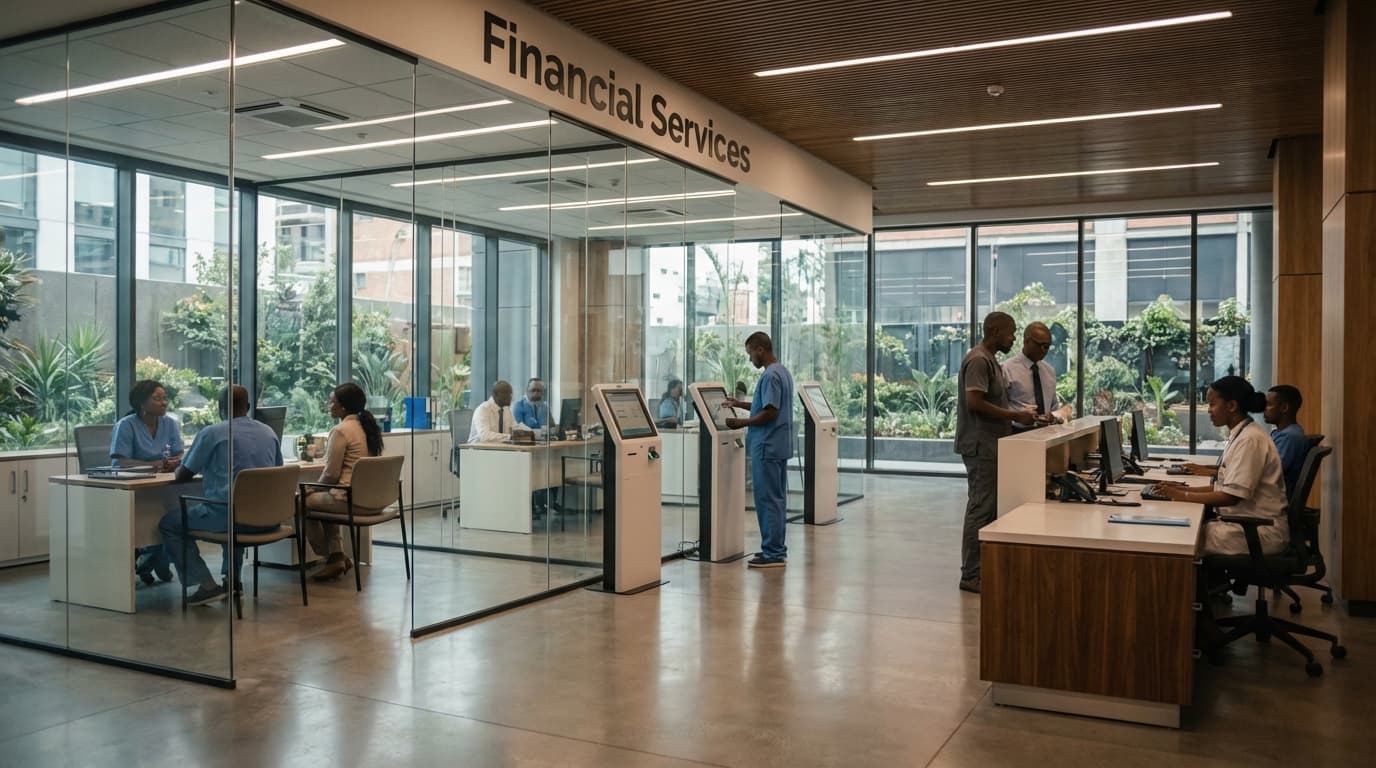
Medical Equipment Financing in Togo
Engineering Excellence & Technical Support
Leasing and financing solutions for medical equipment High-standard technical execution following OEM protocols and local regulatory frameworks.
Accelerated Access to Advanced Medical Technology
Our specialized financing solutions enable Togolese healthcare providers to acquire state-of-the-art medical equipment with competitive interest rates and flexible repayment terms, ensuring faster adoption of life-saving technologies.
Tailored Financing for Diverse Healthcare Needs
We offer bespoke financing packages for a wide spectrum of medical equipment, from diagnostic imaging systems to surgical instruments and laboratory analyzers, catering to the unique operational and budget requirements of clinics, hospitals, and research centers across Togo.
Streamlined Application & Approval Process
Our efficient, technology-driven application and approval process minimizes bureaucratic hurdles, allowing healthcare institutions in Togo to secure the necessary funding for equipment acquisition swiftly, thereby improving patient care and operational efficiency without undue delay.
What Is Medical Equipment Financing In Togo?
Medical Equipment Financing in Togo refers to the provision of capital by financial institutions or specialized lenders to healthcare providers for the acquisition of medical devices, machinery, and technology. This service is crucial for enabling healthcare facilities to upgrade, expand, or maintain their operational capacity through the procurement of essential medical assets, thereby improving the quality and accessibility of healthcare services within the nation.
| Who Needs Medical Equipment Financing? | Typical Use Cases | ||||
|---|---|---|---|---|---|
| Hospitals (Public and Private): Seeking to acquire advanced imaging systems (MRI, CT scanners), surgical robots, laboratory analyzers, or critical care units. | Clinics and Diagnostic Centers: Requiring ultrasound machines, X-ray equipment, endoscopes, or specialized diagnostic tools. | Laboratories (Medical and Research): Needing sophisticated analytical instruments, centrifuges, or biosafety cabinets. | Individual Medical Practitioners (Doctors, Dentists, Specialists): Expanding their practice with new examination equipment, dental chairs, or specialized treatment devices. | Government Health Initiatives: Undertaking public health programs that necessitate the deployment of mobile clinics, diagnostic kits, or essential medical supplies on a large scale. | |
| Acquisition of New Equipment: To replace outdated machinery or introduce new technological capabilities. | Expansion of Services: To offer a broader range of medical treatments and diagnostic procedures. | Upgrade of Existing Infrastructure: To improve efficiency, accuracy, and patient comfort. | Replacement of Damaged or Obsolete Equipment: To ensure uninterrupted service delivery and compliance with safety standards. | Fleet Expansion: For mobile clinics or specialized medical transport units. | Research and Development: To procure cutting-edge instruments for medical research. |
Key Aspects of Medical Equipment Financing in Togo:
- Definition: It is a form of asset-based lending where the medical equipment itself serves as collateral. This facilitates access to higher-value and technologically advanced medical equipment that might otherwise be beyond the immediate financial reach of healthcare providers.
- Lenders: Primarily involves commercial banks, microfinance institutions, and specialized equipment finance companies operating in Togo.
- Financing Options: Includes term loans, leases (operating and finance leases), and sometimes vendor financing programs.
- Collateral: The financed medical equipment typically serves as the primary collateral for the loan or lease.
- Terms and Conditions: Varies based on the lender, the type and cost of equipment, and the financial standing of the borrower. This includes interest rates, repayment periods, down payment requirements, and any associated fees.
- Due Diligence: Lenders conduct thorough due diligence on the borrower's financial health, the specific medical equipment's market value, its condition, and the provider's ability to service the debt.
- Impact: Enhances diagnostic capabilities, treatment efficacy, and overall patient care through access to modern medical technology.
Who Needs Medical Equipment Financing In Togo?
Medical equipment financing in Togo plays a crucial role in enabling healthcare providers to acquire and upgrade essential medical technology. This financing mechanism bridges the gap between the high cost of modern medical devices and the available capital of healthcare institutions, ultimately improving the quality and accessibility of healthcare services for the Togolese population. It allows for the acquisition of diagnostic imaging equipment, surgical instruments, laboratory analyzers, patient monitoring systems, and much more, ensuring that Togolese citizens have access to up-to-date medical care.
| Customer Type | Typical Departments Benefiting | Needs Addressed by Financing | Impact on Healthcare Delivery |
|---|---|---|---|
| Public Hospitals and Clinics | Radiology, Cardiology, Surgery, Laboratory, Emergency Room, Intensive Care Unit (ICU) | Acquisition of advanced diagnostic tools, modern surgical equipment, life-support systems, and upgrades to existing infrastructure. | Improved diagnostic accuracy, enhanced surgical outcomes, increased capacity for critical care, and broader access to essential medical services for the general population. |
| Private Hospitals and Clinics | All departments, with a focus on specialized services like advanced imaging, minimally invasive surgery, and specialized diagnostics. | Investment in cutting-edge technology to offer specialized treatments, attract more patients, and compete with international healthcare standards. | Enhanced service offerings, improved patient satisfaction, and potential for medical tourism. |
| Diagnostic Laboratories | Hematology, Biochemistry, Microbiology, Molecular Diagnostics | Purchase of automated analyzers, PCR machines, microscopes, and other sophisticated laboratory equipment. | Faster and more accurate diagnosis of diseases, improved disease surveillance, and support for public health initiatives. |
| Specialty Medical Centers | Cardiology, Oncology, Neurology, Ophthalmology, etc. | Acquisition of highly specialized equipment such as MRI scanners, CT scanners, linear accelerators, endoscopic devices, and advanced surgical robots. | Delivery of complex and life-saving treatments, better patient outcomes for specific conditions, and advancement of medical expertise in niche areas. |
| Maternity and Birthing Centers | Obstetrics, Neonatology | Purchase of incubators, fetal monitors, ultrasound machines, and specialized delivery equipment. | Improved maternal and infant health outcomes, reduction of neonatal mortality, and safer childbirth experiences. |
Target Customers for Medical Equipment Financing in Togo
- Public Hospitals and Clinics
- Private Hospitals and Clinics
- Specialty Medical Centers (e.g., cardiology, oncology, radiology)
- Diagnostic Laboratories
- Maternity and Birthing Centers
- Dental Clinics
- Physiotherapy and Rehabilitation Centers
- Non-Governmental Organizations (NGOs) operating healthcare facilities
- Medical Training Institutions with clinical components
Medical Equipment Financing Process In Togo
The medical equipment financing process in Togo involves a structured workflow designed to ensure proper evaluation of financing requests and the responsible deployment of funds. This process typically begins with an initial inquiry from a healthcare facility or provider seeking to acquire new or upgrade existing medical equipment. The subsequent steps involve detailed assessment, documentation, and legal/financial closing. Each stage is critical for both the financier and the borrower to understand the terms, risks, and obligations involved.
| Stage | Description | Key Activities | Key Stakeholders Involved | Typical Timeframe |
|---|---|---|---|---|
| The process begins when a healthcare provider expresses interest in financing medical equipment. | Contacting a financial institution or leasing company, outlining the need for equipment. | Healthcare Provider (Borrower/Lessee), Financier (Lender/Lessor) | 1-3 Business Days |
| Detailed understanding of the required medical equipment and its purpose. | Submitting equipment lists, quotes from suppliers, technical specifications, and intended use. | Healthcare Provider, Financier's Equipment Specialist | 3-7 Business Days |
| Assessing the financial capacity and stability of the healthcare provider. | Submitting financial statements, business plans, tax returns, and credit history. | Healthcare Provider, Financier's Credit Department, Credit Bureaus (if applicable) | 7-14 Business Days |
| Outlining the proposed financing terms and conditions. | Review of financial and technical assessments, developing loan/lease agreement terms (interest rate, repayment period, collateral, etc.). | Financier, Healthcare Provider (for review) | 3-5 Business Days |
| Formalizing the financing agreement and conducting legal checks. | Preparing and reviewing loan/lease agreements, security documents, and any other required legal paperwork. Legal due diligence on the borrower. | Healthcare Provider's Legal Counsel, Financier's Legal Department, Notaries/Registrars | 7-21 Business Days (can vary significantly) |
| Formal approval of the financing request by the financier. | Internal committee review and approval based on all assessments and documentation. | Financier's Approval Committee | 2-5 Business Days |
| The process of acquiring the specified medical equipment. | The borrower or financier places an order with the approved supplier. Arranging for transportation and import (if applicable). | Healthcare Provider, Equipment Supplier, Shipping/Logistics Companies | Variable (depends on equipment availability and import processes) |
| Transfer of funds to the equipment supplier or the borrower. | Upon successful delivery and verification of equipment, funds are released according to the agreed terms (e.g., direct to supplier, or to borrower for reimbursement). | Financier, Healthcare Provider, Equipment Supplier | 1-3 Business Days |
| Ensuring the equipment is correctly installed and operational. | Supervising or verifying installation by the supplier and ensuring the equipment is functioning as per specifications. | Healthcare Provider, Equipment Supplier, Financier's Representative | 3-10 Business Days (post-delivery) |
| Ongoing management of the loan/lease agreement. | Regular payment of installments by the borrower. Periodic review of equipment's performance and the borrower's financial health by the financier. | Healthcare Provider, Financier | Throughout the financing term |
Medical Equipment Financing Workflow in Togo
- Inquiry and Initial Contact
- Needs Assessment and Equipment Specification
- Financial Assessment and Creditworthiness Evaluation
- Proposal and Term Sheet Generation
- Documentation and Legal Review
- Approval and Sanction
- Equipment Procurement and Delivery
- Disbursement of Funds
- Installation and Commissioning
- Repayment and Monitoring
Medical Equipment Financing Cost In Togo
Financing medical equipment in Togo involves a variety of cost considerations, influenced by factors such as the type and value of the equipment, the financing institution's policies, the borrower's creditworthiness, and prevailing economic conditions. Lenders typically assess risk and incorporate it into their pricing. Interest rates, administrative fees, and potential collateral requirements are key components of the overall financing cost. Local currency financing (West African CFA franc - XOF) is the most common, offering predictability and avoiding foreign exchange fluctuations for Togolese businesses. However, access to specialized medical equipment financing might be more limited compared to larger economies, potentially impacting competitive pricing.
| Financing Type | Typical Interest Rate Range (Annual, XOF) | Estimated Fee Range (as % of loan, XOF) | Notes |
|---|---|---|---|
| Bank Loans (Secured) | 10% - 18% | 1% - 3% | Often requires substantial collateral and a strong business case. Interest rates vary significantly based on borrower risk profile and bank's internal policies. |
| Leasing Agreements | 12% - 20% | 2% - 5% (initial setup/documentation) | Leasing can be a good option for newer equipment, as ownership remains with the lessor. Rates depend on the lease term and residual value of the equipment. |
| Microfinance Institutions (for smaller/mid-sized equipment) | 15% - 25% | 3% - 7% | May have higher rates due to higher perceived risk but can offer more accessible financing for smaller healthcare providers or entrepreneurs. |
| Equipment Supplier Financing (less common) | Negotiable (often embedded in price) | Varies widely | Direct financing from the equipment vendor. Terms are highly dependent on the supplier and negotiation. May include interest or be structured as a payment plan. |
Key Pricing Factors for Medical Equipment Financing in Togo
- Equipment Value and Type: High-value, specialized, or technologically advanced equipment generally commands higher financing costs due to increased risk and depreciation concerns.
- Borrower's Creditworthiness: A strong financial history, robust balance sheet, and proven repayment capacity significantly improve loan terms and reduce interest rates.
- Financing Institution: Different banks, microfinance institutions, and specialized leasing companies will have varying risk appetites and pricing structures.
- Loan Term and Tenor: Longer repayment periods may result in higher total interest paid, though monthly installments are lower.
- Down Payment/Collateral: A substantial down payment or readily valuable collateral can reduce the loan amount and perceived risk, leading to more favorable rates.
- Economic Conditions: Inflation, interest rate benchmarks set by the central bank, and overall economic stability in Togo can influence lending rates.
- Administrative and Ancillary Fees: These can include loan origination fees, processing charges, appraisal fees for collateral, and insurance premiums.
- Equipment's Marketability and Resale Value: Equipment that holds its value well and is in demand can be easier to finance and potentially at better terms.
Affordable Medical Equipment Financing Options
Acquiring essential medical equipment can be a significant financial undertaking for healthcare providers. Fortunately, a variety of affordable financing options exist, coupled with strategic approaches to minimize costs. Understanding value bundles and implementing smart cost-saving strategies can make a substantial difference in budget management and operational efficiency. This guide explores these avenues to help your practice or facility make informed financial decisions regarding medical equipment.
| Cost-Saving Strategy | Description | Impact on Affordability |
|---|---|---|
| Leasing vs. Purchasing | Leasing offers lower upfront costs and the ability to upgrade equipment more frequently, which can be beneficial for rapidly evolving technology. Purchasing involves ownership but requires a larger initial investment. | Leasing generally lowers initial capital outlay. Purchasing can be more cost-effective long-term if equipment lifespan is extensive. |
| Refurbished Equipment | Purchasing pre-owned, certified, and refurbished medical equipment from reputable vendors can significantly reduce acquisition costs while maintaining quality and functionality. | Substantial reduction in purchase price compared to new equipment. |
| Bulk Purchasing | Acquiring multiple pieces of equipment or consumables from a single vendor or negotiating group purchasing power can lead to significant discounts. | Volume discounts directly lower the per-unit cost. |
| Negotiate Service Contracts | Don't accept standard service contract terms. Negotiate pricing, coverage details, response times, and uptime guarantees to ensure you're getting value for money. | Lower ongoing operational costs through optimized service agreements. |
| Explore Different Financing Models | Beyond traditional loans, consider equipment financing, capital leases, and sale-leaseback options. Each has different implications for cash flow and ownership. | Tailors financial burden to your cash flow, potentially improving accessibility. |
| Prioritize Essential Equipment | Focus your investment on equipment that is critical for patient care and revenue generation. Delay or reconsider purchases of non-essential or infrequently used items. | Allocates limited capital to highest-impact assets, maximizing ROI. |
| Evaluate Total Cost of Ownership (TCO) | Consider not just the purchase price, but also installation, maintenance, training, consumables, energy consumption, and eventual disposal costs. | Provides a holistic view to make the most cost-effective long-term choice. |
Value Bundles Explained
- {"title":"Definition","description":"Value bundles are packages that combine multiple products or services at a reduced price compared to purchasing them individually. In the context of medical equipment, this often includes the equipment itself, installation, training, maintenance, and sometimes even consumables or software licenses."}
- {"title":"Benefits","description":"Bundles can offer a simplified procurement process, predictable costs, and potential discounts. They are designed to provide a complete solution, ensuring that the equipment is not only acquired but also effectively integrated and maintained."}
- {"title":"Types of Bundles","description":"Common medical equipment bundles include imaging systems with installation and training, surgical suites with integrated instruments and support, and diagnostic equipment with ongoing service contracts and software updates."}
- {"title":"Negotiation Points","description":"When considering a bundle, explore what's included, potential for customization, length of service agreements, and opportunities for bulk discounts if purchasing multiple items."}
Verified Providers In Togo
Ensuring access to quality healthcare is paramount, and in Togo, identifying verified healthcare providers is crucial. This document outlines the significance of verified providers, focusing on Franance Health's credentials and explaining why they stand out as the optimal choice for your healthcare needs. Franance Health's commitment to excellence is reflected in their rigorous vetting processes, adherence to international standards, and dedication to patient well-being. Choosing a verified provider like Franance Health offers peace of mind, guarantees competent medical professionals, and ensures access to safe and effective treatments. Their comprehensive approach to healthcare, coupled with their established reputation, makes them a trusted partner in your health journey.
| Franance Health Credential | Significance | Patient Benefit |
|---|---|---|
| Accreditation by the Togolese Ministry of Health | Official recognition and compliance with national healthcare regulations and standards. | Ensures adherence to local medical practices and ethical guidelines, guaranteeing legitimate services. |
| Partnerships with International Health Organizations (e.g., WHO, regional health bodies) | Demonstrates alignment with global best practices and commitment to international healthcare benchmarks. | Provides access to advanced medical knowledge, updated treatment protocols, and a broader network of expertise. |
| Certified Medical Professionals (Doctors, Nurses, Specialists) | Verification of licenses, educational qualifications, and continuous professional development of all staff. | Guarantees that you are treated by highly skilled and knowledgeable practitioners, ensuring competent and up-to-date medical care. |
| Adherence to ISO 9001 Quality Management Standards | Commitment to a systematic approach to quality control in all operational aspects of the healthcare facility. | Ensures consistent quality of service, efficient processes, and a patient-centered approach to care delivery. |
| Patient Testimonials and Positive Feedback | Documented evidence of satisfactory patient experiences and successful treatment outcomes. | Provides real-world assurance of the quality of care, empathy, and effectiveness of services offered by Franance Health. |
| Robust Infection Control Protocols | Implementation of stringent measures to prevent the spread of infections within the healthcare setting. | Safeguards patient health and well-being by minimizing the risk of hospital-acquired infections. |
Key Benefits of Choosing Verified Providers like Franance Health
- Enhanced Patient Safety: Verified providers adhere to strict safety protocols and quality standards, minimizing risks and ensuring a secure healthcare experience.
- Qualified and Competent Professionals: Franance Health's credentials confirm that their medical staff are highly trained, licensed, and possess the necessary expertise.
- Access to Reliable Treatments: Verification ensures that treatments and medications are genuine, effective, and administered appropriately.
- Trust and Transparency: Verified providers operate with a high degree of transparency, providing clear information about services, costs, and practitioner qualifications.
- Improved Health Outcomes: By selecting verified providers, patients are more likely to receive accurate diagnoses and effective care, leading to better health results.
- Peace of Mind: Knowing you are receiving care from a credible and reputable institution significantly reduces stress and anxiety associated with healthcare decisions.
Scope Of Work For Medical Equipment Financing
This Scope of Work (SOW) outlines the requirements for providing medical equipment financing. It details the technical deliverables, standard specifications, and the process for securing and managing financing for medical equipment. The objective is to ensure that the procured equipment meets the required technical standards and that the financing is structured effectively to support the healthcare facility's operational and financial goals.
| Category | Specific Requirements/Specifications | Acceptance Criteria |
|---|---|---|
| Equipment Performance | Must meet or exceed specified performance benchmarks and diagnostic accuracy as per manufacturer's claims and independent testing (if applicable). | Successful validation during commissioning and acceptance testing. |
| Safety Standards | Must comply with all applicable electrical safety, electromagnetic compatibility (EMC), and bio-compatibility standards. | Certification by accredited testing laboratories; no reported safety incidents post-installation. |
| Interoperability | Where applicable, equipment must be compatible with existing hospital IT infrastructure (e.g., EHR systems, PACS) and adhere to relevant interoperability standards (e.g., HL7, DICOM). | Successful data exchange and integration demonstrated during testing. |
| Usability & Ergonomics | Designed for ease of use by trained medical personnel, with intuitive interfaces and ergonomic considerations for patient and operator comfort and safety. | Feedback from end-users during training and initial operational use. |
| Maintenance & Support | Manufacturer or authorized service provider must offer comprehensive post-installation maintenance, repair services, and availability of spare parts for a minimum of X years (specify duration). | Defined service level agreements (SLAs) in place; demonstrated responsiveness and resolution of service requests. |
| Energy Efficiency | Equipment should meet or exceed relevant energy efficiency standards where applicable, contributing to operational cost savings. | Compliance with energy star ratings or equivalent; measurable reduction in energy consumption. |
| Software & Firmware | All software and firmware must be up-to-date, licensed appropriately, and include provisions for future updates and security patches. | Documentation of software versions, licenses, and update schedule; successful application of initial patches. |
Technical Deliverables and Standard Specifications
- Detailed equipment specifications and justifications for each item to be financed.
- Manufacturer's technical datasheets and performance certifications.
- Compliance documentation with relevant national and international medical device regulations (e.g., FDA, CE marking, ISO standards).
- Installation and commissioning reports from certified technicians.
- User manuals, service manuals, and training materials.
- Warranty and service agreements with defined response times and coverage.
- Asset tagging and inventory management system integration.
- Cybersecurity assessment and mitigation plans for networked medical equipment.
- End-of-life disposal and recycling plans.
- Proof of ownership and clear title to the equipment post-financing.
Service Level Agreement For Medical Equipment Financing
This Service Level Agreement (SLA) outlines the response times and uptime guarantees for medical equipment financing services provided by [Financing Company Name] to [Healthcare Provider Name]. This SLA is a critical component of the Master Service Agreement dated [Date of MSA].
| Service Category | Response Time Target (Business Hours) | Resolution Time Target (Business Hours) | Uptime Guarantee |
|---|---|---|---|
| Loan Application Submission & Initial Review | 2 Business Hours | 8 Business Hours | N/A (Application processing is event-driven) |
| Financing Document Generation | 4 Business Hours | 12 Business Hours | N/A (Document generation is event-driven) |
| Status Updates on Existing Applications/Loans | 4 Business Hours | 8 Business Hours | N/A (Information retrieval is event-driven) |
| Technical Support for Online Portals/Systems | 1 Business Hour | 4 Business Hours | 99.5% (During defined business hours) |
| Billing Inquiries & Disputes | 2 Business Hours | 16 Business Hours | N/A (Information retrieval is event-driven) |
| System Outages (Critical Financing Platform) | 30 Minutes (Initial acknowledgement) | 4 Business Hours (Full restoration, if possible) | 99.9% (Excluding scheduled maintenance) |
Key Performance Indicators (KPIs)
- Response Time: Refers to the time taken by [Financing Company Name] to acknowledge and begin addressing a reported issue or request.
- Resolution Time: Refers to the time taken by [Financing Company Name] to resolve a reported issue or fulfill a request, to the extent possible.
- Uptime Guarantee: Refers to the percentage of time that critical financing systems and services are available and operational for [Healthcare Provider Name]'s use.
Frequently Asked Questions

Ready when you are
Let's scope your Medical Equipment Financing in Togo project in Togo.

Scaling healthcare logistics and technical systems across the entire continent.