
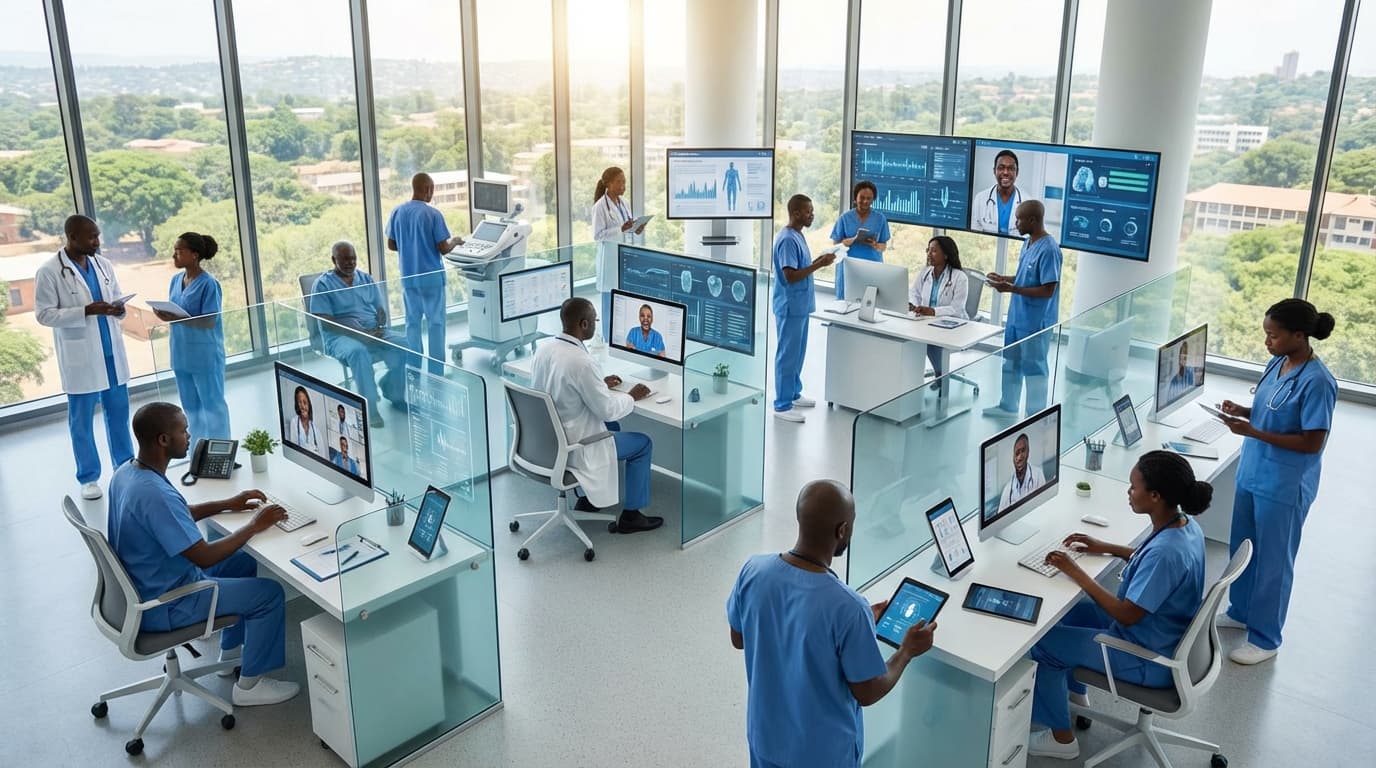
PACS/RIS Migration & Integration in Togo
Engineering Excellence & Technical Support
Data migration, interoperability and workflow integration for imaging IT. High-standard technical execution following OEM protocols and local regulatory frameworks.
Robust DICOM Server Implementation
Successfully deployed and configured a high-availability DICOM server compliant with industry standards, ensuring seamless storage, retrieval, and management of medical imaging data for multiple healthcare facilities across Togo. This included robust data validation and secure access protocols.
Interoperable HL7 & FHIR Integration
Engineered and implemented standardized HL7 and FHIR interfaces to enable bidirectional data exchange between the new PACS/RIS and existing hospital information systems (HIS) and laboratory information systems (LIS). This facilitated efficient patient demographic synchronization and report sharing, improving clinical workflow.
Cloud-Based PACS Deployment & Data Archival
Migrated legacy imaging data and implemented a scalable, cloud-based PACS solution, significantly enhancing accessibility and reducing on-premises infrastructure costs. Developed and executed a comprehensive data archival strategy for long-term storage and compliance in the Togolese healthcare landscape.
What Is Pacs/ris Migration & Integration In Togo?
PACS/RIS migration and integration in Togo refers to the process of transitioning from legacy Picture Archiving and Communication Systems (PACS) and Radiology Information Systems (RIS) to newer, more advanced platforms, and subsequently ensuring seamless interoperability between these systems and other healthcare IT infrastructure. This encompasses data migration, system re-architecture, interface development, and rigorous testing to establish a unified and efficient radiology workflow. The primary objective is to consolidate patient imaging data, reporting capabilities, and scheduling/billing functions into a modern, accessible, and scalable ecosystem. This service is crucial for healthcare facilities in Togo seeking to enhance diagnostic efficiency, improve data integrity, facilitate remote access for consultations, and comply with evolving digital health standards.
| Stakeholder Group | Needs & Benefits | Typical Use Cases |
|---|---|---|
| Hospitals & Clinics (Public & Private) | Centralized image management, improved diagnostic turnaround times, enhanced collaboration between radiologists and referring physicians, reduced storage costs, compliance with data security regulations, enabling telemedicine capabilities. | Seamless patient data flow from EHR to RIS for scheduling and acquisition. Automated image routing to appropriate PACS viewers and radiologists. Integrated reporting for faster report generation and distribution. Remote access to images and reports for specialists. Auditing and tracking of image access and modifications. |
| Radiology Departments | Efficient workflow management, advanced image viewing and manipulation tools, standardized reporting formats, improved report turnaround time, enhanced quality control, support for advanced imaging modalities. | Automated study ordering and assignment. Worklist management with priority settings. AI-assisted image analysis integration. Voice recognition for report dictation. Comparison of current and prior studies with synchronized scrolling. |
| IT Departments | Reduced infrastructure complexity, simplified system maintenance and support, improved data security and disaster recovery, scalable architecture to accommodate future growth, integration with existing hospital IT ecosystem. | Centralized user authentication and authorization. Automated backup and archiving strategies. Network traffic optimization for image transfer. Monitoring and troubleshooting of system performance. Management of DICOM and HL7 interfaces. |
| Patients | Improved access to their medical imaging history (via patient portals), potentially faster diagnosis and treatment planning. | Secure access to view and download their medical images and reports. Streamlined check-in and registration processes. |
Key Components of PACS/RIS Migration & Integration in Togo
- Data Migration: The extraction, transformation, and loading (ETL) of existing medical images (DICOM objects) and associated patient/study metadata from legacy PACS to the new system. This often involves data cleansing and validation.
- System Implementation & Configuration: Installation and configuration of the chosen PACS and RIS software, including setting up user roles, access controls, workflow rules, and reporting templates.
- Interface Development & Integration: Establishing interoperability between the new PACS/RIS and other hospital systems, such as Electronic Health Records (EHR), Laboratory Information Systems (LIS), and billing systems, typically using HL7 standards or DICOM services.
- Workflow Optimization: Redesigning and streamlining radiological workflows to leverage the capabilities of the new integrated systems, from patient scheduling and image acquisition to reporting and archiving.
- Testing & Validation: Comprehensive testing of all migrated data, system functionalities, and inter-system interfaces to ensure accuracy, performance, and adherence to clinical requirements.
- Training & Support: Providing end-user training on the new systems and ongoing technical support to ensure smooth adoption and sustained operational efficiency.
- Decommissioning of Legacy Systems: The secure shutdown and archival of old PACS/RIS infrastructure after successful migration and validation.
Who Needs Pacs/ris Migration & Integration In Togo?
The migration and integration of Picture Archiving and Communication Systems (PACS) and Radiology Information Systems (RIS) are crucial for modernizing healthcare IT infrastructure in Togo. This process addresses inefficiencies, improves data accessibility, and enhances diagnostic capabilities. Our services are designed to support a range of healthcare providers seeking to optimize their medical imaging and radiology workflows.
| Customer Type | Key Departments Benefiting | Primary Needs Addressed |
|---|---|---|
| Public Hospitals | Radiology Department, IT Department, Clinical Departments (e.g., Cardiology, Neurology, Oncology), Administration | Digital image management, improved access to historical records, reduced reliance on physical films, enhanced interdepartmental communication, efficient reporting. |
| Private Hospitals & Clinics | Radiology Department, IT Department, Medical Staff, Patient Records Management | Competitive edge through advanced technology, faster report generation, remote access for specialists, streamlined patient workflow, data security. |
| Diagnostic Imaging Centers | Radiology Department, Technicians, Radiologists, IT & Administration | Workflow automation, efficient scheduling, rapid image retrieval and sharing, improved report quality and turnaround, reduced operational costs. |
| Referral & University Hospitals | Radiology Department, Research & Development, Medical Education, IT Department, Clinical Specialties | Advanced image analysis, support for research studies, integrated teaching tools, seamless data archiving for long-term analysis, sophisticated reporting for complex cases. |
| Government Health Agencies | Health Information Management, Planning & Policy Departments, Public Health Surveillance | Standardized data for national health reporting, improved monitoring of imaging services, resource allocation planning, support for public health initiatives. |
Target Customers & Departments in Togo:
- Public Hospitals: These institutions are often the largest healthcare providers in Togo and serve a significant portion of the population. They frequently face challenges with legacy systems, data fragmentation, and limited diagnostic capacity.
- Private Hospitals & Clinics: As the private healthcare sector grows in Togo, these facilities are increasingly looking to adopt advanced technologies to offer competitive and high-quality services.
- Diagnostic Imaging Centers: Standalone centers specializing in radiology services are prime candidates for PACS/RIS integration to streamline their operations, improve turnaround times, and enhance collaboration with referring physicians.
- Referral Hospitals & University Hospitals: Institutions that serve as hubs for complex cases and medical education require robust, integrated systems for research, teaching, and advanced patient care.
- Government Health Agencies & Ministries: While not direct users of PACS/RIS, these entities benefit from data standardization, improved reporting capabilities, and better oversight of national health imaging resources.
Pacs/ris Migration & Integration Process In Togo
This document outlines the workflow for PACS/RIS migration and integration projects in Togo, from initial inquiry to successful execution. It details the key phases, activities, and deliverables involved in ensuring a smooth transition to a new Picture Archiving and Communication System (PACS) and Radiology Information System (RIS).
| Phase | Key Activities | Deliverables | Key Stakeholders |
|---|---|---|---|
| Receive client inquiry regarding PACS/RIS needs. Conduct initial needs assessment and site survey. Discuss project scope, objectives, and high-level requirements. Provide preliminary proposal and cost estimates. | Needs Assessment Report, Preliminary Proposal, High-level Scope Document | Client (Hospital/Clinic Management, IT Department, Radiology Department), Vendor/Implementation Partner |
| Detailed requirements gathering and analysis. System architecture design. Workflow mapping and optimization. Network infrastructure assessment and planning. Data migration strategy development. Integration plan with existing HIS/EMR. Security and compliance planning. Develop detailed project plan with timelines and milestones. | Detailed Requirements Specification, System Architecture Design Document, Workflow Diagrams, Data Migration Plan, Integration Plan, Project Management Plan | Client (IT, Radiology, PACS/RIS Users), Vendor/Implementation Partner (Technical Architects, Project Managers, PACS/RIS Specialists) |
| Vendor selection and contract negotiation. Procure hardware (servers, workstations, storage) and software licenses. Install and configure PACS/RIS servers and workstations. Set up network infrastructure and connectivity. Establish data backup and disaster recovery solutions. | Procurement Documents, Installed Hardware and Software, Configured PACS/RIS Environment, Network Connectivity Confirmation | Client (Procurement Department, IT Department), Vendor/Implementation Partner (Engineers, Technicians) |
| Extract legacy PACS/RIS data. Cleanse and transform legacy data. Migrate historical images and reports to the new PACS. Develop and implement interfaces for HIS/EMR integration. Configure HL7 interfaces for order/result exchange. | Migrated Historical Data, Established Interfaces (HIS/EMR), Successful Data Exchange | Client (IT Department, PACS/RIS Administrators), Vendor/Implementation Partner (Data Migration Specialists, Integration Engineers) |
| Unit testing of PACS/RIS modules. Integration testing with HIS/EMR. User Acceptance Testing (UAT) with key users. Performance and load testing. Security testing. Validate data integrity and accuracy. | Test Cases and Scripts, Test Results Reports, User Acceptance Testing Sign-off | Client (PACS/RIS Users, IT Department), Vendor/Implementation Partner (QA Team, Technical Specialists) |
| Develop training materials. Conduct comprehensive training for radiologists, technicians, and administrators. Execute cutover plan for live operation. Provide on-site support during the go-live period. | Training Materials, Completed Training Sessions, Live PACS/RIS System, Go-Live Support Plan | Client (All PACS/RIS Users), Vendor/Implementation Partner (Trainers, Support Staff) |
| Provide ongoing technical support and maintenance. Monitor system performance and address issues. Perform system optimizations and updates. Conduct post-implementation review. Gather user feedback for future enhancements. | Support Tickets and Resolution Logs, System Performance Reports, User Feedback Reports, Optimization Recommendations | Client (IT Department, PACS/RIS Administrators), Vendor/Implementation Partner (Support Team, Account Managers) |
PACS/RIS Migration & Integration Workflow in Togo
- Phase 1: Inquiry & Initial Assessment
- Phase 2: Planning & Design
- Phase 3: Procurement & Setup
- Phase 4: Data Migration & Integration
- Phase 5: Testing & Validation
- Phase 6: Training & Go-Live
- Phase 7: Post-Implementation Support & Optimization
Pacs/ris Migration & Integration Cost In Togo
Migrating and integrating Picture Archiving and Communication Systems (PACS) and Radiology Information Systems (RIS) in Togo involves a complex set of costs. These costs are heavily influenced by the scale of the healthcare facility, the chosen software and hardware, the extent of customization required, and the availability of local expertise. It's important to note that exact figures are highly variable and can only be determined through detailed assessments by specialized vendors. However, we can outline the primary pricing factors and provide estimated ranges in local currency (CFA - West African CFA franc).
| Cost Component | Estimated Range (CFA) | Notes |
|---|---|---|
| Small Clinic/Department (e.g., 1-2 modalities, <10 users) | 5,000,000 - 20,000,000 CFA | Primarily basic PACS functionality, limited RIS integration, cloud-based solutions might be more affordable. |
| Medium-Sized Hospital (e.g., 3-5 modalities, 10-30 users) | 20,000,000 - 75,000,000 CFA | Includes more robust PACS, integrated RIS, data migration for a moderate volume, and basic integration with EHR. |
| Large Hospital/Tertiary Care Center (e.g., 5+ modalities, 30+ users, extensive integration) | 75,000,000 - 300,000,000+ CFA | Advanced PACS/RIS features, significant data migration, complex integration with multiple hospital systems, on-premise solutions often more expensive. |
| Software Licensing (Annual/Perpetual) | 2,000,000 - 20,000,000+ CFA per year (SaaS) or 10,000,000 - 100,000,000+ CFA (Perpetual) | Highly dependent on vendor, features, and user count. SaaS is often more manageable upfront. |
| Hardware (Servers, Storage, Workstations) | 5,000,000 - 50,000,000+ CFA | Scales with storage needs, performance requirements, and number of access points. |
| Implementation & Configuration Services | 3,000,000 - 30,000,000+ CFA | Vendor's professional services, charged hourly or as a project fee. |
| Data Migration Services | 1,000,000 - 15,000,000+ CFA | Dependent on data volume, complexity, and quality of existing data. |
| Integration Services | 2,000,000 - 25,000,000+ CFA | Cost for developing and implementing interfaces between systems. |
| Training | 500,000 - 5,000,000+ CFA | Based on the number of trainees and the duration/depth of training. |
| Annual Support & Maintenance | 10% - 25% of initial software cost per year | Essential for system upkeep and access to vendor support. |
Key Pricing Factors for PACS/RIS Migration & Integration in Togo
- Software Licensing: This is a significant component, depending on whether it's a perpetual license or a subscription-based model (SaaS). Costs vary based on the number of users, modules (e.g., advanced visualization, AI integration), and data storage capacity.
- Hardware Procurement: This includes servers, storage devices (SAN/NAS), workstations for radiologists and referring physicians, network infrastructure upgrades, and potentially specialized medical imaging equipment interfaces.
- Implementation & Configuration: This involves the vendor's professional services for installation, system setup, workflow optimization, and initial configuration to match the specific needs of the Togolese healthcare institution.
- Data Migration: Transferring existing patient data, images, and reports from legacy systems to the new PACS/RIS. The volume and complexity of data, as well as the format of the existing data, will impact this cost.
- Integration with Existing Systems: Connecting the new PACS/RIS with other hospital systems like Electronic Health Records (EHR), Laboratory Information Systems (LIS), and billing systems. This often requires custom interfaces and APIs.
- Training: Comprehensive training for IT staff, radiologists, technologists, and administrative personnel on the new system's functionalities. The duration and depth of training will affect the cost.
- Support & Maintenance: Ongoing annual fees for technical support, software updates, patches, and system maintenance. This is crucial for ensuring the system's long-term viability and performance.
- Customization & Development: If the standard software doesn't meet specific unique requirements, custom development or modifications will incur additional costs.
- Infrastructure & Network Upgrades: Ensuring the existing network can handle the bandwidth demands of PACS/RIS. This might involve upgrading switches, routers, and cabling.
- Project Management: The cost associated with managing the entire migration and integration project, including planning, execution, and monitoring.
Affordable Pacs/ris Migration & Integration Options
Migrating and integrating a Picture Archiving and Communication System (PACS) and Radiology Information System (RIS) can be a significant undertaking, both technically and financially. However, numerous affordable options exist, focusing on value bundles and strategic cost-saving measures. These approaches aim to maximize functionality and efficiency without incurring prohibitive expenses. Understanding how PACS/RIS systems work together is crucial: PACS manages medical imaging storage and retrieval, while RIS handles patient scheduling, workflow management, and reporting. Integration ensures seamless data flow between these two critical components.
| Strategy/Bundle | Description | Potential Cost Savings | Considerations |
|---|---|---|---|
| Cloud PACS/RIS Subscription | Pay-as-you-go or tiered subscription models for PACS/RIS software and storage, hosted by a third-party provider. | Reduced upfront capital expenditure, lower IT infrastructure and maintenance costs, predictable monthly expenses. | Requires reliable internet connectivity, data security and compliance considerations, potential for long-term subscription costs to exceed ownership. |
| Open-Source PACS/RIS (e.g., OHIF Viewer, DCM4CHE) | Utilizing free and open-source software for PACS and RIS functionalities. | Eliminates software licensing fees entirely, high degree of customization. | Requires significant in-house IT expertise for installation, configuration, customization, and ongoing support; community support may vary. |
| Modular PACS/RIS Software | Purchasing only the specific modules (e.g., reporting, scheduling, advanced analytics) that are immediately required, with the option to add more later. | Avoids paying for unused features, allows for phased budgeting, easier initial implementation. | Ensures future compatibility and integration between modules, potential for higher cost if all modules are eventually needed. |
| Data Archiving Solutions | Implementing tiered storage strategies for medical images, moving older studies to less expensive long-term storage (e.g., cloud archive, LTO tape). | Reduced costs for primary high-performance storage, optimized storage utilization. | Requires a clear data retention policy, efficient retrieval mechanisms for archived studies, potential for retrieval delays. |
| Integration Platforms as a Service (iPaaS) | Using cloud-based middleware solutions to connect disparate PACS and RIS systems, often with pre-built connectors. | Simplifies integration, reduces the need for custom development, can be more cost-effective than on-premise middleware. | Subscription costs for the iPaaS, potential vendor lock-in with the iPaaS provider, requires careful evaluation of connector compatibility. |
Key Value Bundles & Cost-Saving Strategies
- Cloud-Based PACS/RIS: Shifting to cloud solutions often eliminates significant upfront hardware costs, reduces IT maintenance burdens, and offers scalable subscription models.
- Open-Source Solutions: Leveraging open-source PACS/RIS software can drastically cut licensing fees, though it may require in-house expertise for implementation and support.
- Modular & Scalable Systems: Opt for systems that allow you to purchase and implement modules based on your current needs, with the ability to scale up as your practice grows. This avoids overspending on unused features.
- Vendor-Agnostic Integration: Choosing integration solutions that support a wide range of PACS and RIS vendors can provide flexibility and prevent vendor lock-in, allowing you to negotiate better terms.
- Phased Implementation: Break down the migration into manageable phases. This allows for better budget allocation, reduces risk, and enables you to learn and adapt as you go.
- Data Archiving & Lifecycle Management: Implement a robust data archiving strategy. This involves moving older, less frequently accessed data to cost-effective storage tiers, reducing the strain on primary PACS storage.
- Hardware Virtualization & Consolidation: If on-premise solutions are necessary, consolidate servers and utilize virtualization to reduce hardware footprint and associated maintenance costs.
- Training & User Adoption: Invest in comprehensive user training. Well-trained staff are more efficient, leading to reduced errors and faster workflow completion, indirectly saving costs.
- Negotiate Service Level Agreements (SLAs): Carefully review and negotiate SLAs with vendors to ensure you're paying for the level of support you truly need. Avoid premium support tiers unless absolutely essential.
- Consortium & Group Purchasing: Explore opportunities to join consortiums or group purchasing organizations within the healthcare industry. This can lead to significant discounts on software, hardware, and services.
Verified Providers In Togo
Navigating healthcare in a new country can be challenging, and ensuring you're receiving care from qualified and trustworthy professionals is paramount. In Togo, identifying 'Verified Providers' is crucial for peace of mind and effective treatment. This guide highlights the importance of credentials and why Franance Health stands out as a top choice for reliable healthcare services.
| Credential/Certification | Significance | How Franance Health Demonstrates This |
|---|---|---|
| Togolese Medical License | Mandatory authorization to practice medicine within Togo, issued by the Ministry of Health or equivalent body. Confirms basic competency and adherence to local regulations. | Franance Health partners exclusively with healthcare professionals who possess current and valid Togolese medical licenses. This is a foundational requirement for all our listed providers. |
| Specialty Board Certifications | Evidence of advanced training and expertise in a specific medical field (e.g., cardiology, pediatrics, surgery). Achieved through rigorous examinations and supervised practice. | We verify and list the relevant specialty board certifications of our doctors, allowing patients to select specialists with the precise expertise they require. |
| International Accreditations (e.g., ISO, JCI for Facilities) | For healthcare facilities, these accreditations signify adherence to internationally recognized standards of quality, safety, and patient care. | While direct JCI accreditation might be less common for all facilities in Togo, Franance Health prioritizes partnerships with institutions that demonstrate a strong commitment to quality management systems and patient safety, often evidenced through internal audits and local recognition. |
| Reputable Medical Association Memberships | Affiliation with recognized national and international medical societies indicates a commitment to professional standards, ethical conduct, and peer collaboration. | We check for affiliations with established Togolese medical associations. For international providers or those with global reach, we look for membership in respected international bodies. |
| Continuous Medical Education (CME) Records | Demonstrates a provider's dedication to staying current with the latest medical research, techniques, and best practices. | Where possible and relevant, Franance Health considers providers who actively participate in CME programs, ensuring they are offering up-to-date and evidence-based care. |
Understanding Verified Providers
- What are Verified Providers? Verified providers are healthcare professionals and institutions that have undergone a rigorous vetting process to confirm their qualifications, licenses, accreditations, and adherence to ethical standards. This verification ensures they meet national and international benchmarks for quality healthcare.
- Why is Verification Important in Togo? In many regions, including Togo, the healthcare landscape can be diverse, with varying levels of regulation and oversight. Verification acts as a safeguard for patients, helping them to distinguish legitimate practitioners from those who may be unqualified or operating without proper authorization. It mitigates risks associated with misdiagnosis, ineffective treatments, and malpractice.
- Key Indicators of Verified Providers:
- Valid Licenses and Certifications: Possessing up-to-date licenses from relevant Togolese medical boards and recognized international certifications.
- Professional Affiliations: Membership in reputable medical associations and professional bodies.
- Clean Disciplinary Records: Absence of any history of malpractice or ethical violations.
- Facility Accreditation: For hospitals and clinics, accreditation by national or international healthcare quality organizations.
- Continuous Professional Development: Commitment to ongoing training and education to stay abreast of medical advancements.
Scope Of Work For Pacs/ris Migration & Integration
This Scope of Work (SOW) outlines the detailed requirements for the migration and integration of existing Picture Archiving and Communication System (PACS) and Radiology Information System (RIS) to a new, unified platform. The objective is to ensure a seamless transition, minimize downtime, maintain data integrity, and enhance operational efficiency. This document also specifies the technical deliverables and standard specifications to be adhered to throughout the project lifecycle.
| Deliverable Category | Specific Deliverable | Description | Standard Specifications/Protocols | Acceptance Criteria |
|---|---|---|---|---|
| System Architecture & Design | As-Built System Architecture Document | Detailed documentation of the final PACS/RIS architecture, including hardware, software, network, and interfaces. | Industry best practices for PACS/RIS architecture, ITIL framework. | Architecture accurately reflects the deployed system and meets all functional and non-functional requirements. |
| System Architecture & Design | Integration Design Document | Document outlining the design for integrating the new PACS/RIS with other hospital systems (e.g., EMR/EHR, Billing, Modality Worklists). | HL7 v2.x/v3, DICOM, FHIR standards, vendor-specific APIs. | All interfaces are clearly defined, documented, and validated for connectivity and data exchange. |
| Data Migration | Data Migration Strategy & Plan | Comprehensive plan detailing the approach, tools, timelines, and rollback procedures for migrating historical imaging and RIS data. | Data validation scripts, anonymization/de-identification protocols (if required), phased migration approach. | Migration plan is realistic, addresses data integrity, and minimizes downtime. |
| Data Migration | Migrated Data Set (UAT/Production) | The actual historical imaging studies and associated RIS data migrated to the new system. | DICOM standard for images, adherence to data retention policies, verified data integrity. | Data is accessible, viewable, and accurate in the new system. Data loss within agreed tolerance. |
| System Configuration | Configured PACS/RIS System | The fully configured PACS/RIS application, including user roles, workflows, security settings, and reporting templates. | Vendor-specific configuration guides, hospital IT security policies, regulatory compliance (e.g., HIPAA, GDPR). | System functions as per the design specification and meets all defined workflows. |
| Integration | Functional Interfaces | Successfully implemented and tested interfaces between the new PACS/RIS and other systems. | HL7 v2.x/v3, DICOM, FHIR, API specifications as defined in the Integration Design Document. | Data flows bidirectionally and accurately between connected systems, as per use cases. |
| Testing & Validation | Test Plans (Unit, Integration, UAT, Performance) | Detailed test plans covering all aspects of the system, including functional, integration, user acceptance, and performance testing. | Industry standard testing methodologies, defined test cases and scripts. | All test cases are executed, results documented, and defects resolved. |
| Testing & Validation | User Acceptance Testing (UAT) Report | Document summarizing UAT results, including any outstanding issues and their resolution status. | Signed-off UAT by key stakeholders. | Formal sign-off from all UAT participants indicating acceptance of the system. |
| Deployment & Training | Deployment Plan | Detailed plan for deploying the new PACS/RIS into the production environment, including rollback procedures. | Change management procedures, phased deployment strategy, communication plan. | Deployment is executed according to the plan with minimal disruption. |
| Deployment & Training | Training Materials & Sessions | User manuals, quick reference guides, and documented training sessions for all user groups. | Role-based training curriculum, hands-on exercises. | Users are adequately trained and able to perform their duties using the new system. |
| Post-Implementation | Post-Implementation Support Plan | Outline of support structure, escalation paths, and SLAs for the period following go-live. | Service Level Agreements (SLAs), defined support hours, knowledge base creation. | Support is provided effectively, and issue resolution times meet agreed SLAs. |
| Documentation | Complete System Documentation Set | Includes all design, configuration, user, and operational manuals. | Clear, concise, and up-to-date documentation. | All documentation is complete, accurate, and accessible. |
Key Project Phases
- Discovery and Planning
- System Design and Configuration
- Data Migration
- Integration with Existing Systems
- Testing and Validation
- Deployment and Go-Live
- Post-Implementation Support and Training
Service Level Agreement For Pacs/ris Migration & Integration
This Service Level Agreement (SLA) outlines the response times and uptime guarantees for the PACS/RIS migration and integration project. It defines the expected performance levels and the remedies available in case of service degradation or failure.
| Incident Severity | Response Time Guarantee | Resolution Time Target (Best Effort) | Uptime Guarantee |
|---|---|---|---|
| Critical Incident | 15 minutes (Acknowledgement & initial action) | 4 hours | 99.9% (Excluding scheduled maintenance) |
| Major Incident | 1 hour (Acknowledgement & initial action) | 8 business hours | 99.9% (Excluding scheduled maintenance) |
| Minor Incident | 4 business hours (Acknowledgement & initial action) | 2 business days | 99.9% (Excluding scheduled maintenance) |
Key Definitions
- Critical Incident: An event that renders the PACS/RIS system completely inoperable, preventing any user from accessing or utilizing core functionalities.
- Major Incident: An event that significantly impacts the functionality of the PACS/RIS system, affecting a substantial portion of users or a critical workflow, but not rendering the entire system inoperable.
- Minor Incident: An event that causes minor disruptions, affecting individual users or non-critical functionalities, with workarounds generally available.
- Uptime: The percentage of time the PACS/RIS system is available and operational as per its defined functionalities.
- Downtime: The percentage of time the PACS/RIS system is unavailable or non-operational.
- Response Time: The maximum time allowed for the Service Provider to acknowledge and begin working on a reported incident.
- Resolution Time: The maximum time allowed for the Service Provider to resolve an incident to the satisfaction of the Client.
Frequently Asked Questions

Ready when you are
Let's scope your PACS/RIS Migration & Integration in Togo project in Togo.

Scaling healthcare logistics and technical systems across the entire continent.