
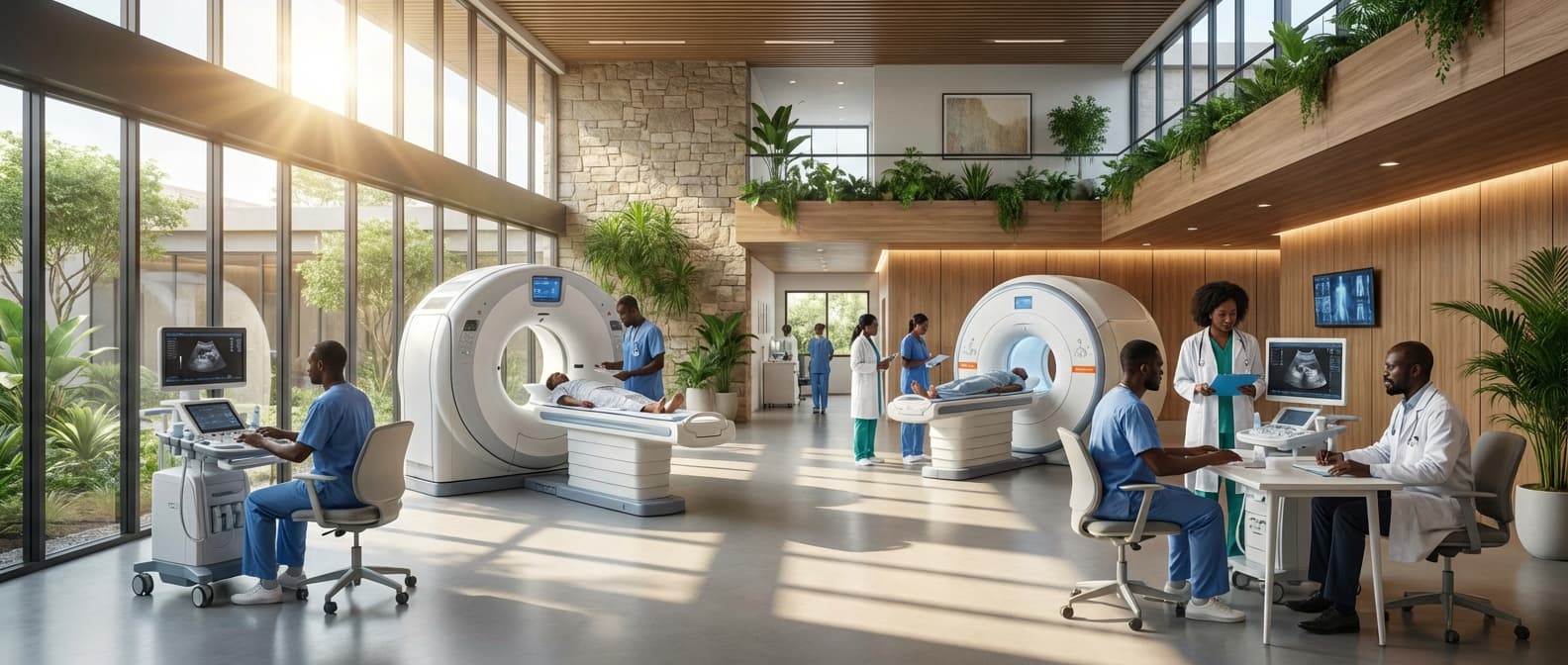
Diagnostic Imaging in Togo
Engineering Excellence & Technical Support
High-resolution imaging systems including CT scanners, MRI, X-ray, and ultrasound technology for accurate clinical diagnosis. High-standard technical execution following OEM protocols and local regulatory frameworks.
Mobile Digital X-ray for Remote Outreach
Deployment of portable digital X-ray units to remote villages, enabling on-site diagnostic imaging for early detection of conditions like tuberculosis and bone fractures, significantly reducing travel burdens for patients and healthcare workers.
AI-Powered Image Analysis Pilot Program
Implementation of an AI-assisted software for rapid analysis of X-ray images, prioritizing urgent cases and flagging potential anomalies for radiologists. This initiative aims to improve diagnostic accuracy and workflow efficiency in understaffed imaging departments.
Radiation Safety Training and Equipment Upgrade
Comprehensive training programs for radiographers on international radiation safety standards, coupled with the gradual upgrade of older X-ray equipment to newer, lower-dose digital systems, ensuring improved patient and staff safety while maintaining image quality.
What Is Diagnostic Imaging In Togo?
Diagnostic imaging in Togo refers to the use of various medical imaging technologies to create visual representations of the interior of the body for clinical analysis and medical intervention. This modality is crucial for the non-invasive assessment of anatomical structures and physiological processes, aiding in disease detection, diagnosis, treatment planning, and monitoring. The service involves the acquisition of images using techniques such as X-rays, Ultrasound, Computed Tomography (CT), and Magnetic Resonance Imaging (MRI). Radiographers or sonographers operate specialized equipment, and radiologists interpret the resulting images. The demand for diagnostic imaging services in Togo is driven by the need for accurate and timely diagnoses across a wide spectrum of medical conditions, from acute trauma to chronic diseases and oncological pathologies.
| Who Needs Diagnostic Imaging? | Typical Use Cases |
|---|---|
| Patients presenting with acute trauma (e.g., suspected fractures, internal bleeding) | Radiography for suspected fractures, dislocations. CT for head trauma, intra-abdominal bleeding. |
| Individuals experiencing symptoms suggestive of internal organ dysfunction (e.g., abdominal pain, respiratory distress) | Ultrasound for abdominal pain (gallstones, appendicitis). Radiography or CT for chest pain (pneumonia, pulmonary embolism). |
| Patients with suspected neurological conditions (e.g., stroke, tumors, spinal cord injuries) | CT or MRI for stroke assessment, brain tumors. MRI for spinal cord pathology. |
| Individuals undergoing cancer screening, diagnosis, or treatment monitoring | CT or MRI for tumor detection, staging, and response to therapy. Mammography (a form of radiography) for breast cancer screening. |
| Pregnant women requiring fetal assessment | Ultrasound for monitoring fetal growth, development, and identifying potential anomalies. |
| Patients with musculoskeletal complaints (e.g., joint pain, ligament tears) | Radiography for initial assessment of bone alignment and integrity. MRI for detailed evaluation of soft tissues (ligaments, tendons, cartilage). |
Diagnostic Imaging Modalities in Togo
- Radiography (X-ray): Utilizes ionizing radiation to produce images of bones, soft tissues, and organs. It is fundamental for detecting fractures, lung pathologies, and foreign bodies.
- Ultrasonography (Ultrasound): Employs high-frequency sound waves to create real-time images. Widely used for abdominal, pelvic, obstetric, and vascular examinations.
- Computed Tomography (CT) Scan: Generates cross-sectional images by combining multiple X-ray images. It provides detailed views of bones, soft tissues, and blood vessels, valuable for trauma, stroke, and cancer staging.
- Magnetic Resonance Imaging (MRI): Uses strong magnetic fields and radio waves to produce highly detailed images of soft tissues, organs, and the central nervous system. Excellent for neurological conditions, musculoskeletal disorders, and soft tissue lesions.
Who Needs Diagnostic Imaging In Togo?
Diagnostic imaging plays a crucial role in modern healthcare, enabling accurate diagnosis, treatment planning, and monitoring of various conditions. In Togo, like many developing nations, access to advanced imaging technologies and skilled personnel can be a challenge. However, the need for these services is significant across a broad spectrum of the population and healthcare facilities. Understanding who needs diagnostic imaging and within which departments they receive care is essential for resource allocation, service development, and improving health outcomes.
| Department/Specialty | Primary Diagnostic Imaging Modalities Utilized | Key Clinical Applications in Togo |
|---|---|---|
| Radiology (General) | X-ray, Ultrasound | Fracture detection, pneumonia, abdominal pain, urinary tract infections, obstetric ultrasound, basic screening. |
| Obstetrics and Gynecology | Ultrasound | Antenatal care, fetal anomaly screening, pelvic mass evaluation, fertility investigations. |
| Pediatrics | X-ray, Ultrasound | Congenital abnormalities, fractures in children, assessment of pediatric abdominal pain, pneumonia in infants. |
| Surgery (General and Specialized) | X-ray, Ultrasound, CT (where available) | Pre-operative assessment of trauma, appendicitis, bowel obstruction, abscess detection, surgical site infection monitoring. |
| Internal Medicine/General Practice | X-ray, Ultrasound | Diagnosis of pneumonia, heart failure, abdominal discomfort, screening for various conditions, guiding referrals. |
| Neurology/Neurosurgery (limited availability) | CT (where available), Ultrasound (e.g., for neonates) | Suspected stroke, head trauma, diagnostic support for neurological conditions. |
| Oncology (emerging need) | CT, Ultrasound (growing importance) | Cancer staging, treatment response monitoring, biopsy guidance (less common). |
| Emergency Medicine | X-ray, Ultrasound | Rapid assessment of trauma, acute abdominal conditions, cardiac emergencies. |
Target Customers for Diagnostic Imaging in Togo
- Patients presenting with symptoms requiring visualization of internal organs, bones, or tissues.
- Individuals requiring follow-up for chronic diseases (e.g., cancer, cardiovascular disease, diabetes) to assess treatment efficacy and disease progression.
- Patients involved in accidents or experiencing trauma, necessitating assessment of injuries.
- Individuals undergoing pre-operative assessment to plan surgical procedures.
- Pregnant women requiring prenatal screening and monitoring.
- Children with congenital abnormalities or developmental issues.
- Patients with neurological symptoms (e.g., stroke, epilepsy, headaches).
- Individuals suspected of having infections that affect internal organs.
- Patients undergoing rehabilitation to assess progress and identify any underlying issues.
Diagnostic Imaging Process In Togo
The diagnostic imaging process in Togo, like in many developing nations, can be characterized by a structured workflow, though it may face resource constraints and varying levels of technological access. The process typically begins with a patient's medical condition requiring imaging, leading to a physician's order, followed by patient preparation, the imaging procedure itself, image interpretation, and finally, the generation of a report for clinical decision-making. Accessibility to advanced imaging modalities and specialized personnel can influence the speed and comprehensiveness of this process.
| Stage | Description | Key Actors | Potential Challenges in Togo |
|---|---|---|---|
| Physician Referral/Inquiry | A medical doctor identifies the need for a diagnostic imaging study based on a patient's symptoms, history, or follow-up requirements. | Physician (General Practitioner, Specialist) | Limited specialist availability, reliance on primary care physicians for initial assessment, potential for delayed referrals due to cost or awareness. |
| Patient Scheduling and Preparation | The patient is scheduled for the imaging appointment. Depending on the modality, specific preparations (e.g., fasting, contrast agent administration) are explained and undertaken. | Patient, Radiographer/Technologist, Nursing Staff | Patient education challenges, limited availability of contrast agents, transportation issues for patients, reminder systems may be rudimentary. |
| Imaging Procedure Execution | The patient undergoes the imaging examination (e.g., X-ray, Ultrasound, CT scan, MRI) using the ordered modality. | Radiographer/Technologist | Equipment maintenance and repair issues (power outages, spare parts), limited availability of advanced modalities (CT, MRI are less common, especially outside major centers), training gaps for technologists. |
| Image Acquisition and Archiving | Images are acquired and stored digitally (PACS) or on film. Data integrity and security are crucial. | Radiographer/Technologist, IT Support (if PACS available) | Lack of PACS in many facilities leading to film-based archiving (prone to loss/damage), limited IT infrastructure, inconsistent data management practices. |
| Radiologist Interpretation | A qualified radiologist reviews the acquired images, identifies abnormalities, and formulates a diagnosis. | Radiologist | Shortage of qualified radiologists (many trained abroad or in limited numbers locally), heavy workload for existing radiologists, limited access to sub-specialized expertise. |
| Report Generation and Communication | A written report detailing the findings and diagnosis is generated by the radiologist and communicated back to the referring physician. | Radiologist, Administrative Staff | Delayed report turnaround time due to workload and communication bottlenecks, reliance on paper-based reports, potential for miscommunication between departments. |
Diagnostic Imaging Workflow in Togo
- Physician Referral/Inquiry
- Patient Scheduling and Preparation
- Imaging Procedure Execution
- Image Acquisition and Archiving
- Radiologist Interpretation
- Report Generation and Communication
Diagnostic Imaging Cost In Togo
Diagnostic imaging plays a crucial role in healthcare, enabling accurate diagnosis and treatment planning. In Togo, the cost of these services is influenced by a variety of factors, leading to a range of prices for common imaging procedures. Understanding these pricing dynamics is essential for patients and healthcare providers alike. The availability and sophistication of equipment, the qualifications and experience of the radiologist, the overhead costs of the imaging center, and the specific type of imaging modality used all contribute to the final price. Geographic location within Togo, with major cities often having more competitive pricing due to higher patient volume and a greater number of providers, also plays a role. Furthermore, public versus private healthcare facilities can present different cost structures, with public institutions often subsidized but potentially having longer wait times, while private facilities may offer faster service at a higher price point. Negotiation and package deals can sometimes be an option, especially for extensive imaging workups.
| Imaging Modality | Typical Price Range (XOF) |
|---|---|
| X-ray (e.g., Chest X-ray) | 10,000 - 30,000 |
| Ultrasound (e.g., Abdominal, Pelvic) | 15,000 - 40,000 |
| CT Scan (e.g., Head, Abdomen) | 75,000 - 150,000+ |
| MRI Scan (e.g., Brain, Spine) | 150,000 - 300,000+ |
| Mammography | 25,000 - 50,000 |
Factors Influencing Diagnostic Imaging Costs in Togo:
- Equipment availability and modernity
- Radiologist's expertise and experience
- Imaging center's operational overhead
- Type of imaging modality (e.g., X-ray, Ultrasound, CT, MRI)
- Geographic location (urban vs. rural)
- Public vs. private healthcare provider
- Complexity of the examination
- Need for contrast agents
- Urgency of the scan
Affordable Diagnostic Imaging Options
Diagnostic imaging is a crucial part of healthcare, but costs can be a significant barrier for many. Fortunately, there are several ways to make these essential services more affordable. Understanding 'value bundles' and employing smart cost-saving strategies can lead to substantial savings without compromising the quality of care you receive.
| Cost-Saving Strategy | Description | Tips for Implementation |
|---|---|---|
| Shop Around for Prices | Prices for the same imaging procedure can vary significantly between different facilities. Even within the same city, you might find substantial differences. | Call multiple imaging centers, hospitals, and even mobile imaging units. Ask for the 'cash price' or 'self-pay price' if you don't have insurance or plan to pay out-of-pocket. |
| Utilize Discount Programs | Many imaging centers offer discount programs for uninsured patients or those with high deductibles. These can be independent of insurance. | Ask about any patient assistance programs, prompt-pay discounts (for paying in full at time of service), or bundled service discounts. |
| Negotiate Prices | Especially if you are paying out-of-pocket, don't be afraid to negotiate the cost of the procedure. Providers may be willing to offer a lower price to secure your business. | Be polite and professional. Mention if you are a cash-paying patient or have a high deductible. It’s often easier to negotiate before the service is rendered. |
| Consider Out-of-Network Providers (with caution) | Sometimes, out-of-network providers might offer lower cash prices. However, understand your insurance plan's out-of-network benefits thoroughly before choosing this option. | Always verify coverage with your insurance provider beforehand to avoid unexpected and high bills. Some plans have extremely limited out-of-network coverage. |
| Ask About Unbundled Services | In some cases, certain components of a diagnostic study might be optional or can be billed separately. Understanding this can help you opt out of services you don't need. | If a doctor orders an MRI with contrast, ask if the contrast is strictly necessary. If it is, ask about the cost with and without contrast. |
| Leverage Health Savings Accounts (HSAs) or Flexible Spending Accounts (FSAs) | These tax-advantaged accounts allow you to set aside money to pay for qualified medical expenses, including diagnostic imaging. The money you contribute is tax-deductible or pre-tax, lowering your overall cost. | Ensure you have an HSA or FSA established. Understand the rules and limits for contributions and withdrawals. |
| Understand Your Insurance Benefits | Knowing what your insurance covers, your deductible, co-pays, and co-insurance is crucial. Out-of-network vs. in-network costs can differ dramatically. | Review your Explanation of Benefits (EOB) carefully. Call your insurance provider to clarify any confusing aspects of your coverage. |
Understanding Value Bundles
- {"title":"What are Value Bundles?","description":"Value bundles are packages of healthcare services that are offered at a predetermined, often discounted, price. Instead of paying for each individual service within a diagnostic process, you pay a single price for a set of related services. This can include the scan itself, the radiologist's interpretation, and sometimes even follow-up consultations."}
- {"title":"Benefits of Value Bundles","description":"The primary benefit is cost predictability. You know the total cost upfront, avoiding surprise bills. Bundles can also streamline the process, as all necessary services are often coordinated by the provider offering the bundle. In many cases, the bundled price is lower than the sum of individual service costs."}
- {"title":"Where to Find Value Bundles","description":"These are increasingly offered by imaging centers, hospitals, and some insurance companies. It's worth inquiring directly with providers or checking your insurance plan's benefits for bundled service options."}
Verified Providers In Togo
Ensuring access to quality healthcare in Togo relies heavily on the credibility and verified credentials of healthcare providers. In this landscape, Franance Health stands out not just as a provider but as a trusted partner committed to excellence. Their rigorous vetting process and unwavering dedication to patient well-being make them the best choice for individuals seeking reliable and professional medical services in Togo. This document outlines the key aspects of Franance Health's credentials and why they represent the pinnacle of healthcare provision in the region.
| Credential Type | Franance Health's Verification Process | Implication for Patients |
|---|---|---|
| Medical Licenses | Thorough verification with Togolese medical boards and relevant international bodies. | Confirms that providers are legally authorized to practice medicine and meet minimum competency standards. |
| Educational Backgrounds | Cross-checking of degrees and diplomas with reputable educational institutions. | Ensures that providers have received appropriate theoretical and practical training in their respective fields. |
| Specialty Certifications | Verification of specialist certifications from recognized professional organizations. | Guarantees that practitioners possess advanced knowledge and skills in their chosen medical specialties. |
| Professional Experience | Review of work history and references to confirm practical application of skills and experience. | Provides assurance of hands-on experience and a track record of successful patient care. |
| Ethical Conduct and Background Checks | Implementation of ethical guidelines and, where applicable, background checks to ensure trustworthiness. | Promotes a safe and trustworthy healthcare environment, minimizing risks of malpractice or misconduct. |
Why Franance Health is the Best Choice in Togo
- Rigorous Provider Vetting: Franance Health employs a comprehensive screening process for all healthcare professionals, ensuring they meet stringent qualification and ethical standards.
- Verified Credentials and Licenses: All listed providers undergo thorough verification of their medical licenses, certifications, and educational backgrounds, guaranteeing their legitimacy and expertise.
- Commitment to Patient Safety and Quality: Franance Health prioritizes patient well-being through strict adherence to medical best practices and continuous quality improvement initiatives.
- Cultural Sensitivity and Language Proficiency: Providers are selected for their ability to communicate effectively and empathetically with diverse patient populations, fostering trust and understanding.
- Accessibility and Affordability: Franance Health strives to make quality healthcare accessible to a broader segment of the Togolese population, balancing excellence with reasonable costs.
- Comprehensive Service Offerings: From general practitioners to specialists, Franance Health offers a wide spectrum of medical services to address various health needs.
- Patient-Centric Approach: The organization is dedicated to providing personalized care, actively involving patients in their treatment plans and respecting their individual needs and preferences.
Scope Of Work For Diagnostic Imaging
This Scope of Work (SOW) outlines the technical deliverables and standard specifications required for providing comprehensive diagnostic imaging services. The objective is to ensure the delivery of high-quality, accurate, and timely imaging procedures and reports, adhering to best practices and regulatory requirements.
| Imaging Modality | Standard Imaging Protocols | Image Quality Standards | Reporting Turnaround Time (TAT) | Equipment Specifications |
|---|---|---|---|---|
| X-ray (Radiography) | Standardized protocols for all common radiographic views (e.g., AP, Lateral, Oblique). Manufacturer-agnostic protocoling where feasible. | Images free from artifacts, appropriate penetration, contrast, and positioning. Radiographic Density Unit (RDU) within acceptable ranges. Resolution of at least 3-5 lp/mm. | Routine: < 24 hours. STAT: < 1 hour. | Digital radiography (DR) or computed radiography (CR) systems, PACS compliant, minimum 3MP displays for interpretation. |
| CT (Computed Tomography) | Manufacturer-agnostic, disease-specific protocols (e.g., CTA, perfusion, neuro). Optimized for ALARA principle. | Sub-millimeter slice thickness for relevant applications, excellent soft tissue contrast, minimal beam hardening artifacts. Spatial resolution typically >10 lp/cm. | Routine: < 48 hours. STAT: < 2 hours. | Multi-detector CT (MDCT) scanner (minimum 16-slice, 64-slice or higher preferred), dual-detector CT, dose reduction technologies, PACS compliant, 3MP or higher displays. |
| MRI (Magnetic Resonance Imaging) | Comprehensive library of pulse sequences and protocols for neuro, body, musculoskeletal, and cardiac imaging. Optimized for signal-to-noise ratio (SNR). | High spatial resolution, excellent soft tissue contrast, minimal motion artifact. Specific resolution depends on application (e.g., 0.5mm for brain, 1-2mm for body). | Routine: < 72 hours. STAT: < 4 hours. | High-field MRI scanner (minimum 1.5T, 3T preferred), gradient strength and slew rate appropriate for applications, multiple receiver coils, PACS compliant, 3MP or higher displays. |
| Ultrasound | Protocols for general, vascular, echocardiography, obstetric, and gynecologic imaging. Doppler interrogation as needed. | Clear visualization of anatomical structures, adequate Doppler sensitivity and spectral waveforms. Resolution dependent on transducer frequency (e.g., 2-10 MHz). | Routine: < 24 hours. STAT: < 3 hours. | High-resolution digital ultrasound system with color Doppler, pulsed-wave Doppler, power Doppler, and appropriate transducer frequencies. PACS integration for image archiving. |
| Nuclear Medicine | Protocols for SPECT/PET imaging with appropriate radiopharmaceuticals and acquisition parameters. Time-activity curve analysis where applicable. | Adequate count statistics, optimal spatial resolution for lesion detection (e.g., 3-5mm FWHM for SPECT). | Routine: < 48 hours. STAT: < 6 hours. | SPECT/CT or PET/CT scanners, gamma cameras, appropriate uptake and processing instrumentation, dose calibrators. PACS integration. |
| Mammography | Digital breast tomosynthesis (DBT) and digital mammography (DM) protocols. Full-field digital mammography (FFDM) compliance. | High contrast resolution for microcalcifications and soft tissue masses. Detection of subtle lesions. Minimum spatial resolution of 15 lp/mm. | Routine screening: < 10 business days. Diagnostic: < 48 hours. | FFDM/DBT system with high-resolution detectors, tomosynthesis capability, dedicated mammography workstations with high-resolution displays (5MP for mammography interpretation). |
Technical Deliverables
- Acquisition of all diagnostic imaging examinations (e.g., X-ray, CT, MRI, Ultrasound, Nuclear Medicine, Mammography, Fluoroscopy).
- Provision of qualified and licensed medical imaging technologists and radiologists.
- Interpretation and reporting of all diagnostic imaging examinations by board-certified radiologists.
- Secure transmission and storage of all imaging data (DICOM format) and reports.
- Integration with the client's Electronic Health Record (EHR) system for seamless data flow.
- Quality Assurance (QA) program for imaging equipment and radiologist performance.
- Emergency radiology services and on-call coverage as specified.
- Adherence to all relevant healthcare regulations and accreditation standards (e.g., HIPAA, ACR).
- Provision of ongoing training and professional development for imaging staff.
- Regular reporting on imaging volumes, turnaround times, and quality metrics.
Service Level Agreement For Diagnostic Imaging
This Service Level Agreement (SLA) outlines the performance standards and commitments for diagnostic imaging services provided by [Provider Name] to [Client Name]. It defines the expected response times for critical and routine imaging requests, as well as guarantees for system uptime to ensure continuous availability of these essential services.
| Service Category | Response Time Target (from request logged) | Uptime Guarantee | Impact of Failure |
|---|---|---|---|
| Emergency/Critical Imaging (e.g., Stroke, Trauma, Acute MI) | Within 15 minutes for initial system acknowledgement and radiologist interpretation commencement. | 99.9% monthly uptime | Immediate escalation, priority resource allocation, and dedicated support team. |
| Urgent Imaging (e.g., Suspected Fracture, Acute Abdomen) | Within 30 minutes for initial system acknowledgement and radiologist interpretation commencement. | 99.5% monthly uptime | Expedited troubleshooting and remediation efforts, with a target resolution within 2 hours. |
| Routine Imaging (e.g., Follow-up studies, Scheduled appointments) | Within 60 minutes for initial system acknowledgement and radiologist interpretation commencement. | 99.0% monthly uptime | Standard troubleshooting and remediation efforts, with a target resolution within 4 business hours. |
| PACS/System Availability (overall) | N/A | 99.8% monthly uptime | Credit towards future services for each percentage point of downtime below the guaranteed level, prorated based on the monthly service fee. (Refer to SLA Appendix A for detailed credit structure). |
Key Performance Indicators (KPIs) and Guarantees
- Response times are measured from the moment a request is officially logged in the Picture Archiving and Communication System (PACS) or the designated Electronic Health Record (EHR) system.
- Uptime guarantees are calculated on a monthly basis, excluding scheduled maintenance windows.
- Downtime impacting critical imaging services will be addressed with priority response and remediation efforts.
- Reporting on SLA performance will be provided to [Client Name] on a monthly basis.
Frequently Asked Questions

Ready when you are
Let's scope your Diagnostic Imaging in Togo project in Togo.

Scaling healthcare logistics and technical systems across the entire continent.