
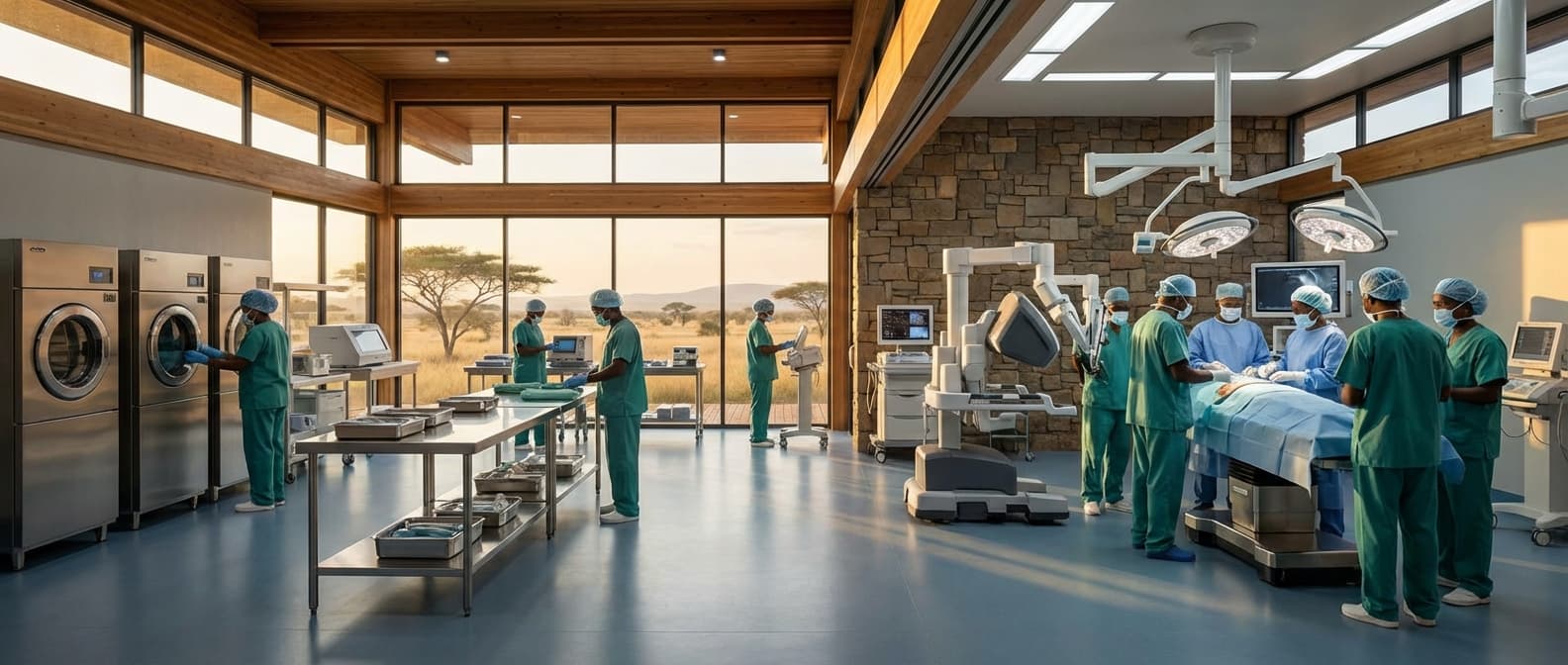
Endoscopy Reprocessing Validation in Togo
Engineering Excellence & Technical Support
AER validation, SOP development and compliance High-standard technical execution following OEM protocols and local regulatory frameworks.
Microbiological Validation Protocols
Implemented rigorous microbiological testing protocols, including bioburden analysis and end-product sterility testing, to validate the effectiveness of automated reprocessing equipment and chemical disinfectants used for flexible endoscopes. This ensures adherence to international standards and minimizes patient infection risk.
Process Parameter Monitoring & Data Analysis
Established real-time monitoring of critical reprocessing parameters (temperature, concentration, contact time) for automated endoscope reprocessors. Comprehensive data analysis and trend reporting identify deviations and ensure consistent efficacy, providing a robust auditable trail for regulatory compliance.
Risk-Based Cleaning & Disinfection Verification
Developed a risk-based approach to validation, prioritizing high-risk endoscopes and procedures. Employed simulated use testing and protein residue detection methods to verify the efficacy of manual cleaning steps and the subsequent high-level disinfection or sterilization processes, ensuring patient safety.
What Is Endoscopy Reprocessing Validation In Togo?
Endoscopy reprocessing validation in Togo refers to the systematic and documented process of verifying that reusable medical devices, specifically endoscopes, have been effectively cleaned and disinfected or sterilized according to established protocols. This validation is crucial for preventing the transmission of healthcare-associated infections (HAIs) by ensuring that endoscopes are safe for patient use between procedures. The service involves a comprehensive assessment of the entire reprocessing workflow, from initial handling to final storage, and includes both process validation and product testing.
| Who Needs Endoscopy Reprocessing Validation? | Typical Use Cases | |||||
|---|---|---|---|---|---|---|
| Healthcare Facilities in Togo: Hospitals, clinics, and specialized endoscopy centers that perform procedures utilizing reusable endoscopes (e.g., gastrointestinal endoscopes, bronchoscopes, cystoscopes, laparoscopes). | New Reprocessing Facilities: Establishing validated processes for newly acquired or constructed endoscopy reprocessing suites. | Introduction of New Endoscope Models or Reprocessing Equipment: Re-validation is required when changes occur in the endoscope design, materials, or the reprocessing equipment used. | Changes in Reprocessing Protocols or Chemicals: Any modification to the cleaning agents, disinfectants, or sterilization methods necessitates re-validation. | Post-Audit Findings or Regulatory Requirements: In response to internal audits, external inspections, or specific mandates from Togolese health authorities. | Persistent or Emerging Healthcare-Associated Infections (HAIs): When an increase in HAIs linked to endoscopic procedures is suspected or identified. | Routine Periodic Re-validation: To ensure ongoing compliance and the continued effectiveness of the reprocessing system, as recommended by regulatory bodies and best practices. |
| Ensuring Patient Safety: The primary goal is to prevent the transmission of pathogens, including bacteria, viruses, and prions, to patients during endoscopic procedures. | Regulatory Compliance: Meeting the requirements of Togolese Ministry of Health or other relevant regulatory bodies concerning medical device reprocessing and infection control. | Quality Assurance: Demonstrating a commitment to high standards of patient care and the safe use of medical equipment. | Risk Mitigation: Reducing the likelihood of adverse events, litigation, and reputational damage associated with HAIs. | Optimizing Reprocessing Workflows: Identifying inefficiencies or potential failure points in the reprocessing chain. | Training and Education Tool: The validation process can serve as a basis for staff training and competency development in endoscopy reprocessing. |
Key Components of Endoscopy Reprocessing Validation
- Process Design and Documentation Review: Evaluation of the written Standard Operating Procedures (SOPs) for cleaning, disinfection, and sterilization, ensuring they align with manufacturer's instructions for use (IFUs) and relevant international/national guidelines.
- Equipment Qualification and Calibration: Verification that automated reprocessors (e.g., washer-disinfectors, sterilizers) are functioning within specified parameters and are regularly calibrated.
- Cleaning Efficacy Testing: Direct and indirect methods to confirm the removal of organic soil (e.g., protein, blood, carbohydrates) and microbial load from the endoscope's internal channels and external surfaces. This can include visual inspections, chemical indicators, and laboratory analysis.
- Disinfection/Sterilization Efficacy Testing: Validation of the germicidal efficacy of the disinfection or sterilization process against a defined spectrum of microorganisms. This typically involves the use of biological indicators (BIs) placed in critical areas of the endoscope to demonstrate organism kill.
- Environmental Monitoring: Assessment of the reprocessing environment to ensure it does not contribute to recontamination (e.g., air quality, water quality).
- Staff Competency Assessment: Evaluation of the knowledge and practical skills of personnel involved in reprocessing endoscopes.
- Record Keeping and Traceability: Verification of robust documentation systems for tracking individual endoscope reprocessing events, including test results, staff involved, and dates.
Who Needs Endoscopy Reprocessing Validation In Togo?
Endoscopy reprocessing validation is crucial for ensuring patient safety and preventing the transmission of infections in healthcare facilities. In Togo, facilities that utilize flexible endoscopes for diagnostic and therapeutic procedures require robust validation of their reprocessing protocols. This validation confirms that cleaning and disinfection/sterilization processes are effective in eliminating all viable microorganisms from the endoscopes between patient uses.
| Department | Role in Endoscopy Use | Need for Reprocessing Validation |
|---|---|---|
| Gastroenterology | Performs gastroscopies, colonoscopies, sigmoidoscopies, and other procedures using flexible endoscopes. | High - direct patient contact with scopes, critical for preventing GI infections and cross-contamination. |
| Pulmonology | Utilizes bronchoscopes for diagnostic and therapeutic interventions in the respiratory tract. | High - delicate respiratory tissues are vulnerable; effective reprocessing is paramount to avoid pulmonary infections. |
| Surgery (General & Specialized) | May use endoscopes for minimally invasive procedures (e.g., laparoscopy, though often rigid, flexible endoscopes can be used in specific contexts). | Moderate to High - depending on the specific type of endoscopic procedure and the instruments used. |
| Infection Prevention and Control (IPC) Department | Oversees and monitors infection control practices across the facility, including sterilization and disinfection. | Essential - IPC departments are responsible for establishing, implementing, and verifying reprocessing standards. |
| Central Sterile Supply Department (CSSD) / Sterilization Unit | Responsible for the overall reprocessing and sterilization of medical equipment, including endoscopes. | Crucial - CSSD directly implements and validates the reprocessing steps; validation ensures their processes are effective. |
| Quality Assurance (QA) Department | Ensures that healthcare services meet established quality standards and regulatory requirements. | Important - QA oversees the validation process and ensures compliance with national and international guidelines. |
Target Customers and Departments for Endoscopy Reprocessing Validation in Togo
- Hospitals (Public and Private)
- Specialized Clinics (e.g., Gastroenterology, Pulmonology)
- Diagnostic Centers
- Surgical Centers
Endoscopy Reprocessing Validation Process In Togo
The Endoscopy Reprocessing Validation Process in Togo aims to ensure that reusable endoscopic devices are thoroughly cleaned and disinfected to prevent the transmission of infections. This process is crucial for patient safety and maintaining the integrity of medical procedures. The workflow, from an initial inquiry to the final execution of validation, involves several key stages, each with specific activities and documentation requirements.
| Stage | Key Activities | Responsible Parties | Documentation/Deliverables |
|---|---|---|---|
| Inquiry and Initial Assessment | Healthcare facility expresses need for validation. Initial assessment of current reprocessing practices, available equipment, and institutional policies. Identification of specific endoscopes to be validated. | Healthcare Facility (e.g., Infection Control Committee, Endoscopy Department Head) | Request for Validation, Site Assessment Report, List of Endoscopes |
| Protocol Development | Define validation objectives, scope, and methodology. Develop Standard Operating Procedures (SOPs) for cleaning, high-level disinfection (HLD) or sterilization. Select appropriate validation methods (e.g., chemical indicators, biological indicators, adenosine triphosphate (ATP) testing, microbial sampling). | Infection Control Team, Endoscopy Unit Staff, External Validation Expert (if applicable) | Validation Protocol Document, Revised/New SOPs, Test Plan |
| Equipment and Consumables Procurement | Ensure availability and proper functioning of reprocessing equipment (e.g., automated endoscope reprocessors, washer-disinfectors). Procure validated disinfectants/sterilants and validation consumables (e.g., indicator strips, biological indicators, ATP swabs). | Biomedical Engineering Department, Procurement Department, Endoscopy Unit Staff | Equipment Maintenance Records, Procurement Orders, Certificates of Analysis for Consumables |
| Staff Training | Train all staff involved in endoscopy reprocessing on the validated SOPs, use of equipment, and interpretation of validation results. Training should cover infection prevention principles. | Endoscopy Unit Staff, Training Department, Validation Expert | Training Materials, Attendance Records, Competency Assessments |
| Validation Execution | Perform reprocessing steps according to the validated protocol. Execute chosen validation tests (e.g., ATP testing to assess cleanliness, microbial sampling post-disinfection, use of chemical indicators to verify disinfectant efficacy). Document each step meticulously. | Endoscopy Unit Staff, Validation Technician/Expert | Raw Test Data Sheets, Completed Test Forms, Photographs/Videos (if applicable) |
| Data Analysis and Reporting | Analyze collected data against predefined acceptance criteria. Identify any deviations or failures. Prepare a comprehensive validation report summarizing findings, conclusions, and recommendations. | Validation Expert, Infection Control Committee | Validation Report, Data Analysis Summaries, Deviations Log |
| Validation Approval and Implementation | Review and approve the validation report by the relevant authorities (e.g., Hospital Administration, Infection Control Committee). Implement the validated reprocessing protocols and SOPs into routine practice. | Hospital Administration, Infection Control Committee | Approved Validation Report, Official Implementation Notice |
| Ongoing Monitoring and Revalidation | Establish a schedule for regular internal monitoring of reprocessing quality (e.g., routine ATP testing). Plan for periodic revalidation of the entire process or specific components based on regulatory requirements, changes in equipment, or incident reports. | Infection Control Team, Endoscopy Unit Staff | Routine Monitoring Records, Revalidation Schedule, Audit Reports |
Endoscopy Reprocessing Validation Process Workflow in Togo
- Inquiry and Initial Assessment
- Protocol Development
- Equipment and Consumables Procurement
- Staff Training
- Validation Execution
- Data Analysis and Reporting
- Validation Approval and Implementation
- Ongoing Monitoring and Revalidation
Endoscopy Reprocessing Validation Cost In Togo
Validating the reprocessing of endoscopic equipment is a crucial step in ensuring patient safety and preventing healthcare-associated infections. In Togo, the cost of such validation is influenced by several factors, leading to a range of prices. These costs are typically borne by healthcare facilities to ensure compliance with international and national standards.
| Validation Service Type | Estimated Cost Range (XOF) | Notes |
|---|---|---|
| Basic Chemical Indicator Testing (per scope type) | 15,000 - 30,000 | Covers simple tests for cleaning efficacy. |
| Biological Indicator Testing (per scope type) | 25,000 - 50,000 | Confirms the inactivation of microorganisms. |
| Full Validation Package (multiple scope types, incl. physical and chemical tests) | 100,000 - 300,000+ | Comprehensive service for a facility, may vary based on the number of scopes and complexity. |
| Annual Maintenance Contract for Validation Services | 300,000 - 1,000,000+ | Typically for a facility requiring regular, scheduled validation of multiple endoscopes. |
| On-Demand/Emergency Validation | 50,000 - 150,000+ | Higher cost due to urgency and potential disruption. |
| Reagent/Consumable Kits (for in-house validation) | 10,000 - 40,000 | Cost of materials per validation cycle, depending on the type of indicators used. |
Key Pricing Factors for Endoscopy Reprocessing Validation in Togo
- Scope and Complexity of Validation: The number of different types of endoscopes requiring validation (e.g., gastroscopes, colonoscopes, bronchoscopes) and the complexity of their reprocessing protocols significantly impact cost. More intricate equipment may require specialized testing.
- Type of Validation Service: Whether the validation is performed by an in-house team with specialized equipment or outsourced to a third-party service provider will influence pricing. External services may include a markup for their expertise and reporting.
- Frequency of Validation: Routine validation, as per regulatory requirements, will be a recurring cost. Emergency or additional validations due to equipment malfunction or protocol changes can incur higher immediate expenses.
- Reagents and Consumables: The validation process often requires specific chemical indicators, biological indicators, and cleaning agents. The cost of these consumables is directly factored into the overall price.
- Personnel Expertise and Training: The qualification and training of the personnel conducting the validation are essential. Costs associated with their salaries and ongoing professional development are indirectly reflected in the service fees.
- Geographic Location within Togo: While less pronounced than other factors, logistical costs for service providers might slightly vary between major cities like Lomé and more remote regions.
- Regulatory Requirements and Standards: Adherence to specific national or international guidelines (e.g., WHO, national health ministry directives) might necessitate particular testing methods or documentation, influencing the scope and cost.
- Equipment Calibration and Maintenance: The validation process itself requires calibrated equipment. The cost of maintaining and calibrating these validation instruments is also a consideration.
- Reporting and Documentation: Comprehensive reports detailing the validation process, results, and any corrective actions taken are crucial. The time and resources dedicated to generating these reports contribute to the overall cost.
Affordable Endoscopy Reprocessing Validation Options
Endoscopy reprocessing is a critical, yet often costly, process. Ensuring the thorough cleaning and disinfection of endoscopes is paramount for patient safety and regulatory compliance. However, the expense associated with validation testing can be a significant barrier for many healthcare facilities, especially smaller ones or those operating under tight budgets. Fortunately, there are several affordable options and strategic approaches to consider.
| Cost-Saving Strategy | Description | Potential Impact |
|---|---|---|
| Negotiate with Third-Party Labs | Engage in proactive price discussions, especially for bulk testing or long-term contracts. Inquire about tiered pricing based on volume. | Reduced per-test cost, predictable budgeting. |
| Phased Validation Approach | Break down validation into stages, focusing on critical components first and then expanding. This allows for budget allocation over time. | Manageable expenses, phased implementation. |
| Optimize Test Frequency | Work with experts to determine the optimal frequency for validation based on usage, risk assessment, and regulatory guidelines, rather than a one-size-fits-all approach. | Reduced testing overhead, focused resource allocation. |
| Invest in Staff Training | Well-trained staff are less likely to make errors that lead to validation failures, reducing the need for retesting and associated costs. | Fewer validation failures, improved reprocessing consistency. |
| Explore 'Lite' Validation Packages | Some labs may offer simplified validation packages for less complex endoscopes or for facilities with lower reprocessing volumes. Inquire about these options. | Lower upfront validation costs. |
| Utilize Real-World Data | Leverage data from your existing reprocessing logs and quality control checks to inform your validation strategy and potentially reduce the scope of external testing. | Data-driven validation, potentially reduced external test requirements. |
Affordable Endoscopy Reprocessing Validation Options
- Understanding Value Bundles: Value bundles represent a shift from transactional pricing to a holistic approach where a package of services is offered at a more attractive, bundled price. In the context of endoscopy reprocessing validation, this could mean a laboratory offering a discounted rate for a comprehensive set of tests required for a specific type of endoscope or for a certain volume of reprocessing validation over time.
- In-House Validation Programs: Some manufacturers offer robust in-house validation programs that can be more cost-effective than third-party testing, especially if facilities have dedicated staff trained in these procedures. These programs often include specific training, equipment, and consumables.
- Shared Validation Services: Facilities with similar needs can explore pooling resources to contract with a single validation provider, potentially negotiating lower rates due to increased volume. This requires collaboration and a strong understanding of shared responsibilities.
- Leveraging Manufacturer Support: Don't overlook the validation support provided by endoscope manufacturers. They often have established protocols and may offer validation assistance or recommendations for cost-effective testing partners.
- Risk-Based Validation Strategies: Instead of validating every single reprocessing cycle, consider a risk-based approach. This involves identifying critical control points and focusing validation efforts on those areas where deviations are most likely to occur or have the greatest impact. This requires a thorough understanding of your reprocessing workflow and potential failure modes.
- Regular Internal Audits and Quality Control: Implementing rigorous internal audits and quality control measures can help identify potential issues before they become validation failures. This proactive approach can save significant costs associated with retesting and potential downtime.
- Focusing on Essential Tests: Not all validation tests are created equal. Prioritize tests that are mandated by regulatory bodies and those that directly address the most critical aspects of reprocessing effectiveness. Consult with your infection control team and regulatory experts to identify these essential tests.
Verified Providers In Togo
Navigating the healthcare landscape in Togo requires trust and assurance. When seeking quality medical services, identifying verified providers is paramount. Franance Health stands out as a leading credentialing body, meticulously vetting healthcare professionals and facilities. Their rigorous verification process ensures that only those meeting the highest standards of expertise, ethical practice, and patient care are recognized. Choosing Franance Health-credentialed providers means opting for competence, safety, and a commitment to your well-being. This dedication to quality assurance makes them the indisputable best choice for reliable healthcare in Togo.
| Credentialing Aspect | Franance Health Standard | Patient Benefit |
|---|---|---|
| Professional Qualifications | Thorough verification of medical degrees, licenses, and certifications. | Ensures providers possess the necessary expertise and training. |
| Clinical Experience | Assessment of practical experience and track record in relevant specializations. | Guarantees hands-on competence and familiarity with various medical conditions. |
| Ethical Conduct | Review of professional history and adherence to medical ethics and codes of conduct. | Promotes trustworthy and respectful patient-provider relationships. |
| Facility Standards | Inspection of healthcare facilities for hygiene, equipment, and safety protocols (if applicable). | Ensures a safe and conducive environment for treatment. |
| Continuing Education | Verification of ongoing professional development and commitment to staying updated. | Guarantees access to the latest medical knowledge and treatment advancements. |
Why Choose Franance Health-Verified Providers:
- Unwavering commitment to patient safety and quality of care.
- Access to highly qualified and ethically sound medical professionals.
- Reduced risk of encountering substandard or fraudulent medical practices.
- Peace of mind knowing you are in capable hands.
- Streamlined access to a network of trusted healthcare partners.
Scope Of Work For Endoscopy Reprocessing Validation
This Scope of Work (SOW) outlines the requirements for the validation of the Endoscopy Reprocessing procedures and associated equipment. The objective is to ensure that the reprocessing of flexible endoscopes consistently and effectively renders them safe for patient use, meeting all relevant regulatory standards and industry best practices.
| Technical Deliverable | Description | Standard Specification/Reference | Acceptance Criteria |
|---|---|---|---|
| Cleaning Efficacy Report | Demonstrates the removal of organic soil (simulated or actual) from internal lumens and external surfaces of endoscopes. | ASTM E1838 (Standard Test Method for Determining the Effectiveness of Cleaning Agent Against Simulated Blood Contamination on Medical Devices); Manufacturer's Instructions for Use (IFU) for cleaning agents and procedures. | Microscopic and/or chemical analysis shows <X% residual organic material (specific target to be defined based on risk assessment). |
| Disinfection/Sterilization Efficacy Report | Validates the killing of specified microorganisms (e.g., high-level disinfectant resistant bacteria, spores) to a defined log reduction. | ASTM E1054 (Standard Test Method for Evaluation of Inactivators of Aseptic Disinfectants); CDC Guidelines for Disinfection and Sterilization in Healthcare Facilities; Manufacturer's IFU for disinfectants/sterilants. | Microbiological testing demonstrates a validated log reduction of target microorganisms (e.g., Log 6 for high-level disinfection, Log 12 for sterilization). |
| AER Performance Protocol and Report | Details the testing of AER units to ensure consistent and effective cleaning, rinsing, disinfection, and drying cycles. | Manufacturer's IFU for AER; FDA guidance on reprocessing medical devices; ISO 13485 (Medical devices -- Quality management systems). | AER meets all performance specifications as per manufacturer's IFU, including cycle parameters, chemical delivery, and water usage. No failure modes identified. |
| HLD Chemical Validation Report | Confirms the correct concentration and contact time of HLD solutions used for reprocessing. | Manufacturer's IFU for HLD; USP <61> (Microbial Enumeration Tests) and USP <62> (Tests for Specified Microorganisms); Chemical manufacturer's specifications. | HLD concentration remains within the manufacturer's specified range throughout its use-life. Contact time is consistently met for each cycle. |
| Water Quality Report | Confirms that water used for rinsing and flushing meets specified microbiological and chemical purity standards. | CDC Guidelines for Disinfection and Sterilization in Healthcare Facilities; Local/National Water Quality Standards; ASTM D1129 (Standard Terminology Relating to Water). | Microbiological counts and chemical impurity levels are below established thresholds for safe endoscope reprocessing. |
| Drying Process Validation Report | Ensures effective drying of endoscope lumens and surfaces to prevent microbial growth. | Manufacturer's IFU for endoscopes and drying equipment; Relevant industry guidelines on environmental controls. | Internal lumens and external surfaces are dried to a specified level of dryness within the defined drying time. |
| Storage and Handling Protocol Validation | Confirms that storage and handling procedures maintain the sterility/high-level disinfected state of endoscopes prior to use. | Manufacturer's IFU for endoscopes and storage cabinets; AAMI ST79 (Comprehensive guide to sterilization and sterile tissue handling in healthcare facilities). | Endoscopes remain free from recontamination during storage and transport. |
| Comprehensive Validation Summary Report | An overarching report summarizing all validation activities, findings, and conclusions. Includes risk assessment and recommendations. | Regulatory requirements (e.g., FDA, MDR); Internal Quality Management System (QMS) procedures; ISO 13485. | All validation activities have been successfully completed, demonstrating consistent and effective reprocessing of endoscopes according to established protocols and regulatory standards. A clear recommendation for routine monitoring is provided. |
Key Areas of Focus for Endoscopy Reprocessing Validation
- Cleaning efficacy validation
- Disinfection/Sterilization efficacy validation
- Automated endoscope reprocessor (AER) performance validation
- Manual cleaning station performance validation
- High-level disinfection (HLD) chemical concentration and exposure time validation
- Sterilization process validation (if applicable, e.g., low-temperature sterilization)
- Endoscope compatibility with reprocessing agents and cycles
- Water quality for rinsing and flushing
- Drying process validation
- Storage and handling protocols validation
- Documentation and record-keeping system validation
Service Level Agreement For Endoscopy Reprocessing Validation
This Service Level Agreement (SLA) outlines the agreed-upon performance metrics for the validation of Endoscopy Reprocessing procedures. It defines the expected response times for issue resolution and the guaranteed uptime of the validation system and related services. This SLA aims to ensure the consistent and reliable reprocessing of endoscopic equipment, minimizing risks to patient safety and operational efficiency.
| Service Component | Availability Guarantee (Uptime) | Response Time (Critical Issue) | Resolution Time (Critical Issue) | Response Time (Non-Critical Issue) | Resolution Time (Non-Critical Issue) |
|---|---|---|---|---|---|
| Endoscopy Reprocessing Validation System | 99.9% | 1 hour | 4 business hours | 4 business hours | 1 business day |
| Data Logging and Reporting Module | 99.8% | 2 hours | 6 business hours | 8 business hours | 2 business days |
| Technical Support Hotline/Portal | N/A (Availability based on operating hours) | 30 minutes (during operating hours) | N/A (Resolution depends on issue complexity) | 2 business hours (during operating hours) | N/A (Resolution depends on issue complexity) |
Key Performance Indicators (KPIs)
- Uptime of the validation system and monitoring tools.
- Response time for critical issues impacting reprocessing validation.
- Resolution time for critical issues impacting reprocessing validation.
- Availability of technical support for validation system queries.
Frequently Asked Questions

Ready when you are
Let's scope your Endoscopy Reprocessing Validation in Togo project in Togo.

Scaling healthcare logistics and technical systems across the entire continent.