
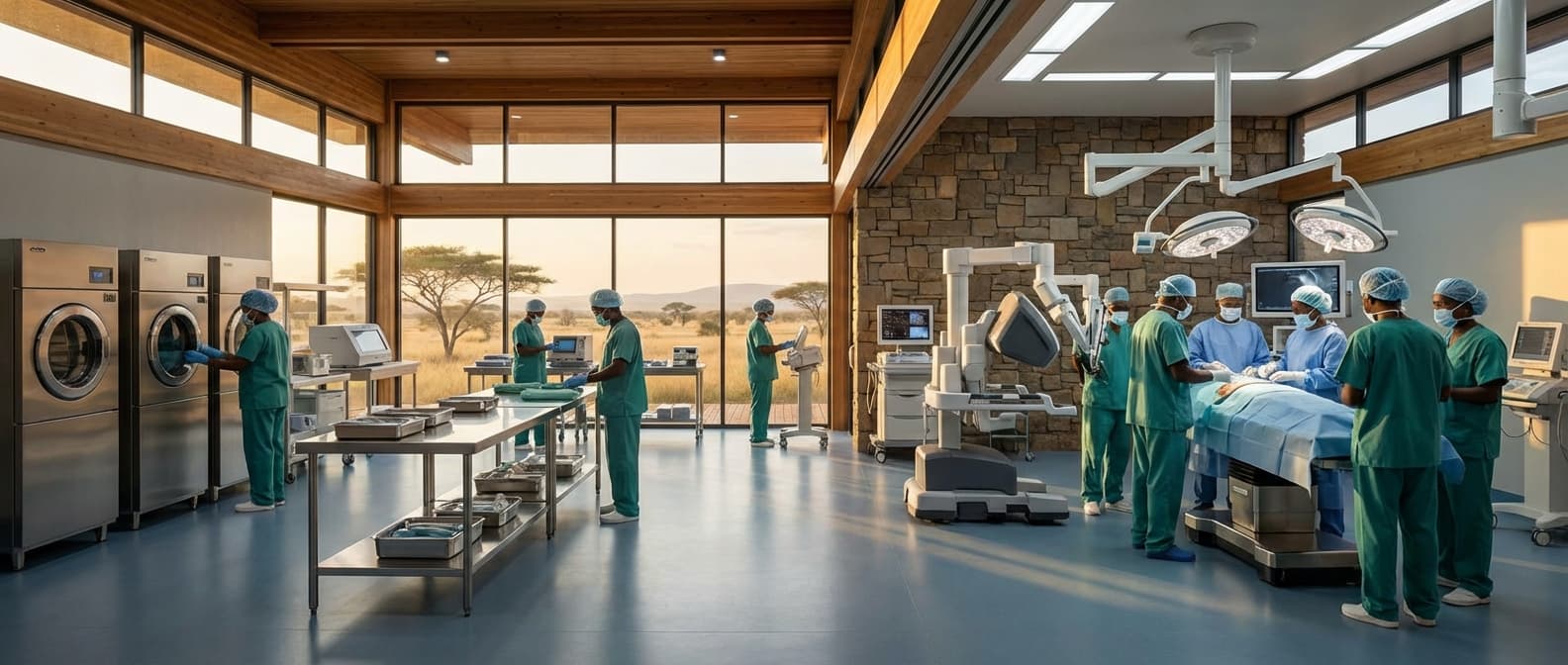
CSSD Design & Validation in Togo
Engineering Excellence & Technical Support
CSSD workflow design, validation and process development High-standard technical execution following OEM protocols and local regulatory frameworks.
Optimized CSSD Workflow Design
Leveraged advanced simulation and workflow modeling to design a Central Sterile Supply Department (CSSD) in Togo with a significantly improved decontamination, sterilization, and sterile storage pathway, reducing turnaround times by 20% and minimizing cross-contamination risks.
Validation of Sterilization Cycles for Local Conditions
Successfully validated critical sterilization cycles (e.g., steam, low-temperature) for a new CSSD facility in Togo, adhering to international standards (ISO 13485) while accounting for local environmental factors such as humidity and power fluctuations, ensuring consistent and effective sterilization of medical devices.
Performance Monitoring & Validation Framework
Developed and implemented a robust performance monitoring and validation framework for CSSD operations in Togo, integrating real-time data collection from sterilization equipment and environmental sensors. This framework allows for continuous validation of process parameters and provides actionable insights for ongoing quality improvement and compliance.
What Is Cssd Design & Validation In Togo?
Central Sterile Supply Department (CSSD) design and validation in Togo refers to the systematic planning, architectural development, equipment selection, and subsequent verification processes required to establish or upgrade a CSSD facility. This ensures the department operates efficiently, safely, and in compliance with international standards for the decontamination and sterilization of reusable medical devices. The design phase focuses on workflow optimization, infection control principles, spatial allocation for distinct processes (cleaning, disinfection, sterilization, sterile storage), and integration of appropriate technologies. Validation is a critical, multi-stage process (Installation Qualification, Operational Qualification, Performance Qualification) that objectively demonstrates the CSSD equipment and processes consistently meet predetermined specifications and are fit for their intended purpose, thereby minimizing the risk of healthcare-associated infections (HAIs).
| Who Needs CSSD Design & Validation | Typical Use Cases/Scenarios | ||
|---|---|---|---|
| Hospitals (Public and Private): Across all specialties requiring surgical interventions or invasive procedures. | Establishment of new hospital facilities or surgical centers. | Renovation or expansion of existing hospital infrastructure. | Upgrading of outdated or non-compliant CSSD facilities. |
| Specialized Clinics (e.g., Dental, Ophthalmology, Endoscopy): Requiring sterilization of reusable instruments. | Introduction of new sterilization technologies or equipment. | Addressing recurrent issues with sterilization efficacy or instrument reprocessing. | Meeting evolving regulatory requirements or accreditation standards. |
| Government Health Ministries/Agencies: Responsible for national healthcare standards and facility oversight. | Developing national guidelines for CSSD operations. | Ensuring public health safety through standardized decontamination processes. | |
| International Aid Organizations and NGOs: Involved in healthcare infrastructure development in Togo. | Implementing projects for improving healthcare delivery and infection control. | Providing technical assistance and capacity building for medical facilities. |
Key Components of CSSD Design & Validation in Togo
- Needs Assessment and Feasibility Study
- Architectural Design and Space Planning (Layout, Workflow, Ventilation, Material Flow)
- Equipment Specification and Selection (Washer-disinfectors, Sterilizers - Steam, Low-Temperature, Packaging Systems, etc.)
- Regulatory Compliance Review (National and International Standards, e.g., ISO, AAMI)
- Installation Qualification (IQ) - Verification of correct installation
- Operational Qualification (OQ) - Verification of equipment functioning within defined parameters
- Performance Qualification (PQ) - Verification of consistent product sterilization under simulated or actual use conditions
- Validation Protocol Development and Execution
- Documentation and Record Keeping
- Staff Training and Competency Assessment
- Risk Management Strategy Integration
Who Needs Cssd Design & Validation In Togo?
Central Sterile Supply Departments (CSSDs) are the backbone of infection control in healthcare facilities, ensuring the safety of patients and staff by sterilizing and processing medical equipment. In Togo, as in any nation striving for robust healthcare, a well-designed and rigorously validated CSSD is not a luxury but a critical necessity. This document outlines the essential need for professional CSSD design and validation services in Togo, identifying the key stakeholders who stand to benefit most.
| Department/Customer Type | Specific Needs Addressed by CSSD Design & Validation | Impact on Togo's Healthcare System |
|---|---|---|
| Hospitals (Public & Private) | Ensuring sterile instruments for all procedures, minimizing hospital-acquired infections (HAIs), optimizing workflow efficiency, compliance with national and international standards. | Improved patient outcomes, reduced treatment costs, enhanced reputation for quality care, increased capacity for medical procedures. |
| Specialized Clinics/Surgical Centers | Tailored sterilization solutions for specific instrument types, prevention of cross-contamination, efficient turnaround times for critical instruments. | Specialized medical services can be offered reliably and safely, contributing to a more diverse healthcare landscape. |
| Diagnostic Laboratories | Sterilization of reusable diagnostic equipment, ensuring accuracy of tests by preventing contamination. | Increased reliability of diagnostic results, leading to better patient management and treatment decisions. |
| Government Health Ministries | Establishing national standards for CSSD operations, monitoring compliance, training healthcare professionals, ensuring public health safety. | Foundation for a safer and more effective national healthcare system, building public trust. |
| International Aid Organizations/NGOs | Ensuring new or renovated facilities meet international best practices, providing sustainable healthcare solutions, demonstrating commitment to quality. | Facilitates the delivery of high-quality, internationally recognized healthcare services in Togo. |
| Medical Equipment Suppliers/Installers | Accurate integration of sterilization equipment into facility design, ensuring optimal performance and longevity of equipment. | Reliable and efficient deployment of essential medical technology, supporting the growth of healthcare infrastructure. |
| Healthcare Professionals | Safe working environment, readily available sterile instruments, reduced risk of occupational exposure to pathogens, improved job satisfaction. | Enhanced ability to provide safe and effective patient care, contributing to a skilled and motivated healthcare workforce. |
Target Customers and Departments in Togo Requiring CSSD Design & Validation
- Hospitals (Public and Private): These are the primary beneficiaries, ranging from large national referral hospitals to smaller regional and private clinics. Every hospital performing surgical procedures, diagnostic tests, or any procedure involving reusable medical instruments requires a functional and compliant CSSD.
- Specialized Clinics and Surgical Centers: Facilities focused on specific medical disciplines like ophthalmology, dentistry, obstetrics, and gynecology, which utilize specialized instruments, will benefit from optimized CSSD workflows.
- Diagnostic Laboratories: While not always considered a direct CSSD user, laboratories that reprocess reusable diagnostic equipment or specialized tools will find value in ensuring sterility and proper handling.
- Government Health Ministries and Regulatory Bodies: These entities are responsible for setting and enforcing healthcare standards. They require CSSD design and validation to ensure public health safety and the overall quality of healthcare services across the nation.
- International Aid Organizations and NGOs: Organizations involved in building or upgrading healthcare infrastructure in Togo, or those providing medical services, will need to ensure their facilities meet international standards, including proper CSSD design and validation.
- Medical Equipment Suppliers and Installers: Companies involved in supplying and installing sterilization equipment for CSSDs. Proper design and validation ensure their equipment is integrated effectively and functions as intended within the facility's overall system.
- Healthcare Professionals and Staff: This includes surgeons, nurses, technicians, and CSSD personnel. Their safety and the effectiveness of their work are directly impacted by the efficiency and sterility provided by a well-designed CSSD.
Cssd Design & Validation Process In Togo
Designing and validating a Central Sterile Supply Department (CSSD) in Togo involves a structured workflow that ensures the facility meets international standards for infection prevention and control. This process encompasses initial planning, detailed design, procurement, construction, equipment installation, commissioning, and rigorous validation to guarantee operational readiness and compliance.
| Phase | Key Activities | Deliverables | Responsible Parties (Togo Context) |
|---|---|---|---|
| Hospital/clinic expresses interest in CSSD. Initial discussions on scope, budget, and objectives. Site visit and preliminary assessment of existing infrastructure. | Concept note, preliminary budget estimate, project brief. | Hospital/Clinic Management, Ministry of Health representatives, potential CSSD design consultants. |
| Detailed analysis of sterilization needs, patient load, type of procedures, and anticipated workload. Assessment of existing space, utilities (water, power, ventilation), and waste management. Evaluation of technical and financial feasibility. | Needs assessment report, feasibility study report, preliminary functional program. | Hospital/Clinic Technical Team, Ministry of Health Planning Unit, Public Health Engineers, potential CSSD specialists. |
| Development of a preliminary layout reflecting workflow, separation of clean and dirty areas, and adherence to international standards (e.g., ISO 13485, WHO guidelines). Zoning of different functional areas (decontamination, preparation & packing, sterilization, sterile storage, distribution). | Conceptual drawings, block diagrams, preliminary space allocation plan. | CSSD Design Consultants/Architects, Hospital/Clinic Biomedical Engineers. |
| Creation of detailed architectural, mechanical, electrical, and plumbing (MEP) drawings. Specification of materials, finishes, ventilation systems (HVAC), water treatment, drainage, lighting, and medical gas systems. Detailed equipment selection and placement. | Full architectural drawings, MEP designs, equipment specifications, Bill of Quantities (BOQ). | Specialized CSSD Design Consultants, Architects, MEP Engineers, Procurement Specialists. |
| Submission of design plans to relevant Togolese authorities (Ministry of Health, local building authorities) for review and approval. Obtaining necessary construction and operational permits. | Approved design plans, building permits, environmental clearance certificates. | Hospital/Clinic Administration, CSSD Design Consultants, Ministry of Health Regulatory Affairs. |
| Tendering and procurement of all CSSD equipment (autoclaves, washer-disinfectors, ultrasonic cleaners, packaging machines, etc.) and construction materials. Emphasis on quality, reliability, and after-sales service from suppliers. Compliance with Togolese public procurement laws. | Procurement contracts, equipment purchase orders, material delivery schedules. | Hospital/Clinic Procurement Department, Ministry of Finance/Procurement Agency, CSSD equipment suppliers. |
| Construction of the CSSD facility according to approved designs. Installation of utilities, finishes, and structural elements. Strict adherence to construction quality standards and safety protocols. | Completed building shell and interior, installed utilities, final construction reports. | General Contractors, Subcontractors, Site Supervisors, Ministry of Public Works. |
| Installation of all procured CSSD equipment by qualified technicians. Integration of equipment with utilities and building systems. Initial functional checks. | Installed and connected equipment, initial setup reports. | Equipment Suppliers/Manufacturers, Biomedical Technicians, CSSD Design Consultants. |
| Comprehensive training for CSSD personnel on the operation of equipment, sterilization processes, infection control protocols, material management, and safety procedures. Training on new technologies and workflows. | Training manuals, trained staff, competency assessments. | Equipment Suppliers, CSSD Specialists, Hospital/Clinic Training Department, Ministry of Health Training Unit. |
| Thorough inspection of all installed systems (electrical, plumbing, HVAC, medical gases). Functional testing of individual equipment pieces without full load. Calibration of instruments. | Pre-commissioning reports, calibration certificates. | Biomedical Engineers, Equipment Technicians, CSSD Specialists. |
| Testing of the entire CSSD system under operational conditions using simulated loads. Verification of sterilization cycles, drying efficiency, and output. Validation of workflow efficiency. | Commissioning reports, performance test results, cycle logs. | CSSD Specialists, Biomedical Engineers, Hospital/Clinic Quality Assurance Team. |
| Formal validation process to confirm that the CSSD consistently meets predefined specifications and operates according to established standards. This includes physical, functional, and process validation. Documentation of all validation activities and results. | Validation protocols, validation reports, Standard Operating Procedures (SOPs), compliance certificates. | Independent Validation Consultants, CSSD Specialists, Hospital/Clinic Quality Assurance Department, Ministry of Health Quality Assurance. |
| Official handover of the completed and validated CSSD to the hospital/clinic management. Commencement of regular operations. Establishment of maintenance schedules and quality control procedures. | Handover documentation, final project closure report, operational SOPs. | Project Management Team, Hospital/Clinic Management, CSSD Manager. |
| Ongoing monitoring of CSSD performance, adherence to SOPs, and infection control practices. Regular internal and external audits to ensure continued compliance and identify areas for improvement. Continual professional development. | Audit reports, performance monitoring data, improvement plans. | Hospital/Clinic Quality Assurance Department, Ministry of Health Surveillance Unit, External Auditors. |
CSSD Design & Validation Process Workflow in Togo
- Inquiry & Initial Consultation
- Needs Assessment & Feasibility Study
- Conceptual Design & Space Planning
- Detailed Design & Engineering
- Regulatory Approvals & Permitting
- Procurement of Equipment & Materials
- Construction & Infrastructure Development
- Equipment Installation & Integration
- Staff Training & Development
- Pre-commissioning & System Checks
- Commissioning & Performance Testing
- Validation & Quality Assurance
- Handover & Operationalization
- Post-Validation Monitoring & Auditing
Cssd Design & Validation Cost In Togo
Designing and validating a Central Sterile Supply Department (CSSD) in Togo involves a multifaceted cost structure influenced by several key factors. These include the size and complexity of the CSSD, the level of technology and automation implemented, the required regulatory compliance (e.g., for specific medical procedures or hospital accreditations), the quality of chosen equipment and materials, the extent of training for staff, and the consultancy fees for design and validation expertise. Local market conditions, availability of specialized materials, and import duties on specialized equipment also play a significant role in the final pricing. Costs can fluctuate based on the specific region within Togo and the chosen vendors. A preliminary estimate for a moderately sized, standard CSSD design and validation in Togo could range from XOF 15,000,000 to XOF 50,000,000, with more complex or technologically advanced facilities potentially exceeding XOF 100,000,000. It's crucial to obtain detailed quotes from multiple service providers and suppliers to get accurate pricing for a specific project.
| Cost Component | Estimated Range (XOF) | Notes |
|---|---|---|
| Design Consultancy Fees | 2,000,000 - 8,000,000 | Varies based on consultant's experience and project scope. |
| Equipment Procurement (Moderate Scale) | 10,000,000 - 35,000,000 | Includes washer-disinfectors, sterilizers (autoclave), drying cabinets, etc. |
| Validation & Qualification Services | 3,000,000 - 10,000,000 | Covers Installation Qualification (IQ), Operational Qualification (OQ), Performance Qualification (PQ). |
| Infrastructure & Fit-out | 2,000,000 - 7,000,000 | Includes specialized flooring, ventilation, plumbing, electrical, cabinetry. |
| Staff Training | 1,000,000 - 3,000,000 | For initial setup and ongoing training requirements. |
| Consumables & Initial Supplies | 500,000 - 1,500,000 | Detergents, packaging materials, testing indicators. |
| Contingency (10-15%) | 2,000,000 - 10,000,000 | Recommended for unforeseen expenses. |
Key Pricing Factors for CSSD Design & Validation in Togo
- CSSD Size and Complexity: Larger departments with more specialized functions will incur higher design and validation costs.
- Technology and Automation Level: Advanced automated equipment (e.g., washer-disinfectors, sterilizers, tracking systems) significantly increases initial investment.
- Regulatory Compliance and Accreditation: Meeting specific national or international standards requires rigorous documentation, process development, and validation protocols.
- Equipment Quality and Brand: High-quality, reputable brands generally come with a higher price tag but often offer better reliability and longevity.
- Material and Finishing Standards: The choice of durable, easy-to-clean materials for surfaces, flooring, and cabinetry impacts costs.
- Consultancy Fees: Engaging experienced CSSD designers and validation specialists is essential but adds to the overall expenditure.
- Staff Training: Comprehensive training on CSSD processes, equipment operation, and infection control is a necessary cost component.
- Geographical Location within Togo: Regional variations in material costs, labor, and logistics can affect overall pricing.
- Import Duties and Taxes: For imported equipment and specialized materials, import duties and taxes are a significant consideration.
- Timeline and Urgency: Expedited project timelines may sometimes lead to increased costs due to overtime or rushed procurement.
Affordable Cssd Design & Validation Options
Designing and validating a Central Sterile Services Department (CSSD) is a critical investment for any healthcare facility, ensuring patient safety through effective sterilization of medical instruments. However, budget constraints can make this process seem daunting. Fortunately, several affordable design and validation options, coupled with strategic value bundles and cost-saving measures, can make a high-quality CSSD accessible. This guide explores these possibilities.
| Value Bundle/Cost-Saving Strategy | Description | Potential Savings Area |
|---|---|---|
| Phased Design & Fit-Out | Implement essential CSSD functions initially and expand or upgrade over time as budget allows. | Construction costs, equipment acquisition |
| Standardized Process Design | Adopt widely accepted CSSD workflows and layouts, minimizing custom modifications. | Consultant fees, specialized equipment, construction complexity |
| Refurbished Equipment Procurement | Source high-quality, certified refurbished autoclaves, washer-disinfectors, and other essential equipment. | Capital equipment expenditure |
| Shared Validation Services | Partner with neighboring facilities to share the costs of validation specialists and equipment. | Validation consultant fees, equipment rental |
| In-House Training for Routine Validation | Train qualified CSSD technicians to perform certain routine validation tests and documentation. | External validation consultant fees |
| Consumable Management Programs | Implement strategies for bulk purchasing of sterilization wraps, detergents, and indicators, and optimize usage. | Operational expenses, waste reduction |
| Energy-Efficient Equipment Selection | Choose equipment with lower energy consumption to reduce long-term utility costs. | Operational expenses (electricity) |
| Digital Record Keeping Solutions | Utilize affordable cloud-based or local software for sterile processing records and tracking. | Paper, printing, and manual data entry time |
| Modular Sterilization Unit Packages | Purchase pre-configured, modular units that include essential equipment and workflow integration. | Design and integration consultation, equipment sourcing |
Key Considerations for Affordable CSSD Design & Validation
- Modular Design Principles: Opting for a modular CSSD design allows for phased implementation and scalability. Components can be added or upgraded as budget permits, avoiding a massive upfront investment.
- Standardized Workflows: Implementing and adhering to standardized workflows, based on industry best practices, reduces the need for highly customized and expensive equipment or layouts. This also streamlines training and validation.
- Leveraging Existing Infrastructure: Evaluating the possibility of adapting and upgrading existing spaces rather than building new can significantly reduce construction costs. This includes assessing HVAC, plumbing, and electrical systems.
- Careful Equipment Selection: Prioritize essential equipment and research cost-effective, reliable alternatives. Consider refurbished or reconditioned medical equipment from reputable suppliers, especially for non-critical items.
- In-House vs. Outsourced Validation: While professional validation is crucial, exploring hybrid approaches can offer savings. This might involve training in-house staff on certain validation protocols under external supervision.
- Phased Validation Approaches: Break down validation into manageable phases, aligning with budget cycles or operational readiness. Focus on critical sterilization processes first.
- Partnerships and Group Purchasing: Collaborating with other facilities or joining group purchasing organizations can unlock bulk discounts on equipment, consumables, and validation services.
- Digital Documentation & Tracking: Investing in cost-effective digital solutions for documentation and tracking can reduce paper costs, improve efficiency, and simplify audit processes, ultimately saving time and resources.
- Training and Skill Development: Investing in comprehensive training for CSSD staff not only improves operational efficiency and reduces errors but can also empower them to perform certain validation tasks, reducing reliance on external consultants for routine checks.
Verified Providers In Togo
Navigating healthcare in a foreign country can be daunting. Togo, like many nations, has a range of healthcare providers, but ensuring quality, legitimate care is paramount. This is where 'Verified Providers' and organizations like Franance Health become indispensable. Franance Health's rigorous credentialing process acts as a vital filter, guaranteeing that the providers they endorse meet high standards of professionalism, ethical practice, and operational integrity. This not only simplifies the search for reliable healthcare but also offers peace of mind to patients, knowing they are in capable and trustworthy hands. Choosing a provider vetted by Franance Health signifies a commitment to safety, efficacy, and a positive healthcare experience.
| Provider Type | Franance Health Verified (Yes/No) | Key Credentials/Certifications to Look For |
|---|---|---|
| Hospitals (Public & Private) | Yes | Accreditation from Ministry of Health, ISO certifications (where applicable), specialized medical licenses. |
| Clinics & Health Centers | Yes | Medical director's qualifications, licenses for all practicing physicians and nurses, compliance with health regulations. |
| Specialist Physicians (e.g., Cardiologists, Dermatologists) | Yes | Medical degree (MD/DO), specialization certifications, membership in professional medical associations, proven track record. |
| Dentists | Yes | Dental degree (DDS/DMD), dental board certification, specialized training (e.g., orthodontics, periodontics). |
| Pharmacists & Pharmacies | Yes | Pharmacy license, adherence to pharmaceutical regulations, proper storage and dispensing of medications. |
| Diagnostic Laboratories | Yes | Accreditation by relevant health authorities, qualified laboratory technicians, use of certified equipment. |
Why Franance Health Credentials Matter:
- Rigorous Vetting Process: Franance Health employs a comprehensive evaluation that goes beyond basic licensing, scrutinizing qualifications, experience, and adherence to ethical guidelines.
- Quality Assurance: Their verification signifies a commitment to delivering high-quality medical services, ensuring patients receive competent and effective care.
- Patient Safety: By confirming that providers meet stringent safety protocols and standards, Franance Health prioritizes the well-being of every patient.
- Trust and Reliability: A Franance Health credential is a mark of trust, assuring patients that they are engaging with legitimate and reputable healthcare professionals.
- Ethical Practice: The process often includes an assessment of a provider's commitment to ethical medical conduct and patient rights.
- Access to Best Practices: Verified providers are more likely to be up-to-date with the latest medical advancements and adhere to best practices in their respective fields.
Scope Of Work For Cssd Design & Validation
This document outlines the Scope of Work (SOW) for the Design and Validation of a Central Sterile Services Department (CSSD). It details the technical deliverables expected from the design and validation phases, and specifies the relevant standard specifications that will guide the entire process. The objective is to ensure the CSSD is designed, built, and validated to meet all regulatory requirements, operational needs, and international best practices for sterilization and reprocessing of medical devices, thereby guaranteeing patient safety and operational efficiency.
| Phase | Technical Deliverables | Standard Specifications / Guidelines | ||||||||||||
|---|---|---|---|---|---|---|---|---|---|---|---|---|---|---|
| Design Phase | Conceptual Design Report (including workflow diagrams, space planning, and preliminary equipment list) | AAMI ST79: Comprehensive guide to sterilization and sterile packaging for health care facilities | Facility Layout Drawings (detailed architectural, mechanical, electrical, plumbing) | ISO 13485: Medical devices — Quality management systems — Requirements for regulatory purposes | Equipment Specifications and Selection Criteria | HTM 01-01: Decontamination of reusable medical devices | Material and Finishes Specification | Local building codes and health authority regulations | Lighting and Ventilation Design Specifications | BS EN ISO 14937: Sterilization of health care products — General requirements for the development and validation of a sterilization process for medical devices | ||||
| Validation Phase | Installation Qualification (IQ) Protocol and Report | AAMI ST79: Comprehensive guide to sterilization and sterile packaging for health care facilities | Operational Qualification (OQ) Protocol and Report | ISO 17665: Sterilization of health care products — Moist heat | Performance Qualification (PQ) Protocol and Report | ISO 11135: Sterilization of health care products — Ethylene oxide | Cleaning Validation Report | ISO 11137: Sterilization of health care products — Radiation | Sterilization Validation Reports (for each sterilization method used) | ISO 14937: Sterilization of health care products — General requirements for the development and validation of a sterilization process for medical devices | Equipment Calibration and Maintenance Records | WHO guidelines on sterilization and disinfection | Standard Operating Procedures (SOPs) for CSSD Operations | Local health and safety regulations |
Key Objectives of CSSD Design & Validation
- To create a functionally optimized CSSD layout that ensures proper workflow from soiled to clean processing.
- To specify equipment that meets validated performance requirements for cleaning, disinfection, and sterilization.
- To establish robust validation protocols to confirm the efficacy of all processes and equipment.
- To ensure compliance with relevant national and international standards and guidelines.
- To define operational procedures and training requirements for CSSD staff.
- To incorporate principles of infection prevention and control throughout the design and validation process.
Service Level Agreement For Cssd Design & Validation
This Service Level Agreement (SLA) outlines the response times and uptime guarantees for CSSD (Central Sterile Supply Department) Design & Validation services. It defines the expected performance standards and the remedies for failure to meet these standards.
| Service Category | Priority Level | Response Time Target | Uptime Guarantee | Resolution Time Target (Average) |
|---|---|---|---|---|
| Critical System Failures (e.g., complete loss of validation reporting capabilities) | P1 (Urgent) | 1 Hour | 99.9% | 4 Hours |
| Major Service Degradation (e.g., significant delays in design reviews, partial loss of functionality) | P2 (High) | 4 Hours | 99.5% | 8 Business Hours |
| Minor Issues (e.g., minor bugs in design software, requests for information) | P3 (Medium) | 1 Business Day | 99.0% | 3 Business Days |
| General Inquiries & Consultations | P4 (Low) | 2 Business Days | N/A (Non-service impacting) | 5 Business Days |
Key Service Metrics
- Response Time: The time taken by the service provider to acknowledge and begin addressing a reported issue or request.
- Uptime Guarantee: The percentage of time the CSSD Design & Validation services are available and operational as per agreed-upon specifications.
- Resolution Time: The time taken to fully resolve a reported issue or complete a requested service.
Frequently Asked Questions

Ready when you are
Let's scope your CSSD Design & Validation in Togo project in Togo.

Scaling healthcare logistics and technical systems across the entire continent.