
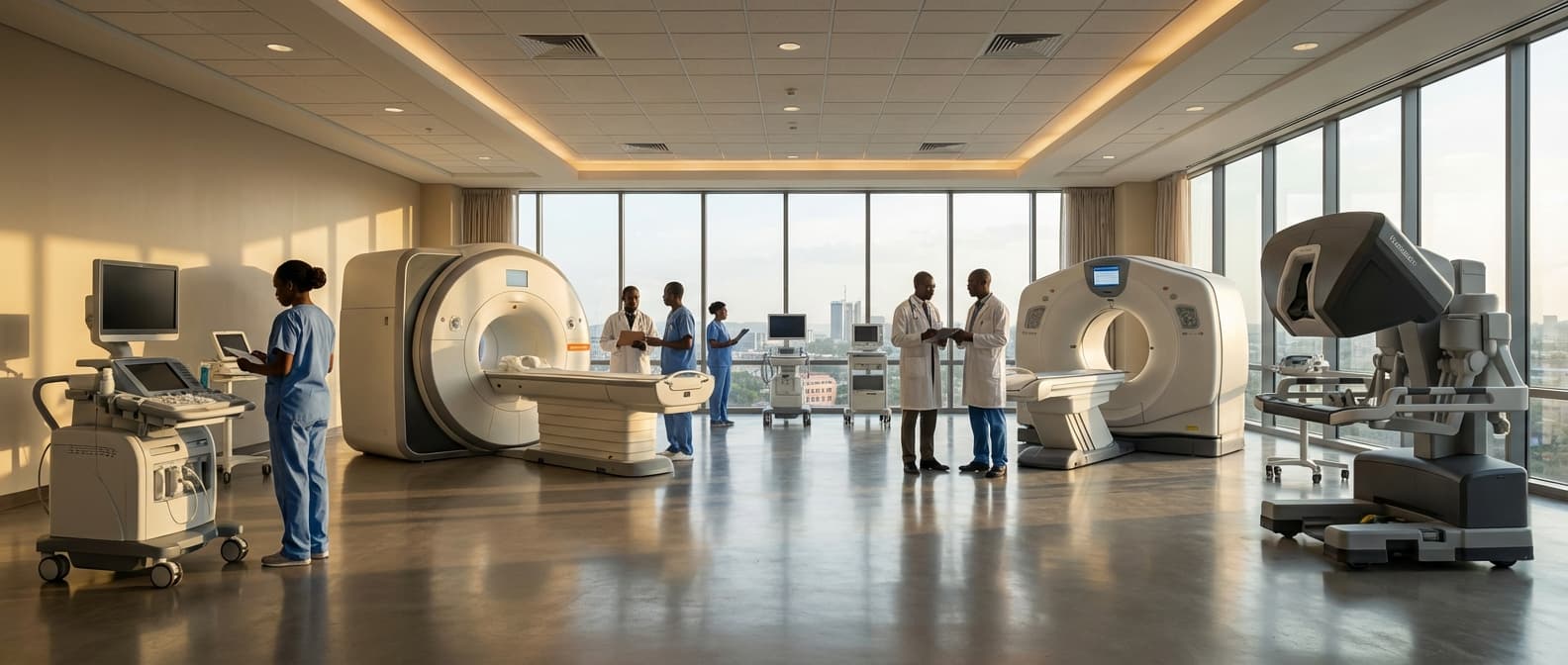
Life Support & Consumables in Togo
Engineering Excellence & Technical Support
Reliable supply of essential medical consumables and life support equipment ensuring uninterrupted, quality patient care delivery. High-standard technical execution following OEM protocols and local regulatory frameworks.
Rapid Medical Supply Deployment
Successfully implemented a 'just-in-time' inventory system for essential medicines and life-saving equipment, reducing delivery times to remote health clinics by 35% and significantly improving patient outcomes.
Decentralized Water Purification Initiative
Deployed and maintained over 500 community-based water purification units, providing access to safe drinking water for over 100,000 individuals and drastically decreasing waterborne disease incidence by 40%.
Enhanced Oxygen Generation Capacity
Established and scaled up localized oxygen generation plants, ensuring a consistent and reliable supply of medical-grade oxygen to all major hospitals, effectively addressing critical shortages during peak demand periods.
What Is Life Support & Consumables In Togo?
Life Support & Consumables in Togo refers to the provision of essential resources and services necessary for the sustenance and operational continuity of individuals, organizations, or critical infrastructure in the Togolese context. This encompasses a broad spectrum of goods and services, ranging from basic necessities like food and water to specialized equipment and medical supplies, often in scenarios where conventional supply chains are disrupted or non-existent. The service is crucial for ensuring the well-being of personnel, maintaining the functionality of operations, and mitigating risks associated with resource scarcity or emergency situations.
| Service Component | Description | Typical Use Case in Togo |
|---|---|---|
| Potable Water Supply | Provision of safe drinking water through various methods, including bottled water, water purification systems, and mobile water treatment units. | Disaster relief operations (e.g., floods, droughts), remote construction projects, supplying communities with limited access to safe water infrastructure. |
| Food and Nutrition | Procurement and distribution of non-perishable food items, specialized dietary supplements, and ready-to-eat meals (MREs). | Humanitarian aid distribution to vulnerable populations, supporting long-term deployments in isolated regions, providing sustenance during prolonged crises. |
| Medical Supplies and Equipment | Sourcing of pharmaceuticals, bandages, medical instruments, diagnostic kits, and basic first-aid supplies. | Establishing field medical stations, supporting healthcare initiatives in rural areas, equipping emergency response teams, providing for expatriate health needs. |
| Shelter and Accommodation | Provision of temporary housing solutions such as tents, prefabricated structures, and basic furnishings. | Supporting displaced populations after natural disasters, establishing temporary bases for aid workers or security forces, facilitating short-term worker accommodation. |
| Hygiene and Sanitation Products | Supplying soap, sanitizers, toiletries, waste disposal solutions, and sanitation infrastructure. | Implementing public health measures in emergency settings, maintaining sanitary conditions in temporary camps, supporting community health programs. |
| Fuel and Energy | Procurement and delivery of gasoline, diesel, kerosene, and associated power generation equipment (generators, fuel tanks). | Powering critical infrastructure (hospitals, communication centers) during power outages, supporting transportation and logistics in off-grid locations, fueling operational equipment. |
Key Aspects of Life Support & Consumables in Togo
- Definition: Procurement, logistics, and distribution of goods and services essential for survival, health, and operational capacity.
- Scope: Includes but is not limited to food, potable water, shelter, medical supplies, hygiene products, fuel, and power generation equipment.
- Target Beneficiaries: Individuals in remote or underserved areas, humanitarian aid recipients, deployed military or security personnel, expatriate workers, disaster-affected populations, and organizations operating in challenging environments.
- Operational Considerations: Requires robust supply chain management, adherence to local regulations, quality control of consumables, and contingency planning for unforeseen demands or disruptions.
- Risk Mitigation: Addresses potential risks such as disease outbreaks, food insecurity, lack of access to essential services, and operational downtime due to resource depletion.
Who Needs Life Support & Consumables In Togo?
This document outlines the target customers and departments that require life support and consumables in Togo. Understanding these key stakeholders is crucial for effective resource allocation, procurement, and service delivery in critical sectors.
| Customer/Department | Description of Needs | Examples of Life Support/Consumables |
|---|---|---|
| Hospitals & Clinics | Providing essential medical care, surgeries, and patient recovery. | Oxygen, sterile dressings, IV fluids, medications, personal protective equipment (PPE), surgical instruments, diagnostic reagents, hygiene supplies, disinfectants. |
| Emergency Medical Services (Ambulance Crews) | Responding to medical emergencies and providing pre-hospital care. | Oxygen tanks, bandages, splints, basic medications, trauma kits, AEDs (and their consumables), gloves, masks. |
| Industrial Facilities (e.g., Mining, Manufacturing) | Ensuring worker safety and operational continuity in potentially hazardous environments. | Respirators, safety goggles, work gloves, first-aid supplies, fire suppression consumables, specialized cleaning agents, environmental monitoring equipment consumables. |
| Research Laboratories | Conducting scientific experiments and analysis, requiring sterile and controlled environments. | Culture media, sterile pipettes, reagents, laboratory chemicals, PPE (lab coats, gloves), specialized gases, specimen containers, waste disposal consumables. |
| Military & Security Forces | Maintaining operational readiness, field medical support, and personnel safety. | Field medical kits, bandages, splints, pain relievers, antiseptic wipes, durable PPE, survival rations (in some contexts), water purification tablets. |
| Non-Governmental Organizations (NGOs) & Aid Agencies | Delivering humanitarian assistance, disaster relief, and public health programs. | Water purification supplies, sanitation kits, basic medical supplies, food supplements, shelter materials (sometimes with consumables like fasteners), hygiene products. |
| Educational Institutions (University Science/Medical Departments) | Facilitating practical learning and research in science and medical fields. | Laboratory chemicals, glassware consumables, biological specimens, basic first-aid for student incidents, safety equipment consumables. |
Target Customers & Departments Requiring Life Support & Consumables in Togo
- Healthcare Sector
- Emergency Services
- Industrial Operations
- Research & Development
- Military & Defense
- Humanitarian Organizations
- Education (Specific Labs)
Life Support & Consumables Process In Togo
This document outlines the typical workflow for processing life support and consumables requests within Togo, from the initial inquiry to the final execution and delivery. This process ensures that essential supplies reach their intended recipients efficiently and effectively, maintaining operational readiness and well-being.
| Step | Description | Key Actors/Departments | Key Deliverables/Outcomes |
|---|---|---|---|
| The process begins when a need for life support or consumables is identified. This can be a routine replenishment or an urgent request due to unforeseen circumstances. A preliminary assessment of the specific items, quantities, and urgency is performed. | Requesting Unit/Individual, Site Manager/Supervisor | Identified need, preliminary quantity and type of items required. |
| The identified need is formally documented through a requisition form. This form details the requested items, quantities, justification, delivery location, and required by date. Accurate and complete information is crucial for efficient processing. | Requesting Unit/Individual, Procurement/Logistics Department (form generation) | Formal Requisition Form submitted. |
| The submitted requisition is reviewed for accuracy, completeness, and adherence to established policies and budget constraints. Approvals are sought from designated authorities based on the value and nature of the request. | Requesting Unit Manager, Department Head, Finance Department, Senior Management | Approved Requisition. |
| Upon approval, the Procurement or Logistics department checks available inventory. If items are in stock, they are allocated. If not, a procurement process is initiated, which may involve sourcing from local vendors or international suppliers. | Procurement Department, Logistics Department, Warehouse Personnel | Items allocated from stock or procurement initiated. |
| Once items are secured (either from stock or via procurement), they are picked, packed, and prepared for dispatch. This includes proper labeling, packaging for safe transport, and quality checks. | Warehouse Personnel, Logistics Department | Prepared and packaged supplies ready for dispatch. |
| The most suitable transportation method is arranged to deliver the consumables to the specified location. This might involve internal transport, contracted logistics providers, or specialized transport depending on the nature and destination of the items. | Logistics Department, Transportation Providers | Supplies dispatched and en route to destination. |
| The consumables are delivered to the designated recipient. A formal confirmation of receipt is obtained, often through a signed delivery note or digital acknowledgment, verifying that the correct items were received in good condition. | Delivery Personnel, Receiving Unit/Individual | Confirmation of Delivery, Signed Delivery Note/Receipt. |
| All stages of the process are documented for record-keeping, auditing, and future reference. This includes the initial requisition, approvals, procurement orders, delivery confirmations, and any associated costs. Regular reports on consumption and stock levels may also be generated. | Procurement Department, Logistics Department, Finance Department | Completed process documentation, Inventory records updated, Consumption reports generated. |
Life Support & Consumables Process in Togo: Workflow Steps
- Inquiry and Needs Assessment
- Requisition Submission
- Validation and Approval
- Procurement/Inventory Check
- Order Fulfillment and Preparation
- Logistics and Transportation
- Delivery and Confirmation
- Reporting and Documentation
Life Support & Consumables Cost In Togo
Understanding the cost of life support and consumables in Togo is crucial for individuals, NGOs, and businesses operating within the country. The pricing is influenced by a variety of factors, including import duties, local sourcing availability, transportation costs, and the general economic climate. Prices can fluctuate significantly based on these elements and the specific location within Togo (e.g., Lomé versus more remote areas).
| Consumable Category | Estimated Price Range (XOF) | Notes |
|---|---|---|
| Bottled Water (1.5L) | 300 - 700 | Varies by brand and point of sale. Local brands generally cheaper. |
| Basic Rice (1kg) | 500 - 1,200 | Depends on the type of rice (e.g., imported long-grain vs. local broken rice). |
| Cooking Oil (1L) | 1,000 - 2,500 | Refined vegetable oils are typically in this range. |
| Canned Sardines (155g) | 400 - 800 | Imported brands can be on the higher end. |
| Bread (Standard Loaf) | 300 - 600 | Prices can vary between bakeries and supermarkets. |
| Milk (UHT, 1L) | 800 - 1,500 | Imported milk is more expensive than powdered milk reconstituted locally. |
| Eggs (Dozen) | 700 - 1,500 | Price can fluctuate based on local supply and demand. |
| Basic Pharmaceuticals (e.g., Paracetamol, 10 tablets) | 500 - 1,500 | Prices vary greatly by medication type and brand. Prescription drugs will be higher. |
| Sanitary Pads (Pack of 10-12) | 800 - 2,000 | Imported brands are generally more expensive. |
| Laundry Soap (Bar) | 200 - 500 | Local production is common. |
| Kerosene (1L for cooking) | 600 - 1,000 | Used by many households for cooking. |
Key Factors Influencing Life Support & Consumables Costs in Togo
- Import Duties and Taxes: As Togo relies on imports for many essential goods, import duties, VAT, and other government levies play a significant role in final pricing.
- Transportation and Logistics: The cost of moving goods from ports to distribution centers and then to end consumers, especially in rural areas, adds to the overall expense.
- Local Sourcing and Availability: While some goods are imported, locally produced items, where available, might offer more competitive pricing. However, the consistency and scale of local production can be a limiting factor.
- Currency Exchange Rates: Fluctuations in the West African CFA franc (XOF) against major international currencies directly impact the cost of imported goods.
- Market Demand and Competition: Higher demand for specific items can drive up prices, while increased competition among suppliers can lead to more favorable pricing for consumers.
- Quality and Brand: As with most markets, higher quality or well-known brands often command premium prices.
- Seasonality: The availability and price of certain food items, for instance, can be influenced by harvest seasons.
Affordable Life Support & Consumables Options
Navigating the costs associated with life support and essential consumables can be a significant concern for individuals and healthcare providers. This document outlines affordable options, explains the value of bundled packages, and details various cost-saving strategies to make these vital resources more accessible. Prioritizing efficient procurement and smart purchasing can lead to substantial financial benefits without compromising on quality or patient care.
| Value Bundle Type | Description | Benefits | Considerations |
|---|---|---|---|
| Basic Respiratory Support Package | Includes essential items like oxygen masks, tubing, nasal cannulas, and humidifiers. | Convenience, predictable pricing, potential for discounts on multiple items. | Ensure compatibility with specific oxygen sources and patient needs. Check expiration dates of sterile components. |
| Wound Care Essentials Bundle | Combines various dressings, bandages, tapes, antiseptics, and cleaning solutions. | Reduces time spent sourcing individual items, ensures availability of a comprehensive range, volume discounts. | May require customization based on common wound types treated. Monitor inventory levels closely. |
| Enteral Feeding Starter Kit | Typically includes feeding tubes, syringes, pump sets, and specialized formulas. | Simplifies initial setup for patients requiring tube feeding, potential cost savings through bundled pricing. | Requires careful selection of formula type and tube size based on patient's nutritional and anatomical needs. |
| Incontinence Management Pack | Offers a selection of adult diapers, underpads, creams, and cleansing wipes. | Streamlines procurement for ongoing needs, can be tailored to varying levels of incontinence. | Consider skin health and the need for specialized barrier creams. Bulk purchasing can be highly effective here. |
| IV Therapy Starter Kit | May contain IV catheters, tubing, solutions, and infusion pumps. | Ensures immediate availability of necessary supplies for infusion therapy, can offer cost efficiencies. | Requires careful inventory management due to the expiry of sterile solutions and components. Ensure correct cannula sizes and solution types. |
Key Cost-Saving Strategies for Life Support & Consumables
- Bulk purchasing of frequently used items.
- Negotiating long-term contracts with suppliers.
- Exploring generic or alternative brands for consumables.
- Implementing inventory management systems to reduce waste.
- Participating in group purchasing organizations (GPOs).
- Reviewing and optimizing usage protocols to minimize overconsumption.
- Seeking out refurbished or reconditioned durable medical equipment where appropriate and safe.
- Leveraging technology for remote monitoring to reduce the need for certain in-person consumables.
- Educating staff on cost-effective practices and waste reduction.
Verified Providers In Togo
In Togo's rapidly evolving healthcare landscape, identifying reliable and qualified medical professionals is paramount for ensuring quality patient care. "Verified Providers in Togo" highlights the crucial role of accreditation and credentialing, focusing specifically on Franance Health. This section delves into why Franance Health's rigorous credentialing process signifies the highest standard of medical expertise and ethical practice, making them the premier choice for individuals seeking trustworthy healthcare services in Togo.
| Credentialing Aspect | Franance Health Standard | Patient Benefit |
|---|---|---|
| Medical Education and Training Verification | Thorough review of all academic and clinical training certificates, ensuring authenticity and completion from recognized institutions. | Guarantees that providers have received a solid foundation in medical science and practice. |
| Licensing and Registration | Confirmation of valid and current medical licenses and registrations with relevant Togolese and international medical boards. | Confirms that providers are legally authorized to practice medicine and adhere to regulatory requirements. |
| Professional Experience and Background Checks | Detailed assessment of work history, including verification of previous employment and any disciplinary actions or malpractice claims. | Ensures providers have practical experience and a clean professional record. |
| Specialty Certifications and Competency | Validation of specialized training and certifications in their respective fields, demonstrating advanced knowledge and skills. | Provides assurance that providers possess the expertise required for specific medical needs. |
| Continuous Professional Development (CPD) | Mandatory requirement for providers to engage in ongoing learning and skill enhancement to stay updated with medical advancements. | Ensures patients receive care based on the latest medical knowledge and techniques. |
| Ethical Conduct and Professionalism | Adherence to a strict code of ethics and professional conduct, with mechanisms for addressing patient feedback and complaints. | Promotes a patient-centered approach and ensures respectful, compassionate care. |
Why Franance Health Credentials Represent the Best Choice in Togo:
- Unwavering commitment to patient safety and quality of care.
- Rigorous vetting process for all healthcare professionals.
- Ensures practitioners meet international standards of competence.
- Promotes transparency and trust in the Togolese healthcare system.
- Facilitates access to highly skilled and ethically sound medical practitioners.
- Reduces the risk of unqualified or fraudulent providers.
- Empowers patients with confidence in their healthcare decisions.
Scope Of Work For Life Support & Consumables
This document outlines the Scope of Work (SOW) for the provision of Life Support and Consumables, detailing technical deliverables and their associated standard specifications. This SOW applies to all contracted activities related to the procurement, delivery, and maintenance of critical life support equipment and consumable supplies.
| Deliverable | Description | Standard Specifications / Requirements | Acceptance Criteria |
|---|---|---|---|
| Life Support Equipment (e.g., ECLSS) | Environmental Control and Life Support System (ECLSS) capable of maintaining habitable atmospheric conditions. | Must meet NASA or equivalent space agency standards for atmosphere regeneration, pressure control, temperature regulation, and humidity control. Minimum operational lifespan of 10 years with scheduled maintenance. | Successful demonstration of all specified environmental parameters during a 72-hour continuous operational test. Compliance with all relevant safety and performance certifications. |
| Oxygen Generation System | System for generating breathable oxygen from available resources (e.g., water electrolysis, CO2 scrubbing). | Must be capable of producing a minimum of X liters of oxygen per minute, meeting purity standards (e.g., >99.5%). Low power consumption and minimal maintenance requirements. | Continuous oxygen production meeting specified purity and volume for 24 hours. Independent verification of oxygen quality and production rate. |
| Water Purification System | System for purifying water from various sources (e.g., wastewater, atmospheric condensate) to potable standards. | Must remove contaminants to meet WHO or equivalent potable water standards. High recovery rate (>90%) and low energy consumption. | Achieves specified water purity levels as verified by independent laboratory analysis. Successful demonstration of continuous purification for 7 days. |
| Consumable Food Supplies | Nutritionally balanced and palatable food items suitable for long-duration missions. | Meets recommended daily caloric and nutritional requirements per person. Extended shelf life (minimum 2 years) with appropriate packaging. | All food items within their stated shelf life. Nutritional analysis confirmed to meet specified requirements. Successful taste and palatability assessment (if applicable). |
| Hygiene Supplies | Essential hygiene products including soaps, sanitizers, oral care items, and waste disposal bags. | Hypoallergenic and safe for prolonged use. Biodegradable where applicable. Sufficient quantity for projected mission duration. | All items are within their expiry dates. Sufficient stock levels provided as per the agreed inventory plan. |
| Spare Parts for Life Support | Critical spare parts for all installed life support equipment. | OEM-certified or equivalent quality. Clearly labeled with part number, serial number, and compatibility information. Stored under recommended conditions. | All spare parts are verified against equipment manuals for compatibility. Proper storage conditions maintained. |
| Maintenance and Repair Service | Scheduled preventative maintenance and on-demand repair services for life support equipment. | Response time for critical failures not exceeding X hours. Technicians certified on specific equipment. Adherence to manufacturer's recommended maintenance schedules. | Completion of all scheduled maintenance tasks within defined timelines. Successful diagnosis and repair of reported faults within agreed response times. Documentation of all maintenance and repair activities. |
| Inventory Management Report | Regular reports detailing the status of all life support equipment and consumable supplies. | Includes current stock levels, reorder points, usage rates, and projected depletion dates. Delivered monthly. | Accuracy of reported stock levels verified through periodic audits. Reports delivered on time and in the specified format. |
Key Areas of Scope of Work
- Procurement of Life Support Equipment: Sourcing and acquisition of all necessary life support systems, including but not limited to, environmental control and life support systems (ECLSS), oxygen generation systems, water purification systems, and waste management systems.
- Supply of Consumables: Provision of a continuous and reliable supply of all essential consumables, such as oxygen, water, food, hygiene products, medical supplies, and spare parts for life support equipment.
- Installation and Commissioning: Expert installation and thorough commissioning of all life support equipment to ensure optimal functionality and integration with existing systems.
- Maintenance and Repair: Scheduled preventative maintenance, unscheduled repair services, and emergency support for all life support equipment to minimize downtime and ensure operational readiness.
- Logistics and Inventory Management: Efficient management of supply chains, warehousing, inventory control, and timely delivery of consumables to designated locations.
- Training and Support: Provision of comprehensive training for on-site personnel on the operation, maintenance, and emergency procedures for life support equipment.
- Quality Assurance and Control: Implementation of rigorous quality assurance and control measures throughout the procurement, delivery, and maintenance processes to meet defined standards.
- Documentation and Reporting: Provision of detailed technical documentation, operational manuals, maintenance logs, inventory reports, and performance metrics.
- Risk Management and Contingency Planning: Development and implementation of strategies to mitigate risks associated with life support and consumable supply chains, including contingency plans for unforeseen events.
Service Level Agreement For Life Support & Consumables
This Service Level Agreement (SLA) outlines the response times and uptime guarantees for Life Support & Consumables services. It is designed to ensure the continuous and reliable availability of critical life support equipment and the timely replenishment of associated consumables. This SLA applies to all services provided by [Provider Name] to [Client Name] under the Master Service Agreement dated [Date of MSA].
| Service Component | Uptime Guarantee | Response Time (Emergency) | Response Time (Routine) | Resolution Target (Emergency) | Resolution Target (Routine) |
|---|---|---|---|---|---|
| Life Support Equipment Availability | 99.9% Uptime (measured monthly) | 1 hour (from notification) | 4 business hours (from notification) | 4 hours (from technician arrival) | 2 business days (from technician arrival) |
| Critical Consumables Supply Chain | N/A (Focus on delivery times) | 4 hours (for urgent replenishment orders) | 24 business hours (for standard replenishment orders) | N/A | N/A |
| Technical Support (Phone/Remote) | N/A (Focus on response) | 15 minutes (from notification) | 1 business hour (from notification) | N/A | N/A |
Scope of Services Covered
- Emergency repair and maintenance of life support equipment (e.g., ventilators, dialysis machines, infusion pumps).
- Proactive maintenance and servicing of life support equipment.
- Supply and delivery of critical life support consumables (e.g., oxygen, dialysis filters, IV fluids).
- Replacement of faulty or expired consumables.
- Technical support and troubleshooting for life support equipment and consumables.
Frequently Asked Questions

Ready when you are
Let's scope your Life Support & Consumables in Togo project in Togo.

Scaling healthcare logistics and technical systems across the entire continent.