
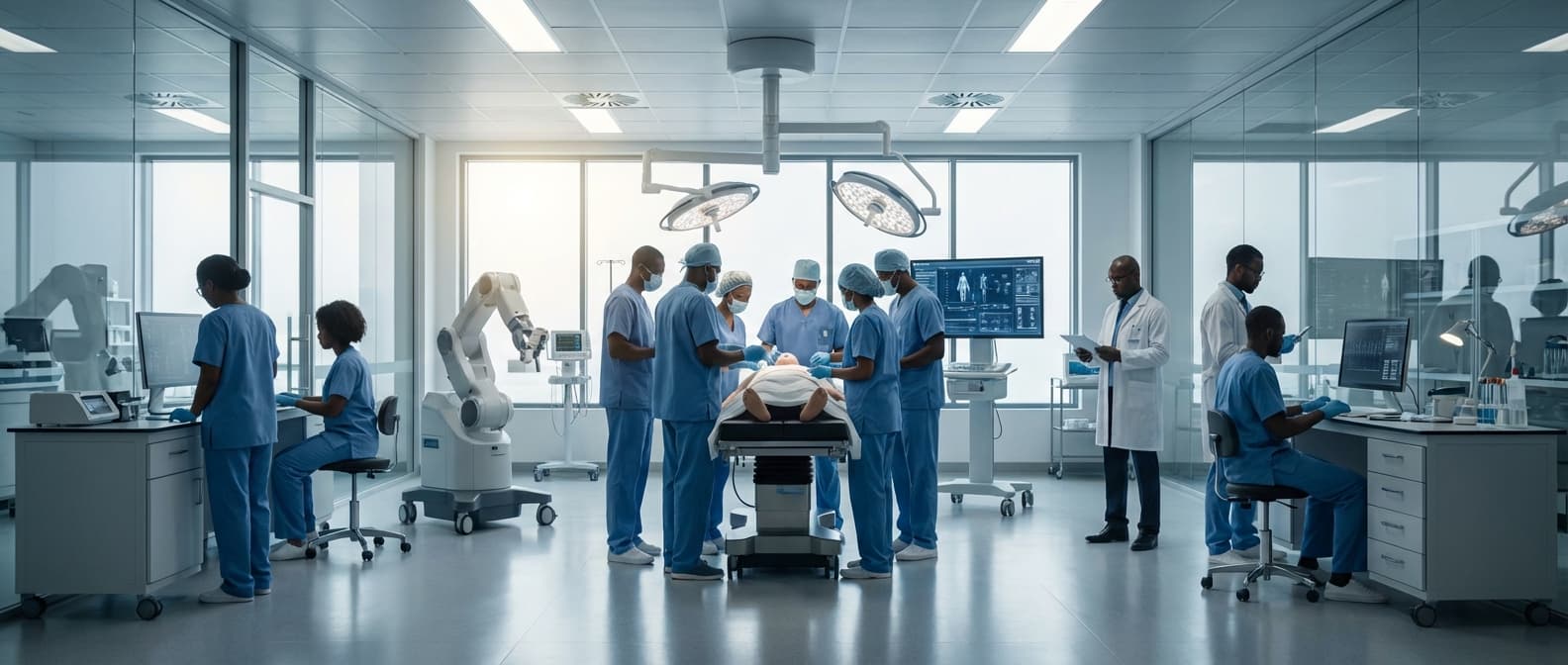
Managed Equipment Service (MES) in Togo
Engineering Excellence & Technical Support
Long‑term equipment provision with uptime SLAs and lifecycle management. High-standard technical execution following OEM protocols and local regulatory frameworks.
Robust & Resilient Infrastructure
We ensure a highly resilient and robust equipment infrastructure across Togo, minimizing downtime and guaranteeing consistent operational performance for critical medical and industrial equipment through proactive maintenance and rapid response capabilities.
Advanced Diagnostics & Predictive Maintenance
Leveraging cutting-edge diagnostic tools and data analytics, our MES in Togo enables predictive maintenance. This identifies potential equipment failures before they occur, drastically reducing unplanned outages and extending equipment lifespan.
Localized Expertise & Rapid Deployment
Our MES in Togo boasts a team of highly skilled local technicians with deep expertise in diverse equipment types. This ensures rapid deployment for on-site support, minimizing travel time and maximizing operational efficiency for our clients nationwide.
What Is Managed Equipment Service (Mes) In Togo?
Managed Equipment Service (MES) in Togo refers to a comprehensive, outsourced model for the acquisition, maintenance, and operational management of specialized equipment, particularly within critical sectors like healthcare, telecommunications, and industrial manufacturing. Instead of outright purchase and in-house management, organizations engage a third-party MES provider to deliver and sustain the necessary equipment as a service. This model shifts the financial and operational burden from the client to the provider, who assumes responsibility for the entire equipment lifecycle, including procurement, installation, training, maintenance, repair, upgrades, and eventual disposal. MES is designed to ensure optimal equipment uptime, performance, and cost-effectiveness for the client, allowing them to focus on their core competencies.
| Who Needs MES? | Typical Use Cases in Togo | |||
|---|---|---|---|---|
| Healthcare Institutions (Hospitals, Clinics, Diagnostic Centers): Organizations requiring advanced medical devices, imaging equipment, laboratory instruments, and surgical tools. They often face capital constraints and the need for specialized technical expertise for maintenance. MES allows them to access and maintain state-of-the-art medical technology without significant upfront investment and with guaranteed uptime for critical patient care. | Telecommunications Providers: Companies needing to deploy and maintain network infrastructure, base stations, transmission equipment, and other critical communication hardware. MES ensures network reliability and scalability, allowing providers to focus on service delivery and customer acquisition. | Industrial and Manufacturing Companies: Businesses operating factories, processing plants, and production lines that rely on specialized machinery, automation systems, and heavy-duty equipment. MES helps maintain operational continuity, optimize production cycles, and manage the lifecycle of costly industrial assets. | Government Agencies and Public Services: Entities responsible for providing public infrastructure, security systems, or specialized operational equipment where budget predictability and reliable service delivery are paramount. | Research and Development Facilities: Institutions requiring specialized scientific instruments and laboratory equipment that demand regular calibration, maintenance, and upgrades to support research activities. |
| Medical Equipment: MRI scanners, CT scanners, X-ray machines, ultrasound devices, laboratory analyzers, surgical robots, patient monitoring systems. | Telecommunications Infrastructure: Base stations, antennas, fiber optic equipment, network switches, routers, data center hardware. | Industrial Machinery: CNC machines, assembly lines, robotic arms, power generators, specialized processing equipment, material handling systems. | IT Hardware and Infrastructure: Servers, storage devices, networking equipment for data centers and enterprise IT environments. | Security and Surveillance Systems: Advanced surveillance cameras, access control systems, command and control centers. |
Key Components of Managed Equipment Service (MES) in Togo
- Procurement and Acquisition: The MES provider handles the sourcing, selection, and acquisition of the required equipment, often leveraging bulk purchasing power and technical expertise to secure the most suitable and cost-effective solutions.
- Installation and Commissioning: Professional installation, configuration, and initial testing of the equipment to ensure it meets operational specifications and is integrated seamlessly into the client's existing infrastructure.
- Operational Support and Training: Providing end-user training, technical support, and guidance on optimal equipment utilization to maximize efficiency and minimize errors.
- Preventive and Corrective Maintenance: Implementing scheduled preventive maintenance programs to minimize downtime and responding promptly to corrective maintenance needs (repairs) to restore functionality.
- Asset Management and Tracking: Maintaining a detailed inventory of all managed equipment, including its location, status, maintenance history, and performance metrics.
- Performance Monitoring and Reporting: Continuously monitoring equipment performance against agreed-upon service level agreements (SLAs) and providing regular reports to the client on uptime, utilization, and maintenance activities.
- Technology Refresh and Upgrades: Planning and executing timely equipment upgrades or replacements to ensure the client has access to current and efficient technology, preventing obsolescence.
- Risk Management and Compliance: Ensuring equipment adheres to relevant national and international safety, quality, and regulatory standards, and managing associated risks.
Who Needs Managed Equipment Service (Mes) In Togo?
Managed Equipment Service (MES) is a comprehensive solution designed to optimize the lifecycle management of medical equipment within healthcare facilities. This service offers a proactive approach to procurement, installation, maintenance, repair, and eventual replacement of medical devices, ensuring they are always operational, up-to-date, and cost-effective. In Togo, MES is particularly beneficial for organizations facing challenges related to aging infrastructure, limited technical expertise, and budget constraints. By outsourcing these critical functions to a specialized provider, healthcare institutions can focus on their core mission of providing quality patient care while reducing the burden and risk associated with managing their own equipment.
| Target Customer Type | Key Departments Benefiting from MES | Specific Needs/Challenges Addressed |
|---|---|---|
| Public Hospitals and Clinics | Radiology, Cardiology, Intensive Care Units (ICUs), Operating Rooms, Laboratories, Emergency Departments | Ensuring consistent availability of critical diagnostic and treatment equipment; managing maintenance budgets effectively; accessing advanced technology through phased upgrades; training staff on new equipment. |
| Private Hospitals and Clinics | Surgery Suites, Diagnostic Imaging Centers, Fertility Clinics, Outpatient Services | Maintaining a competitive edge with modern equipment; minimizing downtime to maximize patient throughput; ensuring high patient satisfaction through reliable technology; optimizing capital expenditure on equipment. |
| NGOs with Healthcare Facilities | Rural Health Posts, Mobile Clinics, Primary Healthcare Centers | Extending the lifespan of limited equipment in remote areas; providing essential maintenance and repair services where local expertise is scarce; ensuring equipment aligns with donor funding requirements; standardizing equipment across multiple sites. |
| Maternity Centers and Specialized Treatment Centers | Obstetrics & Gynecology, Neonatal Intensive Care Units (NICUs), Oncology Departments | Ensuring the continuous operation of life-saving equipment for mothers and newborns; managing specialized equipment with unique maintenance requirements; facilitating access to cutting-edge diagnostic and therapeutic devices. |
| Diagnostic Laboratories | Pathology Labs, Blood Banks, Microbiology Labs | Maintaining the accuracy and reliability of diagnostic testing equipment; ensuring compliance with quality control standards; managing the calibration and servicing of sensitive analytical instruments. |
| Medical Training Institutions | Simulation Labs, Anatomy Departments, Clinical Skills Centers | Providing students with access to modern, functional training equipment; reducing the burden of equipment maintenance on educational budgets; ensuring a realistic learning environment for future healthcare professionals. |
Target Customers for MES in Togo
- Public Hospitals and Clinics
- Private Hospitals and Clinics
- Non-Governmental Organizations (NGOs) with Healthcare Facilities
- Maternity Centers and Specialized Treatment Centers
- Diagnostic Laboratories
- Medical Training Institutions
Managed Equipment Service (Mes) Process In Togo
The Managed Equipment Service (MES) process in Togo, as typically implemented, involves a structured workflow designed to efficiently deliver and manage specialized equipment for various needs, from healthcare to industrial applications. This process begins with an initial inquiry and progresses through detailed assessment, contractual agreement, procurement, installation, ongoing management, and ultimately, decommissioning or renewal. The goal is to provide clients with reliable access to necessary equipment and comprehensive support services, minimizing their operational burden.
| Stage | Description | Key Activities | Responsible Parties |
|---|---|---|---|
| The client expresses interest in MES, typically outlining a general need for specific equipment or services. | Initial contact, understanding the client's broad requirements, providing an overview of MES offerings. | Client, MES Provider |
| A detailed evaluation of the client's specific needs, operational environment, and technical specifications is conducted. | Site visits, technical surveys, defining equipment specifications, identifying support requirements, assessing existing infrastructure. | MES Provider, Client |
| Based on the needs assessment, the MES provider prepares a comprehensive proposal detailing the proposed solution, costs, and service levels. | Costing, service level agreements (SLAs) definition, risk assessment, technical solution design, proposal writing. | MES Provider |
| The client and MES provider negotiate the terms and conditions of the service agreement, including pricing, duration, performance metrics, and responsibilities. | Legal review, pricing adjustments, SLA finalization, contract signing. | Client, MES Provider |
| The MES provider procures the specified equipment from approved manufacturers or suppliers. | Placing orders, vendor management, quality checks, pre-delivery inspections. | MES Provider |
| Arranging for the transportation of equipment from the supplier to Togo and managing all necessary customs procedures. | Shipping, insurance, import duties, customs documentation, local transportation. | MES Provider, Logistics Partners, Togolese Customs |
| The equipment is delivered to the client's site, installed, configured, and tested to ensure it meets operational standards. | Site preparation, installation of equipment, connection to infrastructure, calibration, functional testing. | MES Provider, Technical Teams |
| Client personnel receive comprehensive training on the operation, basic maintenance, and troubleshooting of the equipment. | Developing training materials, conducting training sessions, user manuals, handover documentation. | MES Provider, Client Personnel |
| The MES provider is responsible for the routine maintenance, repairs, and technical support of the equipment throughout the contract period. | Preventive maintenance schedules, corrective maintenance (repairs), spare parts management, remote monitoring, on-site support. | MES Provider, Technical Support Teams |
| The MES provider tracks equipment performance against agreed SLAs and provides regular reports to the client. | Data collection, performance analysis, SLA adherence tracking, generating performance reports, client review meetings. | MES Provider, Client |
| As technology evolves or client needs change, the MES provider may facilitate upgrades or replacements of existing equipment. | Needs assessment for upgrades, procurement of new equipment, phasing out old equipment, smooth transition. | MES Provider, Client |
| At the end of the contract term, equipment is either decommissioned and removed, or the contract is renewed for continued service. | Asset return, data security, site restoration, contract review, renewal negotiations. | MES Provider, Client |
Managed Equipment Service (MES) Process Workflow in Togo
- Inquiry & Initial Consultation
- Needs Assessment & Requirement Definition
- Proposal Development & Submission
- Contract Negotiation & Agreement
- Equipment Procurement & Sourcing
- Logistics & Customs Clearance
- Installation & Commissioning
- Training & Handover
- Ongoing Service & Maintenance
- Performance Monitoring & Reporting
- Equipment Upgrade or Replacement (as needed)
- Decommissioning or Renewal
Managed Equipment Service (Mes) Cost In Togo
Managed Equipment Service (MES) in Togo, while a growing concept, doesn't have a widely standardized pricing structure. Costs are heavily influenced by several factors, making it crucial for organizations to obtain tailored quotes. MES typically involves outsourcing the management, maintenance, and sometimes the procurement of essential equipment (e.g., IT hardware, medical devices, industrial machinery) to a third-party provider. This allows businesses to focus on their core operations while benefiting from expert management and predictable operational expenses.
The pricing for MES in Togo is dynamic and can fluctuate based on the specific needs and scale of the client. Key influencing factors include:
- Equipment Type and Quantity: The nature of the equipment (e.g., high-end servers vs. standard office printers, complex medical scanners vs. basic laboratory tools) and the sheer volume of devices managed are primary cost drivers. More complex or numerous items naturally incur higher service fees.
- Service Level Agreement (SLA): The agreed-upon response times for maintenance, uptime guarantees, and the scope of support (e.g., preventative maintenance, reactive repairs, on-site support vs. remote assistance) significantly impact pricing. Higher levels of guaranteed service command higher prices.
- Contract Duration: Longer-term MES contracts often come with discounted rates as providers can better forecast and amortize their costs. Shorter contracts typically carry a premium.
- Provider Expertise and Reputation: Established MES providers with a proven track record, specialized technical skills, and strong local presence may charge more than newer or less experienced entities. Their reliability and efficiency often justify the higher cost.
- Geographic Location within Togo: While less of a factor for remote management, on-site support or equipment delivery to remote or challenging locations might incur additional logistical costs, potentially reflected in the overall MES price.
- Included Services: Whether the MES contract includes the procurement of new equipment, upgrades, software licensing, or consumables will directly affect the final price. Bundling services can sometimes lead to cost savings.
- Technology and Software: The complexity of the technology being managed, including any specialized software for monitoring and management, will influence the provider's investment and thus the cost.
Pricing Ranges in Local Currency (CFA Francs BCEAO - XOF):
Given the lack of standardized public pricing, the following are illustrative ranges for MES costs in Togo, expressed in CFA Francs BCEAO (XOF). These are indicative and can vary significantly.
- Small-scale Deployments (e.g., SMEs with basic IT infrastructure, small clinics with limited medical equipment): Monthly fees could range from XOF 50,000 to XOF 300,000. This would typically cover basic maintenance, monitoring, and a limited number of support incidents.
- Medium-scale Deployments (e.g., mid-sized businesses with more extensive IT networks, larger clinics or workshops): Monthly fees could range from XOF 300,000 to XOF 1,500,000. This would encompass more comprehensive support, proactive maintenance, and potentially faster response times.
- Large-scale or High-Complexity Deployments (e.g., large corporations, industrial facilities, hospitals with advanced medical equipment): Monthly fees could exceed XOF 1,500,000, potentially reaching several million CFA francs depending on the scope, criticality, and advanced nature of the equipment.
It's important to note that these figures are estimations. Organizations seeking MES in Togo are strongly advised to engage with multiple providers, clearly define their requirements, and solicit detailed, itemized proposals to ensure the best value and service alignment.
| Deployment Scale | Indicative Monthly Cost (XOF) |
|---|---|
| Small-scale Deployments (SMEs, small clinics) | 50,000 - 300,000 |
| Medium-scale Deployments (Mid-sized businesses, larger clinics) | 300,000 - 1,500,000 |
| Large-scale or High-Complexity Deployments (Large corporations, industrial, hospitals) | 1,500,000+ |
Key Factors Influencing MES Costs in Togo
- Equipment Type and Quantity
- Service Level Agreement (SLA)
- Contract Duration
- Provider Expertise and Reputation
- Geographic Location within Togo
- Included Services
- Technology and Software
Affordable Managed Equipment Service (Mes) Options
Affordable Managed Equipment Service (MES) options are crucial for organizations looking to optimize their IT infrastructure without breaking the budget. MES can encompass a wide range of services, from hardware procurement and deployment to ongoing maintenance, monitoring, and lifecycle management. By leveraging value bundles and implementing smart cost-saving strategies, businesses can achieve significant benefits in terms of efficiency, reduced downtime, and predictable IT expenses.
| Cost-Saving Strategy | Description | Impact on MES Costs |
|---|---|---|
| Standardized Hardware Fleet | Selecting a limited range of hardware models simplifies management, procurement, and support. | Reduces procurement costs through bulk discounts, streamlines maintenance, and lowers training overhead for technicians. |
| Tiered Service Level Agreements (SLAs) | Customizing support levels based on the criticality of equipment. Not all devices require 24/7 premium support. | Aligns service costs with actual needs, preventing overspending on less critical assets. Pay for the support you truly require. |
| Predictive Maintenance Over Break/Fix | Investing in proactive monitoring and maintenance to prevent failures rather than reacting to them. | Minimizes expensive emergency repairs, reduces unplanned downtime (which has indirect costs), and extends equipment lifespan. |
| Flexible Hardware Leasing Options | Exploring leasing instead of outright purchasing can offer lower upfront costs and easier upgrades. | Improves cash flow, avoids large capital expenditures, and allows for technology refreshes at predictable intervals. |
| Automation of Routine Tasks | Implementing automated scripts for patching, updates, and initial troubleshooting. | Frees up IT staff for more strategic tasks, reduces human error, and speeds up issue resolution. |
| Consolidated Vendor Management | Working with a single or a few trusted MES providers can lead to better negotiation power. | Simplifies contract management, potentially unlocks volume discounts, and fosters stronger partnership benefits. |
| Right-Sizing Equipment | Ensuring that deployed equipment meets the actual performance needs of the users and applications, avoiding over-provisioning. | Reduces upfront purchase or lease costs and lowers ongoing energy consumption. |
| Remote Management Capabilities | Prioritizing MES providers with robust remote management tools and skilled remote support teams. | Minimizes the need for costly on-site technician visits, leading to faster resolution times and reduced travel expenses. |
Key Components of MES Value Bundles
- Hardware Provisioning & Deployment: Sourcing, installing, and configuring new equipment.
- Proactive Monitoring & Alerting: Real-time tracking of equipment performance and early detection of issues.
- Remote Management & Troubleshooting: Resolving problems efficiently without on-site visits.
- Preventive Maintenance: Scheduled checks and servicing to prevent failures.
- Software Patching & Updates: Ensuring systems are secure and up-to-date.
- Help Desk & Technical Support: Providing end-user assistance and issue resolution.
- Security Management: Implementing and maintaining security measures for equipment.
- Lifecycle Management: Planning for upgrades, replacements, and disposal.
Verified Providers In Togo
In Togo's evolving healthcare landscape, identifying reliable and high-quality medical services is paramount. 'Verified Providers' signifies a crucial stamp of approval, indicating that a healthcare facility or practitioner has met stringent standards for competence, safety, and ethical practice. Franance Health stands out as a premier credentialing body in Togo, meticulously vetting its network of providers. Their rigorous verification process ensures that patients have access to the best possible care, built on a foundation of trust and demonstrable expertise.
| Category | Franance Health Verification Focus | Benefit for Patients |
|---|---|---|
| Clinical Competence | Assessment of medical knowledge, surgical skills, and diagnostic accuracy. | Accurate diagnosis and effective treatment plans. |
| Patient Safety | Evaluation of infection control, emergency preparedness, and medication management. | Reduced risk of hospital-acquired infections and medical errors. |
| Infrastructure and Equipment | Review of facility standards, availability of necessary medical equipment, and maintenance protocols. | Access to appropriate diagnostic and treatment tools. |
| Ethical Practice | Adherence to professional codes of conduct, patient rights, and data privacy. | Respectful and trustworthy healthcare interactions. |
| Continuing Professional Development | Verification of ongoing training and education to stay abreast of medical advancements. | Care informed by the latest medical knowledge and techniques. |
Why Franance Health Credentials Matter:
- Commitment to Quality: Franance Health's verification process goes beyond basic licensing, assessing clinical proficiency, patient safety protocols, and adherence to international best practices.
- Enhanced Patient Safety: Providers accredited by Franance Health have demonstrated robust infection control measures, proper equipment maintenance, and adherence to ethical guidelines, minimizing risks for patients.
- Access to Specialized Expertise: Their network includes specialists across various medical disciplines, ensuring that patients can find the right care for their specific needs.
- Transparency and Accountability: Franance Health promotes transparency by clearly outlining the credentials and areas of expertise of its verified providers, fostering accountability within the healthcare system.
- Improved Patient Outcomes: By partnering with highly qualified and rigorously vetted professionals, Franance Health contributes to better diagnosis, treatment, and overall patient health outcomes.
Scope Of Work For Managed Equipment Service (Mes)
This document outlines the Scope of Work (SOW) for a Managed Equipment Service (MES) contract. It details the technical deliverables and standard specifications required for the successful provision and maintenance of medical equipment within the client's healthcare facilities. The MES aims to ensure optimal equipment performance, availability, safety, and cost-effectiveness throughout its lifecycle.
| Technical Deliverable | Description | Standard Specifications / Key Performance Indicators (KPIs) | Evidence / Documentation |
|---|---|---|---|
| Comprehensive Equipment Inventory | A complete, accurate, and up-to-date inventory of all managed medical equipment, including details such as make, model, serial number, asset tag, location, purchase date, warranty status, and maintenance history. | 99% inventory accuracy. Update of inventory within 24 hours of equipment acquisition or disposal. Standardized asset tagging protocol. | Digital inventory database (e.g., CMMS). Regular audit reports. |
| Procurement of New Equipment | Management of the entire procurement process for new medical equipment, from needs assessment and specification development to vendor selection, purchase, and delivery. | Adherence to client's procurement policies. Equipment meets all specified clinical and technical requirements. On-time delivery targets (e.g., 95%). | Procurement requisitions. Vendor evaluation reports. Purchase orders. Delivery confirmation. |
| Installation and Commissioning | Professional installation and commissioning of all new and relocated equipment, ensuring it is fully functional, calibrated, and integrated into the existing IT infrastructure (if applicable). | Installation within agreed timelines (e.g., within 7 days of delivery). Successful completion of all manufacturer-recommended installation checks. User acceptance testing (UAT) sign-off. | Installation checklists. Commissioning reports. UAT forms. Photos of installed equipment. |
| Preventive Maintenance (PM) Program | Execution of a scheduled PM program designed to maintain equipment in optimal working condition, prevent failures, and ensure safety compliance. | Adherence to manufacturer's recommended PM schedules or a risk-based PM schedule. PM completion rate of 98%. PM reports generated within 48 hours of completion. | PM schedules. Completed PM work orders. PM reports with test results. |
| Corrective Maintenance (CM) & Repair | Prompt and effective response to equipment failures and malfunctions, minimizing downtime and restoring functionality. | Mean Time to Respond (MTTR) for critical equipment (e.g., < 4 hours). Mean Time to Repair (MTTR) for critical equipment (e.g., < 8 hours). First-time fix rate of 90%. | Service request logs. Repair work orders. Service reports detailing fault, actions taken, and parts used. Downtime reports. |
| Calibration and Performance Verification | Regular calibration and performance verification of equipment to ensure accuracy, reliability, and compliance with regulatory standards. | Calibration intervals as per manufacturer recommendations or regulatory requirements. Calibration certificates issued for all calibrated devices. 99% compliance with calibration schedules. | Calibration schedules. Calibration certificates. Performance verification reports. |
| Decommissioning and Disposal | Safe and environmentally responsible decommissioning, removal, and disposal of obsolete or end-of-life equipment. | Compliance with all relevant environmental regulations for disposal. Data sanitization of equipment with storage capabilities. Disposal certificates provided. | Decommissioning plans. Waste transfer notes. Disposal certificates. Asset disposal logs. |
| Training and Competency | Provision of training to clinical staff on the safe and effective use of medical equipment, and to biomedical staff on maintenance procedures. | Training needs assessments conducted annually. All clinical users receive basic operational training. Competency assessments completed for key equipment. Training records maintained. | Training needs analysis reports. Training materials. Training attendance registers. Competency assessment forms. |
| Spare Parts Management | Efficient management of spare parts inventory to ensure timely availability for repairs and maintenance, optimizing stock levels and minimizing costs. | Maintain agreed-upon stock levels for critical spares. Stock accuracy of 98%. Just-in-time (JIT) delivery of non-stocked parts within defined SLAs (e.g., 24-48 hours). | Spare parts inventory reports. Stock movement logs. Parts usage analysis. |
| Reporting and Performance Monitoring | Regular reporting on key performance indicators (KPIs), equipment status, maintenance activities, and costs to enable informed decision-making. | Monthly performance reports submitted within 10 business days of month-end. Reports include data on PM completion, CM response/repair times, equipment uptime, cost analysis, and incident summaries. Adherence to agreed reporting template. | Monthly/Quarterly performance reports. Executive summaries. Data dashboards. |
| Risk Management and Compliance | Proactive identification, assessment, and mitigation of risks associated with medical equipment, ensuring compliance with all relevant regulations and standards (e.g., HTM, FDA, ISO). | Regular risk assessments conducted (e.g., annually or after significant incidents). Action plans developed and tracked for identified risks. 100% compliance with applicable regulations. | Risk registers. Incident investigation reports. Compliance audit reports. Corrective action plans. |
| Continuous Improvement | Implementation of initiatives to identify opportunities for enhancing service delivery, reducing costs, improving equipment reliability, and optimizing workflows. | At least two documented improvement initiatives proposed and implemented per annum. Measurable impact demonstrated for implemented initiatives. | Improvement proposals. Project plans for improvement initiatives. Post-implementation reviews and reports. |
Key Components of the MES Scope of Work
- Equipment Inventory Management
- Procurement and Installation of New Equipment
- Preventive Maintenance (PM) Program
- Corrective Maintenance (CM) and Repair Services
- Calibration and Performance Verification
- Decommissioning and Disposal of Obsolete Equipment
- Training and Competency Assessment
- Spare Parts Management
- Reporting and Performance Monitoring
- Risk Management and Compliance
- Continuous Improvement Initiatives
Service Level Agreement For Managed Equipment Service (Mes)
This Service Level Agreement (SLA) outlines the guaranteed response times and uptime for the Managed Equipment Service (MES) provided by [Your Company Name] to [Client Company Name]. This SLA is an integral part of the overall MES contract and aims to ensure the consistent and reliable performance of the managed equipment.
| Service Component / Equipment Type | Severity Level | Response Time Guarantee | Resolution Time Target | Uptime Guarantee |
|---|---|---|---|---|
| All Critical Equipment (e.g., [List critical equipment types]) | Severity 1 (Critical Failure - Complete Outage) | 15 minutes (via phone/portal) | 4 hours | 99.9% |
| All Critical Equipment (e.g., [List critical equipment types]) | Severity 2 (Major Malfunction - Significant Impairment) | 30 minutes (via phone/portal) | 8 hours | 99.9% |
| All Standard Equipment (e.g., [List standard equipment types]) | Severity 1 (Critical Failure - Complete Outage) | 1 hour (via phone/portal) | 12 hours | 99.5% |
| All Standard Equipment (e.g., [List standard equipment types]) | Severity 2 (Major Malfunction - Significant Impairment) | 2 hours (via phone/portal) | 24 hours | 99.5% |
| All Non-Critical Equipment (e.g., [List non-critical equipment types]) | Severity 3 (Minor Issue - Non-Impactful) | 4 hours (via phone/portal) | 48 hours | 99.0% |
| Planned Maintenance | N/A | 24 hours advance notice required | As scheduled and agreed upon | Excluded from Uptime calculation if performed within agreed window |
Key Definitions
- Service Hours: Refers to the operating hours during which support and maintenance are available, typically [e.g., 24x7, Business Hours (9 AM - 5 PM local time, Monday-Friday)].
- Downtime: The period during which the equipment is unavailable to the client due to failure, malfunction, or planned maintenance that extends beyond the agreed-upon maintenance window.
- Response Time: The maximum time allowed for [Your Company Name] to acknowledge a reported issue and begin diagnosis or remediation efforts.
- Resolution Time: The maximum time allowed to restore the equipment to full operational status.
- Uptime Guarantee: The minimum percentage of time the equipment is expected to be operational within a defined period.
Frequently Asked Questions

Ready when you are
Let's scope your Managed Equipment Service (MES) in Togo project in Togo.

Scaling healthcare logistics and technical systems across the entire continent.