
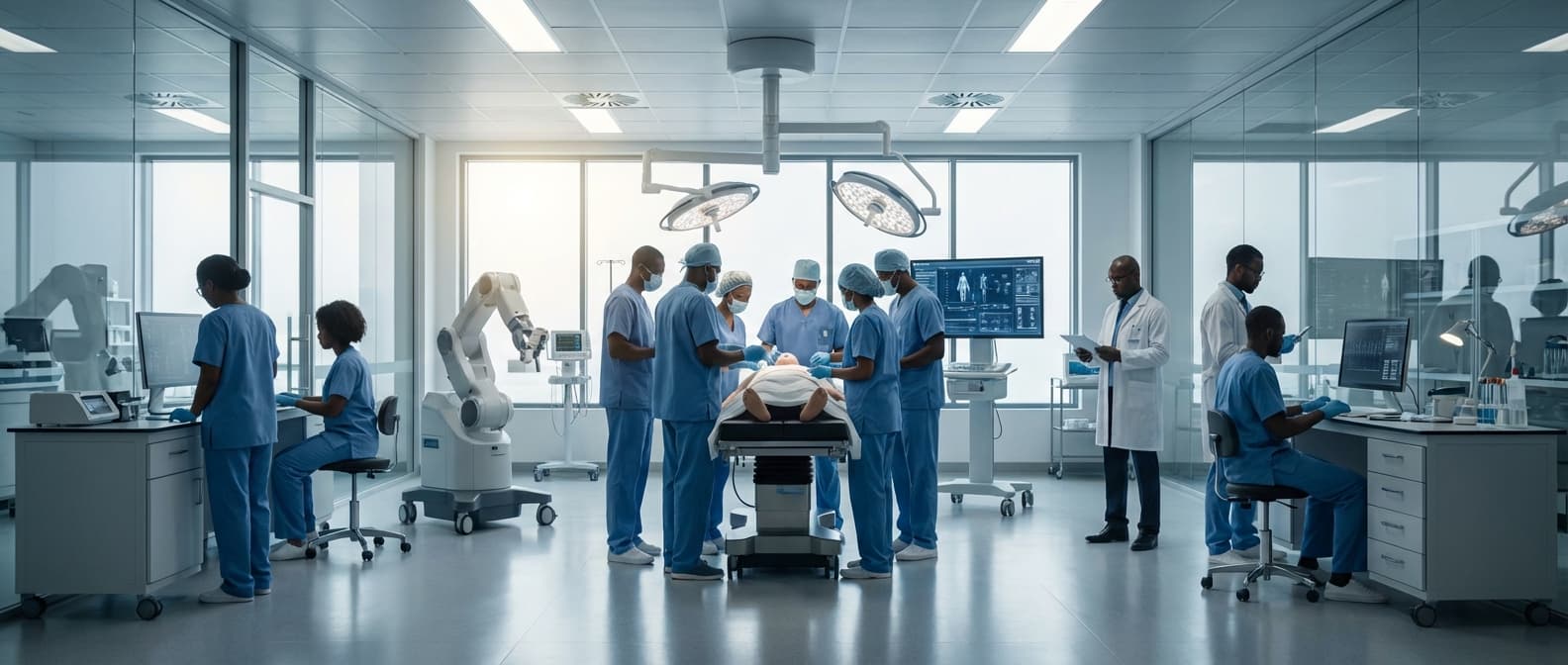
Biomedical Engineering Consulting in Togo
Engineering Excellence & Technical Support
Equipment selection, procurement and implementation consulting High-standard technical execution following OEM protocols and local regulatory frameworks.
Advanced Diagnostic Imaging Integration
Specialized consulting for integrating and optimizing advanced diagnostic imaging systems (MRI, CT, PET) within Togolese healthcare facilities. This includes site readiness assessments, equipment procurement guidance, calibration protocols, and training for local technicians to ensure accurate and reliable diagnostics, improving patient care outcomes.
Biomaterial & Medical Device Local Sourcing Strategy
Developing tailored strategies for identifying, vetting, and establishing reliable local supply chains for essential biomaterials and medical devices. Our expertise facilitates cost-effective procurement, reduces import dependencies, and ensures compliance with international quality standards for sustainable healthcare provision in Togo.
Telemedicine & Remote Patient Monitoring Infrastructure
Designing and implementing robust telemedicine and remote patient monitoring infrastructure to extend healthcare access to underserved regions in Togo. This encompasses network feasibility studies, platform selection, data security protocols, and workflow integration to enable remote consultations and continuous patient oversight.
What Is Biomedical Engineering Consulting In Togo?
Biomedical Engineering Consulting in Togo refers to the provision of specialized technical expertise and advisory services related to the design, development, implementation, maintenance, and regulatory compliance of medical devices, healthcare technologies, and biomedical infrastructure within the Togolese context. This field bridges the gap between engineering principles and healthcare delivery, addressing the unique challenges and opportunities present in Togo's healthcare system. It encompasses a broad range of activities aimed at optimizing the utilization of medical technology, improving patient outcomes, and ensuring the safety and efficacy of healthcare equipment.
| Who Needs Biomedical Engineering Consulting in Togo? | Typical Use Cases | |||
|---|---|---|---|---|
| Public and Private Hospitals/Clinics: Requiring assistance with equipment procurement, maintenance strategies, and infrastructure upgrades. | Procuring an MRI machine: Consultation on specifications, vendor selection, site preparation, and installation. | Implementing a new electronic health record (EHR) system: Advising on the integration of hardware and network infrastructure. | Developing a comprehensive preventive maintenance plan for surgical equipment. | Ensuring compliance with Ministry of Health regulations for medical device import. |
| Ministry of Health and other Government Health Agencies: Seeking expertise in national healthcare technology strategy, policy development, and regulatory frameworks. | Developing national guidelines for medical device quality assurance. | Assessing the suitability of donated medical equipment for local needs and infrastructure. | Planning for the modernization of public health facilities. | Establishing standards for biomedical engineering training programs. |
| Non-Governmental Organizations (NGOs) and International Aid Agencies: Involved in healthcare development projects and requiring technical input on medical equipment and infrastructure. | Setting up new health centers in remote areas: Advising on appropriate technology and power solutions. | Managing the deployment of specialized medical equipment for disease-specific programs (e.g., mobile clinics, diagnostic units). | Conducting needs assessments for medical technology in specific regions. | Ensuring the sustainability of medical equipment through training and maintenance support. |
| Manufacturers and Distributors of Medical Devices: Needing guidance on market access, regulatory affairs, and after-sales support in Togo. | Navigating the Togolese regulatory approval process for a new medical device. | Establishing a reliable after-sales service and maintenance network. | Understanding local market demands and adapting product offerings. | Providing technical documentation and training materials in French. |
| Research Institutions and Universities: Focused on innovation and development in healthcare technology. | Designing and prototyping new medical devices suitable for low-resource settings. | Setting up specialized laboratories with appropriate biomedical equipment. | Advising on the ethical and technical aspects of clinical trials involving medical devices. | Collaborating on technology transfer initiatives. |
Key Components of Biomedical Engineering Consulting in Togo
- Medical Device Selection and Procurement: Advising healthcare facilities on the selection of appropriate medical equipment based on clinical needs, budget constraints, and local infrastructure. This includes technical specifications, performance validation, and vendor assessment.
- Technology Assessment and Integration: Evaluating existing medical technologies and recommending strategies for integration with new systems or for upgrades to enhance functionality and interoperability.
- Infrastructure Planning and Design: Contributing to the design and planning of healthcare facilities with a focus on the technical requirements for medical equipment installation, power supply, ventilation, and safety systems.
- Equipment Maintenance and Management: Developing and implementing preventive maintenance programs, troubleshooting repair needs, and establishing inventory management systems for medical devices to ensure operational readiness and longevity.
- Regulatory Compliance and Quality Assurance: Guiding clients through the complex landscape of Togolese and international regulations pertaining to medical devices, including import/export, registration, and quality control standards.
- Biomedical Waste Management Systems: Designing and advising on the implementation of safe and compliant systems for the disposal of biomedical waste, mitigating environmental and health risks.
- Training and Capacity Building: Providing technical training to healthcare professionals and technicians on the operation, maintenance, and safety protocols of specific medical equipment.
- Feasibility Studies and Project Management: Conducting feasibility studies for new healthcare projects or the introduction of advanced medical technologies, and providing project management oversight for implementation.
Who Needs Biomedical Engineering Consulting In Togo?
Biomedical Engineering consulting services are crucial for advancing healthcare infrastructure and capabilities in Togo. These services cater to a diverse range of clients, from public health institutions to private healthcare providers, and address critical needs within various departments to ensure efficient, safe, and modern medical technology utilization.
| Customer Type | Key Needs Addressed by Consulting | Relevant Departments |
|---|---|---|
| Ministry of Health & Public Hospitals | Developing national medical equipment strategies, procurement standards, training programs, and infrastructure assessment for public healthcare facilities. | All departments, with a focus on central procurement, policy planning, and regional hospital management. |
| Private Hospitals & Clinics | Optimizing medical device inventory, ensuring regulatory compliance, implementing preventive maintenance schedules, and advising on technology acquisition to improve service delivery and cost-effectiveness. | Medical Equipment Management, Procurement, Clinical Departments, Administration. |
| NGOs in Healthcare | Assisting with the selection, installation, and maintenance of medical equipment for humanitarian projects, ensuring sustainability and local capacity building. | Project Management, Procurement, Field Operations, Technical Support. |
| Medical Device Manufacturers & Distributors | Providing market insights, regulatory guidance, and support for product registration, distribution, and after-sales service in Togo. | Sales & Marketing, Regulatory Affairs, Technical Support, Logistics. |
| Research Institutions & Universities | Advising on the acquisition and integration of specialized research equipment, establishing laboratory infrastructure, and ensuring compliance with safety standards. | Research Laboratories, IT Departments, Facilities Management, Procurement. |
| International Development Agencies | Supporting health system strengthening projects, evaluating existing medical infrastructure, and recommending appropriate technological interventions and training strategies. | Project Planning & Evaluation, Technical Advisors, Procurement Specialists. |
Who Needs Biomedical Engineering Consulting in Togo? - Target Customers and Departments
- {"items":["Government Ministry of Health and Public Hospitals","Private Hospitals and Clinics","Non-Governmental Organizations (NGOs) involved in healthcare","Medical Device Manufacturers and Distributors","Research Institutions and Universities","International Development Agencies"],"title":"Target Customers"}
- {"items":["Medical Equipment Management/Biomedical Engineering Department","Procurement and Logistics Department","Information Technology (IT) Department (for medical IT integration)","Clinical Departments (e.g., Radiology, Cardiology, Surgery, Laboratory)","Infection Prevention and Control Department","Facilities Management Department"],"title":"Key Departments within Healthcare Facilities"}
Biomedical Engineering Consulting Process In Togo
The biomedical engineering consulting process in Togo, like in many other regions, follows a structured workflow designed to address the specific needs of healthcare facilities and organizations. This process ensures that projects are well-defined, executed efficiently, and deliver optimal outcomes. The typical workflow begins with an initial inquiry and progresses through several distinct phases to successful project completion and post-execution support.
| Phase | Key Activities | Deliverables | Togo Specific Considerations |
|---|---|---|---|
| 1. Inquiry & Initial Consultation | Client (e.g., hospital, clinic, government ministry) contacts the consulting firm with a need or problem. Initial discussion to understand the general nature of the request (e.g., equipment procurement, facility upgrade, technical training). | Initial understanding of client needs. Identification of potential areas for consultation. | Language barriers (French is the official language, but local languages are prevalent). Understanding of the local regulatory landscape for medical devices. Availability of local technical expertise. |
| 2. Needs Assessment & Scope Definition | Detailed on-site visit to assess current infrastructure, existing equipment, operational workflows, and specific challenges. Interviews with stakeholders (medical staff, administrators, technical personnel). Detailed documentation of existing conditions. Defining the precise objectives, requirements, and scope of the project. | Comprehensive needs assessment report. Clearly defined project scope and objectives. Identification of potential constraints and risks. | Infrastructure limitations (e.g., power stability, internet connectivity). Availability and maintenance capacity of existing equipment. Cultural considerations in healthcare delivery. |
| 3. Proposal Development & Agreement | Development of a detailed proposal outlining the proposed solution, methodology, timeline, resources required, and cost estimates. Presentation of the proposal to the client for review and feedback. Negotiation of terms and conditions. Formal agreement or contract signing. | Detailed project proposal. Signed consulting agreement/contract. | Transparency in pricing is crucial. Building trust is paramount. Flexibility in payment terms may be necessary. |
| 4. Planning & Design | Development of detailed project plans, including timelines, work breakdown structures, and resource allocation. Design of solutions (e.g., facility layout, equipment specifications, workflow optimization). Risk management planning. Obtaining necessary permits and approvals (if applicable). | Detailed project plan. Technical designs and specifications. Risk mitigation strategies. | Navigating local bureaucratic processes for approvals. Considering the availability of specific building materials and construction techniques. |
| 5. Procurement & Installation | Sourcing and procurement of necessary equipment, materials, and software based on agreed specifications. Coordination of logistics, shipping, and customs clearance. Supervision of installation and integration of new systems/equipment. | Procured equipment and materials. Installed and integrated systems. | Challenges with import duties and taxes. Ensuring reliable local suppliers or international partners. Managing transportation within Togo. |
| 6. Testing, Validation & Training | Rigorous testing and validation of all installed systems and equipment to ensure they meet performance standards and regulatory requirements. Development and delivery of comprehensive training programs for relevant personnel (medical, technical, administrative). Hands-on practical sessions. | Testing and validation reports. Training materials and manuals. Certified trained personnel. | Tailoring training to the literacy levels and existing skill sets of local staff. Providing ongoing support for training refreshers. |
| 7. Project Completion & Handover | Final review and inspection of the project with the client. Addressing any outstanding issues or punch list items. Formal handover of the completed project, including all documentation, manuals, and warranties. Client acceptance sign-off. | Final project report. Handover documentation. Client acceptance certificate. | Ensuring all documentation is accessible and understandable to the client. |
| 8. Post-Execution Support & Evaluation | Provision of post-installation support, including troubleshooting and technical assistance. Monitoring the performance and impact of the implemented solutions. Gathering client feedback for continuous improvement. Optional: Long-term maintenance contracts or support agreements. | Ongoing technical support. Performance monitoring reports. Client satisfaction feedback. | Establishing clear communication channels for ongoing support. Potential for remote support, but on-site visits may be necessary for complex issues. |
Biomedical Engineering Consulting Workflow in Togo
- Phase 1: Inquiry & Initial Consultation
- Phase 2: Needs Assessment & Scope Definition
- Phase 3: Proposal Development & Agreement
- Phase 4: Planning & Design
- Phase 5: Procurement & Installation
- Phase 6: Testing, Validation & Training
- Phase 7: Project Completion & Handover
- Phase 8: Post-Execution Support & Evaluation
Biomedical Engineering Consulting Cost In Togo
Biomedical engineering consulting costs in Togo can vary significantly based on several key factors. These include the complexity and scope of the project, the experience and reputation of the consultant or firm, the duration of the engagement, and the specific services required. Common services sought from biomedical engineering consultants in Togo include equipment selection and procurement, facility design and planning, regulatory compliance advice, technical training, and maintenance program development. The pricing is typically structured on an hourly, daily, or project-based fee, with a strong preference for local currency (CFA Franc - XOF) to facilitate transactions within the Togolese market. While precise figures are difficult to provide without a detailed project brief, indicative ranges can be established based on the aforementioned factors.
| Service Type/Engagement Level | Estimated Cost Range (XOF per hour/day/project) |
|---|---|
| Basic Consultation/Information Gathering (Hourly) | 25,000 - 50,000 XOF |
| Technical Advice/Problem Solving (Hourly) | 40,000 - 75,000 XOF |
| Equipment Selection & Procurement Support (Daily) | 100,000 - 250,000 XOF |
| Facility Design & Planning (Project-based, highly variable) | 1,000,000 - 10,000,000+ XOF (depending on scale) |
| Regulatory Compliance Assistance (Daily/Project-based) | 80,000 - 200,000 XOF per day, or project-specific quotes |
| Training and Capacity Building (Daily/Project-based) | 120,000 - 300,000 XOF per day, or project-specific quotes |
| Senior Consultant/Specialist (Hourly) | 60,000 - 120,000 XOF |
| Firm-based Project Rates (Variable) | Varies widely based on scope, expect competitive quotes. |
Key Pricing Factors for Biomedical Engineering Consulting in Togo
- Project Scope and Complexity: Larger, more intricate projects demanding specialized expertise will naturally incur higher costs.
- Consultant Experience and Reputation: Highly experienced and reputable consultants or firms often command higher fees.
- Duration of Engagement: Longer-term projects may benefit from discounted daily or project rates, while short-term, intensive engagements are typically priced hourly.
- Specific Services Required: Specialized services such as advanced regulatory affairs or complex clinical engineering studies will be more expensive than general advice.
- Geographic Location within Togo: While less impactful than other factors, travel and accommodation costs within Togo might influence the overall project budget for consultants based in different regions.
- Urgency of the Project: Expedited projects may incur premium charges.
Affordable Biomedical Engineering Consulting Options
Biomedical engineering consulting is crucial for navigating the complex landscape of medical device development, regulatory affairs, and market entry. However, the perceived high cost can be a barrier for startups and smaller organizations. This guide outlines affordable biomedical engineering consulting options, focusing on value bundles and cost-saving strategies to make expert guidance accessible and impactful.
| Cost-Saving Strategy | Description | Implementation Example |
|---|---|---|
| Targeted Engagement | Focus on specific, critical project phases or challenges where external expertise is most needed, rather than engaging consultants for the entire project lifecycle. | Engaging a consultant for initial regulatory strategy and guidance, then bringing the work in-house for documentation and execution. |
| Phased Project Approach | Break down large projects into smaller, manageable phases. Consultants can be brought in for specific phases, allowing for budget control and flexibility. | Starting with a feasibility study and regulatory assessment, then proceeding to design and development based on initial findings. |
| Leverage Small & Niche Firms | Smaller consulting firms or independent consultants often have lower overhead costs and can offer more competitive rates compared to large, established companies. | Seeking out a specialized consultant with expertise in a niche area of medical imaging rather than a generalist firm. |
| Interim Expertise / Fractional Consulting | Hire a consultant for a specific number of hours per week or month, providing expert guidance without the commitment or cost of a full-time employee. | A startup hiring a part-time regulatory affairs expert for 10 hours per week. |
| Collaborative Knowledge Transfer | Emphasize knowledge transfer during the engagement. Consultants can train internal teams, building in-house capabilities and reducing future reliance on external help. | A consultant conducting workshops on risk management principles for the client's engineering team. |
| Clear Scope & Deliverables | Precisely define the project scope, objectives, and expected deliverables upfront. This prevents scope creep and ensures efficient use of consulting time. | Establishing a clear list of required regulatory documents and a timeline for their completion. |
| Utilize Existing Templates & Resources | Consultants can help adapt and refine existing internal templates or industry-standard resources, saving time and effort compared to creating everything from scratch. | A consultant helping to customize a pre-existing FDA submission template. |
| Performance-Based or Milestone Payments | Where feasible, structure contracts with payments tied to specific project milestones or demonstrable performance, aligning consultant incentives with project success. | Paying a portion of the consulting fee upon successful completion of a design verification test plan. |
| Early-Stage Project Focus | Engage consultants for the critical early stages (e.g., concept, feasibility, regulatory strategy). Getting these right can prevent costly rework later in the development cycle. | Securing a consultant for an early-stage 'go/no-go' decision based on technical and market feasibility. |
Understanding Value Bundles in Consulting
- {"title":"What are Value Bundles?","description":"Value bundles are pre-packaged sets of consulting services designed to address specific project phases or common needs. Instead of paying for individual hours or ad-hoc services, clients purchase a comprehensive package that offers a defined scope of work, deliverables, and often a discounted rate compared to à la carte pricing."}
- {"title":"Benefits of Value Bundles","description":"Bundles provide cost predictability, streamline project planning, ensure comprehensive coverage of critical aspects, and foster a more collaborative, long-term relationship with the consultant. They are ideal for projects with well-defined objectives."}
- {"title":"Common Biomedical Engineering Value Bundles","description":"Examples include 'Early-Stage Feasibility & Concept Development,' 'Regulatory Pathway Strategy & Documentation,' 'Design Verification & Validation Planning,' 'Usability Engineering Assessment,' and 'Post-Market Surveillance Strategy.'"}
Verified Providers In Togo
In Togo's evolving healthcare landscape, identifying reliable and credentialed medical providers is paramount for ensuring quality patient care. Franance Health stands out as a leading platform dedicated to verifying and showcasing healthcare professionals who meet stringent standards. This commitment to verification not only instills confidence in patients but also elevates the overall quality of healthcare services available in Togo. This document outlines the key credentials and advantages that make Franance Health verified providers the optimal choice for your health needs.
| Why Choose Franance Health Verified Providers? | Benefit to Patients |
|---|---|
| Assurance of Quality and Competence: Rigorous credentialing process ensures you are connecting with qualified and skilled healthcare professionals. | Peace of mind knowing you are receiving care from legitimate and competent practitioners. |
| Access to Specialized Care: Verified profiles often highlight specializations, making it easier to find experts for specific medical conditions. | Efficiently locate the right specialist for your unique health needs, saving time and reducing frustration. |
| Trust and Transparency: Franance Health's commitment to verification builds trust in the healthcare system. | Empowerment through informed decision-making, choosing providers you can rely on. |
| Improved Health Outcomes: Access to well-qualified and up-to-date practitioners generally leads to better diagnostic accuracy and treatment efficacy. | Increased likelihood of receiving effective and appropriate medical care, contributing to better health outcomes. |
| Reduced Risk of Medical Errors: Verifying credentials and disciplinary records helps mitigate the risk of encountering unqualified or problematic providers. | A safer healthcare experience with a lower risk of adverse events. |
| Streamlined Healthcare Navigation: Franance Health simplifies the process of finding and selecting healthcare providers in Togo. | A more user-friendly and efficient experience when seeking medical attention. |
Key Franance Health Credentials for Verified Providers:
- Professional Licensure and Registration: All verified providers on Franance Health possess current and valid medical licenses and registrations with the appropriate Togolese regulatory bodies. This ensures they are legally qualified and authorized to practice medicine.
- Educational Qualifications: We meticulously review the academic and professional qualifications of each provider, including degrees, diplomas, and specialized training from recognized institutions.
- Experience and Specialization: Franance Health verifies the professional experience of practitioners, often highlighting their areas of specialization to help patients find the most suitable care.
- Continuing Professional Development (CPD): We encourage and, where applicable, verify that providers engage in ongoing learning and professional development to stay abreast of the latest medical advancements and best practices.
- Clean Disciplinary Record: Providers undergo a review process to ensure they have no unresolved disciplinary actions or sanctions against their licenses.
- Patient Feedback Integration: While not a primary credential, Franance Health may incorporate mechanisms for patient feedback, contributing to a transparent and accountable healthcare ecosystem.
- Commitment to Ethical Practice: Verified providers adhere to a code of ethical conduct, prioritizing patient well-being, confidentiality, and professional integrity.
Scope Of Work For Biomedical Engineering Consulting
This Scope of Work (SOW) outlines the technical deliverables and standard specifications for biomedical engineering consulting services. The consulting engagement aims to provide expert guidance, analysis, and documentation to support the client's biomedical projects, ensuring compliance with relevant standards and best practices. The following sections detail the expected outcomes and the criteria for their acceptance.
| Deliverable Type | Description | Standard Specifications/Acceptance Criteria | Format |
|---|---|---|---|
| Technical Reports | Comprehensive analysis of technical aspects, including feasibility, performance, and potential risks. | Adherence to industry-standard reporting formats. Clarity, conciseness, accuracy, and completeness of data and conclusions. Evidence-based recommendations. | PDF, Word Document |
| Design Documentation | Detailed specifications, schematics, and blueprints for biomedical devices or systems. | Compliance with relevant design standards (e.g., ISO 13485, IEC 60601). Clear and unambiguous drawings. Traceability of requirements to design elements. | PDF, CAD Files (e.g., .dwg, .step), Visio Diagrams |
| V&V Plans & Reports | Methodologies and execution of testing to verify that the device meets its design specifications and intended use. | Alignment with FDA guidance and relevant ISO standards (e.g., ISO 14971 for risk management). Documented test protocols, results, and analysis. Statistical validity of results. | PDF, Excel Spreadsheets |
| Regulatory Documentation | Preparation or review of documentation required for regulatory submissions (e.g., 510(k), PMA, technical files). | Strict adherence to specific regulatory agency requirements (e.g., FDA, EMA, MDR). Accuracy and completeness of all submitted information. Demonstrated compliance with applicable standards. | PDF, Organized File Structure |
| User Manuals/Specifications | Documentation for end-users or for manufacturing, outlining device operation, maintenance, and technical details. | Clarity, ease of understanding for the target audience. Accuracy of information. Compliance with usability engineering standards (e.g., IEC 62366). | PDF, Word Document |
| Data Analysis Reports | Interpretation of experimental, clinical, or performance data. | Appropriate statistical methods used. Clear presentation of results. Sound interpretation and conclusions supported by data. Identification of limitations. | PDF, Presentation Slides |
Key Deliverables
- Detailed Technical Reports (e.g., Feasibility Studies, Design Reviews, Risk Assessments)
- System Architecture and Design Documentation
- Verification and Validation (V&V) Plans and Reports
- Regulatory Compliance Documentation (e.g., FDA, CE Marking support)
- Intellectual Property Disclosure and Patentability Assessments
- User Manuals and Technical Specifications
- Training Materials and Sessions
- Prototype Design and Development Support
- Data Analysis and Interpretation Reports
- Market Research and Competitive Analysis Reports
Service Level Agreement For Biomedical Engineering Consulting
This Service Level Agreement (SLA) outlines the guaranteed response times and uptime for Biomedical Engineering consulting services provided by [Your Company Name] to [Client Name]. This SLA is an addendum to the Master Services Agreement (MSA) dated [Date of MSA].
| Issue Priority | Initial Response Time (Business Hours) | Target Resolution Time (Business Hours) | Escalation Trigger |
|---|---|---|---|
| Critical Issue | 1 Hour | 4 Business Hours | Failure to provide initial response within 1 hour. |
| High Priority Issue | 2 Business Hours | 8 Business Hours (1 Business Day) | Failure to provide initial response within 2 business hours. |
| Medium Priority Issue | 4 Business Hours | 2 Business Days | Failure to provide initial response within 4 business hours. |
| Low Priority Issue | 8 Business Hours (1 Business Day) | 3 Business Days | Failure to provide initial response within 8 business hours. |
Definitions
- {"term":"Consulting Services","definition":"Professional services rendered by Biomedical Engineering consultants, including but not limited to, regulatory affairs support, device design consultation, quality system implementation, risk management, and validation/verification support."}
- {"term":"Business Hours","definition":"The hours during which [Your Company Name] provides support, typically Monday through Friday, 9:00 AM to 5:00 PM in the client's primary time zone ([Client's Time Zone]). Excludes public holidays observed by [Your Company Name]."}
- {"term":"Critical Issue","definition":"A problem that renders a client's medical device non-functional, poses an immediate risk to patient safety, or causes significant regulatory non-compliance, requiring immediate attention."}
- {"term":"High Priority Issue","definition":"A problem that significantly impairs the functionality of a client's medical device or impacts its usability, but does not pose an immediate safety risk or complete non-functionality."}
- {"term":"Medium Priority Issue","definition":"A problem that affects minor functionalities of a client's medical device, has a workaround, or is a general inquiry requiring expert advice."}
- {"term":"Low Priority Issue","definition":"A request for information, a minor clarification, or a non-urgent consultation that does not impact the immediate functionality or compliance of a medical device."}
- {"term":"Initial Response Time","definition":"The maximum time allowed for [Your Company Name] to acknowledge receipt of a service request and provide an initial assessment or plan of action."}
- {"term":"Resolution Time","definition":"The target time for [Your Company Name] to resolve a reported issue. This is a target and may be extended based on the complexity of the issue and client-provided information."}
- {"term":"Uptime","definition":"For services where remote access or cloud-based tools are provided by [Your Company Name], this refers to the percentage of time such services are available for client use. This excludes scheduled maintenance."}
- {"term":"Scheduled Maintenance","definition":"Pre-announced periods during which services may be unavailable for updates, upgrades, or system maintenance. [Your Company Name] will provide at least [Number] days' notice for scheduled maintenance."}
Frequently Asked Questions

Ready when you are
Let's scope your Biomedical Engineering Consulting in Togo project in Togo.

Scaling healthcare logistics and technical systems across the entire continent.