
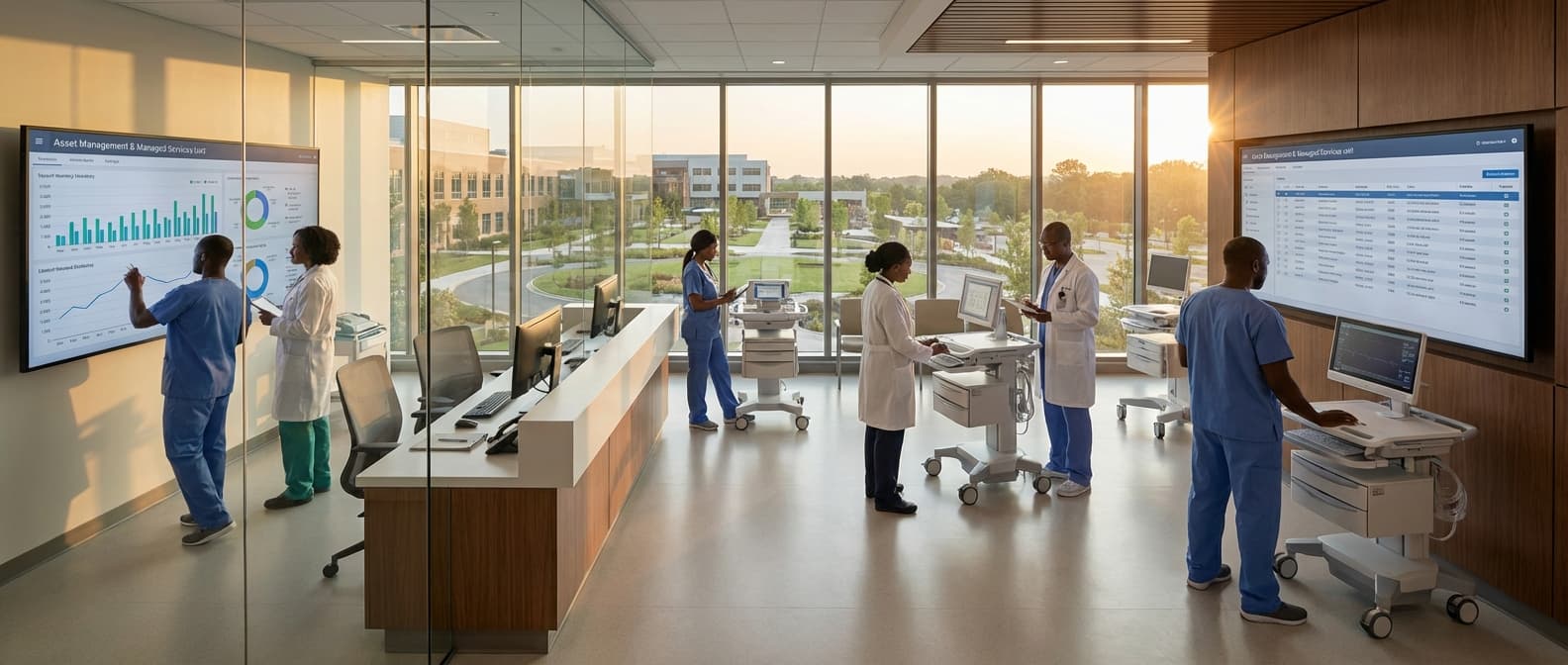
Maintenance KPI Reporting Service (Uptime/MTBF/MTTR) in Togo
Engineering Excellence & Technical Support
Maintenance KPI Reporting Service (Uptime/MTBF/MTTR) High-standard technical execution following OEM protocols and local regulatory frameworks.
Amélioration du Temps de Disponibilité Opérationnel
Notre service offre un suivi précis et en temps réel du temps de disponibilité de vos équipements critiques. En analysant les données de performance, nous identifions les goulots d'étranglement et proposons des stratégies proactives pour maximiser l'uptime, garantissant ainsi une continuité d'exploitation ininterrompue pour les industries Togolaises.
Réduction du Temps Moyen Entre les Pannes (MTBF)
Grâce à nos rapports de maintenance avancés, nous plongeons au cœur des causes profondes des défaillances. En identifiant les tendances et les schémas récurrents, notre service permet de mettre en place des programmes de maintenance préventive et prédictive ciblés, réduisant significativement le MTBF et minimisant les interruptions coûteuses.
Optimisation du Temps Moyen de Réparation (MTTR)
Nous nous concentrons sur l'efficacité des interventions de maintenance. Nos rapports fournissent des analyses détaillées sur les durées de réparation, les ressources utilisées et les procédures. En optimisant ces aspects, notre service aide les entreprises Togolaises à réduire leur MTTR, ramenant rapidement les équipements en état de marche et minimisant l'impact sur la productivité.
What Is Maintenance Kpi Reporting Service (Uptime/mtbf/mttr) In Togo?
Maintenance KPI Reporting Service (Uptime/MTBF/MTTR) in Togo refers to a specialized offering that provides organizations with the systematic collection, analysis, and presentation of key performance indicators (KPIs) related to their asset maintenance operations. The primary metrics reported are Uptime, Mean Time Between Failures (MTBF), and Mean Time To Repair (MTTR). This service is crucial for businesses in Togo operating critical infrastructure or complex machinery to optimize maintenance strategies, minimize operational disruptions, and enhance overall asset lifecycle management. It involves the implementation of data collection mechanisms, aggregation of maintenance records, application of statistical analysis for KPI calculation, and the generation of actionable reports and dashboards.
| Who Needs This Service? | Typical Use Cases | ||||||
|---|---|---|---|---|---|---|---|
| Manufacturing Facilities: Companies operating production lines, heavy machinery, and automated systems where downtime directly impacts output and profitability. | Telecommunications Providers: Ensuring network availability and minimizing service interruptions for subscribers. Tracking cell tower uptime, base station MTBF, and outage resolution times. | Energy & Utilities (Power Generation, Water Treatment): Maintaining the operational integrity of critical infrastructure to ensure continuous service delivery. Monitoring power plant uptime, pump MTBF, and pipeline repair times. | Transportation & Logistics: Optimizing the availability and reliability of fleets (vehicles, aircraft, ships) and associated infrastructure. Tracking vehicle uptime, engine MTBF, and turnaround times for repairs. | Mining & Extractive Industries: Managing the uptime of heavy-duty equipment in remote or challenging environments. Monitoring drill rig uptime, conveyor belt MTBF, and repair turnaround times for essential machinery. | Healthcare Institutions: Ensuring the continuous operation of critical medical equipment like MRI scanners, ventilators, and laboratory instruments. Tracking equipment uptime and repair response times. | Information Technology & Data Centers: Maintaining server availability, network infrastructure, and ensuring minimal service downtime for critical applications and data storage. | Service & Maintenance Providers: Companies offering outsourced maintenance services to various industries who need to demonstrate their performance and efficiency to clients. |
Key Components of the Service:
- Data Acquisition & Integration: Establishing processes and technologies (e.g., CMMS integration, IoT sensors, manual data entry protocols) to capture relevant maintenance data from various sources.
- KPI Calculation Engine: Employing algorithms and statistical methods to accurately compute Uptime (percentage of time an asset is operational), MTBF (average time between equipment failures), and MTTR (average time taken to repair a failed asset).
- Reporting & Visualization: Developing comprehensive reports, dashboards, and analytics that present KPI trends, identify problem areas, and highlight areas for improvement. This often includes historical data, comparative analysis, and predictive insights.
- Root Cause Analysis Support: Facilitating the investigation of failure patterns identified through KPI analysis to determine underlying causes and implement preventive measures.
- Benchmarking & Performance Tracking: Allowing organizations to compare their maintenance performance against industry standards or historical benchmarks.
- Recommendation Generation: Providing data-driven recommendations for optimizing maintenance schedules, spare parts inventory, technician training, and asset replacement strategies.
Who Needs Maintenance Kpi Reporting Service (Uptime/mtbf/mttr) In Togo?
In Togo, a robust Maintenance KPI Reporting Service focusing on Uptime, Mean Time Between Failures (MTBF), and Mean Time To Repair (MTTR) is crucial for businesses aiming to optimize operational efficiency, minimize downtime, and control maintenance costs. This service provides actionable insights through data-driven reporting, enabling proactive maintenance strategies and informed decision-making. It's not just about tracking metrics; it's about transforming raw data into a strategic advantage.
| Target Customer Type | Key Departments Benefiting | Why they need the service |
|---|---|---|
| Manufacturing Companies | Operations, Maintenance, Production Planning, Quality Control | Maximize production uptime, reduce costly breakdowns, improve product quality by ensuring equipment reliability, optimize spare parts inventory, and forecast maintenance needs accurately. |
| Mining Operations | Maintenance, Operations, Fleet Management, Safety | Ensure continuous extraction and processing, minimize the impact of equipment failures on production schedules, improve safety by identifying recurring equipment issues, and reduce operational expenses. |
| Energy & Utilities Providers | Asset Management, Operations, Maintenance, Engineering | Guarantee uninterrupted service delivery, reduce the risk of blackouts or service disruptions, optimize maintenance schedules for critical infrastructure, and improve overall grid reliability. |
| Telecommunications Companies | Network Operations, Field Service, Engineering, Customer Service | Ensure high network availability and uptime, minimize customer impact from service outages, optimize technician dispatch and repair times, and reduce the cost of network maintenance. |
| Logistics & Transportation Firms | Fleet Management, Operations, Maintenance, Supply Chain | Maximize vehicle availability for deliveries, reduce transit delays caused by breakdowns, optimize maintenance schedules for fleets, and lower fuel and repair costs. |
| Agricultural & Food Processing Businesses | Production, Maintenance, Quality Assurance, Operations | Ensure consistent production output, minimize spoilage due to equipment failure, maintain hygiene standards through reliable machinery, and optimize operational costs. |
| Hospitality & Tourism Sector (Large Resorts, Hotels) | Facilities Management, Operations, Engineering, Guest Services | Ensure guest comfort and satisfaction by maintaining critical systems (HVAC, elevators, water), minimize disruptions to services, and reduce operational costs associated with unexpected repairs. |
| Construction & Infrastructure Companies | Project Management, Equipment Management, Maintenance, Operations | Ensure project timelines are met by keeping heavy machinery operational, minimize costly equipment downtime on-site, and optimize the utilization of expensive assets. |
Target Customers in Togo
- Manufacturing Companies
- Mining Operations
- Energy & Utilities Providers (Power Generation, Water Treatment)
- Telecommunications Companies
- Logistics & Transportation Firms
- Agricultural & Food Processing Businesses
- Hospitality & Tourism Sector (Large Resorts, Hotels)
- Construction & Infrastructure Companies
- Oil & Gas Exploration and Production Support
- Public Sector Infrastructure Management
Maintenance Kpi Reporting Service (Uptime/mtbf/mttr) Process In Togo
This document outlines the workflow for the Maintenance KPI Reporting Service (Uptime/MTBF/MTTR) in Togo. This service aims to provide clients with accurate and timely data on their equipment's maintenance performance, enabling informed decision-making and operational improvements. The process begins with an initial client inquiry and progresses through data collection, analysis, reporting, and ongoing support.
| Step | Description | Key Activities | Responsible Party | Timeline (Typical) |
|---|---|---|---|---|
| Initial contact from a client seeking maintenance KPI reporting services. | Client expresses interest, provides overview of needs. Service provider conducts preliminary consultation, understands scope of assets, existing data sources, and reporting frequency. Proposal development. | Client, Service Provider (Sales/Consulting) | 1-3 Days |
| Formalizing the service agreement and initiating the client onboarding process. | Contract negotiation and signing. Client provides detailed asset lists, maintenance logs, operational schedules, and access credentials. Service provider sets up client account and data integration plan. | Client, Service Provider (Legal/Operations) | 3-7 Days |
| Gathering relevant data from the client's systems for analysis. | Connecting to client's CMMS, SCADA systems, sensor data, or manual logs. Establishing automated data feeds or defining manual data submission protocols. Data validation and cleansing. | Service Provider (IT/Data Engineering) | 5-15 Days (depending on complexity) |
| Computing Uptime, MTBF, and MTTR based on the collected data. | Applying defined calculation methodologies for each KPI. Identifying failure events, repair durations, and operational periods. Trend analysis and anomaly detection. Benchmarking (if applicable). | Service Provider (Data Analysts/Maintenance Engineers) | Ongoing (daily/weekly/monthly cycles) |
| Creating comprehensive and insightful KPI reports. | Designing and populating reports with calculated KPIs, visualizations (graphs, charts), trend analyses, and actionable insights. Customizing reports based on client requirements (e.g., executive summaries, detailed operational reports). | Service Provider (Reporting Specialists/Data Analysts) | Ongoing (aligned with reporting frequency) |
| Presenting the generated reports to the client and facilitating a review. | Disseminating reports via secure portal, email, or scheduled meetings. Conducting review sessions to explain findings, answer questions, and discuss implications. Identifying areas for improvement. | Service Provider (Account Manager/Analysts), Client | Ongoing (per reporting cycle) |
| Collaborating with the client to develop and implement improvement strategies based on KPI insights. | Recommending preventative maintenance strategies, spare parts optimization, technician training, or operational adjustments. Tracking the impact of implemented actions on KPIs. Providing ongoing consultation and support. | Service Provider (Consultants/Engineers), Client | Ongoing |
| Periodically assessing the effectiveness of the reporting service and making adjustments. | Gathering client feedback on report quality, timeliness, and insights. Reviewing service delivery processes for efficiency. Updating methodologies or report formats as needed to meet evolving client needs and industry best practices. | Service Provider (Management/Operations), Client | Quarterly/Annually |
Key Maintenance KPIs Explained
- Uptime: The percentage of time a piece of equipment is operational and available for use.
- MTBF (Mean Time Between Failures): The average time a piece of equipment operates successfully between breakdowns.
- MTTR (Mean Time To Repair): The average time it takes to repair a piece of equipment after a failure.
Maintenance Kpi Reporting Service (Uptime/mtbf/mttr) Cost In Togo
Providing a Maintenance KPI Reporting Service in Togo, specifically focusing on Uptime, Mean Time Between Failures (MTBF), and Mean Time To Repair (MTTR), involves various cost considerations. The pricing will largely depend on the scope of work, the complexity of the assets being monitored, the frequency of reporting, and the level of customization required. Local currency pricing in Togo is typically in West African CFA Franc (XOF).
| Service Component / Tier | Estimated Cost Range (XOF) | Typical Inclusions |
|---|---|---|
| Basic Reporting Package | 150,000 - 400,000 XOF per month | Standard Uptime, MTBF, MTTR reports for a limited number of assets (e.g., 5-10). Automated data collection from a single source. Monthly reporting. Generic dashboards. |
| Standard Reporting Package | 400,000 - 1,000,000 XOF per month | Broader asset coverage (e.g., 10-30 assets). Integration with multiple data sources. Weekly and monthly reporting. Customizable dashboards and basic trend analysis. |
| Advanced Reporting & Analytics Package | 1,000,000 - 3,000,000+ XOF per month | Extensive asset coverage. Complex data source integration. Real-time or near real-time reporting. Advanced predictive analytics, root cause analysis features. Dedicated account management and ongoing consultation. Highly customizable reports and KPIs. |
| One-Time Setup & Integration Fee | 200,000 - 1,500,000+ XOF (depending on complexity) | Initial system setup, data source integration, and configuration. This is a one-time fee. |
| Custom Development & Consultation | Hourly Rate: 20,000 - 60,000+ XOF per hour | For specific, bespoke reporting needs, algorithm development, or in-depth operational analysis beyond standard offerings. |
Key Pricing Factors for Maintenance KPI Reporting Services in Togo
- Number of Assets Monitored: The more assets that require monitoring and reporting, the higher the cost will be due to increased data collection and analysis.
- Complexity of Assets: Monitoring sophisticated machinery with intricate systems will demand more specialized expertise and potentially advanced data acquisition tools, leading to higher costs.
- Data Source Integration: The ease or difficulty of integrating with existing data sources (e.g., SCADA systems, IoT sensors, manual logs) will impact implementation time and cost.
- Reporting Frequency & Granularity: Daily, weekly, monthly, or quarterly reports with varying levels of detail (e.g., raw data vs. summarized insights) will influence pricing.
- Customization Needs: Tailoring reports, dashboards, and analysis to specific client requirements will involve additional development and configuration effort.
- Software & Technology Used: The cost of the reporting platform, analytics tools, and any necessary hardware for data collection will be factored in.
- Service Provider Expertise & Reputation: More experienced and reputable service providers may command higher prices due to their proven track record and quality of service.
- Level of Support & Training: The availability of technical support, training for client personnel, and ongoing consultation will affect the overall cost.
- Geographic Reach within Togo: While less of a primary driver for pure reporting, if on-site data collection or occasional site visits are required, travel and logistics costs within Togo could become a factor.
- Contract Duration: Longer-term contracts often come with more favorable pricing per period.
Affordable Maintenance Kpi Reporting Service (Uptime/mtbf/mttr) Options
This document outlines affordable Key Performance Indicator (KPI) reporting services focused on Uptime, Mean Time Between Failures (MTBF), and Mean Time To Repair (MTTR). We understand that accurate and accessible data is crucial for optimizing maintenance operations, reducing costs, and maximizing asset reliability. This service provides structured reporting to empower your team with actionable insights, even with limited budgets. We explore value bundles and cost-saving strategies to ensure you get the most from your maintenance data.
| Value Bundle | Description | Included KPIs | Reporting Frequency | Data Integration Options | Estimated Cost Range (Monthly) | Cost-Saving Strategies Leveraged |
|---|---|---|---|---|---|---|
| Essential Insights | Our most budget-friendly option, providing foundational data for basic monitoring and trend analysis. | Uptime (Overall System) | Monthly | Manual Data Upload / Basic Spreadsheet Integration | $150 - $300 | Minimized setup, automated basic report generation, focused KPI selection. |
| Reliability Accelerator | Builds upon Essential Insights by adding MTBF to understand failure patterns and guide proactive maintenance. | Uptime (Overall System & Key Assets), MTBF (Key Assets) | Bi-Weekly / Monthly | Manual Data Upload / Spreadsheet Integration / API Integration (limited) | $300 - $600 | Early detection of recurring issues, targeted preventive maintenance, reduced unscheduled downtime. |
| Performance Optimizer | Comprehensive reporting including MTTR to analyze repair efficiency and optimize maintenance workflows. | Uptime (Overall System & Key Assets), MTBF (Key Assets), MTTR (Key Assets) | Weekly / Bi-Weekly / Monthly | Spreadsheet Integration / API Integration / Direct Database Connection (limited) | $500 - $1000+ | Streamlined repair processes, optimized spare parts inventory, improved technician scheduling, data-driven decision making for resource allocation. |
| Custom Enterprise Solution | Tailored to your specific needs, offering advanced analytics, custom dashboards, and deeper integration capabilities. | All KPIs, custom metrics, predictive analytics (optional) | Real-time / Daily / Weekly / Monthly | Full API Integration / Direct Database Access / IoT Data Streams | Custom Quote - Based on complexity | Maximized ROI through advanced insights, predictive maintenance, optimized resource utilization, strategic capital investment planning. |
Key Maintenance KPIs Explained
- Uptime: The percentage of time a piece of equipment or system is operational and available for use. High uptime signifies reliable performance and minimizes production or service disruptions.
- Mean Time Between Failures (MTBF): The average time a repairable component or system operates between successive failures. A higher MTBF indicates greater reliability and less frequent breakdowns.
- Mean Time To Repair (MTTR): The average time it takes to repair a failed component or system and return it to operational status. A lower MTTR signifies efficient maintenance and quick recovery from downtime.
Verified Providers In Togo
In Togo's evolving healthcare landscape, identifying reliable and competent medical professionals is paramount. Verified Providers, particularly those associated with Franance Health, stand out due to their rigorous credentialing processes and commitment to quality care. This ensures patients receive treatment from highly qualified and ethical practitioners, offering peace of mind and superior health outcomes.
| Provider Type | Key Credentials Verified | Benefits for Patients |
|---|---|---|
| General Practitioners | Medical Degree (MD/DO), Medical License, Board Certification (where applicable) | Reliable primary care, accurate diagnoses, and appropriate referrals. |
| Specialist Physicians (e.g., Cardiologists, Dermatologists) | Medical Degree, Specialty Board Certification, Fellowship Training (if applicable), Hospital Privileges | Expert diagnosis and treatment for complex conditions, access to advanced procedures. |
| Nurses (RN, LPN) | Nursing Degree/Diploma, Nursing License, Specialized Certifications (e.g., Critical Care, Pediatrics) | Skilled patient care, vital sign monitoring, medication administration, and patient education. |
| Pharmacists | Pharmacy Degree (PharmD), Pharmacy License, Experience in dispensing and drug interaction management | Safe and accurate medication dispensing, expert advice on prescriptions and over-the-counter drugs. |
| Therapists (e.g., Physical Therapists, Mental Health Counselors) | Relevant Degree, Professional License, Specialty Certifications | Targeted rehabilitation, improved mobility, and essential mental health support. |
Why Franance Health Credentials Matter:
- Rigorous Vetting Process: Franance Health employs a multi-faceted approach to verify each provider's qualifications, including academic achievements, practical experience, and professional licenses.
- Specialized Expertise: Credentials often highlight specific areas of expertise, allowing patients to find specialists best suited for their unique medical needs.
- Adherence to Standards: Verified providers are committed to upholding the highest ethical and professional standards in their practice, ensuring patient safety and trust.
- Continuous Professional Development: Franance Health often encourages or requires ongoing training, ensuring providers remain up-to-date with the latest medical advancements and techniques.
- Patient-Centric Approach: The verification process emphasizes a provider's dedication to patient well-being and effective communication, fostering a positive healthcare experience.
Scope Of Work For Maintenance Kpi Reporting Service (Uptime/mtbf/mttr)
This Scope of Work (SOW) outlines the requirements for a Maintenance KPI Reporting Service focused on critical operational metrics: Uptime, Mean Time Between Failures (MTBF), and Mean Time To Repair (MTTR). The service will provide regular, standardized reports to facilitate performance monitoring, identify trends, and drive continuous improvement in maintenance operations. This document details the technical deliverables and standard specifications for the reporting service.
| Deliverable | Description | Format | Frequency | Standard Specification |
|---|---|---|---|---|
| Initial KPI Baseline Report | Establishes the current state of Uptime, MTBF, and MTTR for defined assets/systems. | PDF, CSV | One-time (upon commencement of service) | Includes historical data (if available) for at least the preceding 12 months. Clearly defines the scope of assets/systems included. |
| Monthly KPI Performance Report | Summarizes Uptime, MTBF, and MTTR performance for the reporting period. | PDF (executive summary), CSV (detailed data) | Monthly | Presents KPIs for the current month, year-to-date, and comparison to previous periods. Includes graphs and trend analysis. Details downtime events, reasons for failure, and repair times. |
| Quarterly KPI Trend Analysis Report | Provides an in-depth analysis of KPI trends over a quarter, identifying significant changes and potential root causes. | Quarterly | Analyzes trends in Uptime, MTBF, and MTTR. Highlights areas of improvement or degradation. May include recommendations for corrective actions. | |
| Ad-hoc KPI Data Extract | Provides raw or aggregated KPI data upon request for specific investigations or analysis. | CSV, Excel | As requested | Data will be provided within 2 business days of request. Format and granularity to be agreed upon at the time of request. |
| KPI Data Input Template/API Specification | Defines the format and method for data submission for KPI calculation. | CSV template, API documentation | Ongoing (for data submission) | Template will include columns for asset ID, timestamp of event (failure/repair), event type, downtime duration, repair duration, and reason code. API specification will detail endpoints, data formats (JSON/XML), authentication, and error handling. |
Key Performance Indicators (KPIs)
- Uptime: The percentage of time a system or asset is operational and available for use. Calculated as (Total Available Time - Downtime) / Total Available Time * 100%.
- Mean Time Between Failures (MTBF): The average time elapsed between inherent failures of a repairable system during normal system operation. Calculated as Total Uptime / Number of Failures.
- Mean Time To Repair (MTTR): The average time required to repair a failed component or system. Calculated as Total Downtime / Number of Repairs.
Service Level Agreement For Maintenance Kpi Reporting Service (Uptime/mtbf/mttr)
This Service Level Agreement (SLA) outlines the terms and conditions for the Maintenance KPI Reporting Service, specifically focusing on Uptime, Mean Time Between Failures (MTBF), and Mean Time To Repair (MTTR). It defines the guaranteed response times and uptime percentages for the reporting platform.
| Severity Level | Description | Acknowledgement Time |
|---|---|---|
| Severity 1 (Critical) | Complete outage of the reporting service, loss of all KPI data, or significant data corruption impacting core reporting functions. | 30 minutes |
| Severity 2 (High) | Partial outage of the reporting service, significant degradation of reporting performance, or inability to access specific critical KPI reports. | 2 hours |
| Severity 3 (Medium) | Minor issues affecting non-critical reporting functions, inaccuracies in non-critical KPIs, or usability issues not preventing core functionality. | 8 business hours |
| Severity 4 (Low) | Questions regarding functionality, feature requests, or minor cosmetic issues. | 24 business hours |
Service Level Objectives (SLOs)
- Uptime: The reporting platform will be available 99.9% of the time, excluding scheduled maintenance windows.
- MTBF (Mean Time Between Failures): The average time between system failures of the reporting platform will be at least 1000 hours.
- MTTR (Mean Time To Repair): The average time taken to restore the reporting platform to full functionality after a failure will not exceed 4 hours.
- Response Times: Support requests will be acknowledged within the following timeframes:
- Critical Issues (Severity 1): 30 minutes- High Issues (Severity 2): 2 hours- Medium Issues (Severity 3): 8 business hours- Low Issues (Severity 4): 24 business hours
Frequently Asked Questions

Ready when you are
Let's scope your Maintenance KPI Reporting Service (Uptime/MTBF/MTTR) in Togo project in Togo.

Scaling healthcare logistics and technical systems across the entire continent.