
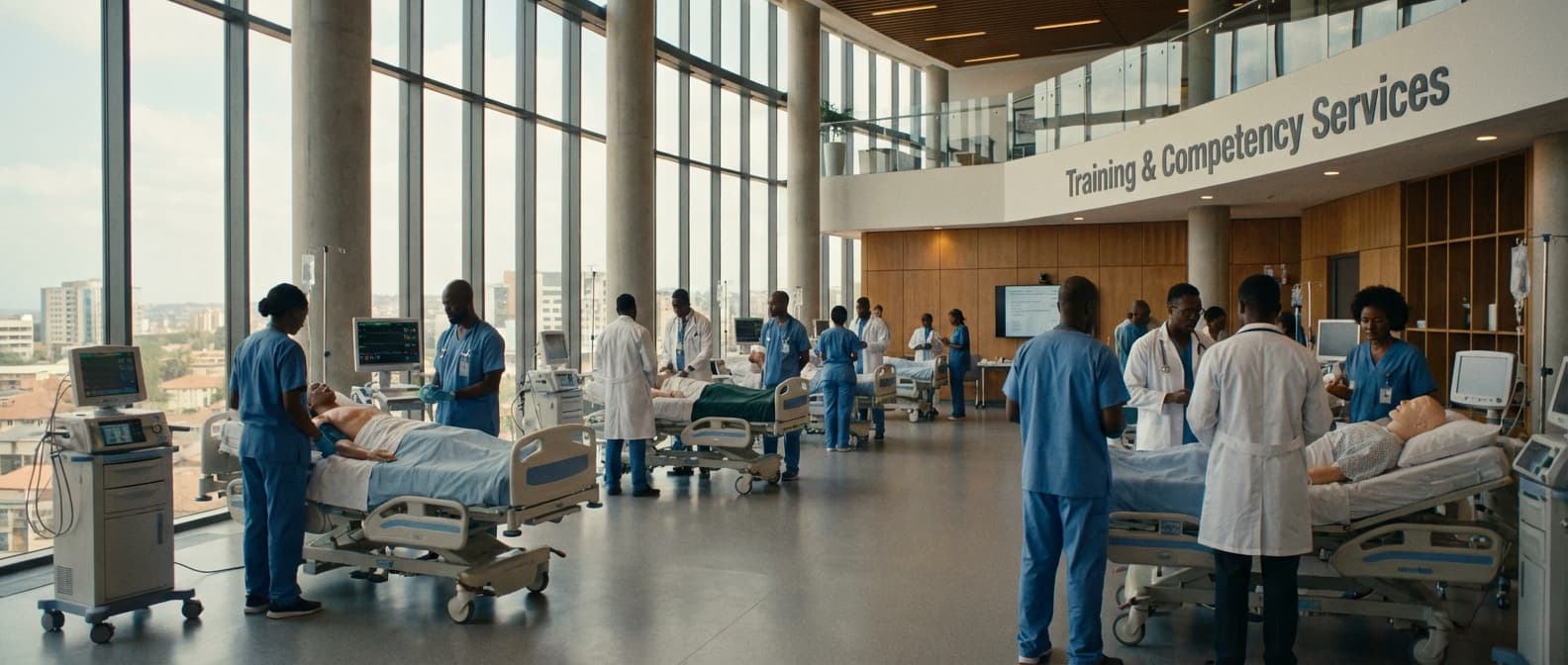
Ultrasound Application Training Service (Protocol-Based) in Tanzania
Engineering Excellence & Technical Support
Ultrasound Application Training Service (Protocol-Based) High-standard technical execution following OEM protocols and local regulatory frameworks.
Standardized Protocol Mastery
Empower your sonographers in Tanzania with our comprehensive, protocol-based training. We ensure consistent, high-quality ultrasound examinations for accurate diagnoses, covering a wide range of modalities and clinical scenarios.
Hands-On Clinical Proficiency
Bridging theory and practice, our training emphasizes practical skills. Participants gain confidence and competence through guided scanning sessions and case studies directly relevant to the Tanzanian healthcare landscape.
Expert-Led Knowledge Transfer
Learn from experienced sonographers and radiologists who understand the unique challenges and opportunities in Tanzanian medical imaging. Our training focuses on critical interpretation, artifact reduction, and efficient workflow optimization.
What Is Ultrasound Application Training Service (Protocol-based) In Tanzania?
Ultrasound Application Training Service (Protocol-Based) in Tanzania refers to structured, curriculum-driven educational programs designed to impart proficiency in the utilization of ultrasound technology for diagnostic and interventional medical procedures. This service emphasizes adherence to standardized imaging protocols, ensuring consistent and reproducible examination techniques. The training focuses on developing the operator's ability to acquire high-quality ultrasound images, interpret findings accurately, and integrate this information into clinical decision-making within the Tanzanian healthcare context.
| Who Needs This Service? | Typical Use Cases/Applications | |||||||||
|---|---|---|---|---|---|---|---|---|---|---|
| Radiologists and Radiographers seeking to specialize or enhance their skills in ultrasound. | Obstetrics and Gynecology: Antenatal scans, gynecological assessments, fetal well-being monitoring. | General Radiology: Abdominal (liver, gallbladder, kidneys, pancreas), superficial structures (thyroid, breast), scrotum. | Emergency Medicine: FAST (Focused Assessment with Sonography for Trauma) scans, identification of free fluid, deep vein thrombosis (DVT) assessment. | Cardiology: Echocardiography (basic principles and application). | Urology: Renal, bladder, and prostate assessments. | Point-of-Care Ultrasound (POCUS) Practitioners: Clinicians performing ultrasound at the patient's bedside for rapid diagnosis. | Medical Students and Residents undergoing postgraduate training. | Healthcare professionals in rural or underserved areas requiring advanced diagnostic capabilities. | Veterinary Medicine: Ultrasound for animal diagnostics. | Midwives and Nurses with expanded scope of practice in obstetric ultrasound. |
Key Components of Ultrasound Application Training Service (Protocol-Based):
- Theoretical Foundation: Comprehensive lectures covering ultrasound physics, instrumentation, artifact recognition, safety principles, and anatomical correlations relevant to specific applications.
- Protocol-Driven Practical Sessions: Hands-on training sessions where participants learn to perform ultrasound examinations following established, evidence-based protocols for various organ systems and clinical scenarios.
- Image Acquisition and Optimization: Skill development in transducer manipulation, gain and depth adjustments, focal zone placement, and spectral/color Doppler interrogation for optimal image quality.
- Anatomical and Pathological Correlation: Training in identifying normal anatomical structures and recognizing a spectrum of pathological findings across different ultrasound applications.
- Clinical Interpretation and Reporting: Guidance on interpreting ultrasound images in the context of patient history and other investigations, and generating accurate and concise reports.
- Quality Assurance and Quality Control (QA/QC): Emphasis on maintaining equipment functionality and adherence to quality standards for diagnostic accuracy.
- Contextualization to Tanzanian Healthcare: Training tailored to address common pathologies, resource availability, and specific healthcare challenges prevalent in Tanzania.
Who Needs Ultrasound Application Training Service (Protocol-based) In Tanzania?
This training service is designed to equip healthcare professionals in Tanzania with the essential skills and knowledge to perform ultrasound examinations effectively and efficiently, adhering to standardized protocols. This ensures consistent, high-quality diagnostic imaging across various healthcare settings, leading to improved patient care and outcomes.
| Healthcare Facility Type | Key Departments/Units | Specific Needs Addressed |
|---|---|---|
| Tertiary/Referral Hospitals | Radiology, Obstetrics & Gynecology, Cardiology, Emergency Medicine, Critical Care, Surgery, Pediatrics | Advanced protocols, specialized applications, interdisciplinary collaboration, quality assurance, continuous professional development. |
| Regional Hospitals | Radiology, Obstetrics & Gynecology, General Medicine, Surgery, Emergency Medicine | Standardized diagnostic protocols, improving diagnostic accuracy, supporting regional referrals, capacity building for general practitioners. |
| District Hospitals | Outpatient Departments, Maternity Wards, Emergency Rooms, General Medicine | Essential diagnostic ultrasound for common conditions (e.g., pregnancy monitoring, basic abdominal scans), point-of-care ultrasound (POCUS) applications, basic protocol adherence. |
| Health Centers/Clinics (with ultrasound capabilities) | Maternity Clinics, Outpatient Departments | Basic antenatal care scanning, essential diagnostic capabilities for common ailments, referral pathway identification. |
| Specialized Clinics (e.g., Cardiac, Vascular) | Cardiology, Vascular Surgery | In-depth training on specific cardiac and vascular ultrasound protocols, interpretation of complex findings. |
| Academic and Training Institutions | Medical Schools, Nursing Schools, Allied Health Training Programs | Integrating standardized ultrasound training into curricula, developing future ultrasound practitioners, research applications. |
Target Customers and Departments for Ultrasound Application Training Service (Protocol-Based) in Tanzania
- Medical Doctors (General Practitioners, Specialists)
- Radiologists and Radiographers
- Obstetricians and Gynecologists
- Emergency Medicine Physicians
- Pediatricians
- Anesthesiologists
- Sonographers
- Nurses (especially those in critical care, emergency, or antenatal units)
- Medical Students and Interns (as part of their clinical rotations)
Ultrasound Application Training Service (Protocol-based) Process In Tanzania
This document outlines the typical workflow for an Ultrasound Application Training Service (Protocol-Based) in Tanzania, from initial inquiry to the successful execution and completion of the training. The process is designed to be structured and efficient, ensuring all parties are clear on expectations and deliverables.
| Phase | Key Activities | Deliverables |
|---|---|---|
| Inquiry and Needs Assessment | Initial contact, understanding requirements, protocol discussion | Needs assessment report, confirmed training scope |
| Proposal and Agreement | Developing proposal, negotiation, contract signing | Signed training agreement/contract |
| Preparation | Logistics planning, material development, equipment check | Training schedule, materials, confirmed logistics |
| Execution (Training Delivery) | Lectures, practical sessions, case studies, feedback | Trained participants, practical skill demonstration |
| Post-Training and Evaluation | Assessments, feedback collection, certificate issuance, reporting | Certificates, evaluation report, final invoice |
| Follow-up (Optional) | Remote support, refresher sessions | Continued learning support |
Ultrasound Application Training Service (Protocol-Based) Workflow in Tanzania
- {"steps":[{"title":"Inquiry Receipt","description":"The training provider receives an inquiry regarding ultrasound application training, typically via email, phone, or website contact form. Inquiries usually originate from healthcare facilities, individual practitioners, or educational institutions."},{"title":"Initial Consultation & Needs Analysis","description":"A preliminary discussion is held to understand the client's specific training needs. This involves identifying: \n- The target audience (e.g., radiologists, sonographers, nurses, medical officers).\n- The specific ultrasound applications requiring training (e.g., abdominal, obstetric, vascular, musculoskeletal).\n- The current skill level of the participants.\n- The desired learning outcomes.\n- The preferred training format (e.g., on-site, remote, blended).\n- The number of participants.\n- The available equipment and learning environment at the client's site."},{"title":"Protocol Discussion","description":"The specific ultrasound protocols to be covered are discussed and confirmed. This ensures the training aligns with established clinical guidelines and the client's institutional practices. The provider may offer standard protocols or work with the client to adapt existing ones."}],"title":"Phase 1: Inquiry and Needs Assessment"}
- {"steps":[{"title":"Training Proposal Development","description":"Based on the needs assessment, the training provider develops a detailed proposal. This typically includes: \n- Scope of training (specific applications and protocols).\n- Learning objectives.\n- Training methodology (lectures, practical sessions, case studies, simulations).\n- Duration and schedule of the training.\n- Trainer qualifications and profiles.\n- Required equipment and materials.\n- Cost breakdown (fees, travel, accommodation, materials).\n- Payment terms."},{"title":"Proposal Review and Negotiation","description":"The client reviews the proposal, and any necessary adjustments or clarifications are made through further discussions and negotiations."},{"title":"Contract/Agreement Finalization","description":"Once both parties agree on the terms, a formal contract or training agreement is drafted and signed, outlining all terms, conditions, deliverables, and responsibilities."}],"title":"Phase 2: Proposal and Agreement"}
- {"steps":[{"title":"Logistics Planning","description":"Detailed arrangements are made for the training, including: \n- Scheduling dates and times.\n- Booking travel and accommodation for trainers (if applicable).\n- Confirming venue suitability and necessary facilities (e.g., projector, whiteboards, internet).\n- Arranging for participants' availability."},{"title":"Training Material Preparation","description":"Training materials are prepared or customized. This may include: \n- Presentation slides.\n- Handouts and reference guides.\n- Case studies and simulation scenarios.\n- Practical demonstration materials.\n- Pre- and post-training assessments."},{"title":"Equipment and Technology Check","description":"Ensuring all necessary training equipment, including ultrasound machines (if provided by the trainer), phantoms, and any audio-visual aids, are functional and ready for use. If on-site, confirmation of the client's equipment functionality is also important."},{"title":"Participant Pre-communication","description":"Information regarding the training schedule, location, required attire, and any pre-reading materials is communicated to the registered participants."}],"title":"Phase 3: Preparation"}
- {"steps":[{"title":"On-site/Remote Training Delivery","description":"The training is conducted according to the agreed-upon schedule and methodology. This involves: \n- Theoretical Sessions: Lectures, presentations, and discussions covering anatomy, physiology, ultrasound physics, image acquisition principles, and protocol guidelines.\n- Practical Sessions: Hands-on practice using ultrasound machines, phantoms, and/or real patients (under supervision) to apply learned techniques and protocols.\n- Case Studies & Discussions: Analyzing real or simulated cases to develop diagnostic skills and critical thinking.\n- Q&A and Feedback: Continuous interaction with participants to address queries and provide immediate feedback."},{"title":"Protocol Adherence and Skill Assessment","description":"Emphasis is placed on participants adhering to the defined ultrasound protocols during practical sessions. Trainers assess participant competency in image acquisition, manipulation, and interpretation."},{"title":"Daily Debrief and Progress Monitoring","description":"Short debriefing sessions at the end of each training day to review progress, address challenges, and adjust the plan if needed."}],"title":"Phase 4: Execution (Training Delivery)"}
- {"steps":[{"title":"Post-Training Assessment","description":"Participants may undergo a post-training assessment to evaluate their comprehension and skill acquisition. This could include written tests, practical skill demonstrations, or case interpretation exercises."},{"title":"Feedback Collection","description":"The training provider collects feedback from both participants and the client regarding the training's effectiveness, content, delivery, and overall satisfaction using feedback forms or surveys."},{"title":"Certificate Issuance","description":"Upon successful completion of the training and assessment, participants receive certificates of attendance or completion, often detailing the covered applications and protocols."},{"title":"Final Report and Evaluation Summary","description":"The training provider submits a final report to the client, summarizing the training activities, participant performance (if assessed), feedback received, and any recommendations for future training or practice improvement."},{"title":"Invoicing and Payment Finalization","description":"Issuance of the final invoice based on the agreed terms, and processing of the final payment by the client."}],"title":"Phase 5: Post-Training and Evaluation"}
- {"steps":[{"title":"Follow-up Support","description":"Some providers offer optional follow-up support, which could include remote consultations, review of case studies, or refresher sessions to reinforce learning and address any emerging challenges in practice."}],"title":"Phase 6: Follow-up (Optional)"}
Ultrasound Application Training Service (Protocol-based) Cost In Tanzania
The cost of Ultrasound Application Training Services, particularly those that are protocol-based, in Tanzania can vary significantly due to a multitude of factors. Protocol-based training emphasizes standardized procedures and best practices, which can influence the depth and duration of the program. These costs are typically quoted in Tanzanian Shillings (TZS).
| Training Type/Scope | Estimated Cost Range (TZS) - Per Participant | Notes |
|---|---|---|
| Basic/Introductory Ultrasound Application (e.g., Abdominal) | 250,000 - 600,000 TZS | Typically 1-3 days, focuses on fundamental protocols and image acquisition. |
| Intermediate Ultrasound Application (e.g., Obstetrics - 1st Trimester) | 400,000 - 900,000 TZS | Typically 3-5 days, involves more detailed protocol adherence and interpretation. |
| Advanced/Specialized Ultrasound Application (e.g., Echocardiography, Vascular) | 700,000 - 1,500,000+ TZS | Can range from 5 days to several weeks, highly specific protocols, advanced interpretation, often requires experienced trainers. |
| Comprehensive Program (Multiple Applications) | 1,000,000 - 3,000,000+ TZS | Includes training across several specialties, duration varies greatly, often includes certification. |
| Refresher/Advanced Skills Workshop (Specific Protocol Focus) | 300,000 - 700,000 TZS | Shorter duration (1-2 days), focusing on honing skills in a particular protocol. |
Key Pricing Factors for Ultrasound Application Training in Tanzania:
- Provider Reputation and Accreditation: Established and accredited training institutions often command higher fees due to their recognized quality and expertise.
- Duration and Intensity of Training: Shorter, introductory courses will be less expensive than comprehensive, multi-week programs. The number of hours per day and the overall project timeline also play a role.
- Scope of Ultrasound Applications: Training focused on a single, basic application (e.g., abdominal) will be cheaper than courses covering multiple specialized areas (e.g., obstetrics, cardiology, vascular).
- Trainer Expertise and Experience: Highly specialized or internationally recognized trainers will generally lead to higher training costs.
- Training Location and Modality: On-site training at a facility in a major city like Dar es Salaam might have different logistical costs compared to remote areas. Online or blended learning formats can also impact pricing.
- Equipment Provision and Simulation: Whether the training includes hands-on access to ultrasound machines or advanced simulation tools will affect the overall cost. Access to a variety of probes and phantom models also adds to the expense.
- Certification and Assessment: The inclusion of formal certification exams, practical assessments, and the issuance of certificates can increase the training fee.
- Training Materials and Resources: Comprehensive handbooks, digital resources, and post-training support materials contribute to the overall cost.
- Group Size and Customization: Training for larger groups might offer a lower per-participant cost. Highly customized training programs tailored to specific institutional needs will likely be more expensive.
- Logistics and Accommodation (for external trainers/trainees): If the training requires participants or trainers to travel and stay overnight, these associated costs will be factored in.
- Currency Fluctuations: While quoted in TZS, underlying costs of imported equipment or trainer fees might be influenced by exchange rates.
Affordable Ultrasound Application Training Service (Protocol-based) Options
Unlock the power of ultrasound with our comprehensive and affordable training services. We offer protocol-based training designed to equip healthcare professionals with the essential skills to perform and interpret ultrasound examinations efficiently and accurately. Our flexible options and cost-saving strategies ensure that high-quality education is accessible to individuals and institutions of all sizes.
| Value Bundle | Includes | Ideal For | Cost-Saving Strategy |
|---|---|---|---|
| Foundation Bundle | Access to all On-Demand Online Modules for 3 core applications (e.g., Abdomen, Pelvis, OB/GYN). | Individual practitioners, new sonographers, or those expanding into new specialties. | Significant savings compared to purchasing individual modules. Bulk discounts available for multiple applications. |
| Professional Bundle | Foundation Bundle + 2 Virtual Instructor-Led Workshops for chosen applications + 1 hour of personalized virtual mentorship. | Practitioners seeking deeper understanding and interactive learning, aiming for rapid skill development. | Bundled pricing offers a 15% discount over individual component costs. Early bird registration incentives. |
| Institutional Excellence Package | On-Site Training for up to 10 staff members + Custom protocol development support + 6 months of access to our online resource library. | Hospitals, clinics, and imaging centers looking to standardize training across their department or facility. | Economical per-person cost for on-site training. Reduced travel expenses for trainers. Multi-year contracts offer further discounts. |
| Comprehensive Hybrid Package | Access to all On-Demand Online Modules + 4 Virtual Instructor-Led Workshops + Simulation software access (limited hours). | Individuals or small groups desiring a comprehensive learning experience with a mix of self-paced and guided instruction. | Package pricing provides a 20% discount on individual course fees. Loyalty programs for returning clients. |
Our Affordable Ultrasound Application Training Service Options
- {"title":"On-Demand Online Modules","description":"Self-paced, interactive online courses covering foundational ultrasound physics, instrumentation, and specific application protocols. Ideal for individual learners seeking flexible study schedules and foundational knowledge."}
- {"title":"Virtual Instructor-Led Workshops","description":"Live, interactive sessions conducted online by experienced sonographers. These workshops focus on protocol demonstration, case study analysis, and Q&A, offering real-time engagement and personalized feedback."}
- {"title":"On-Site Institutional Training","description":"Tailored training programs delivered at your facility, customized to your specific equipment and clinical needs. Perfect for groups and departments aiming to standardize protocols and elevate team proficiency."}
- {"title":"Hybrid Learning Packages","description":"A blend of on-demand online modules and virtual instructor-led sessions, offering a balanced approach to learning that combines self-study with expert guidance."}
Verified Providers In Tanzania
In Tanzania's evolving healthcare landscape, identifying truly verified providers is paramount for ensuring quality, safety, and efficacy of medical services. Franance Health stands out as a leader in this regard, meticulously vetting its network of healthcare professionals and institutions. Their rigorous credentialing process not only confirms licenses and certifications but also delves into practical experience, patient satisfaction, and adherence to ethical standards. This commitment to verification means that when you choose a provider through Franance Health, you are selecting a partner dedicated to delivering superior healthcare outcomes. This dedication is built on transparency, accountability, and a deep understanding of the needs of patients seeking reliable medical care in Tanzania.
| Credential Aspect | Franance Health Verification Standard | Benefit to Patient |
|---|---|---|
| Medical Licenses & Certifications | Confirmed through official regulatory bodies and issuance authorities. | Ensures providers are legally qualified and trained. |
| Professional Experience | Verified through references, practice history, and peer reviews. | Guarantees practical skills and a track record of successful treatment. |
| Specialty Qualifications | Cross-referenced with accredited institutions and relevant boards. | Confirms expertise in specific medical fields. |
| Patient Feedback & Outcomes | Collected through structured surveys and satisfaction metrics. | Indicates a commitment to patient well-being and effective care. |
| Adherence to Ethical Standards | Assessed through background checks and review of professional conduct. | Assures patients of integrity and trustworthy medical advice. |
| Continuing Professional Development | Monitored for participation in ongoing training and education. | Ensures providers are up-to-date with the latest medical advancements. |
Why Franance Health Credentials Represent the Best Choice:
- Rigorous Vetting Process: Franance Health goes beyond basic licensing, scrutinizing qualifications, experience, and disciplinary records.
- Focus on Quality and Safety: Their credentialing ensures providers meet high standards of medical practice and patient care.
- Patient-Centric Approach: Credentials consider patient feedback and satisfaction, prioritizing a positive healthcare experience.
- Ethical Compliance: Franance Health verifies adherence to ethical guidelines and professional conduct.
- Up-to-Date Information: Providers are continuously monitored to ensure their credentials remain current and valid.
- Building Trust: Their verification process fosters trust and confidence for patients seeking reliable healthcare.
Scope Of Work For Ultrasound Application Training Service (Protocol-based)
This document outlines the Scope of Work (SOW) for providing Ultrasound Application Training Services, specifically focused on a protocol-based approach. It details the technical deliverables and standard specifications required to ensure effective and standardized ultrasound training for healthcare professionals. The training will cover the theoretical understanding and practical application of various ultrasound protocols, ensuring competency in specific diagnostic examinations.
| Section | Description | Technical Deliverables | Standard Specifications |
|---|---|---|---|
| Design and development of a comprehensive training curriculum tailored to specific ultrasound applications (e.g., Abdominal, OB/GYN, Cardiac, Vascular, Small Parts). Curriculum will be protocol-driven. |
|
|
| Delivery of lectures and interactive sessions covering ultrasound physics, instrumentation, and protocol-specific theory. |
|
|
| Supervised practical sessions utilizing ultrasound equipment to practice defined protocols on phantoms and/or simulated patients. |
|
|
| Ensuring trainees can consistently perform ultrasound examinations according to established protocols and assessing their competency. |
|
|
| Providing ongoing support and evaluating the effectiveness of the training program. |
|
|
Key Objectives of the Training Service
- To equip trainees with a comprehensive understanding of ultrasound physics and principles relevant to diagnostic imaging.
- To ensure proficiency in operating ultrasound equipment and optimizing image acquisition parameters.
- To standardize the performance of ultrasound examinations through the adoption and application of defined protocols.
- To enhance diagnostic accuracy and interpretative skills through case-based learning and expert feedback.
- To promote patient safety and ethical considerations in ultrasound practice.
Service Level Agreement For Ultrasound Application Training Service (Protocol-based)
This Service Level Agreement (SLA) outlines the guaranteed response times and uptime for the Ultrasound Application Training Service (Protocol-Based). This SLA is integral to the overall service agreement between [Your Company Name] and [Client Name].
| Service Component | Response Time Guarantee | Uptime Guarantee | Notes |
|---|---|---|---|
| Training Content Access (Core Modules) | Acknowledgement: 1 hour<br>Resolution: 4 business hours | 99.5% | Applies to access of pre-recorded training modules and standard protocol guides. |
| Technical Support (Login Issues, Navigation Errors) | Acknowledgement: 2 hours<br>Resolution: 8 business hours | 99.5% | For issues preventing users from accessing or navigating the training platform. |
| Protocol-Specific Query Support (Clarification of Standard Protocols) | Acknowledgement: 4 business hours<br>Resolution: 24 business hours | 99.0% | For questions related to understanding or applying the standard training protocols. Complex queries may require escalation. |
| Bug Reporting and General Feedback Submission | Acknowledgement: 1 business day | N/A (System availability) | Focus is on acknowledging receipt of feedback and bug reports. |
Definitions
- Training Service: Refers to the provision of structured, protocol-based training modules and support for the [Ultrasound Application Name] software.
- Downtime: Any period during which the Ultrasound Application Training Service is unavailable to the Client, preventing users from accessing training content or support functions.
- Scheduled Downtime: Planned periods of unavailability for system maintenance, upgrades, or enhancements, communicated to the Client at least [Number] days in advance.
- Unscheduled Downtime: Any Downtime that is not Scheduled Downtime.
- Response Time: The maximum time taken for [Your Company Name] to acknowledge and begin addressing a reported issue.
- Resolution Time: The maximum time taken for [Your Company Name] to resolve a reported issue.
- Uptime: The percentage of time the Ultrasound Application Training Service is available and functional, excluding Scheduled Downtime.
Frequently Asked Questions

Ready when you are
Let's scope your Ultrasound Application Training Service (Protocol-Based) in Tanzania project in Tanzania.

Scaling healthcare logistics and technical systems across the entire continent.