
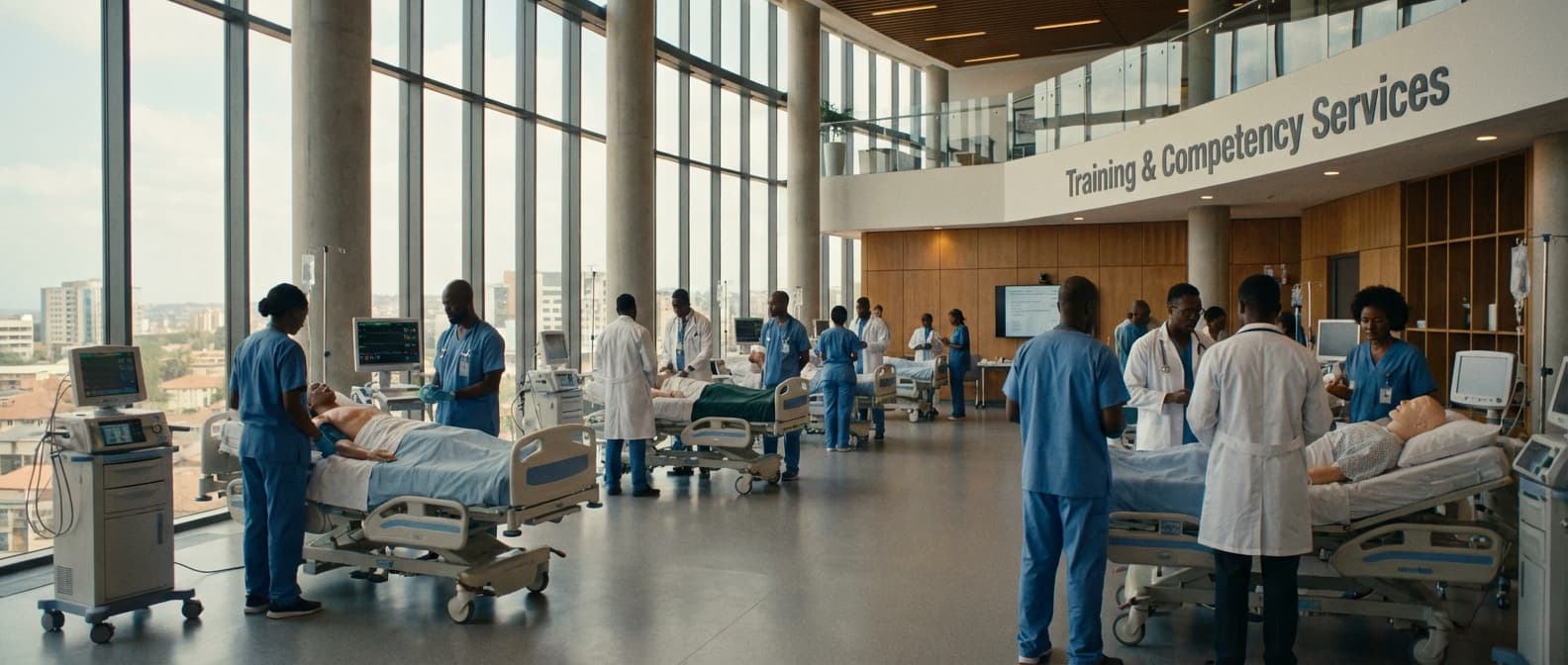
MRI Operator Training Service (Radiographers) in Tanzania
Engineering Excellence & Technical Support
MRI Operator Training Service (Radiographers) High-standard technical execution following OEM protocols and local regulatory frameworks.
Advanced MRI Protocols & Sequences
Master cutting-edge MRI sequences (e.g., FLAIR, DWI, GE, TSE) and protocol optimization for diverse anatomical regions, enhancing diagnostic accuracy and patient throughput in Tanzanian healthcare settings.
Image Quality Optimization & Artifact Reduction
Develop expert skills in identifying and mitigating common MRI artifacts (motion, magnetic susceptibility, aliasing), ensuring superior image quality essential for definitive diagnoses and effective patient management.
Patient Safety & Contrast Administration
Gain comprehensive training on MRI safety protocols, patient screening, and the safe administration of intravenous contrast agents, adhering to international best practices and local regulatory requirements.
What Is Mri Operator Training Service (Radiographers) In Tanzania?
MRI Operator Training Service (Radiographers) in Tanzania refers to specialized educational programs and support designed to equip radiographers with the necessary theoretical knowledge and practical skills to safely and effectively operate Magnetic Resonance Imaging (MRI) scanners. This service ensures that personnel are proficient in patient positioning, image acquisition protocols, artifact recognition, quality control, and adherence to radiation safety (though MRI is non-ionizing, safety protocols are still critical) and imaging physics principles relevant to MRI.
| Who Needs It? | Typical Use Cases | ||||
|---|---|---|---|---|---|
| Newly graduated radiographers seeking specialization in MRI. | Hospitals and diagnostic imaging centers acquiring new MRI facilities or upgrading existing ones. | Existing radiographers transitioning to MRI operation from other imaging modalities (e.g., CT, X-ray). | Radiographers seeking to enhance their skills and knowledge in advanced MRI techniques. | Healthcare institutions aiming to meet accreditation standards for MRI services. | |
| Diagnosis and staging of neurological conditions (e.g., brain tumors, stroke, multiple sclerosis). | Assessment of musculoskeletal injuries and abnormalities (e.g., ligament tears, cartilage damage). | Evaluation of cardiovascular structures and pathologies. | Detection and characterization of abdominal and pelvic pathologies (e.g., liver lesions, gynecological conditions). | Oncology imaging for tumor detection, characterization, and treatment monitoring. | Research applications involving advanced MRI sequences and functional imaging. |
Key Components of MRI Operator Training Service
- Theoretical Instruction: Covering MRI physics, pulse sequences, image contrast mechanisms, hardware components, and safety guidelines.
- Practical Hands-on Training: Supervised operation of MRI scanners, protocol selection, parameter optimization, and image post-processing.
- Patient Care & Safety: Education on MRI-specific contraindications, screening procedures, patient comfort, and emergency management.
- Image Quality Assurance: Training on identifying and mitigating artifacts, performing quality control checks, and optimizing image parameters for diagnostic accuracy.
- Regulatory Compliance: Understanding of national and international standards pertaining to MRI operation and patient safety.
- Continuing Professional Development (CPD): Opportunities for ongoing learning to stay abreast of technological advancements and evolving best practices.
Who Needs Mri Operator Training Service (Radiographers) In Tanzania?
MRI Operator Training Services in Tanzania are crucial for a variety of healthcare professionals and institutions to ensure the safe, effective, and efficient operation of Magnetic Resonance Imaging (MRI) scanners. This specialized training is essential for maximizing diagnostic capabilities and providing high-quality patient care. The need spans across different levels of healthcare facilities and professional roles.
| Target Customer/Department | Key Needs/Reasons for Training | Examples of Specific Roles |
|---|---|---|
| Radiology Departments (Public & Private Hospitals) | Operating MRI scanners safely and efficiently, performing various MRI sequences, ensuring image quality, patient safety protocols, troubleshooting minor issues. | Radiographers, MRI Technologists, Radiology Nurses |
| Neurology Departments | Specialized brain and spine imaging, advanced neuro-imaging techniques (e.g., fMRI, diffusion tensor imaging), understanding neurological pathologies. | Radiographers specializing in neuro-imaging |
| Oncology Departments | Tumor staging, treatment monitoring, advanced contrast-enhanced imaging for various cancers. | Radiographers with an interest in oncological imaging |
| Orthopedic Departments | Musculoskeletal imaging of joints, ligaments, tendons, and bones; specialized orthopedic protocols. | Radiographers with expertise in orthopedic imaging |
| Medical Training Institutions | Training future radiographers, developing curriculum, research in medical imaging. | Lecturers, Clinical Educators, Research Radiographers |
Target Customers and Departments for MRI Operator Training in Tanzania
- {"title":"Public Hospitals","description":"Large public hospitals, often serving as referral centers, are primary beneficiaries. They typically have the highest patient volume and may be investing in or upgrading their MRI equipment. Ensuring their radiographers are adequately trained is vital for national healthcare delivery."}
- {"title":"Private Hospitals and Clinics","description":"The growing private healthcare sector in Tanzania is a significant market. Private facilities often aim to offer advanced diagnostic services to attract a wider patient base. Well-trained MRI operators are a key differentiator."}
- {"title":"Referral and Specialized Centers","description":"Hospitals specializing in neurology, oncology, orthopedics, or cardiology will have a higher demand for advanced MRI techniques. Training ensures their operators can handle complex protocols and interpret results for these specific disciplines."}
- {"title":"University Teaching Hospitals","description":"These institutions are not only involved in patient care but also in medical education and research. Training their radiographers contributes to building a skilled workforce for the future and supports ongoing research endeavors."}
- {"title":"District and Regional Hospitals (with MRI facilities)","description":"While less common, some larger district or regional hospitals may be equipped with MRI scanners. Training for their staff is essential for decentralizing advanced imaging services and improving access for a wider population."}
- {"title":"Government Health Ministries and Agencies","description":"These entities are responsible for setting standards and ensuring the quality of healthcare services across the nation. They may commission training programs to upskill the workforce and standardize MRI operation."}
- {"title":"Medical Equipment Suppliers and Service Providers","description":"Companies that supply and service MRI machines often require their technicians and support staff to undergo operator training to better understand the equipment's functionalities and troubleshoot issues effectively."}
Mri Operator Training Service (Radiographers) Process In Tanzania
This document outlines the typical workflow for an MRI Operator Training Service (Radiographers) in Tanzania. The process is designed to guide potential clients from initial inquiry to the successful execution of a training program tailored to their specific needs and the regulatory environment in Tanzania.
| Stage | Description | Key Activities | Responsible Parties | Output/Deliverable |
|---|---|---|---|---|
| Initial contact from a client seeking MRI operator training. | Client contacts service provider. Discussion of training requirements, target audience (radiographers), existing skill levels, specific MRI modalities, desired learning outcomes, and location (facility-specific or centralized). | Client (e.g., hospital administrator, radiology department head), Training Service Provider (Business Development/Sales) | Understanding of client's needs, initial scope definition. |
| Formalization of the training offering based on the needs assessment. | Service provider designs a preliminary training outline. Estimation of costs (trainer fees, materials, travel, venue if applicable). Development of a detailed proposal including objectives, curriculum modules, duration, methodology, trainer profiles, and a comprehensive quotation. | Training Service Provider (Technical/Curriculum Development Team, Finance) | Detailed training proposal and quotation. |
| Formalizing the terms and conditions of the training engagement. | Client reviews proposal. Negotiation of terms, pricing, payment schedule, and any specific clauses (e.g., confidentiality, intellectual property). Signing of a formal service agreement or contract. | Client (Legal/Procurement), Training Service Provider (Legal/Management) | Signed Service Agreement/Contract. |
| Tailoring the training content and logistics to the agreed-upon scope. | Refinement of curriculum based on client feedback. Finalization of training dates, times, and location. Identification and booking of suitable training venue (if off-site). Arrangement of necessary training equipment and materials. | Training Service Provider (Curriculum Developers, Project Manager), Client (Logistics) | Finalized training schedule, confirmed venue, and detailed agenda. |
| Ensuring all necessary elements are in place for a smooth training execution. | Preparation of training materials (manuals, presentations, case studies). Pre-assessment of participants' knowledge (if applicable). Logistics coordination (travel arrangements for trainers/participants, accommodation, catering if required). Communication with participants about the training details. | Training Service Provider (Trainers, Logistics Coordinator), Client (Participant identification) | Ready training materials, confirmed logistics, informed participants. |
| The core of the service: conducting the actual training sessions. | Delivery of theoretical lectures, practical demonstrations, hands-on exercises, and case study discussions by qualified trainers. Emphasis on MRI physics, image acquisition techniques, safety protocols, patient positioning, and common pathologies relevant to the Tanzanian context. Adherence to Tanzanian regulatory requirements for radiographer training. | Training Service Provider (Trainers) | Delivered training modules, participant engagement. |
| Measuring the effectiveness of the training and participant learning. | Conducting theoretical assessments (quizzes, exams) and practical evaluations (skill demonstrations, scenario-based assessments). Trainer observation of participant performance. Gathering immediate feedback from participants on the training delivery and content. | Training Service Provider (Trainers, Assessors) | Participant assessment results, training feedback forms. |
| Formalizing completion and providing ongoing support. | Issuance of certificates of completion to participants who meet the required standards. Providing post-training support (e.g., answering queries, offering additional resources). Follow-up with the client to ensure training objectives are being met in practice. | Training Service Provider (Administration, Trainers), Client | Certificates of completion, post-training support report. |
| Utilizing client and participant feedback to enhance future training offerings. | Comprehensive review of participant feedback, trainer reports, and assessment outcomes. Identifying areas for improvement in curriculum, delivery methods, or logistical processes. Incorporating lessons learned into future training programs. | Training Service Provider (Management, Curriculum Team) | Internal review report, updated training methodologies. |
MRI Operator Training Service Workflow (Tanzania)
- Inquiry & Needs Assessment
- Proposal Development & Quotation
- Contract Negotiation & Agreement
- Program Customization & Scheduling
- Pre-Training Preparations
- Training Delivery (On-site/Off-site)
- Assessment & Evaluation
- Certification & Follow-up
- Feedback & Continuous Improvement
Mri Operator Training Service (Radiographers) Cost In Tanzania
Training radiographers to operate MRI machines in Tanzania is a specialized and crucial service. The cost of such training is influenced by several key factors, including the duration of the course, the expertise of the trainers, the facilities and equipment utilized, and the inclusion of practical, hands-on experience. Because MRI technology is advanced and requires specialized knowledge, training is typically delivered by experienced radiographers, medical physicists, or specialized training institutions. The range of costs can vary significantly, reflecting these differences in program quality and scope. In Tanzania, costs are generally quoted in Tanzanian Shillings (TZS).
| Training Program Type | Estimated Cost Range (TZS) | Typical Duration | Key Features |
|---|---|---|---|
| Basic MRI Physics & Operation (Introductory) | 3,000,000 - 7,000,000 | 1-2 Weeks | Theoretical understanding of MRI principles, basic machine operation, safety protocols. |
| Comprehensive MRI Operator Training (Standard) | 7,000,000 - 15,000,000 | 3-6 Weeks | In-depth physics, protocol optimization, image acquisition, basic patient positioning, quality control, introduction to common pathologies. |
| Advanced MRI Techniques & Applications | 12,000,000 - 25,000,000+ | 4-8 Weeks (or modular) | Specialized sequences (e.g., fMRI, diffusion tensor imaging), advanced troubleshooting, specific body part imaging, hands-on practice on advanced scanners. |
| On-Site/Customized Institutional Training | Variable (negotiable based on scope) | Customizable | Tailored curriculum, on-site delivery at hospital facilities, focus on specific equipment and institutional needs. |
Key Pricing Factors for MRI Operator Training in Tanzania
- Course Duration and Intensity: Shorter, introductory courses will naturally be less expensive than comprehensive programs covering advanced techniques and troubleshooting.
- Trainer Expertise and Qualifications: Highly experienced and certified MRI trainers, particularly those with international experience, command higher fees.
- Training Venue and Facilities: Training conducted at well-equipped hospitals with modern MRI scanners and simulation labs will be more costly than theoretical-only or basic simulator-based training.
- Practical vs. Theoretical Focus: Programs emphasizing extensive hands-on practice with live MRI scanners will be more expensive due to equipment access and supervision requirements.
- Accreditation and Certification: Training programs leading to recognized certifications or accreditations from professional bodies may incur additional costs.
- Training Materials and Resources: The provision of detailed manuals, access to online learning platforms, and other educational resources can influence pricing.
- Location of Training: Training delivered in major cities like Dar es Salaam might have higher overheads compared to other regions.
- Group Size and Customization: Group discounts might be available, and customized training programs tailored to specific institutional needs can also impact pricing.
Affordable Mri Operator Training Service (Radiographers) Options
Navigating the landscape of affordable MRI operator training for radiographers is crucial for healthcare facilities aiming to expand their imaging services without breaking the bank. This involves exploring various training modalities, understanding value bundles, and implementing smart cost-saving strategies. Our service focuses on delivering high-quality, accessible, and economically viable MRI operator training programs, ensuring radiographers gain the necessary skills and certifications efficiently.
| Training Modality | Description | Typical Cost Range (USD per trainee, indicative) | Cost-Saving Potential |
|---|---|---|---|
| Online/E-Learning Modules | Self-paced theoretical learning covering MRI physics, safety, protocols, and image interpretation. Often includes simulations. | $500 - $2,000 | High: Reduced travel, accommodation, and instructor fees. Scalable. |
| On-Site/In-House Training | Tailored training delivered at the healthcare facility, often utilizing existing MRI equipment. Includes theoretical and practical components. | $3,000 - $10,000+ (package for multiple trainees) | High: Eliminates travel/accommodation for trainees. Can be cost-effective for groups. Requires internal resources/expertise or external provider fees. |
| Hybrid/Blended Learning | Combines online theoretical modules with limited in-person practical sessions and hands-on scanning experience. | $1,000 - $4,000 | Medium to High: Balances cost-effectiveness of e-learning with essential practical skills. Reduces on-site training duration. |
| University/External Program Attendance | Formal academic courses or specialized certification programs at external institutions. Includes comprehensive theory and often clinical rotations. | $5,000 - $15,000+ | Low: Typically higher tuition fees, plus travel and accommodation. May offer deeper theoretical grounding and broader exposure. |
| Vendor-Specific Training | Training provided by MRI equipment manufacturers, focusing on their specific hardware and software. | Varies widely (can be included with equipment purchase or a separate fee: $1,000 - $5,000+) | Medium: Can be cost-effective if bundled with equipment. May be less vendor-neutral. |
Key Considerations for Affordable MRI Operator Training
- Understanding Training Modalities: Different training approaches offer varying cost structures and flexibility.
- Value-Added Bundles: Look for packages that integrate multiple training components for enhanced savings.
- Cost-Saving Strategies: Proactive planning and smart choices can significantly reduce overall training expenses.
- Certification and Accreditation: Ensure training programs lead to recognized certifications to validate skills.
- On-Site vs. Off-Site Training: Evaluate the cost-effectiveness of bringing training to your facility versus sending staff to an external location.
- Blended Learning Approaches: Combining online and in-person elements can offer a balance of cost and engagement.
Verified Providers In Tanzania
In Tanzania's evolving healthcare landscape, identifying genuinely verified healthcare providers is paramount for ensuring quality and reliable medical services. Franance Health stands out as a beacon of trust and excellence, distinguishing itself through a rigorous credentialing process and a commitment to upholding the highest standards in medical care. This document outlines why Franance Health's verified providers represent the best choice for individuals seeking dependable healthcare solutions in Tanzania.
| Attribute | Franance Health Verification | Why it Matters |
|---|---|---|
| Medical Staff Qualifications | Rigorous vetting of degrees, certifications, and specialized training. | Ensures providers possess the necessary expertise for accurate diagnosis and effective treatment. |
| Facility Standards | Assessment of infrastructure, equipment, hygiene, and safety protocols. | Guarantees a safe, clean, and well-equipped environment conducive to healing. |
| Service Delivery Excellence | Evaluation of patient care processes, communication, and follow-up. | Promotes a patient-centered approach, leading to better health outcomes and satisfaction. |
| Regulatory Compliance | Ensures adherence to all Tanzanian health regulations and best practices. | Provides assurance that the provider operates legally and ethically, protecting patient rights. |
| Insurance and Billing Transparency | Verification of transparent pricing and acceptance of reputable insurance plans. | Facilitates accessible and predictable healthcare expenses for patients. |
Key Indicators of Verified Providers:
- Official Accreditation: Verification by recognized national or international health regulatory bodies.
- Professional Licensure: Confirmation of current and valid licenses for all medical practitioners.
- Continuous Professional Development (CPD): Evidence of ongoing training and skill enhancement among staff.
- Patient Feedback and Satisfaction: A consistent track record of positive patient reviews and outcomes.
- Adherence to Ethical Standards: Commitment to patient confidentiality, informed consent, and ethical medical practice.
Scope Of Work For Mri Operator Training Service (Radiographers)
This Scope of Work outlines the requirements for providing comprehensive MRI Operator Training Services specifically tailored for Radiographers. The training will equip participants with the necessary theoretical knowledge and practical skills to safely and effectively operate MRI scanners, produce high-quality diagnostic images, and adhere to best practices in MRI operation and patient care. The training will cover fundamental MRI principles, advanced imaging techniques, safety protocols, quality assurance, and post-processing of images. Key technical deliverables include training manuals, practical session checklists, competency assessments, and a final report. Standard specifications will ensure consistency and effectiveness in the training delivery.
| Specification Area | Standard Specification | Description |
|---|---|---|
| Training Content | Comprehensive & Up-to-Date | Covers theoretical principles (physics, pulse sequences, image formation), practical operation (scanner controls, patient positioning, coil selection), safety (MR safety zones, contraindications, screening), image optimization, basic artifact recognition, and quality control procedures. |
| Training Methodology | Blended Learning Approach | Combines theoretical lectures (in-person or virtual), interactive demonstrations, hands-on practical sessions on actual MRI equipment, and case-based learning. |
| Instructor Qualifications | Certified & Experienced | Instructors must be certified MRI technologists or radiographers with a minimum of 5 years of practical MRI operating experience and proven training ability. |
| Practical Training Duration | Minimum Hours per Participant | A minimum of X hours of supervised hands-on practical training per participant on live scanning sessions or simulated scenarios. |
| Assessment Strategy | Formative & Summative | Includes regular formative assessments (quizzes, participation) and a summative assessment (practical skills evaluation, final exam) to gauge understanding and competency. |
| Equipment Access | Functional MRI Scanner(s) | Access to at least one fully functional MRI scanner with various coils and a PACS system for image review and post-processing during practical sessions. |
| Safety Protocols | Adherence to Strict Safety Standards | All practical sessions will strictly adhere to established MR safety guidelines, including patient screening, ferromagnetic detection, and emergency procedures. |
| Customization | Modular & Adaptable | Training modules can be customized to address specific scanner models or clinical applications relevant to the client's needs, within the overall scope. |
| Documentation | Clear & Concise | All training materials and deliverables will be clear, concise, and easy to understand for radiographers with varying levels of experience. |
| Post-Training Support | Limited Availability | Offer of limited post-training support (e.g., email queries) for a defined period (e.g., 30 days) after the completion of the training. |
Technical Deliverables
- Comprehensive MRI Operator Training Manual (Digital and/or Print)
- Module-specific Presentation Slides and Handouts
- Practical Session Checklists and Observation Forms
- Case Study Scenarios for Image Interpretation and Protocoling
- Competency Assessment Tools (e.g., practical skills evaluation, written quizzes)
- Post-Training Feedback Forms for Participants
- Summary Report of Training Conducted (including attendance, assessment results, and recommendations)
- Certificate of Completion for Successful Participants
Service Level Agreement For Mri Operator Training Service (Radiographers)
This Service Level Agreement (SLA) outlines the performance standards for the MRI Operator Training Service provided to radiographers. It defines the expected response times for support requests and the guaranteed uptime for the training platform.
| Service Component | Service Level Target | Measurement Method | Remedy for Non-Compliance |
|---|---|---|---|
| Initial Response to Critical Support Ticket (System Outage affecting all users) | Within 1 hour | Timestamp of ticket submission to time of first contact (email/phone) | 20% discount on next training module fee, for each occurrence beyond the first in a quarter. |
| Initial Response to High Priority Support Ticket (Individual user unable to access training) | Within 4 business hours | Timestamp of ticket submission to time of first contact (email/phone) | 10% discount on next training module fee, for each occurrence beyond the second in a quarter. |
| Initial Response to Medium Priority Support Ticket (Question about training content) | Within 8 business hours | Timestamp of ticket submission to time of first contact (email/phone) | No direct financial remedy, but documented performance feedback provided to the training provider. |
| Training Platform Uptime (excluding scheduled maintenance) | 99.5% monthly uptime | Monthly measurement of platform availability by the training provider's monitoring tools | For each full 1% below 99.5% uptime, a credit of 5% of the monthly training subscription fee will be applied. |
| Training Material Availability | 100% availability during scheduled training sessions | Monitoring of access to all course materials by the training provider | Rescheduling of affected session at no extra cost, with a supplementary resource provided. |
| Trainer Availability for Scheduled Q&A Sessions | 95% availability | Monitoring of trainer attendance at scheduled Q&A sessions | Alternative trainer provided for missed sessions, or session rescheduled. A recording of the missed session will be made available if feasible. |
Key Performance Indicators (KPIs)
- Response Times for Support Requests
- Uptime Guarantees for Training Platform
- Training Material Availability
- Trainer Availability
Frequently Asked Questions

Ready when you are
Let's scope your MRI Operator Training Service (Radiographers) in Tanzania project in Tanzania.

Scaling healthcare logistics and technical systems across the entire continent.