
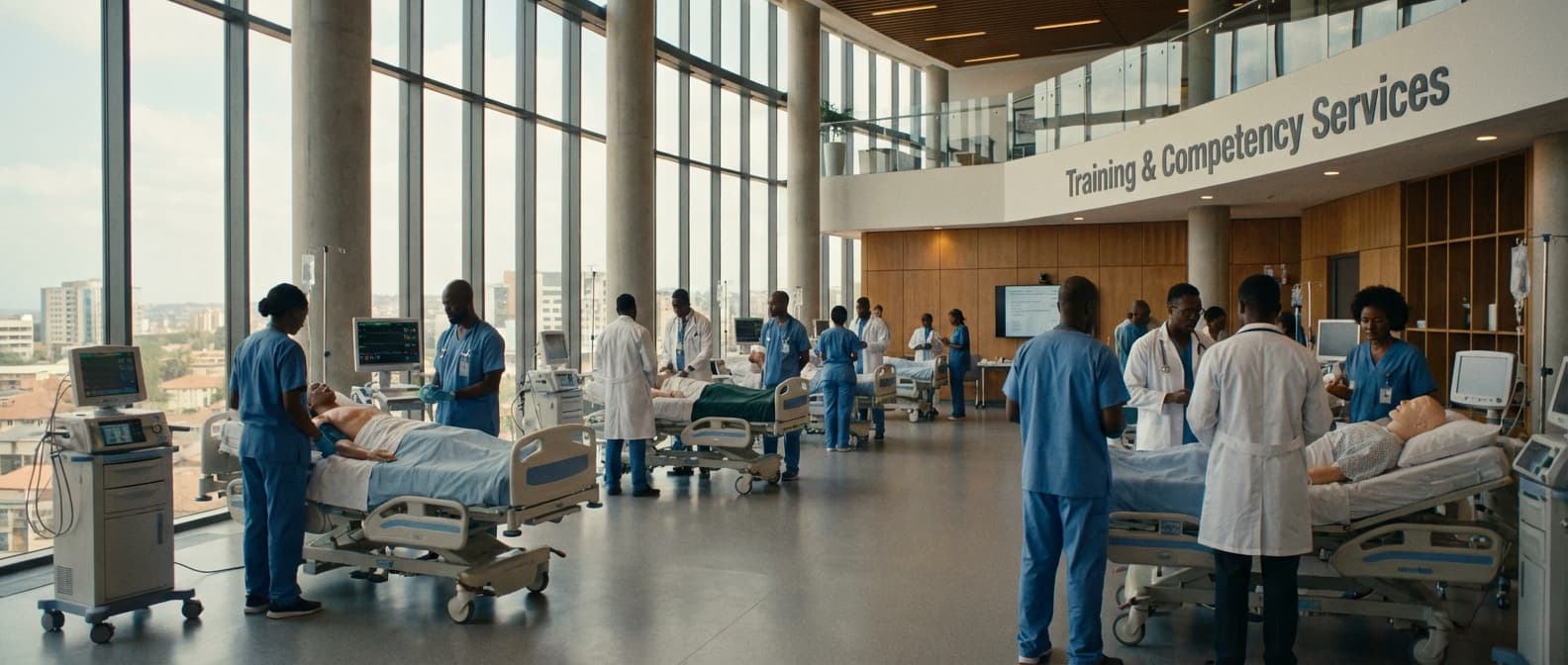
CT Operator Training Service (Radiographers) in Tanzania
Engineering Excellence & Technical Support
CT Operator Training Service (Radiographers) High-standard technical execution following OEM protocols and local regulatory frameworks.
Advanced Remote Training Platform
Leveraging cutting-edge online modules and virtual labs, our CT Operator Training Service provides Tanzanian radiographers with flexible, accessible, and up-to-date education, eliminating geographical barriers and reducing downtime.
Hands-On CT Simulation Training
Our service incorporates high-fidelity CT simulators, allowing trainees to practice a wide range of scanning protocols, patient positioning, and artifact identification in a safe, risk-free environment, building confidence and proficiency.
Expert-Led, Culturally-Aware Instruction
Benefit from training delivered by internationally certified CT radiographers with extensive experience in diverse clinical settings and a deep understanding of the Tanzanian healthcare landscape, ensuring relevant and practical skill development.
What Is Ct Operator Training Service (Radiographers) In Tanzania?
CT Operator Training Service (Radiographers) in Tanzania refers to specialized educational programs designed to equip radiographers with the theoretical knowledge and practical skills necessary to safely and effectively operate Computed Tomography (CT) scanners. This service is crucial for ensuring high-quality diagnostic imaging, minimizing radiation exposure to patients and staff, and adhering to national regulatory standards for medical imaging practices within Tanzania.
| Who Needs CT Operator Training Service? | Typical Use Cases for CT Operator Training | ||||||
|---|---|---|---|---|---|---|---|
| Newly qualified radiographers seeking to specialize in CT imaging. | Initial training for radiographers taking up CT positions in public and private healthcare facilities. | Experienced radiographers requiring recertification or upskilling on new CT technologies or protocols. | Radiographers transitioning from other imaging modalities (e.g., X-ray, Ultrasound) to CT operation. | Healthcare institutions establishing or expanding their CT imaging services. | Radiographers working in remote or underserved areas where specialized CT expertise is limited. | Training programs designed to meet the requirements of the Medical Council of Tanzania or equivalent regulatory bodies for CT practice. | |
| Diagnostic imaging of trauma patients (e.g., head injuries, abdominal trauma). | Staging and monitoring of oncological diseases (e.g., lung nodules, liver metastases). | Evaluation of neurological conditions (e.g., stroke, brain tumors). | Assessment of cardiovascular diseases (e.g., coronary artery disease, aortic aneurysms). | Imaging of the gastrointestinal and genitourinary systems (e.g., appendicitis, kidney stones). | Pre-operative planning for surgical interventions. | Interventional radiology guidance (e.g., biopsies, drainages). | Screening programs (e.g., low-dose CT for lung cancer screening). |
Key Components of CT Operator Training Service (Radiographers) in Tanzania:
- Fundamental Principles of CT Imaging: Understanding X-ray physics, image acquisition parameters (kVp, mAs, slice thickness), gantry rotation, and reconstruction algorithms.
- CT Scanner Operation and Maintenance: Hands-on training on specific CT scanner models, including patient positioning, protocol selection, image acquisition, and basic troubleshooting.
- Radiation Safety and Protection: Comprehensive instruction on radiation physics, biological effects of ionizing radiation, ALARA (As Low As Reasonably Achievable) principles, shielding, dose monitoring, and compliance with Tanzanian radiation protection regulations.
- Image Quality Optimization: Techniques for minimizing artifacts, enhancing diagnostic image clarity, and achieving optimal spatial and contrast resolution.
- Contrast Media Administration: Training on the safe selection, administration, and monitoring of intravenous contrast agents, including recognition and management of adverse reactions.
- Patient Care and Communication: Protocols for patient preparation, informed consent, managing patient anxiety, and ensuring patient comfort and safety during the scan.
- Quality Assurance and Control (QA/QC): Understanding and implementing QA/QC procedures to ensure consistent scanner performance and diagnostic accuracy.
- Pathology Recognition (Basic): Familiarization with common anatomical structures and basic pathological findings visible on CT images to guide protocol selection and identify potential issues.
- Ethical and Legal Considerations: Awareness of professional conduct, patient confidentiality, and relevant medical imaging legislation in Tanzania.
Who Needs Ct Operator Training Service (Radiographers) In Tanzania?
This document outlines the critical need for CT Operator Training Services for Radiographers in Tanzania. Such specialized training is essential to ensure the safe, efficient, and accurate utilization of CT scanning technology, ultimately improving diagnostic capabilities and patient care across the nation.
| Target Customer/Department | Specific Needs/Rationale | Key Personnel to be Trained |
|---|---|---|
| Radiology Departments (Hospitals & Diagnostic Centers) | Core department for CT operations. Need for upskilling existing staff, training new operators, ensuring compliance with safety standards, and efficient protocol management for diverse examinations. | Radiographers, CT Technologists, Radiology Nurses (involved in patient preparation/monitoring) |
| Oncology Departments | Crucial for treatment planning, monitoring tumor response, and guiding biopsies. Requires advanced CT techniques and precise imaging for radiation therapy planning. | Radiographers, Radiation Therapists (to understand CT data integration) |
| Neurology/Neurosurgery Departments | Essential for diagnosing stroke, trauma, tumors, and other neurological conditions. Requires expertise in brain imaging protocols and fast acquisition for acute conditions. | Radiographers, Neurologists (to understand imaging capabilities) |
| Emergency Departments/Trauma Centers | Rapid and accurate CT imaging is vital for diagnosing life-threatening injuries in trauma patients. Training focuses on emergency protocols, fast scan times, and image interpretation support. | Radiographers, Emergency Medicine Physicians (to understand imaging turnaround) |
| Cardiology Departments | For CT angiography of the heart and coronary arteries. Requires specialized training in cardiac CT protocols, ECG gating, and image reconstruction. | Radiographers, Cardiologists (to understand imaging capabilities) |
| Paediatric Departments | Specialized training for pediatric CT imaging to minimize radiation dose, manage patient anxiety, and adapt protocols for young patients. | Paediatric Radiographers, Paediatricians |
| Public Health Initiatives/Government Programs | To standardize CT services, ensure equitable access to diagnostic imaging across regions, and implement national screening programs (if applicable). | Radiographers employed by government health facilities |
| Training and Educational Institutions (Medical Schools, Nursing Schools) | To integrate comprehensive CT operator training into their curriculum, producing well-trained graduates for the healthcare workforce. | Lecturers, Clinical Instructors (to deliver CT training content) |
Target Customers and Departments for CT Operator Training in Tanzania
- Hospitals (Public and Private)
- Diagnostic Imaging Centers
- Referral Hospitals
- Regional Hospitals
- District Hospitals (with CT facilities)
- Tertiary Care Centers
- University Teaching Hospitals
- Specialized Medical Centers (e.g., Oncology, Cardiology)
- Government Ministry of Health Facilities
- Non-Governmental Organization (NGO) Healthcare Providers
Ct Operator Training Service (Radiographers) Process In Tanzania
This document outlines the workflow for CT Operator Training Services for Radiographers in Tanzania, from initial inquiry to the successful completion of the training program. The process is designed to be comprehensive, ensuring that all necessary steps are taken to provide high-quality training that meets both regulatory requirements and the specific needs of the trainees and their sponsoring organizations.
| Stage | Description | Key Activities | Responsible Party(ies) | Key Deliverables |
|---|---|---|---|---|
| Initial contact from a potential client or individual seeking CT operator training. | Receive and acknowledge inquiry, understand training needs (e.g., specific CT modality, experience level, desired outcomes), provide preliminary information on training services, schedule initial consultation. | Client/Individual, Training Provider Sales/Consulting Team | Acknowledged Inquiry, Documented Training Needs, Initial Information Package |
| Based on the assessed needs, a tailored training proposal is created. | Develop detailed training curriculum, outline learning objectives, define duration, location, instructors, equipment requirements, cost breakdown, and payment schedule. Present proposal to client, discuss and negotiate terms. | Training Provider Technical & Sales Teams, Client (HR, Radiology Department Heads) | Detailed Training Proposal, Negotiated Terms, Signed Agreement (Provisional) |
| Formalizing the agreement and preparing for the commencement of training. | Finalize and sign contract. Collect participant details (qualifications, contact information). Schedule training dates and venue. Procure necessary training materials, equipment, and software. Communicate pre-training requirements to participants (e.g., prerequisite knowledge, documentation). | Training Provider Administration & Logistics, Client (HR, Finance) | Signed Training Contract, Confirmed Training Schedule & Venue, Prepared Training Materials, Participant Registration |
| The core phase where theoretical and practical training is conducted. | Deliver theoretical lectures covering CT physics, anatomy, physiology, radiation safety, image acquisition protocols, and quality control. Conduct practical sessions on CT scanners (simulators or actual equipment), demonstrating patient positioning, protocol selection, image manipulation, and troubleshooting. Include case study discussions and interactive Q&A. | Certified CT Instructors, Participants | Completed Theoretical Modules, Practical Skill Demonstrations, Trainee Engagement |
| Evaluating the trainee's comprehension and practical abilities. | Administer theoretical assessments (quizzes, exams). Conduct practical competency assessments (observation of image acquisition, protocol application). Review assessment results. Issue certificates of completion/competency upon successful attainment of learning objectives and passing criteria. | Certified CT Instructors, Training Provider Assessment Team, Participants | Assessment Results, Certificates of Completion/Competency |
| Providing ongoing support and gathering feedback for continuous improvement. | Offer post-training support (e.g., answering follow-up questions, providing resources). Solicit feedback from participants and sponsoring organizations on the training program's effectiveness, quality, and relevance. Analyze feedback to identify areas for improvement in future training delivery. | Training Provider Support Team, Participants, Client | Post-Training Support Provided, Feedback Reports, Program Improvement Recommendations |
CT Operator Training Process Workflow
- Inquiry & Needs Assessment
- Proposal Development & Negotiation
- Contracting & Pre-Training Preparations
- Training Delivery
- Assessment & Certification
- Post-Training Support & Feedback
Ct Operator Training Service (Radiographers) Cost In Tanzania
The cost of CT Operator Training (Radiographers) in Tanzania can vary significantly based on several factors. This training is crucial for ensuring competent operation of CT scanners, leading to accurate diagnoses and patient safety. The pricing is influenced by the training provider, the duration and depth of the program, the location of the training, and the level of accreditation or recognition it holds. Additionally, whether the training includes hands-on practical sessions with actual CT equipment, simulation, or is purely theoretical will impact the overall cost. Some programs might also offer specialized modules on advanced CT techniques or specific equipment models, which can increase the price. Demand for such specialized training in Tanzania, alongside the availability of qualified instructors and training facilities, also plays a role in setting the price points.
| Training Type/Duration | Estimated Cost Range (TZS) - Low End | Estimated Cost Range (TZS) - High End | Notes |
|---|---|---|---|
| Basic CT Operator Certificate (e.g., 2-4 weeks) | 800,000 | 1,500,000 | Focuses on foundational principles and basic operation. May have limited hands-on time. |
| Comprehensive CT Operator Diploma/Advanced Course (e.g., 6-12 weeks) | 1,200,000 | 3,000,000 | Includes in-depth theory, extensive practical sessions, and potentially specialized modules. |
| On-site Training (per group/facility) | Negotiable (higher initial cost) | Negotiable (higher initial cost) | Cost varies greatly depending on the number of participants, duration, and travel/accommodation for trainers. |
| Refresher/Specialized Workshops (e.g., 1-3 days) | 200,000 | 700,000 | Focuses on specific CT applications, protocols, or new technologies. |
| Training with Reputable International Institutions (if offered locally or online) | 2,500,000 | 8,000,000+ | Often higher due to international accreditation, curriculum standards, and potentially online components. |
Key Pricing Factors for CT Operator Training (Radiographers) in Tanzania:
- Training Provider Reputation and Accreditation
- Duration and Intensity of the Course
- Inclusion of Hands-on Practical Training/Simulations
- Level of Specialization (e.g., advanced techniques, specific scanner models)
- Location of Training (urban vs. rural, accessibility)
- Instructor Expertise and Qualifications
- Training Facility Resources (e.g., access to CT scanners, classrooms)
- Certification and Assessment Methods
- Demand and Market Competition
Affordable Ct Operator Training Service (Radiographers) Options
Finding affordable CT operator training is crucial for radiographers looking to advance their skills or for facilities needing to train new personnel. This service focuses on delivering high-quality, cost-effective CT operator training designed to meet professional standards and regulatory requirements. We understand that budget constraints are a significant factor, and therefore, we offer a range of options, including value bundles and strategic cost-saving measures, to make this essential training accessible.
| Cost-Saving Strategy | Description | Impact on Affordability |
|---|---|---|
| Blended Learning Approach | Combines online self-paced modules with shorter, focused in-person or virtual instructor-led sessions. Reduces travel and accommodation costs. | Significantly lowers overall training expenditure by minimizing face-to-face time. |
| Early Bird Registration Discounts | Offers reduced pricing for individuals or groups who commit to training well in advance of the course start date. | Provides direct monetary savings for proactive planning. |
| Group Training Discounts | Applies percentage-based discounts for multiple participants from the same institution enrolling together. | Drives down the per-person cost for facilities investing in their staff. |
| Modular Training Options | Allows trainees to select and pay for specific modules or components of the training, rather than a full, potentially unnecessary package. | Enables customization and avoids paying for redundant or irrelevant content. |
| Sponsorship and Scholarship Programs | Partnerships with professional organizations or the availability of internal facility sponsorship opportunities. | Reduces or eliminates out-of-pocket expenses for the trainee. |
| Simulation-Based Training | Utilizes advanced simulation software for practical scanning experience before progressing to real patient imaging. | Reduces the need for extensive supervised hours on expensive, live equipment and minimizes potential errors on patients. |
| Online Resource Library Access | Provides ongoing access to a digital library of CT protocols, case studies, and educational materials for continuous learning. | Offers long-term value and supports ongoing professional development without recurring fees for basic resources. |
Key Value Bundles for Affordable CT Operator Training
- {"title":"Core CT Principles + Practical Skills Bundle","description":"This bundle combines foundational theoretical knowledge of CT physics, anatomy, pathology, and image acquisition protocols with hands-on practical training. It's ideal for new operators or those transitioning from other modalities. Includes online modules, simulated scanning sessions, and a limited number of supervised real-scan hours."}
- {"title":"Advanced CT Protocols + Artifact Management Bundle","description":"Geared towards experienced radiographers seeking to expand their expertise, this bundle focuses on specialized CT applications (e.g., cardiac CT, interventional CT) and advanced techniques for minimizing and correcting image artifacts. Features in-depth case studies and expert-led Q&A sessions."}
- {"title":"Full CT Operator Certification Package","description":"Our most comprehensive offering, this bundle includes all theoretical and practical training required for full CT operator certification. It encompasses basic principles, advanced protocols, patient care, radiation safety, and a thorough preparation for certification exams. Often includes mentorship and mock exams."}
- {"title":"Facility-Wide Training Solution","description":"Designed for imaging centers or hospitals, this bundle offers customized training programs for multiple staff members. Can include on-site training components, blended learning approaches, and administrative reporting tools to track progress. Significant cost savings per individual when training groups."}
Verified Providers In Tanzania
Finding reliable and qualified healthcare providers in Tanzania is crucial for ensuring quality care. Franance Health has established itself as a leading platform for identifying and accessing verified medical professionals and institutions. This commitment to verification and their comprehensive approach make them the optimal choice for patients seeking trustworthy healthcare.
| Provider Type | Franance Health Verification Standard | Key Benefit for Patients |
|---|---|---|
| Doctors (GPs & Specialists) | Medical Council Registration, Board Certification (where applicable), Peer/Hospital Affiliation Checks | Assurance of qualified and licensed medical expertise. |
| Hospitals & Clinics | Facility Licensing, Accreditation (where applicable), Equipment & Infrastructure Review | Confirmation of safe and well-equipped healthcare facilities. |
| Diagnostic Centers | Regulatory Compliance, Equipment Calibration & Maintenance Records, Staff Qualifications | Reliable and accurate diagnostic services. |
| Pharmacies | Pharmacy Board Registration, Stock Verification (where possible), Dispensing Practices | Access to legitimate and quality medications. |
Why Franance Health is the Best Choice for Verified Providers in Tanzania:
- Rigorous Verification Process: Franance Health employs a multi-stage vetting system that goes beyond basic licensing. They confirm credentials, specializations, and often experience levels, giving patients peace of mind.
- Comprehensive Provider Database: The platform boasts an extensive and diverse network of doctors, specialists, hospitals, clinics, and diagnostic centers across Tanzania, catering to a wide range of medical needs.
- Patient-Centric Features: Franance Health prioritizes the patient experience with features like easy appointment booking, access to patient reviews, and clear service descriptions.
- Focus on Quality and Trust: Their core mission is to bridge the gap between patients and dependable healthcare providers, fostering trust and transparency in the Tanzanian medical landscape.
- Accessibility and Convenience: The platform makes it simple for users to find the right provider based on location, specialty, and availability, streamlining the healthcare search process.
Scope Of Work For Ct Operator Training Service (Radiographers)
This Scope of Work (SOW) outlines the requirements for providing comprehensive CT Operator Training Services for Radiographers. The training will cover theoretical knowledge and practical skills necessary for the safe and effective operation of CT scanners, ensuring high-quality diagnostic imaging. The training program will adhere to industry best practices and regulatory standards. This SOW specifies the technical deliverables, standard specifications for training content, and evaluation methods.
| Category | Specification/Description | Key Performance Indicators (KPIs) |
|---|---|---|
| Curriculum Content | Theoretical modules covering CT physics, image acquisition principles, patient positioning, contrast media administration, radiation safety, artifact reduction, image processing and manipulation, common pathologies, and quality assurance. Practical modules focusing on scanner operation, protocol selection, image reconstruction, and troubleshooting. | Completion rate of all curriculum modules by trainees. Accuracy of theoretical knowledge assessment scores (average > 85%). |
| Training Materials | Clear, concise, and up-to-date training manuals, presentations, and handouts. Materials should be tailored to the specific CT scanner models in use. Case studies should be diverse and representative of clinical practice. | Feedback on material clarity and relevance (average rating > 4/5). Availability of all specified materials prior to training commencement. |
| Practical Training | Hands-on experience with actual CT scanners or high-fidelity simulators. Trainees will perform a range of standard and specialized CT examinations under direct supervision. Emphasis on patient safety and efficient workflow. | Demonstrated proficiency in performing at least 80% of core CT protocols. Successful completion of practical assessment scenarios. Adherence to safety protocols during practical sessions. |
| Radiation Safety Training | In-depth coverage of ALARA principles, dose monitoring, shielding, and regulatory requirements for radiation protection in CT. Specific training on CTDIvol and DLP calculations and interpretation. | All trainees pass radiation safety assessment with a score of 90% or higher. Demonstration of correct radiation safety practices during practical sessions. |
| Image Quality and Artifacts | Training on factors affecting image quality, identification and reduction of common CT artifacts (e.g., motion, beam hardening, streak), and techniques for optimizing image resolution and contrast. | Trainees correctly identify and propose solutions for at least 75% of presented artifact scenarios. Achieve acceptable image quality metrics (as defined by institution) on at least 90% of simulated or actual scans. |
| Assessment and Evaluation | A comprehensive assessment including theoretical quizzes, practical skill demonstrations, and a final examination. A passing score of 75% overall is required. Trainer and course evaluation feedback collection. | Average trainee passing rate of > 90%. Average trainer effectiveness rating of > 4/5. Average course satisfaction rating of > 4/5. |
| Trainer Qualifications | Trainers must be certified radiographers with a minimum of 5 years of experience in CT imaging and possess demonstrable experience in adult education and training. | Submission of trainer CVs and relevant certifications prior to contract award. |
Technical Deliverables
- Comprehensive Training Curriculum (detailed breakdown in specifications)
- Training Manuals and Handouts (digital and/or print)
- Case Study Library (relevant to common CT examinations)
- Practical Training Sessions (on-site or simulated environment)
- Competency Assessment Tools (quizzes, practical evaluations, final exam)
- Trainer Qualifications and Experience Documentation
- Training Schedule and Logistics Plan
- Post-Training Support Plan (e.g., Q&A sessions, refresher materials)
- Training Evaluation and Feedback Reports
Service Level Agreement For Ct Operator Training Service (Radiographers)
This Service Level Agreement (SLA) outlines the response times and uptime guarantees for the CT Operator Training Service provided to radiographers. It defines the commitment to service availability and the procedures for addressing service interruptions and performance issues.
| Service Component | Uptime Guarantee | Response Time (Incident - Critical) | Response Time (Incident - High) | Response Time (Incident - Medium) | Response Time (Support Request) |
|---|---|---|---|---|---|
| CT Operator Training Platform (Online Access) | 99.5% (excluding scheduled maintenance) | 1 hour | 2 hours | 4 hours | 8 business hours |
| Learning Materials (Accessibility) | 99.5% (excluding scheduled maintenance) | 1 hour | 2 hours | 4 hours | 8 business hours |
| Expert Support (Email/Chat) | N/A (focus on response times) | 1 hour | 2 hours | 4 hours | 8 business hours |
Key Service Components & Definitions
- CT Operator Training Service: Refers to the online platform, associated learning materials, and expert support provided for radiographers seeking CT operational proficiency.
- Target Uptime: The percentage of time the CT Operator Training Service is expected to be available and fully functional.
- Response Time: The maximum time allowed to acknowledge and initiate action on a reported incident or support request.
- Incident: Any event that disrupts or degrades the normal operation of the CT Operator Training Service.
- Support Request: A query or request for assistance related to the CT Operator Training Service, not classified as an incident.
- Scheduled Maintenance: Planned periods of downtime for system updates, upgrades, or essential maintenance. This will be communicated in advance.
Frequently Asked Questions

Ready when you are
Let's scope your CT Operator Training Service (Radiographers) in Tanzania project in Tanzania.

Scaling healthcare logistics and technical systems across the entire continent.