
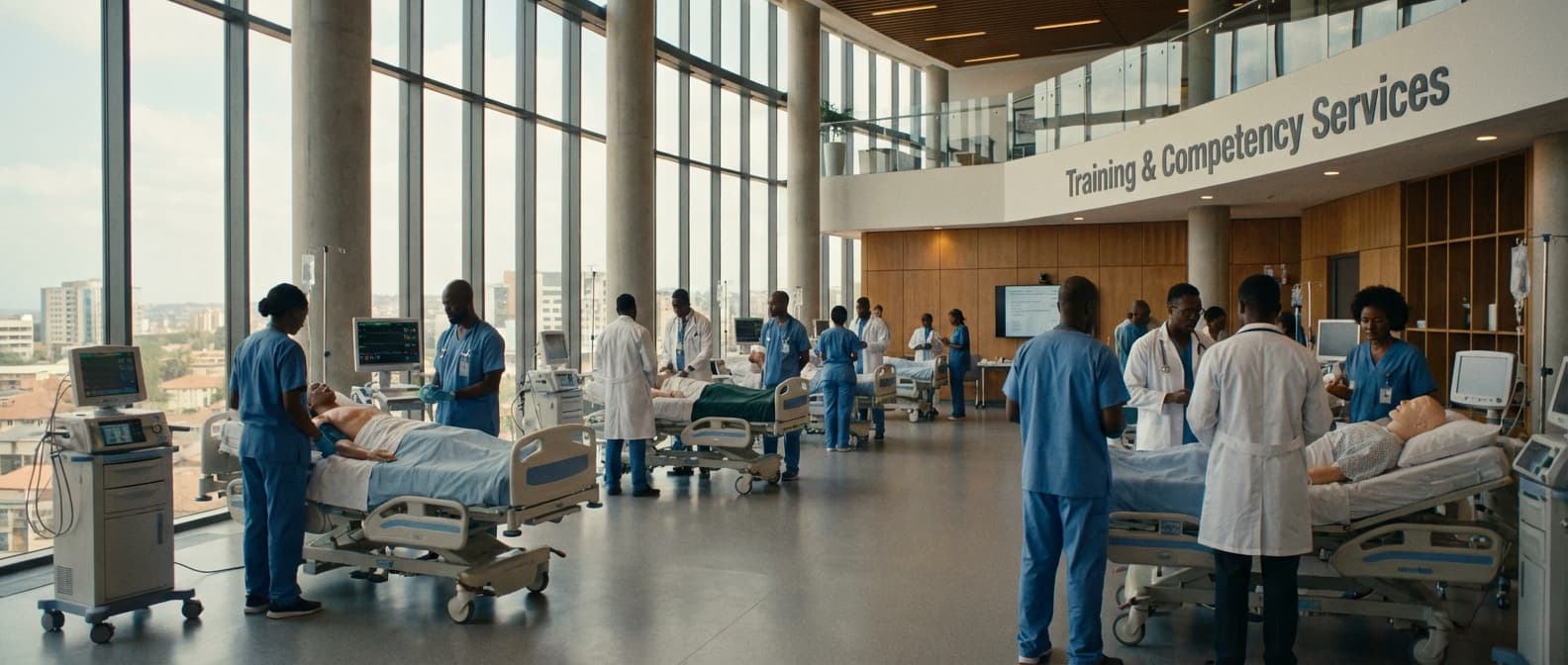
Biomedical Engineering First-Line Support Training Service in Tanzania
Engineering Excellence & Technical Support
Biomedical Engineering First-Line Support Training Service High-standard technical execution following OEM protocols and local regulatory frameworks.
Hands-On Medical Equipment Diagnostics
Participants will gain practical experience in troubleshooting and diagnosing common issues across a range of biomedical equipment, including patient monitors, ECG machines, and defibrillators, utilizing industry-standard testing tools and procedures.
Asset Management & Documentation Best Practices
Training emphasizes effective inventory management, meticulous record-keeping, and compliant documentation for biomedical assets, ensuring efficient lifecycle tracking and adherence to regulatory standards within Tanzanian healthcare facilities.
Safety Protocols & Infection Control Integration
Develop a strong understanding of critical safety protocols, including electrical safety testing and patient risk assessment, alongside best practices for infection control when performing maintenance and support on medical devices.
What Is Biomedical Engineering First-line Support Training Service In Tanzania?
Biomedical Engineering First-Line Support Training Service in Tanzania refers to a specialized educational program designed to equip individuals with the foundational knowledge and practical skills necessary to perform initial troubleshooting, basic maintenance, and operational checks on biomedical equipment within healthcare facilities. This service is crucial for ensuring the continuous and safe functioning of medical devices, minimizing downtime, and optimizing resource utilization in a context where specialized biomedical engineers may be scarce or geographically dispersed. The training emphasizes practical problem identification, reporting, and the application of standardized procedures for common equipment malfunctions. It serves as a critical layer of support, enabling local healthcare personnel to address immediate issues, thereby allowing more complex problems to be escalated efficiently to higher-tier support or specialized technicians.
| Target Audience | Needs Addressed | Typical Use Cases |
|---|---|---|
| Healthcare Facility Technicians (non-biomedical) | Enhance ability to address minor equipment issues independently, reducing reliance on external support for routine problems. | Performing daily equipment checks, restarting malfunctioning devices, identifying and reporting basic faults (e.g., loose connections, error codes, power issues). |
| Clinical Staff (nurses, doctors) | Empower clinicians to perform immediate troubleshooting and ensure equipment readiness for patient care, thereby improving patient safety and workflow efficiency. | Identifying and reporting equipment malfunctions during patient care, performing basic operational tests, and understanding user-level maintenance requirements. |
| Entry-level Biomedical Support Personnel | Provide a foundational skillset for individuals entering the field, preparing them for more advanced training and roles. | Assisting senior biomedical engineers, conducting routine inspections, performing basic calibrations, and managing equipment logs. |
| Medical Equipment Storekeepers/Managers | Enable better understanding of equipment status and maintenance needs, facilitating efficient inventory management and resource allocation. | Identifying equipment requiring service, understanding basic repair requirements for inventory control, and ensuring proper storage conditions. |
Key Components of Biomedical Engineering First-Line Support Training in Tanzania:
- Introduction to biomedical equipment types and their basic principles of operation.
- Common failure modes and troubleshooting methodologies for prevalent medical devices (e.g., patient monitors, infusion pumps, ECG machines, basic laboratory equipment).
- Preventive maintenance schedules and execution of routine checks.
- Safe handling and operation of biomedical equipment.
- Documentation and reporting procedures for equipment faults and maintenance activities.
- Basic electrical safety principles and awareness.
- Understanding of medical device regulatory frameworks and compliance in Tanzania.
- Hands-on practice with diagnostic tools and basic repair techniques.
Who Needs Biomedical Engineering First-line Support Training Service In Tanzania?
Biomedical Engineering First-Line Support Training Service is crucial for ensuring the safe, efficient, and reliable operation of medical equipment across Tanzania. This training aims to empower individuals with the foundational knowledge and practical skills to perform routine maintenance, basic troubleshooting, and essential repairs, thereby extending equipment lifespan and minimizing downtime.
| Customer Type | Key Departments/Roles | |
|---|---|---|
| Public Hospitals (e.g., Muhimbili National Hospital, Regional Hospitals) | Biomedical Engineering Department, Clinical Engineering Unit, Maintenance Department, IT Department (for connected devices), Pharmacy (for specialized equipment) | Nursing Staff (for basic operational checks and reporting), Department Heads (to understand equipment availability and needs) |
| Private Hospitals and Clinics (e.g., Regency Medical Centre, various private practices) | In-house Maintenance Team, Biomedical Technicians, Facility Managers, Department Managers (e.g., Radiology, Cardiology) | Nurses and Doctors (for user-level troubleshooting and reporting) |
| District and Rural Health Centers | On-site Technicians (if available), Clinical Officers, Nurses in charge, Local Government Health Officials | Healthcare Workers (for basic equipment handling and reporting) |
| Government Health Ministries/Agencies (e.g., Ministry of Health, Community Development, Gender, Elderly and Children) | Medical Equipment Officers, Procurement and Logistics Departments, Planning Departments, Regional Health Management Teams | District Biomedical Engineers (if present) |
| NGOs and International Aid Organizations (e.g., MSF, Partners In Health) | Field Technicians, Logistics Officers, Program Managers, Biomedical Engineers (assigned to projects) | Local Healthcare Staff supporting the organization's initiatives |
| Medical Equipment Suppliers/Distributors | Field Service Technicians, Technical Support Staff, Customer Service Departments | Sales Teams (to understand equipment capabilities and support limitations) |
| Educational Institutions | Faculty in Biomedical Engineering/Technology Departments, Continuing Education Departments, Technical Staff | Students pursuing biomedical engineering or related fields |
Target Customers and Departments
- Hospitals and Healthcare Facilities: This is the primary target group, encompassing a wide range of institutions from large public referral hospitals to smaller private clinics and specialized medical centers.
- Government Health Ministries and Agencies: National and regional health authorities responsible for overseeing healthcare infrastructure and equipment management will benefit from training their support staff.
- Non-Governmental Organizations (NGOs) and International Aid Organizations: Organizations involved in delivering healthcare services, especially in remote or underserved areas, often rely on well-maintained equipment.
- Medical Equipment Suppliers and Distributors: Companies that sell and service medical equipment can leverage this training to enhance their after-sales support capabilities.
- Educational Institutions: Universities and technical colleges offering biomedical engineering or related programs can incorporate this training into their curriculum or offer it as a professional development course.
Biomedical Engineering First-line Support Training Service Process In Tanzania
This document outlines the workflow for a Biomedical Engineering First-Line Support Training Service in Tanzania, detailing the process from initial inquiry to the successful execution of the training. The service aims to equip healthcare facilities with essential skills to manage and maintain biomedical equipment, ensuring its optimal functionality and contributing to improved patient care. The process is designed to be clear, efficient, and responsive to the needs of the Tanzanian healthcare sector.
| Stage | Key Activities | Responsible Parties | Deliverables |
|---|---|---|---|
| Inquiry & Assessment | Initial contact, information gathering on equipment and needs | Healthcare Facility, Training Provider | Needs assessment report, understanding of training requirements |
| Proposal & Agreement | Developing and submitting training proposal, contract negotiation and signing | Training Provider, Healthcare Facility | Training proposal, Signed service agreement |
| Preparation | Participant identification and registration, logistical confirmation, pre-training materials | Healthcare Facility, Training Provider | Registered participant list, confirmed logistics, pre-training materials |
| Execution | Delivery of theoretical and practical training sessions | Training Provider (Trainers) | Trained participants, practical skill demonstration |
| Evaluation & Certification | Assessment of participants, feedback collection, issuing certificates | Training Provider, Participants | Assessment results, completed evaluation forms, Training certificates |
| Post-Training | Ongoing support, follow-up assessments, impact evaluation | Training Provider, Healthcare Facility | Post-training support, impact report (optional) |
Biomedical Engineering First-Line Support Training Service Workflow
- {"step":1,"title":"Inquiry and Needs Assessment","description":"The process begins with an inquiry from a healthcare facility (hospital, clinic, etc.) or a relevant government/NGO body expressing interest in first-line biomedical engineering support training. This can be initiated via email, phone, or a dedicated online portal. Upon receiving the inquiry, the training provider will conduct an initial needs assessment. This involves understanding the specific types of biomedical equipment present at the facility, the existing technical capacity of their staff, and their primary challenges related to equipment maintenance and repair. This assessment helps tailor the training content and duration."}
- {"step":2,"title":"Proposal Development and Submission","description":"Based on the needs assessment, the training provider develops a comprehensive proposal. This proposal will detail the training objectives, curriculum, duration, venue requirements (if not conducted at the provider's facility), trainer qualifications, required training materials, logistical arrangements, and a detailed cost breakdown. The proposal is then submitted to the inquiring entity for review."}
- {"step":3,"title":"Agreement and Contract Finalization","description":"Upon acceptance of the proposal, a formal agreement or contract is drafted. This document outlines the scope of work, payment terms, schedule, responsibilities of both parties, confidentiality clauses, and any other relevant legal and operational details. Both the training provider and the client meticulously review and sign the agreement, signifying a commitment to the training service."}
- {"step":4,"title":"Participant Registration and Pre-Training Preparation","description":"The client identifies and registers the participants (e.g., biomedical technicians, nurses, clinical officers) who will attend the training. The training provider may then provide pre-reading materials or introductory modules to participants to familiarize them with basic concepts before the actual training commences. This step also involves confirming the training schedule and logistics with the client."}
- {"step":5,"title":"Training Execution","description":"The core of the service. The training is delivered by qualified biomedical engineers or instructors. The curriculum typically includes a blend of theoretical sessions (e.g., principles of operation, common faults, safety protocols) and practical, hands-on sessions (e.g., basic troubleshooting, preventive maintenance procedures, calibration, use of test equipment). Training methodologies may include lectures, demonstrations, case studies, group discussions, and practical exercises using actual or simulated equipment. Emphasis is placed on safe and effective troubleshooting and maintenance practices relevant to the Tanzanian context."}
- {"step":6,"title":"Assessment and Evaluation","description":"Throughout and at the end of the training, participants are assessed to gauge their understanding and skill acquisition. Assessments can include written tests, practical demonstrations, and observation of their performance during hands-on exercises. The training provider also collects feedback from participants and the client regarding the effectiveness of the training, the trainers, and the overall service delivery through evaluation forms."}
- {"step":7,"title":"Certification and Follow-up","description":"Upon successful completion of the training and passing the assessments, participants are awarded certificates. The training provider may offer post-training support, such as access to online resources, a helpline for technical queries, or refresher courses. A follow-up visit or survey might be conducted after a period to assess the impact of the training on the facility's operational efficiency and equipment maintenance practices."}
Biomedical Engineering First-line Support Training Service Cost In Tanzania
Providing first-line support training for biomedical engineers in Tanzania involves various costs influenced by several factors. These factors determine the overall price range, which can fluctuate based on the provider, the depth of the training, and the specific needs of the organization. Understanding these elements is crucial for budgeting and selecting the most suitable training service.
| Training Type/Scope | Estimated Cost Range (TZS) | Notes |
|---|---|---|
| Basic Introduction to Biomedical Equipment Maintenance | 500,000 - 1,500,000 TZS | Covers fundamental concepts, basic troubleshooting, safety procedures. Typically 1-2 days. |
| Intermediate Troubleshooting and Repair Skills | 1,000,000 - 3,000,000 TZS | Focuses on common equipment failures, diagnostic tools, and practical repair techniques. Typically 3-5 days. |
| Specialized Equipment Training (e.g., Imaging, Anesthesia) | 1,500,000 - 5,000,000+ TZS | Highly specific to particular medical device categories, often requiring specialized trainers and equipment. Duration varies significantly. |
| Comprehensive First-Line Support Program (Multiple Devices/Modules) | 2,500,000 - 7,000,000+ TZS | A holistic training covering a broad range of equipment, preventive maintenance, and regulatory aspects. Can be a multi-week program or series of workshops. |
| On-site / Customized Training | Varies significantly based on scope and duration | Often quoted on a case-by-case basis, factoring in travel, accommodation, and curriculum customization. |
| Online/Virtual Training (per participant) | 300,000 - 1,500,000 TZS | Cost-effective option for theoretical aspects and basic skills. May not include extensive hands-on practice. |
Key Pricing Factors for Biomedical Engineering First-Line Support Training in Tanzania:
- Training Provider Reputation and Expertise: Established training institutions or highly experienced individual consultants often command higher fees due to their proven track record, quality of curriculum, and qualified instructors.
- Training Content and Curriculum Depth: The scope of the training is a major determinant. A basic introductory course will be less expensive than a comprehensive program covering advanced troubleshooting, specific equipment types, or regulatory compliance.
- Duration and Intensity of Training: Longer and more intensive training sessions (e.g., multi-day workshops vs. single-day sessions) will naturally incur higher costs due to increased instructor time, resource utilization, and potentially accommodation/travel.
- Location of Training: Training conducted at the client's premises might incur additional travel and accommodation costs for the trainers. Conversely, training at a dedicated facility might have facility usage fees.
- Number of Participants: While some providers offer per-person rates, others might have tiered pricing where larger groups receive a discount per participant. The total cost will therefore scale with the number of attendees.
- Training Materials and Resources: The provision of high-quality printed manuals, digital resources, access to simulators, or hands-on equipment for practical sessions can influence the overall price.
- Customization and Tailoring: If the training needs to be customized to a specific organization's equipment inventory, workflows, or challenges, this will likely add to the cost due to the development and preparation time involved.
- Certification and Assessment: Including formal assessments, examinations, and the issuance of recognized certifications will generally increase the training cost.
- Post-Training Support: Some providers may offer limited post-training support (e.g., email consultation for a specified period), which can be factored into the price.
- Mode of Delivery: Online or virtual training might be more cost-effective than in-person training due to reduced logistical expenses. However, the quality and interactivity of the online platform can also influence pricing.
Affordable Biomedical Engineering First-line Support Training Service Options
Providing effective first-line support for biomedical equipment is crucial for maintaining patient care continuity and operational efficiency. Affordable training services are vital for healthcare institutions, particularly those with limited budgets. This document outlines various options for cost-effective first-line support training, emphasizing value bundles and smart cost-saving strategies.
| Strategy | Description | Estimated Cost Savings Potential |
|---|---|---|
| Online & Remote Training | Eliminates travel, accommodation, and venue costs. | High (Up to 60-80% reduction in per-person costs compared to on-site) |
| Train-the-Trainer | Scales training efficiently within the organization. | Very High (Significantly reduces overall training expenditure over time) |
| Vendor-Provided Basic Training | Often included or negotiable with equipment purchase. | Moderate to High (If free or bundled, cost is minimal; if negotiated, can save 20-40%) |
| Modular Training | Pay only for relevant skills, avoiding overspending. | Moderate (Avoids paying for unnecessary modules, 15-30% savings) |
| Subscription Access | Cost-effective for ongoing and multi-user access. | Moderate to High (Dependent on subscription tier and number of users, 25-50% savings over individual course purchases) |
| Preventative Maintenance Focus | Reduces breakdown costs, indirectly lowering training needs for complex repairs. | High (Long-term savings on repairs and downtime, though direct training cost savings may be indirect) |
Affordable First-Line Biomedical Support Training Service Options
- {"title":"Online & Remote Training","description":"Leveraging virtual platforms for training sessions significantly reduces travel and accommodation costs. This includes live webinars, pre-recorded modules, and interactive online courses. Many providers offer specialized courses for common biomedical device categories."}
- {"title":"Train-the-Trainer Programs","description":"Instead of training all support staff individually, invest in training a select group of experienced personnel. These 'super-users' can then train and mentor their colleagues internally, creating a sustainable and cost-effective knowledge transfer system."}
- {"title":"Vendor-Provided Basic Training","description":"Many biomedical equipment manufacturers offer basic user or first-line support training as part of their equipment purchase agreements. Thoroughly review these offerings and advocate for their inclusion or at a reduced cost. These can often cover essential maintenance, troubleshooting, and calibration procedures."}
- {"title":"Partnerships with Educational Institutions","description":"Collaborate with local community colleges or universities with biomedical engineering technology programs. They may offer access to training facilities, equipment, and instructors for a nominal fee or through mutually beneficial partnerships."}
- {"title":"Open-Source & Community Resources","description":"Explore freely available online resources, forums, and open-source training materials. While not always structured or certified, these can provide valuable foundational knowledge and troubleshooting tips, especially for common issues."}
- {"title":"Modular & Customizable Training Packages","description":"Seek training providers that offer modular courses. This allows you to select and pay only for the specific modules relevant to your institution's equipment inventory and support needs, avoiding unnecessary training on devices you don't use."}
Verified Providers In Tanzania
In the landscape of healthcare in Tanzania, identifying reliable and high-quality medical services is paramount for individuals and organizations. Franance Health has emerged as a leading provider, distinguished by its robust credentials and commitment to excellence. This document outlines why Franance Health stands out as the best choice for your healthcare needs in Tanzania, backed by verifiable information and transparent practices.
| Credential/Aspect | Franance Health's Commitment | Verification Status |
|---|---|---|
| Ministry of Health Certification | All facilities are fully licensed and inspected by the Tanzanian Ministry of Health. | Verified (Certificate numbers available upon request) |
| Professional Licenses of Staff | All medical practitioners hold valid and current licenses from the relevant Tanzanian professional bodies (e.g., Medical Council of Tanganyika). | Verified (Individual licenses can be cross-referenced) |
| International Affiliations/Partnerships | Collaborations with reputable international healthcare organizations for knowledge exchange and advanced training. | Verifiable through public announcements and partnership agreements |
| Quality Management Systems | Implementation of robust quality assurance protocols and patient feedback mechanisms. | Auditable through internal and external quality assessments |
| Specialist Training and Certifications | Encouragement and support for staff to obtain advanced certifications and specializations. | Verifiable through individual staff qualifications and credentials |
Key Differentiators of Franance Health:
- Accreditation and Regulatory Compliance: Franance Health rigorously adheres to national and international healthcare standards, ensuring all facilities and services meet stringent regulatory requirements set by the Tanzanian Ministry of Health and other relevant bodies.
- Qualified and Experienced Medical Professionals: The organization employs a team of highly skilled and experienced doctors, nurses, specialists, and support staff, many of whom have international training and certifications.
- State-of-the-Art Facilities and Technology: Franance Health invests in modern medical equipment and infrastructure, enabling accurate diagnosis, effective treatment, and a comfortable patient experience.
- Comprehensive Service Offerings: From primary care and diagnostics to specialized treatments and emergency services, Franance Health provides a wide spectrum of medical services catering to diverse patient needs.
- Patient-Centric Approach: A strong emphasis is placed on patient well-being, ethical practices, and personalized care, fostering trust and long-term relationships with patients.
- Commitment to Continuous Improvement: Franance Health actively engages in ongoing training, research, and quality improvement initiatives to stay at the forefront of medical advancements.
Scope Of Work For Biomedical Engineering First-line Support Training Service
This Scope of Work (SOW) outlines the requirements for a Biomedical Engineering First-Line Support Training Service. The objective is to equip a designated group of personnel with the fundamental skills and knowledge necessary to provide effective initial technical support for biomedical equipment. This training will enhance operational efficiency, reduce downtime, and ensure the safe and proper functioning of medical devices within the healthcare facility.
| Technical Deliverable | Standard Specification | Description | Acceptance Criteria |
|---|---|---|---|
| Training Curriculum Document | Comprehensive and detailed outline of all training modules, learning objectives, and content covered. | A written document outlining the entire training program structure, including module breakdown, learning outcomes, and specific topics. | Curriculum is reviewed and approved by the healthcare facility's Biomedical Engineering Department and Training Coordinator. |
| Training Materials (Participant Guides) | High-quality, user-friendly printed or digital materials for each participant, aligned with the curriculum. | Includes presentations, handouts, case studies, checklists, and reference guides. | Materials are clear, accurate, well-organized, and directly support the learning objectives of each module. |
| Training Delivery (Instructor-Led Sessions) | Experienced and qualified biomedical engineering instructors with proven training experience. | Interactive sessions incorporating lectures, demonstrations, hands-on exercises, and Q&A. | Minimum of 80% participant engagement observed during sessions, with instructors demonstrating subject matter expertise. |
| Practical Training Sessions (Hands-on) | Access to functional biomedical equipment for practical exercises and troubleshooting simulations. | Participants engage in simulated troubleshooting scenarios and basic operational checks on representative equipment. | Successful completion of at least 90% of assigned practical exercises by participants. |
| Assessment Tools (Quizzes/Tests) | Written or online assessments to evaluate participant understanding of key concepts. | Includes multiple-choice questions, short answer questions, and scenario-based problems. | Average participant score of at least 75% on all assessments. |
| Participant Feedback Forms | Structured questionnaires to gather feedback on training content, delivery, and instructors. | Forms designed to capture specific insights on the effectiveness of the training program. | Submission of feedback forms by at least 95% of participants; analysis of feedback to identify areas for improvement. |
| Training Completion Certificates | Formal certificates issued to participants who successfully complete the training program. | Certificates should include participant name, training title, dates of training, and issuing organization. | Certificates are accurate, professionally presented, and issued to all participants meeting the passing criteria. |
| Post-Training Support Plan (Optional) | Outline of recommended follow-up resources or support mechanisms. | Includes access to online resources, periodic refresher sessions, or designated mentors. | A documented plan for ongoing support and knowledge reinforcement is provided. |
Key Training Modules
- Introduction to Biomedical Engineering and Healthcare Technology Management
- Basic Principles of Biomedical Equipment Operation (e.g., physiological monitoring, imaging basics, therapeutic devices)
- First-Line Troubleshooting Methodologies and Common Issues
- Equipment Identification, Documentation, and Record Keeping
- Safety Procedures and Regulations (e.g., electrical safety, infection control)
- Introduction to Biomedical Equipment Maintenance and Preventive Maintenance
- Basic Use of Diagnostic and Testing Tools
- Communication and Reporting Protocols for Technical Issues
- Customer Service and User Interaction Skills
Service Level Agreement For Biomedical Engineering First-line Support Training Service
This Service Level Agreement (SLA) outlines the guaranteed response times and uptime for the Biomedical Engineering First-Line Support Training Service. This training service is designed to equip personnel with the foundational knowledge and practical skills required to provide effective first-line support for biomedical equipment. The SLA defines the performance expectations for the delivery of this training, ensuring timely access and availability of training resources.
| Service Component | Uptime Guarantee | Response Time (Non-Critical) | Response Time (Critical) | Definition of Critical Incident |
|---|---|---|---|---|
| Online Training Platform Availability | 99.5% Uptime | Within 4 business hours | Within 1 business hour | Inability to access the training platform for any user, preventing course progression. |
| Access to Training Modules & Resources | 99.8% Availability | Within 2 business hours | Within 30 minutes | Specific training module or critical resource is inaccessible, impacting learning objectives for a significant portion of users. |
| Technical Support for Training Platform | N/A (Support is responsive) | Within 6 business hours | Within 2 business hours | User unable to log in, navigate core platform functions, or complete essential training activities due to technical issues. |
| Scheduled Instructor-Led Sessions (if applicable) | N/A (Scheduled events) | N/A (Sessions commence as scheduled) | Rescheduling or immediate alternative provided | Cancellation or significant delay of a scheduled instructor-led session without prior notification. |
Scope of Service
- Delivery of the Biomedical Engineering First-Line Support Training curriculum.
- Access to online training modules and resources.
- Technical support for accessing and navigating the training platform.
- Scheduled instructor-led sessions (if applicable).
- Post-training assessment and feedback mechanisms.
Frequently Asked Questions

Ready when you are
Let's scope your Biomedical Engineering First-Line Support Training Service in Tanzania project in Tanzania.

Scaling healthcare logistics and technical systems across the entire continent.