
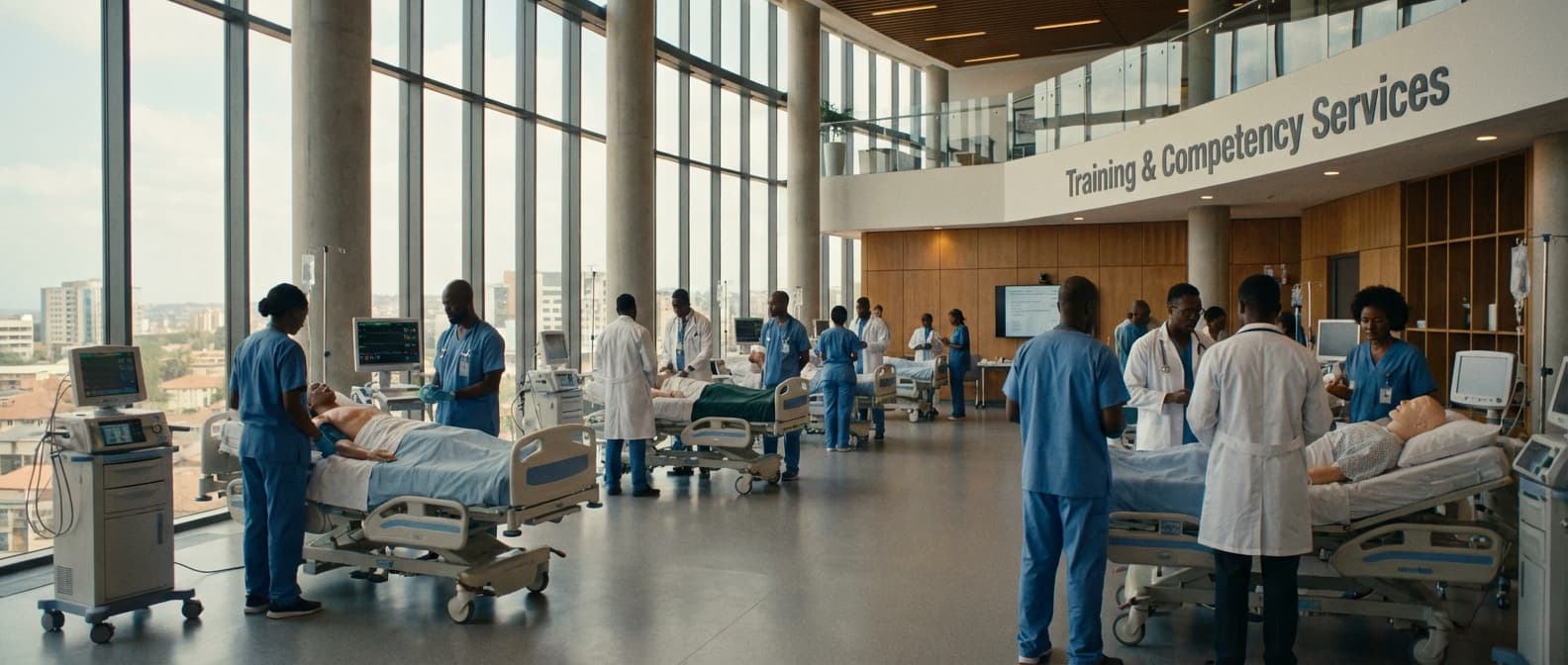
Anesthesia Workstation User Training Service in Tanzania
Engineering Excellence & Technical Support
Anesthesia Workstation User Training Service High-standard technical execution following OEM protocols and local regulatory frameworks.
Mastering Advanced Ventilation Modes
Gain hands-on proficiency with critical ventilation strategies like Pressure Support Ventilation (PSV), Volume Control Plus (VC+), and Automatic Tube Compensation (ATC). Our training empowers Tanzanian anesthetists to optimize patient ventilation, reduce the risk of ventilator-induced lung injury, and ensure safer anesthetic delivery in diverse clinical settings.
Intelligent Monitoring & Alarm Management
Learn to leverage the workstation's sophisticated monitoring capabilities, including capnography, advanced hemodynamic tracking, and neuromuscular blockade monitoring. Our training focuses on interpreting complex data streams and effectively managing alarms to prevent critical events and enhance patient safety during surgical procedures.
Streamlined Drug Administration & Record Keeping
Become adept at utilizing the integrated drug administration features and electronic record-keeping functionalities of your anesthesia workstation. Our service will guide you through precise dosing, efficient workflow management, and accurate documentation, ensuring compliance and optimizing resource utilization within Tanzanian healthcare facilities.
What Is Anesthesia Workstation User Training Service In Tanzania?
The Anesthesia Workstation User Training Service in Tanzania refers to a specialized educational program designed to equip healthcare professionals with the necessary knowledge and practical skills to effectively and safely operate anesthesia workstations. This service is crucial for ensuring optimal patient care during surgical and other medical procedures requiring anesthesia. It encompasses a comprehensive understanding of the workstation's components, functionality, troubleshooting, and adherence to relevant safety protocols and local regulatory requirements.
| Who Needs Anesthesia Workstation User Training? | Typical Use Cases | ||||
|---|---|---|---|---|---|
| Anesthesiologists and Certified Registered Nurse Anesthetists (CRNAs) in both public and private healthcare facilities. | Operating Rooms (ORs) for surgical procedures across various specialties (general surgery, orthopedics, pediatrics, obstetrics, etc.). | Intensive Care Units (ICUs) for prolonged mechanical ventilation and critical care management. | Emergency Departments (EDs) for resuscitation and stabilization of critically ill patients. | Diagnostic and Interventional Suites (e.g., Endoscopy, Cardiology Labs) requiring sedation or anesthesia. | Training institutions and medical colleges for the education of future anesthesia providers. |
| Junior and senior residents in anesthesiology. | Newly qualified anesthesiologists and CRNAs. | Existing practitioners requiring recertification or training on new workstation models. | Biomedical engineers and technicians responsible for installation, maintenance, and repair. | Healthcare administrators overseeing procurement and operational efficiency of anesthesia equipment. |
Key Components of Anesthesia Workstation User Training:
- Anatomy and Physiology Review: A refresher on relevant physiological systems pertinent to anesthesia.
- Workstation Component Identification and Function: Detailed explanation of vaporizers, ventilators, gas delivery systems, monitoring interfaces, and their interrelationships.
- Anesthetic Gas Management: Principles of inhalation anesthetic delivery, calibration, and waste gas scavenging.
- Ventilator Modes and Settings: Understanding various mechanical ventilation modes, parameter selection, and their clinical applications.
- Integrated Monitoring Systems: Operation and interpretation of vital sign monitoring (ECG, SpO2, EtCO2, NIBP, etc.) and advanced hemodynamic monitoring.
- Drug Administration and Delivery: Proper use of integrated drug delivery systems and syringe pumps.
- Alarm Management and Troubleshooting: Recognition of alarms, their causes, and appropriate response protocols.
- Infection Control and Sterilization Procedures: Best practices for maintaining workstation hygiene and preventing cross-contamination.
- Emergency Procedures and Backup Systems: Protocols for responding to equipment failures and managing emergencies.
- Maintenance and Calibration Procedures: Basic user-level maintenance and understanding of scheduled professional servicing.
- Regulatory Compliance and Documentation: Adherence to Tanzanian healthcare regulations and proper record-keeping.
- Simulation Exercises: Hands-on practice in a simulated environment to reinforce learning and build confidence.
Who Needs Anesthesia Workstation User Training Service In Tanzania?
Anesthesia workstation user training services are crucial for healthcare facilities in Tanzania that utilize or plan to implement modern anesthesia workstations. These advanced machines, while offering enhanced patient safety and procedural efficiency, require specialized knowledge for optimal operation, maintenance, and troubleshooting. Investing in comprehensive training ensures that medical professionals can safely and effectively manage patient anesthesia, minimizing risks and maximizing the benefits of these sophisticated devices.
| Department | Primary Users of Anesthesia Workstations | Specific Training Needs |
|---|---|---|
| Anesthesiology Department | Anesthesiologists, Certified Registered Nurse Anesthetists (CRNAs) | Advanced ventilation modes, drug delivery systems, patient monitoring integration, emergency procedures, waveform analysis, preventive maintenance basics. |
| Surgical Department | Surgeons (as observers and for understanding anesthesia implications) | Basic understanding of workstation functions, anesthesia delivery, and patient monitoring for intraoperative awareness. |
| Critical Care / Intensive Care Unit (ICU) | Intensivists, Critical Care Nurses | Use of ventilators from the workstation for critically ill patients, advanced monitoring features, weaning protocols. |
| Operating Room (OR) Nursing Staff | Circulating Nurses, Scrub Nurses | Setup and dismantling of the workstation, troubleshooting common errors, understanding alarm systems, basic maintenance checks. |
| Biomedical Engineering / Technical Department | Biomedical Engineers, Technicians | In-depth understanding of the workstation's mechanical and electronic components, calibration procedures, advanced troubleshooting, preventive maintenance schedules, repair protocols. |
| Medical Education and Training Programs | Medical Students, Nursing Students, Anesthesia Residents/Trainees | Foundational principles of anesthesia delivery, operation of standard and advanced ventilation modes, patient monitoring interpretation, simulated practice. |
Target Customers and Departments for Anesthesia Workstation User Training in Tanzania
- Hospitals (Public and Private)
- Referral Hospitals
- University Teaching Hospitals
- Tertiary Care Centers
- Large and Medium-Sized Clinics with Surgical Capacity
- Non-Governmental Organization (NGO) Healthcare Facilities
- Medical Training Institutions and Universities
Anesthesia Workstation User Training Service Process In Tanzania
This document outlines the Anesthesia Workstation User Training Service Process in Tanzania. The workflow begins with an initial inquiry from a healthcare facility interested in training their personnel on the operation and maintenance of anesthesia workstations. This process ensures that users are competent and confident in utilizing this critical medical equipment, thereby enhancing patient safety and quality of care.
| Phase | Description | Key Activities | Responsible Parties | Deliverables/Outcomes |
|---|---|---|---|---|
| The healthcare facility expresses interest in anesthesia workstation user training. | Receive and acknowledge inquiry, gather basic information about the facility and their needs. | Healthcare Facility, Training Provider | Confirmed interest, initial contact established. |
| Understand the specific training requirements, existing user expertise, and workstation models. | Conduct detailed needs assessment (surveys, calls, site visits), identify training objectives, customize training modules, develop a detailed proposal outlining scope, duration, cost, and curriculum. | Training Provider, Healthcare Facility | Comprehensive training needs identified, customized training proposal submitted. |
| Formalize the training agreement and establish a mutually convenient schedule. | Review and sign the training agreement, confirm dates and times for training, finalize participant list and any logistical arrangements. | Training Provider, Healthcare Facility | Signed training agreement, confirmed training schedule and logistics. |
| Ensure all necessary resources and materials are ready for the training. | Prepare training materials (manuals, presentations, hands-on equipment), confirm availability of anesthesia workstations for practical sessions, brief trainers, communicate pre-training instructions to participants. | Training Provider, Healthcare Facility | Training materials ready, workstations prepared, participants informed. |
| Conduct the comprehensive training program. | Deliver theoretical sessions (workstation principles, safety features, troubleshooting), conduct practical hands-on sessions with anesthesia workstations, facilitate Q&A, and assessments. | Training Provider (Trainers), Healthcare Facility (Participants) | Trained personnel, practical skills demonstrated, understanding of workstation operation. |
| Assess the effectiveness of the training and provide initial support. | Administer post-training evaluations (feedback forms, practical competency checks), provide immediate technical support for initial user queries, compile training reports. | Training Provider, Healthcare Facility | Training effectiveness assessed, user feedback collected, initial support provided. |
| Formally recognize successful completion and offer continued assistance. | Issue certificates of completion to participants, offer ongoing technical support, maintenance reminders, and opportunities for advanced training. | Training Provider, Healthcare Facility | Certified users, access to ongoing support, enhanced long-term user competence. |
Anesthesia Workstation User Training Service Process in Tanzania
- Inquiry & Initial Contact
- Needs Assessment & Proposal Development
- Agreement & Scheduling
- Pre-Training Preparation
- On-Site Training Execution
- Post-Training Follow-up & Evaluation
- Certification & Ongoing Support
Anesthesia Workstation User Training Service Cost In Tanzania
The cost of anesthesia workstation user training services in Tanzania can vary significantly based on several factors. These factors influence the overall price, from the initial consultation to the final certification or assessment. Understanding these elements is crucial for healthcare facilities budgeting for staff development and ensuring safe and effective use of anesthesia equipment.
| Service Level/Scope | Estimated Range (TZS) - Basic | Estimated Range (TZS) - Intermediate | Estimated Range (TZS) - Comprehensive/Advanced |
|---|---|---|---|
| On-site Group Training (Per Day) | 500,000 - 1,500,000 TZS | 1,000,000 - 2,500,000 TZS | 2,000,000 - 4,000,000 TZS |
| On-site Group Training (Per Participant) | 100,000 - 300,000 TZS | 200,000 - 500,000 TZS | 400,000 - 800,000 TZS |
| Off-site (Provider's Location) Group Training (Per Participant) | 80,000 - 250,000 TZS | 150,000 - 400,000 TZS | 300,000 - 700,000 TZS |
| Customized/Specialized Training (Per Day) | 1,000,000 - 2,000,000 TZS | 1,500,000 - 3,000,000 TZS | 2,500,000 - 5,000,000 TZS |
| Virtual Training (Per Participant) | 50,000 - 150,000 TZS | 100,000 - 250,000 TZS | 200,000 - 400,000 TZS |
| Certification Fee (Per Participant) | N/A (often included or separate) | 50,000 - 150,000 TZS | 100,000 - 250,000 TZS |
Key Pricing Factors for Anesthesia Workstation User Training in Tanzania
- Training Provider: The reputation, experience, and accreditation of the training institution or individual trainer play a significant role. Well-established providers with specialized expertise often command higher fees.
- Duration and Intensity of Training: Shorter, introductory courses will be less expensive than comprehensive, multi-day programs that cover advanced features and troubleshooting.
- Scope of Content: The depth and breadth of the curriculum are critical. Training focused solely on basic operation will differ in cost from programs including patient monitoring integration, advanced ventilation modes, or emergency scenarios.
- Number of Participants: Group training is generally more cost-effective per participant than one-on-one sessions. Discounts may be offered for larger groups.
- Location of Training: Whether the training is conducted on-site at the healthcare facility, at the provider's training center, or virtually can impact costs. On-site training may incur travel and accommodation expenses for the trainers.
- Customization of Training: Tailoring the training to specific anesthesia workstation models used by the facility or to address particular clinical needs can increase the price.
- Trainer Qualifications and Experience: Highly qualified and experienced trainers, especially those with clinical backgrounds, may charge more for their services.
- Materials and Resources Provided: The inclusion of training manuals, practice equipment, simulators, or online learning platforms can affect the overall cost.
- Certification or Assessment: If the training culminates in a formal certification or assessment, there might be an additional fee associated with the examination process and certificate issuance.
- Travel and Accommodation: For off-site training, the cost of travel, accommodation, and per diem for trainers must be factored in.
- Equipment Availability: The availability of functional anesthesia workstations for hands-on practice at the training venue can influence the pricing, as sometimes facilities may need to rent or borrow equipment.
- Ongoing Support: Some training packages may include post-training support or refresher courses, which would add to the initial cost.
Affordable Anesthesia Workstation User Training Service Options
Providing comprehensive and affordable user training for anesthesia workstations is crucial for ensuring patient safety and operational efficiency. This service focuses on equipping healthcare professionals with the knowledge and skills necessary to operate these complex devices confidently and effectively. We offer flexible training options designed to meet diverse institutional needs and budgets, emphasizing value and cost-effectiveness. Our approach prioritizes hands-on learning, simulation-based scenarios, and ongoing support to foster long-term competency. We understand that budget constraints are a significant factor for many healthcare facilities, and our service is structured to deliver maximum value without compromising the quality or depth of training. By leveraging our expertise and tailored programs, institutions can significantly reduce training-related expenses while enhancing staff proficiency and patient care outcomes.
| Value Bundle Tier | Included Services | Target Audience | Estimated Cost Savings (vs. Ad-hoc) | Key Benefits |
|---|---|---|---|---|
| Basic Essentials | Standardized on-site training for core functionalities, access to online FAQs and basic troubleshooting guides. | Smaller clinics, new staff onboarding, facilities with basic workstation needs. | 20-30% | Foundation of safe operation, reduced initial learning curve for staff. |
| Standard Proficiency | Comprehensive on-site training, access to virtual modules, one train-the-trainer session, monthly Q&A webinars. | Medium-sized hospitals, departments with moderate workstation complexity, institutions seeking internal expertise. | 35-45% | Enhanced operational efficiency, development of internal trainers, improved staff confidence. |
| Advanced Competency | Customizable on-site or blended learning (on-site + virtual), multiple train-the-trainer sessions, simulation integration, dedicated post-training support hotline, annual refresher course options. | Large teaching hospitals, specialized surgical centers, institutions prioritizing advanced skills and continuous improvement. | 50-65% | Maximized workstation utilization, minimized errors, proactive skill development, significant long-term cost reduction through reduced complications and downtime. |
Affordable Anesthesia Workstation User Training Service Options
- On-site Comprehensive Training: Our expert trainers conduct in-depth sessions at your facility, providing hands-on experience with your specific workstation models. This minimizes travel costs for your staff and allows for training tailored to your unique workflows.
- Remote/Virtual Training Modules: For organizations with dispersed teams or tighter budgets, we offer interactive online modules and live virtual sessions. These are cost-effective and allow for flexible scheduling.
- Train-the-Trainer Programs: Empower your internal staff to become subject matter experts. We train your designated educators, enabling them to provide ongoing, in-house training and support, creating a sustainable and cost-efficient solution.
- Customizable Training Curricula: We tailor training content to your specific needs, focusing on the functionalities most relevant to your clinical practice. This ensures efficient learning and avoids unnecessary instruction.
- Post-Training Support & Refresher Courses: Ongoing support through online resources, Q&A sessions, and optional refresher courses helps maintain staff competency and address evolving needs, preventing costly errors.
- Simulation-Based Training Integration: Incorporating simulation scenarios allows for realistic practice in a safe environment, enhancing skill retention and reducing the need for extensive real-patient exposure during initial training.
Verified Providers In Tanzania
In the competitive landscape of healthcare provision in Tanzania, identifying and engaging with verified providers is paramount for ensuring quality, safety, and efficacy. Franance Health stands out as a beacon of excellence, consistently demonstrating a commitment to the highest standards of medical practice and patient care. This commitment is not merely a claim but is substantiated by rigorous credentialing processes, adherence to regulatory frameworks, and a proven track record of positive patient outcomes. When considering healthcare partners or services, understanding the credentials that make Franance Health the best choice is crucial for informed decision-making.
| Credential Area | Franance Health's Commitment | Why it Matters to Patients |
|---|---|---|
| Regulatory Compliance | Full adherence to all Tanzanian health laws and regulations, including licensing and operational permits. | Ensures services are legally recognized, safe, and meet national standards for quality and patient care. |
| Professional Qualifications | Employing doctors and staff with verified degrees, licenses, and specialized certifications. | Guarantees that treatment is provided by competent and knowledgeable healthcare professionals. |
| Quality Management | Implementation of robust quality control and assurance processes across all services. | Minimizes risks, ensures consistent high-quality care, and leads to better health outcomes. |
| Patient Safety | Strict protocols for infection control, medication management, and patient identification. | Protects patients from preventable harm and ensures a secure treatment environment. |
| Continuous Improvement | Ongoing training and development for staff, adoption of new technologies, and feedback integration. | Access to the latest medical advancements and care strategies for optimal treatment effectiveness. |
| Ethical Practice | Commitment to patient rights, privacy, and transparent communication. | Fosters trust and empowers patients to be active participants in their healthcare journey. |
Key Credentials and Strengths of Franance Health:
- Accreditation by National Health Bodies: Franance Health facilities and professionals undergo stringent evaluations and are accredited by Tanzania's Ministry of Health and other relevant national health authorities. This signifies compliance with established quality of care standards, safety protocols, and ethical practices.
- Highly Qualified and Licensed Medical Professionals: The core strength of Franance Health lies in its team of doctors, nurses, specialists, and allied health professionals who are not only highly experienced but also possess all necessary national licenses and certifications. Continuous professional development is actively encouraged and supported.
- Adherence to International Best Practices: Franance Health integrates global medical advancements and best practices into its operational framework. This includes adopting evidence-based treatment protocols, investing in modern medical technology, and fostering a culture of continuous improvement.
- Robust Quality Assurance Systems: Comprehensive quality assurance programs are in place at all levels of operation. This involves regular internal audits, patient feedback mechanisms, and performance monitoring to ensure consistent delivery of high-quality healthcare services.
- Patient-Centric Approach: Beyond clinical excellence, Franance Health is dedicated to a patient-centric model. This translates to a focus on patient rights, transparent communication, personalized care plans, and a commitment to patient satisfaction and well-being.
- Ethical Conduct and Integrity: Franance Health upholds the highest ethical standards in all its dealings. This includes maintaining patient confidentiality, avoiding conflicts of interest, and ensuring fair and equitable access to healthcare services.
- Investment in Technology and Infrastructure: The organization consistently invests in state-of-the-art medical equipment and modern healthcare infrastructure, ensuring that patients receive diagnosis and treatment utilizing the latest technological advancements available.
- Community Engagement and Health Education: Franance Health actively participates in community health initiatives and provides health education, contributing to the overall well-being and health literacy of the Tanzanian population.
- Strong Network of Partnerships: Collaborations with other reputable healthcare institutions, research bodies, and international organizations further enhance Franance Health's capabilities and reach, ensuring comprehensive care solutions.
Scope Of Work For Anesthesia Workstation User Training Service
This Scope of Work (SOW) outlines the requirements for providing comprehensive user training services for Anesthesia Workstations. The training aims to equip healthcare professionals with the necessary knowledge and skills to safely and effectively operate the Anesthesia Workstation, perform routine maintenance, and troubleshoot common issues. This document specifies the technical deliverables and standard specifications for the training program.
| Deliverable | Description | Format | Standard Specifications |
|---|---|---|---|
| Training Curriculum Development | Comprehensive curriculum covering all aspects of Anesthesia Workstation operation, maintenance, and troubleshooting. | Digital Document (PDF) | Modular design, clearly defined learning objectives for each module, content aligned with manufacturer's guidelines and relevant clinical standards. |
| Training Materials | User manuals, quick reference guides, presentation slides, case studies, and practical exercises. | Digital (PDF, PPTX, DOCX) and/or Printed | High-quality, visually appealing, easy-to-understand language, accurate technical information, and relevant clinical examples. |
| Instructor-Led Training Sessions | On-site or remote training sessions delivered by certified and experienced instructors. | Live Sessions (In-person or Virtual) | Interactive sessions, Q&A opportunities, demonstration of workstation functionalities, and hands-on practice (where applicable). Session duration to be agreed upon. Instructor-to-trainee ratio to be optimized for effective learning. |
| Hands-on Practical Training | Supervised practical sessions using actual Anesthesia Workstation units or high-fidelity simulators. | In-person Practical Session | Realistic simulation of clinical scenarios, guided practice of all core functionalities, troubleshooting exercises. Adequate workstation availability for all trainees. |
| Assessment and Evaluation | Methods to assess trainee understanding and competency, including written tests, practical demonstrations, and post-training feedback. | Digital/Paper-based Quizzes, Practical Observation Checklist, Feedback Forms | Objective assessment criteria, anonymized feedback collection, results to be reported to the client. |
| Post-Training Support | Limited period of support for trainees to address follow-up questions or clarifications after the training is completed. | Email/Phone Support | Defined response times for inquiries, access to online knowledge base or FAQs (if available). Support duration to be specified in contract. |
| Training Certification | Issuance of certificates of completion to trainees who successfully meet the training objectives. | Digital (PDF) or Printed Certificate | Includes trainee name, course title, date of completion, and issuing authority. |
Key Training Objectives
- Understand the fundamental principles of anesthesia delivery and the role of the Anesthesia Workstation.
- Identify and describe the components and functionalities of the Anesthesia Workstation.
- Perform pre-use checks and system initialization procedures.
- Configure and operate the Anesthesia Workstation for various patient types and clinical scenarios.
- Manage ventilation modes, gas delivery, and monitoring parameters.
- Recognize and respond to system alarms and alerts.
- Perform routine cleaning, disinfection, and basic maintenance tasks.
- Understand troubleshooting procedures for common errors and malfunctions.
- Adhere to safety protocols and best practices for Anesthesia Workstation operation.
- Document Anesthesia Workstation usage and any observed issues.
Service Level Agreement For Anesthesia Workstation User Training Service
This Service Level Agreement (SLA) outlines the performance standards and commitments for the Anesthesia Workstation User Training Service provided by [Your Company Name]. It defines the expected response times for support requests and the uptime guarantees for access to training materials and platform features.
| Service Component | Uptime Guarantee | Response Time (Technical Support) | |
|---|---|---|---|
| Online Training Modules & Platform Access | 99.5% Uptime (Monthly) | N/A | |
| Simulated Training Environments (if applicable) | 99.0% Uptime (Monthly) | N/A | |
| Technical Support (Login issues, platform navigation) | N/A | 4 business hours (Standard) | 1 business hour (Critical - impacting immediate training access) |
| Access to Training Documentation & FAQs | 99.8% Uptime (Monthly) | N/A |
Scope of Service
- Provision of online training modules for the Anesthesia Workstation.
- Access to simulated training environments (if applicable).
- Technical support for accessing and navigating the training platform.
- Availability of training documentation and FAQs.
Frequently Asked Questions

Ready when you are
Let's scope your Anesthesia Workstation User Training Service in Tanzania project in Tanzania.

Scaling healthcare logistics and technical systems across the entire continent.