
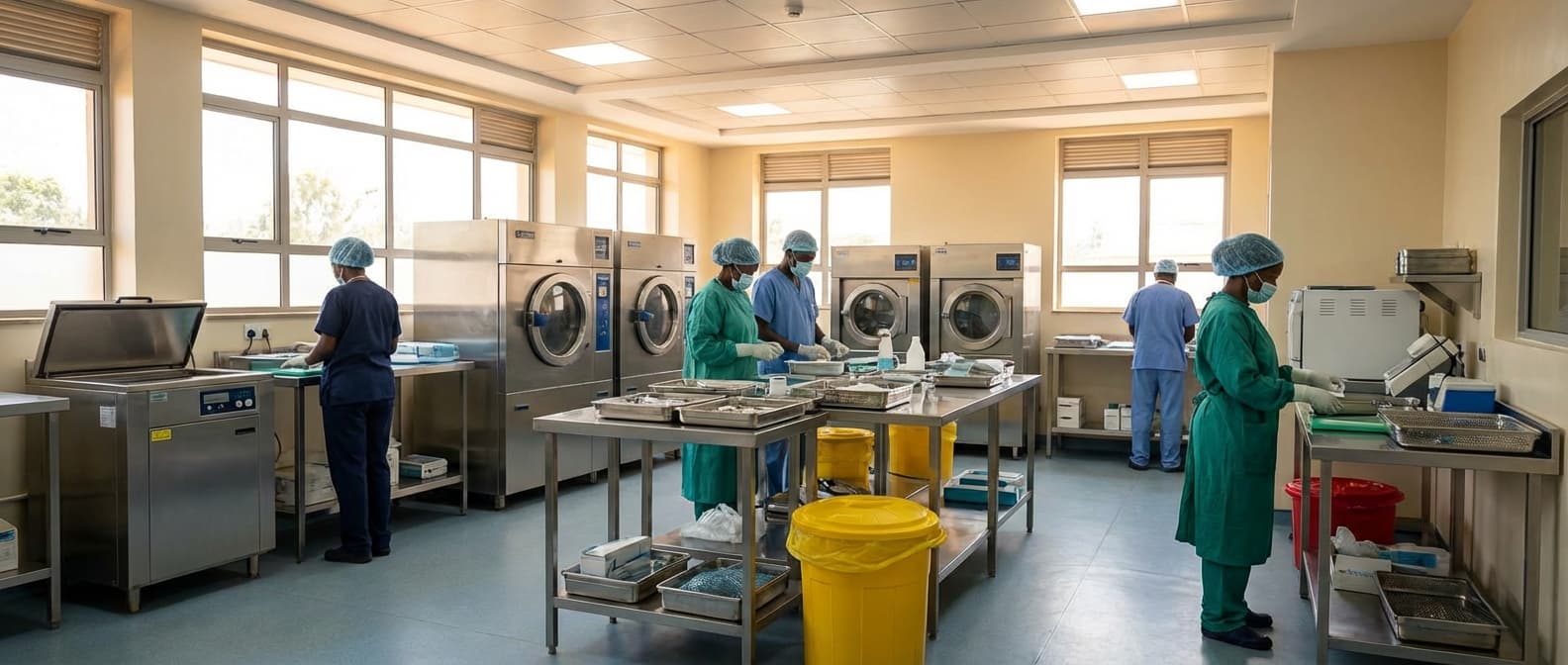
Medical Equipment Decontamination Service (Pre-Repair/Pre-Relocation) in Tanzania
Engineering Excellence & Technical Support
Medical Equipment Decontamination Service (Pre-Repair/Pre-Relocation) High-standard technical execution following OEM protocols and local regulatory frameworks.
Advanced Bioburden Reduction
Employing state-of-the-art decontamination protocols and validated chemical agents to significantly reduce bioburden on medical equipment, ensuring a safer environment for repair technicians and downstream users in Tanzania.
Compliance & Risk Mitigation
Adhering to international decontamination standards (e.g., ISO 13485 principles) and local Tanzanian health regulations to mitigate risks associated with biohazardous materials, safeguarding personnel and preventing cross-contamination during pre-repair and pre-relocation processes.
Secure & Certified Logistics
Providing certified and traceable decontamination procedures that meet transport regulations for medical devices, ensuring secure handling and transportation of equipment throughout Tanzania for essential repair and relocation services.
What Is Medical Equipment Decontamination Service (Pre-repair/pre-relocation) In Tanzania?
Medical Equipment Decontamination Service (Pre-Repair/Pre-Relocation) in Tanzania refers to the specialized process of rendering medical devices safe for handling, transportation, repair, or relocation by removing, inactivating, or destroying biological and chemical contaminants. This service is crucial for safeguarding personnel, the environment, and the integrity of the equipment itself from potential biohazards and chemical residues.
| Contaminant Type | Decontamination Method/Agent Example | Target Equipment Example |
|---|---|---|
| Biological (Bacteria, Viruses, Fungi) | High-level disinfectants (e.g., Glutaraldehyde, Peracetic Acid), Autoclaving | Endoscopes, Surgical Instruments, Ventilators |
| Blood/Bodily Fluids | Enzymatic cleaners, Sodium Hypochlorite (Diluted) | Surface monitors, Phlebotomy equipment |
| Cytotoxic Drugs | Specific neutralizing agents, Wash-in-place protocols | Chemotherapy infusion pumps, Compounding cabinets |
| Contrast Agents/Radiopharmaceuticals | Water rinses, Mild detergents | Angiography injectors, Nuclear medicine scanners |
| Chemical Residues (Cleaning agents) | Thorough rinsing, Specific solvent washes | Laboratory glassware washers, Sterilizers |
Typical Use Cases
- Pre-Repair: A complex diagnostic imaging device (e.g., MRI, CT scanner) showing a malfunction requires removal of internal components for repair. Prior to the service engineer accessing the internal mechanisms, the external surfaces and accessible internal areas are decontaminated to prevent exposure to potential pathogens or residual hazardous substances.
- Pre-Relocation (Internal): A hospital is undergoing renovation, necessitating the movement of an operating theatre anesthesia machine from one wing to another. The machine is decontaminated to ensure the safety of the moving crew and to prevent cross-contamination of different hospital zones.
- Pre-Relocation (External): A diagnostic laboratory is relocating its operations, and all its analytical instruments, including centrifuges and spectrophotometers, need to be transported to a new facility. These instruments undergo a decontamination process before being crated for transit.
- End-of-Life Equipment: Medical devices scheduled for disposal or recycling at the end of their operational lifespan are decontaminated to mitigate environmental risks associated with residual biological or chemical materials.
- Equipment Returned from Loan or Rental: Devices temporarily deployed to a facility and now being returned to the supplier require decontamination to ensure they are safe for handling and storage.
- Accidental Contamination Events: In instances where a medical device has been exposed to blood, bodily fluids, or hazardous chemicals, a decontamination service is initiated before any further handling, repair, or relocation is considered.
Who Needs Medical Equipment Decontamination Service (Pre-repair/pre-relocation) In Tanzania?
In Tanzania, ensuring the safety and functionality of medical equipment is paramount. Before embarking on costly repairs or complex relocations, professional decontamination services play a critical role. This service is essential for a variety of healthcare facilities and personnel who handle medical devices, as it mitigates risks associated with biohazards, chemical residues, and general contamination, thereby protecting both technicians and future users.
| Target Customer/Department | Reason for Needing Decontamination (Pre-Repair/Pre-Relocation) | Specific Equipment Examples |
|---|---|---|
| Hospital Biomedical Engineering Departments | To protect their technicians from potential biohazards and chemical exposure during inspection and repair, and to prevent cross-contamination during transport within the facility or to an external repair site. | Ventilators, patient monitors, infusion pumps, surgical lights, diagnostic imaging equipment (e.g., X-ray machines, ultrasound probes). |
| Clinic/Health Center Administrators | To ensure that equipment being sent for repair or being moved to a new location is safe to handle by transport personnel and external technicians, and to maintain hygiene standards. | Blood pressure monitors, stethoscopes, sterilizers, basic diagnostic tools, laboratory equipment. |
| Diagnostic Laboratory Managers | To prevent contamination of laboratory environments and protect staff from infectious agents or hazardous chemicals present on returned equipment after servicing or during relocation. | Centrifuges, microscopes, PCR machines, hematology analyzers, chemical analyzers. |
| Surgical Unit Supervisors | To ensure that complex surgical instruments and equipment are decontaminated before being sent for maintenance or relocation, safeguarding against biological risks. | Surgical tables, electrosurgical units, endoscopes, anesthetic machines, surgical power tools. |
| Dental Practice Owners/Managers | To protect dental assistants and external technicians from potential biohazards when dental chairs, X-ray units, or other instruments require servicing or moving. | Dental chairs, X-ray units, autoclaves, handpieces, ultrasonic scalers. |
| Medical Equipment Repair and Maintenance Companies | To ensure their workshop is a safe environment and to comply with regulations, preventing their staff from exposure to infectious or hazardous materials from client equipment. | All types of medical equipment received for repair. |
| Research Institution Facilities Managers | To maintain the integrity of research environments and protect research personnel when specialized equipment used in biological or chemical research needs repair or relocation. | Biosafety cabinets, incubators, centrifuges, specialized analytical instruments. |
| NGO Healthcare Program Coordinators | To ensure that donated or operational equipment being transferred between sites or sent for repair is handled safely by all parties involved, especially in remote settings. | Portable ultrasound machines, basic surgical kits, power generators for medical use, water purification systems for health facilities. |
| Government Health Ministry Procurement and Logistics Officers | To ensure proper protocols are followed for equipment being moved between government facilities or sent for specialized repairs, upholding public health standards. | Large-scale hospital equipment, imaging systems, sterilization units, medical vehicles. |
Who Needs Medical Equipment Decontamination Service (Pre-Repair/Pre-Relocation) in Tanzania?
- Hospitals (Government and Private)
- Clinics and Health Centers (Urban and Rural)
- Diagnostic Laboratories
- Surgical Centers
- Dental Practices
- Veterinary Clinics (for shared or specialized equipment)
- Medical Equipment Suppliers and Repair Companies
- Research Institutions
- Non-Governmental Organizations (NGOs) involved in healthcare delivery
- Government Health Ministries and Agencies
Medical Equipment Decontamination Service (Pre-repair/pre-relocation) Process In Tanzania
This document outlines the comprehensive workflow for the Medical Equipment Decontamination Service (Pre-Repair/Pre-Relocation) in Tanzania. This service is crucial for ensuring the safety of technicians and the integrity of equipment during repair or relocation processes by eliminating biological, chemical, or radioactive contaminants. The process begins with an inquiry from a healthcare facility and concludes with the certified decontamination of the equipment.
| Phase | Key Activities | Responsible Party | Deliverables/Outcomes | Notes/Considerations |
|---|---|---|---|---|
| Healthcare facility contacts the decontamination service provider. | Client (Healthcare Facility), Decontamination Service Provider | Understanding of the decontamination need (type of equipment, potential contaminants, urgency). | Initial discussion to clarify scope and identify immediate safety concerns. |
| Provider assesses the scope and provides a detailed quotation. | Decontamination Service Provider | Formal quotation outlining services, costs, timeline, and terms. | Quotation should be transparent and include details on decontamination methods and materials. |
| Agreement on service date, time, and location. | Client (Healthcare Facility), Decontamination Service Provider | Confirmed appointment for decontamination. | Coordination of access, power, water, and waste disposal arrangements. |
| Trained technicians arrive at the facility. | Decontamination Service Provider | Physical decontamination of the medical equipment using approved protocols and agents. | Strict adherence to safety protocols, including Personal Protective Equipment (PPE) for technicians and personnel in the vicinity. Use of appropriate disinfectants, sterilants, or cleaning agents based on contaminant type. Ventilation and containment measures where necessary. |
| Completion of decontamination logs and generation of a certificate. | Decontamination Service Provider | Signed decontamination certificate, detailing equipment, date, method used, and verification of effectiveness (if applicable). | Certificate serves as proof of decontamination for subsequent repair or relocation. |
| Decontaminated equipment is released for repair or relocation. | Client (Healthcare Facility), Decontamination Service Provider | Equipment is cleared for further handling. | Verification that all decontamination waste has been properly disposed of according to regulations. |
Medical Equipment Decontamination Service (Pre-Repair/Pre-Relocation) Workflow
- Inquiry and Initial Assessment
- Quotation and Agreement
- Scheduling and Logistics Planning
- On-site Decontamination Execution
- Documentation and Certification
- Equipment Release and Handover
Medical Equipment Decontamination Service (Pre-repair/pre-relocation) Cost In Tanzania
The cost of medical equipment decontamination services in Tanzania, particularly for pre-repair or pre-relocation needs, can vary significantly due to a multitude of factors. These services are crucial for ensuring the safety of technicians, the integrity of the equipment during handling, and compliance with health and environmental regulations. The pricing is typically influenced by the complexity of the equipment, the type and level of contamination, the decontamination method employed, the urgency of the service, and the geographical location within Tanzania. Specialized or highly sensitive equipment may require more intricate decontamination protocols, leading to higher costs. Similarly, the presence of hazardous biological or chemical contaminants will necessitate more robust and potentially more expensive treatment procedures. The service provider's expertise, certifications, and the quality of their decontamination agents also play a role in the overall price. Travel and logistical considerations for remote locations can also add to the expense. Therefore, obtaining detailed quotes from reputable service providers is essential for accurate budgeting.
| Service Category/Equipment Type (Example) | Estimated Cost Range (TZS) - Basic | Estimated Cost Range (TZS) - Moderate | Estimated Cost Range (TZS) - Complex/Hazardous |
|---|---|---|---|
| Small Diagnostic Tools (e.g., Stethoscopes, BP Cuffs) | 15,000 - 30,000 | 30,000 - 60,000 | N/A |
| Benchtop Laboratory Equipment (e.g., Centrifuges, Incubators) | 40,000 - 80,000 | 80,000 - 150,000 | 150,000 - 300,000 |
| Medium-Sized Medical Devices (e.g., Infusion Pumps, Ventilators) | 70,000 - 120,000 | 120,000 - 250,000 | 250,000 - 500,000+ |
| Large Imaging Equipment (e.g., X-ray Machines, Ultrasound Units) | 150,000 - 300,000 | 300,000 - 600,000 | 600,000 - 1,500,000+ |
| Surgical Instruments (Bulk Processing) | Per Instrument: 5,000 - 15,000 | Per Instrument: 15,000 - 30,000 | N/A |
| Specialized/High-Risk Equipment (e.g., Autoclaves after specific use, Biohazard Containment Units) | N/A | 200,000 - 500,000 | 500,000 - 2,000,000+ |
Key Pricing Factors for Medical Equipment Decontamination Services in Tanzania
- Equipment Type and Complexity
- Nature and Level of Contamination
- Decontamination Method and Agents Used
- Urgency of the Service
- Geographical Location and Accessibility
- Service Provider's Expertise and Certifications
- Volume and Size of Equipment
- Disposal of Contaminated Materials
Affordable Medical Equipment Decontamination Service (Pre-repair/pre-relocation) Options
Maintaining sterile medical equipment is crucial for patient safety and operational efficiency. Our affordable decontamination service, designed for pre-repair and pre-relocation needs, ensures your valuable assets are clean, safe, and compliant. We offer flexible value bundles and strategic cost-saving options to fit your budget without compromising quality.
| Value Bundle | Description | Included Services | Ideal For | Starting Price Range (USD) |
|---|---|---|---|---|
| Basic Clean & Disinfect | Essential decontamination for routine maintenance. | Surface cleaning, high-level disinfection (HLD) of non-critical surfaces. | Equipment awaiting minor repairs or standard relocation. | $50 - $150 per item |
| Advanced Sterilization Package | For equipment requiring a higher level of microbial inactivation. | All services in Basic Clean & Disinfect, plus sterilization of reusable components (where applicable). | Equipment with critical components or those with higher bioburden risk. | $100 - $250 per item |
| Full Decontamination & Inspection | Comprehensive service for thorough cleaning and initial assessment. | All services in Advanced Sterilization Package, plus visual inspection for damage and basic functional check. | Equipment undergoing significant repairs, major relocations, or end-of-lease returns. | $150 - $350 per item |
| Customizable Solutions | Tailored packages based on specific equipment types and needs. | Flexible combination of services to meet unique requirements. | Specialized medical devices, high-volume facilities, or unique decontamination protocols. | Quote-Based |
Why Choose Our Decontamination Service?
- Enhanced Patient Safety: Reduces the risk of cross-contamination and healthcare-associated infections.
- Extended Equipment Lifespan: Proper cleaning and decontamination can prevent premature wear and tear.
- Compliance Assurance: Meets regulatory standards for equipment handling and maintenance.
- Streamlined Operations: Facilitates smoother repair and relocation processes by removing biohazards.
- Cost-Effective Solution: Avoids the potential costs associated with equipment failure or infection outbreaks.
Verified Providers In Tanzania
In Tanzania's evolving healthcare landscape, access to reliable and high-quality medical services is paramount. This is where Franance Health emerges as a distinguished leader. As a meticulously vetted and verified provider, Franance Health consistently demonstrates a commitment to excellence in patient care, operational integrity, and ethical practices. Their stringent credentialing process, coupled with a dedication to patient well-being, positions them as the optimal choice for individuals and organizations seeking trustworthy healthcare solutions in Tanzania.
| Credentialing Area | Franance Health's Commitment | Patient Benefit |
|---|---|---|
| Medical Professional Licensing & Certification | Strict verification of all physician, nurse, and allied health professional licenses and certifications, ensuring current qualifications. | Access to qualified and competent healthcare practitioners, leading to accurate diagnoses and effective treatments. |
| Facility Standards & Infrastructure | Regular audits and assessments of medical facilities, equipment, and hygiene protocols to meet or exceed national and international standards. | Safe, sterile, and well-equipped medical environments that support optimal patient care and minimize risks. |
| Clinical Protocols & Best Practices | Adoption and implementation of up-to-date clinical guidelines and evidence-based treatment protocols. | Consistent and high-quality medical care, ensuring patients receive the most effective and current treatment options. |
| Patient Safety & Confidentiality | Robust systems in place for patient safety management and strict adherence to data privacy and confidentiality regulations. | Peace of mind knowing that their well-being and personal health information are protected. |
| Operational Transparency & Governance | Clear organizational structure, ethical business practices, and accountable leadership. | Trustworthy and reliable healthcare services with a commitment to integrity and ethical conduct. |
Why Franance Health Stands Out:
- Rigorous Verification Process: Franance Health undergoes a comprehensive verification that scrutinizes their medical professionals, facilities, and operational standards, ensuring adherence to the highest benchmarks.
- Unwavering Commitment to Quality: They prioritize evidence-based medicine, continuous professional development for their staff, and the implementation of advanced healthcare technologies.
- Patient-Centric Approach: Franance Health places the patient at the core of their services, fostering a culture of empathy, respect, and transparent communication.
- Compliance and Ethical Standards: Adherence to all relevant Tanzanian healthcare regulations and ethical guidelines is non-negotiable, ensuring a safe and trustworthy environment.
- Comprehensive Service Offerings: From primary care to specialized treatments, Franance Health aims to provide a wide spectrum of medical services to meet diverse patient needs.
Scope Of Work For Medical Equipment Decontamination Service (Pre-repair/pre-relocation)
This Scope of Work (SOW) outlines the requirements for medical equipment decontamination services to be performed prior to repair or relocation. The objective is to ensure the safety of personnel handling the equipment and to prevent the spread of infectious agents. The service includes a multi-step decontamination process, verification, documentation, and adherence to specific technical deliverables and standard specifications.
| Service Component | Description | Technical Deliverable | Standard Specification/Reference |
|---|---|---|---|
| Initial Assessment and Preparation | Visual inspection of equipment for gross contamination and identification of materials. Selection of appropriate cleaning and disinfection agents based on equipment type and suspected contaminants. | Pre-service assessment report detailing equipment condition, identified risks, and chosen decontamination strategy. | Compliance with hospital infection control policies, manufacturer's instructions for use (IFU) for cleaning agents, and relevant regulatory guidelines (e.g., CDC, EPA). |
| Cleaning and Gross Soil Removal | Manual or automated removal of visible organic debris, bodily fluids, and particulate matter using approved detergents and cleaning tools. Emphasis on hard-to-reach areas. | Cleaned equipment surface free from visible soil and residue. | Use of EPA-registered low-level or intermediate-level disinfectants/detergents. Proper rinsing to remove detergent residue. Wipe testing for protein residue (if applicable and specified). |
| Disinfection | Application of EPA-registered high-level disinfectants (HLD) or sterilants, as appropriate for the equipment and risk assessment, to inactivate pathogenic microorganisms. | Decontaminated equipment meeting specified microbial reduction targets (e.g., 6-log reduction for specific pathogens). | Contact time and concentration of disinfectant as per manufacturer's IFU and regulatory recommendations (e.g., FDA guidelines for HLDs). Validation of disinfection process effectiveness (e.g., spore testing if required). |
| Rinsing and Drying | Thorough rinsing of equipment with sterile or filtered water (as appropriate) to remove disinfectant residue, followed by complete drying to prevent microbial regrowth. | Equipment free from disinfectant residue. Equipment completely dry, with no visible moisture. | Use of specific water quality standards for rinsing if required by disinfectant IFU or equipment type. Use of lint-free cloths or filtered air for drying. |
| Verification and Documentation | Visual inspection for residual contamination after the process. Confirmation of successful decontamination through documented procedures and, if necessary, environmental monitoring or testing. | Decontamination certificate or log for each equipment item, detailing the date, time, personnel, agents used, and verification results. | Adherence to internal quality control procedures. Record-keeping compliance with healthcare facility policies and regulatory requirements. |
| Packaging and Labeling for Transport | Secure packaging of the decontaminated equipment to maintain its integrity during transport, with clear labeling indicating its decontaminated status and intended destination (e.g., 'Decontaminated - For Repair'). | Equipment packaged in appropriate protective materials. Clearly labeled with identification, decontamination status, and handling instructions. | Use of tamper-evident seals if required. Packaging materials that are compatible with the equipment and will not introduce contamination. Clear and unambiguous labeling according to facility protocols. |
Key Decontamination Stages
- Initial Assessment and Preparation
- Cleaning and Gross Soil Removal
- Disinfection
- Rinsing and Drying
- Verification and Documentation
- Packaging and Labeling for Transport
Service Level Agreement For Medical Equipment Decontamination Service (Pre-repair/pre-relocation)
This Service Level Agreement (SLA) outlines the response times and uptime guarantees for the pre-repair and pre-relocation decontamination service of medical equipment. This service is critical to ensure the safety of technicians and the integrity of the equipment during handling and maintenance.
| Service Level | Response Time Guarantee | Uptime Guarantee | Notes |
|---|---|---|---|
| Decontamination for Scheduled Repair/Relocation | Within 4 business hours of request notification (for urgent requests) or within 24 business hours for standard requests. | Not applicable (as this is a service, not a continuously available resource). The guarantee is for the timely completion of the decontamination service. | Service requested during business hours (e.g., 9 AM - 5 PM, Mon-Fri). Urgent requests will be prioritized. |
| Completion of Decontamination | Within 8 business hours of arrival on-site for standard decontamination. | Not applicable. | This timing is dependent on the complexity and size of the equipment. The initial response time ensures on-site presence and assessment. |
Key Service Elements
- Scope: This SLA covers the decontamination of medical equipment prior to repair or relocation, as requested by authorized personnel.
- Decontamination Standard: All decontamination will be performed according to [Specify Decontamination Protocol/Standard, e.g., manufacturer's guidelines, internal SOP, industry best practice].
- Service Provider: [Name of Service Provider]
- Client: [Name of Healthcare Facility/Department]
- Effective Date: [Date]
- Termination Date: [Date]
- Exclusions: This SLA does not cover routine cleaning, disinfection during patient use, or emergency decontamination outside of scheduled repair/relocation.
Frequently Asked Questions

Ready when you are
Let's scope your Medical Equipment Decontamination Service (Pre-Repair/Pre-Relocation) in Tanzania project in Tanzania.

Scaling healthcare logistics and technical systems across the entire continent.