
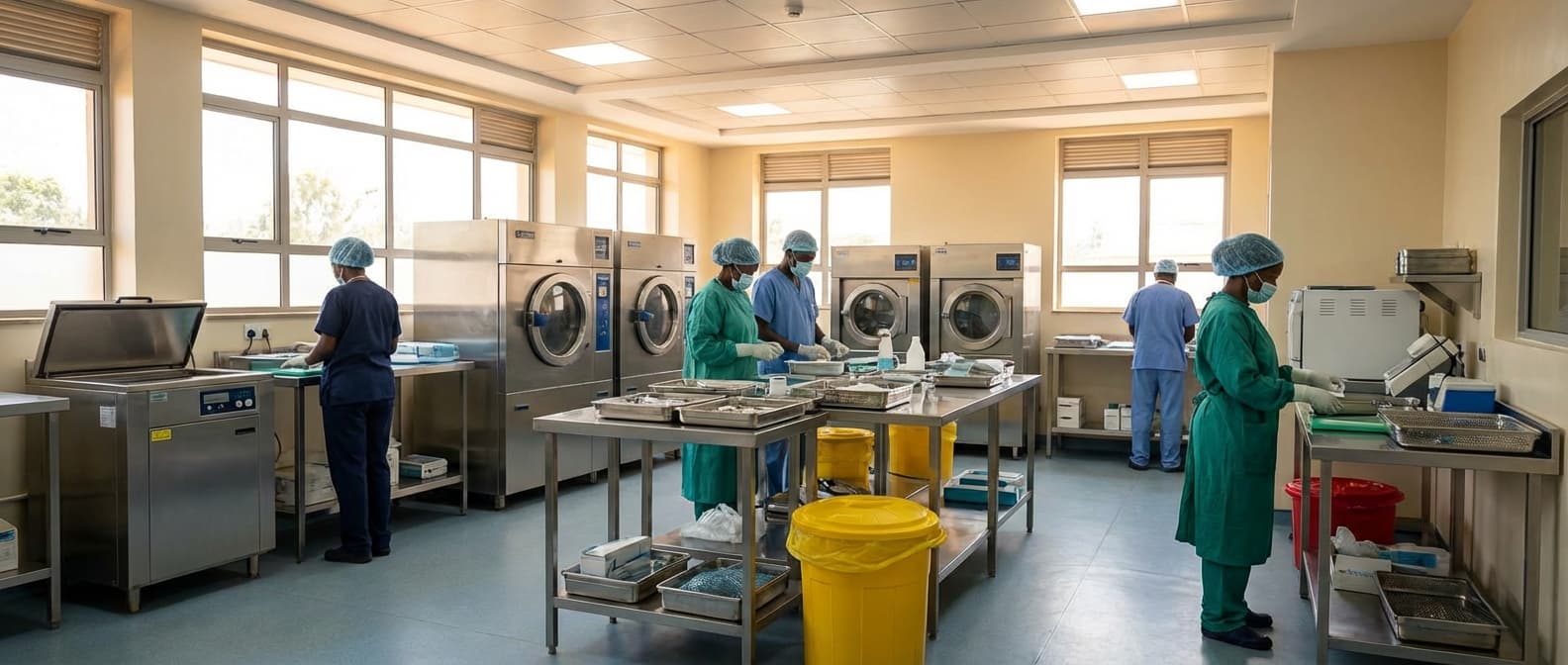
Infection-Control Readiness Support Service for Reusable Equipment in Tanzania
Engineering Excellence & Technical Support
Infection-Control Readiness Support Service for Reusable Equipment High-standard technical execution following OEM protocols and local regulatory frameworks.
Advanced Sterilization Training & Validation
Empowering healthcare facilities across Tanzania with hands-on training for healthcare workers on proper sterilization techniques for reusable medical equipment. Our program includes validation of sterilization processes using biological and chemical indicators to ensure efficacy and compliance with international standards, minimizing the risk of Healthcare-Associated Infections (HAIs).
Smart Inventory Management & Tracking
Implementing digital solutions for efficient tracking and management of reusable medical equipment. This includes real-time inventory monitoring, maintenance scheduling, and lifecycle management, ensuring that equipment is always available, properly maintained, and less likely to be misplaced or used beyond its sterile lifespan, thereby preventing contamination.
Comprehensive Risk Assessment & Protocol Development
Conducting thorough on-site risk assessments of current practices for reusable equipment handling and reprocessing. We develop customized, evidence-based infection prevention and control protocols tailored to the specific context of Tanzanian healthcare settings, addressing local challenges and ensuring robust safety measures are in place.
What Is Infection-control Readiness Support Service For Reusable Equipment In Tanzania?
Infection-Control Readiness Support Service for Reusable Equipment in Tanzania refers to a comprehensive package of technical assistance and practical interventions designed to ensure that healthcare facilities effectively manage the risks associated with the sterilization, disinfection, and safe handling of reusable medical devices. This service aims to bolster a facility's capacity to prevent healthcare-associated infections (HAIs) by ensuring that all reusable equipment is processed to a standard that renders it safe for subsequent patient use. It encompasses a range of activities from policy development and infrastructure assessment to staff training and quality assurance monitoring, directly addressing critical gaps in infection prevention and control (IPC) programs within the Tanzanian healthcare context.
| Service Beneficiary | Key Needs Addressed | Typical Use Cases |
|---|---|---|
| Public Healthcare Facilities (Hospitals, Health Centers, Dispensaries): | Limited access to updated IPC guidelines, inadequate infrastructure (e.g., poorly designed CSSDs), insufficient or malfunctioning sterilization equipment, lack of trained personnel, inconsistent supply of consumables, and weak quality control mechanisms. | • Establishing or upgrading a CSSD. • Implementing a new sterilization protocol for critical instruments. • Training nurses and technicians on safe reprocessing of surgical instruments. • Ensuring compliance with national IPC standards. • Responding to an outbreak of HAIs linked to inadequately processed equipment. |
| Private Healthcare Facilities (Clinics, Hospitals, Specialized Centers): | Varying levels of IPC implementation, potential for outdated practices, need for specialized training on advanced sterilization technologies, and ensuring adherence to regulatory requirements. | • Auditing current reprocessing practices to identify compliance gaps. • Training staff on the validated use of specific sterilization equipment (e.g., low-temperature sterilizers). • Developing protocols for reprocessing complex medical devices (e.g., endoscopes). • Ensuring readiness for regulatory inspections. |
| Non-Governmental Organizations (NGOs) and Faith-Based Organizations (FBOs) Providing Healthcare Services: | Resource constraints, potential for limited access to technical expertise, and the need to align IPC practices across multiple service delivery points. | • Standardizing IPC practices across a network of clinics. • Providing foundational IPC training for staff in remote areas. • Assisting with the procurement of essential IPC supplies. |
| Medical Equipment Suppliers and Manufacturers: | Ensuring that their equipment is installed and operated correctly within the context of the facility's IPC framework; providing technical training for end-users. | • Training healthcare staff on the proper operation and maintenance of newly installed autoclaves. • Developing user manuals that incorporate IPC best practices. • Providing troubleshooting support for equipment-related reprocessing issues. |
Components of Infection-Control Readiness Support Service for Reusable Equipment:
- Needs Assessment and Gap Analysis: Evaluating existing IPC protocols, infrastructure, equipment, consumables, and human resources related to reusable medical device reprocessing.
- Policy and Protocol Development/Revision: Assisting in the establishment or refinement of facility-specific Standard Operating Procedures (SOPs) for cleaning, disinfection, sterilization, storage, and distribution of reusable equipment, aligned with national guidelines (e.g., Ministry of Health guidelines) and international best practices.
- Infrastructure and Equipment Evaluation: Assessing the suitability and functionality of central sterile supply departments (CSSDs), including water quality, ventilation, electrical supply, and the condition and calibration of sterilization and disinfection equipment (e.g., autoclaves, washer-disinfectors, ultrasonic cleaners).
- Staff Training and Capacity Building: Providing targeted training to healthcare workers involved in reprocessing, covering topics such as principles of asepsis, proper decontamination techniques, safe handling of sharps, use of personal protective equipment (PPE), understanding sterilization cycles, and infection surveillance.
- Supply Chain Management Support: Advising on the procurement, storage, and inventory management of essential IPC consumables (e.g., detergents, disinfectants, packaging materials, chemical indicators, biological indicators).
- Quality Assurance and Monitoring: Implementing systems for regular monitoring and evaluation of reprocessing processes, including the use of chemical and biological indicators, record-keeping, and audit procedures.
- Waste Management Integration: Ensuring that waste generated during the reprocessing of reusable equipment is managed according to established safety and environmental regulations.
- Technical Support and Troubleshooting: Providing ongoing expert advice and assistance to address technical challenges encountered in the reprocessing workflow.
Who Needs Infection-control Readiness Support Service For Reusable Equipment In Tanzania?
Understanding who requires infection-control readiness support for reusable equipment in Tanzania is crucial for tailoring effective services and interventions. This support is vital for healthcare facilities to minimize the risk of healthcare-associated infections (HAIs) transmitted through improperly cleaned, disinfected, or sterilized reusable medical devices. The target customers and departments span various levels of the healthcare system and specific areas of patient care where reusable equipment is extensively used.
| Customer Type | Key Departments/Units Involved | Specific Needs/Challenges | Reasons for Support |
|---|---|---|---|
| Public Hospitals (Tertiary, Regional, District) | CSSD, Operating Theatres, ICUs, Maternity, Surgical Wards | Limited availability of advanced sterilization equipment, insufficient trained personnel, inconsistent supply chains for consumables, adherence to national guidelines. | Ensure safe patient care, reduce HAIs, improve compliance with national infection prevention and control (IPC) standards, optimize resource utilization. |
| Private Hospitals (For-profit & Not-for-profit) | CSSD, Operating Theatres, Specialized Clinics, In-patient Wards | Varied levels of infrastructure and training, need for international standards compliance, maintaining reputation and patient trust. | Maintain high-quality patient care, meet accreditation requirements, prevent legal liabilities, ensure patient safety and satisfaction. |
| NGO Healthcare Facilities | CSSD (if available), Treatment Rooms, Basic Surgical Units | Resource constraints, often serving remote or underserved populations, reliance on donor funding, potential for older equipment. | Provide essential healthcare services safely, reach vulnerable populations, optimize limited resources for maximum impact, build local capacity. |
| Rural Health Centers & Dispensaries | Treatment Rooms, Minor Procedure Areas, Antenatal Care | Lack of dedicated CSSD, minimal or no sterilization facilities, reliance on basic disinfection methods, limited access to training and consumables. | Prevent common infections during basic procedures, ensure basic safety for routine care, empower staff with simple and effective IPC practices. |
| Specialized Clinics (Dental, Ophthalmology, etc.) | Treatment/Procedure Rooms, Sterilization Areas | Specific types of reusable instruments requiring specialized cleaning and sterilization protocols, high volume of procedures. | Ensure the safety of specialized procedures, prevent cross-contamination of specific pathogens, maintain the integrity and lifespan of specialized instruments. |
| Central Sterile Supply Departments (CSSDs) | All areas within CSSD (decontamination, cleaning, assembly, sterilization, storage) | Staff training, equipment maintenance and validation, quality assurance, workflow optimization, proper documentation. | Achieve consistent and effective sterilization, reduce reprocessing errors, ensure the sterility of instruments reaching clinical areas. |
| Operating Theatres/Surgical Wards | Sterile Processing Areas, Instrument Storage | Need for immediate availability of sterile instruments, proper handling of contaminated surgical tools, prevention of surgical site infections (SSIs). | Guarantee the sterility of surgical instruments, reduce the risk of SSIs, ensure efficient surgical workflows. |
| Intensive Care Units (ICUs) | Equipment Management, Reprocessing Areas | High risk of infection transmission due to vulnerable patients, frequent use of complex reusable medical devices (e.g., ventilators, endoscopes). | Minimize the risk of HAIs in critically ill patients, ensure the safety of critical care equipment. |
| Maternity & Neonatal Units | Delivery Rooms, Neonatal Intensive Care Units (NICUs) | Specific risks for mothers and newborns, need for meticulous reprocessing of instruments used in childbirth and neonatal care. | Protect vulnerable mothers and newborns from infections, ensure the safety of equipment used in sensitive care settings. |
| Laboratory Departments | Diagnostic Equipment, Glassware, Reusable Syringes/Needles (if applicable) | Sterilization of reusable laboratory equipment to prevent contamination of samples and ensure accurate diagnostic results. | Maintain laboratory integrity, prevent misdiagnosis due to contamination, ensure the safety of laboratory personnel. |
Target Customers and Departments for Infection-Control Readiness Support Service for Reusable Equipment in Tanzania
- Public Hospitals (Tertiary, Regional, and District)
- Private Hospitals (For-profit and Not-for-profit)
- Non-Governmental Organization (NGO) Healthcare Facilities
- Rural Health Centers and Dispensaries
- Specialized Clinics (e.g., dental, ophthalmology, surgical)
- Central Sterile Supply Departments (CSSDs)
- Operating Theatres/Surgical Wards
- Intensive Care Units (ICUs)
- Maternity and Neonatal Units
- Outpatient Departments (where reusable instruments are used)
- Laboratory Departments (for reusable diagnostic equipment)
Infection-control Readiness Support Service For Reusable Equipment Process In Tanzania
This document outlines the workflow for the Infection-Control Readiness Support Service for Reusable Equipment Process in Tanzania. The service aims to assist healthcare facilities in ensuring proper infection control practices for reusable medical equipment, thereby enhancing patient safety and reducing the risk of healthcare-associated infections. The workflow details the steps from an initial inquiry to the full execution of the support service.
| Stage | Description | Key Activities | Responsible Party | Output/Deliverable |
|---|---|---|---|---|
| Inquiry and Initial Contact | Healthcare facilities express interest in the Infection-Control Readiness Support Service. | Facility contacts the support service provider (e.g., Ministry of Health, dedicated NGO). Initial information exchange about the service's purpose and benefits. | Healthcare Facility, Support Service Provider | Acknowledgement of inquiry, initial service information |
| Needs Assessment and Scoping | Understanding the specific needs and challenges of the facility regarding reusable equipment infection control. | Discussion with facility management and relevant staff. Identification of key areas of concern (e.g., sterilization, disinfection, storage). Defining the scope of support required. | Support Service Provider, Healthcare Facility | Needs assessment report, defined scope of service |
| Proposal Development and Agreement | Formalizing the service offering based on the identified needs. | Developing a detailed proposal outlining services, timelines, expected outcomes, and costs (if applicable). Negotiation and finalization of terms. Signing of a Memorandum of Understanding (MOU) or service agreement. | Support Service Provider, Healthcare Facility | Service proposal, signed agreement/MOU |
| On-site Readiness Assessment | Evaluating the current state of infection control practices for reusable equipment at the facility. | Site visit by the support team. Review of existing protocols, infrastructure, and equipment. Observation of staff practices. Identification of gaps and strengths. | Support Service Provider | Detailed readiness assessment report, gap analysis, recommendations |
| Training and Capacity Building | Enhancing the knowledge and skills of healthcare staff in infection control for reusable equipment. | Conducting tailored training sessions on relevant protocols (e.g., proper cleaning, disinfection, sterilization, handling). Demonstrations and practical exercises. Development of training materials. | Support Service Provider | Trained staff, training materials, training attendance records |
| Equipment and Resource Support | Providing necessary resources and equipment to improve infection control practices. | Recommendations for procurement of essential equipment (e.g., autoclaves, disinfectors, PPE). Facilitating access to or provision of consumables and supplies. Assisting with the development of standard operating procedures (SOPs). | Support Service Provider, Healthcare Facility | Procurement recommendations, supplied consumables, developed SOPs |
| Monitoring and Follow-up | Ensuring sustained implementation of improved practices and identifying any emerging issues. | Regular site visits for supervision and monitoring. Review of implemented changes. Providing ongoing technical advice and support. Addressing any challenges encountered by the facility. | Support Service Provider | Monitoring reports, feedback, ongoing technical support |
| Reporting and Continuous Improvement | Documenting the impact of the support service and identifying areas for future enhancement. | Compilation of a comprehensive report detailing activities, outcomes, and impact. Sharing lessons learned with the facility and other stakeholders. Developing strategies for long-term sustainability of infection control practices. | Support Service Provider, Healthcare Facility | Final project report, sustainability plan, recommendations for future interventions |
Workflow Stages
- Inquiry and Initial Contact
- Needs Assessment and Scoping
- Proposal Development and Agreement
- On-site Readiness Assessment
- Training and Capacity Building
- Equipment and Resource Support
- Monitoring and Follow-up
- Reporting and Continuous Improvement
Infection-control Readiness Support Service For Reusable Equipment Cost In Tanzania
The cost of an Infection-Control Readiness Support Service for Reusable Equipment in Tanzania is influenced by several key pricing factors. These services are crucial for ensuring the safety and effectiveness of medical procedures by preventing healthcare-associated infections (HAIs). The overall cost will vary based on the scope of the service, the size and complexity of the healthcare facility, the specific types of reusable equipment requiring support, and the level of expertise provided. Understanding these factors is essential for budgeting and procurement by healthcare institutions in Tanzania.
| Service Component/Scope | Estimated Cost Range (TZS - Tanzanian Shillings) | Notes |
|---|---|---|
| Initial Infection Control Readiness Assessment (per facility) | 500,000 - 2,500,000 | Covers a comprehensive evaluation of current practices, equipment, and infrastructure. |
| Staff Training (per session/group) | 200,000 - 1,000,000 | Depends on the number of staff, duration, and complexity of training modules (e.g., basic hygiene vs. specialized sterilization). Hourly rates for trainers can range from 50,000 to 150,000 TZS. |
| Equipment Sterilization Validation/Audits (per equipment type) | 100,000 - 500,000 | Includes biological and chemical indicator testing, ensuring sterilization efficacy. |
| Routine Maintenance & Calibration (per equipment type, monthly) | 50,000 - 300,000 | For critical sterilization equipment like autoclaves. Varies by equipment model and age. |
| Ongoing Monitoring & Consultation (monthly retainer) | 750,000 - 5,000,000+ | For larger facilities or comprehensive support packages. Can be significantly higher for specialized services. |
| Development of Infection Control Protocols & SOPs (per facility) | 300,000 - 1,500,000 | Tailored to the specific needs and types of equipment within a healthcare setting. |
| Supply Chain Management for Infection Control Consumables (percentage of procurement value or fixed fee) | 2% - 10% of procurement value OR 200,000 - 800,000 TZS per month | Focuses on ensuring adequate stock of essential infection control supplies. |
| Comprehensive Annual Support Package (e.g., for a medium-sized hospital) | 15,000,000 - 60,000,000+ | Bundles multiple services including assessments, training, routine checks, and ongoing advisory. |
Key Pricing Factors for Infection-Control Readiness Support Services in Tanzania:
- Scope of Services: The breadth of support offered, including assessment, training, equipment maintenance, sterilization validation, supply chain management for infection control consumables, and ongoing monitoring.
- Facility Size and Bed Count: Larger hospitals with more departments and a higher bed capacity will generally incur higher costs due to increased equipment volume and complexity.
- Type and Volume of Reusable Equipment: The number and types of instruments, devices, and equipment requiring sterilization and maintenance (e.g., surgical instruments, endoscopes, respiratory equipment, dental tools). Specialized or high-risk equipment often requires more intensive support.
- Level of Expertise and Qualifications: The experience and certifications of the infection control specialists, technicians, and trainers providing the service.
- Frequency and Duration of Support: Whether the service is a one-time assessment, ongoing maintenance, or a continuous monitoring program. Daily, weekly, monthly, or annual contracts will impact pricing.
- Training Requirements: The extent of training provided to facility staff on proper handling, cleaning, disinfection, and sterilization procedures.
- Technology and Equipment Used: If the service provider utilizes advanced diagnostic tools, sterilization monitoring systems, or specialized cleaning equipment, this can influence the price.
- Geographic Location within Tanzania: While national pricing exists, remote or hard-to-reach areas might incur additional logistical costs for travel and on-site visits.
- Consumables and Supplies: If the service includes the provision of disinfectants, sterile packaging materials, or other consumables, these costs will be factored in.
- Reporting and Documentation: The level of detail and frequency of reports provided to the facility on infection control compliance and equipment status.
Affordable Infection-control Readiness Support Service For Reusable Equipment Options
Our Affordable Infection-Control Readiness Support Service for Reusable Equipment Options is designed to empower healthcare facilities with robust infection prevention protocols without breaking the budget. We understand the critical need for reliable reusable equipment management, especially in today's resource-constrained environment. This service offers a tiered approach, allowing facilities to select the level of support that best suits their needs and budget. Key to our offering are flexible 'Value Bundles' and a suite of 'Cost-Saving Strategies' that make proactive infection control accessible and sustainable.
| Value Bundle Name | Included Services | Target Facility Size/Need | Estimated Cost Savings Focus |
|---|---|---|---|
| Essential Readiness Bundle | Basic Risk Assessment, Core Protocol Development, Initial Staff Training Session | Small clinics, limited reusable equipment, entry-level infection control needs | Reduced risk of outbreaks, improved staff compliance |
| Comprehensive Preparedness Bundle | In-depth Risk Assessment, Advanced Protocol Refinement, Biannual Training, Quarterly Audits | Medium-sized hospitals, diverse reusable equipment, established infection control programs needing enhancement | Optimized reprocessing workflows, reduced equipment downtime, lower reprocessing material costs |
| Advanced Assurance Bundle | Full-Service Risk Management, Customized Protocol Implementation, Ongoing Training & Audits, Technology Consultation, Supply Chain Analysis | Large hospitals, complex reusable equipment, high-risk procedures, focus on automation and efficiency | Maximized operational efficiency, significant reduction in reprocessing errors and associated costs, minimized regulatory fines |
Key Components of the Service
- Reusable Equipment Risk Assessment: Thorough evaluation of your current reusable equipment inventory, usage patterns, and existing infection control practices.
- Customized Infection Control Protocols: Development and refinement of Standard Operating Procedures (SOPs) for cleaning, disinfection, sterilization, and storage of all reusable medical devices.
- Staff Training and Competency Assessment: Comprehensive training programs for all staff involved in handling, processing, and managing reusable equipment, with ongoing competency checks.
- Compliance Monitoring and Auditing: Regular on-site and remote audits to ensure adherence to protocols and identify areas for improvement.
- Technology Integration Support: Guidance on implementing and optimizing technology for tracking, traceability, and workflow management of reusable equipment.
- Supply Chain Optimization for Consumables: Strategies to reduce waste and cost associated with necessary consumables used in reprocessing.
- Regulatory Guidance and Updates: Keeping your facility informed about evolving infection control regulations and best practices.
Verified Providers In Tanzania
In the dynamic healthcare landscape of Tanzania, identifying truly verified and high-quality healthcare providers is paramount for individuals seeking reliable medical services. Franance Health stands out as a leading organization committed to ensuring the credibility and excellence of healthcare providers it partners with. This dedication to verification and quality assurance makes Franance Health credentials a compelling indicator of superior healthcare.
| Criterion | Franance Health Verification | Benefit to Patients |
|---|---|---|
| Medical Licensing & Certifications | Verified and up-to-date with Tanzanian medical boards. | Ensures providers are legally qualified and competent. |
| Educational Background & Training | Thoroughly checked against accredited institutions. | Confirms a strong foundation in medical knowledge and skills. |
| Professional Experience & Specialization | Assessed for relevant experience and specific expertise. | Connects patients with appropriate specialists for their conditions. |
| Patient Care & Ethical Standards | Evaluated for patient-centered approaches and ethical conduct. | Promotes a safe, respectful, and compassionate healthcare experience. |
| Facility Standards (where applicable) | Assessed for hygiene, equipment, and infrastructure. | Ensures a safe and well-equipped environment for treatment. |
| Reputation & Patient Feedback | Considered as part of the overall assessment. | Provides an indication of consistent patient satisfaction. |
Why Franance Health Credentials Matter:
- Rigorous Vetting Process: Franance Health employs a comprehensive and multi-faceted vetting process for all affiliated providers. This includes thorough background checks, verification of medical licenses, confirmation of educational qualifications, and assessment of professional experience.
- Commitment to Ethical Practices: Beyond technical qualifications, Franance Health evaluates providers for their adherence to ethical medical practices, patient-centered care, and commitment to patient safety and privacy.
- Quality of Care Standards: Franance Health partners with facilities and individual practitioners who meet and exceed established quality of care benchmarks. This ensures that patients receive evidence-based treatments and personalized attention.
- Continuous Monitoring and Improvement: The commitment doesn't end with initial verification. Franance Health engages in ongoing monitoring and feedback mechanisms to ensure that providers consistently maintain their high standards and adapt to evolving medical knowledge and practices.
- Enhanced Patient Trust and Confidence: By partnering with Franance Health, patients gain the assurance that they are accessing healthcare from vetted, reputable, and trustworthy professionals, fostering greater trust and confidence in their medical journey.
- Access to Specialized Services: Franance Health's network often includes specialized medical professionals and facilities, allowing patients to access a wider range of high-quality services tailored to their specific health needs.
Scope Of Work For Infection-control Readiness Support Service For Reusable Equipment
This Scope of Work (SOW) outlines the requirements for Infection-Control Readiness Support Services focused on reusable medical equipment. The service aims to ensure that healthcare facilities have robust processes, trained personnel, and appropriate infrastructure in place to safely process and manage reusable equipment, thereby minimizing the risk of healthcare-associated infections (HAIs). This SOW details the technical deliverables and standard specifications expected from the service provider.
| Technical Deliverable | Description | Standard Specifications/Acceptance Criteria |
|---|---|---|
| Infection Control Risk Assessment (ICRA) Report for Reusable Equipment | A comprehensive report detailing identified risks associated with reusable equipment reprocessing, including potential pathways for transmission of pathogens. The report will prioritize risks and provide actionable recommendations. | Report must adhere to established ICRA methodologies (e.g., CDC guidelines). Includes quantitative and qualitative risk scoring. Recommendations must be evidence-based and feasible for implementation. |
| Standardized Reprocessing Protocol Manual | A documented set of written procedures for the cleaning, disinfection, and sterilization of all reusable medical equipment. Protocols will be specific to equipment type and intended use. | Protocols must align with manufacturer's instructions for use (IFUs), relevant regulatory standards (e.g., FDA, AAMI, ISO), and current evidence-based guidelines. Manual must be clear, concise, and accessible to staff. |
| Staff Training Program and Competency Assessment Tools | Development and delivery of training modules covering principles of infection control, specific reprocessing steps, equipment operation, and documentation. Includes assessment tools to verify staff competency. | Training content must be comprehensive and tailored to different staff roles. Assessment tools must objectively measure knowledge and practical skills. Program should include a plan for ongoing competency verification. |
| Equipment and Technology Evaluation Report | An analysis of existing or proposed equipment and technologies used for cleaning, disinfection, and sterilization. Includes recommendations for upgrades or new acquisitions based on efficacy, safety, and cost-effectiveness. | Report must include a detailed comparison of technologies, including validation data, user feedback, and potential ROI. Recommendations should consider workflow integration and sustainability. |
| Compliance Audit Report | A report detailing the facility's adherence to internal policies, regulatory requirements, and industry best practices for reusable equipment reprocessing. Includes identification of non-compliance issues and recommended corrective actions. | Audit must be conducted against a predefined checklist based on regulatory standards and best practices. Report should include findings, evidence of non-compliance, and a clear action plan for remediation. |
| Monitoring and Auditing System Design | Design of a system for ongoing monitoring of reprocessing processes and regular auditing of compliance. Includes development of data collection tools, reporting mechanisms, and performance indicators. | System design must be practical for routine use. Performance indicators should be measurable and relevant to infection prevention outcomes. Reporting structure should facilitate timely review and action. |
| Root Cause Analysis (RCA) Framework and Template | Development of a standardized framework and template for conducting root cause analyses of infection control breaches related to reusable equipment. | Framework must guide a systematic investigation process. Template should capture essential information for analysis, including contributing factors, outcomes, and recommendations for preventive measures. |
Key Areas of Support
- Assessment of current infection control practices for reusable equipment.
- Development and implementation of standardized reprocessing protocols.
- Training and competency assessment for staff involved in reprocessing.
- Evaluation and recommendation of appropriate equipment and technologies.
- Guidance on regulatory compliance and best practices.
- Development of monitoring and auditing systems.
- Incident investigation and root cause analysis support.
Service Level Agreement For Infection-control Readiness Support Service For Reusable Equipment
This Service Level Agreement (SLA) outlines the response times and uptime guarantees for the Infection-Control Readiness Support Service for Reusable Equipment. This service aims to ensure that critical reusable equipment is maintained in a state of readiness for infection control, minimizing downtime and supporting the operational needs of the facility. The service includes proactive monitoring, timely intervention for identified issues, and necessary maintenance or repair to ensure equipment functionality and compliance with infection control protocols.
| Service Element | Response Time Guarantee | Uptime Guarantee | Notes |
|---|---|---|---|
| Critical Equipment Failure (e.g., sterilization unit malfunction affecting patient care) | 1 hour (initial response for remote assessment) | 99.5% operational uptime | On-site intervention to commence within 4 hours of confirmed critical failure. |
| High Priority Equipment Issue (e.g., minor malfunction impacting workflow, but not immediate patient care) | 2 business hours (initial response for remote assessment) | 98.0% operational uptime | On-site intervention to commence within 8 business hours of confirmed high priority issue. |
| Routine Monitoring & Preventive Maintenance | As scheduled | N/A (Focus on proactive prevention) | Service provider responsible for adherence to agreed-upon maintenance schedules. |
| Inquiry/Information Request (non-critical) | 24 business hours | N/A | Applies to requests for reports, general information, or non-urgent consultations. |
Service Components
- Proactive monitoring of critical reusable equipment for infection control compliance.
- Remote diagnostics and troubleshooting.
- On-site technical support and repair.
- Preventive maintenance scheduling and execution.
- Assistance with decontamination and sterilization procedures.
- Reporting on equipment status and service interventions.
Frequently Asked Questions

Ready when you are
Let's scope your Infection-Control Readiness Support Service for Reusable Equipment in Tanzania project in Tanzania.

Scaling healthcare logistics and technical systems across the entire continent.