
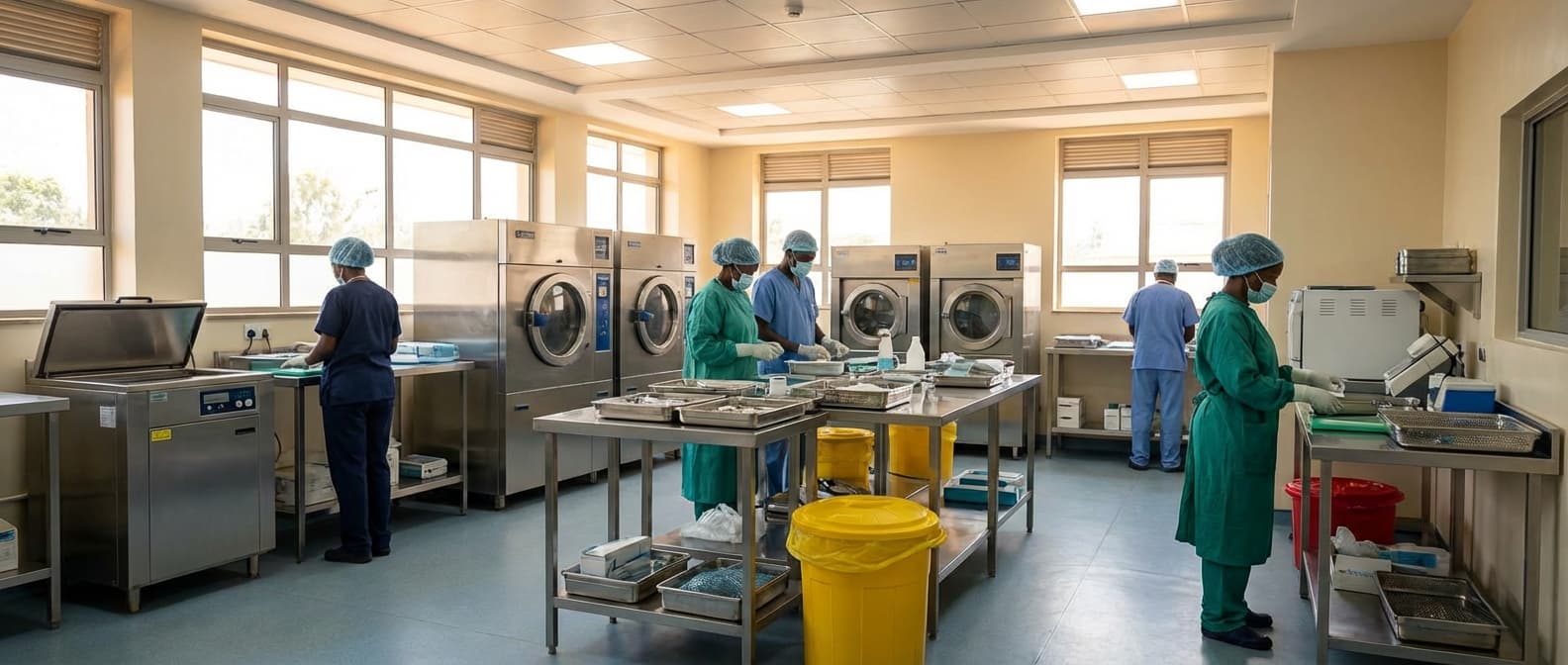
Autoclave Validation Support Service in Tanzania
Engineering Excellence & Technical Support
Autoclave Validation Support Service High-standard technical execution following OEM protocols and local regulatory frameworks.
Sterilization Efficacy Assurance
Our Autoclave Validation Support Service in Tanzania provides rigorous testing using biological and chemical indicators to confirm effective microbial inactivation, guaranteeing the sterility of your medical instruments and laboratory equipment according to international standards.
Performance Parameter Verification
We meticulously validate critical autoclave parameters including temperature, pressure, and cycle time, ensuring consistent and repeatable sterilization cycles. This detailed performance verification minimizes the risk of reprocessing and enhances operational efficiency for healthcare and research facilities across Tanzania.
Regulatory Compliance & Documentation
Our expert team delivers comprehensive, audit-ready validation reports that meet stringent Tanzanian and international regulatory requirements. We streamline your compliance process, providing clear and concise documentation for all your autoclaving equipment.
What Is Autoclave Validation Support Service In Tanzania?
Autoclave validation support services in Tanzania refer to specialized technical assistance provided to ensure that steam sterilization equipment (autoclaves) consistently and effectively eliminate viable microorganisms. This process is critical for maintaining sterility assurance levels (SAL) in environments where aseptic conditions are paramount. The service involves a systematic approach to verifying and documenting the performance of an autoclave against predefined acceptance criteria, ensuring it meets regulatory requirements and operational efficacy. The core objective is to provide demonstrable evidence that the sterilization cycles are capable of achieving the required log reduction of target microorganisms under specific operating parameters.
| Who Needs Autoclave Validation Support Service? | Typical Use Cases | ||
|---|---|---|---|
| Healthcare Facilities (Hospitals, Clinics, Dental Practices): For sterilization of surgical instruments, medical devices, and laboratory consumables. | Sterilization of surgical instruments for operating theatres. | Sterilization of dental instruments and equipment. | Processing of laboratory glassware and media in diagnostic and research settings. |
| Pharmaceutical and Biotechnology Companies: For sterilization of product contact parts, packaging materials, and laboratory equipment. | Sterilization of vials, stoppers, and closures in parenteral drug manufacturing. | Sterilization of media and fermentation vessels in biopharmaceutical production. | Sterilization of components for sterile drug product filling lines. |
| Medical Device Manufacturers: For sterilization of finished medical devices before release to market. | Validation of terminal sterilization processes for implantable devices. | Sterilization of single-use medical devices. | Ensuring compliance with ISO 13485 and other relevant medical device regulations. |
| Research and Development Laboratories (Academic and Industrial): For sterilization of laboratory equipment and supplies. | Sterilization of autoclaved media and reagents. | Decontamination of biohazardous waste. | Ensuring sterility in microbiological and molecular biology experiments. |
| Veterinary Clinics and Animal Research Facilities: For sterilization of surgical instruments and equipment. | Sterilization of instruments used in animal surgery. | Processing of animal care equipment. |
Key Components of Autoclave Validation Support Service
- Installation Qualification (IQ): Verifying that the autoclave is installed correctly according to manufacturer specifications and relevant standards.
- Operational Qualification (OQ): Testing the autoclave's operational parameters within their defined ranges to ensure it functions as intended.
- Performance Qualification (PQ): Challenging the autoclave with biological and/or chemical indicators to prove its ability to sterilize under simulated or actual load conditions.
- Validation Protocol Development: Creating detailed, documented plans outlining the validation methodology, test procedures, acceptance criteria, and reporting requirements.
- Data Analysis and Interpretation: Analyzing the results from IQ, OQ, and PQ testing to determine the autoclave's suitability for its intended use.
- Validation Report Generation: Producing a comprehensive report summarizing the validation activities, results, and conclusions, suitable for regulatory submission and internal quality assurance.
- Revalidation Services: Performing validation after significant repairs, modifications, or at predetermined intervals as per regulatory guidelines and risk assessments.
- Ongoing Monitoring and Calibration Support: Advising on routine monitoring procedures and ensuring calibration of critical parameters.
Who Needs Autoclave Validation Support Service In Tanzania?
In Tanzania, as in many developing nations, ensuring the reliability and safety of sterilization processes is paramount, particularly in healthcare and research. Autoclave validation is a critical compliance and quality assurance requirement that guarantees steam sterilizers are functioning correctly and effectively eliminating microorganisms. Organizations that rely on sterile equipment, but may lack in-house expertise or resources for rigorous validation, are prime candidates for Autoclave Validation Support Services.
| Customer Type | Key Departments/Units | Specific Needs/Reasons for Validation Support |
|---|---|---|
| Hospitals and Healthcare Facilities | Central Sterile Supply Department (CSSD), Operating Theatres, Dental Clinics, Infection Prevention and Control (IPC) Department, Maternity Wards, Outpatient Departments | Ensuring sterility of surgical instruments, patient care items, and implants; compliance with national and international healthcare standards (e.g., ISO, WHO guidelines); preventing hospital-acquired infections (HAIs); maintaining patient safety; regulatory compliance. |
| Laboratories (Research, Clinical, Industrial) | Microbiology Labs, Pathology Labs, Biotechnology Labs, Food Testing Labs, Water Quality Labs, Quality Control Labs | Sterilizing media, glassware, and equipment for accurate and reliable experimental results; preventing cross-contamination; ensuring the integrity of diagnostic testing; compliance with Good Laboratory Practices (GLP) and specific industry regulations. |
| Pharmaceutical Manufacturing and Quality Control | Sterile Manufacturing Units, Quality Assurance (QA) Department, Quality Control (QC) Department | Sterilizing stoppers, vials, equipment, and packaging components for sterile drug production; demonstrating process efficacy to regulatory bodies (e.g., Tanzania Food and Drugs Authority - TFDA); ensuring product safety and efficacy; maintaining Good Manufacturing Practices (GMP). |
| Food and Beverage Processing | Quality Assurance, Production, Research & Development | Sterilizing packaging materials, equipment, and certain food products to ensure product safety and shelf-life; preventing microbial spoilage; meeting food safety standards and regulations. |
| Veterinary Clinics and Animal Research Facilities | Surgical Units, Diagnostic Labs, Animal Care Units | Sterilizing surgical instruments and diagnostic equipment for animal health; ensuring the safety of research procedures; compliance with animal welfare and research standards. |
| Educational Institutions with Science Departments | Biology Labs, Chemistry Labs, Medical Technology Programs | Ensuring the reliability of equipment for student practicals and research projects; educating students on sterilization principles and validation; maintaining a safe laboratory environment. |
Target Customers and Departments Requiring Autoclave Validation Support Service in Tanzania:
- Hospitals and Healthcare Facilities
- Laboratories (Research, Clinical, Industrial)
- Pharmaceutical Manufacturing and Quality Control
- Food and Beverage Processing
- Veterinary Clinics and Animal Research Facilities
- Educational Institutions with Science Departments
Autoclave Validation Support Service Process In Tanzania
This document outlines the typical workflow for an Autoclave Validation Support Service Process in Tanzania, from the initial inquiry to the final execution and report generation. The process is designed to ensure autoclaves meet regulatory standards and function effectively, guaranteeing sterilization efficacy for medical and laboratory applications.
| Stage | Description | Key Activities | Deliverables/Outcomes | Tanzanian Context Considerations |
|---|---|---|---|---|
| The client contacts the service provider to request autoclave validation services. | Understanding client's needs, autoclave type, size, intended use, and any specific regulatory requirements (e.g., Ministry of Health, TFDA guidelines). | Initial understanding of scope, preliminary advice, and identification of key contact persons. | Clear communication regarding language (Swahili and English), and understanding of local healthcare infrastructure and regulatory bodies. |
| Based on the initial consultation, the service provider prepares a detailed proposal. | Defining the scope of validation (e.g., IQ, OQ, PQ), methodology, standards to be followed (e.g., ISO 17665, local guidelines), equipment to be used, timelines, and cost breakdown. | Formal proposal document and a detailed quotation. | Ensuring quotations are competitive and account for potential logistical challenges (e.g., transportation, accommodation) in various regions of Tanzania. |
| Upon acceptance of the proposal, the service provider and client agree on a date for the validation. | Scheduling the visit, coordinating with the client's operational team to minimize disruption, preparing necessary documentation, calibrating validation equipment, and confirming access to the autoclave. | Confirmed schedule, pre-validation checklist for the client, and logistics arrangements. | Allowing for flexibility in scheduling due to potential local holidays or unforeseen operational needs of healthcare facilities. |
| The validation team arrives at the client's site to perform the validation tests. | Installation Qualification (IQ) - verifying correct installation. Operational Qualification (OQ) - verifying the autoclave operates within specified parameters. Performance Qualification (PQ) - demonstrating consistent sterilization cycles with biological and chemical indicators. | Raw validation data, initial observations, and preliminary test results. | Ensuring service providers are familiar with common autoclave models used in Tanzanian hospitals and clinics, and have contingency plans for equipment failure. |
| The collected data is meticulously analyzed by the validation team. | Interpreting test results against pre-defined acceptance criteria, identifying any deviations or non-conformities. | Draft validation report including executive summary, methodology, results, analysis, and conclusions. | Reports should be presented clearly and concisely, potentially with summaries in Swahili for easier understanding by local management. |
| If the validation fails, corrective actions are implemented. | Identifying root causes of failure, recommending and implementing corrective actions (e.g., maintenance, adjustments), and performing revalidation tests to confirm efficacy. | Documentation of corrective actions, revalidation data, and updated validation report. | Working collaboratively with the client's maintenance team, offering practical and cost-effective solutions relevant to the local context. |
| The comprehensive validation report is finalized and submitted to the client. | Presenting the final report, answering any client queries, and obtaining formal sign-off, confirming the autoclave's validated status. | Final, signed-off validation report, certificate of validation, and recommendations for ongoing monitoring and future validation. | Ensuring all documentation meets the requirements of Tanzanian regulatory bodies and provides a solid basis for audits. |
Key Stages of Autoclave Validation Support Service
- Inquiry and Initial Consultation
- Proposal and Quotation
- Scheduling and Site Visit Preparation
- On-site Validation Execution
- Data Analysis and Report Generation
- Corrective Actions and Revalidation (if necessary)
- Final Report Delivery and Sign-off
Autoclave Validation Support Service Cost In Tanzania
Autoclave validation is a critical process in healthcare and research settings to ensure sterilization effectiveness and patient safety. In Tanzania, the cost of autoclave validation support services can vary significantly due to several factors. These services typically involve a qualified technician or company performing tests and documentation to confirm that the autoclave is operating within specified parameters to kill microorganisms. Factors influencing the cost include the type and size of the autoclave, the complexity of the validation process required (e.g., initial validation, routine revalidation, or troubleshooting), the number of cycles to be tested, the travel distance to the facility, and the reputation and experience of the service provider. Local currency, the Tanzanian Shilling (TZS), is used for all pricing. While specific quotes will vary, understanding these influencing factors can help facilities budget effectively for this essential service.
| Service Component | Estimated Price Range (TZS) | Notes |
|---|---|---|
| Routine Revalidation (per autoclave) | 300,000 - 800,000 | Includes steam penetration tests (e.g., Bowie-Dick test), temperature and pressure monitoring, and basic documentation. Assumes standard size. |
| Initial Validation (IQ/OQ/PQ) (per autoclave) | 800,000 - 2,500,000+ | More comprehensive, involving Installation Qualification, Operational Qualification, and Performance Qualification. Can be significantly higher for large, complex units. |
| Biological Indicator Kits (per test) | 50,000 - 150,000 | Cost of disposable or reusable biological indicators for testing sterilization efficacy. Often included in validation packages but can be priced separately. |
| Travel and Accommodation (if applicable) | 50,000 - 300,000+ | Varies based on distance from the service provider's base to the client's facility. |
| Calibration of Temperature/Pressure Sensors | 100,000 - 400,000 (per sensor) | May be included in comprehensive validation or offered as a standalone service. |
Key Pricing Factors for Autoclave Validation Support in Tanzania:
- Autoclave Type and Size: Larger and more complex autoclaves (e.g., industrial-sized units) generally incur higher validation costs than smaller, standard laboratory models.
- Validation Scope and Frequency: Initial validation (IQ, OQ, PQ) is typically more comprehensive and expensive than routine revalidation. The number of cycles tested during validation also impacts cost.
- Service Provider Expertise and Reputation: Established companies with certified technicians and a strong track record may charge premium rates for their specialized knowledge and reliability.
- Geographic Location and Travel: Facilities located in remote areas or requiring significant travel time for the technician will often have additional travel and accommodation charges factored into the service cost.
- Ancillary Services: Some validation services may include additional components like calibration of temperature probes, leak testing, or the provision of specialized biological indicators, which can add to the overall price.
- Urgency of Service: Rush requests or emergency validation services may come with a surcharge.
Affordable Autoclave Validation Support Service Options
Investing in reliable autoclave sterilization is crucial for healthcare facilities, laboratories, and other critical environments. Autoclave validation is a mandatory process to ensure the equipment consistently kills microorganisms, maintaining safety and compliance. However, the cost of expert validation services can be a significant concern, especially for smaller organizations or those with budget constraints. This document outlines affordable autoclave validation support service options, focusing on value bundles and cost-saving strategies to make this essential service accessible.
| Service Option | Description | Value Proposition | Cost-Saving Strategies |
|---|---|---|---|
| Basic Validation Package | Covers essential validation steps (IQ/OQ/PQ) for a single autoclave. | Provides core compliance and safety assurance at a foundational level. | Fixed pricing for a defined scope, predictable budgeting. Combine with other service needs to potentially negotiate a better rate. |
| Multi-Autoclave Bundle | Includes validation for multiple autoclaves within the same facility, often with discounted rates per unit. | Significant cost savings and streamlined scheduling for organizations with several sterilization units. | Lower per-unit cost compared to individual validations. Bulk purchasing discounts. Consider scheduling all validations for the same period. |
| Annual Service Contract | A recurring agreement that includes routine re-validation, preventative maintenance checks, and priority service calls. | Ensures continuous compliance, minimizes downtime, and offers peace of mind. Often includes a set number of on-site visits. | Predictable annual expenditure. Reduced emergency service fees. Potential discounts on parts or additional services. Negotiate tiered contract levels based on service needs. |
| 'Fit-for-Purpose' Validation | Customized validation plans tailored to specific equipment and regulatory requirements, avoiding unnecessary tests. | Cost-effective by focusing only on what is strictly needed, reducing testing time and resource expenditure. | Pay only for the validation components required. Detailed consultation to define the optimal scope. Educate staff on the precise requirements to avoid over-specification. |
| Shared Validation Services | Collaborating with other nearby facilities (e.g., within a hospital network or research park) to share the cost of a validation team. | Leverages shared resources and expertise for reduced individual outlay. | Split costs among multiple entities. More efficient scheduling of validation teams. Requires clear agreements and communication between participants. |
| Remote Support & Consultation | Initial consultation, planning, and post-validation analysis provided remotely, reducing on-site technician time. | Minimizes travel costs and on-site disruption while still offering expert guidance. | Reduced travel expenses. Focus on efficient remote data analysis and reporting. On-site visits only when absolutely necessary. |
Understanding Autoclave Validation Needs
- Initial Validation: Performed when a new autoclave is installed or after major repairs/modifications.
- Routine Re-validation: Typically required annually or semi-annually, depending on regulatory requirements and usage.
- Performance Qualification (PQ): Verifies the autoclave operates consistently under normal operating conditions.
- Installation Qualification (IQ): Confirms the autoclave is installed correctly and meets manufacturer specifications.
- Operational Qualification (OQ): Tests the autoclave's operational parameters within defined limits.
Verified Providers In Tanzania
Navigating the Tanzanian healthcare landscape for reliable and trustworthy medical services can be a challenge. 'Verified Providers in Tanzania' aims to illuminate the path to quality care by showcasing organizations that meet stringent credentialing standards. Among these, Franance Health stands out as a premier example, consistently demonstrating a commitment to excellence, patient safety, and ethical practices. Their comprehensive accreditation and dedication to patient well-being make them a leading choice for individuals and families seeking dependable healthcare solutions.
| Credential Type | Description | Franance Health's Compliance |
|---|---|---|
| Licensing and Registration | Official authorization from Tanzanian regulatory bodies to operate. | Fully licensed and compliant with all national health regulations. |
| Quality Assurance Certifications | Independent audits and certifications demonstrating adherence to quality management systems. | Holds relevant quality assurance certifications (e.g., ISO standards where applicable). |
| Professional Accreditation | Recognition by professional medical associations for meeting specific standards of practice. | All medical practitioners are accredited and maintain active memberships in relevant professional bodies. |
| Patient Feedback Mechanisms | Established systems for collecting and acting upon patient feedback. | Robust patient feedback system in place, actively used for continuous improvement. |
| Ethical Practice Guidelines | Adherence to a strict code of conduct and ethical principles. | Demonstrates strong commitment to ethical medical practices and patient rights. |
Why Franance Health is a Top Choice:
- Rigorous credentialing and verification processes.
- Commitment to high standards of patient care and safety.
- Experienced and qualified medical professionals.
- Focus on ethical practices and patient satisfaction.
- Comprehensive range of healthcare services.
Scope Of Work For Autoclave Validation Support Service
This Scope of Work (SOW) outlines the services to be provided by the selected Vendor for Autoclave Validation Support. The objective is to ensure that the client's autoclaves consistently and reliably achieve sterilization parameters across their operational cycles. The Vendor will perform validation activities in accordance with current Good Manufacturing Practices (cGMP), relevant industry standards (e.g., ISO, AAMI), and client-specific Standard Operating Procedures (SOPs).
| Phase | Key Activities | Deliverables | Standard Specifications/Acceptance Criteria |
|---|---|---|---|
| Installation Qualification (IQ) | Verification of installation, including:
| IQ Protocol IQ Report IQ Certificate | All equipment components are installed as per manufacturer's specifications and design intentions. All instrumentation is calibrated within its certified range. Utilities (steam, water, power) meet design requirements. |
| Operational Qualification (OQ) | Verification of operational parameters, including:
| OQ Protocol OQ Report OQ Certificate | Autoclave operates within defined temperature, pressure, and time ranges for all selected cycles. Alarm systems function as intended and trigger at specified setpoints. Cycle repeatability is demonstrated. |
| Performance Qualification (PQ) | Verification of consistent performance under simulated or actual product conditions, including:
| PQ Protocol PQ Report PQ Certificate | Sterilization efficacy is demonstrated with a minimum of 3 successful consecutive runs meeting established lethality (F0 or equivalent) requirements. BIs demonstrate a 100% kill rate. CIs show expected color change for all test locations. Temperature mapping demonstrates uniformity within acceptable limits. |
| Validation Reporting | Compilation of all qualification data, analysis, and conclusions into a comprehensive validation report. | Final Validation Report | The report includes an executive summary, detailed protocol executions, raw data, analysis, deviations (if any), and a clear statement of validation status (qualified/not qualified). |
Project Objectives
- To perform Installation Qualification (IQ) of the autoclave.
- To perform Operational Qualification (OQ) of the autoclave.
- To perform Performance Qualification (PQ) of the autoclave.
- To provide a comprehensive validation report with all supporting data.
- To ensure the autoclave operates within predefined critical process parameters (CPPs) and critical quality attributes (CQAs).
Service Level Agreement For Autoclave Validation Support Service
This Service Level Agreement (SLA) outlines the guaranteed response times and uptime for the Autoclave Validation Support Service provided by [Your Company Name] to [Client Name]. This SLA is an addendum to the Master Service Agreement (MSA) between the parties, dated [MSA Date].
| Service Component | Response Time Guarantee | Uptime Guarantee |
|---|---|---|
| On-site Autoclave Validation (Scheduled) | Within 4 business hours of confirmed booking for urgent issues (e.g., production down). Within 2 business days for routine revalidations. | N/A (Service is event-driven/scheduled) |
| Remote Support for Validation Queries | Within 1 business hour during business hours (9 AM - 5 PM [Client Timezone], Mon-Fri) | 99.0% availability during business hours |
| Troubleshooting of Validation-Related Issues (Remote) | Within 2 business hours of issue reporting during business hours | 99.0% availability during business hours |
| Calibration of Validation Equipment (On-site/Off-site) | Scheduled as per agreed validation plan, typically within 2 weeks of request. | N/A (Service is event-driven/scheduled) |
| IQ, OQ, PQ Documentation and Execution | As per agreed validation project timelines. | N/A (Service is project-based) |
Scope of Service
- On-site Autoclave Validation (Initial & Revalidation)
- IQ, OQ, PQ documentation and execution
- Calibration of validation equipment
- Remote support for validation queries
- Troubleshooting of validation-related issues
Frequently Asked Questions

Ready when you are
Let's scope your Autoclave Validation Support Service in Tanzania project in Tanzania.

Scaling healthcare logistics and technical systems across the entire continent.