
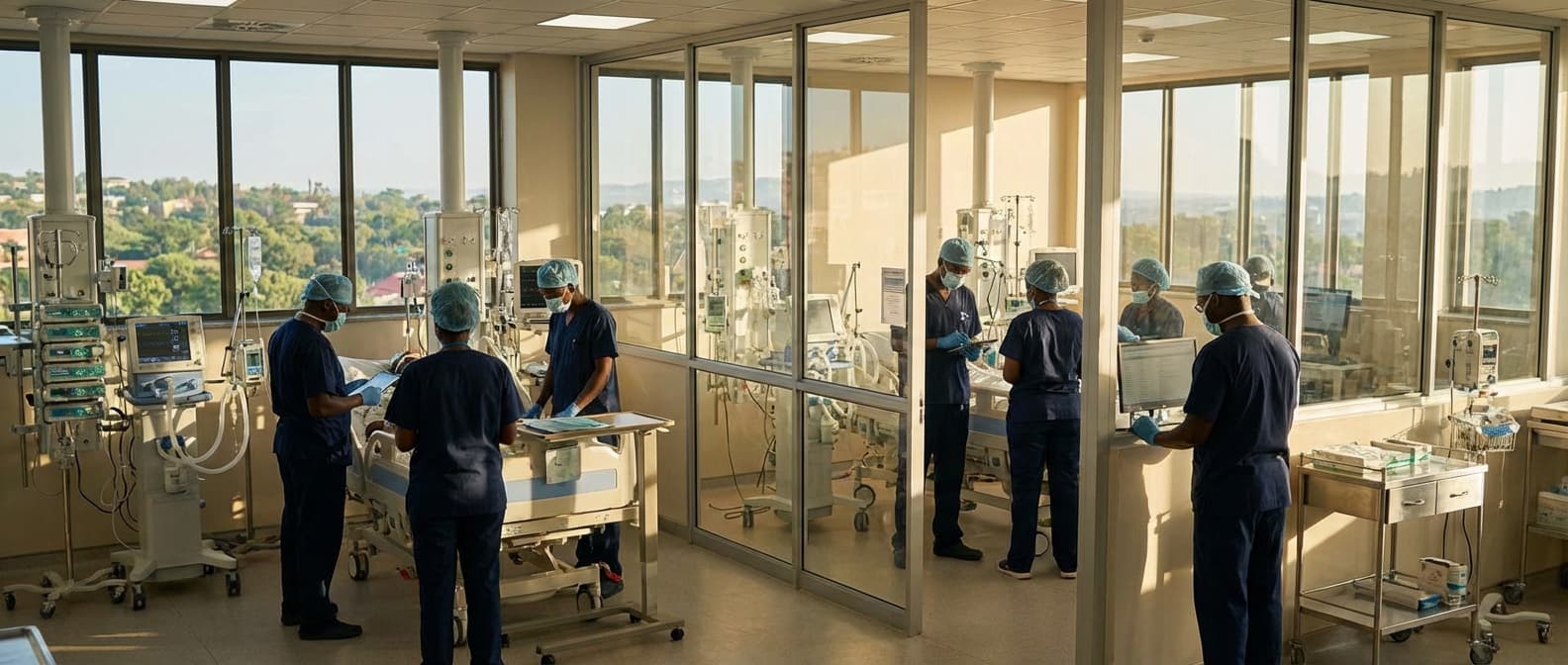
Ventilator Fleet Management & PM in Tanzania
Engineering Excellence & Technical Support
Preventive maintenance and fleet management for ICU ventilators High-standard technical execution following OEM protocols and local regulatory frameworks.
Proactive Predictive Maintenance for Critical Ventilators
Implementing advanced sensor monitoring and AI-driven analytics to predict potential ventilator failures before they occur, ensuring maximum uptime and patient safety across Tanzania's healthcare facilities. This reduces emergency repairs and extends equipment lifespan.
Optimized Mobile Maintenance Unit Deployment
Utilizing real-time GPS tracking and route optimization software for a fleet of mobile maintenance units, ensuring rapid response to service requests across diverse geographical locations in Tanzania. This minimizes technician travel time and maximizes service efficiency.
Centralized Data Analytics & Performance Benchmarking
Establishing a cloud-based platform for comprehensive data collection and analysis of ventilator performance, utilization rates, and maintenance history. This enables data-driven decision-making for resource allocation, training needs, and long-term fleet strategy in Tanzania.
What Is Ventilator Fleet Management & Pm In Tanzania?
Ventilator Fleet Management & Preventive Maintenance (PM) in Tanzania refers to the systematic oversight and upkeep of all mechanical ventilation devices deployed within healthcare facilities across the nation. This encompasses a comprehensive lifecycle management approach, from initial procurement and deployment to routine servicing, calibration, repair, and eventual decommissioning. The primary objective is to ensure the optimal functionality, reliability, and availability of ventilators, thereby supporting critical respiratory care and patient outcomes. This service is essential for healthcare providers, government health ministries, and non-governmental organizations (NGOs) involved in public health infrastructure and patient care.
| Stakeholder/Entity | Need for Ventilator Fleet Management & PM | Typical Use Cases |
|---|---|---|
| Government Health Ministries (e.g., Ministry of Health, Community Development, Gender, Elderly and Children) | Ensuring nationwide availability of functional ventilators for public health emergencies, capacity building in healthcare facilities, and standardized patient care protocols. Compliance with national health infrastructure standards and international best practices. Optimizing resource allocation and capital expenditure for medical equipment. | Managing national ventilator stockpiles during pandemics (e.g., COVID-19). Establishing centralized maintenance hubs. Setting procurement guidelines and standards. Monitoring equipment status in regional hospitals and rural health centers. Developing national training programs for biomedical engineers and technicians. |
| Tertiary and Referral Hospitals (e.g., Muhimbili National Hospital) | Maintaining a high level of readiness for critical care services, supporting complex surgical procedures, and managing patients with severe respiratory distress. Minimizing patient safety risks due to equipment failure. Optimizing the utilization of expensive medical assets. | Implementing scheduled PM for ventilators in Intensive Care Units (ICUs) and High Dependency Units (HDUs). Rapid response to critical equipment failures. Performing advanced diagnostics and repairs. Training ICU staff on advanced ventilator modes and settings. Maintaining accurate equipment logs for audit purposes. |
| Regional and District Hospitals | Providing essential life support in areas with limited specialized medical personnel. Ensuring a baseline level of critical care capacity. Maximizing the operational lifespan of existing equipment given budget constraints. | Conducting routine PM and basic repairs. Training general medical officers and nurses on essential ventilator use. Establishing protocols for escalation of complex issues to higher-level facilities. Managing limited spare parts inventory effectively. |
| Non-Governmental Organizations (NGOs) and International Aid Agencies | Supporting the implementation of healthcare projects and initiatives, often in resource-limited settings. Ensuring the sustainability and long-term functionality of donated or procured medical equipment. Demonstrating accountability for project resources. | Deploying and managing ventilators in project-specific clinics or hospitals. Conducting PM and training as part of project deliverables. Providing technical support and capacity building to local healthcare teams. Reporting on equipment performance and impact to donors. |
| Biomedical Engineering Departments/Technicians | Direct responsibility for the technical upkeep and repair of medical equipment. Ensuring adherence to safety standards and manufacturer specifications. Contributing to the cost-effectiveness of healthcare delivery through efficient maintenance. | Performing scheduled PM and electrical safety tests. Troubleshooting and repairing mechanical and electrical faults. Calibrating sensors and alarms. Ordering and managing spare parts. Maintaining detailed maintenance records in a Computerized Maintenance Management System (CMMS). |
Key Components of Ventilator Fleet Management & PM in Tanzania
- Inventory and Asset Tracking: Establishing and maintaining a detailed registry of all ventilators, including serial numbers, model, manufacturer, purchase date, location, and maintenance history.
- Preventive Maintenance Scheduling and Execution: Developing and adhering to a rigorous PM schedule based on manufacturer recommendations and national guidelines, encompassing regular inspections, cleaning, lubrication, component testing, and calibration.
- Corrective Maintenance and Repair: Promptly diagnosing and rectifying equipment malfunctions, including sourcing of spare parts and engaging certified technicians for timely repairs.
- Calibration and Performance Verification: Ensuring ventilators are calibrated to meet specified performance standards and accuracy benchmarks through regular testing and adjustments.
- User Training and Competency Assessment: Providing comprehensive training to healthcare professionals on the proper operation, basic troubleshooting, and routine care of ventilators.
- Risk Management and Safety Audits: Implementing protocols to identify and mitigate potential risks associated with ventilator use, including regular safety audits and compliance checks.
- Data Management and Reporting: Collecting, analyzing, and reporting on key performance indicators (KPIs) related to ventilator utilization, maintenance, downtime, and costs.
- Lifecycle Planning and Replacement Strategy: Developing long-term strategies for equipment replacement, considering technological advancements, service life, and budgetary constraints.
Who Needs Ventilator Fleet Management & Pm In Tanzania?
Ventilator fleet management and preventative maintenance (PM) are crucial for ensuring the operational readiness and longevity of critical medical equipment like ventilators. In Tanzania, these services are essential for healthcare facilities facing unique challenges related to resource allocation, infrastructure, and the need for reliable patient care. Proactive management prevents costly breakdowns, extends the lifespan of expensive equipment, and most importantly, guarantees that ventilators are available and functioning optimally when critically ill patients need them most. This is particularly vital in a healthcare system where the availability of such advanced medical technology can be a deciding factor in patient outcomes.
| Target Customer/Department | Description and Need for Ventilator Management & PM |
|---|---|
| Hospital Administration/Management | Responsible for overall hospital operations, budget allocation, and ensuring the availability of essential medical equipment. Need robust management systems to track assets, optimize utilization, and control maintenance costs. |
| Biomedical Engineering Department | Directly responsible for the installation, maintenance, repair, and calibration of medical equipment. Require comprehensive PM schedules, spare parts inventory management, and technical expertise to keep ventilators in optimal working condition. |
| Intensive Care Unit (ICU) / Critical Care Department | Direct users of ventilators. Their primary need is guaranteed equipment availability and reliability for life-saving interventions. Downtime of a ventilator directly impacts patient care and safety. |
| Anesthesiology Department | Uses ventilators for surgical procedures. Reliable performance is critical for patient safety during anesthesia and surgery. PM ensures that equipment functions as expected under demanding clinical conditions. |
| Procurement/Logistics Department | Involved in purchasing new equipment and managing the lifecycle of existing assets. Need data from fleet management to inform purchasing decisions, track warranty information, and manage replacement cycles. |
| Quality Assurance Department | Ensures that healthcare services meet established standards. Proper maintenance and calibration of ventilators contribute to overall patient safety and quality of care, aligning with QA objectives. |
| Finance Department | Manages hospital budgets and expenditures. Effective fleet management and PM can reduce unexpected repair costs, extend equipment lifespan, and optimize capital investment in medical technology. |
| Ministry of Health (and regional health authorities) | Oversees the national healthcare system, sets standards, and allocates resources. Need to ensure that public healthcare facilities have functional and reliable essential equipment like ventilators across the country. Fleet management data helps in resource planning and identifying areas needing support. |
Who Needs Ventilator Fleet Management & PM in Tanzania?
- Hospitals (public and private)
- Tertiary care centers
- University teaching hospitals
- Referral hospitals
- Regional and district hospitals
- Private clinics and diagnostic centers with critical care units
- NGOs and international organizations operating healthcare facilities
- Government health ministries and departments
Ventilator Fleet Management & Pm Process In Tanzania
This document outlines the workflow for Ventilator Fleet Management and Preventive Maintenance (PM) processes in Tanzania, from initial inquiry to the full execution of services. The process is designed to ensure the optimal functioning and longevity of the national ventilator fleet, contributing to improved healthcare outcomes.
| Stage | Description | Key Activities | Responsible Parties | Deliverables/Outcomes |
|---|---|---|---|---|
| Inquiry & Request Initiation | The process begins with a formal or informal inquiry regarding ventilator maintenance, repair, or fleet status. This can originate from healthcare facilities, Ministry of Health departments, or other stakeholders. | Receipt of inquiry, initial understanding of the need, documentation of the request. | Healthcare Facility Staff, Ministry of Health (MoH) Representatives, National Biomedical Engineering Department (NBED) Liaison | Acknowledged request, initial record of need. |
| Assessment & Planning | Upon receiving an inquiry, a thorough assessment is conducted to understand the specific requirements, prioritize needs, and plan the necessary maintenance or repair activities. | Site visits (if applicable), technical assessment of ventilator condition, inventory check, scheduling of PM or repair, identification of required parts and tools, risk assessment. | NBED Technicians, Biomedical Engineers, Facility Biomedical Officers, Fleet Manager | Detailed PM/repair plan, prioritized task list, list of required resources. |
| Resource Allocation | This stage involves securing and allocating the necessary human resources, spare parts, specialized tools, and logistical support for the planned activities. | Procurement of spare parts and consumables, scheduling of technician teams, arrangement of transportation, confirmation of access to facilities. | NBED Procurement Officer, Fleet Manager, Logistics Coordinator, Facility Administration | Availability of all required resources at the designated time and location. |
| Preventive Maintenance Execution | The core of the process where trained technicians perform scheduled maintenance, calibration, and minor repairs on the ventilators according to established protocols and manufacturer guidelines. | On-site PM checks, functional testing, calibration, cleaning and disinfection, replacement of worn parts, recording of all actions taken. | NBED Certified Technicians, Facility Biomedical Officers (support) | Functional ventilators, updated maintenance logs, detailed service reports per unit. |
| Quality Assurance & Documentation | Ensuring that all maintenance activities are performed to the highest standards and that comprehensive documentation is maintained for each intervention. | Review of technician reports, verification of completed tasks, quality checks, updating of the central ventilator database, archiving of service records. | NBED Quality Assurance Officer, Fleet Manager, NBED Supervisor | Accurate and complete service records, updated fleet inventory, quality compliance. |
| Reporting & Feedback | Communicating the outcomes of the PM and management activities to relevant stakeholders and gathering feedback for process improvement. | Generation of PM completion reports, status updates on fleet availability, submission of findings to MoH, collection of feedback from healthcare facilities. | Fleet Manager, NBED Management, MoH Representatives | Comprehensive reports, data for decision-making, identified areas for improvement. |
| Follow-up & Continuous Improvement | Addressing any issues identified during PM, implementing corrective actions, and using data and feedback to refine the entire fleet management and PM process. | Analysis of PM data, identification of recurring issues, development of training modules, updating of PM schedules, review of spare parts inventory strategy. | NBED Management, Fleet Manager, MoH Policy Makers, External Partners (if involved) | Enhanced operational efficiency, reduced downtime, improved ventilator reliability, optimized resource utilization. |
Key Stages in Ventilator Fleet Management & PM Process
- Inquiry & Request Initiation
- Assessment & Planning
- Resource Allocation
- Preventive Maintenance Execution
- Quality Assurance & Documentation
- Reporting & Feedback
- Follow-up & Continuous Improvement
Ventilator Fleet Management & Pm Cost In Tanzania
Managing a ventilator fleet in Tanzania, particularly concerning Preventive Maintenance (PM), involves a complex interplay of factors influencing costs. These costs are typically denominated in Tanzanian Shillings (TZS) and are subject to fluctuations based on equipment type, age, service provider, and the specific PM schedule. A robust PM program is crucial for ensuring ventilator reliability, patient safety, and extending the lifespan of these critical medical devices. Failure to adequately maintain ventilators can lead to costly emergency repairs, extended downtime, and compromised patient care. The pricing for ventilator PM in Tanzania is influenced by several key factors:
- Type and Complexity of Ventilator: Different ventilators, from basic mechanical models to advanced critical care units with integrated monitoring and ventilation modes, will have varying PM requirements and thus different costs. More complex devices often require specialized technicians and more intricate testing procedures.
- Age and Condition of the Ventilator: Older ventilators may require more frequent or extensive PM to maintain optimal performance. Parts availability and the need for specialized servicing for aging equipment can also increase costs.
- Service Provider: Costs can vary significantly between in-house biomedical engineering departments, local private service providers, and manufacturer-authorized service centers. Local technicians might offer more competitive pricing but may have limited access to original spare parts or specialized training compared to authorized centers.
- Scope of PM Services: A basic PM might include visual inspection, calibration, and functional testing. More comprehensive services could involve replacing specific parts (filters, batteries, sensors), detailed performance verification, and software updates. The extent of the service contract will directly impact the price.
- Frequency of PM: The recommended PM schedule, often dictated by the manufacturer, will determine how often a ventilator needs servicing. More frequent PM, while beneficial for maintenance, will naturally incur higher annual costs.
- Geographic Location: While less of a factor for fixed service contracts, travel and logistical costs for technicians to reach remote healthcare facilities can add to the overall expense.
- Spare Parts and Consumables: The cost of original spare parts and consumables (filters, tubing, sensors) is a significant component of PM. Availability and import duties can influence these prices in Tanzania.
- Technician Expertise and Training: Highly trained and certified technicians command higher service fees. The availability of such expertise locally is a critical determinant of cost.
- Warranty Status: Ventilators under manufacturer warranty may have PM included or offered at a reduced rate. Post-warranty, costs typically increase.
- Currency Exchange Rates and Inflation: As many spare parts and specialized services might be priced in foreign currencies, fluctuations in the TZS exchange rate can impact the local cost. General inflation also plays a role in increasing labor and material costs over time.
| Service Type | Typical Range (TZS per ventilator per PM) | Notes |
|---|---|---|
| Basic Preventive Maintenance (Visual inspection, cleaning, basic calibration) | 150,000 - 400,000 | Applies to simpler mechanical ventilators. May be lower if conducted by in-house teams. |
| Standard Preventive Maintenance (Includes basic + functional testing, battery check, filter replacement if needed) | 300,000 - 700,000 | Common for general-purpose ventilators. Cost can increase with specific manufacturer parts. |
| Comprehensive Preventive Maintenance (Includes standard + detailed performance checks, sensor calibration, software updates, part replacement as scheduled) | 600,000 - 1,500,000+ | For advanced critical care ventilators. Higher end reflects manufacturer-authorized services and specialized parts. |
| Emergency Repair Call-out Fee (Excluding parts & labor) | 100,000 - 300,000 | May be absorbed into a service contract. Varies by provider and urgency. |
| Cost of Specific Spare Parts (e.g., sensors, batteries, filters) | 50,000 - 500,000+ | Highly variable based on part type and ventilator model. Imported parts can be significantly more expensive. |
| Annual Service Contract (covering all PM and potentially some repairs) | 1,000,000 - 5,000,000+ | Offers predictable budgeting. Price depends heavily on the number and type of ventilators covered, and the level of service. |
Key Pricing Factors for Ventilator PM in Tanzania
- Ventilator Type and Complexity
- Ventilator Age and Condition
- Service Provider (In-house, Local Private, Manufacturer Authorized)
- Scope of PM Services (Basic vs. Comprehensive)
- PM Frequency (e.g., Annual, Bi-annual)
- Geographic Location of Facility
- Cost of Spare Parts and Consumables
- Technician Expertise and Training
- Warranty Status of the Ventilator
- Currency Exchange Rates and Inflation
Affordable Ventilator Fleet Management & Pm Options
Managing a ventilator fleet effectively and ensuring timely preventative maintenance (PM) are crucial for patient care and operational efficiency. This document outlines affordable strategies and value bundles designed to optimize ventilator fleet management and PM, leading to significant cost savings.
| Strategy/Bundle | Description | Potential Cost Savings | Key Benefits |
|---|---|---|---|
| Tiered Service Agreements | Categorizing ventilators by criticality and offering tailored PM plans. | Reduced PM costs for lower-tier equipment, optimized technician allocation. | Ensures essential maintenance for all equipment, efficient resource utilization. |
| Bundled PM & Repair Contracts | Combining routine PM with a predictable repair cost allowance. | Budget predictability, reduced per-incident repair costs, potential for volume discounts. | Financial certainty, reduced administrative overhead for contract management. |
| Certified Refurbished Programs | Acquiring and integrating high-quality, warrantied refurbished ventilators. | Significant reduction in capital expenditure (30-50% or more vs. new). | Faster fleet upgrades, access to advanced technology at lower cost. |
| Inventory Standardization | Limiting the number of different ventilator models in the fleet. | Reduced training costs, bulk purchasing discounts on parts and consumables, streamlined PM. | Improved technician efficiency, lower spare parts inventory. |
| Remote Monitoring & Diagnostics | Utilizing software to monitor device status and performance remotely. | Reduced travel costs for technicians, minimized device downtime, proactive issue resolution. | Enhanced uptime, improved patient safety, optimized maintenance scheduling. |
Key Value Bundles & Cost-Saving Strategies
- Tiered Service Agreements: Offering different levels of PM and support based on device criticality, age, and usage. Higher tiers might include more frequent checks, priority response, and extended warranties, while lower tiers focus on essential maintenance for less critical equipment.
- Remote Monitoring & Diagnostics: Leveraging technology to remotely assess ventilator performance, identify potential issues before they become critical, and optimize PM schedules. This reduces unnecessary on-site visits and minimizes downtime.
- Bundled PM & Repair Contracts: Negotiating contracts that combine routine PM with a set number of repair incidents or a capped repair cost. This provides budget predictability and can be more cost-effective than pay-per-incident models.
- Certified Refurbished Equipment Programs: Incorporating certified refurbished ventilators into the fleet can significantly reduce capital expenditure compared to purchasing new devices. These programs often come with warranties and performance guarantees.
- Extended Service Contracts on New Purchases: When purchasing new ventilators, negotiate extended service contracts as part of the initial deal. This can lock in favorable rates and ensure consistent support for critical equipment.
- Inventory Optimization & Standardization: Reducing the variety of ventilator models in the fleet simplifies PM processes, reduces training needs for technicians, and allows for bulk purchasing of parts and consumables, leading to volume discounts.
- In-House vs. Third-Party PM Analysis: Conduct a thorough cost-benefit analysis to determine the most economical approach for PM. In some cases, training in-house technicians can be cost-effective, while for specialized equipment, outsourcing to a third-party expert might be more efficient.
- Data Analytics for Predictive Maintenance: Utilizing data from device usage, error logs, and PM history to predict component failures and schedule maintenance proactively. This prevents costly emergency repairs and extends the lifespan of equipment.
- Leasing Options for Fleet Expansion/Renewal: Exploring leasing rather than outright purchasing for fleet expansion or renewal can offer flexibility, lower upfront costs, and predictable monthly expenses, often including maintenance and upgrades.
- Partnerships with Medical Device Manufacturers: Collaborating with manufacturers for direct service contracts, training programs, and access to genuine parts can be more cost-effective and ensure higher quality of service.
Verified Providers In Tanzania
In Tanzania's rapidly evolving healthcare landscape, identifying trustworthy and highly competent medical facilities is paramount. Franance Health has emerged as a leader, distinguished by its rigorous credentialing process and unwavering commitment to patient care. This document outlines why Franance Health providers represent the best choice for your medical needs in Tanzania.
| Why Franance Health Providers Are the Best Choice | Key Differentiators | Benefits to Patients |
|---|---|---|
| Unparalleled Quality of Care: | Franance Health's stringent vetting process ensures that only the most qualified and ethical healthcare professionals are affiliated. This includes rigorous checks on medical licenses, specialized training, and a proven track record of successful patient outcomes. | Access to highly skilled doctors, nurses, and specialists who are up-to-date with the latest medical advancements. Reduced risk of misdiagnosis or suboptimal treatment. Greater confidence in the medical expertise you receive. |
| Enhanced Patient Safety and Trust: | Adherence to strict protocols for hygiene, sterilization, and patient data security. Commitment to transparent communication and informed consent. | A secure and safe environment for all medical procedures. Peace of mind knowing your personal health information is protected. Trustworthy relationships built on clear and honest interactions with healthcare providers. |
| Access to Advanced Facilities and Technology: | Franance Health partners with facilities that invest in modern medical equipment and diagnostic tools. This ensures accurate diagnoses and effective treatment options. | Ability to access state-of-the-art diagnostic services (e.g., MRI, CT scans, advanced lab testing). Availability of advanced treatment modalities and surgical techniques. Improved chances of successful recovery and better health outcomes. |
| Comprehensive Range of Services: | The network comprises providers offering a wide spectrum of medical services, from primary care and preventive health to specialized treatments and emergency services. | Convenient access to all your healthcare needs under one trusted network. Reduced need to seek care from multiple, unverified sources. Integrated care pathways for complex medical conditions. |
| Commitment to Continuous Improvement: | Franance Health regularly reviews and updates its credentialing criteria, encouraging its partner providers to engage in ongoing professional development and quality improvement initiatives. | Healthcare providers who are dedicated to staying at the forefront of medical knowledge. Assurance that you are receiving care that is informed by the latest research and best practices. A healthcare system that is constantly striving for excellence. |
Franance Health Credentialing: A Benchmark of Excellence
- Comprehensive Vetting: Franance Health doesn't simply accept any provider. Their process involves a multi-faceted assessment, scrutinizing clinical expertise, operational efficiency, and adherence to ethical standards.
- Quality Assurance: Continuous monitoring and evaluation are integral to Franance Health's model, ensuring that all credentialed providers consistently meet and exceed established benchmarks for patient safety and satisfaction.
- Specialized Expertise: Franance Health actively seeks out and partners with facilities possessing specialized knowledge and advanced capabilities in various medical fields, from general practice to complex surgical procedures.
- Patient-Centric Approach: A core tenet of Franance Health's credentialing is the provider's dedication to patient-centered care, emphasizing empathy, clear communication, and personalized treatment plans.
- Regulatory Compliance: All Franance Health verified providers demonstrate strict adherence to Tanzanian healthcare regulations and international best practices, guaranteeing a safe and compliant medical experience.
Scope Of Work For Ventilator Fleet Management & Pm
This Scope of Work (SOW) outlines the requirements for comprehensive Ventilator Fleet Management and Preventative Maintenance (PM) services. The objective is to ensure the optimal performance, reliability, and safety of the entire ventilator fleet through proactive maintenance, repairs, and management of associated resources. This SOW details the technical deliverables, standard specifications, and responsibilities of the service provider.
| Deliverable | Description | Standard Specification/Requirement | Acceptance Criteria |
|---|---|---|---|
| Comprehensive Fleet Inventory | Establish and maintain an accurate, up-to-date inventory of all ventilators, including serial numbers, model numbers, acquisition dates, warranty status, and location. | Utilize a designated fleet management software (or agreed-upon system) for real-time inventory tracking. Data points to include: Asset ID, Manufacturer, Model, Serial Number, Location, Department, Acquisition Date, Warranty Expiration Date, Last PM Date, Next PM Due Date. | Inventory accuracy rate of 99% or greater, verified through periodic audits. |
| Preventative Maintenance (PM) Program | Develop and execute a proactive PM schedule for all ventilators according to manufacturer recommendations and industry best practices. | PM procedures to follow manufacturer's service manuals. Frequency to be determined based on manufacturer guidelines and usage patterns (e.g., annually, semi-annually, or after a specified number of operating hours). PM checklist to include visual inspection, functional testing, cleaning, lubrication, filter replacement, and battery testing. | Completion of 100% of scheduled PMs within the defined window (e.g., +/- 30 days of due date). All PM tasks completed as per checklist. PM reports submitted within 7 days of completion. |
| Corrective Maintenance and Repair | Provide timely and effective repair services for ventilators experiencing malfunctions or failures. | Response time for urgent repairs: within 4 hours for critical failures. Response time for non-urgent repairs: within 24 hours. Repairs to be performed by certified technicians. Use of genuine or approved replacement parts. Full diagnostic and repair reports provided. | Mean Time To Repair (MTTR) for critical failures not exceeding 24 hours. 95% of all repairs completed on the first visit. Successful functional test and calibration post-repair. |
| Calibration and Performance Verification | Ensure all ventilators are calibrated and perform within manufacturer specifications. | Calibration to be performed as part of PMs and after any significant repairs. Utilize calibrated test equipment traceable to national standards. Verification of key parameters: Tidal Volume, Respiratory Rate, PEEP, Pressure Limits, FiO2, Flow rates, Alarms. | All calibrated ventilators to meet manufacturer's specified accuracy tolerances. Calibration certificates provided for each service event. |
| Parts and Consumables Management | Maintain an adequate stock of critical spare parts and consumables, or ensure rapid procurement. | Maintain a minimum stock level for common wear-and-tear items (e.g., filters, O-rings, batteries). Establish relationships with key suppliers for timely delivery of specialized parts. Inventory of spare parts to be managed and reported. | Availability of 95% of critical spare parts within 48 hours. Accurate tracking of parts used for repairs and PMs. |
| Reporting and Documentation | Provide regular and detailed reports on fleet status, PM activities, repair history, and costs. | Monthly/Quarterly reports to include: fleet status overview, PM completion rates, repair logs (including downtime and cost), parts usage, technician performance, and recommendations. All service records to be maintained electronically and securely. | Timely submission of all required reports. Reports to be accurate, comprehensive, and clearly presented. Data integrity and accessibility of service records. |
| Training and Knowledge Transfer | Provide training to facility biomedical engineering staff on basic troubleshooting, operation, and PM procedures. | Training sessions to be conducted by qualified technicians. Training materials (e.g., presentations, manuals) to be provided. Focus on hands-on practical training. | Demonstrated competence of trained staff through practical assessments. Positive feedback from trainees. |
Key Service Areas
- Fleet Inventory Management
- Preventative Maintenance (PM) Program
- Corrective Maintenance and Repair
- Calibration and Performance Verification
- Parts and Consumables Management
- Reporting and Documentation
- Training and Knowledge Transfer
Service Level Agreement For Ventilator Fleet Management & Pm
This Service Level Agreement (SLA) outlines the terms and conditions for the comprehensive management and preventive maintenance (PM) of the hospital's ventilator fleet. It defines the responsibilities of the service provider and the guaranteed performance metrics, focusing on response times for service requests and ensuring a minimum uptime for critical equipment.
| Service Component | Description | Response Time Target | Uptime Guarantee | Notes |
|---|---|---|---|---|
| Scheduled Preventive Maintenance (PM) | All ventilators will undergo scheduled PM as per manufacturer recommendations and established hospital protocols. | N/A (scheduled in advance) | N/A (PM is proactive) | PM completion reports will be provided within 48 hours of completion. |
| Emergency Repair (Critical Failure) | For ventilators experiencing a critical failure that renders them unusable for patient care. | On-site technician arrival within 2 hours of notification. | 98.5% uptime for the entire fleet. | Definition of 'critical failure' to be agreed upon by both parties. |
| Urgent Repair (Non-Critical Failure) | For ventilators experiencing a malfunction that impacts performance but does not render them immediately unusable (e.g., sensor calibration issue, minor alarm fault). | On-site technician arrival within 8 business hours of notification. | 98.5% uptime for the entire fleet. | May be resolved remotely if feasible. |
| Routine Service Request (Non-Urgent) | For non-critical issues, status checks, or minor adjustments that do not immediately impact patient care. | On-site technician arrival within 24 business hours of notification. | 98.5% uptime for the entire fleet. | To be scheduled during standard business hours unless otherwise agreed. |
| Fleet Management & Reporting | Ongoing management of the ventilator inventory, including tracking service history, calibration dates, and PM status. | N/A (ongoing service) | N/A (ongoing service) | Monthly fleet status reports will be provided, detailing PM status, upcoming PMs, and any outstanding service issues. |
Key Service Components
- Ventilator fleet inventory and tracking
- Scheduled preventive maintenance (PM) per manufacturer guidelines
- On-demand repair services for equipment malfunctions
- 24/7 availability for critical service requests
- Proactive monitoring and reporting of fleet status
Frequently Asked Questions

Ready when you are
Let's scope your Ventilator Fleet Management & PM in Tanzania project in Tanzania.

Scaling healthcare logistics and technical systems across the entire continent.