
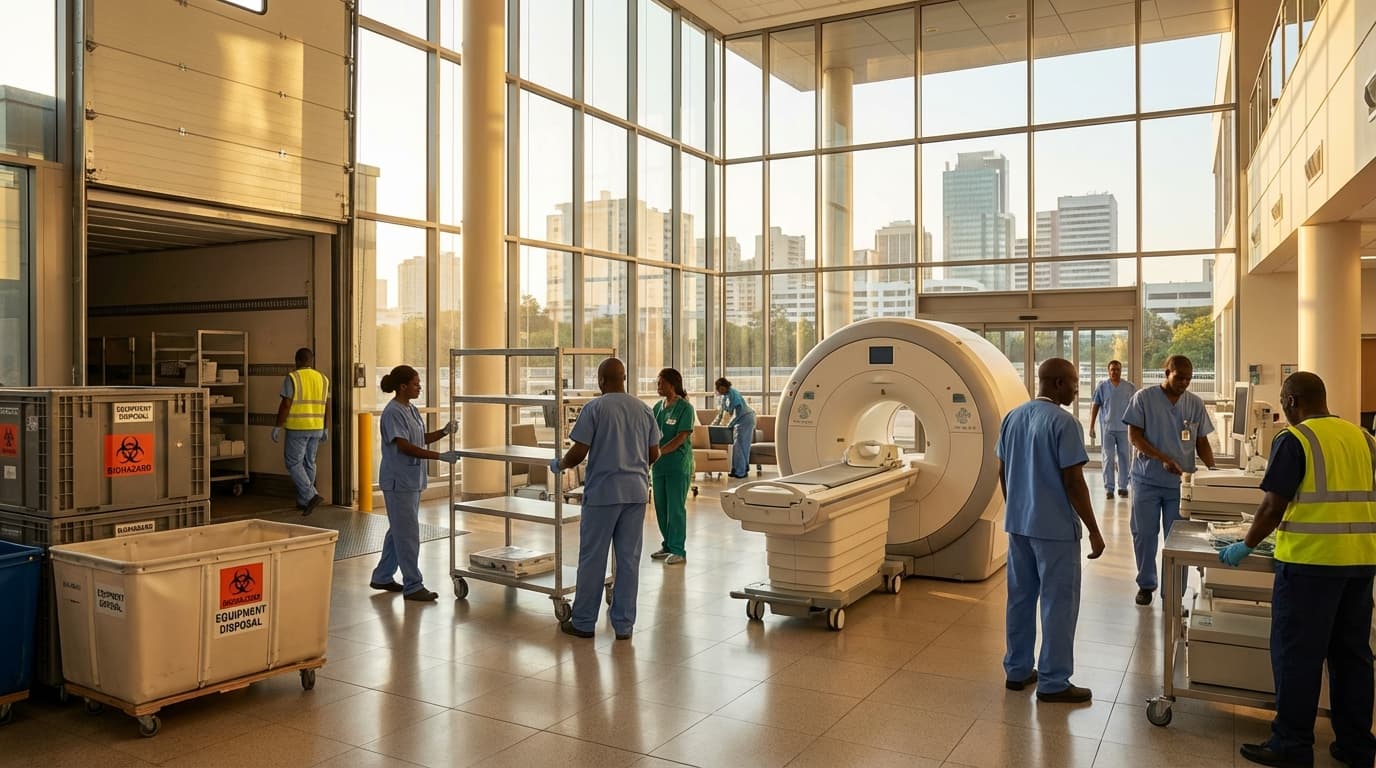
Medical Equipment Relocation Service (Move & Re-Install) in Tanzania
Engineering Excellence & Technical Support
Medical Equipment Relocation Service (Move & Re-Install) High-standard technical execution following OEM protocols and local regulatory frameworks.
Specialized Medical Equipment Transport
Our certified technicians utilize climate-controlled, vibration-dampened vehicles and custom-built cradles to ensure the safe transit of sensitive medical equipment, from delicate laboratory instruments to large imaging machines, across Tanzania's diverse terrain.
Precision Re-Installation & Calibration
We guarantee seamless integration of your relocated medical devices. Our engineers perform meticulous re-installation, comprehensive diagnostic checks, and precise calibration to manufacturer specifications, minimizing downtime and ensuring immediate operational readiness.
Tanzanian Regulatory Compliance & Safety Protocols
Adhering strictly to Tanzanian health and safety regulations, we provide detailed documentation and implement rigorous safety protocols throughout the entire relocation process, from site assessment and packaging to de-installation, transport, and re-installation, ensuring peace of mind.
What Is Medical Equipment Relocation Service (Move & Re-install) In Tanzania?
Medical Equipment Relocation Service (Move & Re-Install) in Tanzania refers to a specialized logistical and technical process focused on the secure transportation and subsequent operational re-establishment of medical devices and instruments within or between healthcare facilities. This service encompasses the entire lifecycle of relocation, from initial assessment and dismantling to safe transit, precise reassembly, and full functional verification in the new environment. It is a critical service for healthcare providers undertaking facility upgrades, expansions, mergers, or the decommissioning and recommissioning of imaging suites, surgical theaters, or laboratory spaces.
| Target Audience | Typical Use Cases | ||
|---|---|---|---|
| Hospitals and Healthcare Networks | Facility expansion or renovation projects, consolidation of services, transfer of equipment between hospital campuses or departments. | Introduction of new imaging modalities or surgical technologies requiring existing equipment to be moved. | Response to natural disasters or unforeseen events requiring immediate equipment relocation. |
| Diagnostic Imaging Centers | Relocation of MRI, CT, X-ray, and ultrasound equipment due to facility upgrades, lease expiry, or expansion into new locations. | Reconfiguration of imaging suites for improved workflow or technology integration. | |
| Specialized Clinics (e.g., Cardiology, Oncology, Neurology) | Moving specialized diagnostic or therapeutic equipment (e.g., Cath lab, linear accelerators, EEG systems) to new or expanded facilities. | Upgrading or replacing existing infrastructure that necessitates equipment movement. | |
| Research and Development Laboratories | Relocation of sophisticated analytical instruments, gene sequencers, or cell culture equipment. | Setting up new research facilities or reconfiguring existing lab spaces. | |
| Government Health Institutions | Public hospitals and health centers undergoing infrastructure development or modernization. | Distribution of essential medical equipment to newly established healthcare facilities across different regions. |
Key Components of Medical Equipment Relocation Service:
- Pre-move Assessment and Planning: Comprehensive evaluation of equipment (type, size, weight, power requirements, delicate components), site surveys of both origin and destination, development of detailed relocation plans including risk mitigation strategies, and inventory management.
- Specialized Packing and Handling: Utilization of custom-built crating, anti-static materials, vibration dampening systems, and climate-controlled transport options to protect sensitive equipment from damage during transit. This includes the use of specialized lifting equipment and skilled personnel for heavy or unusually shaped items.
- Decommissioning and Disassembly: Professional dismantling of complex medical equipment, including imaging systems (MRI, CT scanners), laboratory analyzers, surgical robots, and patient monitoring systems, by certified technicians adhering to manufacturer specifications.
- Secure Transportation: Employing logistics providers with proven experience in handling high-value, sensitive medical equipment. This may involve specialized vehicles, GPS tracking, and secure chain-of-custody protocols.
- Re-installation and Reassembly: Precise reassembly and connection of equipment at the new location by qualified biomedical engineers or technicians. This includes reconnecting power, data, and pneumatic lines according to original configurations.
- Calibration and Performance Verification: Rigorous testing and calibration of all relocated equipment to ensure it meets original performance specifications and regulatory standards. This often involves phantom scans, diagnostic tests, and functional checks.
- On-site Training and Handover: Providing orientation and basic operational guidance to facility staff on the re-commissioned equipment, if required.
- Documentation and Compliance: Maintaining detailed records of the entire relocation process, including inventory lists, condition reports, and certifications, to ensure compliance with healthcare regulations and manufacturer warranties.
Who Needs Medical Equipment Relocation Service (Move & Re-install) In Tanzania?
Relocating medical equipment in Tanzania is a specialized and critical task. It requires meticulous planning, specialized knowledge, and adherence to strict protocols to ensure the safety, functionality, and regulatory compliance of the equipment. Professional medical equipment relocation services offer expertise in dismantling, packaging, transporting, re-installing, and calibrating a wide range of sensitive and valuable medical devices. This ensures minimal downtime and optimal performance post-relocation.
| Target Customer/Department | Specific Needs/Reasons for Relocation | Types of Equipment Commonly Relocated |
|---|---|---|
| Hospitals (Public & Private) | Renovations, expansions, mergers, equipment upgrades, departmental restructuring, new facility setup. | MRI scanners, CT scanners, X-ray machines, ultrasound machines, surgical robots, patient monitoring systems, laboratory analyzers, sterilization equipment, imaging systems. |
| Specialized Clinics (e.g., Cardiology, Oncology, Radiology) | Opening new branches, consolidating services, replacing outdated equipment, moving to larger facilities. | Angiography systems, linear accelerators, PET/CT scanners, specialized diagnostic imaging equipment, endoscopy units, advanced laboratory equipment. |
| Research Institutions & Laboratories | Setting up new research labs, upgrading research infrastructure, relocating entire departments, securing sensitive research equipment. | Electron microscopes, mass spectrometers, DNA sequencers, flow cytometers, high-throughput screening systems, advanced imaging microscopes. |
| Government Health Agencies & Ministries | Distributing equipment to new health centers, consolidating national medical stockpiles, establishing new public health facilities. | Basic diagnostic equipment, sterilization units, mobile X-ray units, laboratory testing kits and associated equipment, communication systems for health data. |
| Medical Training Institutions | Establishing new training facilities, upgrading simulation labs, relocating specialized training equipment for hands-on practice. | Surgical simulation systems, anatomical models, diagnostic simulators, basic medical devices for training purposes, mannequins. |
| Pharmaceutical Companies & Distributors | Setting up new quality control labs, relocating distribution centers, transporting temperature-sensitive storage equipment. | Quality control analyzers, environmental monitoring systems, specialized refrigerated and freezer units, material handling equipment. |
| NGOs & International Aid Organizations | Setting up new clinics or mobile health units in remote areas, responding to health emergencies, establishing long-term healthcare infrastructure. | Portable diagnostic equipment, solar-powered medical devices, basic surgical sets, water purification systems with medical applications, field X-ray units. |
| Medical Equipment Manufacturers & Service Providers | Relocating demonstration units, moving equipment to new service centers, transporting equipment for repair or maintenance. | Demonstration models of advanced equipment, specialized tools for repair, logistics of moving equipment between sites for service. |
| Dental Clinics & Practices | Opening new dental offices, expanding existing practices, upgrading dental chairs and diagnostic equipment. | Dental chairs, X-ray units (intraoral and panoramic), dental lasers, sterilization autoclaves, digital radiography systems. |
Who Needs Medical Equipment Relocation Service (Move & Re-Install) in Tanzania?
- Hospitals (both public and private)
- Specialized Clinics and Diagnostic Centers
- Research Institutions and Laboratories
- Government Health Agencies and Ministries
- Medical Training Institutions
- Pharmaceutical Companies and Distributors
- Non-Governmental Organizations (NGOs) involved in healthcare
- International Aid Organizations
- Medical Equipment Manufacturers and Service Providers
- Dental Clinics and Practices
Medical Equipment Relocation Service (Move & Re-install) Process In Tanzania
This document outlines the comprehensive workflow for the Medical Equipment Relocation Service (Move & Re-Install) in Tanzania. It details the process from initial client inquiry to the successful completion of equipment relocation and re-installation, ensuring minimal disruption and adherence to safety and operational standards.
| Phase | Step | Description | Key Activities | Responsible Parties | Deliverables/Outcomes |
|---|---|---|---|---|---|
| 1.1 Initial Contact | Client expresses interest in medical equipment relocation services. | Receive client's request via phone, email, or website form. Gather basic information about the equipment and relocation needs. | Client, Service Provider Sales/Inquiry Team | Acknowledgement of inquiry, preliminary understanding of client needs. |
| 1.2 Site Survey & Equipment Audit | Thorough assessment of existing and new locations, and detailed inventory of equipment to be moved. | On-site visit to both source and destination. Document equipment type, model, serial number, condition, power requirements, special handling needs, access points, and existing infrastructure. Identify potential challenges (e.g., stairs, narrow doorways, structural limitations). | Service Provider Project Manager/Surveyor, Client Representative | Detailed equipment inventory, site assessment report, identification of risks and special requirements. | |
| 2.1 Solution Design & Planning | Develop a tailored relocation plan based on the site survey and equipment audit. | Determine optimal packing materials, transportation methods, lifting equipment, manpower requirements, timeline, and safety protocols. Consider any necessary permits or regulatory compliance. | Service Provider Project Manager, Logistics Team, Technical Team | Comprehensive relocation plan, risk mitigation strategies. |
| 2.2 Quotation & Proposal | Present a detailed cost estimate and service proposal to the client. | Provide a breakdown of costs for de-installation, packaging, transportation, re-installation, calibration, insurance, and any additional services. Outline the terms and conditions of the service. | Service Provider Sales/Project Manager, Client | Formal quotation and service proposal, agreed-upon scope of work. | |
| 2.3 Contract & Agreement | Formalize the agreement between the client and the service provider. | Client reviews and accepts the proposal. Signing of the service contract outlining responsibilities, timelines, payment terms, and liabilities. | Client, Service Provider Management | Signed service contract. | |
| 3.1 Scheduling & Coordination | Finalize the relocation schedule and coordinate with all involved parties. | Confirm dates and times with the client, internal teams, and any third-party vendors (e.g., building management). Obtain necessary access permissions. | Service Provider Project Manager, Client Representative | Confirmed relocation schedule, access approvals. |
| 3.2 Procurement of Materials & Equipment | Gather all necessary specialized packaging materials and relocation equipment. | Acquire bubble wrap, anti-static materials, custom crates, straps, dollies, lifting equipment, and any specialized tools required for specific equipment. | Service Provider Logistics Team | All required packing and moving supplies on hand. | |
| 3.3 Pre-Relocation Briefing | Brief the relocation team on the specific requirements of the job. | Conduct a pre-move meeting to discuss the equipment inventory, special handling instructions, site conditions, safety procedures, and the overall plan. | Service Provider Project Manager, Relocation Team | Informed and prepared relocation team. | |
| 4.1 De-installation | Safely and systematically disconnect and dismantle equipment at the source location. | Follow manufacturer guidelines or established protocols for de-installation. Document the process with photographs or videos if necessary. Ensure all power and data connections are safely terminated. | Service Provider Technical Team, Client IT/Biomedical Engineer | Equipment safely disconnected and prepared for packaging. |
| 4.2 Packaging & Labeling | Securely package each piece of equipment to prevent damage during transit. | Use appropriate protective materials (anti-static, foam, bubble wrap). Custom crating for fragile or heavy items. Clearly label each package with equipment name, destination, handling instructions, and a unique identification number. | Service Provider Relocation Team, Technical Team | Well-protected and clearly labeled equipment packages. | |
| 5.1 Loading & Securing | Load packaged equipment onto the transport vehicle and secure it properly. | Utilize appropriate lifting equipment. Ensure equipment is strategically placed and secured to prevent shifting or damage during transit. Follow load balancing principles. | Service Provider Relocation Team, Drivers | Securely loaded transport vehicle. |
| 5.2 Transit & Monitoring | Transport the equipment to the destination, adhering to the planned route and schedule. | Ensure safe driving practices. Monitor environmental conditions if sensitive equipment is being transported (e.g., temperature). | Service Provider Drivers, Logistics Coordinator | Equipment safely transported to destination. | |
| 6.1 Unloading & Positioning | Unload packaged equipment at the destination and position it in its designated location. | Carefully unload and move packages to their final placement using appropriate equipment. | Service Provider Relocation Team | Equipment un-loaded and positioned. |
| 6.2 Re-installation | Assemble and connect the equipment according to manufacturer specifications and site requirements. | Re-assemble any dismantled components. Connect power, data, and any necessary accessories. Ensure all connections are secure and correct. | Service Provider Technical Team, Client Biomedical Engineer | Equipment physically installed and connected. | |
| 6.3 Calibration & Configuration | Calibrate and configure the equipment to ensure optimal performance and accuracy. | Perform necessary calibration procedures, software configuration, and initial setup according to manufacturer guidelines. This may involve specialized tools and expertise. | Service Provider Technical Team, Client Biomedical Engineer | Calibrated and configured equipment. | |
| 7.1 Functional Testing | Conduct comprehensive tests to verify the equipment's functionality and performance. | Perform a series of operational tests, simulations, and diagnostic checks to ensure all features and functions are working as expected. Compare results against baseline data if available. | Service Provider Technical Team, Client Biomedical Engineer | Verified and tested equipment functionality. |
| 7.2 Client Acceptance & Handover | Present the re-installed and tested equipment to the client for final acceptance. | Demonstrate the operational status of the equipment. Address any client queries or concerns. Obtain formal sign-off on the completion of the relocation and re-installation services. | Service Provider Project Manager, Client Representative | Client sign-off and acceptance of relocated equipment. | |
| 8.1 Documentation & Training | Provide necessary documentation and basic operational training. | Hand over relevant manuals and warranty information. Offer basic training on newly installed features or operational nuances if required. | Service Provider Technical Team, Client Staff | Updated documentation and trained personnel. |
| 8.2 Follow-up & Feedback | Follow up with the client to ensure satisfaction and gather feedback. | Check in with the client after a specified period to address any post-relocation issues and solicit feedback on the service provided. | Service Provider Project Manager/Customer Service | Client satisfaction confirmed, service improvement insights. |
Medical Equipment Relocation Service (Move & Re-Install) Process in Tanzania
- Phase 1: Inquiry & Initial Assessment
- Phase 2: Planning & Quotation
- Phase 3: Pre-Relocation Preparations
- Phase 4: De-installation & Packaging
- Phase 5: Transportation
- Phase 6: Re-installation & Calibration
- Phase 7: Testing & Handover
- Phase 8: Post-Relocation Support
Medical Equipment Relocation Service (Move & Re-install) Cost In Tanzania
Relocating medical equipment in Tanzania, especially for services that include both movement and re-installation, involves a range of costs influenced by several critical factors. These factors determine the final price for businesses and healthcare providers. Understanding these elements is key to budgeting accurately for such specialized logistical challenges. The pricing is typically quoted in Tanzanian Shillings (TZS), though international moving companies might offer USD quotes for larger projects.
Key factors impacting the cost include the type and size of the medical equipment, the distance of the relocation, the complexity of the re-installation, the need for specialized handling and packaging, accessibility of the locations, and the urgency of the service. For instance, a small laboratory instrument will be significantly cheaper to move and re-install than a large MRI machine. Similarly, moving equipment across different regions within Tanzania will incur higher transportation costs than a local move. Specialized technicians are often required for the calibration and re-installation of sensitive medical devices, adding to the overall expense. Furthermore, access to the pick-up and drop-off points, such as navigating narrow corridors or requiring a crane, can also affect the labor and equipment needed. Urgent moves often command premium pricing due to the expedited logistics and potential for overtime work.
Estimated Cost Ranges (in Tanzanian Shillings - TZS):
It's important to note that these are estimates, and actual costs can vary widely. Obtaining detailed quotes from multiple service providers is highly recommended for accurate budgeting.
| Equipment Category (Illustrative) | Estimated Cost Range (TZS) | Notes |
|---|---|---|
| Small Laboratory Equipment (e.g., Centrifuge, Spectrophotometer) | 500,000 - 2,000,000 | Includes basic packing, local transport, and basic re-installation (plug-and-play). |
| Medium Medical Devices (e.g., Ultrasound Machine, Dental Chair) | 1,500,000 - 5,000,000 | May involve specialized packing, careful handling, and technician for basic setup. |
| Large Imaging Equipment (e.g., X-ray Machine, basic CT scanner) | 5,000,000 - 20,000,000+ | Significant disassembly/reassembly, specialized transport, skilled technicians for re-installation and calibration. Can be much higher for advanced models. |
| Very Large/Complex Equipment (e.g., MRI, advanced CT/PET scanners) | 20,000,000 - 100,000,000+ | Requires extensive planning, specialized engineering teams, custom rigging, and on-site calibration by manufacturers or certified partners. Costs are highly variable. |
| Inter-Regional Relocation Surcharge | Add 20% - 50% to base cost | Dependent on distance, road conditions, and logistics involved for longer hauls. |
| Emergency/Rush Service Surcharge | Add 15% - 30% to base cost | For expedited services outside standard operating hours or with very short notice. |
Key Pricing Factors for Medical Equipment Relocation in Tanzania
- Type and Size of Equipment: Smaller, less sensitive equipment (e.g., centrifuges, microscopes) vs. large, complex machinery (e.g., X-ray machines, CT scanners, incubators).
- Distance of Relocation: Local moves within a city (e.g., Dar es Salaam, Arusha) vs. inter-regional or long-distance moves.
- Complexity of Re-installation: Simple plug-and-play vs. requiring calibration, technical expertise, specialized tools, and integration with existing infrastructure.
- Specialized Handling & Packaging: Need for climate-controlled transport, anti-vibration crates, hoisting, or lifting equipment.
- Accessibility of Locations: Ease of access for loading and unloading (e.g., ground floor vs. upper floors, narrow entrances, stairs, need for external lifting).
- Manpower & Expertise Required: Number of technicians, engineers, and movers needed; their specialized skills and certifications.
- Insurance: Cost of comprehensive insurance coverage for the equipment during transit and re-installation.
- Dismantling and Reassembly: Whether the equipment needs to be disassembled for transport and then reassembled.
- Urgency of Service: Standard relocation vs. emergency or same-day services.
- Ancillary Services: Disposal of old equipment, site preparation, testing, and certification post-installation.
Affordable Medical Equipment Relocation Service (Move & Re-install) Options
Relocating sensitive and often heavy medical equipment requires specialized care and expertise to ensure its integrity and functionality. Our Affordable Medical Equipment Relocation Service (Move & Re-Install) offers comprehensive solutions designed to minimize downtime and cost. We understand the unique challenges associated with medical equipment transport and provide tailored services, from initial packing and disassembly to secure transit and professional re-installation, including necessary calibrations and testing. Our goal is to provide a seamless transition for your facility, allowing you to focus on patient care without the added stress of equipment logistics.
| Value Bundle | Description | Included Services | Cost-Saving Strategies |
|---|---|---|---|
| Basic Move & Connect | Ideal for less complex equipment requiring basic disconnection, transit, and reconnection. | Equipment disconnection, transportation, basic re-installation, and power-up testing. | Bundled pricing for standard equipment types, scheduling during off-peak hours, client-provided basic unpacking materials for non-critical components. |
| Standard Re-Install & Calibrate | For equipment requiring more detailed re-installation and initial calibration. | Disassembly, specialized packing, secure transit, professional re-installation, and functional calibration. | Package discounts for multiple equipment moves, pre-move site assessment to optimize logistics, shared transportation routes when feasible. |
| Premium Facility Transition | Comprehensive solution for entire departments or facility moves, including intricate machinery. | Full service: planning, disassembly, specialized crating, secure transport, expert re-installation, full calibration, testing, and post-move support. | Long-term contract discounts, phased relocation planning to minimize disruption, bulk purchasing of packing materials, client participation in pre-move inventory and labeling. |
Key Features of Our Medical Equipment Relocation Service
- Specialized packing and crating for fragile and sensitive medical devices.
- Disassembly and re-assembly by certified technicians.
- Secure transportation in climate-controlled and shock-absorbent vehicles.
- On-site re-installation and operational testing.
- Calibration and alignment services post-relocation.
- Comprehensive insurance coverage for peace of mind.
- Project management and coordination for smooth transitions.
Verified Providers In Tanzania
When seeking healthcare services in Tanzania, partnering with verified providers is paramount for ensuring quality, safety, and legitimacy. Franance Health stands out as a leading organization committed to upholding these standards. This document outlines Franance Health's credentials and elucidates why they represent the best choice for healthcare needs in Tanzania.
| Key Benefit | Why Franance Health Excels | Impact on Patients |
|---|---|---|
| Trust and Reliability | Franance Health's rigorous vetting and accreditation processes ensure that all listed providers are legitimate and competent. | Patients can be confident they are receiving care from qualified and ethical professionals, reducing the risk of unqualified practitioners. |
| Quality of Care | Adherence to evidence-based medicine and commitment to continuous professional development means providers are up-to-date with the best practices. | Leads to more effective diagnoses, treatments, and improved health outcomes for patients. |
| Patient Safety | Strict adherence to safety protocols and a patient-centric approach are central to Franance Health's operations. | Minimizes the risk of medical errors and ensures a safe and comfortable healthcare experience. |
| Ethical Practices | Franance Health upholds stringent ethical guidelines, including patient confidentiality and informed consent. | Patients can expect respectful and professional treatment, with their rights and well-being prioritized. |
| Access to Advanced Care | Encouraging technological integration ensures that patients benefit from modern diagnostic and treatment capabilities. | Facilitates quicker and more accurate diagnoses, and access to advanced medical interventions. |
Franance Health Credentials and Commitments
- Accreditation and Certifications: Franance Health actively pursues and maintains accreditations from recognized national and international health organizations. These certifications are a testament to their adherence to stringent quality management systems, patient safety protocols, and ethical healthcare practices.
- Rigorous Provider Vetting Process: Every healthcare provider associated with Franance Health undergoes a comprehensive vetting process. This includes verifying medical licenses, educational qualifications, professional experience, and conducting background checks to ensure they meet the highest standards of competence and integrity.
- Commitment to Evidence-Based Medicine: Franance Health champions the use of evidence-based medical practices. This means providers are expected to stay updated with the latest research and adopt treatment protocols that have been proven effective and safe, leading to better patient outcomes.
- Patient-Centric Approach: The organization places a strong emphasis on a patient-centric model of care. Verified providers are trained to prioritize patient needs, comfort, and informed consent, fostering a trusting and supportive healthcare environment.
- Technological Integration: Franance Health encourages and supports the integration of modern healthcare technologies. This can range from advanced diagnostic tools to secure electronic health records, enhancing the efficiency and accuracy of care delivery.
- Continuous Professional Development: They mandate and facilitate ongoing training and professional development for all affiliated healthcare professionals. This ensures that providers remain at the forefront of medical advancements and continue to enhance their skills and knowledge.
- Ethical Standards and Compliance: Franance Health is deeply committed to upholding the highest ethical standards in healthcare. This includes strict adherence to patient confidentiality, non-discrimination policies, and all relevant national and international healthcare regulations.
- Transparent and Accountable Operations: The organization operates with a high degree of transparency, providing clear information about their services, providers, and operational procedures. This fosters accountability and builds trust with patients and partners.
Scope Of Work For Medical Equipment Relocation Service (Move & Re-install)
This Scope of Work (SOW) outlines the requirements for the relocation and re-installation of medical equipment from the existing facility (Source Location) to the new facility (Destination Location). This service encompasses the safe de-installation, transportation, and re-installation of specified medical equipment, ensuring minimal downtime and adherence to all relevant safety and technical standards.
| Deliverable ID | Deliverable Description | Standard Specification / Acceptance Criteria | Responsibility |
|---|---|---|---|
| T1.0 | Detailed Relocation Plan | Includes equipment inventory, detailed move sequence, site surveys (source & destination), resource allocation (personnel, vehicles), risk assessment, contingency plans, and communication protocol. Approved by Client Project Manager. | Service Provider |
| T2.0 | De-installation Report | Documented evidence of safe and complete de-installation, including photographic records, disconnection logs, and confirmation of any required site modifications (e.g., power, plumbing). Signed off by Client's Technical Representative. | Service Provider |
| T3.0 | Equipment Packing and Crating | Appropriate protective materials (e.g., anti-static wrapping, custom crates, shock-absorbing foam) used for each equipment type. Clear labeling with equipment ID, destination room, and handling instructions. Certified compliance with relevant transportation regulations (e.g., IATA for airfreight if applicable). | Service Provider |
| T4.0 | Transportation Log | Detailed manifest of all equipment transported, including serial numbers, origin, destination, and transit time. Proof of insurance for goods in transit. Real-time tracking information if available. | Service Provider |
| T5.0 | Re-installation and Re-calibration Report | Confirmation of successful re-installation according to manufacturer specifications and industry best practices. Calibration certificates for all re-calibrated equipment. Records of any adjustments made. Signed off by Client's Technical Representative and/or Manufacturer Representative. | Service Provider |
| T6.0 | Functional Testing and Verification Reports | Comprehensive test results demonstrating full operational capability of each relocated equipment. Performance metrics meet or exceed pre-move specifications. Documentation includes test protocols, results, and pass/fail status. Signed off by Client's Technical Representative. | Service Provider |
| T7.0 | Final Project Report | Summarizes all aspects of the relocation, including a list of all equipment moved, any deviations from the plan, lessons learned, and final sign-off documentation. Includes all previous reports and certificates. | Service Provider |
| T8.0 | Manufacturer Support Documentation (if applicable) | Confirmation of manufacturer's support for re-installation and validation of specific critical equipment. Includes any service reports or acknowledgments from the manufacturer. | Service Provider (liaise with Manufacturer) |
| T9.0 | Site Condition Report (Destination) | Assessment of readiness of the destination site for re-installation, including checks for power, ventilation, and physical space. Photographic evidence of equipment placement. | Service Provider |
Key Stages of the Medical Equipment Relocation Service
- Planning and Assessment
- De-installation
- Packing and Crating
- Transportation
- Unpacking and De-crating
- Re-installation and Re-calibration
- Testing and Verification
- Documentation and Handover
Service Level Agreement For Medical Equipment Relocation Service (Move & Re-install)
This Service Level Agreement (SLA) outlines the response times and uptime guarantees for the Medical Equipment Relocation Service (Move & Re-Install). It applies to all scheduled relocations and subsequent re-installations of medical equipment performed by [Your Company Name] for [Client Name].
| Service Element | Description | Response Time Target | Uptime Guarantee |
|---|---|---|---|
| Scheduled Move Commencement | The agreed-upon start time for the physical relocation of equipment. | Within 30 minutes of scheduled start time. | N/A |
| Equipment Arrival at Destination | The time equipment arrives at the designated new location. | As per agreed relocation schedule, subject to unforeseen travel delays. | N/A |
| Re-Installation Commencement | The start of the re-installation process by qualified technicians. | Within 2 hours of equipment arrival at the destination. | N/A |
| Initial Operational Readiness (Post Re-Installation) | The equipment is re-installed, calibrated (if applicable), and passes initial functional checks to confirm basic operational status. | Within 8 business hours of re-installation commencement, or as per equipment-specific complexity (defined in Appendix A). | 98% during the first 72 hours post-re-installation. This excludes scheduled maintenance, client-induced issues, or power outages beyond technician control. |
| Emergency Support (Post Re-Installation - Critical Equipment) | Response to critical equipment failure or performance issues immediately following re-installation. | On-site within 4 business hours (for defined critical equipment). | N/A (Focus on rapid resolution) |
Service Objectives
- To ensure timely and efficient relocation of medical equipment from point A to point B.
- To guarantee the successful re-installation and initial operational readiness of relocated medical equipment.
- To minimize disruption to patient care and operational workflows during the relocation process.
Frequently Asked Questions

Ready when you are
Let's scope your Medical Equipment Relocation Service (Move & Re-Install) in Tanzania project in Tanzania.

Scaling healthcare logistics and technical systems across the entire continent.