
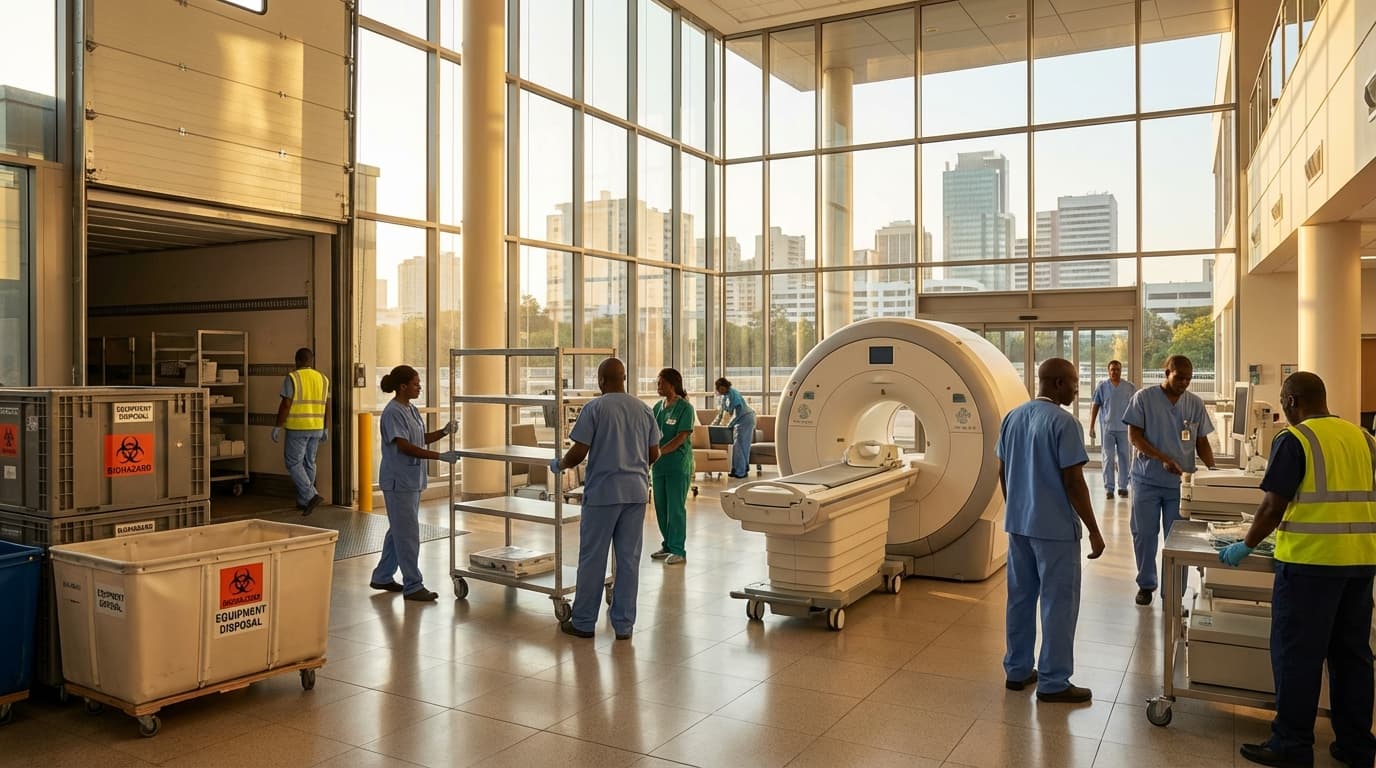
Heavy Medical Equipment De-Installation Service (MRI/CT/Cath Lab) in Tanzania
Engineering Excellence & Technical Support
Heavy Medical Equipment De-Installation Service (MRI/CT/Cath Lab) High-standard technical execution following OEM protocols and local regulatory frameworks.
Specialized Power Management & De-Energization
Our team possesses expert knowledge in the complex power requirements and safety protocols for MRI, CT, and Cath Lab systems. We meticulously plan and execute de-energization procedures, ensuring zero risk of electrical damage or hazard during removal, adhering to strict international safety standards.
Precision Dismantling & Component Handling
Leveraging specialized tools and techniques, we expertly dismantle intricate medical equipment into manageable components. Our trained technicians ensure each part, from sensitive sensor arrays to heavy superconducting magnets, is handled with utmost care to preserve its integrity and facilitate secure transport.
Logistics & Site Remediation Expertise for Remote Tanzanian Locations
We navigate the unique logistical challenges of Tanzania, including remote site access and infrastructure limitations. Our comprehensive service includes site assessment, secure packaging, specialized transport, and thorough site remediation post-de-installation, ensuring a seamless and efficient process from start to finish.
What Is Heavy Medical Equipment De-installation Service (Mri/ct/cath Lab) In Tanzania?
Heavy Medical Equipment De-Installation Service (MRI/CT/Cath Lab) in Tanzania refers to the specialized process of safely and systematically dismantling, disconnecting, and preparing complex, high-value medical imaging and diagnostic apparatus for relocation, disposal, or upgrade. This service is critical for managing the lifecycle of these sophisticated systems, ensuring minimal disruption, preserving asset value, and complying with regulatory and safety standards. The scope typically encompasses physical disconnection of power and data interfaces, removal of ancillary components (e.g., cooling systems, patient tables, console furniture), structural dismantling where necessary (especially for MRI magnets), and secure packaging for transport. It also often includes environmental remediation or hazard containment related to specific equipment (e.g., cryogen handling for MRI).
| Who Needs This Service? | Typical Use Cases | Specific Equipment Considerations | ||||||
|---|---|---|---|---|---|---|---|---|
| Hospitals and Medical Centers in Tanzania undergoing facility upgrades, renovations, or relocations. | Replacing an older MRI/CT scanner with a newer model. | MRI: Requires specialized cryogen handling (helium, nitrogen), potential building modifications (RF shielding, structural support for magnet weight). | Healthcare providers consolidating or expanding their imaging services. | Relocating a Cath Lab to a new wing or a different facility within the same institution. | CT: Involves high-voltage components, potential radiation shielding considerations during disconnection. | Government health ministries or agencies managing public healthcare infrastructure. | Decommissioning a Cath Lab due to obsolescence or end-of-life. | Cath Lab: Complex plumbing, high-power electrical systems, specialized gantry and imaging chain components. |
| Medical equipment leasing companies or financiers managing asset portfolios. | An MRI/CT suite being repurposed for a different function. | General: Emphasis on precision, minimizing damage to high-value components, and ensuring worker safety. | Companies specializing in the refurbishment and resale of used medical equipment. | Disposal of end-of-life medical imaging equipment according to regulatory guidelines. | De-installation for export or international sale. | Emergency departments or specialized clinics requiring temporary or permanent equipment relocation. | Site preparation for installation of new equipment, necessitating removal of existing systems. | Ensuring preservation of original manufacturers' specifications and warranties where applicable. |
Key Aspects of Heavy Medical Equipment De-Installation Service
- Site Assessment and Planning: Pre-deinstallation surveys to evaluate access routes, structural considerations, power requirements, and potential hazards.
- Disassembly and Disconnection: Meticulous separation of all equipment components, including electrical, data, water, and cryogenic lines.
- Component Handling and Securing: Safe removal and stabilization of heavy and sensitive parts, such as superconducting magnets and X-ray tubes.
- Packaging and Crating: Application of appropriate protective measures (e.g., vibration dampening, climate control) for each component during transit.
- Documentation: Comprehensive record-keeping of the de-installation process, including asset inventory and condition reports.
- Waste Management and Disposal (if applicable): Environmentally responsible handling of any hazardous materials or obsolete components.
- Project Management: Coordination of logistics, specialized labor, and client requirements throughout the de-installation lifecycle.
- Compliance and Safety Adherence: Strict adherence to local and international safety regulations, including radiation safety protocols where relevant.
Who Needs Heavy Medical Equipment De-installation Service (Mri/ct/cath Lab) In Tanzania?
Specialized de-installation of heavy medical equipment like MRI, CT scanners, and Cath Labs in Tanzania is a critical service for a range of healthcare facilities and organizations. This intricate process requires precise handling, environmental considerations, and adherence to strict safety protocols. The need arises during equipment upgrades, relocations, decommissioning, or when importing/exporting such sophisticated machinery. Effectively managing these de-installation projects ensures the integrity of the equipment, minimizes downtime for other vital services, and complies with regulatory requirements.
| Target Customer/Department | Specific Needs/Reasons for De-Installation Service |
|---|---|
| Hospitals (Public and Private) | Upgrading to newer MRI/CT/Cath Lab models, relocating departments within the hospital, decommissioning old equipment for space or disposal. |
| Diagnostic Imaging Centers | Replacing existing MRI/CT scanners, expanding facilities to include new imaging modalities, selling or relocating operational equipment to another site. |
| Specialty Clinics (e.g., Cardiology, Neurology) | Upgrading specialized imaging equipment (e.g., cardiac cath labs), moving to a larger facility, or consolidating services. |
| Government Health Ministries/Agencies | Managing public hospital asset lifecycle, coordinating equipment transfers between government facilities, implementing national healthcare infrastructure projects. |
| Medical Equipment Importers and Exporters | Preparing imported equipment for installation at client sites, dismantling equipment for international shipping, ensuring compliant packaging and handling. |
| Refurbishment and Resale Companies | Acquiring used MRI/CT/Cath Lab equipment for refurbishment and resale, requiring careful de-installation to preserve functionality and value. |
| Research Institutions | Decommissioning older research-specific imaging equipment, relocating research facilities, or upgrading to more advanced research imaging systems. |
Who Needs Heavy Medical Equipment De-Installation Service in Tanzania?
- Hospitals (Public and Private)
- Diagnostic Imaging Centers
- Specialty Clinics (e.g., Cardiology, Neurology)
- Government Health Ministries/Agencies
- Medical Equipment Importers and Exporters
- Refurbishment and Resale Companies
- Research Institutions with Medical Imaging Capabilities
Heavy Medical Equipment De-installation Service (Mri/ct/cath Lab) Process In Tanzania
This document outlines the comprehensive workflow for the de-installation of heavy medical equipment, specifically MRI, CT scanners, and Cath Labs, within Tanzania. Our service ensures a safe, efficient, and compliant process from the initial client inquiry to the final site clearance.
| Stage | Activities | Key Considerations | Deliverables |
|---|---|---|---|
| Client contacts service provider with equipment details (type, model, manufacturer, location) and reason for de-installation (relocation, upgrade, disposal). | Understanding client's timeline and specific needs. Initial assessment of equipment complexity. | Acknowledgement of inquiry, preliminary understanding of scope. |
| On-site visit by a technical team to assess the equipment, its installation environment, access routes, power requirements, and any structural considerations. Detailed plan development. | Safety protocols, potential hazards, accessibility for heavy lifting, required tools and personnel, power disconnection procedures, structural integrity of the building. | Detailed site survey report, preliminary de-installation plan, risk assessment. |
| Based on the site survey and plan, a detailed quotation is provided to the client, outlining costs, timelines, and scope of work. Upon agreement, a formal contract is signed. | Transparency in pricing, clear payment terms, liability clauses, insurance coverage, adherence to Tanzanian regulations. | Formal quotation, signed service contract. |
| Scheduling the de-installation date. Notifying relevant stakeholders (hospital administration, IT, facility management). Procuring specialized tools, equipment, and safety gear. Obtaining any necessary permits or approvals. | Ensuring minimal disruption to hospital operations. Confirming availability of required utilities (power shutdown coordination). Training of personnel on specific equipment requirements. | Confirmed schedule, communication plan, necessary permits (if applicable), pre-positioned equipment and personnel. |
| Systematic and safe de-installation of the equipment by trained technicians. This involves disassembling components, disconnecting power and data lines, and careful handling of sensitive parts. | Adherence to manufacturer guidelines and best practices. Strict safety procedures, proper handling of hazardous materials (e.g., refrigerants), detailed photographic/video documentation of the process. | Dismantled equipment components, labelled parts, safety logs, progress reports. |
| Professional packaging of all de-installed components to prevent damage during transport. Coordination of transportation to the designated location (storage, new site, or disposal facility). | Appropriate protective materials, secure loading and transportation, compliance with transport regulations, insurance for transit. | Packaged equipment, shipping manifests, transit insurance confirmation. |
| Completion of all necessary documentation, including de-installation reports, inventory lists, and safety certificates. Formal handover of the de-installed equipment to the client or their designated representative. | Accuracy and completeness of documentation for records and future reference. Client confirmation of satisfactory service delivery. | Final de-installation report, asset inventory, signed handover form. |
Heavy Medical Equipment De-Installation Service Workflow (Tanzania)
- Inquiry & Initial Assessment
- Site Survey & Planning
- Quotation & Contract
- Pre-De-installation Preparations
- De-installation Execution
- Packaging & Logistics
- Documentation & Handover
Heavy Medical Equipment De-installation Service (Mri/ct/cath Lab) Cost In Tanzania
De-installing heavy medical equipment like MRI, CT scanners, and Cath Labs in Tanzania involves specialized skills, meticulous planning, and adherence to safety protocols. The cost associated with this service is influenced by a multitude of factors, making a definitive fixed price challenging. These factors range from the complexity and size of the equipment to the location and any required logistical arrangements. Understanding these drivers is crucial for budgeting and securing accurate quotes.
| Equipment Type | Estimated Cost Range (TZS) | Notes |
|---|---|---|
| MRI Scanner (Low/Mid-Field) | 15,000,000 - 35,000,000 | Includes dismantling, basic handling. High-field systems and complex installations will be higher. |
| MRI Scanner (High-Field) | 25,000,000 - 60,000,000+ | Significant increase due to magnet handling, complex cryogen management, and extensive disassembly. |
| CT Scanner | 10,000,000 - 25,000,000 | Varies with CT tube type, gantry complexity, and need for component removal. |
| Cath Lab Suite | 20,000,000 - 50,000,000+ | Includes dismantling of imaging equipment, patient table, consoles, and associated infrastructure. |
| Ancillary Heavy Equipment (e.g., X-ray machines, Ultrasound with large probes) | 5,000,000 - 15,000,000 | Generally less complex but still requires trained personnel. |
Key Pricing Factors for Medical Equipment De-Installation in Tanzania
- Equipment Type and Size: Larger and more complex systems (e.g., high-field MRI vs. lower-field MRI, advanced CT scanners, full Cath Lab suites) require more time, expertise, and specialized tools for de-installation. The number of components and their weight are significant considerations.
- Accessibility and Site Conditions: The ease of access to the equipment's location within the hospital or clinic plays a vital role. Tight spaces, multiple levels, the need for structural modifications (temporary or permanent), and the general condition of the facility can increase labor and time. Obstructions like doorways, corridors, and elevators also impact the process.
- Dismantling Complexity: Some equipment requires extensive disassembly, including the removal of superconducting magnets (for MRI), intricate cabling, and delicate components. The level of technical expertise required for safe dismantling directly affects labor costs.
- Logistics and Transportation: Moving the de-installed components to a staging area or for transport out of the facility involves specialized handling equipment (cranes, heavy-duty dollies, forklifts). The distance to the pickup point and the need for temporary storage or secure packing add to the overall expense.
- Specialized Tools and Equipment: De-installation often necessitates the use of specific tools, lifting gear, and potentially even temporary power supplies or environmental controls, which are factored into the service cost.
- Manpower and Expertise: The number of technicians, engineers, and support staff required, along with their specialized knowledge and experience in handling such sensitive and heavy machinery, is a primary cost driver.
- Time and Urgency: Emergency de-installations or those requiring expedited service often come with premium charges. The duration of the de-installation process itself, which can range from several days to a week or more depending on the complexity, directly translates to labor costs.
- Regulatory Compliance and Safety Protocols: Adherence to strict safety regulations and hospital protocols is paramount. This includes the use of personal protective equipment (PPE), lockout/tagout procedures, and potentially environmental handling (e.g., for refrigerants in some cooling systems), all of which contribute to the service cost.
- Location within Tanzania: Costs can vary regionally due to differences in labor availability, transportation costs, and local operating expenses. De-installations in remote areas might incur higher charges due to extended travel and logistical challenges.
- Additional Services: This can include waste disposal of non-essential components, minor repairs to the site post-de-installation, or specialized packaging for shipping.
Affordable Heavy Medical Equipment De-installation Service (Mri/ct/cath Lab) Options
Securing affordable heavy medical equipment de-installation services for complex machinery like MRI, CT scanners, and Cath Labs is crucial for healthcare facilities undergoing renovations, upgrades, or relocations. These services are specialized, requiring trained technicians, proper rigging, transportation, and adherence to strict safety protocols. Understanding value bundles and employing cost-saving strategies can significantly reduce the overall expenditure without compromising on quality or safety.
| Cost-Saving Strategy | Description | Potential Impact on Cost |
|---|---|---|
| Comprehensive Planning & Site Assessment | Thoroughly assessing the site, equipment, and logistical challenges before the de-installation begins helps prevent unforeseen costs and delays. | High (reduces overtime, unexpected material needs, and rescheduling fees) |
| Bundled Service Packages | Opting for a service provider that offers a complete de-installation, rigging, crating, and transportation package. This often comes with volume discounts. | Medium to High (significant savings compared to individual service procurement) |
| Off-Peak Scheduling | Scheduling de-installation during less busy periods (e.g., weekends, holidays, or during lower facility utilization) can sometimes result in lower labor rates. | Low to Medium (depends on provider's pricing structure) |
| Local vs. National Providers | While national providers offer extensive reach, local or regional specialized companies might offer more competitive pricing for de-installations within their service area, reducing travel costs. | Medium (depends on the scope and distance) |
| Multi-Equipment Discounts | If de-installing multiple pieces of heavy medical equipment, negotiate a bulk discount with the service provider. | Medium to High (especially for larger projects) |
| Clear and Concise Communication | Ensuring all stakeholders (facility staff, service provider) have clear expectations and access to necessary information to avoid misunderstandings and rework. | Medium (prevents costly errors and delays) |
| Negotiate Contract Terms | Don't hesitate to negotiate pricing, payment terms, and scope of work. Understand what is included and excluded in the quote. | Medium |
| Request Detailed Quotes | Obtain detailed quotes from multiple reputable providers, comparing line items to ensure apples-to-apples comparisons. | Medium (enables informed decision-making and negotiation) |
Understanding Value Bundles and Cost-Saving Strategies
- {"title":"What are Value Bundles?","description":"Value bundles in heavy medical equipment de-installation combine multiple services into a single package, often at a discounted rate compared to booking each service individually. These can include de-installation, rigging, crating, transportation, site preparation, and even storage or re-installation assistance."}
- {"title":"Benefits of Value Bundles","description":"Streamlined logistics, single point of contact, potential cost savings through bundled pricing, reduced administrative overhead, and a more cohesive and efficient project execution."}
- {"title":"Key Cost-Saving Strategies","description":"Careful planning, off-peak scheduling, exploring local vs. national providers, multi-equipment discounts, and negotiation are vital for cost optimization."}
- {"title":"De-Installation Specifics","description":"This process involves safely disconnecting power, cooling, and data lines, followed by dismantling the equipment into manageable components. Specialized tools and expertise are paramount."}
- {"title":"Rigging and Transportation","description":"Requires specialized lifting equipment, trained riggers, and appropriate transportation vehicles to safely move heavy and sensitive medical devices. Compliance with weight and dimension regulations is critical."}
- {"title":"Site Preparation","description":"Ensuring clear pathways, adequate access points, and protection of existing infrastructure is a vital part of the de-installation process, often included in service packages."}
Verified Providers In Tanzania
In Tanzania's burgeoning healthcare landscape, identifying reliable and trustworthy medical providers is paramount for individuals and organizations seeking quality care. Franance Health has emerged as a leading entity, distinguished by its rigorous credentialing processes and unwavering commitment to excellence. This document outlines why Franance Health's verified providers represent the best choice for healthcare needs in Tanzania.
| Provider Type | Franance Health Verification Focus | Why This Matters to You |
|---|---|---|
| Hospitals & Clinics | Accreditation, Infection Control, Equipment Standards, Staff Qualifications | Ensures a safe and effective environment for treatment and recovery. |
| Specialist Doctors | Board Certification, Sub-specialty Fellowships, Peer Reviews, Clinical Experience | Guarantees access to highly skilled professionals for complex medical conditions. |
| General Practitioners | Medical Degree, Licensing, Continuing Medical Education, Patient Feedback | Provides reliable primary care and timely referral to specialists. |
| Diagnostic Laboratories | Accreditation (e.g., ISO), Quality Control Measures, Technologist Qualifications | Ensures accurate and dependable diagnostic testing for proper treatment planning. |
| Pharmaceutical Services | Pharmacy Licenses, Drug Sourcing Protocols, Pharmacist Qualifications, Inventory Management | Guarantees access to authentic and safely managed medications. |
Key Indicators of Franance Health's Verified Providers:
- Rigorous Qualification & Licensing Checks: Franance Health meticulously verifies all medical licenses and certifications of its affiliated healthcare professionals, ensuring they meet and exceed national and international standards.
- Extensive Experience & Specialization: We prioritize providers with proven track records and specialized expertise in various medical fields, guaranteeing access to the right care for specific health concerns.
- Commitment to Continuous Professional Development: Franance Health mandates that its verified providers engage in ongoing training and education to stay abreast of the latest medical advancements and best practices.
- Patient-Centric Approach & Ethical Conduct: Our selection criteria emphasize providers who demonstrate empathy, clear communication, and a strong adherence to ethical medical principles.
- State-of-the-Art Facilities & Technology: Verified providers are associated with facilities that are equipped with modern medical technology and adhere to high standards of hygiene and patient safety.
- Positive Patient Feedback & Outcomes: Franance Health actively monitors patient satisfaction and clinical outcomes, ensuring that our verified providers consistently deliver excellent care.
- Compliance with Regulatory Standards: All Franance Health verified providers operate in full compliance with Tanzanian healthcare regulations and quality assurance frameworks.
Scope Of Work For Heavy Medical Equipment De-installation Service (Mri/ct/cath Lab)
This Scope of Work (SOW) outlines the requirements for the professional de-installation of heavy medical imaging equipment, specifically Magnetic Resonance Imaging (MRI) scanners, Computed Tomography (CT) scanners, and Cardiac Catheterization (Cath Lab) systems. The service aims to safely and efficiently disconnect, dismantle, and prepare these complex systems for relocation or disposal, adhering to stringent safety regulations, manufacturer guidelines, and industry best practices. This document details the technical deliverables, standard specifications, and key activities involved in the de-installation process.
| Activity | Description | Key Considerations/Specifications | Deliverables |
|---|---|---|---|
| Site Assessment and Planning | Initial evaluation of the equipment and its surrounding environment to develop a detailed de-installation plan. | Review of equipment manuals, facility blueprints, power requirements, cooling systems, and access routes. Identification of potential hazards and safety protocols. | Detailed de-installation plan, including timelines, resource allocation, safety procedures, and communication protocols. Risk assessment report. |
| Pre-De-installation Checks | Verification of equipment status and confirmation of readiness for shutdown. | Confirmation of scheduled shutdown windows with facility management. Verification of proper operational shutdown procedures for the specific equipment model. | Confirmation of successful equipment shutdown and readiness for disconnection. |
| Power Down and Isolation | Safe and complete de-energization of the equipment and associated power sources. | Strict adherence to lockout/tagout (LOTO) procedures. Isolation of all power feeds, including main breakers and backup power systems. Verification of zero voltage at connection points. | Documented LOTO procedure completion. Verification of de-energized state for all power circuits. |
| Cooling System Disconnection | Safe disconnection of all cooling systems, including water, cryogen (for MRI), or air cooling. | Proper handling and containment of coolants or cryogens (e.g., helium for MRI) according to safety regulations and manufacturer guidelines. Purging of lines as per manufacturer specifications. | Secured and labeled cooling lines. Documentation of coolant handling and disposal procedures. |
| Component Disconnection and Labeling | Careful disconnection of all electrical, data, and auxiliary cables and components. | Systematic disconnection and meticulous labeling of each cable and component to ensure correct re-installation. Use of manufacturer-recommended connectors and procedures. Safe storage of removed components. | All cables and components are labeled and stored securely. Inventory of disconnected components. |
| Dismantling of Major Components | Disassembly of the primary equipment into manageable sections for transport. | Following manufacturer's detailed dismantling instructions. Use of specialized tools and lifting equipment. Careful handling to prevent damage to sensitive parts. | Major equipment components are disassembled, secured, and prepared for transport. Photographic documentation of dismantling process. |
| Site Cleanup and Verification | Removal of all de-installation-related debris and materials. Restoration of the immediate work area. | Disposal of all waste materials in accordance with environmental regulations. Verification that all connections are safely terminated and secured. | Clean and safe work area. Certificate of de-installation completion. Report on site conditions post-de-installation. |
| Documentation and Reporting | Comprehensive record-keeping of the entire de-installation process. | Photographic and written documentation of each stage, including pre-installation status, disconnection points, dismantling steps, and final site condition. Compliance with all regulatory and manufacturer reporting requirements. | Final de-installation report including all documentation, safety records, and adherence to specifications. Sign-off sheets. |
Key Objectives
- Safe and complete de-installation of designated heavy medical equipment.
- Minimization of operational downtime for adjacent or related systems.
- Adherence to all applicable safety, health, and environmental regulations.
- Proper disconnection and segregation of all electrical, cooling, and data components.
- Dismantling of equipment according to manufacturer specifications and best practices.
- Preparation of equipment for secure transportation, including labeling and protection.
- Documentation of the de-installation process and confirmation of site readiness for the next phase (e.g., transport, disposal).
- Ensuring minimal damage to the existing facility infrastructure during the process.
Service Level Agreement For Heavy Medical Equipment De-installation Service (Mri/ct/cath Lab)
This Service Level Agreement (SLA) outlines the performance standards, response times, and uptime guarantees for the de-installation of heavy medical equipment, specifically Magnetic Resonance Imaging (MRI), Computed Tomography (CT) scanners, and Cardiac Catheterization (Cath Lab) systems. This SLA is designed to ensure minimal disruption and efficient service delivery.
| Service Component | Response Time Target | Uptime Guarantee | Notes |
|---|---|---|---|
| Service Request Acknowledgment (De-installation) | Within 2 business hours of confirmed scheduling. | N/A (This is a scheduled service, not an uptime metric). | Acknowledged via email or client portal. |
| On-Site Arrival (Scheduled De-installation) | As per agreed schedule (e.g., within 15 minutes of scheduled start time). | N/A | Requires clear access and pre-installation site readiness. |
| De-installation Completion Time | Within agreed project timeline (estimated and provided during quoting). | N/A | Dependent on equipment type, complexity, site conditions, and necessary safety protocols. Any significant deviation from the estimated timeline will be communicated proactively. |
| Post-De-installation Site Remediation | Completed immediately following equipment removal, within the same scheduled service window. | N/A | Remediation scope to be clearly defined and agreed upon prior to commencement. |
| Emergency Technical Support (for de-installation process issues) | Within 4 business hours for critical issues impacting de-installation progress. | N/A | Applicable only during the scheduled de-installation window. |
| Equipment De-installation Integrity | N/A | 100% during the de-installation process. | Ensures no damage to the de-installed equipment due to the service provider's actions. Any damage will be assessed and addressed according to breach of contract terms. |
| Site Damage (beyond normal wear and tear) | N/A | N/A | Service provider will be liable for any damage to the facility caused by their negligence or failure to adhere to safety protocols. This is not an uptime guarantee but a liability clause. |
Scope of Service
- De-installation of specified heavy medical equipment (MRI, CT, Cath Lab).
- Safe and compliant removal of equipment from its operational location.
- Packaging and preparation of equipment for transport (as per separate agreement or standard procedure).
- Site remediation to a pre-agreed state post-de-installation (e.g., removal of mounting hardware, minor wall repair).
- Coordination with the client's facilities and IT departments.
Frequently Asked Questions

Ready when you are
Let's scope your Heavy Medical Equipment De-Installation Service (MRI/CT/Cath Lab) in Tanzania project in Tanzania.

Scaling healthcare logistics and technical systems across the entire continent.