
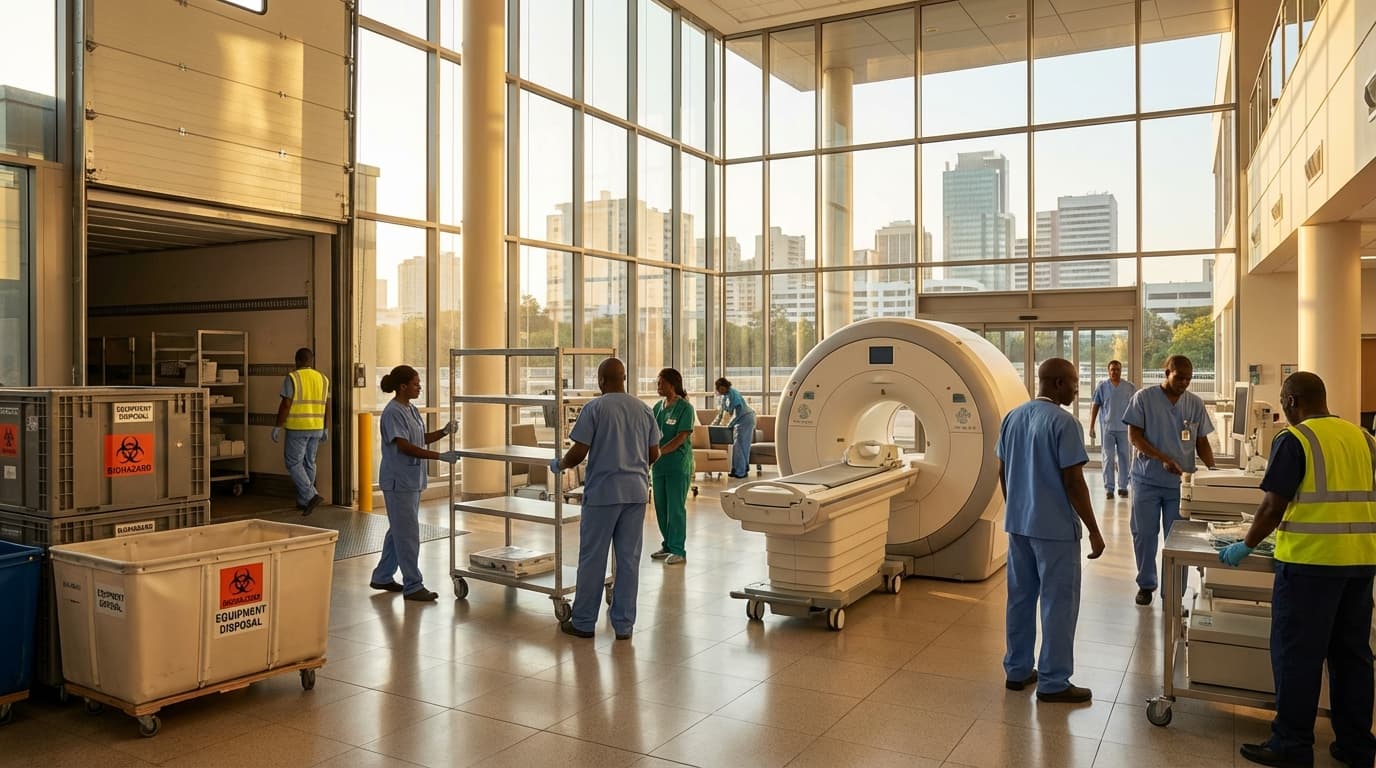
Decommissioning Service for Medical Devices in Tanzania
Engineering Excellence & Technical Support
Decommissioning Service for Medical Devices High-standard technical execution following OEM protocols and local regulatory frameworks.
Regulatory Compliance Assurance
Ensures all medical device decommissioning activities in Tanzania strictly adhere to national regulations (e.g., Medical Devices Act, environmental protection laws) and international best practices, preventing legal penalties and environmental hazards.
Secure Data Eradication & Chain of Custody
Implements robust data destruction protocols for devices with sensitive patient information, guaranteeing compliance with data privacy laws, followed by a traceable chain of custody for all decommissioned equipment.
Sustainable & Responsible Disposal Pathways
Facilitates environmentally sound disposal, recycling, or refurbishment of medical devices, minimizing landfill waste and promoting resource recovery in line with Tanzania's commitment to sustainable practices.
What Is Decommissioning Service For Medical Devices In Tanzania?
Decommissioning service for medical devices in Tanzania refers to the formal process of safely and compliantly retiring a medical device from active use. This involves a series of technical, administrative, and environmental procedures to ensure that the device no longer poses a risk to patients, users, or the environment. The service is critical for healthcare facilities, manufacturers, and service providers operating within Tanzania's regulatory framework.
| Who Needs Decommissioning Service? | Typical Use Cases |
|---|---|
| Healthcare Facilities (Hospitals, Clinics, Diagnostic Centers): When medical equipment reaches the end of its useful life, is replaced with newer technology, is no longer calibrated or supported, or is damaged beyond repair. | End-of-Life Equipment: Retirement of older imaging systems (X-ray, CT, MRI), laboratory analyzers, surgical instruments, patient monitoring systems, and sterilizers. Technology Upgrades: Replacing outdated equipment with advanced models, requiring the safe removal and disposal of legacy systems. Facility Closure or Relocation: Decommissioning all medical equipment within a facility that is closing down or moving to a new location. Damaged or Obsolete Equipment: Devices that are no longer functional, have critical components missing, or are deemed obsolete by manufacturers and cannot be repaired. Lease Returns: Returning leased medical equipment at the end of the contract term, often requiring specific decommissioning protocols as stipulated by the leasing company. |
| Medical Device Manufacturers and Distributors: To manage returns, end-of-life products, and obsolete inventory. | Product Recalls: Decommissioning devices subject to mandatory recalls due to safety defects. Product End-of-Life Management: Managing the disposition of devices after the manufacturer ceases production or support. Warehouse Clearance: Disposing of old or unsellable inventory. |
| Biomedical Engineering Departments/Third-Party Service Providers: To offer specialized decommissioning services to healthcare institutions. | Outsourced Decommissioning: Healthcare facilities contracting specialized companies to manage the complex decommissioning process, ensuring regulatory adherence and minimizing in-house resource strain. |
| Regulatory Bodies (Indirectly): While not directly needing the service, they set the standards and regulations that necessitate such services. | Compliance Assurance: Ensuring that the decommissioning practices within Tanzania meet national environmental and health safety standards. |
Key Components of Medical Device Decommissioning Service:
- Data Sanitization/Destruction: Ensuring all patient-identifiable information (PHI) and other sensitive data stored on the device (e.g., imaging data, patient records, calibration settings) is irrecoverably erased or physically destroyed in accordance with data privacy regulations.
- Electrical and Mechanical Safety Checks: Verifying that the device is rendered inoperable and cannot be accidentally powered on or operated, thereby preventing potential electrical hazards or mechanical injuries.
- Removal of Hazardous Materials: Identifying and safely removing any hazardous components such as batteries, refrigerants, mercury, or other substances that require specialized disposal procedures to comply with environmental regulations.
- Physical Disassembly and Waste Segregation: Dismantling the device into its constituent parts for proper segregation based on material type (e.g., metals, plastics, electronics) to facilitate recycling, refurbishment, or appropriate disposal.
- Environmental Compliance: Adhering to national and international standards for the disposal of electronic waste (e-waste) and medical waste, including proper containment, transportation, and final disposition of components.
- Documentation and Certification: Maintaining comprehensive records of the entire decommissioning process, including asset tracking, data destruction verification, waste manifests, and issuing a certificate of decommissioning to the client.
Who Needs Decommissioning Service For Medical Devices In Tanzania?
Decommissioning service for medical devices in Tanzania is essential for a variety of organizations that handle, store, or dispose of medical equipment. This service ensures that devices are rendered safe and unusable, preventing unauthorized use, data breaches, and environmental hazards.
| Customer Type | Key Departments Involved in Decommissioning |
|---|---|
| Hospitals (Public and Private) | Biomedical Engineering Department, IT Department (for data-bearing devices), Administration/Procurement, Facilities Management, Infection Control |
| Clinics and Health Centers | Clinic Manager, Lead Nurse/Doctor, Administrative Staff |
| Diagnostic Laboratories | Laboratory Manager, Chief Technologist, IT Support (for analytical instruments with data storage) |
| Research Institutions | Principal Investigator, Lab Manager, IT Department, Health and Safety Officer |
| Medical Training Colleges and Universities | Biomedical Engineering Faculty, Simulation Lab Staff, IT Department, Procurement Department |
| Medical Device Manufacturers and Distributors | Quality Assurance, Logistics, Technical Service Department, Environmental Health and Safety (EHS) |
| Government Health Agencies | Procurement and Logistics, Biomedical Engineering Units, IT Departments (for centralized systems) |
| Non-Governmental Organizations (NGOs) involved in healthcare | Program Managers, Logistics Officers, Clinical Staff, IT Support |
| Private Healthcare Providers | Owner/Director, Operations Manager, Clinical Staff |
Target Customers and Departments in Tanzania Requiring Medical Device Decommissioning Services:
- Hospitals (Public and Private)
- Clinics and Health Centers
- Diagnostic Laboratories
- Research Institutions
- Medical Training Colleges and Universities
- Medical Device Manufacturers and Distributors (for end-of-life products)
- Government Health Agencies
- Non-Governmental Organizations (NGOs) involved in healthcare
- Private Healthcare Providers
Decommissioning Service For Medical Devices Process In Tanzania
This document outlines the workflow for the decommissioning of medical devices in Tanzania, from the initial inquiry to the final execution of the service. The process ensures responsible and compliant disposal of medical equipment, adhering to national regulations and environmental standards.
| Stage | Description | Key Activities | Responsible Parties |
|---|---|---|---|
| The client expresses interest in medical device decommissioning services. | Submit inquiry, request for proposal, initial consultation. | Client, Service Provider |
| Service provider presents a plan and pricing, and a contract is finalized. | Site assessment (preliminary), proposal generation, negotiation, contract signing. | Service Provider, Client |
| In-depth assessment and preparation for the decommissioning work. | On-site inventory, detailed decommissioning plan development, risk assessment. | Service Provider, Client |
| The physical process of preparing devices for disposal. | Safe disconnection, dismantling, cleaning, data sanitization (if applicable), secure handling. | Service Provider (Trained Technicians) |
| Responsible handling of decommissioned devices and their components. | Recycling, refurbishment, secure destruction, waste segregation, transportation to disposal facilities. | Service Provider, Licensed Waste Management Partners |
| Recording all activities and providing a summary to the client. | Record keeping, generation of certificates of decommissioning/destruction, final report submission. | Service Provider, Client |
| Formal completion of the service and finalization of records. | Final payment, archival of records. | Client, Service Provider |
Decommissioning Service for Medical Devices Process in Tanzania
- The process begins with an inquiry from a healthcare facility or organization requiring the decommissioning of specific medical devices.
- Upon receiving an inquiry, a preliminary assessment is conducted to understand the type, quantity, and condition of the devices to be decommissioned.
- A detailed proposal is then prepared, outlining the scope of work, timelines, costs, and proposed methods of decommissioning and disposal.
- Upon acceptance of the proposal and signing of a service agreement, a site visit is scheduled for a thorough inspection and inventory of the devices.
- A comprehensive decommissioning plan is developed, detailing the steps for safe disconnection, dismantling, cleaning, and data sanitization (if applicable).
- The execution phase involves trained personnel carrying out the decommissioning activities as per the approved plan, prioritizing safety and environmental protection.
- Following physical decommissioning, appropriate disposal methods are employed, which may include recycling, refurbishment for donation, or secure destruction, in compliance with regulations.
- All decommissioning activities and disposal records are meticulously documented for auditing and compliance purposes.
- A final report is submitted to the client, summarizing the decommissioning process, disposal methods, and any relevant certificates or acknowledgments.
Decommissioning Service For Medical Devices Cost In Tanzania
Decommissioning medical devices in Tanzania involves a range of costs, influenced by several key factors. These factors determine the overall price, which is typically quoted in Tanzanian Shillings (TZS). The process ensures that obsolete, non-functional, or end-of-life medical equipment is safely and responsibly disposed of, preventing potential hazards and complying with regulations. Understanding these pricing elements is crucial for healthcare facilities planning for equipment lifecycle management.
| Device Category (Example) | Estimated Cost Range (TZS) | Notes |
|---|---|---|
| Basic Diagnostic Equipment (e.g., stethoscopes, blood pressure monitors, basic examination lamps) | 50,000 - 250,000 | Low complexity, minimal hazardous materials, straightforward disposal. |
| Intermediate Imaging/Diagnostic Equipment (e.g., X-ray machines, ultrasound machines, basic laboratory equipment) | 300,000 - 1,500,000 | Moderate complexity, potential for some hazardous materials (e.g., mercury in older X-rays), requires specialized handling. |
| Complex/High-Risk Equipment (e.g., MRI, CT scanners, linear accelerators, anesthesia machines) | 2,000,000 - 10,000,000+ | High complexity, significant hazardous materials (e.g., refrigerants, radioactive components, heavy metals), extensive dismantling, specialized disposal facilities required. Costs can vary dramatically based on specific model and components. |
| Medical Furniture/Fixtures (e.g., hospital beds, trolleys, cabinets) | 30,000 - 150,000 | Depends on size, material (metal vs. plastic), and whether they are deemed biohazardous waste. |
Key Pricing Factors for Medical Device Decommissioning in Tanzania
- {"title":"Device Type and Complexity","description":"The type of medical device significantly impacts decommissioning costs. Simple devices like basic examination lamps will be less expensive to decommission than complex equipment such as MRI machines or CT scanners. The latter often contain hazardous materials (e.g., refrigerants, mercury, radioactive isotopes) requiring specialized handling and disposal methods, thus increasing labor and material costs."}
- {"title":"Size and Weight","description":"Larger and heavier equipment necessitates more labor for dismantling, transportation, and specialized disposal. The infrastructure and equipment needed for moving heavy items (e.g., cranes, forklifts) contribute to higher service charges."}
- {"title":"Hazardous Materials Content","description":"Devices containing hazardous materials (e.g., lead, mercury, certain chemicals, radioactive components) require stringent safety protocols and adherence to environmental regulations for disposal. This involves specialized containment, treatment, and disposal processes, which are significantly more costly."}
- {"title":"Dismantling and Preparation Requirements","description":"Some devices require extensive dismantling before disposal. The labor hours, tools, and expertise needed for safe and effective dismantling will add to the overall cost. Proper documentation of the dismantling process may also be required."}
- {"title":"Transportation and Logistics","description":"The distance from the healthcare facility to the designated disposal site, as well as the accessibility of both locations, influences transportation costs. This includes fuel, vehicle maintenance, and driver wages. Specialized transportation might be needed for large or hazardous items."}
- {"title":"Disposal Method and Venue","description":"The chosen disposal method (e.g., recycling, secure landfill, incineration) and the fees charged by authorized disposal facilities are major cost determinants. Facilities that can handle specific hazardous materials or offer comprehensive recycling services will typically have higher fees."}
- {"title":"Regulatory Compliance and Documentation","description":"Ensuring all decommissioning activities comply with Tanzanian environmental and health regulations is paramount. The cost of obtaining necessary permits, certificates of destruction, and maintaining detailed records can add to the service fee. Reputable service providers factor these administrative costs into their pricing."}
- {"title":"Service Provider's Overhead and Expertise","description":"The experience, certifications, insurance, and overhead costs of the decommissioning service provider play a role in pricing. Companies with established track records, specialized training, and robust safety procedures may command higher fees but offer greater reliability and compliance assurance."}
- {"title":"Volume of Decommissioning","description":"For healthcare facilities undertaking a large-scale decommissioning project, economies of scale might lead to slightly reduced per-unit costs. However, the overall project cost will naturally be higher."}
Affordable Decommissioning Service For Medical Devices Options
Decommissioning medical devices involves securely and responsibly removing them from service, ensuring data privacy and environmental compliance. For healthcare facilities operating on tighter budgets, exploring affordable options is crucial. This involves understanding value bundles offered by service providers and implementing strategic cost-saving measures.
| Service Component | Standard Cost (Individual) | Bundled Value Cost (Estimated) | Cost-Saving Benefit |
|---|---|---|---|
| Secure Data Destruction | $50 - $150 per device | $30 - $100 per device (within bundle) | Up to 40% reduction |
| Physical Destruction | $30 - $100 per device | $20 - $70 per device (within bundle) | Up to 30% reduction |
| Environmental Disposal/Recycling | $40 - $120 per device | $30 - $90 per device (within bundle) | Up to 25% reduction |
| Asset Tracking & Reporting | $20 - $50 per device | Included in bundle (or nominal fee) | Significant savings |
| Logistics & Transportation | $75 - $200 per pickup | Included in bundle based on volume/distance | Variable savings |
Understanding Value Bundles and Cost-Saving Strategies
- {"title":"Value Bundles Explained","description":"Value bundles are packages of services offered at a bundled price, often providing cost savings compared to purchasing services individually. For medical device decommissioning, these can include a combination of:\n\n* Secure Data Destruction: Ensuring all sensitive patient data is irrecoverably erased from devices.\n* Physical Destruction: Shredding or dismantling devices to prevent reuse or salvage of components.\n* Environmental Disposal/Recycling: Proper handling of hazardous materials and recycling of usable components.\n* Asset Tracking and Reporting: Documenting the entire decommissioning process for compliance and inventory management.\n* Logistics and Transportation: Picking up devices from your facility.\n* Certification: Providing certificates of destruction and disposal."}
- {"title":"Cost-Saving Strategies","description":"Beyond bundled services, several strategies can significantly reduce decommissioning costs:\n\n* Scheduled Decommissioning: Batching devices for decommissioning at predetermined intervals (e.g., quarterly, annually) rather than on-demand can lead to lower per-unit costs due to efficient scheduling and resource allocation by the provider.\n* Early Planning: Integrating decommissioning planning into the device lifecycle management process allows for better forecasting, negotiation of bulk discounts, and avoidance of urgent, high-cost service requests.\n* Provider Negotiation and Comparison: Obtain quotes from multiple reputable decommissioning service providers. Clearly outline your needs and explore their tiered service offerings. Negotiate pricing based on volume and contract length.\n* Internal Preparation: Preparing devices for pickup by removing accessories, consolidating units, and organizing them by type can reduce the service provider's labor time, thus lowering costs.\n* Prioritizing Data Destruction: If budget is extremely tight, prioritize secure data destruction and environmental compliance over extensive physical destruction for devices with no salvageable value. Clearly communicate this prioritization to the provider.\n* Exploring Certified Refurbishers (for functional devices): For devices that are still functional but no longer needed, explore options for donation or sale through certified medical device refurbishers. This can sometimes offset decommissioning costs and is often more environmentally friendly."}
Verified Providers In Tanzania
When seeking reliable healthcare services in Tanzania, particularly those requiring specialized knowledge and a commitment to quality, identifying 'Verified Providers' is paramount. This designation signifies that a healthcare entity has undergone rigorous vetting processes and meets established standards for service delivery, ethical practices, and patient safety. Franance Health stands out as a premier example of such a verified provider. Their commitment to excellence is not just a claim, but a demonstrably proven track record that makes them the optimal choice for individuals and organizations in Tanzania.
| Feature | Franance Health's Advantage | Why it Matters for Verification |
|---|---|---|
| Accreditation & Certifications | Holds recognized national and international accreditations and certifications. | Direct evidence of meeting established quality and safety benchmarks. |
| Clinical Protocols & Guidelines | Follows evidence-based clinical protocols for all treatments and procedures. | Ensures consistent, effective, and safe patient care delivery. |
| Staff Competency & Training | Employs highly qualified medical professionals with continuous professional development. | Guarantees that patients receive care from competent and up-to-date practitioners. |
| Patient Safety Measures | Implements robust patient safety protocols and risk management systems. | Minimizes the risk of adverse events and ensures a secure healthcare environment. |
| Infrastructure & Equipment | Maintains modern, well-equipped facilities and advanced medical technology. | Facilitates accurate diagnostics and advanced treatment options. |
| Patient Feedback & Improvement | Actively collects and acts upon patient feedback for continuous service enhancement. | Demonstrates a commitment to patient satisfaction and adaptive service delivery. |
Why Franance Health is the Best Choice for Verified Healthcare in Tanzania:
- Unwavering Commitment to Quality Standards: Franance Health adheres to stringent quality management systems, ensuring that every aspect of their service, from initial consultation to ongoing care, meets or exceeds international benchmarks. This dedication to quality is a cornerstone of their verification.
- Experienced and Credentialed Professionals: The healthcare professionals at Franance Health are not only highly skilled but also possess the necessary certifications and ongoing training. This ensures they are up-to-date with the latest medical advancements and best practices.
- Patient-Centric Approach: At Franance Health, the patient's well-being is at the forefront. Their verified status is partly due to their proven ability to deliver compassionate, personalized care that respects individual needs and promotes patient empowerment.
- Transparency and Ethical Practices: Verified providers, like Franance Health, operate with a high degree of transparency in their pricing, treatment plans, and operational procedures. They maintain strict ethical guidelines, fostering trust and confidence among their clientele.
- Comprehensive Service Offerings: Franance Health provides a broad spectrum of healthcare services, making them a convenient and reliable one-stop solution for various medical needs. This comprehensive approach further solidifies their position as a leading verified provider.
- Technological Integration for Enhanced Care: They invest in modern medical technology and infrastructure, which is often a key criterion for verification. This allows for more accurate diagnoses, effective treatments, and efficient patient management.
Scope Of Work For Decommissioning Service For Medical Devices
This Scope of Work (SOW) outlines the requirements and specifications for the decommissioning of medical devices. The service includes the secure and compliant removal, sanitization, data destruction, and disposal of designated medical equipment. The objective is to ensure patient safety, data privacy, environmental responsibility, and adherence to all relevant regulations and standards.
| Category | Item | Standard/Specification | Description |
|---|---|---|---|
| Site Preparation | Access and Safety Protocols | OSHA, Local Health & Safety Regulations | Ensuring a safe working environment, adherence to site-specific safety rules, and proper personal protective equipment (PPE) usage. |
| Device Identification | Unique Device Identification (UDI) | UDI Standards (e.g., GS1, HIBCC) | Verification and logging of UDI for accurate tracking and auditability. |
| Device Disconnection | Electrical and Fluid Disconnection | Manufacturer's Service Manual, Biomedical Engineering Guidelines | Safe and proper disconnection of power, pneumatic, hydraulic, and data cables according to manufacturer specifications. |
| Device Cleaning and Sanitization | Surface Cleaning | CDC Guidelines, Manufacturer's Cleaning Protocols | Thorough cleaning of device exteriors to remove visible contamination and bio-burden. |
| Data Destruction | Media Wiping/Sanitization | NIST SP 800-88 Rev. 1 (Guidelines for Media Sanitization) | Secure erasure of all patient data and sensitive information from devices with digital storage capabilities. |
| Data Destruction | Physical Destruction (if necessary) | HIPAA Security Rule, Manufacturer Recommendations | Physical destruction (shredding, crushing) of storage media for devices where sanitization is not feasible or sufficient. |
| Disassembly | Component Removal | Manufacturer's Service Manual | Careful disassembly of devices into component parts as required for disposal or recycling, minimizing damage to reusable parts. |
| Environmental Disposal | Hazardous Waste Management | EPA Regulations (RCRA), Local Environmental Laws | Proper segregation, labeling, and disposal of any hazardous materials (e.g., batteries, mercury-containing components) through licensed hazardous waste handlers. |
| Environmental Disposal | Electronic Waste (E-waste) Recycling | R2 (Responsible Recycling) Standard, e-Stewards Certification | Recycling of non-hazardous electronic components through certified e-waste recyclers to maximize material recovery and minimize landfill waste. |
| Transportation | Secure Transport | DOT Regulations, Local Transport Laws | Safe and secure transportation of devices and components to designated disposal or recycling facilities. |
| Documentation | Chain of Custody | Internal Audit Requirements, Regulatory Compliance | Maintaining a verifiable record of device handling and transfer from origin to final disposition. |
Technical Deliverables
- Decommissioning Plan (including risk assessment and timeline)
- Device Inventory and Tracking Log (pre and post-decommissioning)
- Certificates of Data Destruction (for devices with stored data)
- Certificates of Disposal/Recycling (for each device)
- Final Decommissioning Report (summarizing all activities and outcomes)
- Waste Manifests and Chain of Custody documentation
Service Level Agreement For Decommissioning Service For Medical Devices
This Service Level Agreement (SLA) outlines the response times and uptime guarantees for the Decommissioning Service for Medical Devices provided by [Your Company Name] (hereinafter referred to as 'Provider') to [Client Company Name] (hereinafter referred to as 'Client'). This SLA is an addendum to the Master Services Agreement (MSA) dated [Date of MSA].
| Incident Severity | Response Time Target | Resolution Time Target | Uptime Guarantee (Monthly) |
|---|---|---|---|
| Critical Incident | 1 Hour | 4 Business Hours | 99.5% |
| Major Incident | 2 Business Hours | 8 Business Hours | 99.8% |
| Minor Incident | 4 Business Hours | 2 Business Days | 99.9% |
Definitions
- Decommissioning Service: The complete and secure removal of medical devices from active use, including data sanitization, physical disposal, and necessary documentation, in accordance with regulatory requirements.
- Downtime: Any period during which the Decommissioning Service is unavailable or unable to perform its core functions due to issues attributable to the Provider.
- Critical Incident: An event that renders the Decommissioning Service completely unavailable or significantly impacts its ability to perform essential functions, requiring immediate attention.
- Major Incident: An event that degrades the performance of the Decommissioning Service, affecting a significant portion of users or functionality, but not rendering it completely unavailable.
- Minor Incident: An issue that has a limited impact on the Decommissioning Service, affecting a small number of users or non-critical functionality.
- Scheduled Maintenance: Planned periods of downtime for system updates, upgrades, or maintenance, communicated to the Client in advance.
- Response Time: The maximum time allowed for the Provider to acknowledge a reported incident and begin working towards resolution.
- Resolution Time: The maximum time allowed for the Provider to resolve an incident to restore the Decommissioning Service to its intended operational state.
Frequently Asked Questions

Ready when you are
Let's scope your Decommissioning Service for Medical Devices in Tanzania project in Tanzania.

Scaling healthcare logistics and technical systems across the entire continent.