
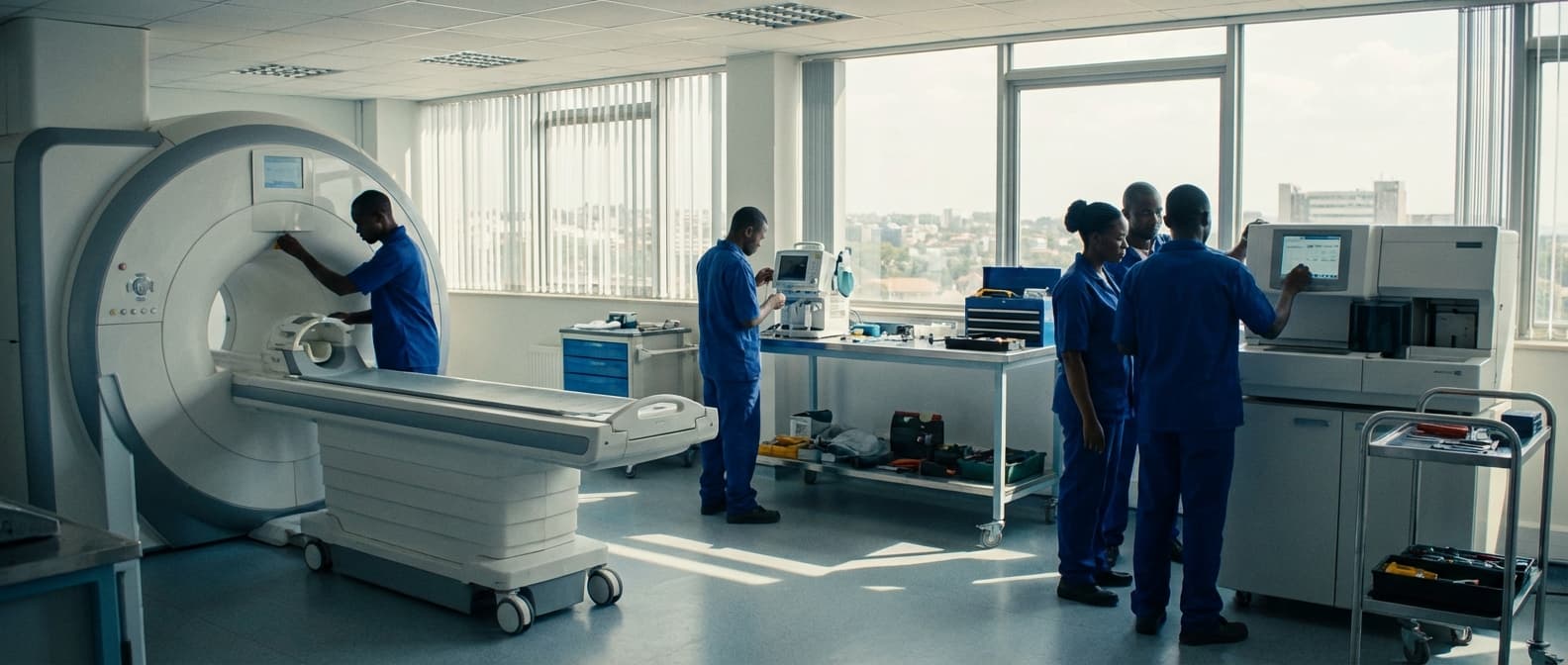
Uptime, Downtime & Root-Cause Analysis Reporting Service in Tanzania
Engineering Excellence & Technical Support
Uptime, Downtime & Root-Cause Analysis Reporting Service High-standard technical execution following OEM protocols and local regulatory frameworks.
Real-time Uptime Monitoring
Leveraging advanced sensor technology and network probes across Tanzania, our service provides instantaneous visibility into your critical infrastructure's operational status. Receive immediate alerts on service availability, ensuring proactive issue resolution and minimizing business disruption.
Comprehensive Downtime Analysis
Beyond simply detecting downtime, our platform meticulously logs and categorizes every outage event. We provide detailed timelines, impacted services, and user reports, offering a granular understanding of the scope and severity of each incident across your Tanzanian operations.
Automated Root-Cause Identification
Our intelligent algorithms correlate event logs, system metrics, and network traffic data to rapidly pinpoint the underlying cause of downtime. Accelerate your MTTR (Mean Time To Repair) by receiving actionable root-cause reports, enabling swift and effective remediation specific to the Tanzanian context.
What Is Uptime, Downtime & Root-cause Analysis Reporting Service In Tanzania?
Uptime, Downtime, and Root-Cause Analysis (RCA) Reporting Services are critical operational intelligence functions aimed at monitoring, measuring, and understanding the availability and performance of IT systems and infrastructure. In Tanzania, these services provide organizations with the necessary insights to ensure continuous operation, minimize disruptions, and proactively address the underlying causes of failures.
| Who Needs This Service in Tanzania? | Typical Use Cases | ||||||||||
|---|---|---|---|---|---|---|---|---|---|---|---|
| Businesses heavily reliant on IT infrastructure: Organizations whose core operations, revenue generation, or customer service depend on the continuous availability of their IT systems. This includes sectors like banking, telecommunications, e-commerce, and healthcare. | Ensuring Service Level Agreement (SLA) Compliance: Demonstrating adherence to agreed-upon uptime commitments with clients or partners, crucial for service providers. | Financial institutions: Banks, microfinance institutions, and payment gateways that require 24/7 availability for transactions and customer access. Telecommunication providers: Mobile network operators and internet service providers whose services are fundamental to daily communication and business operations. | Optimizing IT resource allocation: Identifying underutilized or overutilized resources to improve efficiency and reduce operational costs. | E-commerce platforms and online retailers: Maintaining customer access and transaction processing capabilities to avoid lost sales and reputational damage. | Proactive problem identification: Detecting potential issues before they escalate into major outages, enabling preventative maintenance. | Government agencies and public services: Ensuring the uninterrupted delivery of essential services like public administration, utilities, and emergency response systems. | Post-incident investigation and learning: Conducting thorough RCA to prevent recurrence of similar incidents and to improve system resilience. | Cloud service providers and data centers: Offering reliable infrastructure and services to their clients, with uptime being a primary selling point. | Business continuity and disaster recovery planning: Providing data on system resilience and identifying single points of failure to inform BCP/DR strategies. | Manufacturing and industrial sectors: Monitoring and controlling operational technology (OT) systems, SCADA, and industrial control systems (ICS) for efficient production. | Compliance and auditing: Providing documented evidence of system availability and operational stability for regulatory compliance and internal audits. |
What this Service Involves:
- Uptime Monitoring: Continuous, real-time surveillance of servers, networks, applications, and other IT assets to determine their operational status and availability. This involves sending periodic probes or checks to the monitored components and validating their responsiveness and functionality.
- Downtime Detection & Measurement: Automated identification and quantification of periods when systems or services become unavailable. This includes recording the start and end times of outages, their duration, and the scope of impact (e.g., which users or services were affected).
- Performance Metrics Collection: Gathering data on key performance indicators (KPIs) such as latency, throughput, error rates, and resource utilization (CPU, memory, disk I/O, network bandwidth). This data is essential for establishing baseline performance and identifying deviations.
- Incident Logging & Ticketing: Integration with incident management systems to automatically create tickets when downtime or critical performance degradation is detected. This ensures timely assignment and resolution of issues.
- Root-Cause Analysis (RCA): A systematic process of investigating incidents to identify the fundamental reason(s) why a problem occurred. This typically involves analyzing logs, configuration changes, network traffic, system events, and correlating data from various monitoring sources to pinpoint the origin of the failure.
- Reporting & Visualization: Generation of comprehensive reports and dashboards that present uptime percentages, downtime durations, incident summaries, performance trends, and RCA findings. These reports are crucial for operational reviews, capacity planning, and stakeholder communication.
- Alerting & Notifications: Configurable alert mechanisms that notify relevant IT personnel (administrators, engineers, support staff) via email, SMS, or other communication channels when specific thresholds are breached or critical events occur.
Who Needs Uptime, Downtime & Root-cause Analysis Reporting Service In Tanzania?
In Tanzania's rapidly evolving business landscape, maintaining seamless operations is paramount for success. Downtime, unexpected outages, and the inability to quickly identify the root cause of issues can lead to significant financial losses, reputational damage, and decreased customer satisfaction. Our Uptime, Downtime & Root-Cause Analysis Reporting Service provides critical insights and actionable data to help organizations in Tanzania prevent and mitigate these challenges. This service is essential for any business that relies on technology and infrastructure to deliver its products or services.
| Target Customer Segment | Typical Departments Involved | Key Needs/Benefits |
|---|---|---|
| Telecommunications Providers | Network Operations Center (NOC), IT Operations, Customer Support, Service Assurance | Minimize network outages, ensure call and data service availability, improve subscriber satisfaction, reduce operational expenditure related to troubleshooting. |
| Financial Institutions (Banks, Microfinance) | IT Operations, Core Banking Systems Team, Branch Operations, Risk Management, Compliance | Ensure ATM and online banking uptime, protect financial transactions, meet regulatory compliance for service availability, prevent financial losses from system failures. |
| E-commerce & Online Retailers | IT Operations, Web Development, Logistics & Fulfillment, Customer Service | Maximize website availability, ensure smooth transaction processing, prevent lost sales due to website downtime, maintain customer trust, optimize supply chain visibility. |
| Logistics & Transportation Companies | Fleet Management, Dispatch, IT Operations, Customer Service, Supply Chain Management | Ensure real-time tracking and dispatch system uptime, maintain operational continuity, minimize delays, improve delivery efficiency, provide accurate shipment status to clients. |
| Government & Public Services | IT Departments, Service Delivery Units, National Data Centers, Citizen Services | Ensure availability of critical public services (e.g., e-government portals, health information systems), maintain citizen trust, prevent disruption of essential services. |
| Manufacturing & Industrial Companies | Plant Operations, IT Operations, Maintenance & Engineering, Production Management | Minimize production line stoppages, ensure operational technology (OT) system reliability, optimize resource utilization, prevent costly equipment damage due to unexpected shutdowns. |
| Hospitality & Tourism | IT Operations, Front Desk Operations, Reservation Systems Management, Guest Services | Ensure booking system uptime, maintain guest Wi-Fi availability, provide seamless check-in/check-out experiences, prevent service disruptions for guests. |
Who Needs Uptime, Downtime & Root-Cause Analysis Reporting Service in Tanzania?
- Businesses in sectors heavily reliant on continuous operations (e.g., finance, telecommunications, logistics).
- Organizations experiencing frequent or prolonged service disruptions.
- Companies aiming to improve operational efficiency and reduce costs associated with downtime.
- Enterprises seeking to enhance customer trust and loyalty by ensuring service availability.
- IT departments tasked with managing complex systems and ensuring their reliability.
- Management seeking data-driven insights for strategic decision-making regarding infrastructure investments.
Uptime, Downtime & Root-cause Analysis Reporting Service Process In Tanzania
This document outlines the standard operating procedure for the Uptime, Downtime & Root-Cause Analysis Reporting Service in Tanzania. The process is designed to ensure timely and accurate reporting of system outages and their underlying causes, facilitating proactive problem-solving and continuous improvement.
| Stage | Description | Key Activities | Responsible Party | Deliverables | Timeline (Typical) |
|---|---|---|---|---|---|
| The process begins when a client or internal stakeholder reports a system incident or requests an RCA service. | Receiving incident notification (phone, email, ticket system), clarifying the nature of the request, initial documentation. | Client/Internal Stakeholder, Service Desk/Support Team | Service request logged, initial incident details captured. | Immediate upon incident notification. |
| Gathering preliminary information about the incident to understand its scope and potential impact. | Collecting user reports, system logs, error messages, network status, affected services. | Service Desk/Support Team, System Administrators | Initial incident description, potential affected areas identified. | Within 1-4 hours of request. |
| Confirming the incident is genuine and categorizing its severity and type for prioritization. | Verifying the reported issue, assigning severity level (e.g., Critical, High, Medium, Low), categorizing the incident (e.g., hardware, software, network, human error). | Service Desk/Support Team, Technical Leads | Verified incident, assigned severity and category, initial impact assessment. | Within 1-2 hours of initial assessment. |
| Formally launching the RCA process based on the verified incident and its severity. | Assigning an RCA lead, defining the scope of the RCA, scheduling initial investigation meetings. | RCA Lead, Technical Management | RCA case opened, RCA team assigned, preliminary investigation plan. | Within 2-4 hours of categorization. |
| Gathering comprehensive data and conducting in-depth investigations to understand the contributing factors. | Collecting detailed system logs, performance metrics, configuration changes, audit trails, interviewing relevant personnel, reviewing documentation. | RCA Team, System Administrators, Developers, Network Engineers | Raw data collected, preliminary findings documented. | Continuous, duration depends on complexity (hours to days). |
| Analyzing the collected data to pinpoint the fundamental reason(s) for the incident. | Using RCA methodologies (e.g., 5 Whys, Fishbone Diagram, Fault Tree Analysis), correlating events, identifying underlying systemic issues. | RCA Team | Identified root cause(s) and contributing factors. | Concurrent with data collection, finalized within the RCA timeline. |
| Determining the full impact of the incident and developing immediate and long-term solutions. | Quantifying downtime, financial losses, customer impact; proposing immediate workarounds and long-term corrective/preventive actions. | RCA Team, Business Stakeholders | Impact assessment report, proposed mitigation strategies. | Concurrent with root cause identification. |
| Compiling all findings into a structured and comprehensive RCA report. | Documenting incident details, timeline, affected systems, root cause(s), impact, recommended actions, and responsible parties for actions. | RCA Lead, RCA Team | Draft RCA report. | Within 2-5 days of incident resolution (depending on complexity). |
| Ensuring the accuracy, completeness, and clarity of the RCA report. | Review by management, relevant department heads, and key stakeholders; incorporating feedback and making necessary revisions. | Technical Management, Business Management, Stakeholders | Approved RCA report. | Within 1-3 days of draft submission. |
| Sharing the approved RCA report with relevant parties. | Distributing the report via email, portal, or presentation; conducting briefings or meetings to discuss findings and actions. | RCA Lead, Project Manager | RCA report distributed, key personnel informed. | Within 1 day of approval. |
| Implementing the agreed-upon actions to address the root cause and prevent recurrence. | Assigning tasks for corrective actions, implementing system changes, updating procedures, providing training. | Assigned Action Owners, Relevant Departments | CAPA plans executed, implemented changes. | Varies based on action complexity (days to months). |
| Formally closing the RCA case and monitoring the effectiveness of implemented actions. | Confirming closure of all action items, verifying that the issue has not recurred, performing post-implementation reviews. | RCA Lead, Service Desk/Support Team | RCA case closed, follow-up documented. | Upon completion and verification of CAPA. |
Service Workflow
- Inquiry & Service Request
- Information Gathering & Initial Assessment
- Incident Verification & Categorization
- Root Cause Analysis (RCA) Initiation
- Data Collection & Investigation
- Root Cause Identification
- Impact Assessment & Mitigation Planning
- Report Generation
- Report Review & Approval
- Report Distribution & Communication
- Corrective & Preventive Actions (CAPA)
- Service Closure & Follow-up
Uptime, Downtime & Root-cause Analysis Reporting Service Cost In Tanzania
Estimating the cost of Uptime, Downtime, and Root-Cause Analysis (RCA) reporting services in Tanzania requires considering several key factors that influence pricing. These services are crucial for businesses to understand their system reliability, identify performance bottlenecks, and prevent future disruptions. The pricing will vary significantly based on the complexity of the IT infrastructure, the volume of data to be analyzed, the level of detail required in the reports, and the expertise of the service provider.
| Service Scope | Estimated Monthly Cost Range (TZS) | Typical Features Included |
|---|---|---|
| Basic Uptime/Downtime Reporting (Small Business/Single Application) | 200,000 - 600,000 | Monthly uptime percentage, total downtime, basic event logs, simple reporting dashboard. |
| Standard Uptime, Downtime & RCA Reporting (Medium Business/Multiple Applications) | 700,000 - 2,500,000 | Detailed uptime/downtime analysis, incident timeline, preliminary root cause identification, performance metrics, scheduled reports. |
| Comprehensive Uptime, Downtime & In-depth RCA Reporting (Large Enterprise/Complex Infrastructure) | 3,000,000 - 10,000,000+ | Real-time monitoring, advanced anomaly detection, full-spectrum root cause analysis, trend analysis, predictive insights, customized dashboards, proactive recommendations, potentially incident response support. |
| Ad-hoc RCA Investigation (Per Incident) | 500,000 - 3,000,000+ | Deep dive analysis for specific critical incidents, detailed forensic investigation, comprehensive incident report, lessons learned. |
Key Pricing Factors for Uptime, Downtime & Root-Cause Analysis Reporting Services in Tanzania
- Infrastructure Complexity: The number of servers, applications, network devices, and cloud services to be monitored. More complex environments require more sophisticated tools and deeper analysis.
- Data Volume and Granularity: The amount of log data, performance metrics, and event information that needs to be collected, processed, and analyzed. Higher data volumes typically lead to higher costs.
- Reporting Frequency and Depth: How often reports are generated (e.g., daily, weekly, monthly) and the level of detail they contain. Comprehensive RCA with in-depth analysis will be more expensive than basic uptime/downtime summaries.
- Service Level Agreements (SLAs): The guaranteed uptime percentages and response times for incident resolution. More stringent SLAs often come with higher service fees.
- Technology Stack: The specific technologies used by the client (e.g., operating systems, databases, middleware, cloud platforms). Some technologies may require specialized monitoring tools and expertise.
- Scope of Services: Whether the service includes just reporting, or also proactive monitoring, alert management, remediation recommendations, or direct incident response.
- Provider Expertise and Reputation: Established companies with proven track records and highly skilled engineers may command higher prices.
- Tools and Software: The cost of licensing and maintaining specialized monitoring and analysis software. Some providers may use proprietary tools, while others leverage open-source or commercial solutions.
- Customization Requirements: The need for tailored reporting formats, dashboards, or specific analytical metrics.
- Support Levels: The availability and responsiveness of technical support for inquiries and escalations.
Affordable Uptime, Downtime & Root-cause Analysis Reporting Service Options
This document outlines affordable service options for Uptime, Downtime, and Root-Cause Analysis (RCA) reporting, emphasizing value bundles and cost-saving strategies to help businesses optimize their operational visibility without breaking the bank. We understand the critical need for understanding system availability, identifying the causes of outages, and implementing preventive measures. Our tiered service packages are designed to cater to a range of budgets and needs, from essential monitoring to comprehensive RCA with actionable insights.
| Service Bundle | Key Features | Target Audience | Estimated Monthly Cost Range (USD) |
|---|---|---|---|
| Foundation | Basic Uptime Monitoring, Automated Alerts | Small Businesses, Startups | $50 - $150 |
| Standard Insight | Foundation + Downtime Logging, Basic Alerting | Growing Businesses, IT Departments | $150 - $350 |
| Proactive Action | Standard Insight + Automated RCA, Preliminary Analysis | Medium Enterprises, Operations Teams | $350 - $700 |
| Strategic Advantage | Proactive Action + Expert RCA, Proactive Recommendations, Trend Analysis | Large Enterprises, Mission-Critical Operations | $700 - $1500+ |
| On-Demand Expert | Retainer for dedicated RCA support | Any Business needing expert analysis | Customized based on usage/retainer |
Service Offerings & Value Bundles
- Basic Uptime Monitoring: Essential for businesses needing to track the availability of critical systems and receive immediate alerts for any disruptions. This forms the foundation of operational awareness.
- Standard Downtime & Alerting: Includes basic uptime monitoring plus detailed logging of downtime events, their duration, and basic notification triggers. Provides initial insights into when and how long systems are unavailable.
- Advanced RCA Reporting: Builds upon standard services by incorporating automated data collection from various sources (logs, performance metrics, network traffic) to identify the probable root causes of downtime. This includes preliminary analysis and automated reports.
- Premium RCA & Proactive Insights: The most comprehensive offering. This bundle includes advanced RCA, deep-dive analysis by our experts, identification of recurring issues, and recommendations for proactive improvements to prevent future downtime. Offers trend analysis and strategic advice.
- Customizable Bundles: For businesses with unique requirements, we offer the flexibility to tailor a package by combining elements from different tiers. This ensures you only pay for what you need.
- Retainer-Based RCA: For ongoing needs, a retainer model can provide dedicated RCA expertise on demand, offering significant cost savings compared to ad-hoc investigations.
Verified Providers In Tanzania
In Tanzania's rapidly evolving healthcare landscape, identifying truly verified and reputable healthcare providers is paramount. Franance Health stands out as a leader, offering a robust network of credentialed professionals and facilities. This dedication to rigorous vetting and adherence to international quality standards makes them a standout choice for individuals and organizations seeking reliable healthcare services. Their commitment to transparency and patient well-being ensures that every provider within their network has undergone thorough background checks, has valid and up-to-date professional licenses, and meets strict criteria for medical expertise and ethical practice. Choosing Franance Health means opting for peace of mind, knowing you are accessing care from providers who have been meticulously verified.
| Credential Aspect | Franance Health Standard | Benefit to Patients |
|---|---|---|
| Licensing and Registration | Mandatory verification of current and valid professional licenses with relevant Tanzanian medical boards and authorities. | Ensures providers are legally authorized to practice and meet minimum competency requirements. |
| Educational and Professional Background | Thorough review of academic qualifications, training, and specialization of all healthcare professionals. | Guarantees that providers possess the necessary knowledge and skills for their respective fields. |
| Experience and Competency | Assessment of practical experience and demonstrated competency through peer reviews and/or performance evaluations where applicable. | Confirms that providers have a track record of successful patient care and effective treatment. |
| Ethical Conduct and Professionalism | Background checks and adherence to a strict code of conduct, including no history of malpractice or disciplinary actions. | Protects patients from unethical practices and ensures a trustworthy healthcare experience. |
| Facility Accreditation (for partner facilities) | Ensures that partner healthcare facilities meet established standards for infrastructure, equipment, and operational protocols. | Provides a safe and well-equipped environment for receiving medical treatment. |
| Continuous Professional Development (CPD) | Encouragement and often verification of ongoing training and education to stay abreast of medical advancements. | Ensures patients receive care informed by the latest medical knowledge and techniques. |
Why Franance Health Credentials Matter:
- Rigorous Verification Process
- Up-to-Date Professional Licenses
- Demonstrated Medical Expertise
- Commitment to Ethical Practice
- Adherence to International Quality Standards
- Focus on Patient Safety and Well-being
Scope Of Work For Uptime, Downtime & Root-cause Analysis Reporting Service
This document outlines the Scope of Work (SOW) for a comprehensive Uptime, Downtime & Root-Cause Analysis (RCA) Reporting Service. The service aims to provide detailed insights into system availability, identify the causes of service disruptions, and recommend corrective actions to enhance reliability and performance. The technical deliverables will be provided in a standardized format to ensure consistency and ease of integration with existing monitoring and reporting tools.
| Deliverable Category | Specific Deliverable | Description | Format | Standard Specifications |
|---|---|---|---|---|
| Uptime/Downtime Reporting | Daily Availability Report | Summary of system uptime and downtime percentages for the preceding 24 hours. | CSV / JSON | Includes: Timestamp, System Name, Uptime (%), Downtime (%), Key Incidents (if any) |
| Uptime/Downtime Reporting | Weekly Availability Report | Aggregated uptime and downtime statistics for the week, highlighting trends and major incidents. | PDF / CSV | Includes: Week Start Date, Week End Date, Overall Uptime (%), Overall Downtime (%), Breakdown by System, Summary of Weekly Incidents |
| Uptime/Downtime Reporting | Monthly Availability Report | Comprehensive monthly overview of system availability, including monthly averages, year-to-date figures, and performance against SLAs. | PDF / PowerPoint | Includes: Month and Year, Average Uptime (%), Average Downtime (%), SLA Compliance Status, Key Performance Indicators (KPIs), Trend Analysis |
| Root-Cause Analysis (RCA) | Incident Analysis Report (per event) | Detailed analysis of individual downtime incidents, including timeline, impact, identified root cause(s), and immediate remediation steps. | PDF / Word Document | Includes: Incident ID, Incident Start Time, Incident End Time, Duration, Impacted Systems/Services, Root Cause(s) (e.g., Hardware Failure, Software Bug, Human Error, Network Issue), Contributing Factors, Immediate Actions Taken, Recommendations for Prevention |
| Root-Cause Analysis (RCA) | Post-Mortem Report (for major incidents) | In-depth review of significant downtime events, focusing on lessons learned and long-term preventative strategies. | PDF / PowerPoint | Includes: Executive Summary, Incident Timeline, Impact Assessment, Root Cause Analysis Findings, Actions Taken, Lessons Learned, Preventative Measures (short-term and long-term), Ownership and Timelines for Recommended Actions |
| Performance & Recommendations | System Reliability Improvement Plan | Proactive recommendations based on RCA findings to enhance system stability, reduce future downtime, and optimize performance. | PDF / Word Document | Includes: Identified Weaknesses, Proposed Solutions, Prioritization of Recommendations, Estimated Impact of Recommendations, Resource Requirements, Implementation Roadmap |
| Data & Metadata | Raw Event Data | Access to raw uptime/downtime event logs and incident data used for analysis. | JSON / CSV | Timestamp, Event Type (Uptime/Downtime), System/Service Identifier, Duration (if applicable), Severity, Incident ID (if applicable) |
Key Objectives of the Service
- Accurately track and report system uptime and downtime metrics.
- Conduct thorough root-cause analysis for all significant downtime events.
- Provide actionable recommendations for preventing future occurrences.
- Deliver reports in a clear, concise, and standardized format.
- Support continuous improvement of system reliability.
Service Level Agreement For Uptime, Downtime & Root-cause Analysis Reporting Service
This Service Level Agreement (SLA) outlines the guaranteed uptime, defines downtime, and details the procedures for Root-Cause Analysis (RCA) reporting for the Uptime, Downtime & Root-Cause Analysis Reporting Service (hereinafter referred to as "the Service"). This SLA is an addendum to the Master Service Agreement (MSA) between [Your Company Name] and [Client Company Name].
| Metric | Target | Measurement Method | Client Notification |
|---|---|---|---|
| Monthly Uptime Guarantee | 99.9% | Calculated as ((Total Minutes in Month - Unscheduled Downtime Minutes) / Total Minutes in Month) * 100% | Real-time status dashboard accessible via [Link to Dashboard] |
| Response Time to Critical Incidents | < 15 minutes | Time from incident detection by monitoring systems to initial acknowledgment by [Your Company Name]'s support team. | Automated email notifications and/or SMS alerts to designated Client contacts. |
| RCA Report Delivery (following Unscheduled Downtime exceeding 1 hour) | < 48 business hours | Time from the resolution of the Unscheduled Downtime to the delivery of the initial RCA report. | Email to designated Client contact. |
Definitions
- Uptime: The period during which the Service is operational and available for use by the Client, as measured by [Your Company Name]'s monitoring systems.
- Downtime: The period during which the Service is not operational or available for use by the Client. Downtime excludes Scheduled Maintenance.
- Scheduled Maintenance: Pre-announced periods during which the Service may be unavailable due to planned system upgrades, repairs, or maintenance. Scheduled Maintenance will be communicated to the Client at least [Number] business days in advance.
- Unscheduled Downtime: Any Downtime that is not Scheduled Maintenance.
- Root-Cause Analysis (RCA): A systematic process to identify the underlying cause(s) of an incident or problem, preventing recurrence. The RCA report will detail the incident, its impact, the identified root cause(s), and the corrective actions taken or planned.
- Service Credits: Financial compensation provided to the Client for failure to meet the Uptime guarantees, as detailed in the Remedies section.
Frequently Asked Questions

Ready when you are
Let's scope your Uptime, Downtime & Root-Cause Analysis Reporting Service in Tanzania project in Tanzania.

Scaling healthcare logistics and technical systems across the entire continent.