
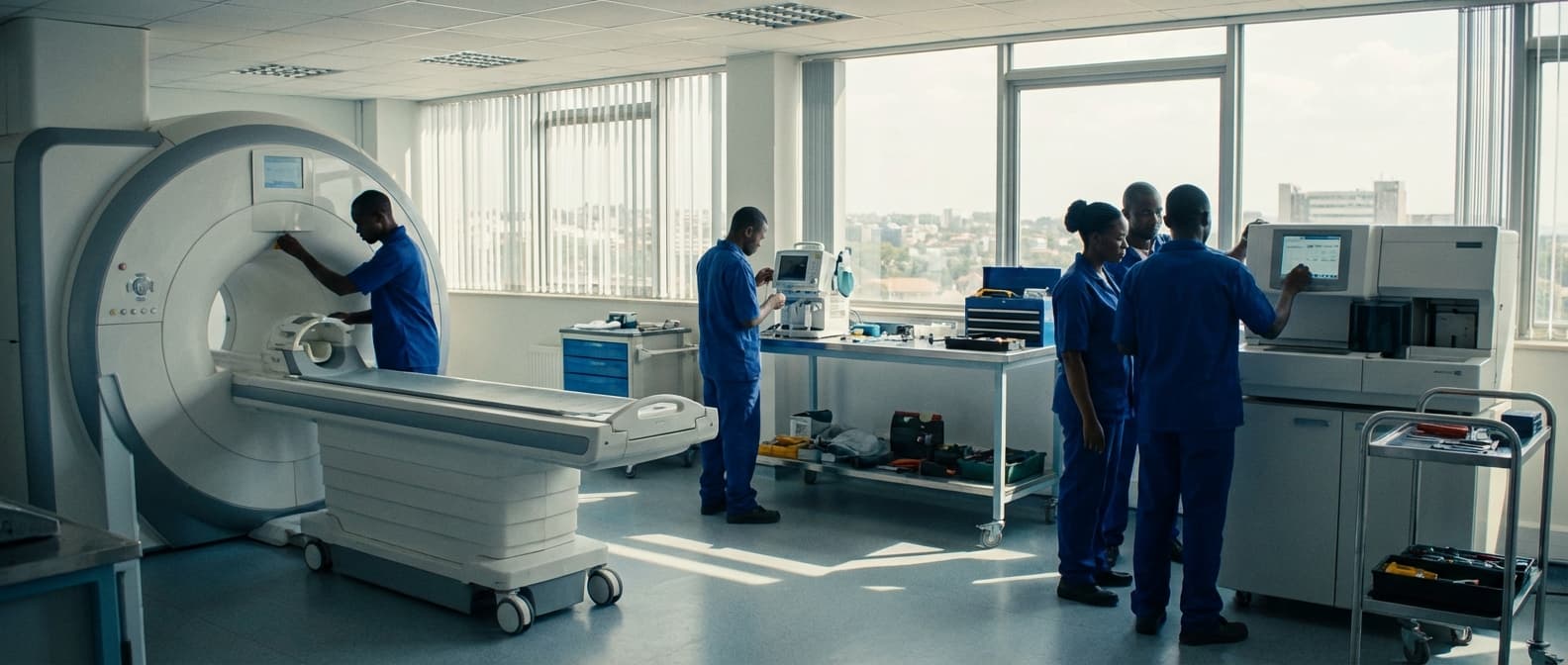
Planned Shutdown Coordination Service for Critical Equipment in Tanzania
Engineering Excellence & Technical Support
Planned Shutdown Coordination Service for Critical Equipment High-standard technical execution following OEM protocols and local regulatory frameworks.
Minimized Downtime Through Predictive Analytics
Leveraging advanced predictive analytics and historical data from critical equipment in Tanzania's key industries (mining, power generation, oil & gas), we forecast potential failures with high accuracy. This allows for pre-emptive maintenance scheduling during planned shutdowns, significantly reducing unexpected outages and associated revenue losses.
Optimized Resource Allocation & Supply Chain Integration
Our service meticulously coordinates the procurement and delivery of specialized parts, skilled technicians, and essential safety equipment across Tanzania's often challenging logistical landscape. By integrating with local and international suppliers, we ensure all necessary resources are on-site precisely when needed for planned shutdowns, preventing delays and cost overruns.
Enhanced Safety & Regulatory Compliance for Shutdowns
We implement robust safety protocols and comprehensive risk assessments tailored to Tanzanian environmental and regulatory frameworks. Our expert coordination ensures all planned shutdown activities adhere to international best practices for critical equipment maintenance, safeguarding personnel, the environment, and ensuring compliance with all relevant Tanzanian authorities.
What Is Planned Shutdown Coordination Service For Critical Equipment In Tanzania?
Planned Shutdown Coordination Service for Critical Equipment in Tanzania is a specialized offering designed to systematically manage and execute scheduled operational downtimes for vital machinery and infrastructure within Tanzanian industries. This service is crucial for ensuring that essential maintenance, upgrades, or repairs are performed with minimal disruption to ongoing production or service delivery, thereby safeguarding asset integrity, operational continuity, and overall economic output. The core objective is to transform potentially disruptive planned shutdowns into efficient, controlled, and optimized events.
This service involves a multi-phased approach encompassing meticulous planning, robust execution, and comprehensive post-shutdown analysis. It mandates a deep understanding of the specific critical equipment, its operational dependencies, and the potential cascade effects of its downtime. The service leverages project management methodologies, risk assessment frameworks, and specialized technical expertise to achieve its goals.
| Who Needs This Service? | Typical Use Cases | ||||||
|---|---|---|---|---|---|---|---|
| Industries reliant on continuous operation of critical equipment: This includes, but is not limited to, power generation, oil and gas exploration and refining, mining, manufacturing (heavy and light), telecommunications, water treatment, and transportation infrastructure. | Facility owners and operators: Responsible for the safe and efficient operation and maintenance of their assets. | Project managers and engineering teams: Overseeing complex maintenance or upgrade projects that necessitate temporary cessation of specific equipment. | Companies seeking to optimize operational efficiency and minimize unplanned downtime: Recognizing the cost implications of unexpected failures and seeking proactive management strategies. | Organizations facing stringent regulatory compliance requirements: Where scheduled inspections and maintenance are mandated for safety and operational integrity. | Entities operating in remote or challenging environments: Where resource mobilization and logistical coordination are complex. | Companies with a high volume of critical assets: Requiring a structured approach to manage multiple concurrent or sequential shutdowns. | |
| Preventive Maintenance (PM): Scheduled inspections, lubrication, component replacement, and calibration to avert premature equipment failure. | Corrective Maintenance (CM): Addressing identified defects or minor failures before they escalate into major breakdowns. | Major Overhauls & Refurbishments: Comprehensive dismantling, inspection, repair, and reassembly of critical machinery to extend its service life. | Upgrades and Modernization: Installation of new components, retrofitting of obsolete systems, or implementation of technological advancements. | Regulatory Compliance Inspections: Scheduled checks and certifications required by national or international governing bodies (e.g., safety audits, environmental compliance checks). | Asset Integrity Management: Activities focused on ensuring the continued fitness-for-purpose of critical assets. | Turnarounds and Revamps: Large-scale, multi-discipline projects involving extensive maintenance, upgrades, and modifications to entire process units or facilities. | Emergency Response Preparedness Drills: Simulating shutdown scenarios to test response capabilities. |
Key Components of Planned Shutdown Coordination Service:
- Scope Definition & Objective Setting: Clearly defining the objectives of the shutdown (e.g., preventive maintenance, corrective repairs, upgrades, regulatory compliance), the specific equipment involved, and the desired outcomes.
- Detailed Planning & Scheduling: Developing comprehensive work plans, activity sequencing, resource allocation (human capital, materials, specialized tools), and realistic timelines, often incorporating critical path analysis.
- Risk Assessment & Mitigation: Identifying potential hazards, operational risks, and safety concerns associated with the shutdown, and developing proactive mitigation strategies and contingency plans.
- Stakeholder Communication & Coordination: Facilitating clear and consistent communication channels among all relevant parties, including operations, maintenance, engineering, safety departments, external contractors, and regulatory bodies.
- Resource Mobilization & Management: Ensuring the timely availability and efficient management of all necessary personnel, equipment, spare parts, and consumables.
- On-site Supervision & Execution: Providing expert oversight during the shutdown period to ensure adherence to the plan, safety protocols, and quality standards.
- Permitting & Authorization Management: Navigating and securing all required permits, work authorizations, and safety clearances for activities within the shutdown window.
- Post-Shutdown Verification & Handover: Conducting thorough inspections, testing, and commissioning to ensure equipment is returned to service safely and in optimal condition, followed by formal handover.
- Documentation & Reporting: Maintaining detailed records of all activities, findings, and outcomes, and providing comprehensive post-shutdown reports for analysis and future planning.
Who Needs Planned Shutdown Coordination Service For Critical Equipment In Tanzania?
Planned Shutdown Coordination Service for Critical Equipment in Tanzania is essential for organizations that rely on continuous operation of vital machinery and systems. These services ensure that scheduled maintenance, upgrades, or repairs are executed efficiently and with minimal disruption to business operations, safety, and compliance. This is particularly crucial in Tanzania's burgeoning industrial, energy, and infrastructure sectors where downtime can lead to significant financial losses, safety hazards, and reputational damage.
| Customer Type | Key Departments Requiring Coordination |
|---|---|
| Manufacturing Company | Operations, Maintenance, Production Planning, Safety, Engineering |
| Mining Operation | Mine Operations, Maintenance, Geology, Safety, Environmental Compliance, Logistics |
| Power Utility | Generation, Transmission & Distribution, Operations, Maintenance, Safety, System Control |
| Oil & Gas Company | Drilling Operations, Production, Refining, Maintenance, Health, Safety & Environment (HSE), Supply Chain |
| Telecommunications Provider | Network Operations, Field Maintenance, Engineering, IT Infrastructure |
| Hospital | Facilities Management, Biomedical Engineering, Operations, Safety |
| Port Authority | Port Operations, Maintenance, Security, Logistics, Safety |
Target Customers and Departments
- {"items":["Manufacturing (e.g., food processing, textiles, automotive, cement)","Mining and Minerals Processing","Oil and Gas Exploration and Production","Chemical and Petrochemical Plants","Telecommunications"],"heading":"Industries"}
- {"items":["Power Generation and Distribution Companies","Water and Wastewater Treatment Plants","Transportation Networks (e.g., ports, airports, railway systems)","Telecommunication infrastructure providers"],"heading":"Infrastructure and Utilities"}
- {"items":["Large Hospitals and Healthcare Facilities (e.g., critical life support systems)","Data Centers","Large Commercial Buildings with critical HVAC and security systems"],"heading":"Commercial and Service Sectors"}
Planned Shutdown Coordination Service For Critical Equipment Process In Tanzania
This document outlines the workflow for the Planned Shutdown Coordination Service for Critical Equipment in Tanzania. This service aims to ensure the safe, efficient, and timely execution of planned maintenance shutdowns for critical machinery, minimizing downtime and associated risks. The workflow begins with an initial inquiry and concludes with the post-execution review.
| Stage | Description | Key Activities | Deliverables | Responsible Parties |
|---|---|---|---|---|
| Inquiry and Initial Consultation | The client initiates contact to request planned shutdown coordination services for critical equipment. | Client expresses need, defines general equipment and desired shutdown window. Service provider acknowledges inquiry, schedules initial meeting. | Confirmation of inquiry, initial understanding of client needs. | Client, Service Provider |
| Scope Definition and Planning | Detailed understanding of the shutdown requirements and development of a comprehensive plan. | Site visit, detailed assessment of critical equipment, identification of maintenance tasks, risk assessment, development of shutdown schedule, safety procedures, communication protocols, and emergency response plans. Cost estimation and proposal generation. | Detailed Scope of Work (SoW), Shutdown Plan, Risk Assessment Report, Safety Plan, Budget Proposal. | Service Provider (Technical Team, Project Managers), Client (Operations, Maintenance) |
| Resource Mobilization and Procurement | Gathering all necessary personnel, equipment, materials, and permits for the shutdown. | Mobilization of skilled technicians, engineers, supervisors. Procurement of specialized tools, spare parts, consumables. Application for necessary permits and licenses. Logistics planning for personnel and equipment transport. | Assembled Team, Procured Materials & Equipment, Obtained Permits. | Service Provider (Procurement, HR, Logistics), Client (Procurement, Site Access) |
| Pre-Shutdown Preparations | Finalizing all arrangements before the commencement of the shutdown. | Pre-shutdown meetings with all stakeholders, site readiness checks, safety briefings, equipment isolation and verification, finalization of task lists, communication system testing. | Pre-Shutdown Readiness Report, Verified Equipment Status. | Service Provider (Project Management, Safety Officers), Client (Operations, Maintenance) |
| Shutdown Execution | The planned shutdown period where maintenance activities are performed. | Implementing the shutdown plan, performing scheduled maintenance tasks, troubleshooting issues, adhering to safety protocols, daily progress reporting, immediate decision-making on deviations. | Completed Maintenance Tasks, Progress Reports, Incident Reports (if any). | Service Provider (Execution Teams, Supervisors), Client (Site Management, Operations) |
| Post-Shutdown Activities and Reporting | Restoring equipment to operation and documenting the entire process. | Equipment re-commissioning and testing, final safety checks, demobilization of resources, compilation of all documentation, final shutdown report generation including lessons learned. | Re-commissioned Equipment, Final Shutdown Report, Lessons Learned Document. | Service Provider (Project Management, Technical Teams), Client (Operations, Maintenance, Management) |
| Continuous Improvement | Analyzing the shutdown process for future enhancements. | Review of shutdown performance against objectives, identification of areas for improvement in planning, execution, and safety. Updating procedures and best practices based on learnings. | Updated Procedures, Best Practice Recommendations. | Service Provider, Client |
Workflow Stages
- Inquiry and Initial Consultation
- Scope Definition and Planning
- Resource Mobilization and Procurement
- Pre-Shutdown Preparations
- Shutdown Execution
- Post-Shutdown Activities and Reporting
- Continuous Improvement
Planned Shutdown Coordination Service For Critical Equipment Cost In Tanzania
Coordinating planned shutdowns for critical equipment in Tanzania involves a range of services designed to minimize disruption and ensure safety. The cost of these services is influenced by several factors, and typical price ranges can be provided in Tanzanian Shillings (TZS). These services are crucial for industries relying heavily on uninterrupted operations, such as mining, manufacturing, power generation, and telecommunications.
| Service Level/Scope | Estimated Price Range (TZS) | Typical Duration |
|---|---|---|
| Basic Shutdown Planning & Scheduling | 5,000,000 - 15,000,000 | 1-2 weeks of planning |
| Intermediate Coordination (Planning, Site Supervision, Safety Oversight) | 15,000,000 - 40,000,000 | 1-4 weeks of execution |
| Comprehensive Project Management (End-to-End, including Vendor Management, Risk Assessment) | 40,000,000 - 100,000,000+ | 4+ weeks of execution, complex projects |
| Specialized Technical Coordination (e.g., for highly complex machinery) | Add 10% - 30% to base cost | Varies based on equipment |
| Daily Coordination Fee (for extended or ad-hoc support) | 750,000 - 2,500,000 per day | Per day |
Key Pricing Factors for Planned Shutdown Coordination in Tanzania
- {"title":"Scope and Complexity of the Shutdown","description":"The number of equipment units, their criticality, and the interdependencies between them significantly impact coordination efforts. A large-scale, multi-stage shutdown will naturally be more expensive than a single-unit maintenance. This includes the extent of dismantling, repair, reassembly, and testing required."}
- {"title":"Duration of the Shutdown","description":"Longer planned shutdown periods require more extensive planning, on-site supervision, and resource allocation. The cost is often calculated on a daily or weekly basis for the coordination team's presence."}
- {"title":"Type of Critical Equipment","description":"Different types of equipment (e.g., large turbines, complex conveyor systems, specialized manufacturing machinery) require varying levels of technical expertise for coordination and supervision. Highly specialized equipment may necessitate the involvement of external subject matter experts."}
- {"title":"Level of Service Required","description":"This can range from basic planning and scheduling to comprehensive project management, including risk assessment, safety management, contractor coordination, procurement assistance, and post-shutdown reporting. Higher levels of service will naturally command higher fees."}
- {"title":"Number of Coordination Personnel","description":"The size of the coordination team needed depends on the scale and complexity of the shutdown. This includes project managers, site supervisors, safety officers, logistics coordinators, and technical specialists."}
- {"title":"Location and Accessibility","description":"Remote or difficult-to-access locations may incur additional costs for travel, accommodation, and logistics for the coordination team. Port facilities or specialized industrial zones might also have specific access requirements and associated fees."}
- {"title":"Safety and Regulatory Compliance","description":"Ensuring strict adherence to Tanzanian safety regulations and industry best practices is paramount. The cost of implementing and overseeing these measures, including specialized safety personnel and equipment, is factored in."}
- {"title":"Emergency Response Planning","description":"Developing and maintaining robust emergency response plans for potential unforeseen issues during the shutdown adds to the coordination service cost."}
- {"title":"Reporting and Documentation Requirements","description":"The level of detail and frequency of reporting, as well as the complexity of post-shutdown documentation, will influence the final cost."}
- {"title":"Vendor and Contractor Management","description":"The service provider's role in sourcing, vetting, and managing external vendors and contractors for specialized tasks will impact the overall price."}
Affordable Planned Shutdown Coordination Service For Critical Equipment Options
Our Affordable Planned Shutdown Coordination Service is designed to minimize downtime and optimize maintenance for your critical equipment. We offer flexible value bundles that cater to various needs and budgets, focusing on proactive planning and efficient execution. Our core philosophy is to identify and implement cost-saving strategies throughout the shutdown lifecycle, from pre-planning to post-event analysis.
| Cost-Saving Strategy | Description | Impact on Shutdown Cost |
|---|---|---|
| Detailed Pre-Planning & Scheduling | Identifying critical path activities, overlapping tasks, and buffer times to minimize idle periods. | Significant reduction in overall shutdown duration, leading to lower labor and resource costs. |
| Optimized Resource Allocation | Ensuring the right personnel, tools, and materials are available at the right time, avoiding over- or under-staffing. | Reduces overtime, equipment rental costs, and potential delays due to resource shortages. |
| Effective Contractor Management | Negotiating competitive rates, ensuring clear scope of work, and enforcing performance metrics. | Lower contractor expenses and improved quality of work, reducing rework. |
| Preventative & Predictive Maintenance Integration | Leveraging scheduled maintenance to address potential issues before they cause critical failures during the shutdown. | Minimizes unexpected breakdowns and extends the life of equipment, reducing future emergency repair costs. |
| Streamlined Communication & Reporting | Establishing clear communication channels and regular progress updates to identify and resolve issues promptly. | Prevents small problems from escalating into major delays and cost overruns. |
| Post-Shutdown Analysis & Lessons Learned | Evaluating shutdown performance, identifying areas for improvement in future planning and execution. | Drives continuous improvement, leading to more efficient and cost-effective shutdowns over time. |
Value Bundles
- {"title":"Essential Shutdown Planning","description":"This bundle provides foundational planning services, including scope definition, preliminary scheduling, and risk assessment. Ideal for organizations with established internal maintenance teams seeking expert guidance on critical path management."}
- {"title":"Comprehensive Shutdown Management","description":"Includes all features of Essential Planning, plus detailed work package development, contractor pre-qualification, and on-site coordination during the shutdown. Suitable for organizations needing a more hands-on approach to ensure seamless execution."}
- {"title":"Proactive Shutdown Optimization","description":"This premium bundle incorporates advanced analytics, predictive maintenance integration, and post-shutdown performance benchmarking. For organizations aiming for continuous improvement and maximum asset utilization."}
Verified Providers In Tanzania
In Tanzania's healthcare landscape, identifying verified providers is crucial for ensuring quality care and patient safety. Franance Health stands out as a leading entity, meticulously vetting and credentialing healthcare professionals and facilities. This rigorous process guarantees that their network comprises only the most competent and ethical practitioners, making them the best choice for your healthcare needs. Their commitment to upholding high standards ensures that when you choose a Franance Health-affiliated provider, you are choosing excellence, reliability, and trust.
| Credentialing Aspect | Franance Health's Assurance | Benefit to Patients |
|---|---|---|
| Professional Licenses & Certifications | Verifies all active and valid licenses and certifications required by Tanzanian medical boards. | Ensures providers meet legal and professional requirements. |
| Education & Training Verification | Confirms the authenticity and completeness of medical education and specialized training. | Guarantees providers have the foundational knowledge and specialized skills. |
| Work Experience & History | Conducts thorough background checks on past employment and clinical experience. | Confirms practical experience and a stable professional history. |
| Peer Review & Reputation | May incorporate feedback from peers and assessments of professional conduct. | Upholds ethical standards and fosters a culture of accountability. |
| Adherence to Best Practices | Ensures providers follow current medical guidelines and evidence-based practices. | Promotes high-quality, up-to-date medical care. |
Why Franance Health Credentials Matter
- Rigorous Vetting Process: Franance Health employs a comprehensive evaluation system that scrutinizes qualifications, experience, and ethical standing of all providers.
- Commitment to Quality: Their credentialing ensures adherence to the highest standards of medical practice and patient care.
- Enhanced Patient Safety: By selecting verified providers, patients can have greater confidence in the safety and effectiveness of the medical services received.
- Trust and Reliability: Franance Health's seal of approval signifies a commitment to professionalism and trustworthy healthcare delivery.
- Access to Competent Professionals: Their network connects individuals with highly skilled and experienced healthcare practitioners across various specialties.
Scope Of Work For Planned Shutdown Coordination Service For Critical Equipment
This Scope of Work (SOW) outlines the requirements for a Planned Shutdown Coordination Service for Critical Equipment. The objective is to ensure safe, efficient, and timely execution of planned shutdowns for essential machinery, minimizing downtime and associated risks. The service will encompass planning, scheduling, resource allocation, execution oversight, and post-shutdown reporting. The technical deliverables and standard specifications are detailed herein.
| Phase | Key Activities | Technical Deliverables | Standard Specifications / Requirements |
|---|---|---|---|
| Define shutdown scope and objectives. Identify critical equipment and their interdependencies. Develop detailed work breakdown structure (WBS). Create risk assessment and mitigation plan. Secure necessary permits and approvals. Procurement of spare parts and consumables. Develop detailed schedule. Establish communication protocols. | Shutdown Plan Document (including WBS, risk assessment, communication plan, schedule). Spare Parts List. Permit Acquisition Confirmation. Stakeholder Contact List. | Shutdown scope aligned with OEM recommendations and operational needs. Risk assessment to cover safety, technical, and environmental aspects. Schedule to be developed using critical path method (CPM) and allow for contingency. Procurement lead times to be factored in. Communication plan to define reporting lines and frequency. |
| Conduct pre-shutdown inspections. Mobilize personnel and equipment. Confirm availability of all resources. Implement lockout/tagout (LOTO) procedures. Isolate and depressurize equipment. Site preparation and staging areas. | Pre-Shutdown Inspection Reports. Resource Mobilization Checklist. LOTO Plan and Record. Equipment Isolation Confirmations. | Pre-shutdown inspections to verify equipment condition and readiness. LOTO procedures to comply with relevant industry standards (e.g., OSHA). All personnel to receive necessary safety briefings and training. |
| Supervise and coordinate all shutdown activities. Monitor progress against schedule. Manage resources and address deviations. Implement quality control measures. Conduct safety observations and audits. Issue daily progress reports. | Daily Progress Reports. Quality Control Checklists. Safety Observation Reports. Incident/Near-Miss Reports. | Execution to follow the approved shutdown plan and schedule. Deviations to be formally managed and approved. Quality control to ensure work meets specified standards. Safety audits to be conducted regularly. |
| Perform post-shutdown inspections and testing. Commission equipment. Remove LOTO devices. Site cleanup and demobilization. Conduct post-shutdown review meeting. Compile final shutdown report. | Post-Shutdown Inspection Reports. Test Certificates/Reports. LOTO Removal Records. Final Shutdown Report. | Post-shutdown testing to verify functionality and performance. Final report to include lessons learned, actual costs vs. budget, and recommendations for future shutdowns. All documentation to be archived. |
| Maintain accurate records of all activities. Provide regular status updates. Generate final comprehensive shutdown report. | As-Built Drawings (if applicable). Maintenance Logs. Test Results. Final Shutdown Report. | All reports to be clear, concise, and factual. Final report to serve as a valuable reference for future maintenance and operational planning. Data to be presented in a standardized format. |
Key Objectives
- Minimize planned downtime of critical equipment.
- Ensure adherence to safety regulations and best practices during shutdowns.
- Optimize resource utilization (personnel, materials, equipment).
- Facilitate clear communication and coordination among all stakeholders.
- Provide comprehensive documentation of shutdown activities and outcomes.
Service Level Agreement For Planned Shutdown Coordination Service For Critical Equipment
This Service Level Agreement (SLA) outlines the terms and conditions for the Planned Shutdown Coordination Service for Critical Equipment. It defines the responsibilities of both the Service Provider and the Client, with a particular focus on response times for critical events and uptime guarantees for the coordination service itself. This SLA aims to ensure minimal disruption to operations and efficient scheduling of planned maintenance and upgrades for critical equipment.
| Metric | Description | Target | Measurement |
|---|---|---|---|
| Response Time for Emergency Shutdown Notification | Time taken to acknowledge receipt of an emergency shutdown notification and initiate contact with the designated Client representative. | 15 minutes | System logs, call records, email timestamps |
| Response Time for Planned Shutdown Request | Time taken to acknowledge receipt of a formal planned shutdown request and schedule an initial consultation. | 2 business hours | System logs, email timestamps |
| Uptime Guarantee for Coordination Platform | Percentage of time the Planned Shutdown Coordination Service platform is available and operational for access and use by authorized personnel. | 99.9% | System monitoring tools, uptime reports |
| Time to Provide Draft Shutdown Schedule | Time taken from the finalization of requirements for a planned shutdown to the delivery of a draft coordinated shutdown schedule. | 3 business days | Project management tool timestamps, email communication |
| On-Site Support Availability (if applicable) | Availability of designated Service Provider personnel for on-site coordination during critical phases of a planned shutdown. | As per agreed project plan, with a minimum of 24-hour advance notice requirement for scheduling. | Site visit logs, personnel availability records |
Key Service Components
- Planned Shutdown Scheduling: Proactive coordination and scheduling of planned downtime for critical equipment to minimize operational impact.
- Resource Allocation Management: Ensuring availability of necessary resources (personnel, parts, tools) during planned shutdowns.
- Risk Assessment & Mitigation: Identifying potential risks associated with planned shutdowns and developing mitigation strategies.
- Communication & Notification: Establishing clear communication channels and notification procedures for all stakeholders.
- Post-Shutdown Review: Conducting reviews to identify lessons learned and improve future shutdown coordination.
Frequently Asked Questions

Ready when you are
Let's scope your Planned Shutdown Coordination Service for Critical Equipment in Tanzania project in Tanzania.

Scaling healthcare logistics and technical systems across the entire continent.