
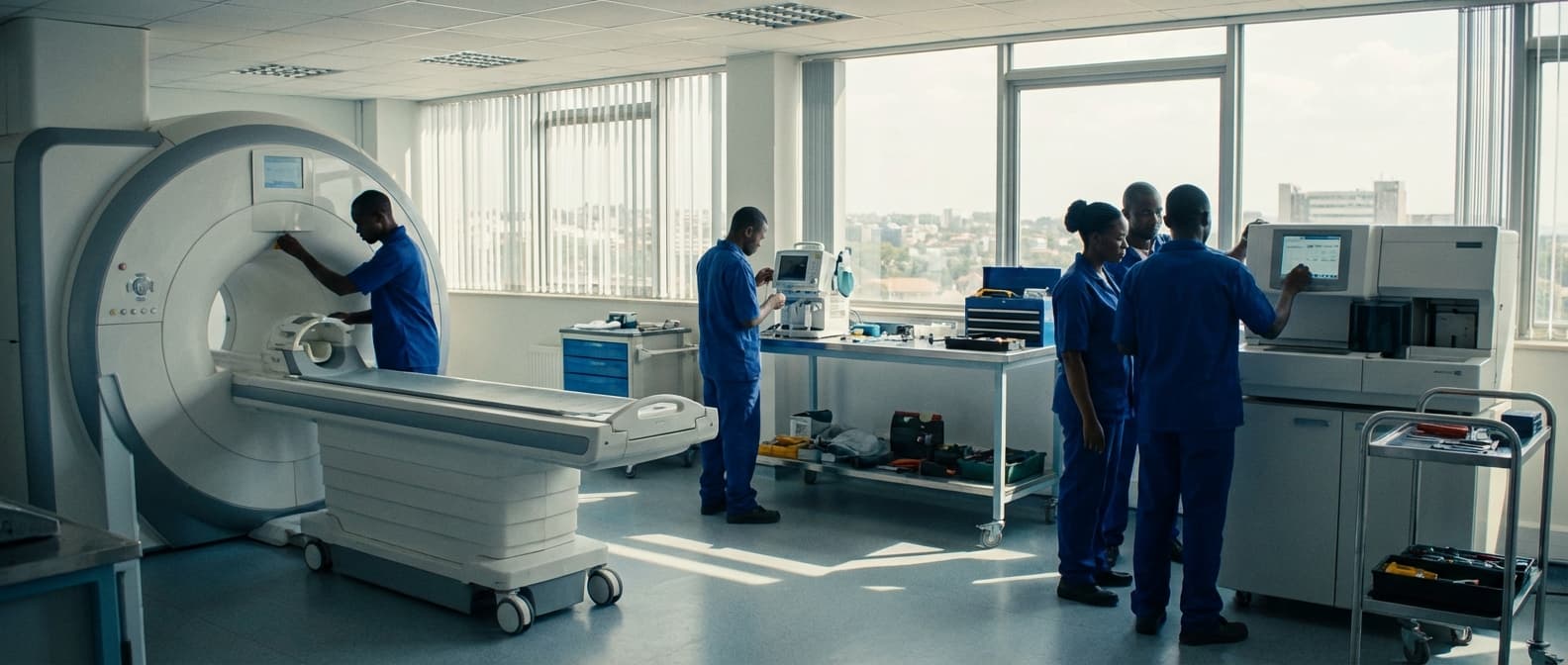
Comprehensive Maintenance Contract (CMC) Management Service (Parts & Labor) in Tanzania
Engineering Excellence & Technical Support
Comprehensive Maintenance Contract (CMC) Management Service (Parts & Labor) High-standard technical execution following OEM protocols and local regulatory frameworks.
Integrated Parts & Labor Optimization
Our CMC service seamlessly blends proactive parts procurement with skilled labor deployment. We analyze historical data and operational needs to ensure the right parts are available when and where skilled technicians are scheduled, minimizing downtime and maximizing efficiency for your Tanzanian operations.
Predictive Maintenance for Peak Uptime
Leveraging advanced analytics and IoT integration, our CMC identifies potential equipment failures before they occur. This allows for scheduled interventions, ensuring critical machinery in Tanzania operates at peak performance and drastically reducing unplanned downtime and associated labor costs.
Transparent Compliance & Performance Reporting
Gain full visibility into your maintenance activities. Our CMC provides detailed, real-time reports on parts used, labor hours, costs, and performance metrics, all compliant with Tanzanian regulations. This transparency empowers informed decision-making and demonstrates a strong return on your maintenance investment.
What Is Comprehensive Maintenance Contract (Cmc) Management Service (Parts & Labor) In Tanzania?
Comprehensive Maintenance Contract (CMC) Management Service (Parts & Labor) in Tanzania refers to a contractual agreement where a service provider assumes full responsibility for the planned and unplanned maintenance of a client's assets. This encompasses both the supply of necessary spare parts and the provision of skilled labor for repairs, upkeep, and preventive measures. The objective is to ensure optimal operational efficiency, minimize downtime, and extend the lifespan of the covered equipment or facility through proactive and reactive maintenance strategies.
| Who Needs It? | Typical Use Cases in Tanzania | |||||||
|---|---|---|---|---|---|---|---|---|
| Manufacturing Sector: Companies operating production lines, machinery, and industrial equipment. | Healthcare Institutions: Hospitals and clinics requiring reliable operation of medical equipment (e.g., MRI machines, X-ray units, laboratory analyzers). | Telecommunications Providers: Maintaining critical network infrastructure, base stations, and data centers. | Energy & Utilities: Managing power generation plants, transmission infrastructure, and water treatment facilities. | Transportation & Logistics: Maintaining fleets of vehicles, specialized transport equipment, and warehousing systems. | Construction & Mining: Ensuring the operational readiness of heavy machinery, earthmoving equipment, and processing plants. | Large Commercial Properties: Management of HVAC systems, elevators, electrical distribution, and plumbing in office buildings, shopping malls, and hotels. | Government & Public Sector: Maintaining infrastructure, public transport, and essential service equipment. | |
| Machinery Downtime Reduction: Minimizing production stoppages due to equipment failure. | Extended Equipment Lifespan: Proactive maintenance prevents premature wear and tear, prolonging asset utility. | Predictable Operating Costs: Fixed contract terms provide budget certainty for maintenance expenses. | Access to Specialized Expertise: Leveraging the contractor's skilled technicians and specialized tools. | Improved Operational Efficiency: Ensuring equipment performs at optimal levels. | Reduced Capital Expenditure on Maintenance Staff: Outsourcing maintenance allows companies to focus on core competencies. | Compliance with Regulatory Standards: Ensuring equipment meets industry and safety regulations. | Risk Mitigation: Transferring the risk of unexpected repair costs and downtime to the service provider. | Optimized Spare Parts Inventory: Efficient management of critical spare parts to avoid shortages and excess stock. |
Key Components of CMC Management Service (Parts & Labor)
- Preventive Maintenance (PM): Scheduled inspections, cleaning, lubrication, adjustments, and part replacements to avert potential failures.
- Corrective Maintenance (CM): Unscheduled repairs to address emergent equipment malfunctions and breakdowns.
- Spare Parts Management: Procurement, stocking, inventory control, and timely delivery of genuine or equivalent spare parts.
- Labor Provision: Deployment of qualified technicians, engineers, and support staff with the requisite expertise.
- Technical Support & Troubleshooting: Remote and on-site assistance to diagnose and resolve technical issues.
- Performance Monitoring & Reporting: Tracking equipment performance, maintenance activities, and providing detailed reports to the client.
- Emergency Response: Availability of resources for urgent repairs and critical incident management.
- Warranty Management: Handling of manufacturer warranties for new or replaced components.
- Cost Control & Budgeting: Establishing predictable maintenance expenditures and optimizing resource allocation.
Who Needs Comprehensive Maintenance Contract (Cmc) Management Service (Parts & Labor) In Tanzania?
In Tanzania, a Comprehensive Maintenance Contract (CMC) Management Service for Parts & Labor is crucial for organizations that rely heavily on operational machinery, equipment, and infrastructure. These services ensure optimal performance, minimize downtime, extend asset lifespan, and manage costs effectively by proactively addressing maintenance needs. This is particularly vital in sectors with critical operations or where specialized technical expertise is scarce.
| Target Customer Type | Typical Departments/Functions Involved | Why CMC Management Service is Crucial |
|---|---|---|
| Manufacturing & Industrial Plants | Operations Department, Engineering Department, Maintenance Department, Production Management | Ensures continuous production, prevents costly breakdowns of heavy machinery, maintains quality standards, and optimizes operational efficiency. |
| Healthcare Facilities (Hospitals & Clinics) | Biomedical Engineering Department, Facility Management, Hospital Administration, IT Department (for medical equipment) | Guarantees the reliability of critical medical equipment (e.g., MRI machines, ventilators), ensures patient safety, meets regulatory standards, and minimizes service interruptions. |
| Telecommunication Companies | Network Operations Center (NOC), Field Operations, Technical Support, Infrastructure Management | Maintains the uptime of network infrastructure (base stations, data centers), ensures uninterrupted service delivery to customers, and manages the lifecycle of complex network equipment. |
| Power Generation & Utilities | Operations & Maintenance Department, Engineering Department, Plant Management, Asset Management | Ensures the continuous and reliable supply of electricity/water, manages the maintenance of complex power generation units or water treatment plants, and prevents catastrophic failures. |
| Mining & Extractive Industries | Operations Management, Maintenance & Reliability Department, Engineering, Safety & Compliance | Keeps heavy-duty mining equipment (excavators, crushers, drills) operational, minimizes downtime in remote locations, ensures safety, and adheres to strict operational requirements. |
| Large Commercial Buildings & Real Estate | Facility Management, Building Operations, Property Management, Engineering Services | Maintains critical building systems (HVAC, elevators, electrical systems, fire safety), ensures tenant comfort and safety, and manages the lifespan of building infrastructure. |
| Government & Public Sector Agencies (e.g., transportation, infrastructure projects) | Public Works Departments, Transportation Authorities, IT Departments, Project Management Offices | Ensures the functionality of public infrastructure, transportation systems (e.g., vehicles, rail), and government IT systems, providing essential services to citizens. |
| Oil & Gas Sector | Operations & Maintenance, Process Engineering, Asset Integrity, Safety Departments | Manages the maintenance of specialized equipment in upstream, midstream, and downstream operations, ensuring safety, environmental compliance, and continuous production. |
Who Needs CMC Management Service (Parts & Labor) in Tanzania?
- Organizations with critical and complex machinery/equipment.
- Businesses aiming to reduce operational downtime and associated losses.
- Companies seeking to control maintenance budgets and avoid unexpected repair costs.
- Entities that lack in-house specialized technical expertise for maintenance.
- Organizations operating in remote areas where access to spare parts and skilled technicians is challenging.
- Sectors with stringent regulatory compliance requirements for equipment upkeep.
- Businesses looking to maximize the return on investment (ROI) of their capital assets.
Comprehensive Maintenance Contract (Cmc) Management Service (Parts & Labor) Process In Tanzania
This document outlines the Comprehensive Maintenance Contract (CMC) Management Service (Parts & Labor) process in Tanzania. It details the workflow from the initial customer inquiry to the successful execution of the maintenance services, ensuring optimal operational efficiency and longevity of equipment for our clients.
| Stage | Description | Key Activities | Responsible Party | Deliverables/Outcomes |
|---|---|---|---|---|
| The process begins when a potential client expresses interest in CMC services for their equipment in Tanzania. | Receive and log inquiry, understand client's needs, provide preliminary information about CMC services, schedule initial meeting. | Sales/Business Development Team, Client | Inquiry logged, understanding of client needs, scheduled meeting. |
| A thorough assessment of the client's equipment and operational environment to understand maintenance requirements. | On-site visit, detailed inspection of equipment, review of service history, identification of potential risks, documentation of equipment inventory. | Technical Team/Engineers, Client Representative | Detailed equipment assessment report, identification of maintenance needs, baseline data collection. |
| Based on the assessment, a tailored CMC proposal is developed and discussed with the client. | Develop customized proposal (scope of work, SLAs, pricing, exclusions), present proposal to client, negotiate terms and conditions, address client queries. | Sales/Business Development Team, Technical Team, Client | Formal CMC proposal, agreed-upon scope of work, Service Level Agreements (SLAs), pricing structure. |
| Formalizing the partnership and preparing for service delivery. | Finalize contract terms, legal review and signing of the CMC contract, client onboarding, establishment of communication channels, system setup. | Legal Department, Management, Client, Operations Team | Signed CMC contract, established client account, initiated communication protocols. |
| Proactive maintenance to prevent breakdowns and ensure optimal equipment performance. | Develop preventive maintenance schedule (based on manufacturer recommendations & equipment usage), notify client, deploy technicians, perform scheduled checks and servicing, document completed tasks. | Operations Team, Technical Team, Client | Scheduled maintenance completed, equipment performance optimized, reduced risk of breakdowns. |
| Prompt and efficient response to equipment failures or performance issues. | Receive breakdown report (via phone, email, or portal), diagnose issue, dispatch technician (with necessary parts), repair equipment, test functionality, document repair actions. | Customer Support/Helpdesk, Technical Team, Client | Equipment repaired and restored to operational status, minimal downtime, documented repair report. |
| Ensuring the availability of genuine and appropriate spare parts for both preventive and corrective maintenance. | Maintain inventory of commonly used parts, identify and procure required parts (local or international), manage stock levels, track part usage, ensure quality of procured parts. | Procurement Department, Logistics Team, Technical Team | Adequate spare parts inventory, timely procurement of needed parts, reduced lead times for repairs. |
| Ensuring the right technicians with the appropriate skills are available for all maintenance activities. | Maintain a skilled technical team (various specializations), schedule technician availability, provide ongoing training and development, ensure adherence to safety protocols. | Operations Team, HR Department, Technical Team | Qualified technicians deployed as needed, efficient use of labor resources, adherence to safety standards. |
| Providing clients with regular updates on maintenance activities and equipment performance. | Generate regular reports (monthly/quarterly) on maintenance performed (preventive & corrective), equipment uptime, parts usage, technician performance, key performance indicators (KPIs), present reports to client. | Operations Team, Management, Client | Comprehensive maintenance reports, performance dashboards, informed client decision-making. |
| Accurate and timely billing for services rendered. | Generate invoices based on contract terms (e.g., monthly fees, parts used, labor hours), submit invoices to client, follow up on payments, reconcile payments. | Finance Department, Accounts Receivable, Client | Accurate invoices issued, timely payments received, financial records maintained. |
| Ensuring continued service and client satisfaction through contract review and renewal. | Conduct periodic contract reviews, gather client feedback, assess performance against SLAs, propose renewal terms, negotiate updated contracts. | Sales/Business Development Team, Management, Client | Contract renewal, updated service agreements, continued client relationship. |
Key Stages in the CMC Management Process
- Inquiry & Initial Consultation
- Site Assessment & Equipment Evaluation
- Proposal & Contract Negotiation
- Contract Agreement & Onboarding
- Preventive Maintenance Scheduling & Execution
- Corrective Maintenance (Breakdown) Response
- Parts Procurement & Inventory Management
- Labor Deployment & Skill Management
- Reporting & Performance Monitoring
- Invoice & Payment Processing
- Contract Renewal & Review
Comprehensive Maintenance Contract (Cmc) Management Service (Parts & Labor) Cost In Tanzania
Comprehensive Maintenance Contract (CMC) services in Tanzania, encompassing both parts and labor, are crucial for ensuring the optimal performance and longevity of various equipment. The cost of these contracts can vary significantly based on a multitude of factors, making it challenging to provide a single definitive price. These factors influence the overall risk, complexity, and resource allocation required by the service provider.
| Equipment Category | Estimated Annual CMC Cost Range (TZS) | Typical Coverage Scope |
|---|---|---|
| Small Office Equipment (Printers, Copiers) | 500,000 - 1,500,000 | Preventive maintenance, minor repairs, key parts replacement |
| Standard IT Infrastructure (Servers, Desktops, Laptops) | 750,000 - 3,000,000 per unit/server | Preventive maintenance, remote support, on-site repairs for critical failures, some parts |
| Basic Medical Equipment (e.g., BP monitors, Stethoscopes) | 300,000 - 1,000,000 per unit | Calibration, basic servicing, minor part replacements |
| Mid-Range Medical Equipment (e.g., Ultrasound machines, basic lab equipment) | 2,000,000 - 10,000,000+ per unit | Preventive maintenance, scheduled servicing, critical part replacement, software updates |
| Industrial Machinery (e.g., Generators, Manufacturing equipment) | 5,000,000 - 50,000,000+ annually | Comprehensive preventive maintenance, breakdown repairs, major component overhaul, parts, labor, potential 24/7 support |
| Vehicles (Fleet Management/Maintenance) | 1,000,000 - 5,000,000+ per vehicle annually | Scheduled servicing, repairs, replacement of wear parts, roadside assistance |
| Specialized Scientific Instruments | 3,000,000 - 20,000,000+ per unit | Highly specialized maintenance, calibration, parts, expert labor |
Key Pricing Factors for CMC Services in Tanzania:
- Type and Complexity of Equipment: More sophisticated and specialized machinery (e.g., medical equipment, industrial machinery, advanced IT infrastructure) will naturally incur higher maintenance costs due to specialized technicians, proprietary parts, and complex diagnostic procedures.
- Age and Condition of Equipment: Older or poorly maintained equipment may require more frequent repairs, replacement parts, and extensive labor, thus increasing the overall contract cost.
- Scope of Coverage: Contracts can range from routine preventive maintenance to full-coverage with unlimited breakdown repairs. The more comprehensive the coverage, the higher the price.
- Frequency of Maintenance: The agreed-upon schedule for preventive maintenance (e.g., monthly, quarterly, annually) directly impacts the labor hours and potential parts usage included in the contract.
- Response Time and Availability: Contracts that guarantee rapid response times (e.g., within 24 hours) or 24/7 availability for emergency repairs will command a premium due to the need for on-call technicians and potentially standby parts.
- Geographic Location: Maintenance services in remote or less accessible areas of Tanzania may incur higher costs due to travel expenses, accommodation for technicians, and logistical challenges.
- Value of Equipment: The replacement value of the equipment often serves as a baseline for calculating the contract price. Higher-value assets represent a greater financial risk for the service provider.
- Brand and Manufacturer Agreements: Contracts with original equipment manufacturers (OEMs) or authorized service providers might be more expensive but often offer higher quality assurance and access to genuine parts.
- Included Parts vs. Exclusions: Clearly defining what parts are included in the contract is vital. Contracts that cover all wear-and-tear parts and major component replacements will be priced higher than those with limited part inclusion.
- Service Provider Reputation and Expertise: Established and reputable service providers with a proven track record and highly skilled technicians may charge more, reflecting their expertise and reliability.
- Contract Duration: Longer-term contracts might offer slight discounts compared to shorter-term agreements, as they provide more predictable revenue for the service provider.
- Downtime Penalties/Service Level Agreements (SLAs): Contracts with stringent uptime guarantees and penalties for non-compliance will factor these potential costs into their pricing.
- Training and Skill Requirements: The level of specialized training and certifications required for technicians to service specific equipment will influence labor costs.
- Consumables and Wear Parts: The frequency of replacement for consumables (e.g., filters, lubricants) and wear parts will be factored into the contract cost.
Affordable Comprehensive Maintenance Contract (Cmc) Management Service (Parts & Labor) Options
Our Affordable Comprehensive Maintenance Contract (CMC) Management Service offers a streamlined approach to managing your equipment maintenance needs, ensuring optimal uptime and longevity while controlling costs. We provide flexible value bundles and expert cost-saving strategies, tailored to your specific operational requirements.
| Value Bundle | Inclusions | Target Audience | Key Cost-Saving Strategies |
|---|---|---|---|
| Basic Care | Scheduled Preventive Maintenance, On-Demand Repair Calls (Labor Included), Basic Parts Sourcing | Small to medium-sized businesses with standard equipment needs. | Bulk purchasing of common parts, leveraging manufacturer discounts, minimizing travel by scheduling geographically clustered service calls. |
| Standard Plus | All Basic Care features + Extended Warranty Monitoring, Priority Response Times, Minor Part Replacements (e.g., filters, seals) | Growing businesses with critical operational equipment. | Predictive maintenance analysis to anticipate part failures, negotiated labor rates, proactive identification of potential failures for scheduled repairs. |
| Premium Comprehensive | All Standard Plus features + Major Part Replacements (e.g., motors, pumps), Remote Monitoring Capabilities, Dedicated On-Site Technician (Part-time/Full-time Option), Comprehensive Parts Inventory Management | Large enterprises with high-value, mission-critical assets and stringent uptime requirements. | Optimized inventory management to reduce carrying costs, long-term parts contracts with guaranteed pricing, reducing downtime through immediate part availability, leveraging technology for remote diagnostics to minimize site visits. |
Key Features and Benefits
- Proactive Maintenance Scheduling: Prevents unexpected breakdowns and costly emergency repairs.
- Dedicated Account Management: A single point of contact for all your CMC needs.
- Transparent Pricing: Clear and upfront costs with no hidden fees.
- Access to Certified Technicians: Experienced professionals ensuring quality service.
- Parts Inventory Management: Optimized stock levels to reduce lead times and material costs.
- Warranty Management: Tracking and leveraging manufacturer warranties effectively.
- Performance Reporting: Data-driven insights into equipment health and maintenance expenditure.
- Customizable Service Level Agreements (SLAs): Tailored response times and uptime guarantees.
Verified Providers In Tanzania
In Tanzania's evolving healthcare landscape, identifying reliable and high-quality providers is paramount for individuals and organizations seeking effective health solutions. This is where Franance Health emerges as a distinguished and trustworthy entity. This document outlines the key credentials and compelling reasons why Franance Health stands out as the best choice for your healthcare needs in Tanzania.
| Credential/Aspect | Franance Health's Commitment | Why it Matters for You |
|---|---|---|
| Regulatory Compliance | Strict adherence to TMDA and national health laws. | Guarantees safe, legal, and ethical healthcare services. |
| Professional Expertise | Employing licensed, certified, and continuously trained medical staff. | Ensures you receive care from skilled and knowledgeable practitioners. |
| Technological Advancement | Utilizing modern medical equipment and updated facilities. | Leads to accurate diagnostics and effective, cutting-edge treatments. |
| Patient Rights & Care | Prioritizing privacy, informed consent, and empathetic treatment. | Fosters trust and ensures your needs and comfort are at the forefront. |
| Service Breadth | Offering a wide range of medical services under one roof. | Provides convenient and accessible healthcare for various needs. |
| Social Responsibility | Engaging in community health outreach and awareness. | Reflects a commitment to the broader health of Tanzania. |
Franance Health's Core Credentials & Why They Matter
- {"title":"Accreditation and Regulatory Compliance","description":"Franance Health rigorously adheres to all national and international healthcare standards and regulations. This includes compliance with the Tanzania Medicines and Medical Devices Authority (TMDA) and other relevant governing bodies. Accreditation signifies a commitment to quality, safety, and ethical practices, ensuring patients receive care that meets stringent benchmarks."}
- {"title":"Experienced and Certified Healthcare Professionals","description":"The backbone of Franance Health is its team of highly qualified and experienced medical practitioners, nurses, specialists, and support staff. All professionals undergo thorough background checks, hold valid certifications and licenses, and participate in continuous professional development. This ensures that every patient is attended to by competent and up-to-date experts."}
- {"title":"State-of-the-Art Facilities and Technology","description":"Franance Health invests in modern medical equipment and maintains advanced facilities designed to provide a comfortable and efficient healthcare experience. From diagnostic tools to treatment technologies, their commitment to utilizing cutting-edge resources directly translates to more accurate diagnoses and effective treatments for patients."}
- {"title":"Patient-Centric Approach and Ethical Practices","description":"At the heart of Franance Health's philosophy is an unwavering dedication to patient well-being and satisfaction. They prioritize clear communication, informed consent, patient privacy, and empathetic care. Their ethical framework ensures that all decisions are made in the best interest of the patient, fostering trust and long-term relationships."}
- {"title":"Comprehensive Service Offerings","description":"Franance Health provides a wide spectrum of healthcare services, catering to diverse needs. This includes primary care, specialist consultations, diagnostic services, preventative health programs, and potentially specialized treatments depending on their scope. This comprehensiveness simplifies healthcare access for individuals and makes them a one-stop solution."}
- {"title":"Community Engagement and Public Health Initiatives","description":"Beyond direct patient care, Franance Health actively participates in community health programs and public health awareness campaigns. This commitment demonstrates their dedication to improving the overall health and well-being of the Tanzanian population and positions them as a responsible corporate citizen."}
Scope Of Work For Comprehensive Maintenance Contract (Cmc) Management Service (Parts & Labor)
This Scope of Work (SOW) outlines the requirements for a Comprehensive Maintenance Contract (CMC) Management Service, encompassing both Parts and Labor. The service provider will be responsible for the end-to-end management of all aspects of the CMC, ensuring optimal performance, availability, and longevity of the contracted equipment/systems. This includes proactive maintenance, reactive repairs, spare parts management, vendor coordination, reporting, and performance analysis. The objective is to minimize downtime, reduce operational costs, and ensure adherence to all contractual obligations and technical standards.
| Technical Deliverable/Component | Standard Specification/Description | Key Performance Indicators (KPIs) | |
|---|---|---|---|
| Preventive Maintenance Schedule | Development and adherence to a detailed, manufacturer-recommended, or client-approved PM schedule for each asset. Includes defined tasks, frequency, and required resources. Schedule to be provided in digital format (e.g., spreadsheet, CMMS module). | PM Completion Rate (>95%) | Adherence to PM Schedule (within +/- 10% of planned date) |
| Corrective Maintenance Response Time | Defined timeframes for acknowledging and initiating corrective actions upon notification of a breakdown. Response times will vary based on criticality of the asset (e.g., Tier 1: 1-hour acknowledgement, 4-hour on-site; Tier 2: 2-hour acknowledgement, 8-hour on-site). | Mean Time To Respond (MTTR) for critical assets (< 2 hours) | Mean Time To Repair (MTTR) for critical assets (< 8 hours) |
| Spare Parts Inventory Management | Establishment and maintenance of an optimal spare parts inventory, balancing availability with holding costs. Includes identification of critical spares, stock level optimization, procurement, tracking, and quality assurance of all parts. | Spare Parts Availability for Critical Spares (>98%) | Inventory Turnover Rate within target range (as defined in contract) |
| Technical Troubleshooting and Diagnostics | Provision of qualified technical personnel to diagnose and resolve equipment issues. Utilization of advanced diagnostic tools and techniques. Documentation of all troubleshooting steps and findings. | First Time Fix Rate (>85%) | Resolution Rate for complex issues (as defined in contract) |
| Service Reports | Regular (e.g., monthly, quarterly) comprehensive reports detailing all maintenance activities performed, parts consumed, labor hours, asset status, and any deviations from the plan. Reports to include trend analysis and recommendations. | Timeliness of Report Submission (within 5 business days of period end) | Accuracy and Completeness of Reports (100%) |
| Vendor Performance Evaluation | Regular assessment of sub-contractors and third-party service providers against agreed-upon SLAs. Includes performance reviews, issue resolution, and feedback mechanisms. | Vendor SLA Adherence (>95%) | Number of vendor escalations (minimal) |
| Asset Lifecycle Management Support | Providing input and recommendations regarding asset upgrades, replacements, and end-of-life planning based on maintenance history, performance data, and technological advancements. | Number of proactive upgrade/replacement recommendations submitted per annum (as per contract) | Cost-effectiveness of recommendations (as measured by ROI) |
| Calibration and Testing | Ensuring all measurement and test equipment, as well as critical operational systems, are regularly calibrated and tested according to relevant standards and manufacturer specifications. Issuance of calibration certificates. | Calibration Compliance Rate (>99%) | Timeliness of Calibration (within +/- 10% of due date) |
| Warranty Management | Tracking and managing manufacturer warranties for all equipment. Coordinating warranty claims and repairs to minimize out-of-pocket expenses. | Warranty Claim Success Rate (>95%) | Reduction in out-of-warranty repair costs |
Key Responsibilities and Service Components
- Contract Administration and Management
- Preventive Maintenance (PM) Planning and Execution
- Corrective Maintenance (CM) / Breakdown Maintenance
- Spare Parts Management
- Vendor Management and Coordination
- Technical Support and Troubleshooting
- Reporting and Performance Monitoring
- Compliance and Documentation
- Continuous Improvement
Service Level Agreement For Comprehensive Maintenance Contract (Cmc) Management Service (Parts & Labor)
This Service Level Agreement (SLA) outlines the response times and uptime guarantees for the Comprehensive Maintenance Contract (CMC) Management Service, encompassing both Parts and Labor. It is designed to ensure timely and effective resolution of issues, minimizing downtime and maximizing the operational efficiency of the managed assets.
| Service Level | Response Time (Business Hours) | Uptime Guarantee (Monthly) | Definition/Details |
|---|---|---|---|
| Critical Incident (System Down) | 1 Hour | 99.9% | Complete system failure impacting core business operations. Immediate remote or on-site intervention required to restore functionality. |
| High Priority Incident (Major Performance Degradation) | 2 Business Hours | 99.5% | Significant impact on system performance or functionality, hindering a substantial portion of operations. Requires prompt investigation and repair. |
| Medium Priority Incident (Minor Performance Issues) | 4 Business Hours | N/A | Minor functional issues or performance slowdowns that do not severely impede operations but require attention. Resolution within agreed upon timeframe. |
| Low Priority Incident (Information Request/Preventative Task) | 8 Business Hours | N/A | Routine inquiries, requests for information, or scheduling of preventative maintenance tasks. Handled during standard business hours. |
Scope of Service
- Proactive monitoring and scheduled preventative maintenance.
- Reactive maintenance and repair services for all covered assets.
- Management and procurement of all necessary spare parts.
- On-site and remote technical support.
- Coordination and management of third-party vendor services when required.
Frequently Asked Questions

Ready when you are
Let's scope your Comprehensive Maintenance Contract (CMC) Management Service (Parts & Labor) in Tanzania project in Tanzania.

Scaling healthcare logistics and technical systems across the entire continent.