
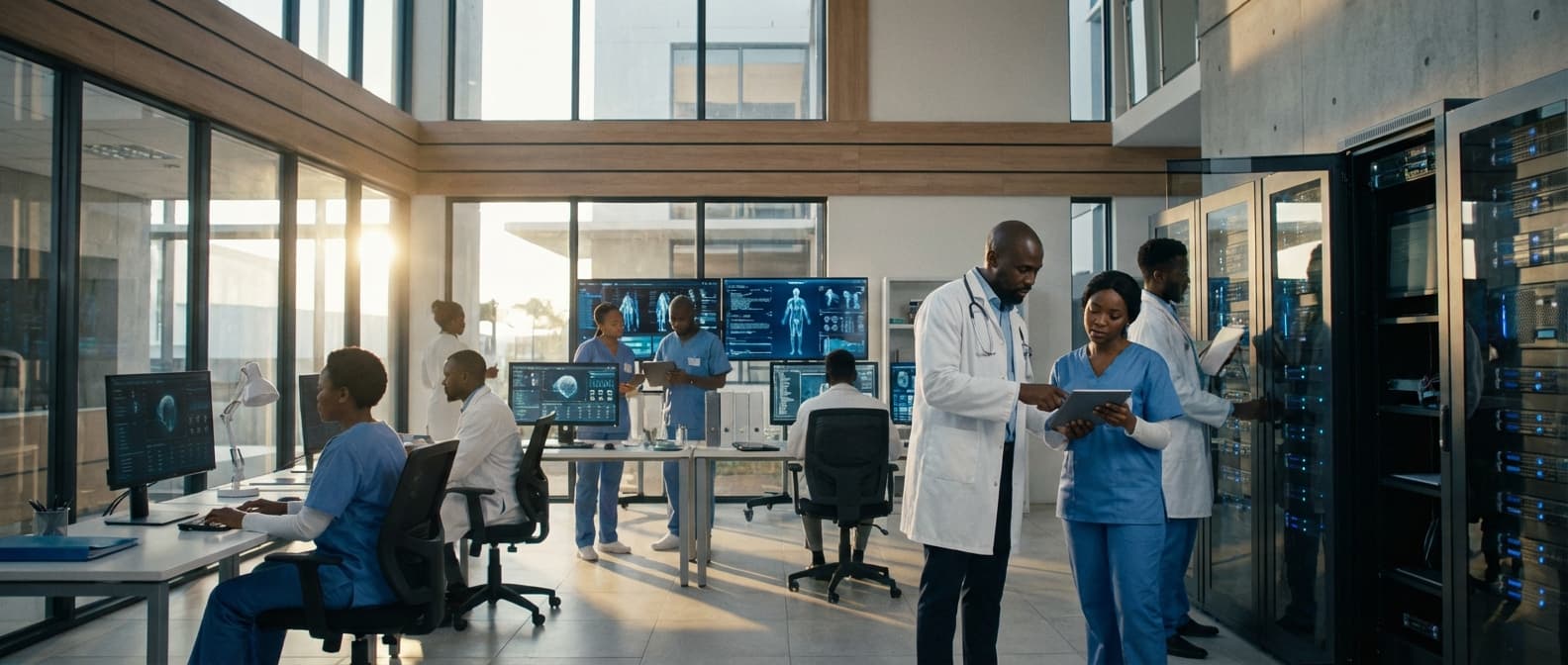
Tele-Radiology in Tanzania
Engineering Excellence & Technical Support
24/7 access to certified radiologists providing rapid, accurate remote interpretation of diagnostic imaging studies. High-standard technical execution following OEM protocols and local regulatory frameworks.
Expanded Access to Specialized Radiology
Tele-radiology bridges geographical barriers, enabling remote healthcare facilities in Tanzania to access expert radiologists for diagnostic interpretation, significantly improving the quality and timeliness of patient care, especially in underserved rural areas.
Rapid Diagnostic Turnaround Times
By leveraging digital imaging and secure networks, tele-radiology platforms facilitate the swift transmission of medical images. This dramatically reduces report turnaround times, allowing for faster clinical decision-making and initiation of appropriate treatment for critical conditions.
Knowledge Transfer & Capacity Building
Tele-radiology empowers local medical professionals in Tanzania through real-time case consultations and educational feedback from experienced specialists. This fosters continuous learning and strengthens the diagnostic capabilities of the national healthcare workforce.
What Is Tele-radiology In Tanzania?
Tele-radiology in Tanzania refers to the practice of transmitting radiological images and patient data from one geographical location to another for the purpose of expert interpretation and reporting. This service leverages digital imaging technologies and telecommunications infrastructure to overcome geographical barriers and address the shortage of specialized radiologists, particularly in remote and underserved areas of the country. It enables healthcare providers in primary or secondary healthcare facilities to access the expertise of radiologists situated elsewhere, often in urban centers or even internationally, to aid in diagnosis and patient management. The core of tele-radiology involves the acquisition of medical images (e.g., X-rays, CT scans, MRIs, ultrasounds) at a local facility, their secure transmission to a remote reading center, and subsequent interpretation by a qualified radiologist who generates a diagnostic report. This report is then transmitted back to the originating facility, facilitating timely clinical decision-making.
| Who Needs Tele-Radiology in Tanzania? | Typical Use Cases | |||||
|---|---|---|---|---|---|---|
| Hospitals and Health Centers in Remote or Underserved Areas: Facilities located far from major urban centers where specialist radiologists are scarce or non-existent. | Emergency Department Consultations: Providing rapid interpretation of critical imaging studies (e.g., trauma, stroke, acute abdomen) to expedite patient care and decision-making, especially when no radiologist is immediately available. | Primary Healthcare Facilities: Enabling access to diagnostic imaging services that would otherwise be unavailable, improving the diagnostic capabilities of general practitioners. | Screening Programs: Facilitating large-scale screening for conditions like tuberculosis (chest X-rays) or diabetic retinopathy (fundus images) where efficient interpretation is crucial. | Specialty Clinics: Supporting specialized medical departments (e.g., oncology, cardiology, neurology) that require specific radiological interpretations. | Capacity Building and Training: Enabling remote supervision and training of local radiographers and junior radiologists. | Tertiary Care Hospitals with High Workload: Augmenting the capacity of busy radiology departments by outsourcing overflow or subspecialty interpretations. |
Key Components and Stakeholders of Tele-Radiology in Tanzania
- Image Acquisition Systems: Digital X-ray machines, CT scanners, MRI scanners, ultrasound machines equipped with Picture Archiving and Communication Systems (PACS) for digital image capture and storage.
- Telecommunications Infrastructure: Reliable internet connectivity (broadband, VSAT) for secure and efficient transmission of large medical image files.
- PACS/RIS Integration: Integration of PACS (Picture Archiving and Communication System) for image management and RIS (Radiology Information System) for workflow management and reporting.
- Teleradiology Platforms: Software solutions enabling secure image transfer, viewer capabilities, communication tools, and report generation.
- Remote Radiologists: Board-certified or qualified radiologists with expertise in various subspecialties, accessible remotely.
- Local Healthcare Facilities: Hospitals, clinics, and health centers in Tanzania that perform radiological examinations but lack on-site radiology expertise.
- Patients: Individuals requiring diagnostic imaging for various medical conditions.
Who Needs Tele-radiology In Tanzania?
Tele-radiology offers a transformative solution for enhancing diagnostic imaging services in Tanzania, addressing critical gaps in specialist availability and accessibility. The core need stems from a severe shortage of qualified radiologists, particularly outside of major urban centers. This shortage leads to diagnostic delays, misdiagnoses, and a disproportionate burden on existing medical professionals. Tele-radiology leverages technology to connect local healthcare facilities with remote radiologists, enabling timely and accurate interpretation of medical images, thereby improving patient outcomes and strengthening the overall healthcare infrastructure. It is especially vital for remote and underserved regions where on-site radiology services are non-existent or severely limited.
| Department/Service Area | Primary Need Addressed by Tele-Radiology | Specific Imaging Modalities Benefited |
|---|---|---|
| Emergency Department | Rapid interpretation of critical imaging for trauma, stroke, and other acute conditions, reducing diagnostic delays and improving time-to-treatment. | X-ray, CT scans, Ultrasound |
| Orthopedics | Accurate diagnosis of fractures, dislocations, and other musculoskeletal injuries, especially in areas with limited orthopedic specialists. | X-ray, CT scans |
| Internal Medicine/General Medicine | Diagnosis and management of a wide range of conditions affecting the chest, abdomen, and other organs, supporting primary care physicians. | X-ray, CT scans, Ultrasound, MRI (if available locally) |
| Pediatrics | Specialized interpretation of pediatric imaging, crucial for diagnosing congenital abnormalities, infections, and injuries in children. | X-ray, Ultrasound, CT scans |
| Maternal and Child Health (Obstetrics & Gynecology) | Remote interpretation of obstetric ultrasounds for antenatal care, fetal well-being, and diagnosis of gynecological conditions. | Ultrasound |
| Oncology | Monitoring treatment response, staging of cancers, and early detection of recurrence through consistent and expert interpretation of scans. | CT scans, MRI, PET scans (if accessible) |
| Infectious Diseases | Diagnosis and monitoring of infectious conditions such as tuberculosis (chest X-rays) and pneumonia, especially prevalent in resource-limited settings. | X-ray, CT scans |
| Rehabilitation Services | Assessment of progress and identification of complications post-surgery or injury, aiding in effective rehabilitation planning. | X-ray, CT scans |
Target Customers and Departments for Tele-Radiology in Tanzania
- {"title":"Public Healthcare Facilities","description":"Government-run hospitals and health centers, particularly those located in rural and remote areas, often lack the resources and specialist personnel for in-house radiology services. Tele-radiology can bridge this gap, providing essential diagnostic support."}
- {"title":"Private Hospitals and Clinics","description":"While some private facilities may have basic imaging equipment, they too can benefit from tele-radiology to access specialized interpretations, especially for complex cases or during off-hours, improving their service offering and competitiveness."}
- {"title":"District and Referral Hospitals","description":"These hospitals serve as crucial referral points for surrounding smaller clinics and health posts. Providing them with tele-radiology capabilities ensures that patients needing advanced imaging interpretation can receive it without the need for costly and time-consuming travel."}
- {"title":"Specialty Hospitals and Centers","description":"Hospitals focusing on specific areas like maternal and child health, oncology, or cardiology can leverage tele-radiology for highly specialized image interpretations relevant to their patient populations, enhancing the accuracy of diagnoses and treatment planning."}
- {"title":"Mobile Clinics and Outreach Programs","description":"For organizations conducting mobile health screenings or outreach programs in remote communities, tele-radiology can be integrated to provide immediate or near-immediate interpretations of X-rays and other imaging modalities, enabling on-the-spot diagnosis and management."}
Tele-radiology Process In Tanzania
Tele-radiology in Tanzania is a crucial initiative to bridge the gap in expert radiological interpretation, especially in remote and underserved areas. The process generally follows a structured workflow designed for efficiency and accuracy.
| Stage | Description | Key Actors Involved | Technology/Tools Used | Potential Challenges |
|---|---|---|---|---|
| Inquiry & Request Initiation | Identifying the need for radiological interpretation and formally requesting the service. | Referring physician/clinician, Local healthcare facility staff. | Phone calls, emails, EMR system (if integrated), Request forms. | Lack of awareness of tele-radiology services, Inconsistent referral protocols, Poor communication channels. |
| Image Acquisition & Data Transmission | Capturing diagnostic images and securely sending them to the tele-radiology provider. | Radiographer/Technician, IT support at local facility, Tele-radiology platform administrators. | X-ray, CT, MRI, Ultrasound machines; PACS, DICOM standards, Secure internet connection, VPNs, Cloud-based platforms. | Poor image quality, Insufficient clinical information, Unreliable internet connectivity, Data security concerns, Compatibility issues between systems. |
| Teleradiology Service Triage & Assignment | Organizing incoming requests and assigning them to the most suitable radiologist. | Tele-radiology service manager, Triage specialists, Administrative staff. | Tele-radiology platform, Workflow management software, Prioritization algorithms. | Workload imbalance among radiologists, Delays in assignment, Inadequate triage criteria. |
| Radiologist Interpretation & Report Generation | Expert review of images and clinical data, followed by creation of a diagnostic report. | Tanzanian or international licensed radiologist, Subspecialists (if needed). | High-resolution monitors, PACS viewer, Reporting software, Medical knowledge base. | Radiologist fatigue, Lack of subspecialty expertise for rare cases, Language barriers (if international), Potential for diagnostic errors. |
| Report Transmission & Feedback | Delivering the finalized report to the requesting facility and facilitating communication. | Tele-radiology platform, Referring physician, Radiologist (for clarification). | Secure reporting portal, EMR integration, Email (for notifications). | Delays in report delivery, Misinterpretation of reports, Lack of a robust feedback mechanism. |
| Billing & Administration | Managing the financial aspects and administrative records of the tele-radiology service. | Billing department, Administrative staff, Finance officers at both facilities. | Billing software, Accounting systems, Record management systems. | Complex billing structures, Payment delays, Difficulty in tracking services rendered. |
Tele-Radiology Workflow in Tanzania
- Inquiry & Request Initiation: The process begins when a healthcare facility (e.g., a district hospital, rural clinic) identifies a need for radiological interpretation for a patient. This could be due to a lack of on-site radiologists, limited availability of specialized equipment, or complex cases requiring expert opinion. The requesting facility initiates an inquiry, typically through a designated communication channel.
- Image Acquisition & Data Transmission: Medical imaging modalities (X-ray, CT, MRI, Ultrasound) are used to acquire the necessary diagnostic images at the local healthcare facility. These images, along with patient clinical history, demographic data, and any relevant reports, are then prepared for transmission. This often involves using Picture Archiving and Communication Systems (PACS) or other secure digital transfer protocols to send the data to the tele-radiology service provider.
- Teleradiology Service Triage & Assignment: Upon receipt, the tele-radiology platform or administrative team triages the incoming requests. Factors like urgency, modality, and specialization required are considered. The case is then assigned to an appropriate, qualified radiologist within the tele-radiology network.
- Radiologist Interpretation & Report Generation: The assigned radiologist reviews the images and clinical information provided. They perform a thorough diagnostic interpretation, applying their expertise. A detailed, structured report is then generated, outlining findings, diagnosis, and recommendations. This report is crucial for informing patient management.
- Report Transmission & Feedback: The finalized radiology report is transmitted back to the requesting healthcare facility through the secure tele-radiology platform. The report is accessible to the referring physician, who can then use it to guide further patient care, treatment decisions, and follow-up. Feedback mechanisms may exist for the referring physician to clarify points or provide additional clinical context.
- Billing & Administration: Throughout the process, administrative tasks such as patient registration, case tracking, and billing for the tele-radiology services are managed. This ensures proper record-keeping and financial reconciliation between the facilities and the tele-radiology provider.
Tele-radiology Cost In Tanzania
Tele-radiology, the practice of interpreting medical images remotely, is gaining traction in Tanzania as a way to improve access to specialized diagnostic services, especially in underserved areas. The cost of tele-radiology services in Tanzania is influenced by several key pricing factors, leading to a range of prices in the local currency, Tanzanian Shilling (TZS).
Key Pricing Factors:
- Type of Imaging Modality: Different imaging types (X-ray, CT scan, MRI, Ultrasound) have varying complexities and require different levels of expertise for interpretation. CT and MRI scans, being more intricate, generally incur higher tele-radiology costs.
- Complexity of the Case: Routine interpretations are typically less expensive than complex cases requiring in-depth analysis, comparison with prior studies, or detailed reporting.
- Radiologist's Specialization and Experience: Highly specialized radiologists (e.g., neuroradiologists, pediatric radiologists) or those with extensive experience may command higher fees.
- Turnaround Time (TAT): Urgent interpretations, often required for emergency cases, come at a premium due to the need for immediate attention and expedited reporting.
- Volume of Studies: Healthcare providers or facilities that contract for a high volume of tele-radiology interpretations might negotiate lower per-study rates.
- Technology and Platform Costs: The underlying tele-radiology platform, including software, hardware, and data transmission infrastructure, contributes to the overall cost structure.
- Provider's Location and Overhead: The operational costs of the tele-radiology provider, whether based locally or internationally, will influence their pricing.
- Insurance Coverage and Payment Models: The presence or absence of insurance, and the specific payment arrangements (e.g., fee-for-service, subscription models), can affect the out-of-pocket cost for patients or institutions.
| Service Type | Typical Interpretation Fee (TZS) | Notes |
|---|---|---|
| X-ray (Single View/Study) | 50,000 - 150,000 | Standard chest X-rays, bone X-rays. |
| X-ray (Multiple Views/Complex Study) | 100,000 - 250,000 | e.g., skeletal surveys, contrast studies. |
| CT Scan (Single Body Part/Routine) | 200,000 - 500,000 | e.g., head CT, abdominal CT without contrast. |
| CT Scan (Multiple Body Parts/Contrast/Complex) | 350,000 - 800,000+ | e.g., chest CT with contrast, complex trauma CT. |
| MRI Scan (Single Body Part/Routine) | 400,000 - 900,000 | e.g., brain MRI, knee MRI without contrast. |
| MRI Scan (Multiple Body Parts/Contrast/Complex) | 600,000 - 1,500,000+ | e.g., spine MRI with contrast, functional MRI. |
| Ultrasound (Routine Abdominal/Pelvic) | 100,000 - 250,000 | Standard diagnostic ultrasound. |
| Ultrasound (Specialized - e.g., Doppler, Fetal) | 150,000 - 400,000 | Requires more specialized expertise. |
| Mammography (Screening/Diagnostic) | 80,000 - 200,000 | Interpretation of mammogram images. |
| Urgent Interpretation Fee (Add-on) | 50,000 - 150,000 | Typically an additional fee for TAT of 1-4 hours. |
Common Tele-Radiology Services and Estimated Price Ranges in Tanzania (TZS)
- X-ray Interpretation
- CT Scan Interpretation
- MRI Scan Interpretation
- Ultrasound Interpretation
- Mammography Interpretation
Affordable Tele-radiology Options
Tele-radiology offers a cost-effective solution for healthcare providers by enabling remote access to expert radiology services. This not only expands access to care but also reduces overhead associated with in-house radiology departments. Understanding value bundles and implementing cost-saving strategies are crucial for maximizing the financial benefits of tele-radiology.
| Bundle Type | Included Services | Primary Cost-Saving Benefit |
|---|---|---|
| Per-Study/Per-Report | Individual radiologist interpretation of imaging studies and generation of reports. | Pay-as-you-go, ideal for variable caseloads; avoids fixed staffing costs. |
| Dedicated Sub-specialist Coverage | Access to specific sub-specialists (e.g., neuroradiology, musculoskeletal, pediatric radiology) on a dedicated basis or for defined volumes. | Reduces reliance on expensive in-house sub-specialists and ensures access to high-quality interpretations. |
| Critical Findings Notification | Immediate alerts and communication for urgent or critical findings, often with direct physician consultation. | Improves patient care outcomes and reduces potential for delayed treatment, indirectly saving costs associated with complications. |
| Volume-Based Pricing Tiers | Discounted rates for higher monthly or annual radiology interpretation volumes. | Incentivizes higher utilization, leading to lower per-study costs as volume increases. |
| Comprehensive 24/7 Coverage | Continuous availability of radiologists for all imaging interpretations, including off-hours and weekends. | Eliminates the need for expensive internal on-call radiologist schedules and ensures timely reads for all shifts. |
Key Tele-Radiology Value Bundles and Cost-Saving Strategies
- Value Bundles in Tele-Radiology: These are pre-defined service packages that combine multiple radiology services for a fixed price. They offer predictability in costs and can streamline billing and reporting processes.
- Common Value Bundle Components:
- Cost-Saving Strategies: Beyond bundles, several strategies can be employed to reduce overall tele-radiology expenses.
- Technology Optimization: Investing in efficient PACS (Picture Archiving and Communication System) and teleradiology platforms can reduce data transfer costs and improve workflow efficiency.
- Sub-specialty Coverage: Accessing sub-specialist radiologists remotely avoids the need to hire and maintain in-house specialists for rare or highly specialized reads.
- Overnight/Off-Hours Coverage: Tele-radiology providers can offer 24/7 coverage, reducing the need for expensive on-call staff and ensuring timely results for critical cases.
- Scalability: Tele-radiology services can be scaled up or down based on demand, avoiding the fixed costs of maintaining a larger in-house team during periods of lower volume.
Verified Providers In Tanzania
In the Tanzanian healthcare landscape, identifying truly reliable and high-quality medical providers is paramount for individuals seeking the best possible care. Franance Health stands out as a leading organization dedicated to vetting and credentialing healthcare facilities and professionals across Tanzania. Their rigorous verification process ensures that accredited institutions meet stringent standards for patient safety, medical expertise, infrastructure, and ethical practices. Choosing a Franance Health credentialed provider is not just about finding a doctor or hospital; it's about entrusting your well-being to an entity that has undergone comprehensive scrutiny and demonstrated a commitment to excellence. This commitment translates into tangible benefits for patients, including improved health outcomes, increased trust, and a more transparent healthcare experience. This document outlines the core principles behind Franance Health's credentialing and why their certified providers represent the most dependable choice for healthcare in Tanzania.
| Credentialing Aspect | Franance Health Verification Standard | Benefit for Patients |
|---|---|---|
| Medical Staff Qualifications | Verification of licenses, certifications, and ongoing professional development. | Access to highly skilled and knowledgeable doctors, nurses, and specialists. |
| Facility Infrastructure & Equipment | Assessment of cleanliness, safety, and availability of modern medical technology. | Access to well-maintained facilities and advanced diagnostic and treatment tools. |
| Patient Care & Safety | Evaluation of patient rights, privacy, infection control, and emergency preparedness. | A secure and respectful environment with a focus on minimizing risks and ensuring prompt care. |
| Ethical Practices & Governance | Review of ethical guidelines, transparency in billing, and effective management structures. | Trustworthy providers committed to fair practices and patient well-being. |
| Continuity of Care | Ensuring seamless transitions between different levels of care and specialties. | Integrated healthcare experience with coordinated treatment plans. |
Why Franance Health Credentials Matter
- Ensures adherence to international best practices in healthcare delivery.
- Verifies the qualifications and expertise of medical professionals.
- Confirms the availability of appropriate medical equipment and facilities.
- Promotes patient safety and infection control protocols.
- Guarantees ethical conduct and patient-centered care.
- Provides a benchmark for quality and reliability in the Tanzanian healthcare sector.
- Reduces the risk of receiving substandard medical services.
- Empowers patients with confidence in their choice of provider.
Scope Of Work For Tele-radiology
This document outlines the Scope of Work (SOW) for Tele-Radiology services, detailing the technical deliverables and standard specifications required to ensure high-quality, efficient, and secure remote diagnostic imaging interpretation. The scope encompasses the provision of qualified radiologists, the necessary technological infrastructure, and operational processes for the remote reading of medical images.
| Deliverable Category | Specific Technical Requirement | Standard/Specification | Verification Method |
|---|---|---|---|
| Radiologist Services | Board Certification & Licensing | Current, valid board certification (e.g., ABMS, FRCR) and state medical licenses in all relevant jurisdictions. | Verification of credentials and licenses provided by vendor. |
| PACS/RIS Integration | Image and Data Transfer | DICOM 3.0 compliant, secure HL7 messaging for RIS integration, bidirectional communication. | Successful integration testing, live data transfer verification. |
| Image Transmission | Security & Protocol | Encrypted transmission (TLS 1.2+), SFTP, or secure VPN. Adherence to DICOM standards for image storage and retrieval. | Security audit, network traffic analysis, DICOM conformance statement. |
| Reporting System | Report Generation & Access | HL7 compliant reports, secure web-based access, EMR/RIS integration capabilities. | Template review, integration testing, user acceptance testing. |
| Quality Assurance | Performance Monitoring | Defined QA metrics (e.g., accuracy rates, TAT adherence), regular audits, peer review process. | Monthly QA reports, audit findings review. |
| Service Level Agreements (SLAs) | System Uptime & TAT | Guaranteed uptime (e.g., 99.9%), specific TATs for STAT and routine studies. | Monthly SLA performance reports, incident logs. |
| Data Security | Privacy & Compliance | HIPAA/GDPR compliant, data encryption at rest and in transit, access controls, audit trails. | Security assessment report, penetration testing results, compliance audits. |
| Technical Support | Availability & Response | 24/7 availability, defined response and resolution times for critical issues. | Support ticket logs, SLA adherence for support response. |
Key Technical Deliverables and Standard Specifications
- Radiologist Qualifications and Licensing: All tele-radiologists must possess current board certification (or equivalent), maintain active medical licenses in the relevant jurisdictions where patient care is provided, and adhere to all professional ethical standards.
- Picture Archiving and Communication System (PACS) Integration: Seamless, secure, and bidirectional integration with the client's existing PACS or RIS (Radiology Information System) is mandatory. This includes the ability to receive, store, and retrieve images and associated reports.
- Image Transmission Protocol: Adherence to DICOM (Digital Imaging and Communications in Medicine) standards for image transmission is required. Secure transmission protocols (e.g., HTTPS, SFTP, VPN) must be employed to protect patient data.
- Reporting System: A secure, user-friendly reporting system that allows for clear, concise, and timely interpretation reports. Reports should be accessible to authorized healthcare providers and integrate with the RIS/EMR (Electronic Medical Record) system.
- Quality Assurance (QA) Program: Implementation of a robust QA program to monitor radiologist performance, turnaround times (TAT), report accuracy, and compliance with established protocols. Regular audits and feedback mechanisms are essential.
- Turnaround Time (TAT) Standards: Clearly defined and agreed-upon TATs for various types of studies (e.g., STAT, routine, outpatient). These times should be monitored and reported regularly.
- Data Security and Privacy: Strict adherence to all applicable data privacy regulations (e.g., HIPAA, GDPR). This includes robust data encryption, access controls, audit trails, and disaster recovery plans.
- System Uptime and Availability: Guaranteed system uptime and availability for the tele-radiology platform, with defined service level agreements (SLAs) and incident response procedures.
- Technical Support: Provision of 24/7 technical support for any platform-related issues, including troubleshooting and resolution of connectivity or software problems.
- IT Infrastructure Requirements: Clear specifications for the client's IT infrastructure, including network bandwidth, hardware, and software compatibility, to support the tele-radiology service.
- Radiologist Workflow Tools: Access to advanced visualization tools, including multi-planar reconstruction (MPR), 3D rendering, and image manipulation capabilities, to aid in accurate diagnosis.
- Communication and Collaboration Tools: Secure communication channels for radiologists to consult with referring physicians or other healthcare professionals when necessary.
- Training and Onboarding: Comprehensive training for the client's IT staff and relevant clinical personnel on the tele-radiology platform and workflows.
Service Level Agreement For Tele-radiology
This Service Level Agreement (SLA) outlines the performance expectations and guarantees for tele-radiology services provided by [Provider Name] to [Client Name]. This SLA covers critical aspects such as report turnaround times and system uptime.
| Service Component | Performance Target | Measurement Method | Remedy for Failure |
|---|---|---|---|
| Critical Study Report Turnaround Time | Median: 30 minutes; 95th percentile: 60 minutes | Time from study upload to report availability in PACS/RIS | Credit of X% on the monthly fee for each instance exceeding the 95th percentile target. For persistent failures (e.g., > Y instances in a month), a performance review and corrective action plan will be implemented. |
| Routine Study Report Turnaround Time | Median: 8 hours; 95th percentile: 12 hours | Time from study upload to report availability in PACS/RIS | Credit of Z% on the monthly fee for each instance exceeding the 95th percentile target. For persistent failures (e.g., > A instances in a month), a performance review and corrective action plan will be implemented. |
| System Uptime Guarantee | 99.9% | Measured monthly, excluding Scheduled Downtime | For any month where uptime falls below 99.9% (and above 99.0%), a credit of B% on the monthly fee will be applied. For uptime below 99.0%, a credit of C% on the monthly fee will be applied. For persistent downtime, a performance review and corrective action plan will be implemented. |
| Scheduled Downtime Communication | Minimum 48 hours advance notice | Email notification to designated client contacts | Failure to provide adequate notice may result in a review of service charges for the affected period, at client's discretion. |
| Emergency Support Response | Within 15 minutes for critical system outages | Initiated by client via designated emergency contact number/email | For each instance of failure to meet the emergency support response time, a credit of D% on the monthly fee will be applied. |
Key Definitions
- Critical Study: A radiology study that requires immediate interpretation due to suspected life-threatening conditions or urgent clinical decision-making.
- Routine Study: A radiology study that does not require immediate interpretation and can be processed within standard turnaround times.
- System Uptime: The percentage of time that the tele-radiology platform and associated services are operational and accessible to authorized users.
- Scheduled Downtime: Planned periods of interruption for system maintenance, upgrades, or patches, communicated in advance to the client.
- Unscheduled Downtime: Unplanned periods of system interruption due to unforeseen technical issues, hardware failures, or external factors.
- Response Time: The time elapsed from when a study is received by the tele-radiology platform to when the preliminary or final report is made available.
Frequently Asked Questions

Ready when you are
Let's scope your Tele-Radiology in Tanzania project in Tanzania.

Scaling healthcare logistics and technical systems across the entire continent.