
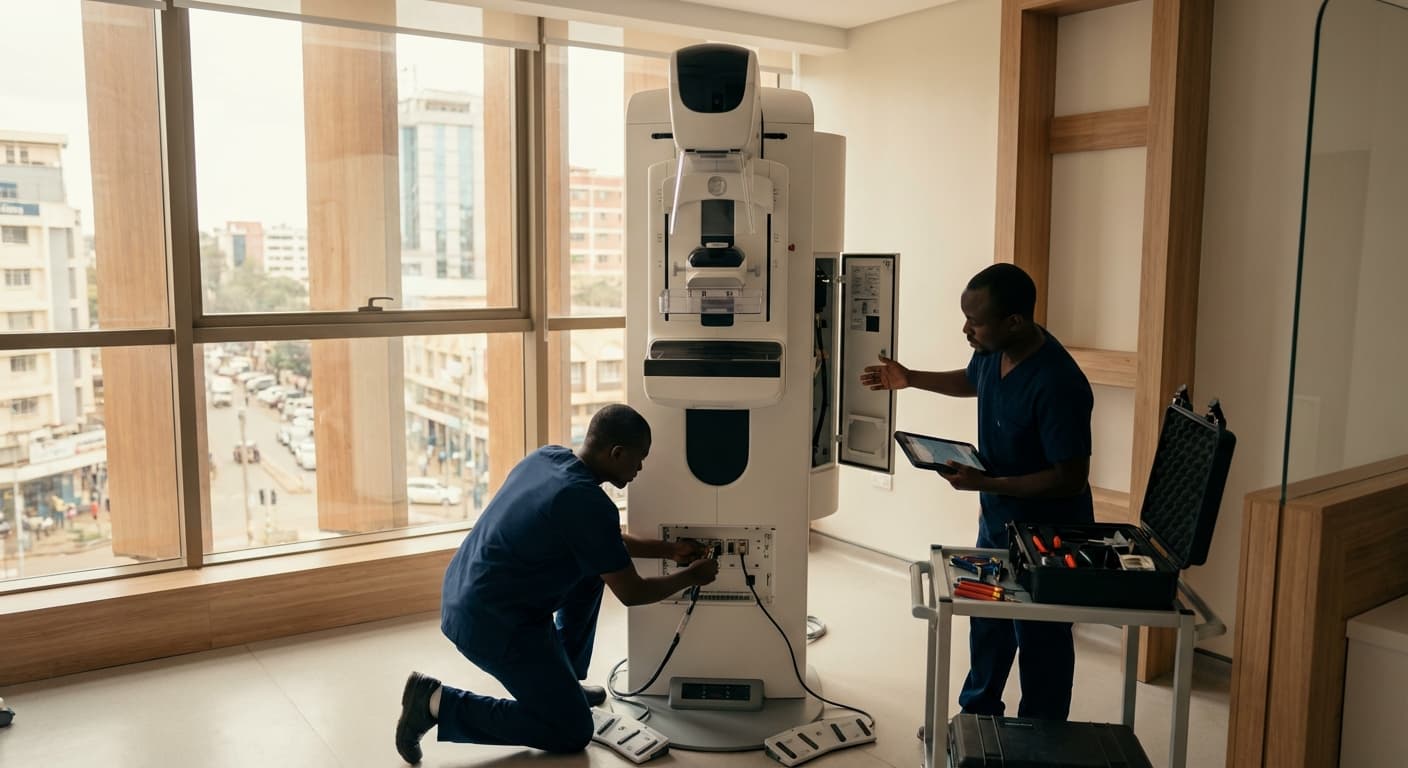
Mammography Installation Service in Tanzania
Engineering Excellence & Technical Support
Mammography Installation Service High-standard technical execution following OEM protocols and local regulatory frameworks.
Cutting-Edge Imaging Technology Integration
We specialize in the seamless integration of the latest mammography hardware and software, ensuring optimal image quality and diagnostic accuracy. Our expert technicians are certified to install and configure advanced digital mammography systems, including 3D tomosynthesis, to meet the evolving needs of healthcare facilities in Tanzania.
Robust Network & PACS Connectivity Solutions
Ensuring reliable data transfer and accessibility is paramount. Our installation services include comprehensive network setup, PACS (Picture Archiving and Communication System) integration, and secure data management solutions. We design and implement robust infrastructure to support efficient workflow and seamless collaboration between radiologists and referring physicians across Tanzania.
Compliance, Calibration & Shielding Expertise
Patient safety and regulatory adherence are our top priorities. We meticulously ensure all installations meet international radiation safety standards, including proper X-ray shielding and accurate calibration of equipment. Our team provides thorough post-installation testing and documentation to guarantee compliance with Tanzanian healthcare regulations.
What Is Mammography Installation Service In Tanzania?
Mammography Installation Service in Tanzania refers to the professional process of setting up, calibrating, and integrating mammography equipment within healthcare facilities across the country. This service is crucial for ensuring the accurate and reliable operation of mammography machines, which are essential for early detection of breast cancer. It encompasses a comprehensive technical procedure, from the initial site assessment and equipment delivery to the final testing and commissioning, often including staff training and adherence to regulatory standards specific to Tanzania.
| Who Needs Mammography Installation Service in Tanzania? | Typical Use Cases: | ||||
|---|---|---|---|---|---|
| Hospitals (Public and Private): Both large tertiary referral centers and smaller district hospitals requiring diagnostic imaging capabilities. | Establishment of new diagnostic imaging departments or expansion of existing ones. | Replacement of outdated or malfunctioning mammography equipment. | Upgrade of existing mammography systems to digital (DR or CR) technology. | Mobile mammography units for outreach screening programs. | Research institutions conducting studies on breast cancer detection and imaging. |
| Specialized Breast Imaging Centers: Facilities dedicated solely to breast health diagnostics. | Outpatient Clinics and Diagnostic Centers: Expanding services to include mammography for screening and diagnostic purposes. | Non-Governmental Organizations (NGOs) and Charitable Foundations: Implementing breast cancer screening initiatives in underserved areas. | Government Health Agencies: Equipping public health facilities as part of national screening programs. |
Key Components of Mammography Installation Service:
- Site Assessment and Planning: Evaluating the designated installation area for structural integrity, power supply requirements, radiation shielding, environmental controls (temperature, humidity), and compliance with local building codes.
- Equipment Delivery and Unpacking: Safely transporting and carefully unpacking sensitive mammography components, including the X-ray generator, detector, image processing unit, and workstation.
- Physical Installation and Assembly: Assembling the various components, ensuring precise alignment and secure mounting according to manufacturer specifications and engineering principles.
- Electrical and Data Connectivity: Establishing robust electrical connections, including grounding and surge protection, and integrating data transfer capabilities for PACS (Picture Archiving and Communication System) or other digital imaging networks.
- Radiation Shielding Verification: Confirming the adequacy of existing or newly installed radiation shielding to protect personnel and the public, often involving dosimetry.
- Calibration and Quality Assurance (QA) Testing: Performing rigorous calibration procedures to ensure optimal image quality, resolution, and radiation output. This involves using specialized phantoms and adhering to established QA protocols.
- System Integration and Software Configuration: Installing and configuring the mammography system's software, including image acquisition, processing, and storage functionalities, and integrating it with other hospital IT systems.
- Performance Testing and Validation: Conducting comprehensive tests to verify the system's performance against manufacturer benchmarks and clinical requirements, including testing of all imaging modes and functionalities.
- User Training: Providing hands-on training for radiographers, technologists, and potentially radiologists on the operation, maintenance, and basic troubleshooting of the installed mammography equipment.
- Documentation and Handover: Providing detailed installation reports, calibration certificates, user manuals, and maintenance schedules, formally handing over the operational system to the healthcare facility.
Who Needs Mammography Installation Service In Tanzania?
In Tanzania, the need for mammography installation services is driven by the growing awareness and demand for advanced diagnostic imaging, particularly for breast cancer screening and diagnosis. These services are crucial for healthcare facilities aiming to provide comprehensive cancer care and early detection programs. The installation process requires specialized technical expertise to ensure the equipment is set up correctly, calibrated, and ready for clinical use, adhering to international safety and performance standards.
| Target Customer Type | Typical Departments Involved | Key Needs/Reasons for Installation |
|---|---|---|
| Government Hospitals (Tertiary and Regional) | Radiology Department, Oncology Department, Outpatient Clinics | Expanding public health services, increasing access to screening, equipping new facilities, upgrading existing technology. |
| Private Hospitals and Diagnostic Centers | Radiology Department, Imaging Centers, Women's Health Clinics | Offering advanced diagnostic services, meeting patient demand for specialized imaging, competitive market positioning, ensuring high-quality patient care. |
| Cancer Care Centers and Institutes | Radiology Department, Medical Oncology, Surgical Oncology, Screening Programs | Essential for early detection, diagnosis, and staging of breast cancer, supporting comprehensive cancer management protocols. |
| NGOs focused on Women's Health | Mobile Clinics, Screening Units, Partnered Healthcare Facilities | Implementing outreach programs, providing accessible screening in underserved areas, capacity building for local healthcare providers. |
| Teaching and Research Hospitals | Radiology Department, Research & Development Units, Medical Education | Training future radiologists, conducting research on breast cancer, utilizing cutting-edge equipment for educational and scientific purposes. |
| Rural Health Centers (with specialized outreach) | Radiology Department (if equipped), Mobile Screening Units | Extending diagnostic capabilities to remote populations, facilitating early detection in areas with limited access to specialized care. |
Target Customers & Departments Requiring Mammography Installation Service in Tanzania
- Government Hospitals (Tertiary and Regional)
- Private Hospitals and Diagnostic Centers
- Cancer Care Centers and Institutes
- Non-Governmental Organizations (NGOs) focused on Women's Health
- Teaching and Research Hospitals
- Rural Health Centers with specialized outreach programs
Mammography Installation Service Process In Tanzania
This document outlines the typical workflow for mammography installation services in Tanzania, from the initial inquiry to the final execution and handover. The process is designed to ensure a smooth and efficient installation, meeting all regulatory and technical requirements.
| Stage | Description | Key Activities | Responsible Parties |
|---|---|---|---|
| The client expresses interest in mammography installation services. This stage involves understanding the client's needs and providing preliminary information. |
| Client, Service Provider |
| A thorough evaluation of the installation site is conducted to ensure it meets the technical and safety requirements for the mammography equipment. |
| Service Provider (Technical Team), Client (Site Access) |
| Based on the site survey, a detailed quotation is prepared, and upon agreement, a formal contract is signed. |
| Service Provider, Client |
| The necessary mammography equipment and any auxiliary materials are procured, and logistics for delivery are arranged. |
| Service Provider (Procurement & Logistics Team) |
| The installation site is prepared according to the specifications identified during the site survey, and the equipment is received and inspected. |
| Client (for site modifications), Service Provider (for equipment inspection) |
| The mammography equipment is physically installed and configured by certified technicians. |
| Service Provider (Installation Technicians) |
| The installed equipment undergoes rigorous testing and calibration to ensure it operates according to manufacturer specifications and regulatory standards. |
| Service Provider (Certified Technicians & Engineers) |
| The client's staff are trained on the operation and basic maintenance of the mammography equipment, followed by the formal handover. |
| Service Provider (Trainers & Project Manager), Client (Trainees & Project Representative) |
| Ongoing support is provided to ensure the continued optimal performance of the mammography unit. |
| Service Provider (Technical Support & Maintenance Team), Client |
Mammography Installation Service Workflow in Tanzania
- Initial Inquiry & Consultation
- Site Survey & Assessment
- Quotation & Agreement
- Procurement & Logistics
- Pre-Installation Preparation
- Installation & Configuration
- Testing & Calibration
- Training & Handover
- Post-Installation Support
Mammography Installation Service Cost In Tanzania
Installing mammography equipment in Tanzania involves a range of costs influenced by several factors. These factors include the type and complexity of the mammography unit, the brand and manufacturer, the need for specialized infrastructure modifications (like X-ray shielding, ventilation, and power upgrades), the installation team's expertise and travel expenses, and any necessary calibration and training for medical staff. The pricing is typically presented in Tanzanian Shillings (TZS).
| Service Component | Estimated Price Range (TZS) | Notes |
|---|---|---|
| Basic Mammography Unit (2D Digital) | TZS 150,000,000 - 300,000,000 | Excludes extensive infrastructure modifications. |
| Advanced Mammography Unit (3D Tomosynthesis) | TZS 300,000,000 - 600,000,000+ | Includes higher technological capabilities. |
| Site Preparation & Infrastructure Modifications | TZS 20,000,000 - 80,000,000+ | Varies significantly based on existing facility and shielding needs. |
| Professional Installation & Setup | TZS 10,000,000 - 30,000,000 | Includes technical expertise and labor. |
| Calibration, Testing & Quality Assurance | TZS 5,000,000 - 15,000,000 | Ensures diagnostic accuracy. |
| Operator Training (Radiographers/Technicians) | TZS 5,000,000 - 10,000,000 | Per session or per group. |
| Integration with PACS/HIS | TZS 10,000,000 - 30,000,000 | Depends on the complexity of existing hospital systems. |
| Contingency & Unforeseen Costs | TZS 15,000,000 - 50,000,000 | Recommended buffer for unexpected expenses. |
| Total Estimated Installation Cost (Mid-Range) | TZS 215,000,000 - 495,000,000+ | This is a general estimate and can fluctuate widely. |
Key Pricing Factors for Mammography Installation in Tanzania
- Type and Model of Mammography Unit: Digital mammography systems (2D and 3D/tomosynthesis) are generally more expensive than older analog systems.
- Brand and Manufacturer: Reputable international brands often command higher prices due to their perceived quality, reliability, and after-sales support.
- Infrastructure Requirements: Costs associated with modifying the installation site, including lead shielding for radiation protection, electrical upgrades, HVAC systems, and structural reinforcements.
- Installation Team Fees: This includes the charges for skilled technicians, engineers, and project managers. Travel and accommodation for the team, especially if they are from outside the immediate region, will add to the cost.
- Calibration and Testing: Post-installation calibration and comprehensive testing to ensure the equipment meets diagnostic standards.
- Staff Training: Training for radiographers and technicians on the operation and maintenance of the new mammography system.
- Ancillary Equipment: Costs for related peripherals like workstations, PACS (Picture Archiving and Communication System) integration, and diagnostic displays.
- Warranty and Service Agreements: Extended warranty periods or comprehensive service contracts can influence the initial installation cost or be a separate recurring expense.
- Logistics and Shipping: Transportation of the mammography unit from the port or manufacturer to the installation site.
Affordable Mammography Installation Service Options
Installing a mammography unit is a significant investment for any healthcare facility. Beyond the initial purchase or lease, installation costs can be substantial and vary widely depending on the complexity of the equipment, the existing infrastructure, and the chosen service provider. Fortunately, several affordable mammography installation service options exist, focusing on value bundles and strategic cost-saving measures to make this essential technology more accessible.
| Service Component | Typical Cost Range (USD) | Cost-Saving Tip |
|---|---|---|
| Site Assessment | $500 - $2,500+ | Include in a bundle, or perform preliminary checks yourself. |
| Equipment Delivery & Rigging | $1,000 - $5,000+ | Coordinate with your facility's logistics if possible. |
| Electrical & Plumbing Modifications | $2,000 - $10,000+ | Ensure compliance with manufacturer specs beforehand. |
| Radiation Shielding | $5,000 - $20,000+ | Standardized room design where possible. |
| Installation & Calibration | $5,000 - $15,000+ | Bundle with purchase, compare multiple providers. |
| Initial Training | $1,000 - $5,000+ | Included in many value bundles. |
| Warranty & Maintenance (1-2 Years) | $3,000 - $10,000+ | Negotiate extended terms within a bundle. |
Understanding Value Bundles and Cost-Saving Strategies
- Value Bundles: These packages often combine installation services with other essential offerings, providing a more comprehensive and potentially cost-effective solution than purchasing services à la carte.
- Key Components of Value Bundles:
- Pre-installation Site Assessment: Thorough evaluation of your facility's electrical, structural, and environmental readiness for the mammography unit.
- Professional Installation & Calibration: Expert setup and fine-tuning of the mammography equipment to ensure optimal performance and diagnostic accuracy.
- Initial Training: Comprehensive training for your radiographers and technical staff on operating the new system.
- Warranty & Maintenance Packages: Often bundled for a specified period, covering unexpected repairs and routine maintenance.
- Optional Add-ons: May include PACS integration support, software upgrades, or extended service agreements.
- Cost-Saving Strategies: Implementing these strategies can significantly reduce the overall expense of mammography installation.
- Negotiate Package Deals: Don't hesitate to negotiate the price of value bundles. Bundle multiple services or equipment purchases to leverage better pricing.
- Phased Installation: For larger facilities or those with budget constraints, consider a phased installation approach, spreading the cost over time.
- Pre-owned Equipment with Installation: Explore reputable vendors offering certified pre-owned mammography units that come with installation services. This can be a substantial cost saver.
- Standardized Infrastructure: Ensure your facility's infrastructure (e.g., power, shielding) meets industry standards to minimize custom modifications during installation.
- Compare Multiple Quotes: Obtain detailed quotes from several qualified installation service providers to compare pricing, services offered, and timelines.
- Early Planning: Starting the planning and procurement process well in advance allows for more negotiation leverage and better selection of cost-effective options.
- Leverage Manufacturer Programs: Inquire about any installation assistance programs or discounts offered directly by the mammography equipment manufacturer.
- Minimize Downtime: Efficient installation planning and execution by experienced technicians can minimize operational downtime, indirectly saving costs.
- Consider Remote Support Options: For certain aspects of setup or troubleshooting, explore if remote support can be utilized to reduce on-site technician hours.
Verified Providers In Tanzania
Navigating healthcare in Tanzania can be complex. Ensuring you receive quality care requires identifying trusted and verified providers. Franance Health stands out as a premier choice due to its rigorous credentialing process and commitment to patient well-being. This document outlines why Franance Health's verified providers represent the best option for your healthcare needs in Tanzania.
| Credentialing Aspect | Franance Health Verification | Benefit to Patient |
|---|---|---|
| Medical Licensure & Accreditation | Rigorous check of all national and relevant international accreditations. | Guarantees providers meet baseline legal and professional standards. |
| Clinical Expertise & Experience | Evaluation of specialized training, years of practice, and peer reviews. | Ensures access to highly skilled and experienced medical professionals. |
| Ethical Conduct & Professionalism | Background checks and adherence to a strict code of ethics. | Provides peace of mind regarding patient safety and respectful treatment. |
| Facility Standards (if applicable) | Assessment of infrastructure, equipment, and hygiene. | Confirms that care is delivered in a safe and well-equipped environment. |
| Patient Feedback & Satisfaction | Regular collection and analysis of patient testimonials and feedback. | Prioritizes providers who demonstrably deliver excellent patient experiences. |
Why Choose Franance Health Verified Providers?
- Uncompromising Quality Assurance: Franance Health's verification process goes beyond basic licensing. It involves in-depth assessment of medical expertise, ethical conduct, and adherence to international best practices.
- Patient-Centric Approach: Verified providers are selected based on their commitment to patient satisfaction, clear communication, and personalized care plans.
- Access to Specialized Care: Franance Health partners with a diverse network of specialists, ensuring you can access the right expertise for any medical condition.
- Transparency and Trust: Our verification process ensures transparency, allowing you to have complete confidence in the credentials and capabilities of the healthcare professionals you engage with.
- Streamlined Healthcare Experience: By simplifying the provider selection process, Franance Health allows you to focus on your health, not on navigating an opaque system.
Scope Of Work For Mammography Installation Service
This Scope of Work (SOW) outlines the requirements for the professional installation of a new mammography system. It details the technical deliverables, standard specifications, and tasks required to ensure a successful and compliant installation within the designated healthcare facility. The objective is to provide a fully functional, calibrated, and tested mammography unit ready for clinical use, adhering to all relevant safety and regulatory standards.
| Technical Deliverable | Description | Standard Specification / Requirement | Acceptance Criteria |
|---|---|---|---|
| Site Readiness Report | Documentation confirming the facility meets all pre-installation requirements. | Includes architectural drawings, electrical capacity verification, HVAC specifications, radiation shielding assessment, and network readiness. | Report signed off by facility representative and installer. |
| Installation Plan | Detailed plan outlining the installation timeline, procedures, personnel, and safety protocols. | Includes daily schedules, equipment handling procedures, risk mitigation strategies, and emergency contact information. | Approved by the facility's project manager. |
| Installed Mammography System | The complete mammography system, including all components, is installed and physically secured. | System components must be installed according to manufacturer's guidelines and facility layout. All cabling is neatly managed and secured. | Visual inspection confirming proper placement, secure mounting, and organized cabling. |
| Electrical Connections and Grounding | Proper connection of the mammography system to the facility's power supply and grounding system. | Compliance with local electrical codes, NEC, and manufacturer's specifications. Verified grounding resistance within acceptable limits. | Electrical safety testing report confirming compliance and proper grounding. |
| Environmental Monitoring Data | Records of environmental conditions (temperature, humidity) during installation. | Maintain temperature and humidity within manufacturer-specified operating ranges. | Log entries documenting environmental conditions throughout the installation period. |
| System Configuration | The mammography system is configured to integrate with the facility's IT infrastructure and PACS/RIS. | Includes network configuration, DICOM compliance, and user account setup as per facility requirements. | Successful network connectivity test and image transfer to PACS. |
| Calibration Certificate | Documentation of system calibration performed by certified technicians. | Calibration to manufacturer specifications and relevant regulatory standards (e.g., ACR, FDA). | Certificate of Calibration signed and dated by the accredited technician. |
| Quality Assurance (QA) Test Report | Report detailing the results of all required QA tests. | Includes phantom imaging, dose measurements, resolution tests, artifact checks, and other specified QA protocols. | QA test results meet or exceed manufacturer and regulatory requirements. Report signed by responsible QA personnel. |
| Radiation Safety Survey Report | Independent verification of radiation safety measures. | Includes measurements of radiation leakage, shielding effectiveness, and compliance with NCRP and local regulations. | Report from a qualified medical physicist confirming radiation safety compliance. |
| User Training Completion Record | Documentation confirming that key personnel have received adequate training. | Training covers system operation, basic troubleshooting, and routine QA procedures for designated users (technologists, physicists). | Signed attendance sheets and evaluation forms from training sessions. |
| As-Built Drawings | Updated architectural and electrical drawings reflecting the final installation. | Accurately depicts the location of the mammography unit, power outlets, cabling routes, and any modifications made. | As-built drawings reviewed and approved by the facility's engineering department. |
| Operation and Maintenance Manuals | Complete set of all relevant system manuals. | Includes user manuals, service manuals, and warranty information. | All documentation provided in the agreed-upon format (hardcopy or digital). |
| Final Acceptance Certificate | Formal document signed by both parties indicating successful completion and acceptance of the installation. | Confirms all deliverables have been met and the system is fully functional and ready for clinical use. | Signed by authorized representatives of the facility and the installation service provider. |
Key Project Phases
- Site Preparation and Verification
- Equipment Delivery and Unpacking
- System Installation and Cabling
- Power and Grounding
- Environmental Controls and Monitoring
- System Configuration and Integration
- Calibration and Quality Assurance Testing
- Training and Handover
- Documentation and Reporting
Service Level Agreement For Mammography Installation Service
This Service Level Agreement (SLA) outlines the response times and uptime guarantees for the Mammography Installation Service provided by [Your Company Name] to [Client Name]. This agreement is effective as of [Start Date] and will remain in effect until [End Date].
| Service Component | Response Time Target | Uptime Guarantee | Reporting / Escalation Procedure |
|---|---|---|---|
| Initial Response (Critical Issue) | Within 1 Hour (24/7) | N/A | Report via phone ([Phone Number]) or dedicated portal. Escalation to Tier 2 support within 2 hours. |
| Initial Response (Standard Issue) | Within 4 Business Hours | N/A | Report via email ([Email Address]) or dedicated portal. Escalation to Tier 2 support within 8 business hours. |
| Resolution Target (Critical Issue) | Within 4 Business Hours | N/A | Targeted resolution time, actual resolution may vary based on complexity. |
| Resolution Target (Standard Issue) | Within 1 Business Day | N/A | Targeted resolution time, actual resolution may vary based on complexity. |
| Installation Service Availability | N/A | 99.5% Monthly Uptime | Uptime is monitored continuously. Downtime events will be logged and reported. Client may request a monthly uptime report. |
| Planned Maintenance | Advance Notification (48 Hours) | N/A | Scheduled maintenance will be communicated at least 48 hours in advance. Maintenance windows will be outside of standard business hours where possible. |
Key Service Level Objectives
- Response Time: The time taken for [Your Company Name] to acknowledge and begin addressing a reported issue.
- Uptime Guarantee: The percentage of time the Mammography Installation Service is available and operational.
- Exclusions: Situations or events that are not covered by this SLA.
- Remedies: Actions to be taken by [Your Company Name] in case of SLA breaches.
Frequently Asked Questions

Ready when you are
Let's scope your Mammography Installation Service in Tanzania project in Tanzania.

Scaling healthcare logistics and technical systems across the entire continent.