
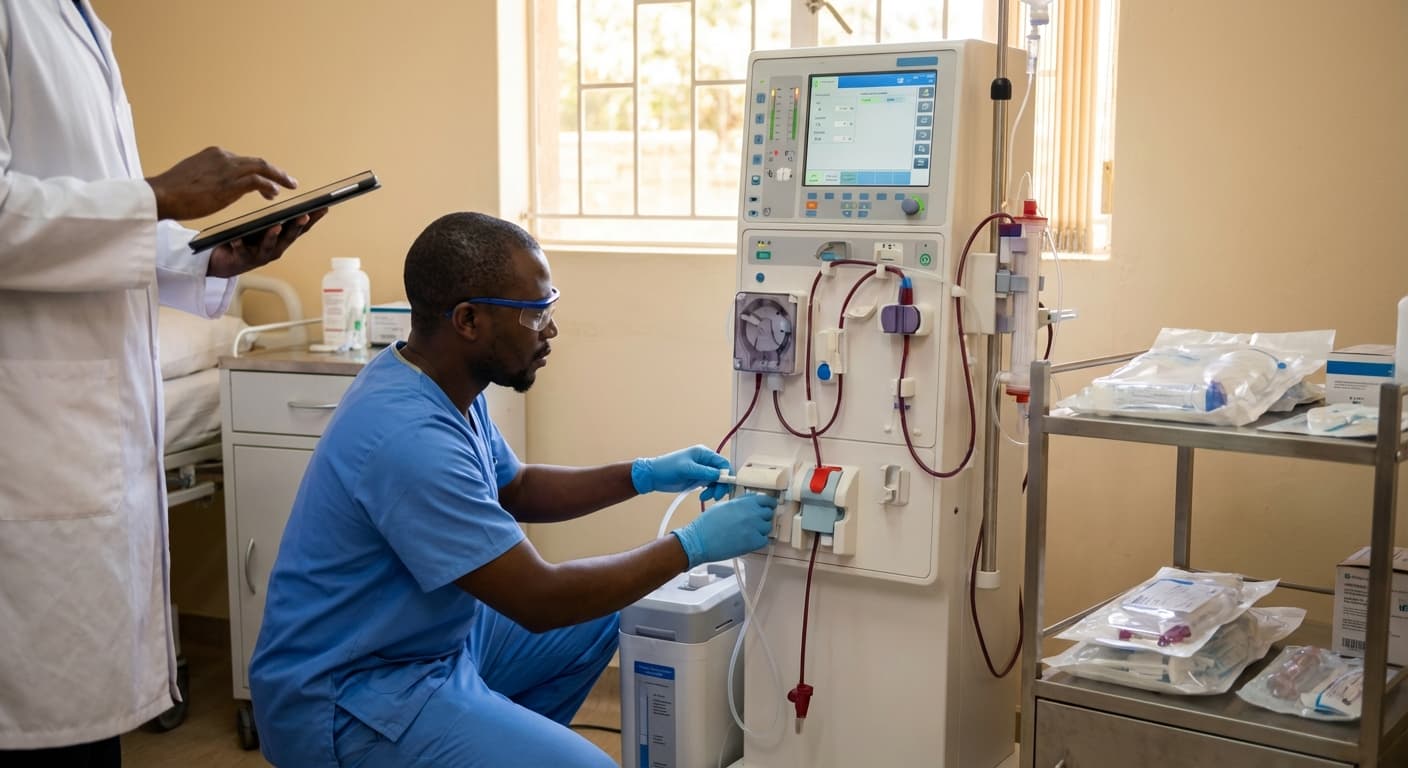
Hemodialysis Machine Installation Service in Tanzania
Engineering Excellence & Technical Support
Hemodialysis Machine Installation Service High-standard technical execution following OEM protocols and local regulatory frameworks.
Certified Technicians, Local Expertise
Our team comprises certified hemodialysis technicians with in-depth knowledge of Tanzanian infrastructure and regulatory requirements, ensuring seamless and compliant installations.
Site Assessment & Customization
We conduct thorough site assessments to identify specific needs and challenges, tailoring our installation plans to optimize machine performance and patient care within your facility.
Comprehensive Training & Support
Beyond installation, we provide comprehensive training for your biomedical staff on machine operation, maintenance, and troubleshooting, backed by ongoing technical support for uninterrupted service.
What Is Hemodialysis Machine Installation Service In Tanzania?
Hemodialysis machine installation service in Tanzania refers to the specialized process of setting up, configuring, and commissioning hemodialysis equipment within healthcare facilities. This service ensures that the machines are operational, safe, and compliant with relevant medical and technical standards for patient treatment. It encompasses a comprehensive set of tasks required to integrate the hemodialysis unit into the facility's existing infrastructure and clinical workflows. The service is critical for any institution offering or planning to offer renal replacement therapy via hemodialysis.
| Who Needs Hemodialysis Machine Installation Service? | Typical Use Cases | |||||
|---|---|---|---|---|---|---|
| Hospitals (Public and Private): Both general hospitals and specialized medical centers requiring dialysis units for inpatient and outpatient care. | Establishment of new dialysis centers: Setting up dedicated facilities for chronic hemodialysis treatment. | Renal Dialysis Clinics: Outpatient facilities focused exclusively on providing hemodialysis services. | Expansion of existing dialysis services: Upgrading or increasing the capacity of current dialysis units with new machines. | Government Health Initiatives: Public health programs aimed at increasing access to renal replacement therapy in underserved areas. | Emergency or temporary dialysis setups: Deploying dialysis machines in disaster zones or for specific public health crises. | Research Institutions: Facilities conducting research related to renal diseases and dialysis technologies. |
Key Components of Hemodialysis Machine Installation Service:
- Site Assessment and Preparation: Evaluating the physical space, power supply, water purification systems, waste disposal capabilities, and environmental conditions to ensure they meet the specific requirements of the hemodialysis machines.
- Unpacking and Physical Placement: Carefully unboxing the hemodialysis machines and their accessories, followed by their precise positioning within the designated treatment area.
- Electrical and Plumbing Connections: Connecting the machines to the facility's power grid and water supply, ensuring adherence to all safety regulations and manufacturer specifications. This often involves specialized plumbing and electrical work.
- Water Purification System Integration: Connecting the hemodialysis machines to the facility's reverse osmosis (RO) or other water purification systems, which are essential for producing ultrapure water required for dialysis.
- Calibration and Configuration: Performing initial calibration of sensors, flow rates, pressure gauges, and other critical parameters according to manufacturer guidelines and clinical protocols.
- System Testing and Validation: Conducting thorough functional tests to verify the performance of all machine components, including pumps, dialyzers, and safety features. This includes simulating dialysis treatment to ensure accurate operation.
- Staff Training: Providing comprehensive training to biomedical engineers, nephrologists, nurses, and technicians on the operation, maintenance, troubleshooting, and basic repair of the installed hemodialysis machines.
- Documentation and Handover: Providing all necessary documentation, including user manuals, service logs, warranty information, and certifications, and formally handing over the operational equipment to the healthcare facility.
- Compliance and Regulatory Adherence: Ensuring the installation meets all national and international standards, regulations, and guidelines pertaining to medical device installation and dialysis practice in Tanzania.
Who Needs Hemodialysis Machine Installation Service In Tanzania?
Hemodialysis machine installation services are crucial for any healthcare facility in Tanzania that aims to provide life-saving renal replacement therapy. These services are essential for establishing and maintaining functional dialysis units, ensuring patient safety, and optimizing the performance of the vital equipment. The demand for such services is driven by the increasing prevalence of kidney disease in Tanzania and the government's and private sector's efforts to expand access to dialysis care across the nation.
| Department/Unit | Role in Hemodialysis Machine Installation | Key Requirements for Installation |
|---|---|---|
| Nephrology Department | The core department responsible for patient care, diagnosis, and treatment of kidney diseases. They directly utilize the installed machines. | Proper plumbing for water purification, electrical power supply, waste disposal, ventilation, and adequate space for machines and patient comfort. |
| Engineering/Biomedical Engineering Department | Responsible for the technical aspects of hospital infrastructure and medical equipment maintenance. They often oversee the technical installation and integration of machines. | Understanding of electrical schematics, water supply systems, and compatibility with existing hospital infrastructure. Involvement in pre-installation site surveys. |
| Procurement Department | Handles the acquisition of medical equipment. They work with suppliers and may liaise with installation service providers. | Ensuring the chosen installation service meets the required standards, certifications, and contractual obligations. |
| Infection Control Department | Ensures that all procedures and installations adhere to strict hygiene and infection prevention protocols. | Ensuring sterile environments during installation, proper disposal of waste materials, and adherence to safety guidelines to prevent cross-contamination. |
| Facility Management/Estates Department | Oversees the physical infrastructure of the hospital, including utilities and building modifications. | Coordination of any necessary structural modifications, plumbing, electrical work, and ensuring compliance with building codes. |
Target Customers & Departments for Hemodialysis Machine Installation Service in Tanzania
- {"title":"Government Hospitals","description":"These are the primary providers of healthcare services to the majority of the population in Tanzania. As the government expands its healthcare infrastructure and treatment options, numerous regional and district hospitals require new dialysis unit installations or upgrades to existing facilities."}
- {"title":"Referral Hospitals","description":"Major referral hospitals, often located in urban centers, serve as tertiary care providers and are likely to have established or be expanding their dialysis departments to manage complex cases and provide specialized care."}
- {"title":"Private Hospitals and Clinics","description":"The growing private healthcare sector in Tanzania is investing in advanced medical equipment, including hemodialysis machines, to cater to a segment of the population that can afford private medical services. This includes both large private hospital groups and smaller, specialized clinics."}
- {"title":"Non-Governmental Organizations (NGOs) and Charitable Foundations","description":"Organizations focused on improving healthcare access and outcomes, particularly for underserved populations, may fund and establish dialysis units in areas with limited resources. Their projects often necessitate professional installation services."}
- {"title":"New Healthcare Facilities","description":"Any newly established hospitals, clinics, or medical centers intending to offer comprehensive renal care will require complete hemodialysis machine installation services from scratch."}
- {"title":"Research and Teaching Institutions","description":"Medical schools and research centers that include nephrology as a specialization or conduct research on kidney diseases may install dialysis machines for training purposes and clinical trials, requiring expert installation."}
Hemodialysis Machine Installation Service Process In Tanzania
This document outlines the typical workflow for Hemodialysis Machine Installation Service in Tanzania, from initial inquiry to successful execution. It details the stages involved, the key activities within each stage, and the roles and responsibilities of the parties concerned.
| Stage | Key Activities | Responsible Parties | Key Deliverables/Outcomes |
|---|---|---|---|
| Client (hospital, clinic) contacts service provider with a requirement for hemodialysis machine installation. Service provider gathers preliminary information about the machine type, quantity, and client's existing infrastructure. Initial discussion of client's needs and expectations. | Client (Healthcare Facility), Service Provider (Installation Company/Distributor) | Understanding of client's needs, preliminary scope definition. |
| Service provider conducts a thorough site visit to evaluate the installation location. Assessment of space, power supply, water quality and availability, drainage, ventilation, and any other necessary utilities. Development of a detailed installation plan, including timelines and resource allocation. | Service Provider (Technical Team), Client (Facility Manager/Biomedical Engineer) | Detailed site assessment report, confirmed installation requirements, refined installation plan. |
| Based on the site assessment and scope, the service provider prepares a detailed quotation outlining all costs (equipment, labor, materials, consumables, training, etc.). Negotiation and finalization of terms and conditions. Signing of a service agreement or contract. | Service Provider, Client | Formal quotation, signed service agreement/contract. |
| Service provider procures the hemodialysis machine(s) and any necessary accessories or specialized components. Arranges for transportation of equipment and personnel to the installation site in Tanzania. Manages customs clearance and import procedures. | Service Provider (Procurement & Logistics Team) | Procured equipment, scheduled transportation, cleared customs. |
| Client prepares the installation site according to the agreed-upon specifications (e.g., ensuring electrical outlets, water purification systems, and drainage are ready). Service provider may provide guidance or coordinate with the client's contractors. | Client, Service Provider (Consultative Role) | Site readiness for installation. |
| Skilled technicians arrive at the site and unpack the equipment. They connect the machine to the power supply, water source, and drainage system. Software installation and configuration of machine parameters according to manufacturer guidelines and client specifications. | Service Provider (Installation Technicians) | Physically installed and connected hemodialysis machine. |
| Rigorous testing of all machine functions to ensure optimal performance. Calibration of sensors, pumps, and other critical components. Verification of safety features and adherence to medical standards. | Service Provider (Certified Technicians) | Tested and calibrated hemodialysis machine, test reports. |
| Comprehensive training for the healthcare staff (nurses, technicians, biomedical engineers) on the operation, maintenance, and troubleshooting of the hemodialysis machine. Training materials and user manuals are provided. | Service Provider (Trainers), Client (Healthcare Staff) | Trained personnel, user manuals, operational knowledge. |
| Formal handover of the installed and tested hemodialysis machine to the client. Provision of all relevant documentation, including installation reports, test certificates, maintenance logs, and warranty information. | Service Provider, Client | Accepted installation, complete documentation package. |
| Ongoing technical support, troubleshooting assistance, and scheduled preventive maintenance services as per the service agreement. This ensures the long-term functionality and reliability of the hemodialysis machine. | Service Provider (Support & Maintenance Team), Client | Continued operational efficiency, reduced downtime, warranty adherence. |
Hemodialysis Machine Installation Service Workflow in Tanzania
- Inquiry and Initial Consultation
- Site Assessment and Planning
- Quotation and Agreement
- Procurement and Logistics
- Pre-Installation Preparations
- On-Site Installation and Configuration
- Testing and Calibration
- User Training
- Handover and Documentation
- Post-Installation Support and Maintenance
Hemodialysis Machine Installation Service Cost In Tanzania
Installing a hemodialysis machine in Tanzania involves several cost components, influenced by the complexity of the installation, the specific model of the machine, and the service provider. These costs are typically quoted in Tanzanian Shillings (TZS). Factors affecting the price include the need for specialized plumbing and electrical work, water purification systems, the expertise of the technicians, and any necessary modifications to the facility. The range for installation services can vary significantly, often starting from a few million TZS and potentially going much higher for more complex setups.
| Service Component | Estimated Cost Range (TZS) | Notes |
|---|---|---|
| Basic Installation Fee | 3,000,000 - 7,000,000 | Covers standard setup, connection to utilities, and initial testing. |
| Water Purification System Installation | 2,000,000 - 5,000,000 | Dependent on the type and capacity of the system. |
| Electrical and Plumbing Modifications | 1,000,000 - 4,000,000 | Varies based on existing infrastructure and required upgrades. |
| Site Preparation and Ancillary Equipment | 500,000 - 2,000,000 | Includes minor adjustments, shelving, or specific mounting if needed. |
| Comprehensive Installation Package (including basic modifications and water system) | 6,000,000 - 16,000,000+ | A more all-inclusive estimate for a standard setup. |
| Complex/Large-Scale Installations | 15,000,000+ | For multiple machines, specialized infrastructure, or remote locations. |
Key Factors Influencing Hemodialysis Machine Installation Costs in Tanzania
- Machine Model and Complexity: Different hemodialysis machines have varying installation requirements, impacting labor and material costs.
- Facility Modifications: This includes any necessary upgrades to electrical wiring, plumbing, drainage, or structural changes to accommodate the machine.
- Water Purification System: A high-quality water purification system is crucial for hemodialysis and its installation adds to the overall cost.
- Labor and Technician Expertise: The skill level and experience of the installation technicians will influence their rates.
- Geographical Location: Installation costs might differ slightly based on the specific region or city within Tanzania due to logistical considerations.
- Testing and Calibration: Thorough testing and calibration of the machine post-installation are essential and included in the service cost.
- Warranty and Support: Some installation packages may include initial warranty periods or ongoing maintenance agreements, affecting the upfront price.
Affordable Hemodialysis Machine Installation Service Options
When establishing or expanding hemodialysis services, the installation of specialized machinery is a critical and often significant investment. This guide explores affordable hemodialysis machine installation service options, focusing on value bundles and cost-saving strategies to ensure high-quality care is accessible and sustainable.
| Strategy | Description | Potential Cost Savings |
|---|---|---|
| Value Bundles: | Combining multiple services (e.g., machine purchase + installation + initial training + basic maintenance) into a single package from a vendor. | Negotiated bulk pricing, reduced administrative overhead, streamlined procurement, and predictable budgeting. |
| Refurbished Machines: | Purchasing high-quality, certified refurbished hemodialysis machines from reputable vendors. These machines undergo rigorous testing and repair. | Significant upfront cost reduction compared to new machines, often with a warranty. |
| Leasing Options: | Instead of outright purchase, leasing machines can offer lower initial capital outlay and predictable monthly expenses, often including maintenance. | Reduced capital expenditure, easier access to the latest technology, and consolidated maintenance costs. |
| Phased Installation: | Installing machines in phases based on patient demand and budget availability, rather than all at once. | Spreads out capital expenditure, allowing for better cash flow management. |
| Partnerships with Water Treatment Specialists: | Collaborating with specialized water treatment companies for RO unit and plumbing installation, potentially offering integrated packages. | Potentially better pricing and expertise, ensuring optimal water quality for dialysis. |
| Negotiating Service Contracts: | Carefully reviewing and negotiating terms of service and maintenance contracts, comparing offers from different providers. | Lower annual maintenance costs, clear service level agreements (SLAs), and potential for extended warranties. |
| In-house vs. Outsourced Training: | Evaluating whether to use vendor-provided training, third-party specialized trainers, or develop in-house training programs for staff. | Potentially lower training costs if using internal resources or negotiating group rates for external training. |
| Bulk Purchasing of Consumables: | While not directly installation, linking machine installation to bulk purchasing agreements for essential consumables can indirectly reduce overall operational costs. | Lower per-unit cost of disposables, improving long-term financial viability. |
Key Components of Hemodialysis Machine Installation Services
- Machine Procurement & Sourcing: Identifying reliable suppliers for new or refurbished machines, negotiating bulk discounts, and considering leasing options.
- Site Preparation & Infrastructure: Ensuring adequate plumbing, electrical, water treatment systems (RO units, softeners), and ventilation to meet machine specifications and regulatory standards.
- Installation & Calibration: Professional setup, connection, and precise calibration of hemodialysis machines by certified technicians.
- Staff Training: Comprehensive training for clinical and technical staff on machine operation, maintenance, troubleshooting, and infection control protocols.
- Ongoing Maintenance & Support: Service contracts, preventative maintenance schedules, and rapid response for repairs to minimize downtime.
- Regulatory Compliance & Documentation: Assistance with meeting all local and national health regulations, including necessary permits and documentation for installation.
Verified Providers In Tanzania
Navigating healthcare in Tanzania can be challenging, with varying standards of care and provider qualifications. For individuals and organizations seeking reliable and high-quality medical services, identifying verified providers is paramount. This is where Franance Health emerges as a trusted name, setting a benchmark for excellence in healthcare provision.
| Provider Type | Franance Health Verification Mark | Key Benefits for Patients |
|---|---|---|
| Hospitals | Accredited & Certified by Franance Health | Access to state-of-the-art facilities, multidisciplinary teams, and adherence to international patient safety protocols. |
| Clinics | Franance Health Approved Medical Centers | Reliable primary and specialized outpatient services with qualified medical staff. |
| Specialist Doctors | Franance Health Certified Specialists | Expert medical advice and treatment from vetted and experienced practitioners. |
| Diagnostic Laboratories | Franance Health Quality Assured Labs | Accurate and timely diagnostic testing conducted with advanced technology and quality control measures. |
Why Franance Health Credentials Matter:
- Rigorous Accreditation: Franance Health partners exclusively with healthcare facilities and professionals who have undergone stringent accreditation processes. This ensures adherence to national and international quality standards for patient safety, clinical efficacy, and operational efficiency.
- Skilled and Certified Professionals: All medical practitioners affiliated with Franance Health are fully licensed, certified, and possess extensive experience in their respective fields. Continuous professional development is a core tenet, guaranteeing that their knowledge and skills remain at the forefront of medical advancements.
- Comprehensive Service Portfolio: Franance Health offers a broad spectrum of medical services, from primary care and specialist consultations to advanced diagnostics and surgical procedures. This integrated approach ensures that patients receive holistic and coordinated care.
- Patient-Centric Approach: A commitment to patient well-being is at the heart of Franance Health's philosophy. Their verified providers prioritize compassionate care, clear communication, and respect for patient autonomy, fostering a trusting and supportive healthcare experience.
- Ethical Practices and Transparency: Franance Health upholds the highest ethical standards in all its operations. This includes transparent pricing, clear communication about treatment options, and a commitment to patient confidentiality.
Scope Of Work For Hemodialysis Machine Installation Service
This Scope of Work (SOW) outlines the requirements for the installation services of hemodialysis machines. It details the technical deliverables, standard specifications, and responsibilities of the service provider to ensure a successful and compliant setup of the equipment.
| Phase | Activity | Technical Deliverables | Standard Specifications |
|---|---|---|---|
| Pre-installation site survey | Site assessment report including power, water, drainage, and space requirements verification. | Compliance with manufacturer's site preparation guidelines. ADA accessibility considerations. Electrical grounding standards (e.g., NEC). Water quality standards (e.g., AAMI/ISO 13959). |
| Receipt and inspection of machines | Confirmation of delivery against purchase order, documented damage assessment. | Careful handling to prevent physical damage. Secure storage before installation. |
| Mounting and connection of machine | Secure and stable placement of machines. Proper connection of power, water, and dialysate lines. | Adherence to manufacturer's installation manual. Cable management for safety and aesthetics. Compliance with local building codes. |
| Connection to auxiliary systems (e.g., water treatment) | Successful integration with approved water treatment systems. Configuration of machine settings. | Compatibility with existing or new water treatment units. Dialysate composition accuracy. Network connectivity (if applicable) according to hospital IT policy. |
| Power-on self-test, basic functional checks | Successful completion of all internal diagnostics. Verification of basic operational parameters (e.g., pump function, pressure sensors). | Manufacturer-specified diagnostic sequences. Alarm system functionality. Pressure and flow rate verification within tolerance. |
| Installation report, user manual handover | Signed installation completion certificate. As-built diagrams (if applicable). Provision of user manuals and warranty information. | Documented test results. Site-specific configuration settings recorded. Handover of all required documentation to authorized personnel. |
| Introduction to machine operation | Brief orientation for designated clinical staff on basic operation and safety features. | Content aligned with manufacturer's basic user training modules. Focus on essential functions and emergency procedures. |
Key Objectives of the Installation Service
- Ensure the safe and correct physical installation of each hemodialysis machine.
- Verify and confirm that all installations meet manufacturer specifications and relevant regulatory standards.
- Perform initial system checks and basic functional tests to confirm operational readiness.
- Provide necessary documentation and training for site personnel regarding the installed equipment.
- Minimize disruption to existing clinical operations during the installation process.
Service Level Agreement For Hemodialysis Machine Installation Service
This Service Level Agreement (SLA) outlines the performance standards and guarantees for the Hemodialysis Machine Installation Service provided by [Your Company Name] to [Client Name]. This SLA covers response times for critical issues and uptime guarantees for the installed hemodialysis machines.
| Service Level | Response Time Target | Uptime Guarantee | Resolution Time Target (Critical Issues) |
|---|---|---|---|
| Critical Issue | 1 hour | 98% Uptime (monthly) | 4 hours |
| Urgent Issue | 2 business hours | N/A | 8 business hours |
| Routine Issue | 8 business hours | N/A | 48 business hours |
Key Definitions
- Installation Service: Refers to the entire process of delivering, setting up, and commissioning a hemodialysis machine at the client's facility, including necessary connections and initial testing.
- Critical Issue: A malfunction or failure of the installed hemodialysis machine that renders it inoperable or significantly impairs its functionality, directly impacting patient care.
- Urgent Issue: A malfunction or issue that degrades the performance of the hemodialysis machine but does not render it completely inoperable.
- Routine Issue: Any non-critical issue, request for information, or minor adjustment not directly impacting machine operation.
- Downtime: The period during which a hemodialysis machine is unavailable for patient use due to a Critical Issue or Urgent Issue. Planned maintenance or scheduled upgrades are excluded from Downtime calculations.
- Response Time: The maximum time allowed from the initiation of a support request to the time a certified technician or support personnel acknowledges and begins actively working on the issue.
Frequently Asked Questions

Ready when you are
Let's scope your Hemodialysis Machine Installation Service in Tanzania project in Tanzania.

Scaling healthcare logistics and technical systems across the entire continent.