
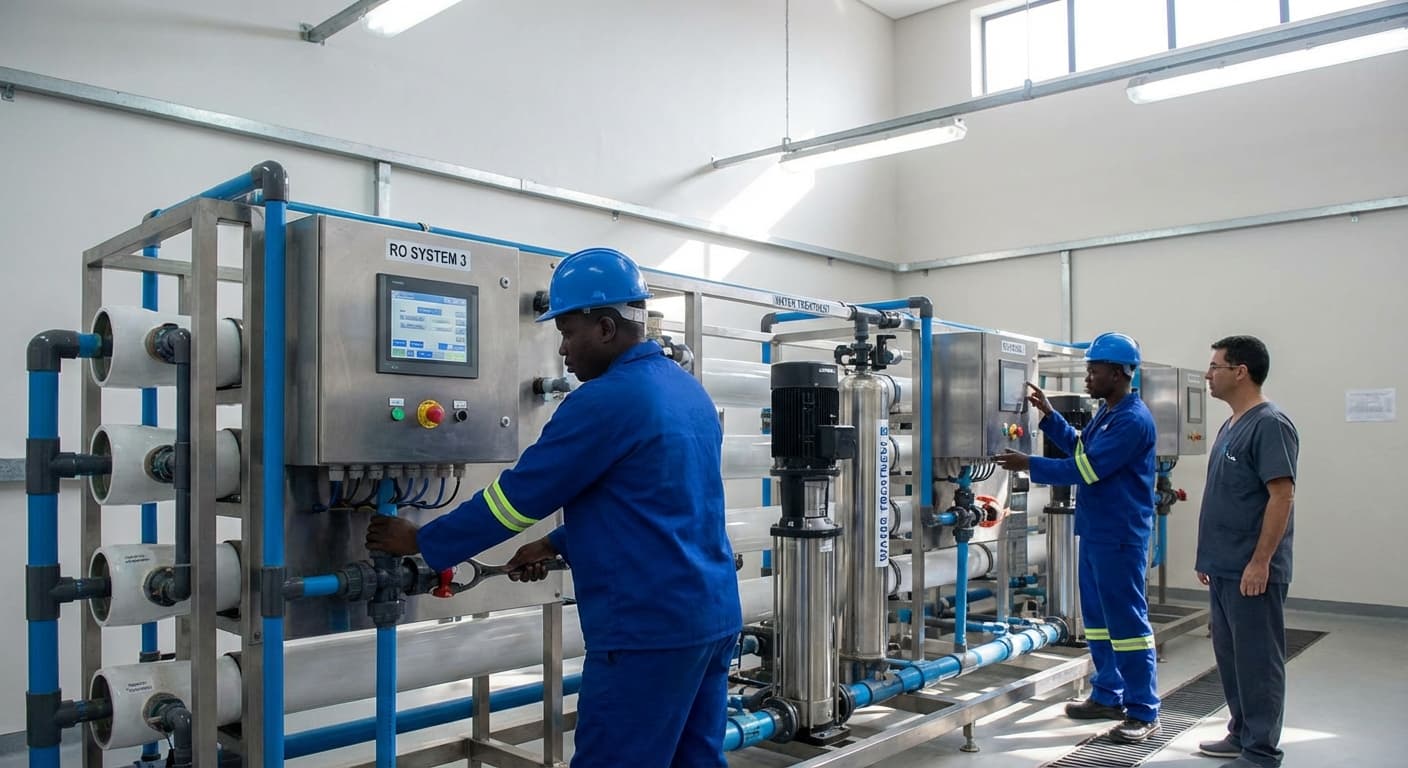
Dialysis RO/Water Treatment Plant Installation Service in Tanzania
Engineering Excellence & Technical Support
Dialysis RO/Water Treatment Plant Installation Service High-standard technical execution following OEM protocols and local regulatory frameworks.
Certified Compliance & Quality Assurance
We ensure all installations adhere to stringent Tanzanian health and safety regulations and international water quality standards. Our certified technicians conduct rigorous pre- and post-installation testing for complete peace of mind.
Seamless Integration & Energy Efficiency
Our expert engineers design and install RO systems for optimal water output and minimal energy consumption, integrated smoothly with your existing infrastructure to reduce operational costs and environmental impact.
Robust Design & Localized Expertise
Leveraging robust, durable components tailored for the Tanzanian climate and water conditions, our installations are built for long-term reliability. Our local teams provide unmatched on-site support and maintenance.
What Is Dialysis Ro/water Treatment Plant Installation Service In Tanzania?
Dialysis RO/Water Treatment Plant Installation Service in Tanzania refers to the specialized engineering and project management undertaking focused on the design, procurement, assembly, commissioning, and handover of Reverse Osmosis (RO) and associated water purification systems specifically for dialysis facilities within Tanzania. These systems are critical for producing ultrapure water, a fundamental requirement for hemodialysis treatments, ensuring patient safety by removing contaminants that could cause adverse reactions or infections. The service encompasses all phases from initial site assessment and system design tailored to the facility's water demands and source water quality, through to the installation of RO membranes, pre-filtration stages, post-treatment units (e.g., UV disinfection, deionization), piping, control systems, and rigorous testing to meet international standards (e.g., AAMI, ISO). Post-installation support, including operator training and maintenance protocols, is often a key component.
| Stakeholder/Facility Type | Primary Need | Typical Use Case |
|---|---|---|
| Renal Dialysis Centers (Public & Private) | Production of ultrapure, pyrogen-free water for hemodialysis treatments to prevent patient complications such as infection, pyrogenic reactions, and electrolyte imbalances. | Installation of a centralized RO system to supply multiple dialysis stations, ensuring consistent water quality and compliance with medical standards. |
| Hospitals with Nephrology Departments | Establishing or upgrading in-house dialysis capabilities to provide comprehensive renal care, ensuring a reliable and safe water supply for dialysis procedures. | Integrating a dedicated RO plant within the hospital infrastructure to support both scheduled and emergency dialysis treatments. |
| Non-Governmental Organizations (NGOs) & Charities | Providing access to essential dialysis services in underserved regions by setting up cost-effective and reliable water treatment solutions for new or existing dialysis units. | Deploying robust and low-maintenance RO systems, often with consideration for limited infrastructure or remote locations. |
| Medical Equipment Suppliers & Installers | Ensuring that the dialysis equipment they supply is complemented by a compliant and functional water purification system for complete project delivery. | Partnering with specialized RO installation services to offer turnkey solutions for new dialysis centers or facility expansions. |
Key Components and Considerations for Dialysis RO/Water Treatment Plant Installation in Tanzania:
- Source Water Analysis: Comprehensive testing of incoming water (municipal, borehole, well) for mineral content, microbial load, organic compounds, and potential contaminants.
- System Design & Engineering: Tailoring the RO system, including pre-treatment (sediment filters, activated carbon filters), RO units, post-treatment (polishing filters, UV sterilization, potentially a dual-pass RO or EDI for ultra-pure requirements), and distribution loops, to meet specific dialysis machine flow rates and water quality standards.
- Component Sourcing & Procurement: Acquisition of high-quality RO membranes, pumps, filters, tanks, piping, valves, control panels, and instrumentation from reputable manufacturers.
- On-site Installation & Assembly: Physical setup of all system components, including structural mounting, electrical connections, and plumbing.
- Integration with Dialysis Machines: Ensuring seamless connection and flow control between the purified water system and the dialysis machines.
- Commissioning & Validation: Operational testing, calibration of instruments, and performance validation to confirm water purity meets stringent medical standards.
- Water Quality Monitoring: Implementation of regular testing protocols and potentially continuous monitoring systems to ensure ongoing compliance.
- Operator Training: Comprehensive instruction for facility staff on system operation, routine maintenance, troubleshooting, and water quality testing.
- Regulatory Compliance: Adherence to Tanzanian Ministry of Health regulations and international dialysis water quality guidelines.
- Maintenance & Support Contracts: Provision of ongoing technical support, spare parts, and preventive maintenance services.
Who Needs Dialysis Ro/water Treatment Plant Installation Service In Tanzania?
Dialysis centers and hospitals in Tanzania that rely on purified water for their hemodialysis treatments are the primary beneficiaries of Dialysis RO/Water Treatment Plant Installation services. Ensuring the highest quality of water is paramount to patient safety and effective treatment outcomes, as impurities can lead to serious complications. These facilities require robust, reliable, and compliant water treatment systems to meet international standards and provide safe dialysis services.
| Target Customer Type | Key Departments Involved | Specific Needs Addressed |
|---|---|---|
| Hospitals | Nephrology/Renal Unit, Biomedical Engineering, Facilities Management, Procurement Department | Installation of new dialysis RO plants, upgrades to existing systems, regular maintenance contracts, ensuring compliance with water quality standards. |
| Dedicated Dialysis Centers | Center Management, Clinical Operations, Biomedical Technician, Procurement Officer | Establishing a new center requiring a complete water treatment solution, replacing outdated or inefficient systems, ensuring uninterrupted water supply for daily operations. |
| Government Healthcare Facilities (e.g., Regional Hospitals) | Ministry of Health representatives, Hospital Administration, Engineering Department, Procurement Unit | Providing access to safe dialysis water in under-resourced areas, fulfilling public health mandates, ensuring long-term operational sustainability of dialysis services. |
| Private Healthcare Providers | Medical Director, Operations Manager, Technical Services, Purchasing Department | Meeting the demands of a growing private healthcare sector, offering premium dialysis services with guaranteed water quality, adhering to strict patient safety protocols. |
| NGO Healthcare Projects | Project Managers, Medical Coordinators, Local Implementation Teams, Procurement Specialists | Establishing dialysis facilities in remote or underserved communities, focusing on cost-effective and sustainable water treatment solutions, often with a focus on capacity building and training. |
Target Customers and Departments for Dialysis RO/Water Treatment Plant Installation in Tanzania
- {"item":"Hospitals with Nephrology Departments"}
- {"item":"Dedicated Dialysis Centers/Clinics"}
- {"item":"Government-run Healthcare Facilities"}
- {"item":"Private Healthcare Providers"}
- {"item":"Non-Governmental Organization (NGO) Healthcare Projects"}
Dialysis Ro/water Treatment Plant Installation Service Process In Tanzania
This document outlines the comprehensive workflow for Dialysis RO/Water Treatment Plant Installation Services in Tanzania, from the initial client inquiry to the successful execution and handover of the plant. The process is designed to ensure efficiency, transparency, and client satisfaction throughout.
| Stage | Key Activities | Deliverables/Outcomes | Responsible Party |
|---|---|---|---|
| Receive inquiry via phone, email, or website. Discuss client's specific needs, existing infrastructure, water quality requirements, and budget. Provide preliminary information on services and capabilities. | Understanding of client's requirements, initial project scope definition, confirmation of suitability. | Client, Service Provider Sales/Technical Team |
| Conduct a thorough site visit to evaluate the installation location, available utilities (power, water source), space constraints, and existing plumbing. Collect detailed water quality data (raw water analysis). | Detailed site report, confirmed water quality parameters, identification of potential challenges. | Service Provider Technical Team, Client Representatives |
| Based on the site assessment and needs analysis, develop a detailed proposal including proposed system design, technical specifications, equipment list, project timeline, cost breakdown, and payment terms. | Comprehensive project proposal, detailed quotation. | Service Provider Engineering/Sales Team |
| Review the proposal with the client, address any queries, and negotiate terms and conditions. Finalize the contract and obtain client's signature. | Signed contract, formal agreement to proceed. | Client, Service Provider Management |
| Develop detailed engineering designs, including P&IDs (Piping and Instrumentation Diagrams), electrical schematics, civil work requirements, and equipment layouts. Obtain necessary approvals. | Approved engineering drawings and specifications. | Service Provider Engineering Team |
| Source and procure all necessary equipment and materials from approved suppliers. Manage logistics, including shipping, customs clearance, and transportation to the site in Tanzania. | All required equipment and materials delivered to the site. | Service Provider Procurement & Logistics Team |
| For modular or skid-mounted systems, fabricate and pre-assemble components in a controlled environment before shipping to site. | Partially or fully assembled plant modules ready for final assembly on-site. | Service Provider Fabrication Workshop |
| Prepare the installation site as per the engineering designs. This may include foundation work, utility connections (power, water inlet/outlet), and structural modifications. | Site ready for plant installation, all necessary infrastructure in place. | Client (or contracted civil works team), Service Provider Site Supervisor |
| Transport the RO/Water Treatment Plant components to the site. Assemble, connect, and install all equipment according to the engineering drawings and manufacturer specifications. | Fully installed RO/Water Treatment Plant. | Service Provider Installation Team |
| Conduct rigorous testing of all plant components and systems. Verify performance against design specifications and ensure optimal water quality output. Calibrate instruments and set up control parameters. | Successful operational plant, validated water quality reports, operational parameters set. | Service Provider Commissioning Engineers |
| Provide comprehensive training to the client's operational staff on plant operation, routine maintenance, troubleshooting, and safety procedures. | Trained and competent operational staff. | Service Provider Training Specialist |
| Formally hand over the installed and commissioned plant to the client. Provide all relevant documentation, including operation and maintenance manuals, warranties, test reports, and as-built drawings. | Client acceptance of the plant, complete project documentation package. | Service Provider Project Manager, Client Representatives |
| Offer ongoing support, including scheduled maintenance services, spare parts supply, and remote monitoring (if applicable) to ensure the long-term performance and reliability of the plant. | Continued optimal plant performance, readily available support services. | Service Provider Technical Support & Maintenance Team |
Dialysis RO/Water Treatment Plant Installation Service Workflow in Tanzania
- Client Inquiry and Initial Consultation
- Site Assessment and Needs Analysis
- Proposal Development and Quotation
- Contract Negotiation and Agreement
- Design and Engineering Phase
- Procurement and Logistics
- Plant Fabrication and Pre-assembly (if applicable)
- Site Preparation and Civil Works
- Plant Delivery and Installation
- System Testing and Commissioning
- Operator Training
- Handover and Documentation
- Post-Installation Support and Maintenance
Dialysis Ro/water Treatment Plant Installation Service Cost In Tanzania
Installing a Reverse Osmosis (RO) and Water Treatment Plant for dialysis facilities in Tanzania is a critical and specialized service. The cost is influenced by several factors, including the plant's capacity, the specific water treatment technologies employed, the complexity of installation, the location within Tanzania, and the chosen service provider. These systems are essential for ensuring the ultra-pure water required for hemodialysis, which directly impacts patient safety and treatment efficacy. Factors impacting the cost include the required flow rate of purified water (measured in liters per hour, LPH), the quality of the incoming water source (which determines the pre-treatment needed), the level of automation and monitoring, and any specific regulatory compliance requirements. The pricing will also vary based on whether the service includes design, procurement, installation, commissioning, and initial training, or if these are separate components. Local currency (Tanzanian Shilling - TZS) pricing can fluctuate due to import costs for specialized components, shipping, and the expertise of the installation team. Reputable providers often offer comprehensive packages that include ongoing maintenance and support, which should be factored into the overall investment.
| Service Component | Estimated Cost Range (TZS) | Notes |
|---|---|---|
| Small Clinic/Unit (e.g., 50-100 LPH) | 15,000,000 - 40,000,000 TZS | Basic pre-treatment, single-stage RO, minimal automation. Suitable for a few dialysis stations. |
| Medium Facility (e.g., 100-250 LPH) | 40,000,000 - 90,000,000 TZS | Enhanced pre-treatment, potentially double-pass RO, more robust monitoring. For moderate-sized dialysis centers. |
| Large Hospital/Center (e.g., 250+ LPH) | 90,000,000 - 200,000,000+ TZS | Sophisticated multi-stage pre-treatment, high-efficiency RO, advanced automation, redundancy, strict compliance. For major healthcare institutions. |
| Design and Engineering Consultation | 2,000,000 - 10,000,000 TZS | Essential for system sizing and optimal technology selection. |
| Procurement of Key Components (RO Membranes, Pumps, Filters) | Varies greatly based on capacity and quality | Often a significant portion of the total cost. |
| Installation Labor and Logistics | 5,000,000 - 25,000,000 TZS | Includes skilled technicians, transport, and on-site setup. |
| Commissioning and Water Quality Testing | 2,000,000 - 8,000,000 TZS | Crucial for verifying system performance and water purity standards. |
| Initial Operator Training | 1,000,000 - 5,000,000 TZS | Ensures proper operation and basic troubleshooting. |
Key Pricing Factors for Dialysis RO/Water Treatment Plant Installation in Tanzania
- Plant Capacity (Liters Per Hour - LPH): Larger capacity plants for high-volume dialysis centers will naturally cost more.
- Water Source Quality: The more contaminants in the raw water, the more extensive and costly the pre-treatment stages will be.
- Technology Employed: Advanced filtration, UV sterilization, and specific RO membrane types can influence price.
- Installation Complexity: Site accessibility, existing infrastructure, and the need for specialized piping and electrical work impact costs.
- Location within Tanzania: Remote areas may incur higher logistical and labor costs.
- Scope of Service: Whether the quote includes design, procurement, installation, commissioning, training, and initial maintenance.
- Automation and Monitoring Systems: Advanced control systems and real-time monitoring add to the overall price.
- Regulatory Compliance: Meeting specific health and safety standards for medical water purification.
- Brand and Manufacturer Reputation: Established brands with proven reliability might command higher prices.
- After-Sales Support and Maintenance Contracts: The inclusion of ongoing service agreements.
Affordable Dialysis Ro/water Treatment Plant Installation Service Options
Setting up a reliable dialysis water treatment plant is crucial for patient safety and treatment efficacy. Our service options focus on providing affordable installation of Reverse Osmosis (RO) and comprehensive water treatment systems. We understand that budget is a key consideration for healthcare facilities, and we are dedicated to offering cost-effective solutions without compromising on quality or compliance standards. This involves a multi-pronged approach encompassing smart system design, efficient installation practices, and ongoing support.
We offer tiered value bundles to cater to different facility needs and budgets. These bundles are designed to provide a complete solution, from initial consultation and system design to installation, testing, and commissioning. By bundling services and equipment, we can achieve economies of scale and pass those savings onto our clients. Cost-saving strategies are integrated throughout the process, including selecting energy-efficient components, optimizing system size to match actual demand, and utilizing modular designs for easier maintenance and future expansion. We also emphasize long-term cost reduction through robust system design that minimizes downtime and extends the lifespan of the equipment. Our goal is to deliver a superior water treatment solution that is both affordable upfront and economical to operate and maintain.
| Value Bundle Tier | Included Services & Equipment | Ideal For | Estimated Price Range (Installation Only, subject to site assessment) |
|---|---|---|---|
| Essential RO System | Single-pass RO system, essential pre-filtration (sediment, carbon), basic monitoring, installation, and commissioning. | Small clinics, satellite dialysis units, facilities with basic water quality. | $5,000 - $10,000 |
| Standard RO with Softener | Dual-pass RO system, enhanced pre-filtration, water softener, basic conductivity monitoring, installation, and commissioning. | Medium-sized dialysis centers, facilities with moderately hard water. | $10,000 - $18,000 |
| Premium RO & Comprehensive Treatment | High-flow dual-pass RO, advanced pre-filtration (e.g., activated carbon, UV sterilization), water softener, continuous conductivity and TOC monitoring, redundancy features, installation, testing, and comprehensive commissioning. | Large dialysis centers, hospitals, facilities requiring highest purity standards and redundancy. | $18,000 - $35,000+ |
| Customized Solutions | Tailored systems based on specific water quality analysis, existing infrastructure, and unique patient requirements. Includes all necessary components and services. | Unique facility needs, retrofits, specialized dialysis applications. | Quote-based (dependent on complexity) |
Key Cost-Saving Strategies
- Modular System Design: Allows for scalability and phased investment, reducing initial capital outlay.
- Energy-Efficient Components: Selection of low-power pumps, membranes, and control systems to reduce operational electricity costs.
- Optimized System Sizing: Precise calculation of water requirements to avoid over-engineering and unnecessary equipment costs.
- Preventative Maintenance Packages: Proactive maintenance schedules to prevent costly breakdowns and extend equipment life.
- Bulk Purchasing of Consumables: Negotiating better prices for filters, membranes, and chemicals through strategic procurement.
- Remote Monitoring & Diagnostics: Early detection of issues to minimize downtime and expensive emergency repairs.
- Training for Facility Staff: Empowering in-house personnel with basic maintenance knowledge to reduce reliance on external service calls.
- Water Reuse & Conservation: Implementing strategies to minimize water wastage, reducing both water bills and wastewater treatment costs.
- Phased Installation Options: For larger facilities, we can offer staged installations to spread costs over time.
- Competitive Sourcing of Equipment: Leveraging our network to obtain high-quality components at the best possible prices.
Verified Providers In Tanzania
Finding verified healthcare providers in Tanzania is crucial for ensuring quality and trustworthy medical services. Among the esteemed entities, Franance Health stands out due to its stringent credentialing processes and commitment to excellence. This document outlines why Franance Health's verified providers represent the best choice for your healthcare needs in Tanzania.
| Verification Aspect | Franance Health Standard | Patient Benefit |
|---|---|---|
| Educational Background | Confirmed completion of accredited medical programs. | Ensures providers have foundational knowledge and training. |
| Professional Licensing | Active and valid licenses from relevant Tanzanian medical boards. | Guarantees legal authorization and adherence to regulatory requirements. |
| Certifications | Verification of specialized certifications and ongoing training. | Confirms expertise in specific medical fields and up-to-date knowledge. |
| Work Experience & References | Thorough review of past employment and professional references. | Provides insights into practical experience and peer validation. |
| Ethical Conduct | Adherence to a strict code of ethics and professional conduct. | Promotes patient trust, respect, and integrity in healthcare delivery. |
| Clinical Competence | Regular evaluation of clinical skills and patient outcomes. | Ensures providers deliver effective and high-quality medical care. |
Why Franance Health Providers are the Best Choice:
- Rigorous Vetting and Credentialing: Franance Health employs a multi-faceted verification process that goes beyond basic licensing. This includes verifying educational qualifications, professional licenses, certifications, and work history of all their affiliated healthcare professionals.
- Commitment to Quality Care: Verified Franance Health providers adhere to established medical standards and best practices. They are continuously assessed for their clinical outcomes and patient satisfaction, ensuring a high level of care.
- Ethical Standards and Integrity: Franance Health mandates strict adherence to ethical guidelines and professional conduct among its network. This ensures that patients receive respectful, transparent, and honest medical services.
- Access to Specialized Expertise: Through their extensive network, Franance Health connects patients with a diverse range of specialists, ensuring that even complex medical needs can be met by highly qualified and experienced professionals.
- Patient-Centric Approach: Verified providers under the Franance Health umbrella are trained to prioritize patient well-being, clear communication, and shared decision-making, fostering a collaborative and trusting patient-provider relationship.
- Continuous Professional Development: Franance Health encourages and supports ongoing training and development for its affiliated practitioners, ensuring they remain up-to-date with the latest medical advancements and techniques.
- Transparency and Accountability: Franance Health maintains a transparent system where the credentials of their verified providers are readily accessible, offering peace of mind and accountability to patients.
- Improved Healthcare Accessibility: By establishing a network of verified providers across various regions in Tanzania, Franance Health significantly enhances access to reliable healthcare services for a broader population.
Scope Of Work For Dialysis Ro/water Treatment Plant Installation Service
This Scope of Work (SOW) outlines the requirements for the installation services of a Reverse Osmosis (RO) and Water Treatment Plant for a dialysis facility. It details the technical deliverables, standard specifications, and project phases to ensure a successful and compliant installation.
| Technical Deliverable | Description | Standard Specification/Requirement | Acceptance Criteria |
|---|---|---|---|
| Detailed Installation Plan | Comprehensive plan outlining all installation activities, timelines, resource allocation, and safety procedures. | Must include risk assessment, method statements, and a detailed schedule. | Approved by the Client prior to commencement of installation. |
| RO/Water Treatment Plant Equipment | All necessary components for the RO/Water Treatment Plant, including pre-filters, RO membranes, post-filters, UV sterilizers, storage tanks, pumps, and piping. | Must comply with relevant medical device regulations (e.g., FDA, CE) and water quality standards for dialysis (e.g., AAMI, ISO). | Equipment delivered to site in good condition, with all required certifications and documentation. |
| Piping and Plumbing Installation | Installation of all interconnecting piping, valves, and fittings for the water treatment system and connection to dialysis machines. | Materials: Food-grade, medical-grade stainless steel (e.g., SS316L) or approved food-grade plastics. NSF/ANSI 61 certified. | Leak-free connections, proper insulation where required, and adherence to plumbing codes. |
| Electrical Installation | Wiring, connection, and grounding of all electrical components of the RO/Water Treatment Plant. | Conducted by qualified electricians. Compliance with local electrical codes and safety standards. Use of appropriate gauge wiring and surge protection. | All electrical connections secure, properly insulated, and tested for continuity and safety. |
| Control System Integration | Integration of the plant's control system with existing facility management systems (if applicable) or standalone operation. | PLC-based control system with user-friendly interface. Data logging capabilities for water quality parameters. | System operates as designed, with accurate monitoring and control of water production and quality. |
| Water Quality Monitoring System | Installation and calibration of sensors for continuous monitoring of key water parameters (e.g., conductivity, turbidity, TOC, free chlorine). | Sensors must be calibrated to recognized standards. Online monitoring with alarm functions. | Continuous and accurate real-time data displayed and logged. Alarms triggered at set thresholds. |
| Commissioning Report | Detailed report documenting the successful commissioning and testing of the entire RO/Water Treatment Plant. | Includes results of all tests, water quality analysis reports, and operational parameters. | Client sign-off on the report, confirming satisfactory performance. |
| As-Built Drawings | Updated drawings reflecting the final installed configuration of the RO/Water Treatment Plant, including piping, electrical, and instrumentation. | Accurate representation of the installed system. | Approved by the Client. |
| Operation and Maintenance (O&M) Manuals | Comprehensive manuals for the operation and maintenance of the installed RO/Water Treatment Plant. | Includes troubleshooting guides, spare parts lists, and recommended maintenance schedules. | Provided in hard copy and electronic format. |
| Training Program | Training for facility staff on the operation, routine maintenance, and basic troubleshooting of the RO/Water Treatment Plant. | Training delivered by experienced personnel. Content tailored to the facility's operational needs. | Staff demonstrate competency in operating and maintaining the system. |
Project Phases and Key Activities
- Phase 1: Site Assessment and Design Verification
- Phase 2: Procurement and Logistics
- Phase 3: Installation and Integration
- Phase 4: Commissioning and Testing
- Phase 5: Training and Handover
- Phase 6: Post-Installation Support (Optional)
Service Level Agreement For Dialysis Ro/water Treatment Plant Installation Service
This Service Level Agreement (SLA) outlines the performance standards and guarantees for the installation services of a Dialysis Reverse Osmosis (RO)/Water Treatment Plant. It defines the expected response times from the service provider in case of issues and sets out uptime guarantees for the installed system post-handover, subject to the terms and conditions herein.
| Service Metric | Definition | Service Level Target | Measurement/Verification | Consequences of Failure |
|---|---|---|---|---|
| Initial Response Time (Critical Issue) | Time taken to acknowledge and initiate troubleshooting for a complete system failure or severe performance degradation impacting dialysis operations. | Within 2 hours during business hours (9 AM - 5 PM, Mon-Fri); Within 4 hours outside business hours (including weekends and holidays). | Timestamped support ticket logs, technician call logs. | 1% credit on monthly service fee for each 1-hour delay beyond the target. |
| Initial Response Time (Non-Critical Issue) | Time taken to acknowledge and initiate troubleshooting for minor performance issues not immediately impacting dialysis operations. | Within 4 business hours. | Timestamped support ticket logs, technician call logs. | 1% credit on monthly service fee for each 4-hour delay beyond the target. |
| System Uptime Guarantee | Percentage of time the RO/Water Treatment Plant is operational and producing water meeting specified quality standards. | 98% uptime per calendar month. | Continuous monitoring data from the installed system, verified by monthly reports. | For every 1% decrease in uptime below 98% in a calendar month, a credit of 5% of the monthly service fee will be applied. A reduction below 95% may trigger termination clauses. |
| Preventive Maintenance Completion | Timely completion of scheduled preventive maintenance as per the agreed schedule. | 100% completion within the agreed-upon timeframe. | Service reports, maintenance logs. | No direct financial penalty; repeated failures may impact future contract renewals and be considered a breach of contract. |
| Emergency Support Availability | Availability of qualified technicians for emergency support. | 24/7/365. | Call logs, technician availability records. | Escalation procedures triggered, potential for increased service fees for out-of-scope emergency calls if not covered by a separate agreement. |
Key Service Metrics
- Response Time: The maximum time the Service Provider will take to acknowledge and begin addressing a reported issue.
- Resolution Time: The maximum time the Service Provider will take to resolve a reported issue, ensuring the RO/Water Treatment Plant is back to operational status.
- System Uptime Guarantee: The minimum percentage of time the installed RO/Water Treatment Plant is expected to be functional and delivering water of the required quality.
- Preventive Maintenance Schedule: The agreed-upon frequency and scope of routine inspections and maintenance to minimize the risk of failures.
- Emergency Support Availability: The hours and days during which emergency support is available.
Frequently Asked Questions

Ready when you are
Let's scope your Dialysis RO/Water Treatment Plant Installation Service in Tanzania project in Tanzania.

Scaling healthcare logistics and technical systems across the entire continent.