
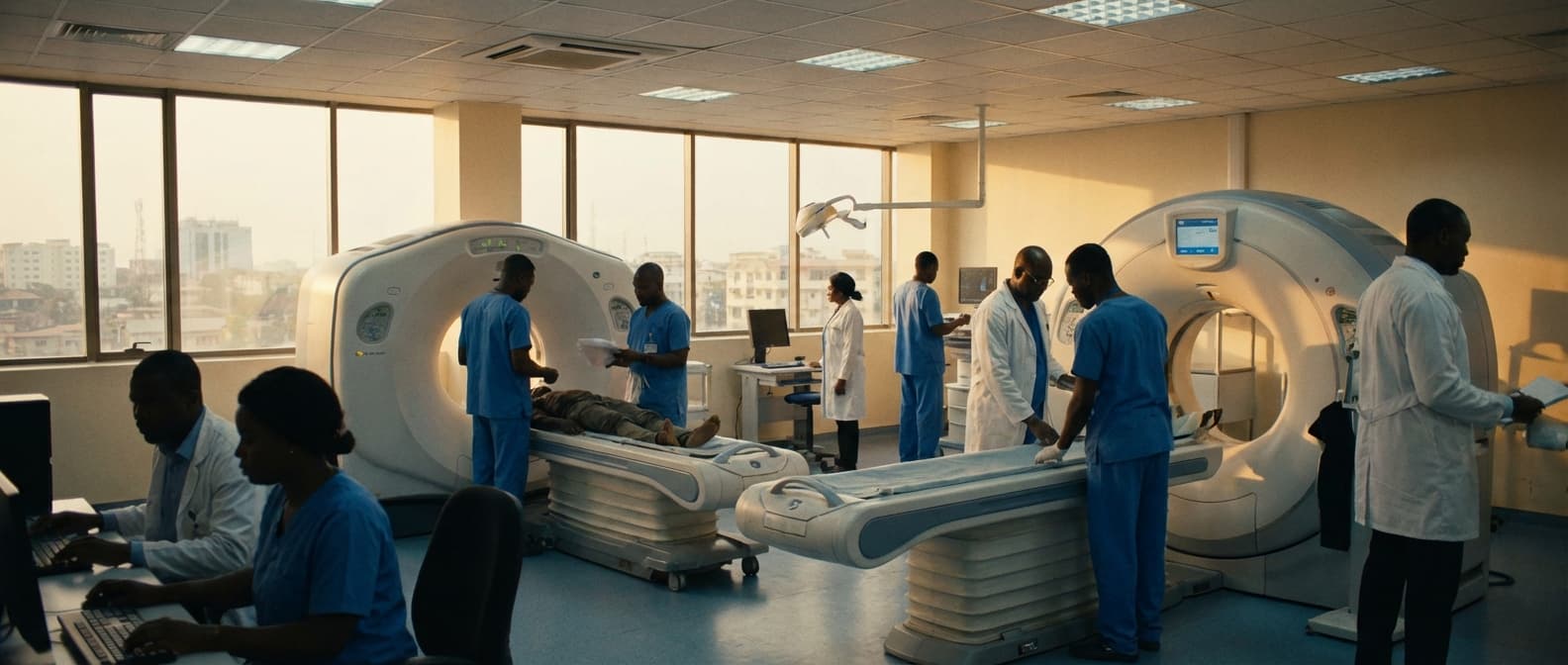
Imaging Acceptance Testing & QA in Tanzania
Engineering Excellence & Technical Support
Commissioning and periodic QA for CT/MRI/X‑ray/US/Mammo. High-standard technical execution following OEM protocols and local regulatory frameworks.
National Diagnostic Imaging Standards
Established and enforced national standards for diagnostic imaging equipment acceptance testing and quality assurance, ensuring consistent image quality and patient safety across Tanzania's healthcare facilities.
Automated Test Suite Development
Developed and deployed an automated test suite for image acquisition and processing, significantly reducing manual testing time and increasing the accuracy of acceptance tests for new imaging modalities.
Capacity Building for Technologists
Implemented comprehensive training programs for biomedical engineers and radiographers on best practices for imaging acceptance testing and ongoing quality assurance, empowering local expertise.
What Is Imaging Acceptance Testing & Qa In Tanzania?
Imaging Acceptance Testing (IAT) and Quality Assurance (QA) in Tanzania refers to the systematic evaluation of medical imaging systems and their associated software to ensure they meet predefined specifications, regulatory requirements, and operational standards before deployment and ongoing use. This service is critical for verifying that imaging modalities (e.g., X-ray, CT, MRI, Ultrasound, PET/CT) and Picture Archiving and Communication Systems (PACS) function correctly, produce diagnostically accurate images, and integrate seamlessly within the healthcare IT infrastructure. IAT is typically performed at the point of installation or significant upgrade, while QA is an ongoing process of monitoring and verification to maintain optimal performance and image quality over the lifespan of the equipment and systems.
| Who Needs Imaging Acceptance Testing & QA? | Typical Use Cases in Tanzania | |
|---|---|---|
| Healthcare Facilities: Hospitals (public and private), clinics, diagnostic imaging centers, and specialized medical institutions acquiring new or upgraded imaging equipment. This includes facilities introducing advanced imaging technologies or expanding their imaging services. | New System Installation: Validating the performance and functionality of newly installed X-ray machines, CT scanners, MRI systems, ultrasound units, mammography equipment, or nuclear medicine scanners. PACS/RIS Implementation or Upgrade: Ensuring successful integration and operational readiness of PACS and RIS for efficient image management and workflow automation. Software Updates and Patches: Testing the impact of significant software updates or patches on system performance, image quality, and interoperability. Periodic System Audits: Conducting scheduled QA checks to ensure ongoing compliance with quality standards and identify potential issues before they impact patient care. Troubleshooting and Root Cause Analysis: Investigating and resolving performance degradations or image quality issues identified through routine monitoring. Regulatory Audits: Demonstrating compliance with national and international imaging standards for accreditation and licensing purposes. | |
| Manufacturers and Vendors: Responsible for ensuring their equipment and software meet all specified requirements and pass acceptance testing before handover to the client. | Government Health Agencies: Overseeing the quality and safety of medical imaging services provided within the national healthcare system, often through accreditation and regulatory frameworks. Third-Party Service Providers: Companies specializing in medical equipment maintenance, calibration, and IT integration, often contracted to perform IAT and QA services. | Radiology and Imaging Departments: Directly impacted by the performance and reliability of imaging systems, necessitating their involvement in the testing and QA process. |
Key Components of Imaging Acceptance Testing & QA in Tanzania
- System Verification: Confirming that all hardware components (detectors, generators, gantry, consoles) and software modules function as per manufacturer specifications and site requirements.
- Image Quality Assessment: Evaluating image fidelity, resolution, contrast, noise levels, and artifact reduction using standardized phantoms and clinical image review. This is often quantified using objective metrics.
- Performance Testing: Measuring acquisition times, processing speeds, data transfer rates, and system throughput to ensure it meets clinical workflow demands.
- Integration Testing: Verifying interoperability with other healthcare systems, such as Electronic Health Records (EHR), RIS (Radiology Information Systems), and DICOM (Digital Imaging and Communications in Medicine) gateways.
- Workflow Validation: Simulating typical clinical scenarios to ensure the system supports efficient patient management, image acquisition, processing, and reporting.
- Security and Data Integrity: Assessing compliance with data protection regulations (e.g., patient confidentiality) and ensuring the integrity and security of imaging data during storage, retrieval, and transmission.
- Regulatory Compliance: Ensuring adherence to local and international medical device regulations and standards applicable in Tanzania.
- User Training and Documentation Review: Verifying that user manuals are accurate and comprehensive, and that end-users are adequately trained on system operation.
Who Needs Imaging Acceptance Testing & Qa In Tanzania?
Imaging Acceptance Testing & Quality Assurance (QA) are crucial for ensuring that medical imaging systems in Tanzania are functioning correctly, producing accurate and reliable diagnostic information, and meeting regulatory standards. This is vital for patient safety, effective treatment planning, and the overall efficiency of healthcare services.
| Target Customer/Department | Specific Needs/Benefits | Examples of Imaging Modalities |
|---|---|---|
| Hospitals (Radiology/Medical Imaging Department) | Ensure diagnostic accuracy, reduce misdiagnosis, optimize image quality, comply with national standards, improve workflow efficiency, maintain patient safety, minimize equipment downtime. | X-ray, CT scanners, MRI scanners, Ultrasound machines, Mammography units, Fluoroscopy systems, PACS (Picture Archiving and Communication System) |
| Hospitals (Other Clinical Departments) | Receive reliable images for diagnosis and treatment planning, trust the accuracy of the imaging data for patient care. | Ultrasound for obstetrics/gynecology, Endoscopy imaging, Digital radiography for orthopedics. |
| Diagnostic Imaging Centers | Maintain a reputation for high-quality imaging, attract more patients, ensure compliance with licensing and accreditation requirements, optimize throughput. | CT scanners, MRI scanners, X-ray machines, Ultrasound machines, DEXA scanners. |
| Specialty Clinics (e.g., Cardiology, Neurology, Oncology) | Obtain precise imaging for specialized diagnoses and treatment monitoring, ensure that imaging protocols are optimized for specific conditions. | Echocardiography machines, Neuroimaging (MRI/CT), PET scanners for oncology, Digital X-ray for musculoskeletal assessments. |
| Government Health Agencies & Regulatory Bodies | Oversee the quality and safety of medical imaging services nationwide, ensure adherence to established standards, protect public health. | All medical imaging modalities deployed in public healthcare facilities. |
| Medical Equipment Suppliers and Service Providers | Verify the proper installation and functionality of new equipment, provide post-installation and regular maintenance QA, build trust with clients, reduce warranty claims. | All types of medical imaging equipment they supply and service. |
| Research Institutions | Guarantee the consistency and accuracy of imaging data for research studies, ensure reproducibility of results, maintain data integrity. | Advanced imaging systems for research, MRI, PET, high-resolution CT. |
Who Needs Imaging Acceptance Testing & QA in Tanzania?
- Hospitals (Public and Private)
- Diagnostic Imaging Centers
- Specialty Clinics (e.g., Cardiology, Neurology, Oncology)
- Government Health Agencies & Regulatory Bodies
- Medical Equipment Suppliers and Service Providers
- Research Institutions
Imaging Acceptance Testing & Qa Process In Tanzania
This document outlines the typical workflow for Imaging Acceptance Testing & Quality Assurance (QA) processes in Tanzania, covering the journey from initial inquiry to final execution and sign-off. The process emphasizes adherence to established protocols, regulatory compliance, and ensuring the reliable functionality of imaging equipment and associated software.
| Stage | Description | Key Activities | Responsible Parties |
|---|---|---|---|
| Inquiry & Planning | Initiation of the testing process and defining its scope. | Client request, scope definition, objective setting, timeline agreement. | Client (Facility Management, IT, Clinical Staff), QA Provider/Vendor |
| Pre-Site Assessment (Optional) | Evaluating the installation environment. | Site survey, power check, network assessment, environmental factors. | QA Provider/Vendor, Facility Engineer |
| Test Protocol Development/Review | Creating or validating the testing procedures. | Protocol creation/review, referencing standards (IEC, TRPS), defining acceptance criteria. | QA Provider/Vendor, Client Representative, Regulatory Body (if applicable) |
| Equipment Installation & Verification | Ensuring correct setup of the imaging equipment. | Installation verification, adherence to manufacturer guidelines, initial safety checks. | Vendor/Installer, QA Provider/Vendor |
| Performance Testing | Executing the defined tests to evaluate functionality and quality. | Image quality tests, functional checks, dose verification, PACS/RIS integration, safety tests. | QA Provider/Vendor, Vendor Technicians (assisting) |
| Documentation & Reporting | Recording all test results and findings. | Data logging, issue recording, generating test reports. | QA Provider/Vendor |
| Issue Resolution & Re-testing | Addressing and rectifying identified problems. | Problem diagnosis, corrective actions, re-testing to confirm resolution. | Vendor/Service Provider, QA Provider/Vendor |
| Client Acceptance & Sign-off | Formal acknowledgement of successful testing. | Review of reports, client approval, formal sign-off. | Client Representative, QA Provider/Vendor |
| Post-Acceptance Monitoring | Planning for ongoing quality control. | Recommendations for periodic QA, preventative maintenance schedules. | Client (Facility Management, Biomedical Engineers), QA Provider/Vendor |
Key Stages in Imaging Acceptance Testing & QA Process:
- Inquiry & Planning: The process begins with an inquiry from a client (e.g., a hospital, clinic, or government health facility) regarding the need for acceptance testing for new or existing imaging equipment. This leads to a collaborative planning phase where scope, objectives, timelines, and required resources are defined.
- Pre-Site Assessment (Optional but Recommended): Before formal testing, a preliminary assessment of the installation site may be conducted to identify potential environmental factors, power requirements, network connectivity, and any pre-existing conditions that could impact testing.
- Test Protocol Development/Review: A detailed test protocol is developed or reviewed. This protocol outlines specific tests, parameters, acceptance criteria, and procedures based on manufacturer specifications, international standards (e.g., IEC), and local regulatory requirements (e.g., Tanzania Radiation Protection Service - TRPS guidelines).
- Equipment Installation & Verification: The imaging equipment is installed at the client's site. QA personnel verify that the installation adheres to manufacturer guidelines and safety standards.
- Performance Testing: This is the core of the acceptance testing. It involves a series of tests to evaluate the equipment's operational performance. This includes:
- Image Quality Assessment: Evaluating resolution, contrast, noise, artifacts, and overall image fidelity using phantoms, test images, and clinical images.
- Functional Testing: Verifying all operational modes, features, controls, and accessories of the imaging equipment.
- Dose/Radiation Output Verification (for relevant modalities): Ensuring radiation output is within safe and specified limits, and that dose reporting mechanisms are accurate.
- Image Archiving & Retrieval (PACS/RIS Integration): Testing the seamless transfer, storage, retrieval, and display of images through Picture Archiving and Communication Systems (PACS) and Radiology Information Systems (RIS).
- Network Connectivity & Data Transfer: Confirming reliable network connectivity and efficient data transfer speeds.
- Safety Testing: Verifying all safety features, interlocks, and emergency shutdown mechanisms are functional.
- Documentation & Reporting: All test results, observations, and deviations from the protocol are meticulously documented. A comprehensive test report is generated, summarizing the findings, including any identified issues and recommendations.
- Issue Resolution & Re-testing: If any issues or failures are identified during testing, they are documented, and a corrective action plan is developed with the vendor or service provider. Re-testing is performed to verify that the issues have been resolved.
- Client Acceptance & Sign-off: Once all tests are successfully completed and any identified issues are rectified to the satisfaction of the client and regulatory bodies, formal acceptance is granted, and the client provides sign-off.
- Post-Acceptance Monitoring & Ongoing QA: While not strictly acceptance testing, the process often includes recommendations or plans for ongoing QA procedures, preventative maintenance, and periodic performance checks to ensure continued optimal functionality and safety.
Imaging Acceptance Testing & Qa Cost In Tanzania
Imaging Acceptance Testing (IAT) and Quality Assurance (QA) costs in Tanzania are influenced by several key factors, leading to a range of pricing. These tests are crucial for ensuring that imaging systems, from medical devices to industrial scanners, function correctly and produce reliable results before widespread deployment or integration. The costs can vary significantly based on the complexity of the imaging modality, the scope of the testing required, the expertise of the QA team, and the geographical location within Tanzania. It's important to note that a standardized pricing structure is not widely published, and quotes are often bespoke.
| Service Component | Estimated Range (TZS) Per Test/Day/Project |
|---|---|
| Basic System Check (e.g., power-on, basic functionality) | 50,000 - 150,000 TZS per simple device |
| Standard Imaging QA (e.g., X-ray, Ultrasound - basic image quality, calibration) | 150,000 - 500,000 TZS per day/per basic system |
| Advanced Imaging QA (e.g., CT, MRI - detailed image analysis, artifact testing, dose validation) | 500,000 - 2,000,000+ TZS per day/per complex system |
| Specialized Modality Testing (e.g., industrial imaging, specific scientific instruments) | Custom Quote (potentially higher due to unique requirements) |
| On-site Visit & Logistics (per diem, travel, accommodation - shared across tests) | 100,000 - 300,000 TZS per day per team member (variable) |
| Detailed Reporting & Documentation | Included in daily rates, or a separate fee of 50,000 - 500,000 TZS depending on complexity |
| Consultancy & Advisory Services | 200,000 - 750,000 TZS per day |
Key Pricing Factors for Imaging Acceptance Testing & QA in Tanzania
- Complexity of Imaging Modality: Advanced technologies like MRI, CT scanners, or sophisticated industrial inspection systems require more in-depth and specialized testing, thus increasing costs compared to simpler X-ray or ultrasound equipment.
- Scope of Testing: The number of tests performed, the specific parameters validated (e.g., image resolution, contrast, artifact detection, radiation safety), and the level of detail in reporting directly impact the overall cost.
- Testing Environment: Whether testing is conducted on-site at the client's facility or at a dedicated QA lab affects logistics and associated expenses. On-site testing may incur travel, accommodation, and per diem costs for the QA team.
- Duration of Testing: The time required to complete the acceptance testing is a primary cost driver. Complex systems or extensive test suites will naturally take longer.
- Expertise and Experience of QA Team: Highly specialized and experienced QA engineers or technicians, especially those with certifications or specific knowledge of particular imaging technologies, will command higher rates.
- Software and Hardware Requirements: Specialized software for image analysis or specific calibrated phantoms and test equipment needed for validation contribute to the cost.
- Regulatory Compliance: If the imaging system needs to meet specific national (e.g., Tanzania Food and Drugs Authority - TFDA) or international regulatory standards, the testing protocols and documentation requirements will be more rigorous and thus more expensive.
- Third-Party Involvement: Engaging independent testing agencies or consultants can add to the cost but may provide added assurance and impartiality.
- Location within Tanzania: While less of a primary driver than the technical factors, logistical costs for reaching remote areas or major urban centers like Dar es Salaam can influence the final quote.
- Reporting and Documentation: The depth and format of the final QA report, including detailed findings, recommendations, and validation certificates, can affect the price.
Affordable Imaging Acceptance Testing & Qa Options
For imaging facilities and healthcare providers, ensuring the accuracy and reliability of imaging equipment through robust Acceptance Testing (AT) and Quality Assurance (QA) is critical for patient safety and diagnostic confidence. However, traditional testing methods can be expensive and resource-intensive. This guide explores affordable imaging AT & QA options, highlighting value bundles and cost-saving strategies to help you optimize your testing processes without compromising quality.
| Strategy | Description | Cost-Saving Potential | Implementation Notes |
|---|---|---|---|
| Value Bundling (Vendor-Provided) | Negotiate packages that combine AT, initial QA, and potentially ongoing QA services for multiple modalities or over a period. Vendors may offer discounts for bundled services. | High. Bulk discounts, reduced administrative overhead by dealing with one provider. | Requires careful contract review. Ensure the bundle covers all essential tests. Compare bundled pricing against individual services from multiple vendors. |
| Tiered Service Agreements | Opt for service agreements with different levels of service (e.g., basic QA checks vs. comprehensive AT). Choose the tier that best suits your facility's needs and budget. | Medium to High. Pay only for the services you need. Avoid overspending on advanced features if not required. | Understand the specific tests included in each tier. Consider future needs when selecting a tier. |
| In-House QA with External AT | Perform routine QA checks using trained internal staff and utilize third-party experts for more complex Acceptance Testing, especially for new equipment or significant upgrades. | High. Reduces ongoing costs associated with external QA visits. Leverages existing staff. | Requires investment in staff training and appropriate QA equipment. Ensure staff competency and adherence to protocols. |
| Utilizing Simulator Software | Employ specialized software that can simulate various imaging scenarios and phantom data for testing image quality parameters without requiring physical phantoms for every test. | Medium. Reduces the cost and maintenance of physical phantoms and some manual testing procedures. | Ensure the software is validated and meets regulatory requirements. May not be suitable for all types of tests or modalities. |
| Remote QA Monitoring & Support | Leverage vendors offering remote monitoring of QA data and remote support for troubleshooting. This can reduce the need for on-site visits for minor issues. | Medium. Reduces travel costs and minimizes equipment downtime by enabling quicker issue resolution. | Requires reliable network infrastructure. Ensure data security and privacy compliance. |
| Cooperative Purchasing / Group Buying | Collaborate with other imaging facilities in your network or region to negotiate bulk discounts on AT & QA services or equipment. | High. Leverages collective purchasing power for significant cost reductions. | Requires coordination and agreement among participating facilities. Centralized management can be beneficial. |
Key Considerations for Affordable Imaging AT & QA
- Understanding the Scope: Clearly define the required testing for each modality to avoid unnecessary expenses.
- Leveraging Technology: Explore automated testing tools and software that can reduce manual labor and time.
- Third-Party Expertise: Partnering with specialized third-party vendors can offer cost-effective solutions and access to expert knowledge.
- Internal Training & Empowerment: Investing in training your in-house technicians can build capacity and reduce reliance on external services for routine QA.
- Standardization: Adopting standardized testing protocols across different modalities can streamline the process and reduce complexity.
- Preventative Maintenance Integration: Aligning AT/QA with preventative maintenance schedules can identify potential issues early, preventing costly repairs.
Verified Providers In Tanzania
In the landscape of healthcare in Tanzania, identifying reliable and high-quality medical providers is paramount for individuals seeking the best possible care. Franance Health stands out as a network of verified healthcare facilities and practitioners committed to excellence, patient safety, and ethical practices. Their rigorous credentialing process ensures that every provider within their network meets stringent standards, offering patients peace of mind and access to superior medical services.
| Credentialing Aspect | Franance Health Standard | Patient Benefit |
|---|---|---|
| Medical Licensure & Certification | Strict verification of all licenses and certifications with relevant Tanzanian authorities. | Ensures providers are legally qualified and recognized to practice. |
| Professional Experience | Minimum years of proven experience in their respective medical fields. | Access to seasoned professionals with practical expertise. |
| Clinical Competency | Assessment of diagnostic and treatment skills through peer review and case studies. | Higher probability of accurate diagnoses and effective treatment plans. |
| Ethical Conduct | Background checks and adherence to a strict code of medical ethics. | Trustworthy providers who prioritize patient well-being and confidentiality. |
| Facility Standards | Inspection of facilities for hygiene, safety, and appropriate equipment. | Safe and comfortable environment for receiving medical care. |
| Continuing Education | Requirement for ongoing professional development and training. | Providers stay updated with the latest medical advancements and techniques. |
Why Franance Health is the Best Choice:
- Unwavering commitment to quality assurance and patient safety through a comprehensive vetting process.
- Access to a diverse range of specialized medical services, from general practice to advanced diagnostics and treatments.
- Emphasis on continuous professional development for all affiliated healthcare professionals.
- Transparent billing practices and a patient-centric approach to care.
- Leveraging modern technology and best practices in healthcare delivery.
- Strong partnerships with reputable local and international health organizations.
Scope Of Work For Imaging Acceptance Testing & Qa
This document outlines the Scope of Work for Imaging Acceptance Testing and Quality Assurance (QA). It details the technical deliverables required and the standard specifications to be adhered to during the testing process. The objective is to ensure that the imaging system meets all functional, performance, and quality requirements before deployment and ongoing operation.
| Category | Technical Deliverable | Standard Specification/Reference | Verification Method |
|---|---|---|---|
| Image Acquisition | Acquisition Device Calibration Reports | Manufacturer's calibration guidelines, ISO 13485 (for medical devices) | Review of calibration logs and certificates |
| Image Acquisition | Acquired Image Files (various modalities) | DICOM Conformance Statement, DICOM Part 10 (Storage) | Visual inspection, DICOM validation tools |
| Image Quality | Image Quality Assessment Reports | Radiographic criteria (e.g., ACR, RSNA), visual acuity standards, signal-to-noise ratio (SNR) thresholds | Expert review by radiologists/technologists, objective image analysis tools |
| Image Quality | Artifact Analysis Report | Defined acceptable artifact levels, absence of critical diagnostic artifacts | Visual inspection, comparison with artifact libraries |
| Image Processing | Processed Image Samples | Defined image enhancement algorithms, reconstruction parameters | Visual comparison of pre- and post-processing, objective metrics (e.g., contrast, sharpness) |
| Image Processing | Processing Speed Benchmarks | Target processing times per image/study (e.g., seconds/minute) | Performance testing tools, timing measurements |
| Data Management & Archival | DICOM Metadata Validation Reports | DICOM Part 10 (Storage), compliance with local data dictionary/HL7 | DICOM validation tools, data extraction and comparison |
| Data Management & Archival | Archived Image Retrieval Timeliness | Defined retrieval SLA (e.g., < 5 seconds for active archive) | Load testing, simulated retrieval requests |
| Data Management & Archival | Data Integrity Check Results | Checksum verification, duplicate record detection | Automated scripts, manual spot checks |
| System Integration | Interoperability Test Reports (e.g., with PACS, EMR/EHR) | HL7 standards, DICOM Modality Worklist/Provider, IHE profiles | End-to-end workflow simulation, message tracing |
| System Integration | Data Mapping Validation | Accurate mapping of patient demographics, study information, and image metadata | Data comparison between systems, workflow testing |
| Performance & Stability | Load Testing & Stress Test Reports | Expected user load, concurrent study volume, system uptime requirements | Automated load generation tools, long-duration stability tests |
| Performance & Stability | Error Handling & Recovery Test Results | Defined error codes, graceful degradation, data recovery procedures | Simulated system failures (network, storage, application), recovery time objective (RTO) |
| Security | Access Control & Audit Log Verification | Role-based access control policies, HIPAA compliance, audit trail requirements | Penetration testing (optional), access log review, user privilege testing |
| User Interface & Workflow | User Acceptance Testing (UAT) Sign-off | Usability heuristics, defined user workflows, task completion rates | End-user testing, feedback collection and resolution |
Key Objectives of Imaging Acceptance Testing & QA
- Verify functional correctness of all imaging features and workflows.
- Validate system performance against defined benchmarks (e.g., image acquisition speed, processing time, network throughput).
- Ensure image quality meets established diagnostic and archival standards.
- Confirm integration with other systems (e.g., PACS, EMR/EHR) is seamless and data integrity is maintained.
- Assess system reliability, stability, and error handling capabilities.
- Validate compliance with relevant regulatory standards and internal policies.
Service Level Agreement For Imaging Acceptance Testing & Qa
This Service Level Agreement (SLA) outlines the performance expectations and guarantees for Imaging Acceptance Testing and Quality Assurance (QA) services provided by [Your Company Name/Provider Name] to [Client Company Name/Client Name]. This SLA defines response times for issue reporting and resolution, as well as uptime guarantees for the testing environments and associated tools.
| Service Component | Service Level Objective (SLO) | Measurement Method | Reporting |
|---|---|---|---|
| Issue Reporting & Acknowledgment | Within 1 Business Hour | Time from client's official report submission (email, ticketing system) to provider's acknowledgment. | Monthly performance report. |
| Issue Resolution - Critical (e.g., system down, major functionality blocked) | Within 4 Business Hours | Time from acknowledgment to issue resolution (workaround or permanent fix). | Monthly performance report. |
| Issue Resolution - High (e.g., significant deviation from expected behavior) | Within 8 Business Hours | Time from acknowledgment to issue resolution (workaround or permanent fix). | Monthly performance report. |
| Issue Resolution - Medium (e.g., minor deviations, UI inconsistencies) | Within 2 Business Days | Time from acknowledgment to issue resolution (workaround or permanent fix). | Monthly performance report. |
| Issue Resolution - Low (e.g., cosmetic issues, documentation errors) | Within 5 Business Days | Time from acknowledgment to issue resolution. | Monthly performance report. |
| Testing Environment Uptime | 99.5% Uptime | Calculated monthly: (Total minutes in month - Downtime minutes) / Total minutes in month * 100%. Downtime excludes scheduled maintenance. | Monthly performance report. |
| QA Tool Availability | 99.0% Uptime | Calculated monthly: (Total minutes in month - Downtime minutes) / Total minutes in month * 100%. Downtime excludes scheduled maintenance. | Monthly performance report. |
| Scheduled Maintenance | Max 4 hours per month, with 48-hour advance notice | Downtime due to planned maintenance activities. | Communicated via email/client portal. |
Key Performance Indicators (KPIs)
- Response Time: The maximum time allowed for acknowledgment and initial assessment of a reported issue.
- Resolution Time: The maximum time allowed for resolving a reported issue, categorized by severity.
- Uptime Guarantee: The minimum percentage of time the testing environments and QA tools are expected to be available and operational.
- Service Credit: Compensation provided to the client in the event of failure to meet defined SLAs.
Frequently Asked Questions

Ready when you are
Let's scope your Imaging Acceptance Testing & QA in Tanzania project in Tanzania.

Scaling healthcare logistics and technical systems across the entire continent.