
Total Cost of Ownership (TCO) & Lifecycle Budgeting Service in Tanzania
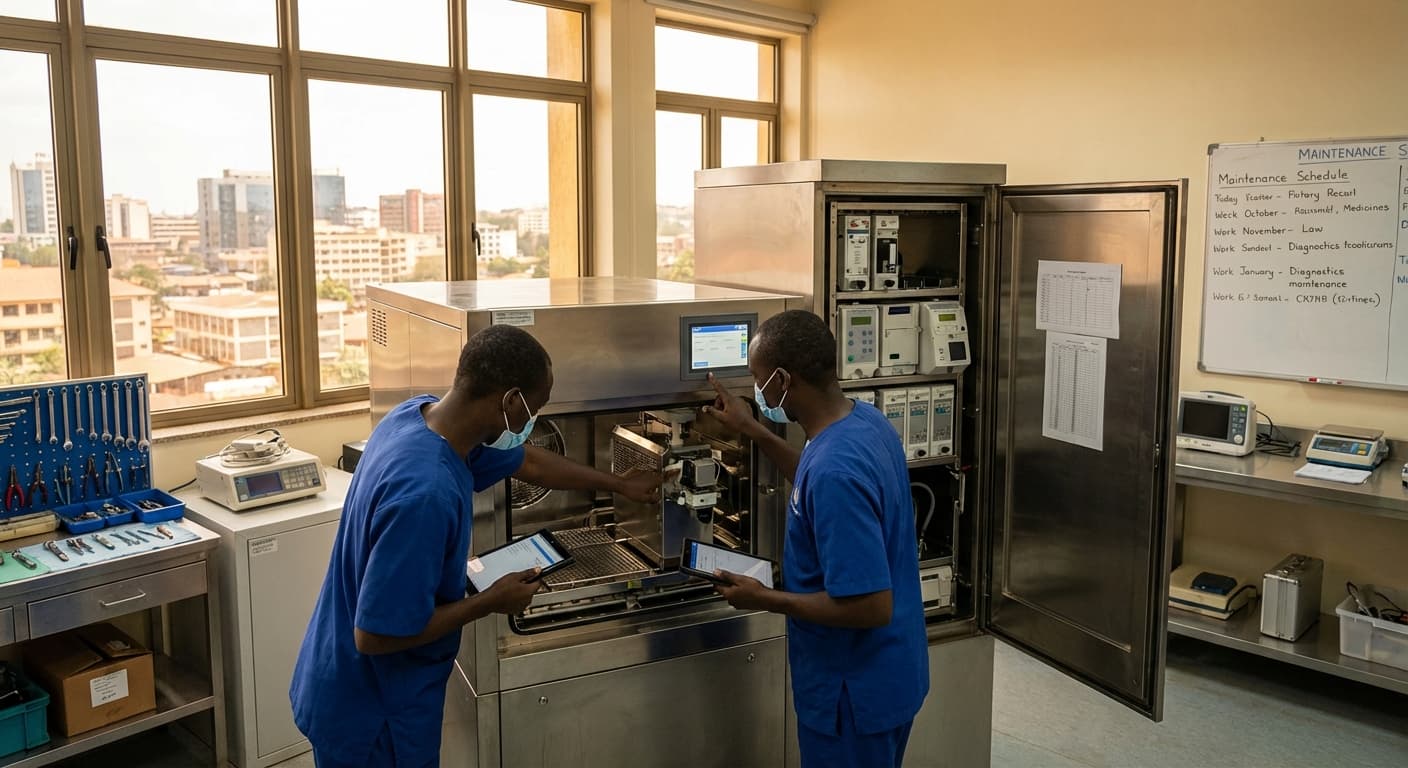
Engineering Excellence & Technical Support
Total Cost of Ownership (TCO) & Lifecycle Budgeting Service High-standard technical execution following OEM protocols and local regulatory frameworks.
Predictive Maintenance Cost Optimization
Leveraging historical data and advanced analytics, our TCO & Lifecycle Budgeting service empowers Tanzanian businesses to predict potential equipment failures. This proactive approach minimizes costly emergency repairs, reduces unplanned downtime, and optimizes spare parts inventory, ultimately slashing operational expenditures throughout the asset's lifecycle.
Energy Efficiency Lifecycle Integration
We integrate energy efficiency as a core component of TCO calculations for assets in Tanzania. By analyzing power consumption, renewable energy integration opportunities (e.g., solar PV), and potential energy price fluctuations, we provide a clear financial roadmap for selecting the most cost-effective and sustainable solutions over the entire asset lifespan.
Strategic Procurement & Disposal Planning
Our service goes beyond initial purchase costs, encompassing end-of-life disposal strategies and residual value estimations for Tanzanian enterprises. By meticulously planning procurement timelines and optimizing disposal methods (including recycling and resale opportunities), we ensure maximum value realization and minimize unforeseen liabilities, contributing to a robust lifecycle budget.
What Is Total Cost Of Ownership (Tco) & Lifecycle Budgeting Service In Tanzania?
Total Cost of Ownership (TCO) and Lifecycle Budgeting services in Tanzania represent a sophisticated financial management approach focused on comprehensively understanding and planning for all expenses associated with an asset, project, or system throughout its entire lifespan. TCO extends beyond the initial acquisition cost to encompass all direct and indirect costs incurred from procurement, deployment, operation, maintenance, and eventual disposal or decommissioning. Lifecycle Budgeting, inextricably linked to TCO, is the process of projecting and allocating financial resources for these identified costs over the asset's or project's entire lifecycle. This service is crucial for informed decision-making, risk mitigation, and optimizing financial performance within the Tanzanian context, which may involve specific regulatory considerations, import duties, and local operational realities.
| Who Needs TCO & Lifecycle Budgeting Services in Tanzania? | Typical Use Cases in Tanzania |
|---|---|
| Businesses and Corporations: Particularly those with significant capital investments in infrastructure, equipment, or technology. This includes manufacturing, telecommunications, mining, energy, and agriculture sectors. | Government Agencies and Public Sector Entities: For strategic procurement of large-scale infrastructure projects (e.g., roads, power plants, public transport), IT systems, and public utilities, ensuring long-term financial sustainability and value for money. |
| Financial Institutions: For assessing the long-term viability of asset financing and investment decisions. | Non-Governmental Organizations (NGOs) and Development Partners: For managing project budgets effectively over extended program lifecycles and ensuring the sustainability of implemented solutions. |
| Project Developers and Managers: For accurate financial planning and risk assessment of construction, energy, and infrastructure projects. | IT Departments and CIOs: For strategic planning and budgeting of IT infrastructure, software, and cloud services, considering obsolescence and upgrade cycles. |
| Procurement and Supply Chain Managers: To make informed purchasing decisions based on long-term cost-effectiveness rather than just initial price. | Facilities Management Teams: For optimizing the operational and maintenance budgets of buildings, plants, and equipment. |
Key Components of TCO & Lifecycle Budgeting Services in Tanzania
- Initial Acquisition Costs: Direct purchase price, taxes, duties, shipping, installation, and initial setup.
- Operating Costs: Energy consumption, consumables, labor (operational staff), licensing fees, and performance-related costs.
- Maintenance and Repair Costs: Scheduled preventive maintenance, unscheduled repairs, spare parts, service contracts, and technician labor.
- Upgrade and Enhancement Costs: Costs associated with technology upgrades, feature enhancements, and retrofitting for improved performance or compliance.
- Downtime and Lost Revenue: Quantifiable financial impact of asset unavailability due to maintenance, breakdowns, or planned obsolescence.
- Decommissioning and Disposal Costs: Costs associated with removal, dismantling, environmental remediation, and recycling or disposal of the asset at the end of its useful life.
- Financing Costs: Interest on loans, depreciation, and amortization.
- Training and Skill Development: Costs associated with training personnel to operate and maintain the asset effectively.
- Risk and Contingency: Allocation of funds to cover unforeseen events, price escalations, or regulatory changes.
Who Needs Total Cost Of Ownership (Tco) & Lifecycle Budgeting Service In Tanzania?
In Tanzania, businesses and organizations that undertake significant asset acquisition, infrastructure development, or long-term project planning are prime candidates for Total Cost of Ownership (TCO) and Lifecycle Budgeting services. These services are crucial for making informed financial decisions, optimizing resource allocation, and ensuring the long-term financial health of an organization. They move beyond initial purchase price to account for all costs incurred over an asset's or project's lifespan, including acquisition, operation, maintenance, upgrades, and eventual disposal. This holistic approach helps to identify potential hidden costs, compare alternatives effectively, and secure sustainable funding.
| Target Customer Segment | Key Departments/Functions Benefiting |
|---|---|
| Government Agencies & Public Sector Organizations | Planning & Budgeting, Procurement, Infrastructure Development, Finance, Public Works, Ministry of Finance |
| Large-Scale Infrastructure Developers (e.g., Roads, Ports, Power Plants) | Project Management, Finance, Engineering, Procurement, Operations & Maintenance, Investment Planning |
| Manufacturing & Industrial Companies | Operations, Finance, Procurement, Maintenance, Engineering, Capital Expenditure Planning |
| Energy & Utilities Providers (Electricity, Water, Gas) | Asset Management, Finance, Operations, Engineering, Strategic Planning, Regulatory Affairs |
| Transportation & Logistics Companies (Airlines, Shipping, Rail, Fleet Management) | Fleet Management, Finance, Operations, Procurement, Maintenance, Route Planning |
| Financial Institutions & Banks | IT Infrastructure Management, Facilities Management, Risk Management, Finance, Investment Banking (for client advisory) |
| Real Estate Developers & Property Management Firms | Asset Management, Finance, Property Operations, Development Planning, Investment Analysis |
| Telecommunications Companies | Network Operations, Finance, Procurement, Engineering, Capital Investment Planning, Infrastructure Management |
| Mining & Natural Resources Sector | Operations, Finance, Capital Projects, Asset Management, Procurement, Environmental & Social Governance (ESG) |
| Large Agricultural Enterprises | Farm Management, Operations, Finance, Procurement (for machinery & equipment), Logistics |
Target Customers for TCO & Lifecycle Budgeting Services in Tanzania:
- Government Agencies & Public Sector Organizations
- Large-Scale Infrastructure Developers
- Manufacturing & Industrial Companies
- Energy & Utilities Providers
- Transportation & Logistics Companies
- Financial Institutions & Banks
- Real Estate Developers & Property Management Firms
- Telecommunications Companies
- Mining & Natural Resources Sector
- Large Agricultural Enterprises
Total Cost Of Ownership (Tco) & Lifecycle Budgeting Service Process In Tanzania
This document outlines the workflow for a Total Cost of Ownership (TCO) and Lifecycle Budgeting service provided in Tanzania. The process is designed to be comprehensive, from initial client inquiry to the final delivery of TCO and lifecycle budget reports, ensuring a clear understanding of the long-term financial implications of asset acquisition and management.
| Stage | Description | Key Activities | Deliverables | Responsible Party |
|---|---|---|---|---|
| The client expresses interest in TCO and lifecycle budgeting services. This stage involves understanding their needs and defining the scope of the engagement. | Receive and acknowledge client inquiry, hold initial consultation, discuss objectives and desired outcomes, identify the assets/projects to be analyzed, determine the timeframe for the analysis, discuss potential data sources, agree on project scope and preliminary budget, sign a Letter of Engagement (LOE). | Initial Consultation Summary, Agreed Project Scope Document, Signed Letter of Engagement (LOE). | Client, Service Provider (Consultant) |
| Gathering all relevant data pertaining to the lifecycle of the identified assets or projects. This is a critical and often time-intensive phase. | Identify all cost drivers across the asset lifecycle (acquisition, operation, maintenance, disposal, etc.), collect historical data (purchase records, maintenance logs, energy consumption, etc.), gather future projections (inflation rates, technology advancements, regulatory changes, etc.), conduct site visits (if applicable), interview key stakeholders, and perform initial data validation and cleansing. | Comprehensive Data Inventory, Validated Dataset, Stakeholder Interview Summaries. | Service Provider (Consultant), Client (for data provision) |
| Developing robust financial models to calculate TCO and project lifecycle costs based on the collected data and agreed-upon assumptions. | Define the lifecycle stages for modeling, select appropriate TCO and lifecycle budgeting methodologies, develop the financial model (using spreadsheets, specialized software, etc.), incorporate discount rates for Net Present Value (NPV) calculations, run sensitivity analyses and scenario planning, validate model outputs with client assumptions. | TCO Calculation Model, Lifecycle Budget Projections, Sensitivity Analysis Reports, Scenario Planning Outputs. | Service Provider (Consultant) |
| Consolidating the findings into clear, actionable reports and presenting them to the client. | Draft the TCO and lifecycle budget report, including executive summary, methodology, detailed cost breakdown, key findings, recommendations, and risk assessment, review draft report with client for feedback, revise report based on feedback, prepare presentation materials, conduct formal presentation of findings and recommendations to client stakeholders. | Draft TCO & Lifecycle Budget Report, Final TCO & Lifecycle Budget Report, Presentation Slides. | Service Provider (Consultant), Client (for review and feedback) |
| Providing ongoing support and potentially conducting reviews to ensure the client can effectively utilize the provided TCO and lifecycle budgeting insights. | Answer client questions regarding the report and model, provide clarification on methodologies and assumptions, offer training on using the TCO/budgeting tools (if applicable), schedule a follow-up meeting to discuss implementation of recommendations, conduct a post-project review to assess client satisfaction and identify areas for service improvement. | Clarification Notes, Training Materials (if applicable), Post-Project Review Minutes. | Service Provider (Consultant), Client |
Key Stages of the TCO & Lifecycle Budgeting Service Process
- Initial Inquiry & Scoping
- Data Collection & Analysis
- TCO & Lifecycle Budget Modeling
- Report Generation & Presentation
- Post-Delivery Support & Review
Total Cost Of Ownership (Tco) & Lifecycle Budgeting Service Cost In Tanzania
Understanding the Total Cost of Ownership (TCO) and Lifecycle Budgeting for services in Tanzania is crucial for organizations to make informed financial decisions, avoid unexpected expenses, and optimize resource allocation over the entire lifespan of a service. TCO encompasses not just the initial acquisition or implementation cost, but also all ongoing operational, maintenance, and eventual disposal expenses. Lifecycle budgeting extends this by planning for these costs across the entire duration a service is in use. This service is particularly valuable for IT infrastructure, software implementations, fleet management, facility maintenance, and any service with a significant long-term financial commitment.
Pricing for TCO & Lifecycle Budgeting services in Tanzania is influenced by several key factors. These include the complexity and scope of the services being analyzed, the duration of the lifecycle being budgeted, the level of detail required in the analysis, the experience and reputation of the consulting firm, and the specific industry and regulatory environment. For smaller, less complex projects, a fixed fee might be offered, while larger, more intricate engagements will likely be project-based or time-and-materials.
| Service Type (Indicative) | Typical Lifecycle (Years) | Estimated Price Range (TZS) | Notes |
|---|---|---|---|
| Basic TCO/Lifecycle Budget for a single IT asset (e.g., Server, Software License) | 3-5 | 2,500,000 - 7,500,000 TZS | Focus on direct acquisition, maintenance, and support costs. Assumes readily available data. |
| Comprehensive TCO/Lifecycle Budget for a small IT system (e.g., Small business server, network upgrade) | 5-7 | 7,000,000 - 20,000,000 TZS | Includes implementation, training, ongoing support, and potential upgrade/replacement planning. |
| Detailed TCO/Lifecycle Budget for a medium-sized IT infrastructure (e.g., SME data center, CRM implementation) | 5-10 | 18,000,000 - 50,000,000 TZS | In-depth analysis of hardware, software, personnel, security, and operational costs, including risk assessment. |
| Extensive TCO/Lifecycle Budget for a large-scale project (e.g., ERP implementation, Facility management for a large organization) | 10-15+ | 40,000,000+ TZS | Requires significant data collection, stakeholder interviews, complex modeling, and scenario planning. Pricing is highly project-specific and can exceed 100,000,000 TZS for very large and complex undertakings. |
| Consulting Fees for TCO/Lifecycle Budgeting Advisory (Hourly/Daily Rate) | N/A | 150,000 - 500,000+ TZS per hour | For ad-hoc advice, data validation, or specific analysis components. Varies significantly by consultant seniority and firm. |
Key Pricing Factors for TCO & Lifecycle Budgeting Services in Tanzania
- Scope and Complexity of Services: Analyzing a single software license will be far less expensive than assessing an entire data center infrastructure or a large-scale construction project.
- Lifecycle Duration: The longer the period for which the budget needs to be developed (e.g., 3 years vs. 10 years), the more extensive the analysis and data required, impacting cost.
- Level of Detail & Granularity: High-level estimations will be cheaper than detailed, line-item-by-line-item budgeting with sensitivity analysis and scenario planning.
- Data Availability and Quality: If the client has readily available, accurate historical data, the cost of data gathering and validation will be lower.
- Consultant Expertise and Reputation: Established firms with a proven track record and specialized expertise will command higher fees.
- Industry and Regulatory Requirements: Certain industries may have specific reporting or compliance needs that add to the complexity and cost of the analysis.
- Reporting and Deliverables: The format and depth of the final report, including presentations, dashboards, and training, will influence pricing.
- Project Management Overhead: The administrative and project management efforts involved in conducting the study.
- Travel and Accommodation (if applicable): For on-site assessments or client meetings outside the consultant's primary location.
Affordable Total Cost Of Ownership (Tco) & Lifecycle Budgeting Service Options
Our Affordable Total Cost of Ownership (TCO) & Lifecycle Budgeting Service offers comprehensive solutions to help businesses understand, manage, and reduce their long-term expenses. We go beyond initial purchase prices to encompass all costs associated with an asset or system throughout its entire lifespan. This includes acquisition, operation, maintenance, support, upgrades, and eventual disposal. By providing clear visibility into these expenditures, we empower you to make informed financial decisions, optimize resource allocation, and unlock significant cost savings.
| Value Bundle Option | Key Features | Target Audience | Estimated Cost Savings Potential |
|---|---|---|---|
| Foundation TCO Analysis | Initial TCO assessment, asset inventory, basic cost categorization, identification of major cost drivers. | Small to medium-sized businesses, new asset acquisitions, startups. | 10-15% |
| Comprehensive Lifecycle Budgeting | In-depth TCO analysis, detailed lifecycle cost modeling, operational expenditure forecasting, maintenance planning, risk assessment. | Growing businesses, organizations with complex asset portfolios, businesses seeking to optimize existing operations. | 15-25% |
| Strategic TCO Optimization & Cost Reduction | All features of Comprehensive Lifecycle Budgeting, plus strategic recommendations for cost reduction, vendor negotiation support, technology lifecycle planning, disposal optimization. | Large enterprises, organizations with high asset values, businesses undergoing major transformations, businesses aiming for market leadership in cost efficiency. | 20-35%+ |
Key Benefits of Our TCO & Lifecycle Budgeting Services
- Proactive Cost Control: Identify and mitigate hidden costs before they impact your bottom line.
- Optimized Investment Decisions: Make strategic choices based on long-term value, not just upfront price.
- Enhanced Budget Predictability: Develop accurate and reliable budgets with a complete understanding of lifecycle expenditures.
- Improved Asset Performance: Ensure assets are maintained effectively, leading to longer lifespans and reduced downtime.
- Strategic Resource Allocation: Allocate capital and operational budgets more efficiently.
- Reduced Risk of Unexpected Expenses: Minimize surprises and financial shocks due to unforeseen costs.
- Increased Return on Investment (ROI): Maximize the value derived from your assets and investments.
- Sustainable Financial Planning: Build a robust financial framework for long-term business success.
Verified Providers In Tanzania
In the pursuit of reliable healthcare access, identifying verified providers is paramount. In Tanzania, Franance Health stands out as a leading entity committed to ensuring quality and trustworthiness in healthcare services. Their rigorous credentialing process and dedication to patient well-being make them a benchmark for excellence. This document outlines what Franance Health credentials entail and why they represent the best choice for individuals seeking dependable medical care.
| Benefit of Choosing Franance Health Verified Providers | Description |
|---|---|
| Peace of Mind: | Knowing that your healthcare provider has undergone a thorough verification process by a reputable organization like Franance Health offers significant peace of mind. |
| Access to Expertise: | Franance Health's network includes a wide range of specialists, ensuring you can find the right expert for your specific medical condition. |
| Improved Patient Outcomes: | Verified providers are more likely to adhere to best practices, leading to more accurate diagnoses and effective treatments, thus improving patient outcomes. |
| Enhanced Patient Experience: | The emphasis on a patient-centric approach means you can expect better communication, more attentive care, and a more positive overall healthcare experience. |
| Reduced Risk of Medical Errors: | Rigorous vetting and quality assurance contribute to a lower risk of medical errors and suboptimal care. |
| Reliable and Trustworthy Services: | Franance Health's commitment to verification ensures that the services provided are reliable, ethical, and delivered with integrity. |
Understanding Franance Health Credentials
- Rigorous Vetting Process: Franance Health employs a comprehensive vetting process for all healthcare providers they partner with. This includes verifying medical licenses, professional certifications, and educational qualifications.
- Quality Assurance Standards: They maintain stringent quality assurance standards, regularly assessing the clinical practices, patient feedback, and adherence to ethical guidelines of their network providers.
- Specialist Network: Franance Health curates a network of highly skilled specialists across various medical disciplines, ensuring access to expert care for diverse health needs.
- Patient-Centric Approach: A core tenet of Franance Health's credentialing is the emphasis on a patient-centric approach. Providers are evaluated on their communication skills, empathy, and commitment to patient education and satisfaction.
- Continuous Professional Development: They encourage and often facilitate continuous professional development for their network, ensuring providers remain up-to-date with the latest medical advancements and best practices.
- Technological Integration: Franance Health often partners with providers who leverage modern technology to enhance healthcare delivery, including electronic health records, telemedicine capabilities, and efficient appointment scheduling.
- Accessibility and Affordability: While maintaining high standards, Franance Health also strives to make quality healthcare accessible and affordable through strategic partnerships and service models.
Scope Of Work For Total Cost Of Ownership (Tco) & Lifecycle Budgeting Service
This Scope of Work (SOW) outlines the services to be provided for a comprehensive Total Cost of Ownership (TCO) and Lifecycle Budgeting analysis. The objective is to establish a clear understanding of all costs associated with a specific asset, system, or project throughout its entire lifecycle, from acquisition to disposal. This analysis will inform strategic decision-making, optimize resource allocation, and enhance financial planning.
| Phase | Key Activities | Deliverables | Standard Specifications |
|---|---|---|---|
| Kick-off meeting, scope validation, identification of asset/system, stakeholder interviews, data requirements gathering. | Project Charter, Detailed Scope Document, Stakeholder Register, Data Requirement Matrix. | Project Charter: Clearly defines objectives, scope, stakeholders, and initial assumptions. Scope Document: Precisely outlines what is included and excluded from the TCO/Lifecycle analysis. Data Requirement Matrix: Lists all necessary data points with format and source expectations. |
| Gathering historical cost data, market research for future costs, vendor quotes, internal operational data review, data cleaning and validation. | Raw Data Repository, Validated Data Set, Data Gaps Report, Data Validation Log. | Raw Data Repository: Organized collection of all gathered raw data. Validated Data Set: Cleaned, reconciled, and verified data ready for analysis. Data Gaps Report: Identifies missing or incomplete data and proposed solutions. Data Validation Log: Records all validation steps and outcomes. |
| Defining cost categories (e.g., acquisition, operation, maintenance, disposal), establishing cost drivers, building the TCO calculation framework, sensitivity analysis parameters. | TCO Model Framework, Defined Cost Categories and Drivers, Sensitivity Analysis Parameters. | TCO Model Framework: A structured spreadsheet or software model to calculate TCO. Defined Cost Categories and Drivers: Clear definitions of what constitutes each cost and what influences it. Sensitivity Analysis Parameters: Defined ranges for key variables to assess their impact on TCO. |
| Forecasting costs for each lifecycle stage, projecting future expenditures, identifying budget requirements, scenario planning. | Lifecycle Budget Report, Future Cost Projections, Budgetary Recommendations, Scenario Analysis Outputs. | Lifecycle Budget Report: A comprehensive breakdown of costs per lifecycle stage. Future Cost Projections: Quantified estimates of expenses over the defined lifecycle. Budgetary Recommendations: Proposed budget allocations and justifications. Scenario Analysis Outputs: Results of different potential future scenarios. |
| Analyzing TCO and lifecycle budget outputs, identifying cost optimization opportunities, risk assessment, developing strategic recommendations. | TCO Analysis Report, Lifecycle Budget Analysis Report, Cost Optimization Recommendations, Risk Assessment Matrix, Strategic Recommendations Brief. | TCO Analysis Report: Interpretation of TCO results and key cost drivers. Lifecycle Budget Analysis Report: Evaluation of budget performance and forecasting accuracy. Cost Optimization Recommendations: Actionable strategies to reduce costs. Risk Assessment Matrix: Identification and prioritization of financial risks. Strategic Recommendations Brief: High-level guidance for decision-making. |
| Compiling final reports, developing executive summaries, presenting findings to stakeholders, facilitating Q&A sessions. | Final TCO & Lifecycle Budgeting Report, Executive Summary, Presentation Deck, Meeting Minutes. | Final TCO & Lifecycle Budgeting Report: A consolidated document of all findings and recommendations. Executive Summary: A concise overview for senior management. Presentation Deck: Visual aids for presenting findings. Meeting Minutes: Record of discussions and decisions. |
| Reviewing the accuracy of TCO and lifecycle budget forecasts against actual expenditures, refining the model for future use. | Post-Implementation Review Report, Model Refinement Recommendations. | Post-Implementation Review Report: Assessment of forecast accuracy and lessons learned. Model Refinement Recommendations: Suggestions for improving the TCO model. |
Service Objectives
- Develop a robust TCO model tailored to the specific needs of the client.
- Identify and quantify all direct and indirect costs across the asset/system lifecycle.
- Establish a comprehensive lifecycle budget for the identified asset/system.
- Provide actionable insights and recommendations for cost optimization and risk mitigation.
- Ensure clarity and transparency in cost forecasting and budgeting processes.
- Facilitate informed decision-making regarding investment, maintenance, and replacement strategies.
Service Level Agreement For Total Cost Of Ownership (Tco) & Lifecycle Budgeting Service
This Service Level Agreement (SLA) outlines the performance expectations and guarantees for the Total Cost of Ownership (TCO) & Lifecycle Budgeting Service (the "Service"). It defines the responsibilities of both the Service Provider and the Customer, along with the metrics for measuring service quality.
| Severity Level | Description | Response Time Target | Resolution Time Target | Uptime Guarantee |
|---|---|---|---|---|
Definitions
- {"term":"Customer","definition":"The individual or organization purchasing and utilizing the TCO & Lifecycle Budgeting Service."}
- {"term":"Service Provider","definition":"The entity responsible for delivering and maintaining the TCO & Lifecycle Budgeting Service."}
- {"term":"Service Hours","definition":"The hours during which the Service is generally available and supported, typically defined as 24x7x365 unless otherwise specified in a separate agreement or addendum."}
- {"term":"Downtime","definition":"The cumulative period within Service Hours during which the Service is unavailable to the Customer. Downtime does not include scheduled maintenance or events outside of the Service Provider's reasonable control."}
- {"term":"Scheduled Maintenance","definition":"Pre-planned interruptions to the Service for updates, upgrades, or other maintenance activities. Customers will be notified in advance of Scheduled Maintenance, typically with at least 48 hours' notice."}
- {"term":"Response Time","definition":"The maximum time allowed for the Service Provider to acknowledge a reported incident or request for support, based on its severity level."}
- {"term":"Resolution Time","definition":"The maximum time allowed for the Service Provider to resolve a reported incident or fulfill a request, based on its severity level."}
- {"term":"Uptime Guarantee","definition":"The minimum percentage of Service Hours that the Service will be available and functional."}
Frequently Asked Questions

Ready when you are
Let's scope your Total Cost of Ownership (TCO) & Lifecycle Budgeting Service in Tanzania project in Tanzania.

Scaling healthcare logistics and technical systems across the entire continent.