
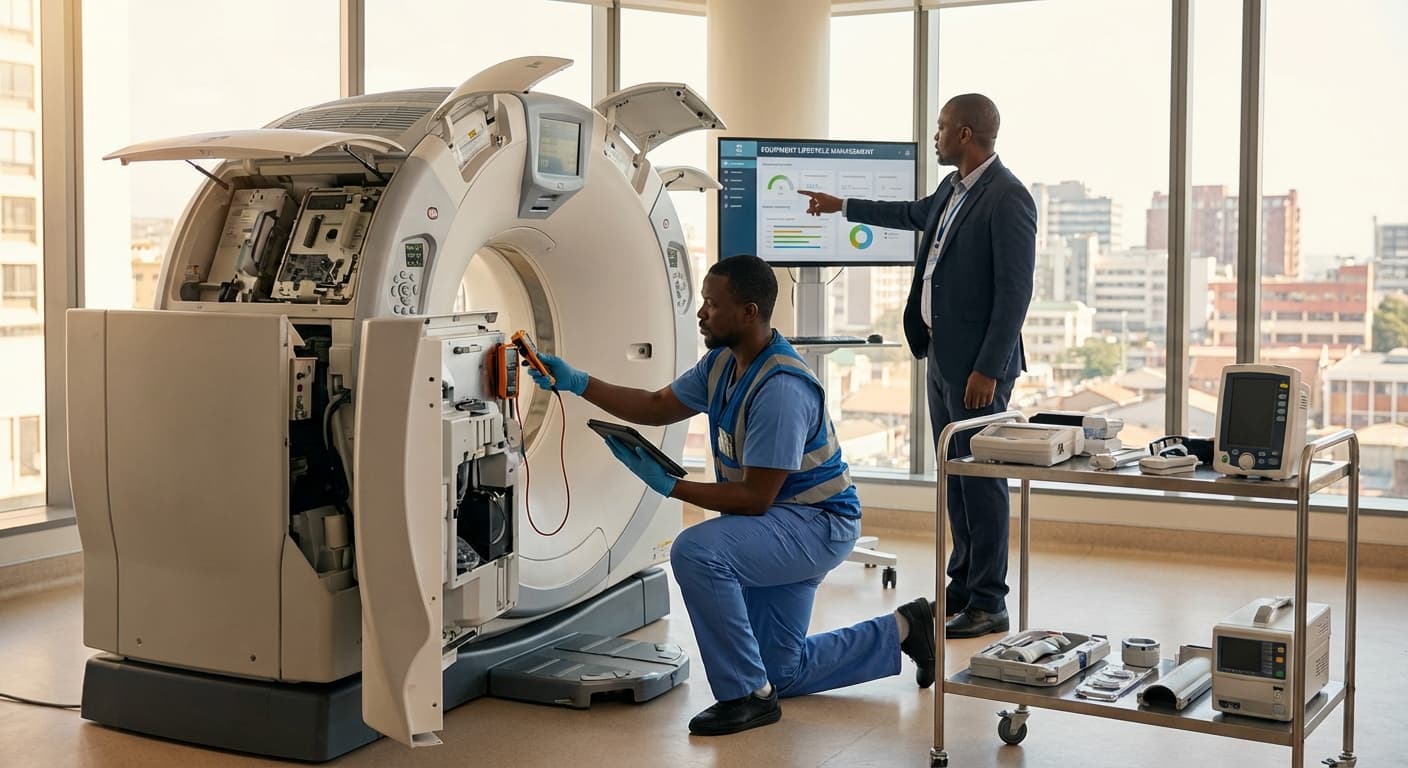
Equipment Replacement Planning & Obsolescence Strategy Service in Tanzania
Engineering Excellence & Technical Support
Equipment Replacement Planning & Obsolescence Strategy Service High-standard technical execution following OEM protocols and local regulatory frameworks.
Proactive Obsolescence Management
Leveraging advanced analytics and industry-specific lifecycle data, we identify and mitigate potential obsolescence risks in critical equipment across Tanzanian industries, ensuring uninterrupted operations and preventing costly production downtime. Our service predicts component end-of-life and recommends strategic replacements well in advance.
Optimized Replacement Lifecycle Costing
We provide detailed lifecycle cost analysis for equipment replacement, factoring in initial investment, maintenance, energy consumption, and disposal. Our data-driven approach helps Tanzanian businesses make informed decisions that minimize total cost of ownership and maximize return on investment, aligning with economic realities and operational efficiency goals.
Customized Asset Inventory & Risk Assessment
Our service includes a comprehensive audit and categorization of your existing asset base. We develop a tailored obsolescence risk profile for each piece of equipment, enabling targeted replacement strategies that prioritize critical assets and align with your specific operational needs and budgetary constraints within the Tanzanian context.
What Is Equipment Replacement Planning & Obsolescence Strategy Service In Tanzania?
Equipment Replacement Planning & Obsolescence Strategy Service in Tanzania refers to a specialized consultancy and operational framework designed to proactively manage the lifecycle of industrial and commercial equipment. This service addresses the inherent challenges associated with technological advancements, wear and tear, regulatory compliance, and the increasing cost of maintenance for aging assets. It involves a systematic approach to assess the current state of equipment, forecast future needs, and develop strategies for timely replacement or upgrade to mitigate risks, optimize operational efficiency, and maintain a competitive edge within the Tanzanian economic landscape.
| Who Needs This Service? | Typical Use Cases | |||
|---|---|---|---|---|
| Manufacturing sector companies (e.g., food processing, textiles, cement, mining, agriculture equipment) | Upgrading outdated production machinery to improve output quality and quantity. | Implementing a structured approach to replace aging fleet vehicles to reduce maintenance costs and improve logistics efficiency. | Managing the lifecycle of critical process control systems in the oil and gas or chemical industries. | Ensuring compliance with evolving environmental or safety regulations through equipment upgrades or replacements. |
| Mining and Extractive Industries | Replacing worn-out heavy machinery (e.g., excavators, haul trucks) to minimize downtime and maintain extraction targets. | Assessing and planning for the replacement of specialized drilling equipment that has become technologically obsolete. | ||
| Infrastructure and Construction | Developing a strategy for the phased replacement of construction equipment to meet project demands and reduce repair expenditures. | Evaluating the obsolescence of building management systems (BMS) in large commercial or public facilities. | ||
| Energy Sector (Power Generation, Oil & Gas) | Planning for the replacement of turbines, generators, or pumping stations nearing the end of their operational lifespan. | Strategizing the upgrade or replacement of control and safety systems to meet modern industry standards and cyber-security requirements. | ||
| Telecommunications and IT Infrastructure | Managing the refresh cycles of network hardware, servers, and data center equipment to maintain performance and security. | Developing plans for the replacement of outdated communication towers or satellite equipment. | ||
| Healthcare Facilities | Planning for the replacement of medical imaging equipment or critical diagnostic tools to ensure accuracy and patient safety. | Upgrading laboratory equipment to incorporate newer technologies and improve research capabilities. | ||
| Government and Public Sector Agencies | Managing the lifecycle of public service vehicles, administrative machinery, and specialized operational equipment. | Developing replacement plans for IT infrastructure within government ministries and departments. |
Key Components of the Service:
- Asset Condition Assessment: Comprehensive evaluation of existing equipment's physical condition, performance metrics, and remaining useful life (RUL).
- Obsolescence Identification: Analyzing technological, functional, and regulatory obsolescence risks associated with specific equipment types.
- Life Cycle Cost Analysis (LCCA): Quantifying the total cost of ownership over an equipment's lifespan, including acquisition, operation, maintenance, and disposal.
- Predictive Maintenance Integration: Leveraging data analytics and IoT to forecast potential failures and inform proactive maintenance scheduling.
- Replacement Strategy Development: Defining optimal replacement cycles, considering factors like capital availability, production demands, and technological maturity.
- Obsolescence Mitigation Strategies: Implementing measures such as component sourcing, reverse engineering, or phased upgrades to extend the operational life of critical assets where replacement is not immediately feasible.
- Capital Planning & Budgeting: Aligning replacement plans with financial cycles and securing necessary funding.
- Technology Scouting & Evaluation: Identifying emerging technologies and evaluating their suitability for integration into existing operational frameworks.
- Disposal & Decommissioning Planning: Developing environmentally responsible and cost-effective plans for the end-of-life management of retired equipment.
- Risk Management: Identifying and mitigating risks associated with equipment failure, downtime, safety incidents, and regulatory non-compliance.
Who Needs Equipment Replacement Planning & Obsolescence Strategy Service In Tanzania?
Equipment replacement planning and obsolescence strategy services are crucial for organizations in Tanzania to maintain operational efficiency, minimize downtime, mitigate financial risks associated with aging assets, and ensure compliance with evolving industry standards and regulations. These services help businesses proactively manage their asset lifecycles, moving from reactive maintenance to strategic foresight.
| Target Customer Segment | Key Departments/Roles Involved |
|---|---|
| Manufacturing Companies | Operations Management, Plant Management, Maintenance Department, Procurement/Purchasing, Finance Department, Engineering/Technical Teams |
| Mining Operations | Mine Management, Maintenance & Reliability Engineering, Asset Management, Operations, Procurement, Finance |
| Energy and Utilities Providers | Operations Management, Plant Engineering, Technical Services, Asset Management, Procurement, Finance, Regulatory Compliance Teams |
| Telecommunications Companies | Network Operations, Engineering, IT Infrastructure Management, Procurement, Finance, Strategic Planning |
| Transportation and Logistics Firms | Fleet Management, Maintenance & Repair, Operations Management, Procurement, Finance, Safety & Compliance Officers |
| Healthcare Institutions | Biomedical Engineering, Facilities Management, Clinical Department Heads (for specialized equipment), Procurement, Finance, IT Department (for networked medical devices) |
| Construction and Infrastructure Development | Project Management, Plant and Equipment Management, Maintenance Supervisors, Procurement, Finance, Site Managers |
| Government Agencies | Procurement Departments, Technical/Engineering Divisions, Asset Managers, Operations Chiefs, Finance and Budgeting Offices, Safety & Security Departments |
| Agricultural Businesses | Farm Management, Operations Supervisors, Maintenance Staff, Procurement Officers, Finance Managers |
Who Needs Equipment Replacement Planning & Obsolescence Strategy Service in Tanzania?
- Manufacturing Companies
- Mining Operations
- Energy and Utilities Providers (Power Generation, Water Treatment)
- Telecommunications Companies
- Transportation and Logistics Firms
- Healthcare Institutions (Hospitals, Clinics)
- Construction and Infrastructure Development Companies
- Government Agencies (Defense, Public Works)
- Agricultural Businesses with Mechanized Operations
- Any organization heavily reliant on specialized or capital-intensive equipment for its core functions.
Equipment Replacement Planning & Obsolescence Strategy Service Process In Tanzania
This document outlines the Equipment Replacement Planning & Obsolescence Strategy Service Process for clients in Tanzania. The service is designed to help organizations proactively manage their equipment lifecycle, mitigate the risks associated with obsolescence, and optimize capital expenditure for replacements. The workflow details the steps involved from the initial client inquiry to the final execution and reporting of the strategy.
| Stage | Key Activities | Deliverables | Tanzanian Contextualization |
|---|---|---|---|
| Inquiry & Initial Consultation | Client contact, needs assessment, scope definition. | Understanding of client's challenges, proposal outline. | Consideration of local Tanzanian business environment and regulatory frameworks. |
| Information Gathering & Assessment | Data collection (asset registers, maintenance logs), risk analysis. | Equipment inventory, obsolescence risk report, current state analysis. | Engagement with Tanzanian maintenance teams and asset managers. |
| Strategy Development | Lifecycle analysis, obsolescence forecasting, replacement prioritization. | Equipment Replacement Plan, Obsolescence Strategy Document. | Incorporation of locally available spare parts and technical support considerations. |
| Financial Planning & Budgeting | Cost estimation, ROI analysis, budget formulation. | Capital Expenditure Forecast, Budget Allocation Recommendations. | Alignment with Tanzanian economic conditions and foreign exchange considerations. |
| Implementation Planning & Execution | Procurement management, project scheduling, installation oversight. | Procurement documentation, installation reports, decommissioning plans. | Coordination with Tanzanian government agencies for import/export if applicable, local supplier engagement. |
| Monitoring & Continuous Improvement | Performance tracking, post-implementation review, strategy refinement. | Performance reports, updated strategy, lessons learned documentation. | Feedback loop with Tanzanian operations for ongoing adaptation. |
Workflow Stages
- {"title":"Stage 1: Inquiry & Initial Consultation","description":"The process begins with an incoming inquiry from a potential client in Tanzania seeking assistance with equipment replacement planning and obsolescence strategy. This is followed by an initial consultation to understand the client's specific needs, existing equipment inventory, operational context, and strategic objectives."}
- {"title":"Stage 2: Information Gathering & Assessment","description":"Detailed information about the client's current equipment fleet is collected. This includes asset registers, maintenance records, purchase dates, vendor information, performance data, and any existing lifecycle management policies. An assessment of the current obsolescence risks and replacement needs is performed."}
- {"title":"Stage 3: Strategy Development","description":"Based on the gathered information and assessment, a tailored Equipment Replacement Planning & Obsolescence Strategy is developed. This includes identifying critical equipment, predicting failure rates, forecasting replacement timelines, evaluating technology trends, and recommending appropriate replacement approaches (e.g., phased replacement, strategic upgrades)."}
- {"title":"Stage 4: Financial Planning & Budgeting","description":"The strategy is translated into a comprehensive financial plan. This involves estimating capital expenditure requirements, exploring financing options, and developing multi-year budgets for equipment replacement. The goal is to align replacement schedules with financial capacity and maximize return on investment."}
- {"title":"Stage 5: Implementation Planning & Execution","description":"A detailed implementation plan is created, outlining the procurement, installation, and decommissioning processes. This stage may involve working with local Tanzanian vendors, coordinating logistics, and managing project timelines. The execution of the replacement plan commences according to the agreed schedule."}
- {"title":"Stage 6: Monitoring & Continuous Improvement","description":"Once the replacements are executed, the process includes ongoing monitoring of new equipment performance and adherence to the strategy. Regular reviews are conducted to identify any deviations, lessons learned, and opportunities for continuous improvement in future planning cycles."}
Equipment Replacement Planning & Obsolescence Strategy Service Cost In Tanzania
Planning for equipment replacement and developing an obsolescence strategy are critical for businesses in Tanzania to ensure operational efficiency, minimize downtime, and manage capital expenditures effectively. The cost of such a service is influenced by several factors, leading to a broad range of pricing in Tanzanian Shillings (TZS). This service typically involves a comprehensive assessment of existing assets, forecasting future needs, evaluating technological advancements, and recommending optimal replacement cycles and strategies to mitigate obsolescence risks. Factors influencing the cost include the scope and complexity of the asset base, the level of detail required in the analysis, the experience and reputation of the consulting firm, and the duration of the engagement.
| Service Scope & Complexity | Estimated Cost Range (TZS) |
|---|---|
| Basic Equipment Inventory & Replacement Timeline (e.g., for a small to medium-sized enterprise with a limited asset base) | 15,000,000 - 40,000,000 TZS |
| Standard Assessment with Lifecycle Cost Analysis (e.g., for a medium-sized enterprise with diverse assets, including basic risk assessment) | 40,000,000 - 100,000,000 TZS |
| Comprehensive Obsolescence Strategy & Advanced Planning (e.g., for large industrial operations, involving detailed technology forecasting, risk mitigation plans, and multi-year capital budgeting integration) | 100,000,000 - 300,000,000+ TZS |
| Ongoing Advisory & Strategy Updates (Annual Retainer or Project-Based) | 30,000,000 - 150,000,000+ TZS (depending on scope and frequency) |
Key Pricing Factors for Equipment Replacement Planning & Obsolescence Strategy Services in Tanzania
- Size and Complexity of Asset Base: The number, type, and diversity of equipment to be assessed significantly impact the effort required. A larger and more complex inventory will naturally command higher fees.
- Scope of Services: Whether the service includes a basic inventory and replacement timeline or a more in-depth analysis involving lifecycle cost modeling, risk assessment, and strategic technology forecasting will affect the price.
- Data Availability and Quality: The ease of accessing accurate and complete data on equipment purchase dates, maintenance records, operating costs, and performance metrics will influence the time and resources needed for the assessment.
- Consulting Firm's Expertise and Reputation: Established firms with a proven track record and specialized knowledge in asset management and industrial engineering will typically charge more than newer or smaller consultancies.
- Project Duration and Intensity: The length of the engagement and the level of consultant involvement (e.g., full-time on-site presence versus periodic consultations) directly translate to cost.
- Customization and Deliverables: The extent of customization required for the strategy, specific reporting formats, and the number of detailed reports or presentations needed can influence pricing.
- Technological Tools and Software: The use of advanced asset management software or simulation tools by the consultant may be factored into the service cost.
- Geographic Location and Travel Costs: While the service is for Tanzania, if consultants need to travel extensively across different regions to assess facilities, these logistical costs will be included.
Affordable Equipment Replacement Planning & Obsolescence Strategy Service Options
Our Affordable Equipment Replacement Planning & Obsolescence Strategy Service is designed to empower organizations with proactive lifecycle management for their critical assets. We offer flexible value bundles and cost-saving strategies to ensure you maintain operational efficiency, minimize downtime, and avoid costly last-minute replacements due to obsolescence. Our approach focuses on maximizing the lifespan of your existing equipment while strategically planning for future upgrades, all within a budget-conscious framework.
| Value Bundle Name | Description | Included Services | Key Benefits | Typical Cost Savings Potential |
|---|---|---|---|---|
| Foundation Bundle | Essential planning for organizations starting their obsolescence strategy. | Equipment Inventory, Obsolescence Risk Assessment, Basic Replacement Roadmapping | Initial visibility into aging assets, early identification of high-risk equipment. | 5-10% reduction in unexpected downtime, delayed emergency replacement costs. |
| Growth Bundle | A more comprehensive approach for organizations seeking to optimize TCO. | Foundation Bundle + Predictive Maintenance Strategy, TCO Analysis, Detailed Replacement Roadmapping | Informed decision-making on repairs vs. replacements, optimized budget allocation for future investments. | 10-15% reduction in lifecycle costs, improved operational uptime. |
| Enterprise Bundle | Full-spectrum lifecycle management for complex and critical asset portfolios. | Growth Bundle + Vendor Monitoring, Spare Parts Optimization, EOL Planning | Proactive mitigation of supply chain risks, maximized ROI on existing assets, streamlined end-of-life transitions. | 15-25% reduction in total equipment lifecycle costs, enhanced strategic agility. |
Key Service Components:
- Comprehensive Equipment Inventory & Audit
- Obsolescence Risk Assessment & Prioritization
- Predictive Maintenance & Repair Strategy Development
- Total Cost of Ownership (TCO) Analysis
- Strategic Replacement Roadmapping & Budgeting
- Vendor & Technology Landscape Monitoring
- Spare Parts Management Optimization
- End-of-Life (EOL) Management & Disposal Planning
Verified Providers In Tanzania
Navigating the Tanzanian healthcare landscape to find verified providers can be a daunting task for individuals seeking quality medical care. In this context, Franance Health stands out as a beacon of trust and excellence. Their rigorous credentialing process ensures that all affiliated healthcare professionals and facilities meet the highest standards of competence, ethics, and patient safety. Choosing a verified provider through Franance Health offers unparalleled peace of mind, guaranteeing access to experienced practitioners and well-equipped medical centers.
| Provider Type | Franance Health Verification Criteria | Benefits of Choosing Verified Providers |
|---|---|---|
| Doctors (General Practitioners & Specialists) | Valid medical license, recognized board certification, demonstrated clinical experience, good standing with medical councils, and adherence to ethical codes. | Accurate diagnosis, effective treatment plans, access to specialized expertise, and compassionate care. |
| Hospitals & Clinics | Accreditation by national or international bodies, adherence to safety protocols, availability of essential equipment and medications, qualified medical staff, and efficient management systems. | Safe and sterile environment, access to advanced medical technology, comprehensive medical services under one roof, and efficient patient flow. |
| Diagnostic Centers (Labs & Imaging) | Accreditation, use of calibrated and well-maintained equipment, qualified technicians and radiologists, adherence to quality control measures, and timely delivery of accurate results. | Precise and reliable diagnostic information, timely identification of medical conditions, and informed treatment decisions. |
| Pharmacies | Valid operating license, proper storage of medications, availability of genuine drugs, and dispensing by qualified pharmacists. | Access to safe and effective medications, professional advice on drug usage, and prevention of counterfeit drugs. |
Why Franance Health Credentials Matter:
- Unwavering commitment to quality assurance and patient safety.
- Access to a network of highly qualified and experienced healthcare professionals.
- Transparent and reliable information about provider qualifications and specializations.
- Streamlined access to a comprehensive range of medical services.
- Enhanced patient confidence and trust in their healthcare decisions.
Scope Of Work For Equipment Replacement Planning & Obsolescence Strategy Service
This Scope of Work (SOW) outlines the services for Equipment Replacement Planning and Obsolescence Strategy. The objective is to develop a comprehensive strategy and actionable plan to manage the lifecycle of critical equipment, mitigate risks associated with obsolescence, and optimize replacement investments. This service will involve data collection, analysis, risk assessment, and the development of a strategic roadmap for future equipment management.
| Phase | Key Activities | Technical Deliverables | Standard Specifications |
|---|---|---|---|
| Phase 1: Discovery and Data Collection | Gather detailed information on all critical equipment assets, including age, manufacturer, model, purchase date, maintenance history, criticality, performance data, and current vendor support status. | Equipment Inventory Database: A comprehensive, structured database containing all collected equipment data. Data Validation Report: Documentation of the data quality checks performed and any identified discrepancies. | Data collected should be in a standardized format (e.g., CSV, Excel). Database schema will be agreed upon with the client. All data will be handled with strict confidentiality. |
| Phase 2: Analysis and Risk Assessment | Analyze collected data to identify equipment nearing end-of-life, at high risk of obsolescence, or experiencing performance degradation. Assess the business impact of potential failures or obsolescence. | Obsolescence Risk Assessment Report: Detailed analysis of obsolescence risks for each equipment item, including technical, operational, and financial factors. Criticality Matrix: Prioritization of equipment based on criticality and obsolescence risk. Performance Degradation Analysis: Identification of trends in performance issues. | Risk assessment will utilize a defined scoring methodology (e.g., quantitative, qualitative). Criticality will be defined based on business impact (e.g., production downtime, safety, regulatory compliance). Analysis will be supported by statistical methods where applicable. |
| Phase 3: Strategy Development | Develop a strategic framework for equipment replacement and obsolescence management. This includes defining replacement criteria, considering various replacement options (e.g., like-for-like, upgrade, standardization), and outlining proactive maintenance strategies. | Equipment Replacement Strategy Document: Outlines the overarching strategy, guiding principles, and policies for managing equipment lifecycles. Obsolescence Mitigation Strategies: Proposed approaches for managing identified obsolescence risks. | Strategy will align with the client's business objectives and risk appetite. Replacement criteria will be clearly defined and measurable. Consideration of total cost of ownership (TCO) for different options. |
| Phase 4: Roadmap and Implementation Planning | Create a phased implementation plan and a multi-year roadmap for equipment replacement and upgrade projects. This includes budget estimation, resource planning, and identification of key performance indicators (KPIs). | Equipment Replacement Roadmap: A visual timeline of planned replacements and upgrades over a defined period (e.g., 3-5 years). Implementation Plan: Detailed actions, timelines, responsibilities, and resource requirements for executing the roadmap. Budgetary Estimates: Preliminary cost projections for planned replacements. KPI Definition: Identification of metrics to track the success of the strategy. | Roadmap will be presented in a clear, visual format (e.g., Gantt chart). Budget estimates will be broken down by year and equipment category. KPIs will be SMART (Specific, Measurable, Achievable, Relevant, Time-bound). |
| Phase 5: Final Reporting and Knowledge Transfer | Compile all findings, analyses, strategies, and plans into a comprehensive final report. Conduct workshops or presentations to transfer knowledge and ensure the client's team can effectively manage the strategy going forward. | Final Project Report: A consolidated document detailing all phases of the project, findings, recommendations, and the strategic roadmap. Knowledge Transfer Sessions: Presentations and/or workshops on the developed strategy and its implementation. Template Documents: Standardized templates for ongoing equipment management (e.g., replacement request forms, obsolescence tracking sheets). | Report will be delivered in a professional, organized format. Knowledge transfer sessions will be tailored to the client's team. Templates will be provided in editable formats. |
Key Activities and Deliverables
- Phase 1: Discovery and Data Collection
- Phase 2: Analysis and Risk Assessment
- Phase 3: Strategy Development
- Phase 4: Roadmap and Implementation Planning
- Phase 5: Final Reporting and Knowledge Transfer
Service Level Agreement For Equipment Replacement Planning & Obsolescence Strategy Service
This Service Level Agreement (SLA) outlines the performance standards for the Equipment Replacement Planning & Obsolescence Strategy Service. It defines the expected response times for critical incidents and the guaranteed uptime for the associated management platforms and reporting tools.
| Service Element | Response Time (Critical) | Resolution Time (Target) | Uptime Guarantee |
|---|---|---|---|
| Consultation & Strategy Development | 24 Business Hours | N/A (Project-based) | N/A |
| Obsolescence Alert Notification | 4 Business Hours | N/A (Notification Only) | 99.9% |
| Replacement Planning Support (Urgent Request) | 8 Business Hours | 48 Business Hours | 99.9% |
| Platform/Portal Access (Management & Reporting) | N/A | N/A | 99.9% |
| Data Updates (Obsolescence Feeds) | N/A | Within 72 hours of supplier notification | 99.9% |
Key Service Components
- Equipment lifecycle management
- Obsolescence risk assessment and mitigation
- Replacement planning and budgeting
- Technology refresh strategy
- Performance monitoring and reporting
- Access to obsolescence intelligence feeds
Frequently Asked Questions

Ready when you are
Let's scope your Equipment Replacement Planning & Obsolescence Strategy Service in Tanzania project in Tanzania.

Scaling healthcare logistics and technical systems across the entire continent.