
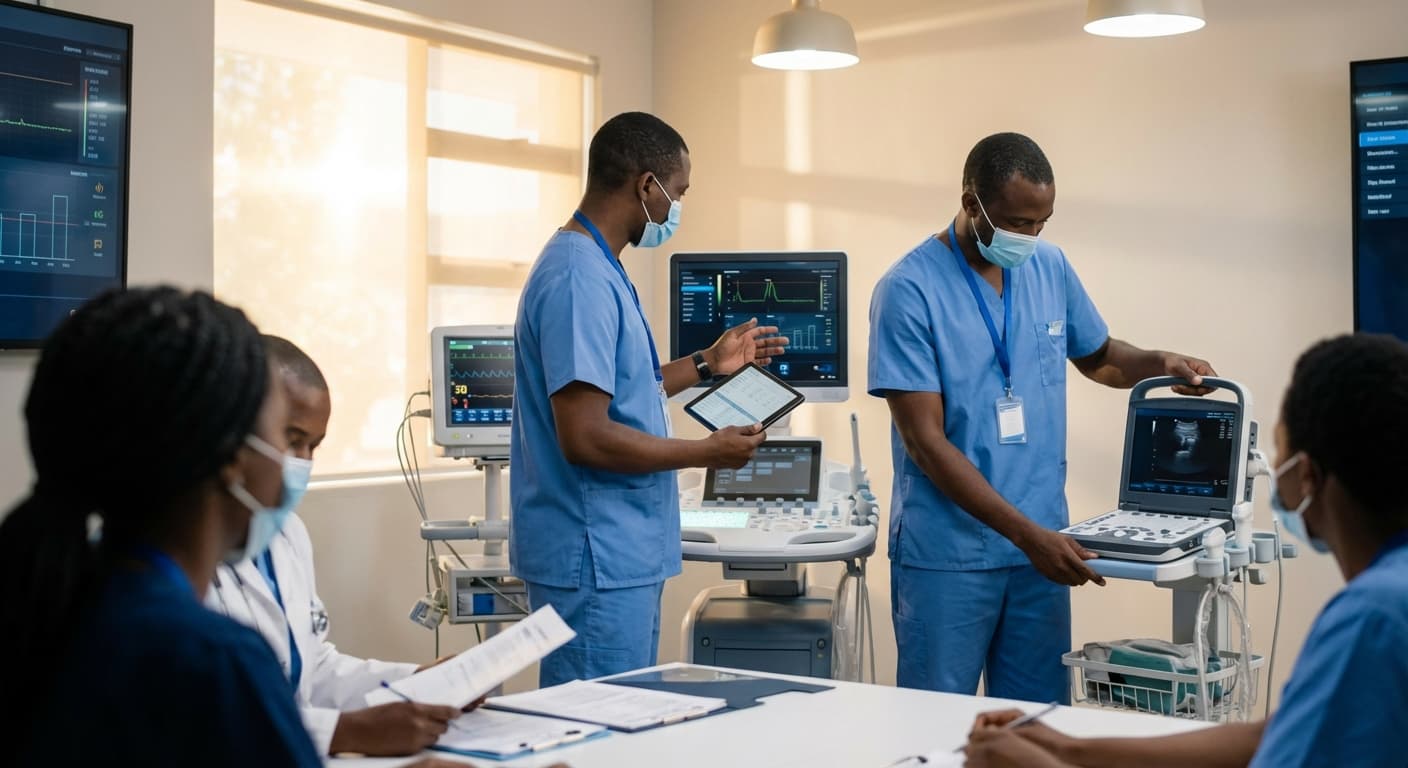
Clinical Needs Assessment for Medical Equipment in Tanzania
Engineering Excellence & Technical Support
Clinical Needs Assessment for Medical Equipment High-standard technical execution following OEM protocols and local regulatory frameworks.
Decentralized Needs Mapping
Leveraging a robust, cloud-based platform for real-time data aggregation from district hospitals and rural clinics. This system enables the identification of equipment gaps and prioritization based on geographical accessibility, patient load, and existing infrastructure, ensuring equitable resource distribution across Tanzania's diverse healthcare landscape.
Configurable Equipment Lifecycle Management
Implementing a modular system designed to track equipment from acquisition to disposal. This includes automated maintenance scheduling, spare parts inventory management, and user-defined calibration requirements, tailored to the specific operating environments and maintenance capacities of Tanzanian healthcare facilities.
Predictive Analytics for Demand Forecasting
Utilizing historical utilization data, patient demographics, and projected disease prevalence to forecast future medical equipment needs. This proactive approach allows for strategic procurement and reduces stockouts of critical items, optimizing the allocation of limited budgets and improving patient outcomes.
What Is Clinical Needs Assessment For Medical Equipment In Tanzania?
Clinical Needs Assessment for Medical Equipment in Tanzania is a systematic and data-driven process designed to evaluate the current and future requirements for medical devices within healthcare facilities. It aims to ensure that available and procured equipment aligns with the prevailing disease burden, service delivery models, technological advancements, and resource constraints specific to the Tanzanian context. This comprehensive assessment identifies gaps, prioritizes needs, and informs strategic decision-making for effective resource allocation, procurement, and deployment of medical equipment. The process typically involves an in-depth analysis of clinical workflows, patient demographics, existing infrastructure, maintenance capabilities, and user training needs.
| Who Needs It | Typical Use Cases | ||
|---|---|---|---|
| Ministry of Health (MoH) and its agencies (e.g., Medical Stores Department - MSD): For national health strategy development, resource allocation, and procurement planning. | Developing national essential medical equipment lists and procurement strategies. | Formulating national guidelines for equipment maintenance and management. | Identifying equipment needs for public health programs (e.g., maternal and child health, infectious disease control). |
| Regional and Zonal Health Management Teams: For optimizing equipment distribution and utilization within their administrative areas. | Assessing and addressing equipment disparities between facilities within a region. | Developing regional procurement plans based on local needs. | Facilitating inter-facility referrals and resource sharing. |
| Hospital and Health Center Management: For planning departmental upgrades, procurement of new equipment, and optimizing existing resources. | Justifying budget requests for capital equipment investment. | Developing specific procurement plans for individual departments or facilities. | Assessing the feasibility of introducing new clinical services requiring specialized equipment. |
| Healthcare Financing Institutions and Development Partners: To inform their investment decisions and ensure alignment with national health priorities. | Conducting due diligence for funding medical equipment projects. | Identifying areas for targeted technical and financial assistance. | Evaluating the impact and sustainability of equipment donation programs. |
| Medical Equipment Suppliers and Manufacturers: To understand market demands and tailor their offerings to the specific needs of the Tanzanian healthcare sector. | Identifying opportunities for product development and market entry. | Providing evidence-based justifications for their product lines. | Collaborating with healthcare providers on equipment selection and training. |
Key Components of Clinical Needs Assessment:
- Facility Profiling: Characterization of healthcare facilities, including type, capacity, geographical location, and catchment population.
- Service Demand Analysis: Quantifying the volume and nature of clinical services provided and anticipated demand, considering epidemiological trends.
- Equipment Inventory and Condition Assessment: Cataloging existing medical equipment, its operational status, age, and maintenance history.
- Gap Analysis: Identifying discrepancies between required and available equipment, considering both quantitative and qualitative aspects.
- Technological Appropriateness Assessment: Evaluating the suitability of proposed technologies considering local context, sustainability, and user competency.
- Infrastructure and Support Services Evaluation: Assessing the availability of essential utilities (power, water), maintenance personnel, spare parts, and consumables.
- Training Needs Assessment: Determining the current skill levels of healthcare professionals and identifying training requirements for new or existing equipment.
- Cost-Benefit Analysis and Prioritization: Evaluating the economic implications of equipment acquisition and maintenance, and establishing priorities based on impact and feasibility.
- Regulatory and Policy Compliance Review: Ensuring proposed equipment meets national and international standards and regulations.
Who Needs Clinical Needs Assessment For Medical Equipment In Tanzania?
A comprehensive clinical needs assessment for medical equipment in Tanzania is crucial for a wide range of stakeholders to ensure efficient, effective, and equitable healthcare delivery. This process involves identifying the specific medical equipment required by healthcare facilities, considering patient demographics, disease prevalence, existing infrastructure, and budgetary constraints. Without a proper assessment, resources can be misallocated, leading to shortages of essential equipment, overstocking of unnecessary items, and ultimately, compromised patient care. This document outlines who needs this assessment, detailing the target customers and the specific departments that benefit from such a process.
| Customer Type | Description | Key Departments Involved |
|---|---|---|
| Government Healthcare Institutions | These are the backbone of the public health system, serving the majority of the population. Needs assessments are vital for national health strategies, resource allocation, and ensuring access to quality care across all levels of the system. | All departments across the spectrum of public health facilities, from national to sub-district levels. |
| Private Healthcare Providers | These facilities offer alternative or specialized healthcare services. Needs assessments help them to optimize their investments, meet patient demand, and remain competitive while adhering to regulatory standards. | Departments relevant to their service offerings, e.g., General Surgery, Internal Medicine, Diagnostics, Obstetrics & Gynecology. |
| Non-Governmental Organizations (NGOs) and Faith-Based Organizations (FBOs) | Often operating in underserved areas or focusing on specific health issues, NGOs and FBOs require assessments to effectively deploy resources and provide essential medical equipment for their projects and facilities. | Clinical departments within their supported health facilities, community health programs. |
| Tertiary Referral Hospitals | These are apex facilities providing highly specialized care and serving as referral centers for complex cases. Needs assessments here focus on advanced diagnostic and therapeutic equipment. | Cardiology, Neurology, Neurosurgery, Oncology, Nephrology, Critical Care (ICU/HDU), advanced diagnostic imaging (MRI, CT scanners). |
| Regional Referral Hospitals | Serving a larger geographic area, these hospitals provide comprehensive secondary-level care and manage more complex cases than district hospitals. Needs assessments support their role as regional hubs. | Surgery, Internal Medicine, Pediatrics, Obstetrics & Gynecology, General Radiology, basic ICU, specialized outpatient clinics. |
| District Hospitals | These hospitals are the primary referral points for health centers and dispensaries within a district, offering a broader range of services than lower-level facilities. Needs assessments focus on essential and intermediate-level equipment. | General Medicine, General Surgery, Pediatrics, Obstetrics & Gynecology, basic laboratory, basic radiology, emergency care. |
| Health Centers and Dispensaries | These are the frontline healthcare facilities, providing primary healthcare services, including maternal and child health, basic curative care, and preventative services. Needs assessments focus on essential equipment for these functions. | Maternal and Child Health (MCH) clinics, general consultation rooms, basic laboratory services, emergency response points. |
| Specialized Clinics (e.g., Oncology, Cardiology, Pediatrics) | Facilities dedicated to specific medical specialties require precise needs assessments to acquire and maintain the specialized equipment necessary for accurate diagnosis and treatment. | Specific diagnostic equipment (e.g., endoscopes, ECG machines, ultrasound), treatment delivery systems (e.g., chemotherapy infusion pumps, cardiac catheterization equipment). |
| Diagnostic Laboratories | These units are critical for accurate diagnosis. Needs assessments ensure they have the appropriate analyzers, microscopes, and associated consumables to support clinical decision-making. | Hematology, Biochemistry, Microbiology, Immunology, Molecular diagnostics. |
| Emergency Medical Services (EMS) | For rapid response and pre-hospital care, EMS units require robust needs assessments for ambulances, life support equipment, and communication systems. | Ambulance equipment, advanced cardiac life support (ACLS) devices, portable ventilators, trauma kits. |
| Surgical Departments | From basic to complex surgeries, this department relies heavily on a wide array of surgical instruments, anesthesia machines, and post-operative monitoring equipment. | General surgery, orthopedic surgery, gynecological surgery, general anesthesia, specialized surgical tools. |
| Intensive Care Units (ICUs) | Critical care units require specialized life-sustaining equipment like ventilators, cardiac monitors, and infusion pumps to manage critically ill patients. | Ventilators, hemodynamic monitoring systems, defibrillators, continuous renal replacement therapy (CRRT) machines. |
| Maternity and Neonatal Units | Essential for safe childbirth and newborn care, these units need equipment for monitoring mothers and infants, resuscitation, and specialized neonatal care. | Incubators, radiant warmers, phototherapy units, fetal monitors, infant ventilators. |
| Outpatient Departments (OPDs) | While often associated with general consultation, OPDs can benefit from equipment like vital signs monitors, basic diagnostic tools, and examination beds to improve efficiency and patient experience. | Examination rooms, vital signs monitoring, basic diagnostic testing (e.g., glucometers). |
| Rehabilitation Services | For physical therapy, occupational therapy, and other rehabilitation programs, needs assessments focus on specialized equipment for recovery and functional improvement. | Therapy equipment (e.g., exercise machines, treadmills, electrotherapy devices), assistive devices. |
Target Customers and Departments for Medical Equipment Needs Assessment in Tanzania
- Government Healthcare Institutions
- Private Healthcare Providers
- Non-Governmental Organizations (NGOs) and Faith-Based Organizations (FBOs)
- Tertiary Referral Hospitals
- Regional Referral Hospitals
- District Hospitals
- Health Centers and Dispensaries
- Specialized Clinics (e.g., Oncology, Cardiology, Pediatrics)
- Diagnostic Laboratories
- Emergency Medical Services
- Surgical Departments
- Intensive Care Units (ICUs)
- Maternity and Neonatal Units
- Outpatient Departments (OPDs)
- Rehabilitation Services
Clinical Needs Assessment For Medical Equipment Process In Tanzania
This document outlines the workflow for conducting a Clinical Needs Assessment for Medical Equipment in Tanzania, from the initial inquiry to the final execution. This process is crucial for ensuring that healthcare facilities acquire appropriate, functional, and sustainable medical equipment aligned with their clinical needs and the national health strategy.
| Phase | Key Activities | Responsible Parties | Key Outputs/Deliverables | Timeframe (Indicative) |
|---|---|---|---|---|
| Receipt of request for needs assessment from healthcare facility/Ministry of Health. Initial consultation to understand the scope and objectives. Formation of the Needs Assessment Team (NAT). | Requesting Facility/MoH, Ministry of Health (MoH), Biomedical Engineering Department (BED), Clinical Staff, NAT | Confirmed scope of assessment, NAT established. | 1-2 Weeks |
| Review of facility infrastructure, patient demographics, disease burden, service delivery plans. Clinical staff interviews and focus group discussions. Observation of current clinical practices and workflows. Assessment of existing equipment condition and functionality. | NAT, Clinical Staff, Biomedical Engineers, Facility Management | Needs assessment report detailing identified gaps and priorities, equipment inventory (existing and required). | 4-6 Weeks |
| Categorization of identified needs based on urgency, impact, and cost-effectiveness. Development of detailed technical specifications for each required equipment item. Consideration of local context, availability of consumables, and maintenance support. | NAT, Clinical Specialists, Biomedical Engineers, Procurement Specialists | Prioritized list of medical equipment with detailed specifications. | 2-3 Weeks |
| Estimation of capital costs for equipment, installation, training, and initial consumables. Identification of funding sources (government budget, grants, donor funding). Development of a phased procurement plan based on available resources. | NAT, Ministry of Finance, MoH, Facility Management, Procurement Unit | Approved budget and resource allocation plan. | 2-4 Weeks |
| Development of procurement documents (tenders, requests for proposals). Adherence to national procurement laws and regulations. Vendor selection based on technical and financial evaluation. Contract negotiation and award. | Procurement Unit, MoH Legal Department, BED, NAT | Procurement contracts for selected medical equipment. | 8-12 Weeks (depending on complexity and volume) |
| Delivery and unpacking of equipment. Installation and connection to utilities (power, water, etc.). Testing and calibration of equipment to ensure functionality. Verification against specifications. | Suppliers/Vendors, BED, NAT | Installed and commissioned medical equipment, certificates of performance. | 2-4 Weeks per batch of equipment |
| Training of clinical and technical staff on the operation, use, and basic maintenance of new equipment. Development of user manuals and training materials. Establishing a sustainable maintenance framework. | Suppliers/Vendors, BED, Clinical Educators, NAT | Trained personnel, user manuals, established maintenance protocols. | Ongoing during and after installation |
| Post-installation monitoring of equipment performance and usage. Regular maintenance and repair coordination. Feedback collection from end-users. Assessment of impact on service delivery. | BED, Facility Management, MoH Quality Assurance Department, NAT | Performance reports, maintenance logs, user feedback. | Ongoing |
| Comprehensive documentation of the entire process, including needs assessment reports, procurement records, installation certificates, training logs, and evaluation findings. Submission of final reports to relevant stakeholders. | NAT, MoH Planning and Monitoring Unit, BED | Final project report, comprehensive documentation archive. | 2-3 Weeks (post-execution) |
Clinical Needs Assessment Workflow
- Initiation and Inquiry
- Information Gathering and Needs Identification
- Equipment Prioritization and Specification
- Budgeting and Resource Allocation
- Procurement Planning and Execution
- Installation and Commissioning
- Training and Capacity Building
- Monitoring and Evaluation
- Documentation and Reporting
Clinical Needs Assessment For Medical Equipment Cost In Tanzania
This report presents a clinical needs assessment for medical equipment cost in Tanzania, focusing on pricing factors and typical ranges in local currency (Tanzanian Shilling - TZS). Understanding these aspects is crucial for effective healthcare planning, budgeting, and procurement to ensure access to essential medical technologies for Tanzanian citizens. The assessment considers various categories of medical equipment, from basic diagnostic tools to more complex surgical and imaging devices.
Several key factors significantly influence the pricing of medical equipment in Tanzania:
- Type and Complexity of Equipment: Simpler diagnostic tools like stethoscopes will be significantly cheaper than advanced imaging machines like MRI scanners.
- Brand and Manufacturer Reputation: Established international brands with a proven track record often command higher prices due to perceived quality, reliability, and after-sales support.
- New vs. Refurbished/Used Equipment: Refurbished or used equipment can offer substantial cost savings, but requires careful inspection and certification to ensure functionality and safety.
- Features and Specifications: The specific features, technical capabilities, and technological advancements of a piece of equipment will directly impact its price.
- Import Duties and Taxes: Tanzania, like many countries, levies import duties and taxes on medical equipment, adding to the final cost. Exemptions or special provisions for healthcare organizations may exist but can be complex to navigate.
- Shipping and Logistics: Costs associated with international shipping, freight forwarding, insurance, and local transportation within Tanzania contribute to the overall price.
- Installation, Training, and Maintenance: The cost of professional installation, operator training, and ongoing maintenance contracts are often bundled or considered as separate expenses.
- Supplier and Distributor Markups: Local distributors and suppliers add their markups, which can vary depending on their operational costs and market position.
- Warranty and Service Agreements: Longer or more comprehensive warranty periods and service agreements will typically increase the initial purchase price.
- Exchange Rates: Fluctuations in the TZS against major currencies (USD, EUR) can significantly impact the landed cost of imported equipment.
- Volume of Purchase: Larger bulk orders can sometimes lead to discounted pricing from manufacturers or distributors.
- Local Availability and Lead Times: Equipment readily available locally might be slightly more expensive than ordering directly from overseas but offers shorter lead times and potentially easier after-sales support.
| Equipment Category | Typical Price Range (TZS) | Notes/Examples |
|---|---|---|
| Basic Diagnostic Equipment | 50,000 - 1,000,000 | Stethoscopes, BP monitors, thermometers, otoscopes. Range depends on brand and features. |
| Laboratory Equipment (Basic) | 500,000 - 10,000,000 | Microscopes, centrifuges, basic analysers. Range depends on automation and capacity. |
| Patient Monitoring Systems (Basic) | 2,000,000 - 15,000,000 | ECG, SpO2, NIBP monitors. Higher end includes multi-parameter and transportable units. |
| Surgical Instruments (Sets) | 300,000 - 5,000,000 | Basic surgical kits, instrument trays. Depends on material, number of instruments, and specialization. |
| Anesthesia Machines (Basic) | 10,000,000 - 40,000,000 | Entry-level to mid-range machines with essential features. |
| X-ray Machines (Fixed) | 30,000,000 - 150,000,000+ | Includes basic analogue to digital (DR) systems. DR systems are significantly more expensive. |
| Ultrasound Machines (Portable/Mid-range) | 15,000,000 - 60,000,000 | Basic portable ultrasound for general imaging to mid-range systems with Doppler capabilities. |
| Dental Chairs and Equipment | 8,000,000 - 50,000,000 | Includes dental chair units, X-ray, sterilisers. Range depends on features and brand. |
| Sterilization Equipment (Autoclaves) | 2,000,000 - 20,000,000 | Benchtop to larger floor-standing autoclaves. Depends on capacity and features. |
| Refurbished Equipment (General) | 30-60% of new price | Significant savings possible, but requires thorough due diligence on condition and service history. |
Key Pricing Factors for Medical Equipment in Tanzania
- Type and Complexity of Equipment
- Brand and Manufacturer Reputation
- New vs. Refurbished/Used Equipment
- Features and Specifications
- Import Duties and Taxes
- Shipping and Logistics
- Installation, Training, and Maintenance
- Supplier and Distributor Markups
- Warranty and Service Agreements
- Exchange Rates
- Volume of Purchase
- Local Availability and Lead Times
Affordable Clinical Needs Assessment For Medical Equipment Options
This document outlines affordable approaches to conducting clinical needs assessments for medical equipment, focusing on identifying the best options while optimizing costs. We'll explore the concept of 'value bundles' – integrated solutions that offer comprehensive benefits at a reduced price – and detail various cost-saving strategies applicable to equipment procurement and lifecycle management.
| Value Bundle Components | Description | Cost-Saving Potential |
|---|---|---|
| Integrated Hardware & Software | A single purchase including the medical device, its operating system, and essential analytical software. Often comes pre-configured. | Reduces integration complexities and the need for separate software licenses. Streamlines IT support. |
| Training & Support Packages | Bundled with initial purchase, offering on-site training for staff, remote technical support, and potentially extended warranties. | Minimizes downtime due to user error or technical issues. Predictable support costs. |
| Consumables & Maintenance Contracts | Supplying a set quantity of required consumables alongside a comprehensive maintenance plan for a defined period. | Volume discounts on consumables. Predictable maintenance expenses, avoiding surprise repair bills. |
| Managed Equipment Services (MES) | A holistic approach where a third-party provider manages the acquisition, maintenance, and upgrade of a range of equipment. | Can offer significant TCO reduction through optimized utilization, procurement leverage, and proactive maintenance. Shifts capital expenditure to operational expenditure. |
| Refurbished or Certified Pre-Owned Equipment | High-quality, professionally refurbished medical equipment that has undergone rigorous testing and certification. | Significant upfront cost savings compared to new equipment, while still offering reliability and warranty. |
Key Components of an Affordable Clinical Needs Assessment
- Define Clear Clinical Objectives: Understand the specific patient care needs, diagnostic requirements, and treatment goals the equipment must support. Avoid over-specifying.
- Prioritize Essential Functionality: Differentiate between 'must-have' and 'nice-to-have' features. Focus on core functionalities that directly impact patient outcomes.
- Assess Existing Infrastructure: Evaluate current technological capabilities, space limitations, and personnel training to ensure compatibility and minimize upgrade costs.
- Benchmark Against Similar Facilities: Research what equipment and solutions comparable institutions are using, paying attention to their reported outcomes and cost-effectiveness.
- Consider Total Cost of Ownership (TCO): Beyond the initial purchase price, factor in installation, training, maintenance, consumables, software updates, and eventual disposal.
- Explore Vendor Partnerships: Engage with multiple vendors to understand their offerings, negotiate terms, and identify potential for bundled solutions.
Verified Providers In Tanzania
In Tanzania's burgeoning healthcare landscape, identifying reliable and trustworthy medical providers is paramount for individuals seeking quality care. Franance Health has emerged as a leading entity, distinguishing itself through a rigorous credentialing process that ensures its network of providers consistently meets the highest standards of medical expertise, ethical practice, and patient safety. This commitment to verified excellence makes Franance Health the optimal choice for navigating the healthcare system in Tanzania.
| Credentialing Aspect | Franance Health's Standard | Benefit to Patients |
|---|---|---|
| Medical License Verification | Mandatory verification with Tanzania's medical regulatory bodies. | Ensures providers are legally authorized to practice and meet basic competency requirements. |
| Educational Background Check | Verification of degrees and certifications from recognized institutions. | Confirms that providers have received appropriate formal training. |
| Professional Experience Review | Assessment of relevant clinical experience and areas of specialization. | Guarantees that providers possess practical skills and expertise in their field. |
| Continuous Professional Development (CPD) | Requirement for providers to engage in ongoing learning and training. | Ensures providers stay updated with the latest medical advancements and best practices. |
| Ethical Conduct and Disciplinary History | Thorough checks for any past disciplinary actions or ethical breaches. | Protects patients from potentially harmful or unprofessional medical practice. |
| Patient Feedback Mechanisms | Inclusion of systems for collecting and acting upon patient feedback. | Promotes a patient-centered approach and continuous improvement in care delivery. |
Why Franance Health Providers are the Best Choice:
- Rigorous Vetting and Credentialing: Franance Health employs a multi-faceted approach to verify the qualifications, licenses, and experience of every healthcare professional within its network. This includes thorough background checks, verification of educational institutions, and review of professional certifications.
- Commitment to Quality Standards: Providers associated with Franance Health adhere to stringent quality of care benchmarks, focusing on evidence-based practices, patient outcomes, and continuous professional development.
- Patient-Centric Approach: The credentialing process emphasizes not only clinical competence but also a provider's dedication to compassionate care, effective communication, and respecting patient rights and preferences.
- Access to Specialized Expertise: Franance Health's network encompasses a diverse range of medical specialists, ensuring that patients can access the specific expertise they require, from general practitioners to highly specialized surgeons and consultants.
- Transparency and Accountability: Franance Health maintains a transparent system where patients can be confident in the qualifications of their chosen provider. The organization also has mechanisms in place for feedback and accountability, further enhancing trust.
- Streamlined Healthcare Navigation: By partnering with verified providers, Franance Health simplifies the process of finding and accessing reliable healthcare services, reducing stress and uncertainty for patients.
Scope Of Work For Clinical Needs Assessment For Medical Equipment
This Scope of Work (SOW) outlines the requirements for a comprehensive clinical needs assessment for medical equipment. The objective is to identify current and future equipment requirements across various clinical departments, ensuring alignment with patient care goals, technological advancements, and budgetary constraints. This assessment will inform strategic procurement decisions, optimize resource allocation, and enhance the overall quality of healthcare services. The project will involve data collection, analysis, and the development of a detailed report, including technical specifications for recommended equipment.
| Deliverable | Description | Standard Specifications/Format | Timeline (Weeks) |
|---|---|---|---|
| Project Kick-off Meeting Minutes | Record of discussions, decisions, and action items from the initial project meeting. | Standard meeting minutes format. | 1 |
| Stakeholder Interview Summaries | Consolidated notes and key findings from interviews with clinical staff, department heads, and IT personnel. | Structured summary document per department. | 4 |
| Current Equipment Inventory and Utilization Report | Comprehensive list of existing medical equipment, including age, maintenance history, and current utilization rates. | Excel or CSV format, including fields for: Equipment Name, Manufacturer, Model, Serial Number, Purchase Date, Last Service Date, Maintenance Cost, Utilization Metrics (e.g., hours of use, patient procedures). | 6 |
| Clinical Workflow Analysis Reports | Detailed description of current clinical workflows in each department and identification of bottlenecks or inefficiencies related to equipment. | Narrative report with flowcharts and process diagrams. | 8 |
| Future Clinical Needs Projections | Forecast of anticipated equipment needs based on projected patient volume, service expansion, and emerging medical technologies. | Narrative report with supporting data and trends. | 10 |
| Gap Analysis Report | Identification of discrepancies between current equipment capabilities and future clinical needs. | Structured report outlining gaps by department and equipment category. | 12 |
| Recommended Equipment List with Justification | Prioritized list of recommended new or upgraded equipment, with detailed justification for each item. | Excel or CSV format, including fields for: Recommended Equipment, Department, Justification (e.g., improved patient outcomes, increased efficiency, regulatory compliance), Estimated Cost, Vendor/Manufacturer (if known). | 14 |
| Technical Equipment Specifications (per item) | Detailed technical requirements for each recommended piece of equipment. | Standardized technical specification document template, including but not limited to: Performance requirements (e.g., accuracy, speed, resolution), Physical dimensions, Power requirements, Connectivity standards (e.g., HL7, DICOM), Safety features, User interface requirements, Integration requirements with existing systems (e.g., EMR/EHR), Warranty and serviceability requirements, Regulatory compliance (e.g., FDA, CE). | 16 |
| Final Clinical Needs Assessment Report | Comprehensive report summarizing the entire assessment process, findings, recommendations, and technical specifications. | Professional report format (PDF), including executive summary, methodology, departmental analysis, gap analysis, equipment recommendations, technical specifications, and appendices. | 18 |
| Presentation of Findings | Oral presentation of the final report to key stakeholders. | PowerPoint presentation slides. | 19 |
Key Project Phases and Activities
- Phase 1: Project Initiation and Planning
- Phase 2: Data Collection and Stakeholder Engagement
- Phase 3: Needs Analysis and Gap Identification
- Phase 4: Equipment Recommendation and Specification Development
- Phase 5: Reporting and Presentation
Service Level Agreement For Clinical Needs Assessment For Medical Equipment
This Service Level Agreement (SLA) outlines the agreed-upon response times and uptime guarantees for the Clinical Needs Assessment service provided by [Your Company Name] for medical equipment. This SLA is designed to ensure efficient and reliable support for our clients, enabling them to maintain operational readiness and patient care.
| Service Component | Description | Service Level Target | Measurement Methodology |
|---|---|---|---|
| Initial Response to Assessment Request | Acknowledgement and commencement of initial scoping for a new Clinical Needs Assessment project. | Within 2 business days | Date and time of email acknowledgement or confirmation of project initiation. |
| Progress Update (Ongoing Assessment) | Regular updates provided to the client on the status and progress of an active Clinical Needs Assessment. | At least weekly, or as agreed upon in the project plan | Meeting minutes, progress reports, or documented email correspondence. |
| Response to Clarification Requests | Time taken to respond to client queries or requests for clarification during the assessment process. | Within 1 business day | Date and time of email response or documented communication. |
| Availability of Assessment Tools/Platform | The percentage of time the online platform or tools used for conducting the needs assessment are accessible and functional. | 99.5% uptime | Monitoring of platform uptime via automated tools. Calculated monthly. |
| Delivery of Final Assessment Report | The timeframe for delivering the comprehensive Clinical Needs Assessment report after data collection and analysis is complete. | Within 10 business days of completion of data gathering, or as per agreed project timeline. | Date of delivery of the final report. |
Key Service Components
- Clinical Needs Assessment: This service involves evaluating the current clinical requirements and identifying the optimal medical equipment solutions to meet those needs. This includes understanding patient demographics, procedural volumes, technological advancements, and budget considerations.
- Response Times: The timeframes within which [Your Company Name] commits to acknowledging and initiating action on reported issues or requests.
- Uptime Guarantees: The minimum percentage of time that the assessment service is expected to be available and fully functional.
Frequently Asked Questions

Ready when you are
Let's scope your Clinical Needs Assessment for Medical Equipment in Tanzania project in Tanzania.

Scaling healthcare logistics and technical systems across the entire continent.