
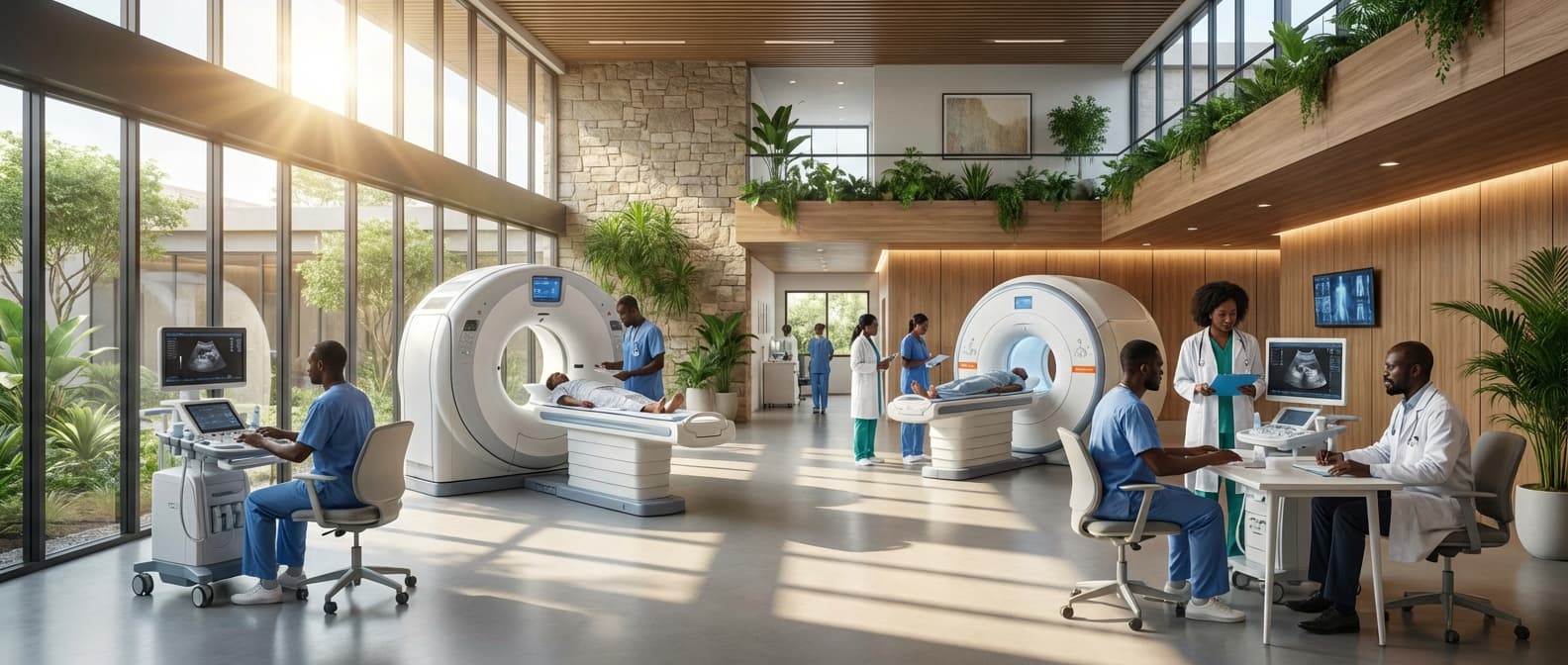
Endoscopy Solutions in Tanzania
Engineering Excellence & Technical Support
Advanced endoscopic equipment delivering superior visualization and diagnostic precision for minimally invasive procedures. High-standard technical execution following OEM protocols and local regulatory frameworks.
Advanced Diagnostic Endoscopes
Introducing state-of-the-art endoscopic equipment featuring high-definition imaging, variable stiffness, and advanced maneuverability, enabling earlier and more accurate diagnosis of gastrointestinal and respiratory conditions across Tanzania. This technology empowers healthcare professionals with unprecedented visualization for critical procedures.
Minimally Invasive Therapeutic Tools
Providing a comprehensive suite of minimally invasive tools for therapeutic endoscopy, including sophisticated snares, polypectomy devices, and hemostatic clips. These solutions allow for precise interventions directly within the body, reducing patient recovery time and enhancing treatment outcomes for common procedures like polyp removal and bleeding control in Tanzanian hospitals.
Integrated Training & Support Network
Establishing a robust training and technical support network for endoscopic procedures throughout Tanzania. This includes hands-on workshops, remote proctoring capabilities, and readily available spare parts, ensuring sustainable adoption and expert utilization of our endoscopy solutions for improved patient care nationwide.
What Is Endoscopy Solutions In Tanzania?
Endoscopy solutions in Tanzania refer to the availability and utilization of diagnostic and therapeutic procedures employing endoscopes. An endoscope is a flexible or rigid tube with a light and camera attached, allowing for internal visualization of hollow organs and cavities within the body. These solutions encompass the equipment, trained personnel, and clinical protocols necessary for performing endoscopic examinations and interventions. The primary objective is to facilitate accurate diagnosis, precise treatment, and minimally invasive procedures, thereby improving patient outcomes and reducing healthcare burdens.
| Who Needs Endoscopy Solutions? | Typical Use Cases |
|---|---|
| Patients presenting with unexplained gastrointestinal bleeding (hematemesis, melena, hematochezia). | Investigation of chronic abdominal pain, dyspepsia, or dysphagia not responsive to initial medical management. |
| Individuals with suspected or confirmed inflammatory bowel disease (Crohn's disease, ulcerative colitis). | Screening and surveillance for colorectal cancer in high-risk populations or symptomatic individuals. |
| Patients with abnormal findings on radiological imaging (e.g., suspected gastric or duodenal ulcers, strictures, or masses). | Diagnosis and management of biliary and pancreatic duct pathologies (e.g., gallstones, strictures, tumors). |
| Patients with suspected esophageal varices, particularly those with a history of liver disease. | Management of upper gastrointestinal tract bleeding (e.g., variceal ligation, clipping). |
| Individuals experiencing unintentional weight loss or persistent vomiting. | Removal of ingested foreign bodies from the gastrointestinal tract. |
| Patients requiring biopsy for histopathological examination of suspicious lesions. | Dilatation of benign or malignant esophageal, pyloric, or colonic strictures. |
Key Components and Applications of Endoscopy Solutions in Tanzania
- Diagnostic Endoscopy: Visual inspection of internal organs to identify abnormalities such as inflammation, ulcers, polyps, tumors, or strictures.
- Therapeutic Endoscopy: Interventions performed using endoscopic tools, including polyp removal (polypectomy), stent placement, bleeding control (hemostasis), foreign body retrieval, and dilation of narrowed passages.
- Specialized Endoscopic Techniques: Advanced procedures like endoscopic retrograde cholangiopancreatography (ERCP) for bile and pancreatic duct examination, endoscopic ultrasound (EUS) for detailed imaging, and capsule endoscopy for small intestine visualization.
- Infection Control Protocols: Stringent sterilization and disinfection procedures for endoscopic equipment to prevent cross-contamination.
- Training and Education: Capacity building for healthcare professionals in endoscopic techniques and interpretation.
Who Needs Endoscopy Solutions In Tanzania?
Endoscopy, a crucial diagnostic and therapeutic tool, plays a vital role in the healthcare landscape of Tanzania. The need for reliable and advanced endoscopy solutions spans across various medical specialties and facilities, driven by the increasing prevalence of gastrointestinal and respiratory diseases, as well as the growing emphasis on early detection and minimally invasive procedures. Healthcare providers in Tanzania are seeking endoscopy solutions to improve diagnostic accuracy, enhance patient outcomes, and expand their treatment capabilities. This includes hospitals, clinics, and specialized diagnostic centers that cater to a diverse patient population experiencing conditions such as ulcers, gastritis, inflammatory bowel disease, early-stage cancers, and respiratory infections. The demand is particularly high in urban centers where advanced medical facilities are more concentrated, but there's also a growing need in regional hospitals aiming to upgrade their diagnostic services. Ultimately, anyone involved in the diagnosis and management of internal organ conditions, particularly within the digestive and respiratory tracts, would benefit from advanced endoscopy solutions.
| Department | Needs and Applications of Endoscopy Solutions |
|---|---|
| Gastroenterology | Diagnosis and management of upper and lower GI disorders (e.g., ulcers, gastritis, IBD, polyps, cancer). Performing therapeutic procedures like polypectomy, dilation, stricture management, and foreign body removal. |
| Pulmonology | Diagnosis and management of lung and airway diseases (e.g., pneumonia, bronchitis, COPD exacerbations, lung cancer, hemoptysis). Performing bronchoscopy for biopsies, bronchoalveolar lavage, and foreign body removal. |
| General Surgery | Pre-operative assessment, intra-operative guidance (e.g., ERCP), and post-operative follow-up for GI surgeries. |
| Oncology | Early detection and staging of GI and lung cancers. Biopsies for diagnosis and monitoring treatment response. |
| Internal Medicine | Broad diagnostic tool for unexplained symptoms related to the GI tract and respiratory system. |
| Pediatrics | Diagnosis of congenital GI anomalies, foreign body ingestion, and inflammatory conditions in children. |
| Emergency Medicine | Management of acute GI bleeding, perforations, and foreign body ingestions/aspirations. |
Target Customers and Departments for Endoscopy Solutions in Tanzania
- Hospitals (Public and Private)
- Specialized Clinics (Gastroenterology, Pulmonology, Oncology)
- Diagnostic Centers
- Research Institutions
Endoscopy Solutions Process In Tanzania
This document outlines the typical workflow for Endoscopy Solutions in Tanzania, from initial inquiry to the successful execution of a procedure or service. This process is designed to ensure clarity, efficiency, and optimal patient care.
| Stage | Description | Key Activities | Responsible Parties | Documentation |
|---|---|---|---|---|
| The starting point where a patient or healthcare provider expresses interest in endoscopy services. | Contacting the endoscopy facility (phone, email, walk-in), discussing symptoms/needs, initial information gathering, scheduling an initial consultation. | Patient, Referring Physician, Reception/Administrative Staff, Nurse Navigator (if applicable) | Inquiry form, Contact log, Initial appointment details |
| A thorough evaluation of the patient's medical history and suitability for endoscopy. | Consultation with a specialist (gastroenterologist, surgeon), reviewing medical history, performing necessary physical examinations, ordering preliminary tests (blood work, imaging), confirming the need and type of endoscopy. | Specialist Physician, Patient, Referring Physician, Lab Technicians, Radiologists | Patient Medical Record (PMR), Consultation notes, Preliminary test results, Referral letter |
| Organizing the procedure and ensuring the patient is fully prepared. | Booking the procedure date and time, providing detailed pre-procedure instructions (dietary restrictions, bowel preparation, medication adjustments), obtaining informed consent, confirming insurance details. | Scheduling Staff, Nurse Educators, Patient, Anesthesiologist (if applicable), Insurance Providers | Procedure schedule, Pre-procedure instruction forms, Informed consent forms, Insurance pre-authorization |
| The actual endoscopy procedure is performed. | Patient registration and check-in, vital signs monitoring, administration of sedation/anesthesia, performing the endoscopic examination, taking biopsies (if necessary), diagnostic imaging. | Endoscopist (Physician), Endoscopy Nurse, Anesthesiologist/Sedation Nurse, Patient | Procedure report, Anesthesia record, Biopsy records, Images/Video recordings |
| Monitoring the patient's recovery and providing further guidance. | Recovery room monitoring, vital signs checks, pain management, immediate post-procedure instructions (diet, activity), scheduling follow-up appointments, reviewing preliminary findings. | Recovery Room Nurse, Endoscopist, Patient | Recovery notes, Discharge instructions, Follow-up appointment details |
| Handling the financial aspects of the service. | Generating invoices based on procedure codes and services rendered, submitting claims to insurance, collecting co-payments/deductibles, providing receipts, addressing billing inquiries. | Billing Department, Patient, Insurance Providers | Invoices, Payment receipts, Insurance claim forms |
| Maintaining records and generating insights for quality improvement. | Updating patient records with procedure outcomes, archiving reports and images, contributing to internal and external quality control databases, generating performance reports for management. | Medical Records Department, IT Department, Quality Assurance Team, Management | Archived patient records, Database entries, Performance reports |
Endoscopy Solutions Process Workflow in Tanzania
- Inquiry and Initial Consultation
- Patient Assessment and Referral
- Scheduling and Pre-Procedure Preparations
- Procedure Execution
- Post-Procedure Care and Follow-up
- Billing and Payment
- Data Management and Reporting
Endoscopy Solutions Cost In Tanzania
The cost of endoscopy procedures in Tanzania can vary significantly based on several factors. These include the type of endoscopy performed (e.g., gastroscopy, colonoscopy, bronchoscopy), the complexity of the procedure, the specific hospital or clinic (public vs. private, specialized centers), the location within Tanzania (urban centers generally have higher costs), and the inclusion of additional services like sedation, biopsy, or polyp removal. While exact pricing is dynamic, understanding these influencing elements provides a clearer picture of potential expenses in local currency (Tanzanian Shilling - TZS).
| Procedure Type (Estimated Range in TZS) | General Gastroscopy (Upper GI) | General Colonoscopy (Lower GI) | Gastroscopy with Biopsy | Colonoscopy with Biopsy | Colonoscopy with Polyp Removal |
|---|---|---|---|---|---|
| Public Hospital (Estimated) | 200,000 - 500,000 | 300,000 - 700,000 | 250,000 - 600,000 | 350,000 - 800,000 | 400,000 - 1,000,000 |
| Private Hospital/Clinic (Estimated) | 400,000 - 1,000,000 | 600,000 - 1,500,000 | 500,000 - 1,200,000 | 700,000 - 1,800,000 | 800,000 - 2,500,000 |
Key Pricing Factors for Endoscopy in Tanzania
- Type of Endoscopy: Gastroscopy (upper GI), Colonoscopy (lower GI), Sigmoidoscopy, Bronchoscopy, etc., each have different equipment and time requirements.
- Inclusions: Biopsy, polyp removal, specialized imaging during the procedure, and tissue analysis will increase the overall cost.
- Facility Type: Private hospitals and specialized diagnostic centers typically charge more than public hospitals.
- Location: Major cities like Dar es Salaam and Arusha tend to have higher medical costs compared to smaller towns or rural areas.
- Anesthesia/Sedation: The type and administration of anesthesia or sedation used during the procedure contribute to the total price.
- Doctor's Fees: The specialist's consultation and procedure fees can vary.
- Pre- and Post-Procedure Care: Consultations before the procedure and follow-up appointments can add to the expense.
Affordable Endoscopy Solutions Options
Navigating the world of endoscopy can feel overwhelming, especially when considering costs. However, numerous affordable options exist, often packaged in ways that maximize value and minimize out-of-pocket expenses. Understanding these 'value bundles' and implementing effective cost-saving strategies can significantly ease the financial burden of necessary endoscopic procedures.
| Cost-Saving Strategy | Description | Potential Savings | Actionable Tip |
|---|---|---|---|
| Compare Facility Costs | Prices for the same endoscopy procedure can vary significantly between hospitals, ambulatory surgery centers, and independent clinics. | Can range from hundreds to thousands of dollars. | Obtain price quotes from at least 2-3 different facilities before scheduling. |
| Inquire About Self-Pay Discounts | If you are uninsured or have a high deductible, ask about discounted rates for patients paying out-of-pocket. Facilities often have lower rates for these scenarios. | Typically 10-50% off the billed charges. | Directly ask the billing department or scheduler about self-pay options and discounts. |
| Utilize Insurance Benefits Fully | Understand your insurance plan's coverage for diagnostic versus screening endoscopies, co-pays, deductibles, and out-of-pocket maximums. | Maximizes insurance coverage and minimizes personal expense. | Contact your insurance provider to clarify benefits and pre-authorization requirements. |
| Explore Payment Plans | Many facilities offer interest-free or low-interest payment plans to spread the cost of the procedure over several months. | Makes the cost more manageable. | Discuss payment options with the billing department at the time of scheduling or before the procedure. |
| Seek Out Outpatient Surgery Centers | Ambulatory surgery centers are often less expensive than hospital-based facilities for routine endoscopic procedures. | Can be 20-40% cheaper than hospital settings. | Ask your referring physician if an outpatient surgery center is an appropriate option for your procedure. |
| Ask About Generic vs. Brand-Name Medications | While less common for procedural medications, it's always worth inquiring if there are any cost differences. | Minor savings, but worth asking. | Discuss medication options with your physician and anesthesiologist. |
| Consider Telehealth for Pre/Post-Op Consultations | If available, virtual appointments can save on travel time and costs for follow-up discussions. | Reduces travel expenses and time off work. | Inquire if pre-operative or post-operative consultations can be conducted via telehealth. |
Understanding Value Bundles in Endoscopy
- Bundled Procedure Pricing: Many healthcare facilities offer discounts when multiple related procedures are performed during a single visit. For example, a combined upper endoscopy (EGD) and colonoscopy might be offered at a reduced overall price compared to booking them separately.
- All-Inclusive Packages: Some centers, particularly independent or specialized endoscopy clinics, may offer all-inclusive packages. These typically cover the procedure itself, pre-operative consultations, sedation, pathology analysis, and sometimes even follow-up care, providing a predictable cost.
- Network Provider Agreements: Participating with insurance providers often leads to discounted rates for in-network procedures. Healthcare systems negotiate with insurers, and these savings are passed on to patients with in-network coverage.
- Package Deals with Anesthesia: While anesthesia is often a separate line item, some facilities might include or offer discounted anesthesia services as part of a larger procedural package, especially for less complex cases.
- Preventive Care Bundles: For screening procedures like colonoscopies, some insurers or healthcare systems may bundle them with other preventive health services, further reducing the patient's responsibility.
Verified Providers In Tanzania
In Tanzania's healthcare landscape, identifying genuinely qualified and trustworthy medical providers is paramount for patient safety and effective treatment. Franance Health has emerged as a leading platform dedicated to vetting and showcasing these verified providers. Their rigorous credentialing process ensures that patients can access healthcare with confidence, knowing they are choosing from a network of reputable and skilled medical professionals. This commitment to transparency and quality makes Franance Health a crucial resource for anyone seeking reliable healthcare services in Tanzania.
| Credentialing Aspect | Franance Health's Standard | Patient Benefit |
|---|---|---|
| Medical License Verification | Rigorous checks against official medical councils and regulatory bodies. | Guarantees providers are legally authorized to practice medicine. |
| Educational Background & Qualifications | Verification of degrees, certifications, and specialized training from accredited institutions. | Ensures providers possess the necessary theoretical knowledge and practical skills. |
| Professional Experience & Track Record | Review of past work history, referrals, and absence of disciplinary actions. | Confirms practical expertise and a history of ethical practice. |
| Specialization Confirmation | Validation of specific areas of medical expertise and sub-specialties. | Helps patients find the most appropriate specialist for their needs. |
| Commitment to Continuing Medical Education (CME) | Confirmation of ongoing professional development and up-to-date knowledge. | Ensures patients receive care based on the latest medical advancements. |
Why Franance Health Credentials Matter
- Ensures patient safety by filtering out unqualified practitioners.
- Promotes trust and confidence in the Tanzanian healthcare system.
- Provides easy access to a curated list of legitimate medical professionals.
- Facilitates informed decision-making for patients seeking specific medical expertise.
- Drives higher standards of care across the healthcare sector.
Scope Of Work For Endoscopy Solutions
This Scope of Work (SOW) outlines the technical deliverables and standard specifications for the procurement and implementation of Endoscopy Solutions. The objective is to acquire advanced endoscopic systems that enhance diagnostic accuracy, therapeutic capabilities, and patient comfort. The selected solutions will be deployed across various departments within the organization, requiring seamless integration with existing IT infrastructure and adherence to stringent quality and safety standards.
| Deliverable | Technical Specifications | Quality Standards | Acceptance Criteria |
|---|---|---|---|
| Video Processor/Console | Resolution: Minimum Full HD (1920x1080). Frame Rate: Minimum 60 fps. Connectivity: HDMI, DVI, USB 3.0. Imaging modes: Standard, High Definition, Chromoendoscopy (if applicable). User interface: Intuitive, touchscreen enabled. Storage: Internal SSD with minimum 1TB capacity. | ISO 13485 certified manufacturer. CE marking or FDA clearance. Compliance with IEC 60601 standards for medical electrical equipment. | Successful system boot-up and self-test. Verification of all input/output ports. Demonstration of image clarity and processing speed. Successful capture and playback of test images/videos. |
| Flexible Endoscopes | Outer Diameter: As per departmental requirements (e.g., <10mm for gastroscopy, <13mm for colonoscopy). Working Channel Diameter: Minimum 2.8mm. Bending Angle: Up/Down >180°, Left/Right >160°. Field of View: Minimum 140°. Insertion Tube Length: Adequate for intended procedures. Image Sensor: CMOS or CCD with high pixel density. | ISO 13485 certified manufacturer. CE marking or FDA clearance. Leak testing compliance. Biocompatibility of materials. | Visual inspection for defects. Verification of all articulation controls. Testing of working channel patency and irrigation/suction functionality. Demonstration of image quality and color reproduction. Leak test verification. |
| Light Source | Type: LED or Xenon. Illuminance: Minimum 150,000 Lux. Color Temperature: Adjustable, mimicking natural daylight. Lamp Life: Minimum 10,000 hours for LED. Connectivity: Compatible with selected video processor. | ISO 13485 certified manufacturer. CE marking or FDA clearance. Compliance with IEC 60601 standards. | Verification of light output intensity and stability. Confirmation of correct color temperature. Seamless integration with video processor for on/off control. |
| Image/Video Capture and Recording | Format: DICOM, JPEG, MPEG-4. Resolution: Matching video processor output. Storage Capacity: Sufficient for a minimum of 100 procedures per day. Network Connectivity: Ethernet, Wi-Fi (if applicable). | Compliance with HIPAA/GDPR for patient data. Secure data transfer protocols. | Successful capture of images and videos. Verification of file formats and data integrity. Seamless transfer to PACS or designated storage. Demonstration of search and retrieval functionality. |
| Sterilization Equipment | Type: High-level disinfection (HLD) or sterilization (e.g., peracetic acid, ethylene oxide). Cycle Time: Efficient and appropriate for high-volume use. Capacity: Able to process multiple endoscopes concurrently. Monitoring: Integrated process monitoring and documentation. | UL, CE, or FDA approval. Compliance with AAMI ST58, EN 15883 standards. | Verification of sterilization efficacy through biological indicators. Documentation of successful cycles. Confirmation of equipment calibration and maintenance logs. |
Key Endoscopy Solution Components:
- Video Processor/Console
- Endoscopic Imaging Towers
- Flexible Endoscopes (Gastroscopes, Colonoscopes, Bronchoscopes, etc.)
- Rigid Endoscopes (Laparoscopes, Arthroscopes, etc.)
- Light Sources
- Insufflators
- Irrigation/Aspiration Pumps
- Image/Video Capture and Recording Devices
- Endoscopic Visualization Accessories (Monitors, Grasping Forceps, Biopsy Valves, etc.)
- Sterilization and Storage Equipment
Service Level Agreement For Endoscopy Solutions
This Service Level Agreement (SLA) outlines the performance standards and commitments for the provision of Endoscopy Solutions. It defines the expected response times for support and maintenance requests, as well as the guaranteed uptime for the Endoscopy Solutions platform and associated services.
| Service Component | Uptime Guarantee | Response Time (Critical Issue) | Response Time (Major Issue) | Response Time (Minor Issue) |
|---|---|---|---|---|
| Endoscopy Solutions Platform (Cloud-hosted) | 99.9% Uptime (excluding scheduled maintenance) | 1 hour (during Business Hours) | 4 business hours (during Business Hours) | 8 business hours (during Business Hours) |
| On-Premise Software Module | Not applicable (Customer's responsibility for infrastructure) | 2 business hours (remote support) | 8 business hours (remote support) | 16 business hours (remote support) |
| Core Hardware Components (if applicable) | Not applicable (covered by hardware warranty/maintenance agreement) | 4 business hours (for remote diagnosis and dispatch of technician) | 8 business hours (for remote diagnosis and dispatch of technician) | Next business day (for remote diagnosis and dispatch of technician) |
| Data Backup and Recovery Services | 99.5% Availability | 2 hours (for initiation of recovery process) | 4 hours (for initiation of recovery process) | 24 hours (for initiation of recovery process) |
Key Definitions
- Endoscopy Solutions: Refers to the integrated platform, software, hardware, and associated services provided for endoscopic procedures.
- Downtime: Any period during which the Endoscopy Solutions platform or its critical functionalities are unavailable to the Customer, excluding scheduled maintenance.
- Scheduled Maintenance: Pre-announced periods of planned maintenance, typically communicated at least 48 hours in advance, during which services may be temporarily unavailable.
- Business Hours: Standard working hours, usually Monday to Friday, 9:00 AM to 5:00 PM in the Customer's local time zone, excluding public holidays.
- Critical Issue: An issue that renders the Endoscopy Solutions platform completely unusable, preventing all core functionalities.
- Major Issue: An issue that significantly impairs the functionality of the Endoscopy Solutions platform, but does not render it completely unusable.
- Minor Issue: An issue that has a minimal impact on the functionality of the Endoscopy Solutions platform, or is an aesthetic or documentation-related problem.
- Response Time: The maximum time allowed for our support team to acknowledge and begin actively working on a reported issue.
- Resolution Time: The target time within which an issue is expected to be resolved. Note that actual resolution may depend on the complexity of the issue and the availability of necessary resources.
Frequently Asked Questions

Ready when you are
Let's scope your Endoscopy Solutions in Tanzania project in Tanzania.

Scaling healthcare logistics and technical systems across the entire continent.