
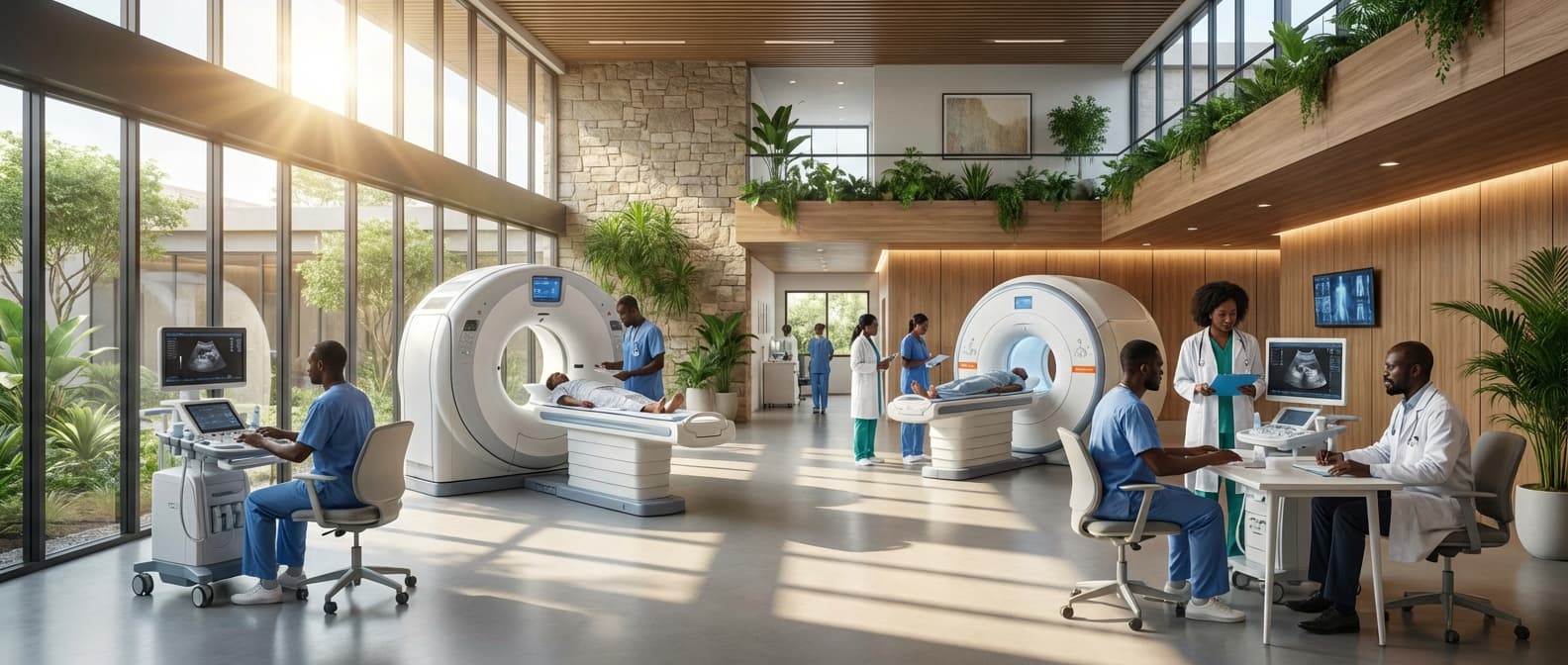
Diagnostic Imaging in Tanzania
Engineering Excellence & Technical Support
High-resolution imaging systems including CT scanners, MRI, X-ray, and ultrasound technology for accurate clinical diagnosis. High-standard technical execution following OEM protocols and local regulatory frameworks.
Mobile X-ray Units Reach Remote Villages
Deployment of portable X-ray machines in remote, underserved areas of Tanzania significantly increases access to diagnostic imaging for conditions like tuberculosis and pneumonia, reducing travel burdens for patients and enabling earlier interventions.
Tele-radiology Network Enhances Specialist Access
Establishing a tele-radiology network connecting district hospitals to central referral centers allows radiologists to remotely review scans, providing crucial second opinions and training opportunities, thereby improving diagnostic accuracy and patient outcomes across the country.
Ultrasound Training Programs Boost Capacity
Implementing comprehensive ultrasound training programs for healthcare professionals in regional hospitals expands the availability of essential diagnostic services, particularly for obstetric and gynecological care, leading to improved maternal and child health.
What Is Diagnostic Imaging In Tanzania?
Diagnostic imaging in Tanzania refers to the use of various medical imaging technologies to visualize the internal structures of the human body for the purpose of diagnosis, disease detection, and monitoring of treatment. These non-invasive or minimally invasive techniques create detailed anatomical and physiological images, aiding clinicians in identifying abnormalities, assessing the extent of pathology, and guiding therapeutic interventions. The service encompasses a spectrum of modalities, each with distinct physical principles and applications. Availability and accessibility of these services in Tanzania are influenced by infrastructure, trained personnel, and technological investment, often concentrated in urban centers and larger healthcare facilities.
| Who Needs Diagnostic Imaging? | Typical Use Cases |
|---|---|
| Patients presenting with symptoms suggestive of internal pathology (e.g., pain, unexplained weight loss, neurological deficits, abnormal physical findings). | Investigation of suspected fractures, dislocations, and other bone abnormalities. Detection and staging of neoplastic diseases (cancer). Evaluation of infectious processes (e.g., pneumonia, appendicitis, abscesses). Assessment of traumatic injuries. Monitoring treatment efficacy and disease progression. Pre-operative planning and assessment. Screening for certain conditions (e.g., mammography for breast cancer, though less widespread in Tanzania). |
| Individuals undergoing routine medical check-ups where specific risks are identified. | Differentiating between benign and malignant lesions. Guidance for interventional procedures (e.g., biopsies, drain placements). Evaluation of cardiovascular health (e.g., cardiac CT angiography). Assessing the viability and function of organs (e.g., renal ultrasound, nuclear medicine scans). Diagnosing congenital anomalies. |
| Patients with chronic conditions requiring ongoing monitoring (e.g., renal disease, inflammatory bowel disease). | Assessing the extent and involvement of neurological disorders (e.g., stroke, multiple sclerosis). Evaluation of abdominal pain and discomfort. Management of obstetric and gynecological conditions. |
Key Components of Diagnostic Imaging Services in Tanzania
- Radiography (X-ray): Utilizes electromagnetic radiation to produce 2D images, primarily for skeletal assessment, chest imaging (e.g., pneumonia, tuberculosis), and detecting foreign bodies.
- Computed Tomography (CT) Scan: Employs X-rays and sophisticated computer processing to generate cross-sectional images (slices) of the body, offering superior detail for soft tissues, bone, and blood vessels in organs like the brain, abdomen, and chest. Essential for trauma evaluation, tumor staging, and identifying complex pathologies.
- Magnetic Resonance Imaging (MRI): Leverages strong magnetic fields and radio waves to produce highly detailed cross-sectional images, particularly effective for soft tissues, nervous system (brain, spinal cord), muscles, and joints. Offers excellent contrast without ionizing radiation.
- Ultrasound (Sonography): Employs high-frequency sound waves to create real-time images of internal organs and structures. Widely used in obstetrics and gynecology for fetal monitoring and pelvic assessments, as well as for evaluating the abdomen, thyroid, and blood flow (Doppler ultrasound).
- Fluoroscopy: A real-time X-ray imaging technique that allows visualization of continuous motion within the body, often used for dynamic studies of the gastrointestinal tract, cardiovascular system (angiography), and during interventional procedures.
- Nuclear Medicine Imaging (e.g., PET-CT, SPECT): Involves the administration of small amounts of radioactive tracers to assess organ function and identify metabolic changes associated with diseases like cancer and cardiovascular conditions.
Who Needs Diagnostic Imaging In Tanzania?
Diagnostic imaging plays a crucial role in modern healthcare, enabling timely and accurate diagnosis, treatment planning, and patient monitoring. In Tanzania, a developing nation with a growing healthcare sector, understanding who needs diagnostic imaging and within which departments it's most vital is key to resource allocation and service improvement. This document outlines the primary beneficiaries and the departments that rely heavily on these services.
| Department | Key Diagnostic Imaging Needs | Common Modalities Used |
|---|---|---|
| Radiology/Medical Imaging Department | Primary provider of all diagnostic imaging services. Central hub for image acquisition, interpretation, and reporting. | X-ray, CT, MRI, Ultrasound, Mammography, Fluoroscopy |
| Emergency Department (Casualty) | Rapid assessment of trauma, fractures, internal bleeding, head injuries, and acute medical conditions. | X-ray, CT, Ultrasound |
| Surgical Departments (General, Orthopedic, Neurosurgery, etc.) | Pre-operative planning, intra-operative guidance (limited), and post-operative assessment for injuries, infections, and surgical complications. | X-ray, CT, MRI, Ultrasound |
| Internal Medicine/General Wards | Diagnosis and monitoring of pneumonia, heart conditions, abdominal pain, kidney diseases, and other systemic illnesses. | X-ray, Ultrasound, CT |
| Pediatrics Department | Diagnosis of congenital anomalies, infections, trauma, and growth-related issues in children. | X-ray, Ultrasound, (CT/MRI for complex cases) |
| Obstetrics and Gynecology Department | Prenatal care (fetal assessment), diagnosis of gynecological conditions, infertility investigations, and breast imaging. | Ultrasound, Mammography, (MRI for specific indications) |
| Oncology Department | Staging of cancers, monitoring treatment response, and detecting recurrence. | CT, MRI, PET-CT (where available), Ultrasound |
| Cardiology Department | Assessment of heart structure and function, detection of blockages, and monitoring of cardiovascular interventions. | Echocardiography (Ultrasound), CT Angiography, MRI |
| Pulmonology Department | Diagnosis and management of lung diseases such as pneumonia, tuberculosis, lung cancer, and interstitial lung diseases. | X-ray, CT |
| Neurology Department | Investigation of stroke, tumors, seizures, degenerative diseases, and other neurological disorders. | CT, MRI |
| Urology Department | Diagnosis of kidney stones, urinary tract infections, tumors, and other genitourinary conditions. | Ultrasound, CT, X-ray (KUB) |
Target Customers for Diagnostic Imaging in Tanzania
- {"title":"Patients with Suspected or Confirmed Illnesses","description":"Individuals presenting with symptoms indicative of various diseases, requiring visualization of internal structures to confirm or rule out diagnoses. This is the broadest category and encompasses patients across all age groups and socioeconomic backgrounds."}
- {"title":"Patients Requiring Treatment Monitoring","description":"Those undergoing treatment for chronic conditions (e.g., cancer, tuberculosis, cardiovascular diseases) or post-surgical recovery, where imaging is used to assess treatment efficacy, detect complications, or monitor disease progression."}
- {"title":"Trauma and Emergency Patients","description":"Individuals who have suffered injuries from accidents, falls, or violence. Imaging is critical for rapidly identifying fractures, internal bleeding, organ damage, and other life-threatening conditions."}
- {"title":"Pediatric Patients","description":"Children with congenital abnormalities, developmental issues, infections, or injuries. Specialized pediatric imaging protocols ensure safety and provide accurate diagnostic information for this vulnerable population."}
- {"title":"Women's Health Patients","description":"Pregnant women requiring prenatal screening (ultrasound), and women undergoing investigations for gynecological conditions, breast cancer screening (mammography), and pelvic issues."}
- {"title":"Individuals with Chronic Diseases","description":"Patients with long-term conditions such as diabetes, hypertension, or neurological disorders, where imaging might be used to assess organ damage or complications."}
- {"title":"Patients Undergoing Surgical Procedures","description":"Pre-operative planning often requires imaging to visualize anatomical structures and potential challenges. Post-operative imaging is essential for assessing surgical outcomes and detecting complications."}
Diagnostic Imaging Process In Tanzania
The diagnostic imaging process in Tanzania, while evolving, generally follows a structured workflow to ensure accurate and timely patient care. This process begins with an initial inquiry or referral from a clinician, progresses through scheduling and patient preparation, culminates in the imaging procedure itself, and concludes with image interpretation and reporting. The specific steps and their efficiency can vary depending on the facility's resources, availability of technology, and trained personnel.
| Step | Description | Key Actors | Potential Challenges in Tanzania |
|---|---|---|---|
| Clinician Referral/Inquiry | A healthcare provider (doctor, nurse practitioner) identifies the need for a diagnostic imaging examination based on a patient's symptoms, medical history, or follow-up requirements. This involves specifying the type of imaging needed (X-ray, Ultrasound, CT, MRI) and the clinical indication. | Referring Clinician | Lack of awareness of available imaging modalities, limited access to specialists for complex cases, communication gaps between departments. |
| Scheduling and Appointment Booking | The patient or referring clinic contacts the diagnostic imaging department to schedule an appointment. This may involve checking availability, understanding the procedure's requirements, and obtaining pre-appointment instructions. | Receptionist/Radiographer/Radiology Administrator, Patient/Referring Clinic | Overcrowding in public facilities leading to long waiting times, limited appointment slots due to equipment downtime or insufficient staff, manual or inefficient booking systems. |
| Patient Preparation and Consent | Depending on the imaging modality, the patient may need specific preparation (e.g., fasting for abdominal ultrasound, contrast agent administration for CT/MRI). The procedure is explained to the patient, and informed consent is obtained. | Radiographer/Radiology Nurse, Patient | Inadequate patient education leading to non-compliance with preparation, language barriers, ethical considerations around informed consent in diverse settings. |
| Image Acquisition (The Imaging Procedure) | The patient undergoes the specified imaging examination by a trained radiographer or technologist. This involves positioning the patient correctly and operating the imaging equipment to capture the necessary images. | Radiographer/Radiology Technologist | Shortage of skilled radiographers, outdated or malfunctioning equipment, lack of essential consumables (e.g., contrast media), unreliable power supply affecting equipment operation. |
| Image Processing and Quality Control | Acquired images are processed (digitally or via film development in older systems) and reviewed for technical quality. Any necessary adjustments or repeat scans are performed. | Radiographer/Radiology Technologist | Limited access to advanced digital processing software, maintenance issues with processing equipment, insufficient quality control protocols. |
| Radiologist Interpretation | A qualified radiologist reviews the processed images to identify abnormalities, diagnose the condition, and provide a comprehensive assessment. | Radiologist | Severe shortage of radiologists (especially in rural areas), heavy workload leading to delays, limited access to subspecialty radiologists. |
| Report Generation and Communication | The radiologist dictates or writes a formal report detailing their findings, diagnosis, and recommendations. This report is then communicated back to the referring clinician, often electronically or as a hard copy. | Radiologist, Medical Secretary/Transcriptionist, Referring Clinician | Inefficient transcription services, challenges with secure and timely electronic report transmission, delays in report delivery impacting patient management. |
| Follow-up and Treatment Planning | The referring clinician uses the imaging report to guide further patient management, which may include ordering additional tests, initiating treatment, or scheduling follow-up imaging. | Referring Clinician, Patient | Lack of integration between diagnostic imaging and clinical decision-making, patient follow-up challenges due to access and cost barriers. |
Diagnostic Imaging Workflow in Tanzania
- Clinician Referral/Inquiry
- Scheduling and Appointment Booking
- Patient Preparation and Consent
- Image Acquisition (The Imaging Procedure)
- Image Processing and Quality Control
- Radiologist Interpretation
- Report Generation and Communication
- Follow-up and Treatment Planning
Diagnostic Imaging Cost In Tanzania
Diagnostic imaging services are a crucial component of healthcare in Tanzania, aiding in the diagnosis and management of a wide range of medical conditions. The cost of these services can vary significantly due to several factors, influencing accessibility for different socioeconomic groups. Understanding these pricing dynamics is essential for patients, healthcare providers, and policymakers alike. The primary currency for these transactions is the Tanzanian Shilling (TZS).
| Imaging Modality | Estimated Price Range (TZS) | Notes |
|---|---|---|
| X-ray (e.g., Chest X-ray) | 30,000 - 80,000 | Basic diagnostic, widely available. |
| Ultrasound (e.g., Abdomen, Pelvis) | 40,000 - 120,000 | Common for soft tissue imaging, obstetrics, and gynecology. |
| CT Scan (e.g., Head, Abdomen) | 200,000 - 600,000 | Cost increases with contrast agent and scan complexity. Available in major hospitals and specialized centers. |
| MRI Scan (e.g., Brain, Spine, Joints) | 400,000 - 1,200,000+ | Generally the most expensive modality. Requires advanced technology and specialized expertise. Availability is limited to larger urban centers. |
| Mammography | 50,000 - 150,000 | Screening and diagnostic imaging for breast cancer. |
| Echocardiogram (Ultrasound of the Heart) | 100,000 - 250,000 | Specialized ultrasound for cardiac assessment. |
Key Pricing Factors for Diagnostic Imaging in Tanzania
- Type of Imaging Modality: Different imaging techniques have inherently different equipment, operational, and maintenance costs. For instance, MRI and CT scans are generally more expensive than X-rays or ultrasounds.
- Complexity of the Examination: A simple chest X-ray will be less costly than a contrast-enhanced CT scan of the abdomen, which requires specialized contrast agents and longer scan times.
- Geographic Location: Costs can differ between urban centers (like Dar es Salaam, Arusha, Mwanza) and rural areas. Larger hospitals and private clinics in major cities often have higher overheads, potentially leading to higher prices. Conversely, access to advanced equipment might be more limited in remote regions, impacting the availability and cost of certain scans.
- Type of Healthcare Facility: Public hospitals, funded partly by the government, generally offer lower prices compared to private hospitals and specialized diagnostic centers. Private facilities often cater to a higher-income demographic and aim for profitability, reflecting in their pricing.
- Equipment Age and Technology: Newer, state-of-the-art equipment can be more expensive to acquire and maintain, which may be reflected in the service cost. However, older technology might also require more frequent repairs, incurring costs.
- Radiologist and Technician Expertise: The cost of highly skilled and experienced radiologists and technicians can influence the overall pricing of a diagnostic service. Availability of specialized radiologists for specific modalities can also play a role.
- Consumables and Contrast Agents: Procedures requiring contrast media (e.g., for CT or MRI) will incur additional costs for these specialized drugs.
- Administrative and Operational Overheads: This includes costs related to staffing, electricity, building maintenance, and administrative processes, which vary between facilities.
- Insurance Coverage: While not a direct pricing factor, the presence and scope of health insurance can significantly impact the out-of-pocket expenditure for patients. However, widespread comprehensive health insurance coverage is still developing in Tanzania.
Affordable Diagnostic Imaging Options
Diagnostic imaging, such as X-rays, CT scans, and MRIs, can be a significant healthcare expense. Fortunately, there are ways to manage these costs effectively. Understanding value bundles and implementing cost-saving strategies can make essential imaging services more affordable. Value bundles offer a package of related services at a potentially lower overall cost than purchasing each service individually. Cost-saving strategies involve proactive planning, informed decision-making, and exploring alternative options to reduce out-of-pocket expenses.
| Imaging Type | Potential Cost-Saving Strategies | Explanation |
|---|---|---|
| X-ray | Outpatient Imaging Center, Shop Around | X-rays are generally less expensive than CT or MRI, but costs still vary. Outpatient centers are often cheaper than hospitals. Direct price comparison is crucial. |
| CT Scan | Value Bundle (if combined with consultation), Outpatient Imaging Center, Cash Price Inquiry | CT scans are more complex and costly. Inquire if imaging centers offer bundled rates for scan + radiologist's report or a follow-up visit. Ask about discounted self-pay rates. |
| MRI | Negotiate Payment Plan, Explore Different Facilities, Inquire about cash prices | MRIs are typically the most expensive. If cost is a major concern, explore multiple imaging centers and be prepared to negotiate or inquire about self-pay discounts. Payment plans can ease the burden of large bills. |
| Ultrasound | Compare prices between different providers, Ask your doctor about alternatives | While generally more affordable, ultrasound costs can still vary. Comparing prices and discussing with your doctor ensures you're getting the best value and appropriate test. |
| PET Scan | Seek physician recommendation for necessity, Inquire about hospital financial assistance | PET scans are highly specialized and expensive. Confirm strict medical necessity. Some hospitals offer financial assistance programs or charity care for eligible patients. |
Key Strategies for Affordable Diagnostic Imaging
- Understand your insurance coverage: Know your deductible, co-pays, and co-insurance for diagnostic imaging. Inquire about in-network vs. out-of-network provider costs.
- Ask about 'Value Bundles': Some healthcare providers and imaging centers offer bundled pricing for related diagnostic tests or for imaging followed by a consultation. This can provide cost savings compared to separate billing.
- Shop around for pricing: Prices for the same imaging procedure can vary significantly between different facilities and providers. Don't hesitate to call and compare costs.
- Consider outpatient imaging centers: These facilities are often less expensive than hospital-based imaging departments.
- Explore High-Deductible Health Plans (HDHPs) with Health Savings Accounts (HSAs): If you have an HDHP, an HSA allows you to save pre-tax money specifically for healthcare expenses, including imaging.
- Discuss necessity and alternatives with your doctor: Ensure the imaging is medically necessary. In some cases, a less expensive imaging modality or a different diagnostic approach might be suitable.
- Inquire about cash prices or self-pay discounts: If you don't have insurance or your insurance has high out-of-pocket costs, ask if facilities offer discounted rates for direct payment.
- Negotiate payment plans: If facing a large bill, ask the facility if they offer flexible payment arrangements.
- Utilize online price transparency tools: Many insurance companies and some healthcare systems provide online tools to estimate costs for specific procedures.
- Look for accredited imaging centers: While not always directly related to cost, accredited centers often have higher quality standards and may offer competitive pricing.
Verified Providers In Tanzania
When seeking healthcare services in Tanzania, it's crucial to partner with providers who are not only qualified but also demonstrably committed to ethical practices and patient well-being. Franance Health stands out in this regard, offering a transparent and trustworthy network of healthcare professionals. Their rigorous vetting process ensures that all affiliated providers meet high standards of medical expertise, adherence to professional ethics, and possess the necessary accreditations. Choosing Franance Health means opting for a healthcare experience that prioritizes your safety, privacy, and access to quality care.
| Credential Type | Franance Health Verification Process | Why it Matters for Patients |
|---|---|---|
| Medical Licenses & Certifications | Verified against official Tanzanian regulatory bodies (e.g., Medical Council of Tanganyika). | Ensures providers are legally qualified and authorized to practice medicine. |
| Educational Background | Confirmation of degrees and diplomas from accredited institutions. | Guarantees a solid foundation of medical knowledge and training. |
| Professional Experience | Verification of previous employment and roles, including peer references where applicable. | Confirms practical application of skills and experience in real-world healthcare settings. |
| Ethical Standing & Disciplinary History | Checks for any past malpractice claims or disciplinary actions by professional boards. | Protects patients from providers with a history of unethical or harmful practices. |
| Specialty Qualifications | Validation of specific training and certifications in specialized medical fields. | Ensures patients are treated by experts in their particular medical needs. |
Why Franance Health Providers are Your Best Choice:
- Rigorous Credentialing: Franance Health employs a multi-stage verification process, examining educational background, licensing, professional experience, and any disciplinary records.
- Commitment to Ethics: All Franance Health providers adhere to a strict code of conduct, prioritizing patient autonomy, informed consent, and confidentiality.
- Continuous Professional Development: Providers within the Franance Health network are encouraged and often required to engage in ongoing training and skill enhancement.
- Patient-Centric Approach: The focus is on delivering compassionate, personalized care tailored to individual patient needs and circumstances.
- Accessibility and Transparency: Franance Health facilitates access to verified providers and provides clear information about their credentials and services.
- Reputation and Trust: The network is built on a foundation of trust and positive patient experiences, fostering confidence in the quality of care received.
Scope Of Work For Diagnostic Imaging
This document outlines the Scope of Work (SOW) for the provision of Diagnostic Imaging services, detailing technical deliverables and standard specifications. The objective is to ensure high-quality, reliable, and efficient diagnostic imaging services that meet clinical needs and regulatory requirements.
| Deliverable | Description | Standard Specifications/Key Requirements | Acceptance Criteria |
|---|---|---|---|
| Imaging Equipment (e.g., MRI, CT, X-ray, Ultrasound) | Provision, installation, and operational readiness of specified diagnostic imaging equipment. | Latest generation technology, high resolution, advanced imaging features (e.g., spectral imaging for CT, high field strength for MRI), compliance with relevant safety standards (e.g., FDA, CE). | Successful installation, calibration, testing, and validation by manufacturer-certified technicians. Satisfactory performance in benchmark tests and initial clinical imaging runs. |
| Picture Archiving and Communication System (PACS) | Implementation and integration of a PACS for image storage, retrieval, and distribution. | Scalable architecture, secure data storage (RAID, backups), efficient image compression (lossless/lossy), compatibility with DICOM standards, user-friendly interface. | Successful integration with all imaging modalities, seamless image transfer, verifiable data integrity, and successful user acceptance testing. |
| Radiology Information System (RIS) | Implementation and integration of a RIS for patient scheduling, workflow management, and reporting. | Integration with PACS and EMR/EHR, HL7 compliance, efficient report generation tools, robust user access controls, audit trails. | Seamless data flow between RIS, PACS, and EMR/EHR. Accurate patient data management and report creation. Successful user acceptance testing. |
| Image Quality Standards | Ensuring all diagnostic images meet established quality benchmarks for diagnostic interpretation. | Adherence to established protocols for each modality, consistent image clarity, minimal artifacts, appropriate signal-to-noise ratio, compliance with ALARA principles for radiation exposure. | Regular audits of image quality by qualified radiologists. Mean Opinion Scores (MOS) above predefined thresholds for critical imaging parameters. |
| Reporting and Documentation | Provision of timely, accurate, and comprehensive diagnostic imaging reports. | Reports dictated and signed by board-certified radiologists within defined turnaround times (e.g., STAT, routine). Standardized report format, inclusion of relevant findings, impression, and recommendations. DICOM SR compliance where applicable. | Timely delivery of reports meeting defined turnaround times. Accuracy and completeness of reports verified through peer review and quality assurance processes. |
| Data Security and Privacy | Ensuring the secure storage, transmission, and access to patient imaging data. | HIPAA/GDPR/local data protection compliance, encryption of data at rest and in transit, role-based access controls, regular security audits and vulnerability assessments. | Successful completion of security audits. No reported breaches or unauthorized access. Verification of encryption protocols and access controls. |
| Service Level Agreements (SLAs) | Defined performance metrics and response times for service and support. | Guaranteed uptime for equipment and systems, defined response times for technical issues and emergency support, provision for spare parts and consumables. | Meeting or exceeding defined uptime percentages. Compliance with agreed-upon response and resolution times. Documented resolution of support tickets. |
Key Areas Covered in the Scope of Work
- Service Overview and Objectives
- Scope of Imaging Modalities
- Technical Equipment Specifications
- Software and IT Integration
- Staffing and Personnel Requirements
- Quality Assurance and Control
- Reporting and Documentation Standards
- Data Management and Security
- Maintenance and Support
- Compliance and Regulatory Standards
Service Level Agreement For Diagnostic Imaging
This Service Level Agreement (SLA) outlines the guaranteed response times and uptime for the diagnostic imaging services provided. It establishes the expected performance standards and the remedies for any deviations.
| Service Component | SLA Guarantee | Measurement Method | Remedy for Failure |
|---|---|---|---|
| Emergency Imaging Appointment Availability | Within 2 hours of request for critical cases | Time from confirmed request to scheduled appointment time | Service Credit of 10% of monthly fee for each unfulfilled emergency appointment |
| Routine Imaging Appointment Availability | Within 5 business days of request | Time from confirmed request to scheduled appointment time | Service Credit of 5% of monthly fee for each appointment delayed beyond 5 business days |
| Preliminary Report Delivery (Non-Critical) | Within 24 hours of image acquisition | Time from image acquisition completion to preliminary report availability | Service Credit of 5% of monthly fee for each report delayed beyond 24 hours |
| Final Report Delivery | Within 48 hours of image acquisition | Time from image acquisition completion to final report availability | Service Credit of 5% of monthly fee for each report delayed beyond 48 hours |
| System Uptime Guarantee | 99.9% availability during scheduled operating hours | Percentage of time systems are operational, excluding scheduled maintenance | Service Credits: 5% for <99.9% to 99.5%; 10% for <99.5% to 98%; 20% for <98% availability |
| Scheduled Maintenance Notification | Minimum 48 hours' advance notice | Receipt of notification by the client prior to scheduled downtime | Service Credit of 5% of monthly fee for each instance of insufficient notice |
Key Service Components
- Diagnostic Imaging Services: Refers to all imaging modalities and associated reporting provided by the service provider, including but not limited to X-ray, CT, MRI, Ultrasound, and Mammography.
- Response Time: The time taken from the initiation of a request (e.g., scheduling an appointment, receiving an imaging order) to the commencement of the service or delivery of the preliminary report.
- Uptime: The percentage of time the diagnostic imaging systems and related services are available and operational for use.
- Downtime: Any period during which the diagnostic imaging systems or services are unavailable due to planned maintenance or unplanned outages.
- Service Credits: Financial compensation provided to the client in the event of a failure to meet the agreed-upon service levels.
Frequently Asked Questions

Ready when you are
Let's scope your Diagnostic Imaging in Tanzania project in Tanzania.

Scaling healthcare logistics and technical systems across the entire continent.