
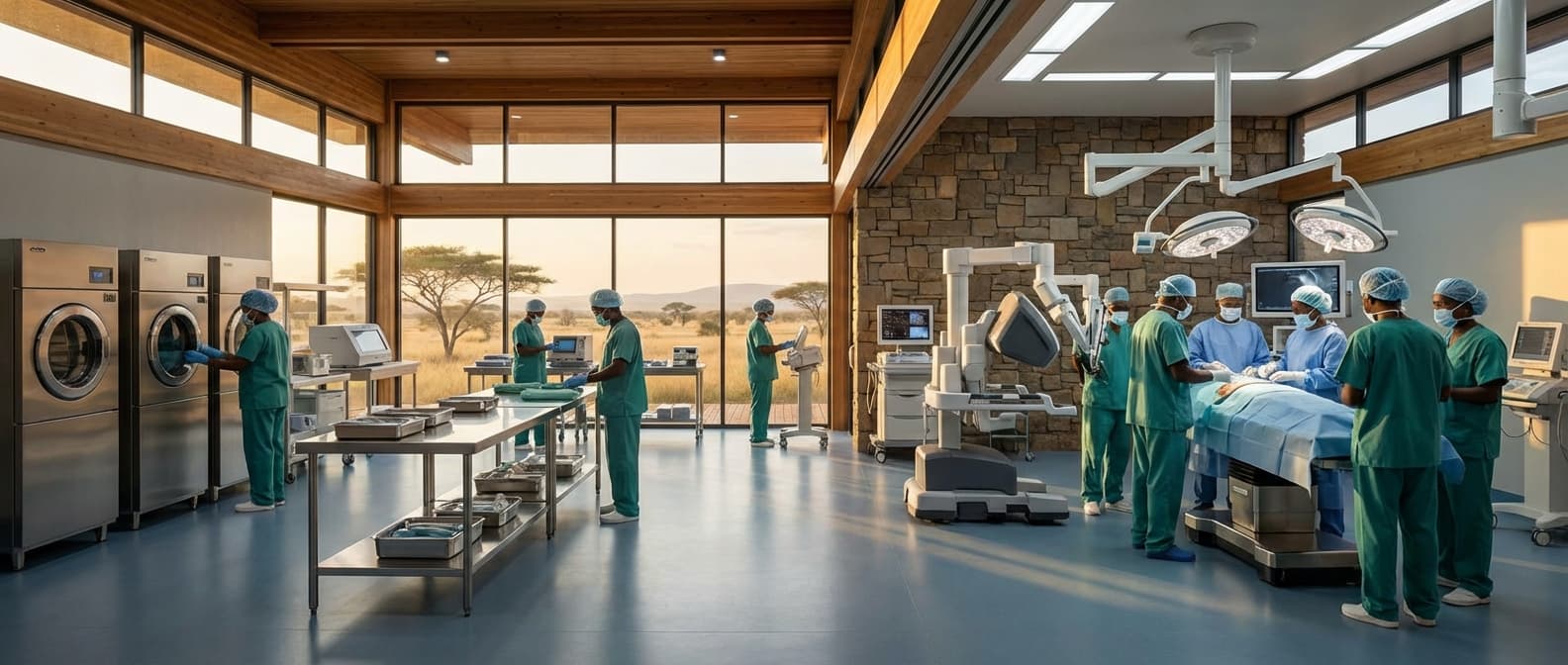
Medical Gas System Design & Installation in Tanzania
Engineering Excellence & Technical Support
Medical gas pipeline systems: O2, N2O, air, vacuum High-standard technical execution following OEM protocols and local regulatory frameworks.
Reliable Medical Gas Supply Chains
Engineered robust medical gas systems in Tanzania, ensuring uninterrupted supply of vital gases (oxygen, medical air, nitrous oxide) through redundancy planning, advanced pressure monitoring, and strategic pipeline routing to critical care areas, meeting rigorous international standards and local health regulations.
Patient Safety through Advanced Gas Purity
Implemented state-of-the-art filtration and purification technologies for medical gases within Tanzanian healthcare facilities, safeguarding patients from contaminants and ensuring optimal therapeutic efficacy. Our designs prioritize system integrity and minimize the risk of cross-contamination.
Energy-Efficient & Compliant Gas Generation
Designed and installed highly efficient on-site medical air generation systems tailored for Tanzania's climate and power infrastructure, significantly reducing operational costs and reliance on bulky gas cylinders. All installations adhere to NFPA 99 and local building codes for safety and performance.
What Is Medical Gas System Design & Installation In Tanzania?
Medical gas system design and installation in Tanzania refers to the comprehensive process of planning, engineering, and constructing a safe and reliable network for delivering essential medical gases to healthcare facilities. This encompasses the selection, sizing, and placement of gas sources (e.g., medical air compressors, oxygen concentrators, bulk liquid oxygen tanks, nitrous oxide cylinders), central piping systems adhering to international standards (e.g., NFPA 99, HTM 02-01), terminal units (outlets) at patient care locations, and associated alarm and monitoring systems. The service ensures the purity, pressure, and flow rate of medical gases meet stringent clinical requirements for patient treatment and life support.
| Service/Component | Description | Importance in Tanzania |
|---|---|---|
| Medical Air | Dry, filtered, oil-free compressed air used for respiratory therapy, pneumatic instrumentation, and ventilators. | Crucial for mechanical ventilation, especially in critical care units, supporting diverse respiratory interventions. |
| Oxygen | High-purity oxygen supplied for patients with hypoxemia or hypoxia, supporting respiration and metabolic processes. | Indispensable for treating respiratory distress, cardiac conditions, and a wide range of acute and chronic illnesses. |
| Nitrous Oxide | An anesthetic gas used for mild sedation and analgesia, particularly in surgical and dental procedures. | Facilitates pain management and patient comfort during minor surgeries and dental treatments. |
| Vacuum | Suction systems used for aspirating bodily fluids from patients, essential for surgical procedures and airway management. | Critical for maintaining patient airways, removing secretions, and managing surgical sites. |
| Waste Anesthetic Gas Disposal (WAGD) | Systems to safely remove and vent anesthetic gases from operating rooms and recovery areas. | Ensures a safe working environment for healthcare personnel and mitigates environmental impact. |
| Nitrogen | Used in some specialized medical applications, such as powering surgical tools or in cryosurgery. | Less common but essential for specific advanced surgical procedures where available. |
Key Components and Stages of Medical Gas System Design & Installation
- Site assessment and needs analysis
- System schematic development and P&ID creation
- Equipment selection and sizing
- Piping material selection and route planning
- Compliance with national and international standards
- Pressure testing and leak detection
- Purging and flushing of the piping network
- Commissioning and performance validation
- Operator training and documentation
- Routine inspection and maintenance planning
Who Needs Medical Gas System Design & Installation In Tanzania?
Establishing a reliable and compliant medical gas system is crucial for healthcare facilities in Tanzania. These systems are not a luxury but a fundamental requirement for patient care, diagnostic procedures, and life support. The design and installation of medical gas systems are complex processes that require specialized knowledge to ensure safety, efficiency, and adherence to national and international standards. This ensures that hospitals and clinics can provide the highest quality of care.
| Customer Type | Key Departments Requiring Medical Gas Systems |
|---|---|
| Public Hospitals | Intensive Care Units (ICUs), Operating Theaters (OTs), Emergency Departments (EDs), Neonatal Intensive Care Units (NICUs), Maternity Wards, General Wards, Pulmonary Function Labs, Anesthesia Departments, Dialysis Units |
| Private Hospitals | Intensive Care Units (ICUs), Operating Theaters (OTs), Emergency Departments (EDs), Neonatal Intensive Care Units (NICUs), Maternity Wards, General Wards, Pulmonary Function Labs, Anesthesia Departments, Dialysis Units, Specialized Surgical Suites |
| Specialty Clinics | Operating Rooms, Recovery Rooms, Procedure Rooms, Respiratory Therapy Departments, Cardiac Catheterization Labs, Pulmonary Function Testing Areas |
| Diagnostic Centers | Endoscopy Suites, Bronchoscopy Rooms, Pulmonary Function Testing Booths |
| Ambulatory Surgical Centers | Operating Rooms, Recovery Areas, Pre-operative Holding Areas |
| Research Institutions | Clinical Trial Units, Animal Research Facilities (where applicable), Diagnostic Labs |
| Tertiary Care Centers | All departments within a large, comprehensive hospital, with advanced and specialized medical gas needs |
Target Customers & Departments for Medical Gas System Design & Installation in Tanzania
- Hospitals (Public and Private)
- Specialty Clinics (e.g., Cardiac, Respiratory, Surgical)
- Diagnostic Centers
- Ambulatory Surgical Centers
- Research Institutions with Clinical Wings
- Tertiary Care Centers
Medical Gas System Design & Installation Process In Tanzania
The design and installation of medical gas systems in Tanzania are critical for ensuring the safe and effective delivery of essential medical gases to healthcare facilities. This process is complex and requires adherence to national and international standards, as well as a thorough understanding of the local regulatory landscape. The workflow typically begins with a client inquiry and progresses through detailed design, procurement, installation, testing, commissioning, and finally, handover and training. Each stage involves specific activities, stakeholders, and deliverables to guarantee a robust and compliant system.
| Stage | Description | Key Activities | Key Stakeholders | Deliverables |
|---|---|---|---|---|
| Inquiry and Initial Consultation | The process begins with a potential client (e.g., hospital administration, project manager) expressing interest in a medical gas system. | Understanding client requirements, preliminary scope definition, site visit scheduling. | Client, Project Manager, Potential Service Provider. | Initial project brief, meeting minutes. |
| Needs Assessment and Site Survey | A thorough evaluation of the healthcare facility's current and future medical gas needs, and an assessment of the existing site conditions. | Analyzing patient load, required gases (oxygen, medical air, nitrous oxide, vacuum), gas consumption rates, existing infrastructure, power availability, space for equipment, safety considerations. | Client, Design Engineer, Site Surveyor. | Needs assessment report, site survey report, preliminary system layout. |
| Conceptual Design and Feasibility Study | Developing a high-level design concept and assessing the technical and economic viability of the proposed system. | Defining system architecture (central plant, piped distribution, terminal units), identifying potential equipment, estimating costs, outlining project timeline. | Design Engineer, Project Manager, Client. | Conceptual design report, feasibility study, preliminary budget. |
| Detailed Design and Engineering | Creating comprehensive engineering drawings, specifications, and calculations for all components of the medical gas system. | Producing P&ID (Piping and Instrumentation Diagrams), layout drawings, schematics, equipment schedules, material specifications, compliance with relevant standards (e.g., ISO 7396, BS 6863, TMDA regulations). | Design Engineer, CAD Technician, Specialist Consultants (if needed). | Detailed engineering drawings, technical specifications, bill of quantities (BOQ). |
| Regulatory Approvals and Permits | Obtaining necessary approvals and permits from Tanzanian authorities. | Submitting design documents to Tanzania Medicines and Medical Devices Authority (TMDA), local government authorities for building permits, environmental impact assessments (if applicable). | Client, Design Engineer, Regulatory Affairs Specialist. | Approved design permits, construction permits. |
| Procurement of Equipment and Materials | Sourcing and acquiring all necessary medical gas equipment, piping, fittings, valves, alarms, and other components. | Issuing tenders, evaluating bids, selecting suppliers, negotiating contracts, quality control of procured items. | Procurement Department, Project Manager, Quality Control Inspector. | Procurement orders, supplier agreements, delivery manifests. |
| System Installation | The physical construction and assembly of the medical gas system according to the approved designs. | Pipe laying, welding, brazing, installation of gas generators/compressors, manifold systems, regulators, alarms, terminal units, testing of pipework integrity. | Installation Team, Certified Technicians, Site Supervisor. | Installed medical gas piping network, equipment installation. |
| Testing and Commissioning | Rigorous testing of the installed system to ensure it meets all performance, safety, and regulatory requirements. | Pressure testing, leak testing, purity analysis of gases, flow rate verification, alarm system functionality checks, purging of the system. | Commissioning Team, Independent Testing Agency (if required), Client Representative. | Test reports, commissioning certificates, performance verification records. |
| Handover and Training | Officially transferring the completed system to the client and providing essential training to facility staff. | System demonstration, provision of as-built drawings and operation & maintenance manuals, training on system operation, emergency procedures, and routine maintenance. | Project Manager, Installation Team, Client Staff (engineers, technicians, nurses). | As-built drawings, O&M manuals, training certificates, handover documentation. |
| Post-Installation Support and Maintenance | Providing ongoing support, troubleshooting, and scheduled maintenance to ensure the system's longevity and optimal performance. | Preventive maintenance programs, emergency repair services, spare parts management, system upgrades. | Service Provider, Client Maintenance Department. | Maintenance logs, service reports, warranty documentation. |
Key Stages in the Medical Gas System Design & Installation Process in Tanzania
- Inquiry and Initial Consultation
- Needs Assessment and Site Survey
- Conceptual Design and Feasibility Study
- Detailed Design and Engineering
- Regulatory Approvals and Permits
- Procurement of Equipment and Materials
- System Installation
- Testing and Commissioning
- Handover and Training
- Post-Installation Support and Maintenance
Medical Gas System Design & Installation Cost In Tanzania
Designing and installing a medical gas system in Tanzania involves a complex interplay of factors that significantly influence the overall cost. These systems are critical for patient care, providing essential gases like oxygen, medical air, vacuum, and nitrous oxide to various points of use within healthcare facilities. The pricing is not uniform and is heavily dependent on the scale of the project, the complexity of the installation, the specific equipment chosen, and geographical location within Tanzania. Local currency (Tanzanian Shilling - TZS) pricing is influenced by import duties, currency exchange rates, and the availability of skilled labor and materials.
Several key pricing factors contribute to the final cost:
- System Scope and Size: The number of medical outlets required, the size of the hospital or clinic, and the types of gases needed are primary cost drivers. Larger facilities with more extensive gas networks will naturally incur higher expenses.
- Equipment Selection: The choice of medical gas source equipment (e.g., bulk oxygen tanks, medical air compressors, vacuum pumps, manifolds), pipeline materials (copper, aluminum), terminal units (outlets, flowmeters, regulators), and alarm systems significantly impacts the budget. High-quality, certified equipment often comes at a premium but ensures reliability and safety.
- Installation Complexity: The building's existing structure, the need for new trenching, wall penetrations, and the routing of pipelines in challenging architectural spaces will increase labor and material costs.
- Labor and Expertise: The availability of certified and experienced medical gas system designers, installers, and technicians in Tanzania is crucial. Specialized skills command higher wages, and projects in remote areas might incur additional travel and accommodation costs for personnel.
- Regulatory Compliance and Certification: Adhering to national and international standards (e.g., NFPA 99, HTM 02-01) requires rigorous testing, commissioning, and certification processes, which add to the overall project expense.
- Geographical Location: Costs can vary between major urban centers like Dar es Salaam and more remote regions due to differences in logistics, material availability, and local labor rates.
- Project Management and Consultancy: Engaging qualified project managers and consultants to oversee the design and installation process is an important consideration that adds to the cost but ensures a well-executed project.
Estimated Cost Ranges in Tanzanian Shillings (TZS):
It's important to note that these are estimations and actual costs can vary significantly. These ranges are provided for indicative purposes and should not be considered definitive quotes.
- Small Clinic/Outpatient Department (Limited Outlets): TZS 50,000,000 - TZS 150,000,000
- Medium-Sized Hospital (Multiple Wards, ICU, Operating Theaters): TZS 150,000,000 - TZS 500,000,000
- Large Hospital/Tertiary Care Facility (Comprehensive System): TZS 500,000,000 - TZS 1,500,000,000+ (potentially much higher for very large and complex projects).
These estimates typically cover design, supply of equipment, installation, testing, and commissioning. Exclusions might include structural modifications to the building, electrical power supply upgrades, and ongoing maintenance contracts.
| Facility Type/System Size | Estimated Cost Range (TZS) |
|---|---|
| Small Clinic/Outpatient Department (Limited Outlets) | 50,000,000 - 150,000,000 |
| Medium-Sized Hospital (Multiple Wards, ICU, Operating Theaters) | 150,000,000 - 500,000,000 |
| Large Hospital/Tertiary Care Facility (Comprehensive System) | 500,000,000 - 1,500,000,000+ |
Key Factors Influencing Medical Gas System Design & Installation Costs in Tanzania
- System Scope and Size (Number of outlets, facility size, gases required)
- Equipment Selection (Source equipment, pipeline materials, terminal units, alarms)
- Installation Complexity (Building structure, routing, trenching)
- Labor and Expertise (Skilled technicians, regional availability)
- Regulatory Compliance and Certification (Testing, commissioning, standards adherence)
- Geographical Location (Logistics, material availability, local rates)
- Project Management and Consultancy
Affordable Medical Gas System Design & Installation Options
Designing and installing a medical gas system is a critical investment for any healthcare facility. While quality and safety are paramount, there are ways to optimize costs without compromising standards. This guide explores affordable design and installation options, highlighting value bundles and cost-saving strategies to help you achieve a compliant and efficient medical gas infrastructure.
| Cost-Saving Strategy | Description | Impact on Affordability |
|---|---|---|
| Early Planning & Design Consultation | Engaging with experienced medical gas designers early in the project allows for optimized system layout, reduced material usage, and incorporation of future expansion needs, preventing costly rework later. | Reduces waste, material costs, and potential change order expenses. |
| Modular or Prefabricated Components | Utilizing pre-assembled medical gas panels, manifolds, and outlets can significantly speed up installation time and reduce on-site labor costs. These components are often manufactured under controlled conditions, ensuring quality. | Lowers labor costs, reduces installation time, and potentially improves quality control. |
| Standardization of Equipment & Materials | Opting for standard, readily available equipment and piping materials from reputable manufacturers can lead to better pricing and easier sourcing for replacements or future expansions. | Benefits from bulk purchasing, competitive pricing, and reduced lead times. |
| Value Engineering During Design | Working with the design team to identify opportunities for cost reduction without sacrificing safety or functionality. This might involve exploring alternative material specifications or system configurations. | Identifies cost-effective alternatives and optimizes material and labor allocation. |
| Phased Installation for Existing Facilities | For renovations or expansions, phasing the installation of medical gas lines can align costs with budget cycles and minimize disruption to ongoing patient care. | Spreads capital expenditure and minimizes operational impact costs. |
| Negotiate Multiple Bids & Contracts | Obtain quotes from several qualified medical gas design and installation firms. Thoroughly review each proposal to compare not just the price but also the scope of work, warranty, and reputation. | Ensures competitive pricing and allows for selection of the best value proposition. |
| Prioritize Essential Services | In new construction or major renovations, identify the most critical medical gas services required initially and plan for future expansion as budget allows. This avoids over-investing in non-essential services upfront. | Focuses initial investment on core needs, deferring non-critical costs. |
| Long-Term Maintenance Contracts | Securing a comprehensive preventative maintenance contract can prevent costly emergency repairs and extend the lifespan of the system, ultimately saving money over the system's lifecycle. | Reduces the likelihood of expensive breakdowns and ensures optimal system efficiency. |
Understanding Value Bundles
- {"title":"Integrated Design & Installation Packages","description":"Many reputable medical gas system providers offer comprehensive packages that combine design, engineering, equipment procurement, and installation. These bundles often come with a fixed price, reducing the risk of cost overruns and streamlining the project management process. The value lies in the bundled expertise and coordinated execution."}
- {"title":"Turnkey Solutions","description":"Similar to integrated packages, turnkey solutions handle every aspect of the project from conception to completion. This includes not only the core gas system but also associated infrastructure, testing, and commissioning. The primary value is the 'hands-off' approach for the facility, allowing them to focus on patient care."}
- {"title":"Phased Implementation Bundles","description":"For facilities with budget constraints or ongoing renovations, providers may offer phased bundles. This allows for the installation of essential medical gas services in stages, spreading the cost over time. Value is derived from flexibility and the ability to prioritize critical areas first."}
- {"title":"Maintenance & Service Contract Bundles","description":"When purchasing a new system, inquire about bundled deals that include initial maintenance, preventative service contracts, and emergency support. These bundles offer long-term cost predictability and ensure the system's optimal performance and longevity, avoiding costly emergency repairs."}
Verified Providers In Tanzania
In the pursuit of reliable and quality healthcare services in Tanzania, identifying verified providers is paramount. Franance Health stands out as a beacon of excellence, offering a comprehensive network of accredited healthcare facilities and professionals. This document outlines the credentials that position Franance Health as the optimal choice for your healthcare needs in Tanzania, emphasizing their commitment to quality, accessibility, and patient-centered care.
| Credential Category | Franance Health's Standards | Benefit to Patients |
|---|---|---|
| Medical Licensing & Registration | All affiliated doctors and facilities must possess valid and up-to-date licenses from the Tanzania Medical Council (TMC) and relevant regulatory bodies. | Ensures that all practitioners are legally qualified and recognized to provide medical services. |
| Facility Accreditation | Hospitals and clinics are assessed for infrastructure, equipment, hygiene, and safety protocols, often aligning with Ministry of Health standards. | Guarantees a safe, clean, and well-equipped environment for medical procedures and patient care. |
| Professional Qualifications & Experience | Emphasis on healthcare professionals with recognized medical degrees, specialized training, and proven experience in their respective fields. | Provides access to highly skilled and experienced doctors and specialists for optimal treatment outcomes. |
| Quality Management Systems | Encourages and verifies the implementation of quality management systems within partner facilities to monitor and improve service delivery. | Promotes continuous improvement in healthcare services, leading to better patient experiences and results. |
| Ethical Practice & Patient Rights | Providers are vetted for their commitment to ethical medical conduct and upholding patient rights, including confidentiality and informed consent. | Ensures that patients are treated with respect, dignity, and their privacy is protected. |
| Emergency Preparedness | Verification of facilities' readiness to handle medical emergencies, including availability of essential equipment and trained personnel. | Provides assurance of immediate and effective care during critical medical situations. |
Why Franance Health is the Best Choice
- Rigorous Accreditation & Verification: Franance Health partners exclusively with healthcare providers who undergo stringent verification processes, ensuring adherence to national and international standards of care.
- Diverse Network: Access a wide array of specialists and facilities, from general practitioners to advanced surgical centers, catering to a broad spectrum of medical needs.
- Quality Assurance: Continuous monitoring and evaluation of partner providers guarantee consistent high-quality service delivery.
- Patient-Centric Approach: Franance Health prioritizes patient satisfaction, offering seamless appointment scheduling, transparent billing, and responsive customer support.
- Technological Integration: Many Franance Health partners leverage modern medical technology for accurate diagnosis and effective treatment.
- Local Expertise, Global Standards: Combining deep understanding of the Tanzanian healthcare landscape with a commitment to upholding global best practices.
Scope Of Work For Medical Gas System Design & Installation
This Scope of Work (SOW) outlines the design and installation requirements for a medical gas system, encompassing all phases from conceptual design to final commissioning. It specifies the technical deliverables expected from the contractor and adheres to relevant industry standard specifications to ensure safety, compliance, and operational excellence.
| Deliverable | Description | Standard Specification Reference |
|---|---|---|
| Conceptual Design Report | Preliminary layout, system type identification, initial equipment sizing, and cost estimation. | NFPA 99, ASSE 6000 Series |
| Detailed Design Drawings | Complete set of architectural, mechanical, and electrical drawings showing piping routes, valve locations, terminal units, alarms, and control systems. | NFPA 99, ASSE 1001, ASSE 1020, ASSE 1030, ASSE 1055, Health Facility Guidelines |
| Equipment Specifications | Detailed technical specifications for all medical gas equipment including compressors, vacuum pumps, manifolds, regulators, alarm panels, and terminal units. | Manufacturer's Data Sheets, UL/ETL Certification, NFPA 99 compliance |
| Piping and Fittings Specifications | Material requirements, joining methods (brazing, welding), pressure ratings, and cleaning procedures for all medical gas piping. | ASTM B88, ASTM B280, MSS SP-110, ASSE 1020 |
| Installation Manuals | Comprehensive instructions for the safe and compliant installation of all system components. | Manufacturer's Installation Guides, NFPA 99, ASSE 6010 |
| Testing and Commissioning Plan | Detailed procedures for pressure testing, leak detection, purity testing, flow rate verification, and alarm system functionality. | NFPA 99, ASSE 6030, ASSE 6040 |
| As-Built Drawings | Updated drawings reflecting the final installed system, including any deviations from the design drawings. | Project Documentation Standards |
| Operations and Maintenance (O&M) Manuals | Information on system operation, preventive maintenance schedules, troubleshooting guides, and spare parts lists. | Manufacturer's O&M Manuals, AHCA Guidelines |
| Training Program | Training sessions for facility staff on the operation, maintenance, and emergency procedures for the medical gas system. | ASSE 6010, ASSE 6030 |
| Certifications and Compliance Documentation | All necessary certifications, permits, and test reports to demonstrate compliance with applicable codes and standards. | Local Building Codes, State Licensing Boards, NFPA 99 |
Key Project Phases
- Design & Engineering
- Procurement & Fabrication
- Installation & Construction
- Testing & Commissioning
- Training & Handover
Service Level Agreement For Medical Gas System Design & Installation
This Service Level Agreement (SLA) outlines the performance standards and guarantees for the design and installation of medical gas systems by [Your Company Name] (hereinafter referred to as 'Provider') for [Client Name] (hereinafter referred to as 'Client'). This agreement covers response times for critical issues and uptime guarantees for the installed medical gas system infrastructure.
| Service Component | Response Time (Business Hours) | Uptime Guarantee |
|---|---|---|
| Critical System Failure (e.g., complete loss of a medical gas supply) | 1 Hour (from initial notification) | 99.9% Availability (excluding scheduled maintenance and Force Majeure events) |
| Partial System Degradation (e.g., pressure fluctuation, alarm activation) | 4 Business Hours (from initial notification) | 99.5% Availability (excluding scheduled maintenance and Force Majeure events) |
| Design & Installation Project Commencement | 2 Business Days (after contract signing) | N/A (Project timelines will be defined in a separate project schedule) |
| Routine System Inspection & Maintenance (as per separate maintenance agreement) | Defined in separate maintenance agreement | N/A |
Scope of Service
- Design of medical gas systems compliant with all relevant national and local codes and standards (e.g., NFPA 99, CSA Z305.1).
- Procurement of all necessary components and equipment.
- Installation of medical gas piping, outlets, alarms, and control panels.
- Testing, purging, and certification of the installed system.
- On-site commissioning and handover of the system.
- Provision of as-built drawings and system documentation.
Frequently Asked Questions

Ready when you are
Let's scope your Medical Gas System Design & Installation in Tanzania project in Tanzania.

Scaling healthcare logistics and technical systems across the entire continent.