
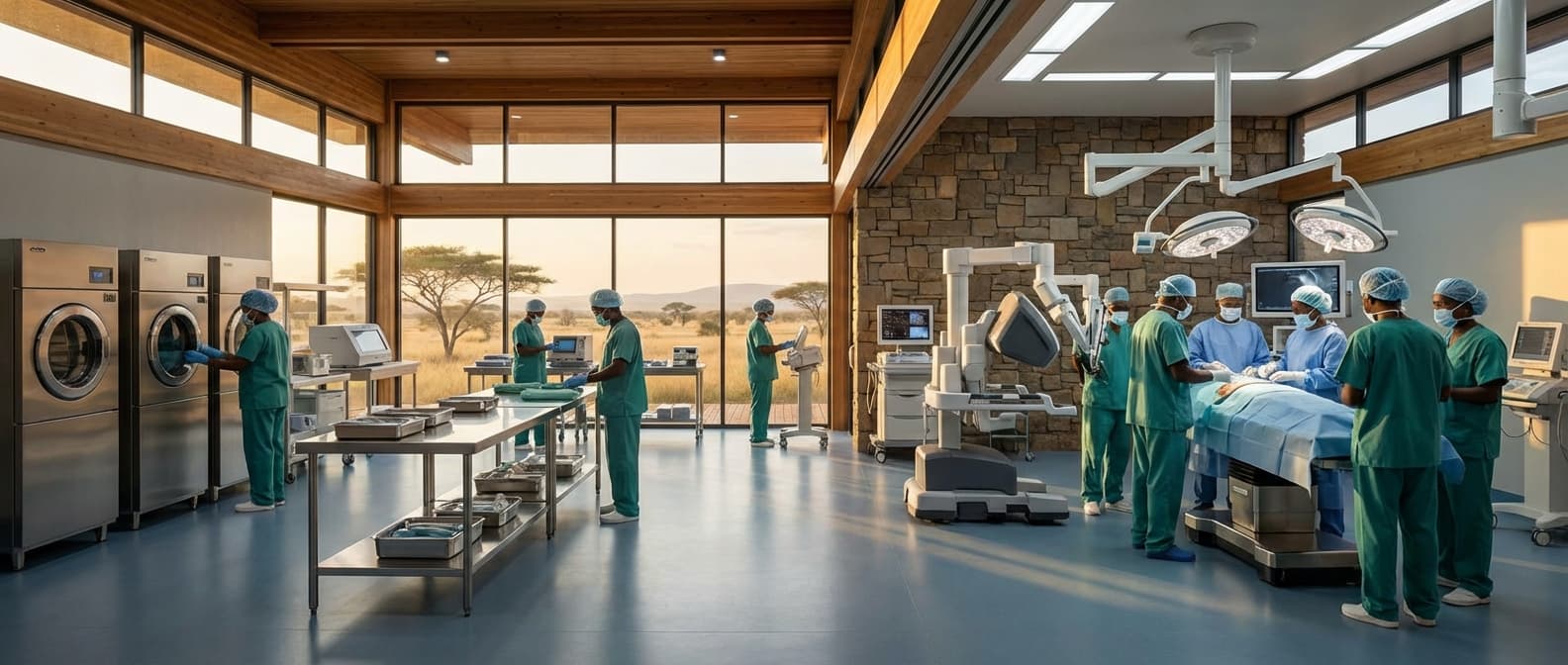
Endoscopy Reprocessing Validation in Tanzania
Engineering Excellence & Technical Support
AER validation, SOP development and compliance High-standard technical execution following OEM protocols and local regulatory frameworks.
Microbiological Validation
Ensuring robust microbiological validation protocols are implemented and adhered to, meeting international standards for the inactivation of critical pathogens during flexible endoscope reprocessing in Tanzanian healthcare facilities.
Standard Operating Procedure (SOP) Development
Developing and implementing comprehensive Standard Operating Procedures (SOPs) for each stage of the endoscopy reprocessing workflow, including detailed instructions for cleaning, disinfection, and sterilization, tailored to the Tanzanian context.
Equipment Performance Monitoring
Establishing rigorous monitoring and maintenance schedules for automated endoscope reprocessors (AERs) and associated equipment to guarantee consistent and effective performance, crucial for patient safety in Tanzania.
What Is Endoscopy Reprocessing Validation In Tanzania?
Endoscopy reprocessing validation in Tanzania refers to the systematic process of verifying and documenting that reusable endoscopic devices have undergone a validated cleaning and high-level disinfection (HLD) or sterilization process according to established protocols. This validation ensures that the reprocessing procedures are consistently effective in eliminating or reducing microbial contamination to a level that prevents the transmission of healthcare-associated infections (HAIs). It is a critical component of infection prevention and control in healthcare facilities that utilize flexible and rigid endoscopes for diagnostic and therapeutic procedures.
| Who Needs Endoscopy Reprocessing Validation | Typical Use Cases | ||||
|---|---|---|---|---|---|
| Hospitals: Both public and private hospitals performing endoscopic procedures (e.g., gastroenterology, pulmonology, urology, gynecology, otolaryngology). | Specialized Clinics: Outpatient clinics and diagnostic centers with endoscopy units. | Surgical Centers: Facilities conducting minimally invasive surgical procedures using endoscopes. | Government Health Agencies: For regulatory oversight and ensuring compliance with national infection control guidelines. | Healthcare Facilities in Tanzania: Mandated by national health policies and international best practices for patient safety. | |
| Gastroenterology: Colonoscopies, upper endoscopies (EGDs), sigmoidoscopies for diagnosis and treatment of gastrointestinal conditions. | Pulmonology: Bronchoscopies for diagnosing lung diseases and performing biopsies. | Urology: Cystoscopies and ureteroscopies for examining the urinary tract. | Gynecology: Hysteroscopies for evaluating the uterus. | Otolaryngology (ENT): Laryngoscopies and nasopharyngoscopies. | Arthroscopy: While often involving different reprocessing protocols, validation principles are similar for instruments used in joint visualization. |
What Endoscopy Reprocessing Validation Involves
- Validation Protocol Development: Establishing a comprehensive protocol that outlines the cleaning, disinfection/sterilization, and storage procedures for each type of endoscope and its accessories.
- Process Monitoring: Implementing routine monitoring of key parameters during the reprocessing cycle, including temperature, time, concentration of disinfectants/sterilants, and water quality.
- Microbiological Testing: Performing periodic microbiological testing on reprocessed endoscopes to confirm the absence or significant reduction of viable microorganisms, including bacteria, fungi, and potentially viruses. This may involve surface sampling or rinse water analysis.
- Chemical Indicator Testing: Utilizing chemical indicators to assess the effectiveness of disinfection/sterilization parameters (e.g., high-level disinfectant concentration indicators).
- Enzyme Testing: Employing enzymatic cleaning indicators to verify the removal of organic soil during the cleaning phase.
- Documentation and Record Keeping: Maintaining detailed records of all reprocessing steps, validation activities, equipment maintenance, staff training, and test results to demonstrate compliance and traceability.
- Staff Training and Competency Assessment: Ensuring that all personnel involved in reprocessing are adequately trained on the validated protocols and demonstrating competency in their execution.
- Equipment Verification and Maintenance: Regularly verifying and maintaining the performance of automated endoscope reprocessors (AERs) and other reprocessing equipment.
- Audit and Review: Conducting periodic internal and external audits to assess the ongoing effectiveness of the reprocessing validation program.
Who Needs Endoscopy Reprocessing Validation In Tanzania?
The critical process of validating endoscopy reprocessing is essential for patient safety and infection prevention. In Tanzania, like many developing nations, resources and infrastructure can present unique challenges. This validation ensures that endoscopes, after being used on a patient, are thoroughly cleaned and disinfected to a standard that eliminates the risk of transmitting infectious agents to subsequent patients. Without proper validation, facilities risk patient harm, outbreaks of healthcare-associated infections (HAIs), and potential legal ramifications. The focus of this validation is on ensuring that the reprocessing equipment, cleaning agents, and manual processes are effective and consistently applied.
| Target Customer/Department | Key Needs Addressed by Validation | Specific Services/Procedures Involved |
|---|---|---|
| Public Hospitals | Ensuring patient safety with limited budgets, compliance with national health guidelines, preventing outbreaks of HAIs, improving trust in public healthcare. | Routine gastrointestinal endoscopies, bronchoscopies, cystoscopies, sigmoidoscopies. Reprocessing of flexible and semi-rigid endoscopes. |
| Private Hospitals & Specialty Clinics | Maintaining high standards of care and patient satisfaction, minimizing liability, attracting and retaining patients, demonstrating commitment to quality. | Advanced endoscopic procedures (ERCP, EUS), interventional pulmonology, urological procedures. Reprocessing of complex and high-risk endoscopes. |
| Diagnostic Centers | Ensuring accuracy and reliability of diagnostic procedures, preventing cross-contamination, building reputation for safe practices. | Endoscopic biopsies, diagnostic colonoscopies, upper GI endoscopies. Standard reprocessing of flexible endoscopes. |
| Teaching and University Hospitals | Training healthcare professionals on best practices, research into infection control, setting standards for the country, ensuring patient safety during complex procedures. | All types of endoscopic procedures. Validation of reprocessing for both standard and novel endoscopic technologies. |
| NGO Healthcare Facilities | Providing essential healthcare services to underserved populations, ensuring cost-effectiveness while maintaining safety, adherence to donor requirements. | Basic and intermediate endoscopic procedures. Validation of reprocessing in resource-constrained environments. |
| Government Referral Centers | Managing complex cases requiring specialized endoscopic interventions, acting as centers of excellence, setting national guidelines and protocols. | Complex interventional endoscopies, therapeutic procedures. Validation of reprocessing for a wide range of equipment and advanced techniques. |
| Endoscopy Reprocessing Department/Staff | Ensuring the effectiveness of their cleaning and disinfection processes, understanding and adhering to protocols, identifying and rectifying reprocessing failures, staff training and competency. | All aspects of manual cleaning, automated washer-disinfector operation, high-level disinfection, storage, and leak testing. |
| Infection Prevention and Control (IPC) Committees | Monitoring and auditing reprocessing practices, developing and updating IPC policies, identifying and responding to HAIs, ensuring regulatory compliance. | Oversight and validation of the entire reprocessing lifecycle. |
| Biomedical Engineering Departments | Ensuring the proper functioning and maintenance of reprocessing equipment (e.g., washer-disinfectors), calibration of equipment, troubleshooting equipment failures. | Verification of equipment performance against validation parameters. |
Target Customers and Departments for Endoscopy Reprocessing Validation in Tanzania
- Hospitals (Public and Private)
- Specialty Clinics (e.g., Gastroenterology, Pulmonology)
- Diagnostic Centers
- Teaching and University Hospitals
- Non-Governmental Organization (NGO) Healthcare Facilities
- Government Referral Centers
Endoscopy Reprocessing Validation Process In Tanzania
The Endoscopy Reprocessing Validation Process in Tanzania aims to ensure that reusable endoscopes are reprocessed according to international standards and national guidelines to prevent healthcare-associated infections. This process validates the effectiveness of the cleaning, disinfection, and sterilization (if applicable) procedures performed on endoscopes.
| Stage | Key Activities | Responsible Parties | Documentation Required | Outcome |
|---|---|---|---|---|
| Inquiry and Request Submission | Healthcare facility expresses interest in validation. Submits a formal request to the designated regulatory/validation body. Provides preliminary information about their endoscopy reprocessing facilities and procedures. | Healthcare Facility, Ministry of Health (or designated body) | Formal Request Letter, Facility Information Sheet | Acknowledgement of request, scheduling of initial consultation. |
| Pre-Validation Assessment | Review of existing reprocessing Standard Operating Procedures (SOPs). Assessment of staff training and competency. Inspection of reprocessing equipment and consumables (e.g., detergents, disinfectants). Site visit to observe current reprocessing practices. | Validation Team (e.g., from Ministry of Health, accredited laboratory, or external consultant) | Existing SOPs, Staff Training Records, Equipment Maintenance Logs, Consumables Certificates | Identification of gaps and areas requiring improvement before formal validation. |
| Validation Protocol Development | Based on the pre-validation assessment, a detailed validation protocol is developed. This protocol outlines the specific tests to be performed, sampling strategies, acceptance criteria, and timelines. It adheres to relevant international guidelines (e.g., AAMI, ISO) and national directives. | Validation Team, Healthcare Facility (in collaboration) | Draft Validation Protocol | Agreed-upon protocol for validation execution. |
| On-site Validation Execution | Implementation of the validation protocol. This involves:
| Validation Team, Healthcare Facility Staff (assisting) | Completed Test Forms, Sample Collection Records, Equipment Readings | Collection of objective data on reprocessing effectiveness. |
| Data Analysis and Reporting | Laboratory analysis of collected samples. Interpretation of test results against established acceptance criteria. Compilation of a comprehensive validation report detailing the methodology, results, and any deviations. Recommendations for improvement are provided. | Validation Team (Laboratory technicians, Analysts) | Laboratory Test Results, Draft Validation Report | Objective assessment of reprocessing efficacy and identification of non-conformities. |
| Validation Certificate Issuance | Upon satisfactory completion of all validation activities and review of the report, a validation certificate is issued to the healthcare facility. This certificate attests to the effectiveness of their endoscopy reprocessing procedures for a specified period. | Ministry of Health (or designated issuing authority) | Final Validation Report, Approved Certificate Template | Formal recognition of validated reprocessing procedures. |
| Post-Validation Monitoring and Revalidation | Healthcare facilities are expected to maintain their validated processes. Regular internal audits and monitoring are crucial. Periodic revalidation (e.g., annually or biannually) is typically required to ensure continued compliance and effectiveness, especially after significant changes to equipment, chemicals, or procedures. | Healthcare Facility, Ministry of Health (for audits) | Internal Audit Reports, Records of Process Changes | Sustained compliance with reprocessing standards, prevention of healthcare-associated infections. |
Workflow Stages
- Inquiry and Request Submission
- Pre-Validation Assessment
- Validation Protocol Development
- On-site Validation Execution
- Data Analysis and Reporting
- Validation Certificate Issuance
- Post-Validation Monitoring and Revalidation
Endoscopy Reprocessing Validation Cost In Tanzania
Endoscopy reprocessing validation is a critical step in ensuring patient safety and preventing the transmission of infections. In Tanzania, the cost of validating endoscopy reprocessing procedures can vary significantly due to several pricing factors. These factors are influenced by the complexity of the reprocessing protocols, the type and number of endoscopes being validated, the specific laboratory or service provider engaged, and the geographical location within Tanzania.
Key Pricing Factors:
- Scope of Validation: This includes the specific tests conducted. Basic validation might involve biological indicators to confirm high-level disinfection efficacy. More comprehensive validation could include chemical indicators, process validation for automated reprocessors, and documentation review.
- Number and Type of Endoscopes: The cost is often per endoscope or per reprocessing cycle. Different types of endoscopes (e.g., flexible, rigid, duodenoscopes) may have varying reprocessing requirements and thus impact validation costs.
- Service Provider: The choice of laboratory or specialized service provider is a major determinant. Government-accredited laboratories, private diagnostic centers, or external consultants will have different pricing structures based on their overhead, expertise, and profit margins.
- Reagents and Consumables: The cost of biological and chemical indicators, culture media, and other consumables used in the validation process directly influences the overall price.
- Personnel Expertise and Time: Highly trained personnel are required to perform these validations correctly. The time spent on sample collection, testing, analysis, and report generation contributes to the cost.
- Location: While less impactful than other factors, transportation costs for samples or personnel, especially to remote healthcare facilities, could add a marginal amount.
- Frequency of Validation: While not a per-validation cost, the need for regular revalidation (e.g., annually, or after equipment malfunction) contributes to the overall budget allocation for this service.
Estimated Pricing Ranges in Tanzanian Shillings (TZS):
It's important to note that these are estimates and can fluctuate. For precise pricing, direct consultation with service providers in Tanzania is recommended. The ranges provided are based on general market understanding and may not reflect specific, current quotes.
| Validation Component/Scope | Estimated Range (TZS) per Endoscope | Notes |
|---|---|---|
| Basic Biological Indicator Testing (per cycle) | 150,000 - 350,000 | Confirms effectiveness of disinfection agents. |
| Comprehensive Process Validation (including biological and chemical indicators) | 400,000 - 800,000 | Covers a broader assessment of the reprocessing system. |
| Automated Reprocessor Performance Validation | 600,000 - 1,200,000 | For specialized equipment, often more detailed. |
| Documentation Review and Consultation | 100,000 - 250,000 | Assessing existing protocols and providing guidance. |
| Full Validation Package (Initial Setup/Comprehensive Audit) | 1,000,000 - 2,500,000+ | May include initial setup, multiple tests, and extensive reporting. |
Note: These figures are indicative and can vary significantly. Healthcare facilities are advised to obtain quotations from multiple accredited laboratories and service providers within Tanzania for accurate and competitive pricing.
| Validation Component/Scope | Estimated Range (TZS) per Endoscope | Notes |
|---|---|---|
| Basic Biological Indicator Testing (per cycle) | 150,000 - 350,000 | Confirms effectiveness of disinfection agents. |
| Comprehensive Process Validation (including biological and chemical indicators) | 400,000 - 800,000 | Covers a broader assessment of the reprocessing system. |
| Automated Reprocessor Performance Validation | 600,000 - 1,200,000 | For specialized equipment, often more detailed. |
| Documentation Review and Consultation | 100,000 - 250,000 | Assessing existing protocols and providing guidance. |
| Full Validation Package (Initial Setup/Comprehensive Audit) | 1,000,000 - 2,500,000+ | May include initial setup, multiple tests, and extensive reporting. |
Factors Influencing Endoscopy Reprocessing Validation Costs in Tanzania
- Scope of Validation Tests (e.g., biological indicators, chemical indicators, process validation)
- Number and Type of Endoscopes Being Validated
- Choice of Service Provider (Government-accredited labs, private centers, consultants)
- Cost of Reagents and Consumables (biological indicators, culture media, etc.)
- Personnel Expertise and Time Required for Testing and Analysis
- Geographical Location (for transportation costs, if applicable)
- Frequency of Required Revalidation
Affordable Endoscopy Reprocessing Validation Options
Ensuring the efficacy of flexible endoscope reprocessing is paramount for patient safety and infection prevention. However, the validation of reprocessing procedures can be a significant cost for healthcare facilities. This document outlines affordable options, emphasizing value bundles and cost-saving strategies for endoscopy reprocessing validation.
| Validation Component | Traditional Pricing (Estimated Range per Event) | Value Bundle Savings Potential | Cost-Saving Strategy Example |
|---|---|---|---|
| Initial Equipment Validation | $500 - $2,000+ | Up to 20% discount when bundled | Negotiate annual validation contract |
| Periodic Revalidation (e.g., semi-annually) | $400 - $1,500+ | Included in annual bundle, fixed price | Consolidate vendor for all periodic tests |
| High-Level Disinfection Efficacy Testing | $100 - $300+ | Reduced per-test cost within bundle | Streamline testing frequency based on risk assessment |
| Biological Indicator Testing | $50 - $150+ | Lower cost per test in bulk purchase | Utilize automated systems for processing indicators |
| Documentation & Reporting | Often included, but can be a separate charge | Comprehensive reporting included | Implement electronic record-keeping system |
Understanding Value Bundles and Cost-Saving Strategies
- {"title":"What are Value Bundles in Endoscopy Reprocessing Validation?","description":"Value bundles are comprehensive service packages that combine multiple aspects of reprocessing validation into a single, often discounted, offering. Instead of purchasing individual validation services (e.g., leak testing, high-level disinfection efficacy testing, biological indicator testing), facilities can opt for a bundle that covers all necessary validation requirements over a defined period."}
- {"title":"Key Components of a Value Bundle:","description":"These typically include:\n- Initial validation of reprocessing equipment and protocols.\n- Periodic revalidation as required by regulatory bodies (e.g., FDA, CDC, professional societies).\n- Routine monitoring and testing (e.g., enzymatic detergent efficacy, high-level disinfectant concentration verification).\n- Documentation and reporting services.\n- Potentially, training or consultation on reprocessing best practices."}
- {"title":"Cost-Saving Strategies:","description":"Several strategies can be employed to reduce the overall cost of validation:\n- Negotiate Bulk Discounts: Procuring validation services for multiple endoscopes or over longer contract periods can lead to significant price reductions.\n- Leverage In-House Expertise: Investing in training for existing staff to perform certain validation tasks (e.g., basic equipment checks, documentation) can reduce reliance on external services.\n- Streamline Testing Protocols: Optimize testing schedules to align with actual usage and regulatory requirements, avoiding unnecessary or redundant testing.\n- Consolidate Vendors: Working with a single, reputable vendor for all validation needs can simplify procurement and potentially lead to better pricing through consolidated contracts.\n- Explore Technology Solutions: Investigate automated validation systems or software that can improve efficiency and accuracy, reducing labor costs associated with manual processes.\n- Partner with Academic or Research Institutions: For certain specialized validation needs, collaborations with nearby universities or research hospitals might offer cost-effective solutions or access to shared resources.\n- Focus on Preventative Maintenance: Proactive maintenance of reprocessing equipment can reduce the likelihood of failures that require costly revalidation."}
- {"title":"Benefits of Affordable Validation Options:","description":"Implementing these strategies not only reduces financial burden but also:\n- Enhances patient safety by ensuring consistent and effective reprocessing.\n- Improves regulatory compliance.\n- Frees up valuable resources for other patient care initiatives.\n- Increases the predictability of validation costs."}
Verified Providers In Tanzania
In Tanzania, navigating the healthcare landscape to find reliable and qualified providers can be a challenge. Ensuring you're receiving care from verified professionals is paramount for your well-being. Franance Health stands out as a leading entity in this regard, offering a rigorously vetted network of healthcare practitioners. Their meticulous credentialing process goes beyond superficial checks, delving deep into the qualifications, experience, and ethical standing of each provider. This commitment to verification instills confidence and assures patients that they are in capable hands, making Franance Health a trusted partner in accessing quality healthcare in Tanzania.
| Credential Type | Franance Health Verification Process | Importance for Patients |
|---|---|---|
| Medical Licenses & Certifications | Thoroughly checked against official Tanzanian regulatory bodies and international standards. | Ensures providers meet the minimum legal and professional requirements for practice. |
| Educational Background | Verification of degrees, diplomas, and specialized training from accredited institutions. | Confirms the theoretical knowledge and specialized expertise of the provider. |
| Professional Experience | Detailed review of past work history, roles, and responsibilities. | Demonstrates practical application of skills and familiarity with various medical scenarios. |
| Specialty Training & Fellowships | Confirmation of advanced training and qualifications in specific medical disciplines. | Guarantees expertise in complex or niche medical areas. |
| Ethical Conduct & Disciplinary Records | Background checks and inquiries into any past professional misconduct. | Upholds patient safety, trust, and a high standard of care. |
Why Franance Health Providers Are the Best Choice:
- Rigorous credential verification of all healthcare professionals.
- Emphasis on extensive experience and proven track record.
- Commitment to ethical practices and patient-centered care.
- Access to a diverse range of specialists across various medical fields.
- Streamlined patient experience with trusted providers.
Scope Of Work For Endoscopy Reprocessing Validation
This Scope of Work (SOW) outlines the requirements for the validation of the endoscopy reprocessing procedures and equipment at [Healthcare Facility Name]. The objective is to ensure that all flexible endoscopes and their accessories are reprocessed in accordance with current regulatory guidelines, manufacturer's instructions for use (IFU), and best practices to prevent healthcare-associated infections (HAIs).
| Technical Deliverable | Description | Standard Specifications/References |
|---|---|---|
| Validation Protocol | A detailed document outlining the methodology, scope, acceptance criteria, and specific tests to be performed during the validation study. | Based on AAMI ST79, ISO 17665, manufacturer IFUs, CDC guidelines, APIC guidelines. |
| Cleaning Validation Test Report | Includes results of testing for residual organic matter (e.g., protein, hemoglobin) on cleaned endoscopes using validated methods (e.g., Olympus Endoscopic Cleaning Indicator, Olympus Cleaning Verification System, Lumiscent). | Acceptance criteria: < 200 µg protein per scope, as per manufacturer recommendations and established benchmarks. |
| Microbial Challenge Testing Report | Demonstrates the effectiveness of HLD or sterilization in eradicating a defined microbial challenge (e.g., Mycobacterium terrae for HLD, spore-forming bacteria for sterilization). | Acceptance criteria: Complete inactivation of challenge microorganisms, as per regulatory requirements and manufacturer IFUs. |
| AER Performance Verification Report | Confirms the AER's ability to deliver the correct concentration of disinfectant/sterilant, correct cycle parameters (time, temperature, pressure), and proper rinsing and drying. | Manufacturer's specifications for the AER model, and relevant regulatory standards. |
| Endoscope Functionality Testing Report | Verifies that the endoscope and its accessories remain undamaged and fully functional after the complete reprocessing cycle. | Manufacturer's IFUs for endoscope inspection and leak testing. |
| Personnel Competency Assessment Report | Documents the evaluation of reprocessing staff on their understanding and application of the validated procedures. | Observation checklists, competency assessment forms based on training materials. |
| Documentation Review Report | Assessment of the completeness, accuracy, and compliance of reprocessing records, logs, and traceability systems. | Regulatory requirements (e.g., FDA 21 CFR Part 820), internal policies, and manufacturer IFUs. |
| Risk Assessment Report | Identification and evaluation of potential risks associated with the reprocessing workflow and proposed mitigation strategies. | ISO 14971 principles for risk management. |
| Final Validation Summary Report | A comprehensive report summarizing all validation activities, findings, conclusions, and recommendations for ongoing monitoring. | All referenced standards and guidelines. |
Key Objectives
- To verify the effectiveness of the cleaning process in removing organic soil and microbial contamination from endoscopes and accessories.
- To confirm the efficacy of high-level disinfection (HLD) or sterilization processes in eliminating pathogenic microorganisms.
- To assess the functionality and performance of automated endoscope reprocessors (AERs) and associated equipment.
- To validate the competency of reprocessing personnel in executing standardized procedures.
- To ensure all reprocessing activities are adequately documented.
- To identify any potential risks or areas for improvement in the current reprocessing workflow.
Service Level Agreement For Endoscopy Reprocessing Validation
This Service Level Agreement (SLA) outlines the performance expectations and guarantees for the Endoscopy Reprocessing Validation service. It defines the response times for reported issues and the minimum uptime guaranteed for the validation system and associated services.
| Severity Level | Definition | Response Time Target | Resolution Time Target (Business Hours) | System Uptime Guarantee |
|---|---|---|---|---|
| Critical (Severity 1) | Complete system outage or critical function failure affecting all users. | 15 minutes | 2 hours | 99.9% |
| High (Severity 2) | Significant degradation of a critical function or impact on a large subset of users. | 30 minutes | 4 business hours | 99.7% |
| Medium (Severity 3) | Partial loss of functionality or performance degradation affecting a smaller group of users. | 1 business hour | 8 business hours | 99.5% |
| Low (Severity 4) | Minor issue, feature request, or cosmetic problem with no significant impact on operations. | 4 business hours | Next scheduled maintenance window or 5 business days | N/A (System availability generally unaffected) |
Key Performance Indicators (KPIs)
- Response Time: The maximum time allowed for the service provider to acknowledge and begin addressing a reported issue.
- Resolution Time: The maximum time allowed to fully resolve a reported issue, depending on its severity.
- System Uptime: The percentage of time the Endoscopy Reprocessing Validation system and its supporting infrastructure are available and operational.
- Data Availability: The guaranteed accessibility and integrity of validation data.
Frequently Asked Questions

Ready when you are
Let's scope your Endoscopy Reprocessing Validation in Tanzania project in Tanzania.

Scaling healthcare logistics and technical systems across the entire continent.