
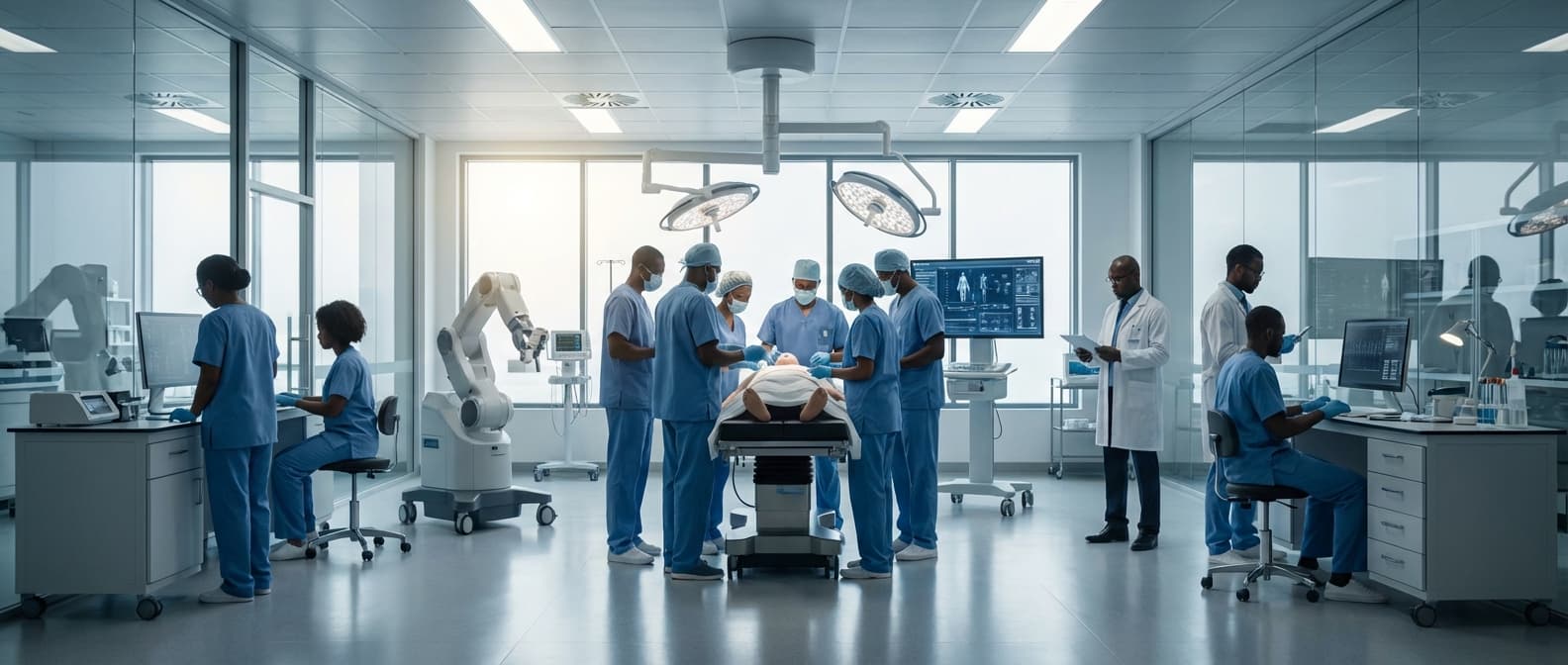
Managed Equipment Service (MES) in Tanzania
Engineering Excellence & Technical Support
Long‑term equipment provision with uptime SLAs and lifecycle management. High-standard technical execution following OEM protocols and local regulatory frameworks.
Optimized Asset Lifecycle Management
Leveraging advanced predictive analytics and IoT sensors, MES in Tanzania provides real-time insights into equipment performance, enabling proactive maintenance, minimizing downtime, and extending the operational lifespan of critical assets across industries like mining, manufacturing, and healthcare.
Predictive Maintenance for Cost Savings
Our MES solution in Tanzania shifts from reactive to predictive maintenance, utilizing data-driven insights to forecast potential equipment failures. This significantly reduces costly emergency repairs, optimizes spare parts inventory, and lowers overall operational expenditures by up to 25%.
Enhanced Remote Monitoring & Diagnostics
MES empowers Tanzanian businesses with robust remote monitoring capabilities. Our platform allows for real-time performance tracking, fault diagnosis, and expert remote support, ensuring maximum uptime and immediate response to operational challenges, even in remote locations.
What Is Managed Equipment Service (Mes) In Tanzania?
Managed Equipment Service (MES) in Tanzania refers to a comprehensive outsourced service model where a third-party provider takes responsibility for the procurement, installation, maintenance, and often the upgrade of medical equipment for healthcare facilities. This service aims to alleviate the financial and operational burdens associated with capital-intensive medical technology, allowing healthcare providers to focus on patient care. MES typically involves a long-term contractual agreement, where the provider ensures equipment availability, performance, and obsolescence management, often on a fee-per-use or fixed-fee basis. This shifts the ownership risk and operational complexity from the healthcare institution to the MES provider.
| Who Needs MES? | Typical Use Cases | ||||
|---|---|---|---|---|---|
| Public Hospitals and Clinics: Particularly those with limited capital for direct equipment purchase and a need for reliable, modern medical technology. | Rural Healthcare Centers: Addressing the challenge of maintaining specialized equipment in remote locations where local technical expertise may be scarce. | Private Hospitals and Diagnostic Centers: Seeking to optimize operational efficiency, reduce capital expenditure, and ensure access to the latest diagnostic and therapeutic modalities. | Government Health Initiatives and Programs: Implementing large-scale deployment of medical equipment for national health programs requiring robust and sustained operational support. | New Healthcare Facility Development: Providing a turnkey solution for equipping new hospitals or clinics, ensuring all medical technology needs are met seamlessly. | |
| Diagnostic Imaging: X-ray machines, CT scanners, MRI units, ultrasound devices, and associated PACS (Picture Archiving and Communication System) infrastructure. | Surgical and Operating Room Equipment: Anesthesia machines, surgical lights, electrosurgical units, patient monitoring systems, and sterilization equipment. | Intensive Care Unit (ICU) and Critical Care Equipment: Ventilators, defibrillators, vital signs monitors, and infusion pumps. | Laboratory and Pathology Equipment: Analyzers (hematology, chemistry, immunoassay), microscopes, and centrifuges. | Radiotherapy and Oncology Equipment: Linear accelerators, brachytherapy units, and related treatment planning systems. | General Ward and Outpatient Department Equipment: Hospital beds, patient lifts, ECG machines, and diagnostic tools. |
Key Components of Managed Equipment Service (MES) in Tanzania
- Procurement and Installation: Sourcing appropriate medical equipment based on facility needs and specifications, and overseeing its professional installation and commissioning.
- Maintenance and Repair: Proactive and reactive maintenance, including preventive maintenance schedules, routine servicing, and rapid response to equipment malfunctions and breakdowns to minimize downtime.
- Training and Support: Providing training for healthcare staff on the proper use and basic maintenance of the equipment, along with ongoing technical support.
- Consumables Management: In some MES models, the provider may also manage the supply of necessary consumables and accessories for the equipment.
- Asset Management and Lifecycle Planning: Tracking equipment inventory, managing warranties, and planning for eventual upgrades or replacements to ensure the facility has access to up-to-date technology.
- Performance Monitoring and Reporting: Implementing systems to monitor equipment performance, utilization, and downtime, with regular reporting to the client.
- Risk Transfer: Shifting the financial and operational risks associated with equipment ownership, maintenance, and obsolescence to the MES provider.
Who Needs Managed Equipment Service (Mes) In Tanzania?
Managed Equipment Service (MES) plays a crucial role in modernizing and optimizing healthcare infrastructure in Tanzania. By outsourcing the management and maintenance of medical equipment, healthcare providers can focus on their core mission of patient care, while ensuring their technology is reliable, up-to-date, and cost-effective. This frees up valuable capital and expertise that can be redirected towards enhancing clinical services and improving patient outcomes.
| Department/Area | Specific Needs Addressed by MES | Examples of Equipment |
|---|---|---|
| Radiology | Ensuring high uptime of imaging equipment, access to latest technologies for diagnostics, efficient image management systems. | X-ray machines, CT scanners, MRI scanners, Ultrasound machines, Mammography units. |
| Operating Theatres | Maintaining sterile environments, ensuring availability and functionality of surgical equipment, rapid response to equipment malfunctions during procedures. | Anesthesia machines, surgical lights, patient monitors, electrosurgical units, ventilators. |
| Intensive Care Units (ICUs) | Continuous monitoring and maintenance of life-support equipment, ensuring accuracy and reliability for critical patient care. | Ventilators, infusion pumps, defibrillators, cardiac monitors, dialysis machines. |
| Laboratory Services | Maintaining calibrated and functioning diagnostic equipment, ensuring data integrity, access to advanced analytical tools. | Hematology analyzers, biochemistry analyzers, PCR machines, microscopes, centrifuges. |
| Emergency Departments | Readiness and availability of essential life-saving equipment, rapid deployment and maintenance to handle high patient volumes. | Defibrillators, portable X-ray units, suction machines, vital signs monitors. |
| Maternity and Neonatal Units | Ensuring specialized equipment for mother and child care is functioning optimally and safely. | Incubators, phototherapy units, fetal monitors, ultrasound scanners. |
| Central Sterile Supply Department (CSSD) | Maintaining the efficiency and sterility of sterilization equipment, crucial for infection control. | Autoclaves, sterilization wraps, instrument washers. |
| Information Technology (IT) & Medical Records | Integration of medical equipment with hospital information systems (HIS) and electronic medical records (EMR), ensuring data security and accessibility. | PACS (Picture Archiving and Communication System) servers, network infrastructure for medical devices. |
Target Customers for MES in Tanzania
- Public Hospitals (Referral, Regional, District)
- Private Hospitals and Clinics
- Tertiary Care Centers
- Specialty Hospitals (e.g., Cardiac, Oncology)
- Diagnostic Centers and Laboratories
- Government Health Agencies (e.g., Ministry of Health)
- Non-Governmental Organizations (NGOs) with healthcare facilities
- Medical Training Institutions with clinical practice wings
Managed Equipment Service (Mes) Process In Tanzania
The Managed Equipment Service (MES) process in Tanzania is a comprehensive framework designed to ensure the efficient procurement, installation, maintenance, and eventual upgrade or replacement of medical equipment within healthcare facilities. This process is typically facilitated by a third-party MES provider, often in partnership with the Tanzanian government or individual hospital networks. The workflow aims to provide reliable access to essential medical technologies, thereby improving healthcare delivery. The process begins with identifying a need and culminates in the ongoing management and eventual lifecycle renewal of the equipment.
| Stage | Description | Key Activities | Stakeholders Involved |
|---|---|---|---|
| Inquiry & Needs Assessment | Identifying the requirement for specific medical equipment based on healthcare needs and service gaps. | Site visits, stakeholder consultations, data analysis of disease burden and service utilization, identification of critical equipment gaps. | Ministry of Health, Regional/District Health Management Teams, Hospital Management, Clinical Staff, MES Provider. |
| Proposal Development & Negotiation | The MES provider submits a detailed proposal outlining the proposed equipment, services, costs, and timelines. | Technical assessment of needs, development of equipment specifications, financial modeling, service level agreement (SLA) definition, negotiation of terms. | MES Provider, Ministry of Health, Hospital Management, Procurement Agencies. |
| Contracting & Financing | Formalizing the agreement between the MES provider and the procuring entity, including financial arrangements. | Contract drafting and review, legal approvals, securing financing (often through government budgets, loans, or grants), establishing payment mechanisms. | MES Provider, Ministry of Health, Ministry of Finance, Legal Departments, Financial Institutions. |
| Equipment Procurement & Logistics | Sourcing and acquiring the agreed-upon medical equipment and ensuring its safe delivery to the healthcare facilities. | Global sourcing, vendor selection, quality assurance, customs clearance, transportation, warehousing. | MES Provider, Equipment Manufacturers/Suppliers, Logistics Companies, Customs Authorities. |
| Installation & Commissioning | Setting up the equipment at the facility and ensuring it is fully functional and calibrated to meet performance standards. | Site preparation, equipment installation, testing, calibration, initial user familiarization. | MES Provider (Technical Team), Hospital Biomedical Engineering Department, Clinical Users. |
| Training & Capacity Building | Educating healthcare professionals on the proper use, operation, and basic maintenance of the new equipment. | Development of training modules, conducting training sessions (on-site and/or off-site), provision of user manuals and reference materials. | MES Provider (Training Specialists), Clinical Staff, Biomedical Technicians. |
| Operations & Maintenance | Ensuring the continuous availability and optimal performance of the equipment through routine and corrective maintenance. | Preventive maintenance schedules, scheduled servicing, repair of breakdowns, provision of spare parts, remote monitoring (where applicable). | MES Provider (Maintenance Teams), Hospital Biomedical Engineering Department, Clinical Users. |
| Performance Monitoring & Reporting | Regularly assessing the performance of the equipment and the MES provider against agreed-upon Service Level Agreements (SLAs). | Data collection on equipment uptime, response times for maintenance, user feedback, generation of performance reports, regular review meetings. | MES Provider, Ministry of Health, Hospital Management, Independent Auditors (sometimes). |
| Equipment Lifecycle Management | Planning for the eventual replacement or upgrade of equipment as it ages, becomes obsolete, or its service needs increase significantly. | Asset tracking and depreciation analysis, planning for end-of-life replacement, exploring upgrade options, disposal of old equipment, integration with new procurement cycles. | MES Provider, Ministry of Health, Hospital Management, Procurement Agencies. |
MES Process Workflow in Tanzania
- Inquiry & Needs Assessment
- Proposal Development & Negotiation
- Contracting & Financing
- Equipment Procurement & Logistics
- Installation & Commissioning
- Training & Capacity Building
- Operations & Maintenance
- Performance Monitoring & Reporting
- Equipment Lifecycle Management
Managed Equipment Service (Mes) Cost In Tanzania
Managed Equipment Service (MES) in Tanzania is a growing model for healthcare facilities seeking to acquire and maintain advanced medical equipment without significant upfront capital investment. The cost of MES is not a fixed figure and is influenced by a multitude of factors, leading to a wide range in pricing. This discussion will explore these key pricing determinants and provide estimated cost ranges in the local currency, Tanzanian Shilling (TZS).
| Equipment Category (Examples) | Estimated Monthly MES Cost Range (TZS) | Notes on Cost Drivers |
|---|---|---|
| Basic Laboratory Equipment (e.g., Hematology Analyzer, Chemistry Analyzer - mid-range) | 1,500,000 - 4,000,000 TZS | Depends on throughput, automation level, and included reagents/consumables. |
| Mid-Range Imaging Equipment (e.g., Ultrasound Machine, X-ray Machine) | 2,500,000 - 7,000,000 TZS | Influenced by resolution, number of probes/detectors, and software features. |
| Advanced Laboratory Equipment (e.g., High-throughput analyzers, PCR machines) | 3,000,000 - 8,000,000 TZS | Higher costs due to complexity, automation, and specialized consumables. |
| High-End Imaging Equipment (e.g., CT Scanner, MRI Scanner) | 10,000,000 - 30,000,000+ TZS | Significant cost drivers include magnet strength (MRI), number of slices (CT), and advanced imaging functionalities. Requires specialized technicians. |
| Surgical Equipment (e.g., Basic Laparoscopic Set, Electrosurgical Unit) | 1,000,000 - 3,500,000 TZS | Depends on the sophistication of the instruments and the breadth of the surgical application. |
| Anesthesia Machines | 2,000,000 - 5,000,000 TZS | Factors include ventilator capabilities, monitoring integration, and safety features. |
Key Factors Influencing MES Costs in Tanzania
- Type and Complexity of Equipment: High-end imaging machines (MRI, CT scanners), advanced surgical robots, and complex laboratory analyzers will naturally command higher service fees due to their specialized nature, intricate components, and the need for highly skilled technicians.
- Number of Equipment Items: A comprehensive MES contract covering a larger fleet of equipment will generally result in a higher overall cost, though per-unit pricing might be more favorable.
- Service Level Agreements (SLAs): The scope of services included in the SLA significantly impacts pricing. This can range from basic preventive maintenance and emergency repairs to comprehensive services including consumables, software updates, training, and even replacement of parts.
- Equipment Age and Condition: Newer, state-of-the-art equipment may have lower initial maintenance costs but higher depreciation. Older equipment might require more frequent repairs and replacement parts, thus increasing ongoing service costs.
- Geographic Location: The location of the healthcare facility within Tanzania can influence costs due to transportation of technicians and spare parts, especially in remote areas. Logistics and accessibility play a crucial role.
- Service Provider's Reputation and Expertise: Established MES providers with a proven track record, a strong network of qualified technicians, and robust infrastructure may charge a premium for their reliability and quality of service.
- Contract Duration: Longer-term MES contracts often come with more favorable pricing structures compared to short-term agreements, reflecting the provider's ability to amortize their investments over a longer period.
- Included Consumables and Spare Parts: Whether the MES contract includes consumables (e.g., reagents for lab equipment, contrast media for imaging) and the cost of spare parts will directly affect the overall price.
- Training and Support: The inclusion of comprehensive training for medical staff on equipment operation and maintenance, as well as ongoing technical support, will add to the MES cost.
- Financial Model: The specific financial arrangement, such as lease-purchase, pay-per-use, or a fixed monthly fee, will also influence the pricing structure and perceived cost.
Affordable Managed Equipment Service (Mes) Options
Managing equipment effectively is crucial for businesses of all sizes. Affordable Managed Equipment Service (MES) options offer a strategic approach to ensure operational efficiency, reduce downtime, and control costs. This includes understanding value bundles, which combine various services into a single package, and implementing cost-saving strategies that leverage the benefits of MES.
| MES Value Bundle Components | Description | Cost-Saving Impact |
|---|---|---|
| Equipment Leasing/Financing | Acquiring necessary hardware through a service provider, often at better rates than direct purchase. | Eliminates large upfront capital expenditure, spreads costs over time. |
| Proactive Maintenance & Monitoring | Regular checks, diagnostics, and remote monitoring to prevent issues before they arise. | Reduces costly emergency repairs, extends equipment lifespan, prevents data loss. |
| On-Demand Technical Support | Access to skilled technicians for troubleshooting and issue resolution. | Minimizes downtime, reduces the need for in-house specialist staff. |
| Software & Firmware Updates | Ensuring all equipment runs on the latest, most secure, and efficient software versions. | Improves performance, enhances security, avoids compatibility issues. |
| End-of-Life Management & Recycling | Responsible disposal and recycling of outdated equipment. | Ensures compliance with environmental regulations, avoids disposal fees. |
| Consumables Management | Managing and replenishing supplies like printer ink, toner, etc. | Optimizes inventory, prevents stockouts, potentially negotiates bulk pricing. |
Key Benefits of Affordable MES
- Predictable Operating Expenses: Transition from unpredictable capital expenditures to manageable, recurring operational costs.
- Reduced Downtime: Proactive maintenance and quick response times minimize disruptions to your business operations.
- Access to Latest Technology: MES providers often offer upgrades and access to newer, more efficient equipment without significant upfront investment.
- Improved Resource Allocation: Frees up internal IT staff to focus on strategic initiatives rather than routine equipment management.
- Scalability: Easily adapt your equipment needs as your business grows or shrinks.
Verified Providers In Tanzania
Finding reliable and accredited healthcare providers is paramount for ensuring quality medical care, especially when navigating a new system or seeking specialized treatment. In Tanzania, identifying these 'verified providers' can be a challenge. This is where organizations like Franance Health play a crucial role. Franance Health is dedicated to establishing a network of trustworthy medical professionals and facilities, rigorously vetting them to guarantee a high standard of care for their clients. Their credentialing process is comprehensive, involving background checks, verification of licenses and certifications, assessment of infrastructure and equipment, and evaluation of patient feedback and satisfaction. By choosing providers affiliated with Franance Health, individuals can gain confidence in the expertise, ethical practices, and quality of services they will receive. This commitment to transparency and quality assurance makes Franance Health-credentialed providers the superior choice for medical services in Tanzania.
| Credential Component | Franance Health Verification | Benefit to Patients |
|---|---|---|
| Professional Licenses | Mandatory verification of current and valid medical licenses | Ensures providers are legally qualified to practice. |
| Specialty Certifications | Confirmation of relevant postgraduate qualifications and certifications | Guarantees expertise in specific medical fields. |
| Experience Record | Review of years of practice and professional history | Indicates a level of practical skill and familiarity with diverse cases. |
| Facility Standards | Assessment of hygiene, safety, and equipment adequacy | Provides assurance of a safe and well-equipped medical environment. |
| Patient Feedback | Collection and analysis of patient testimonials and satisfaction scores | Offers insights into the provider's bedside manner and overall patient experience. |
| Ethical Compliance | Checks for adherence to professional codes of conduct | Protects patient rights and promotes trustworthy medical relationships. |
Why Franance Health Credentials Matter
- Rigorous Vetting Process: Franance Health employs a multi-faceted approach to verify providers, ensuring they meet stringent quality and ethical standards.
- License and Certification Verification: All credentials, licenses, and specializations are thoroughly checked and confirmed.
- Infrastructure and Equipment Assessment: Facilities are evaluated for their readiness, cleanliness, and the availability of modern medical equipment.
- Patient Satisfaction Metrics: Feedback and satisfaction levels of past patients are considered in the credentialing process.
- Commitment to Ethical Practices: Providers are assessed for their adherence to medical ethics and patient rights.
- Enhanced Patient Confidence: A Franance Health credential offers peace of mind, assuring patients of receiving competent and reliable care.
Scope Of Work For Managed Equipment Service (Mes)
This document outlines the Scope of Work (SOW) for a Managed Equipment Service (MES) contract. It details the technical deliverables and standard specifications required from the service provider to ensure the efficient and effective management of designated equipment throughout its lifecycle.
| Category | Specification | Description | Standard/Benchmark |
|---|---|---|---|
| Inventory Management | Asset Tagging | Unique identification and tracking of each equipment asset. | ISO 19770-2 compliant tagging preferred. |
| Inventory Management | Asset Register | Centralized database of all managed equipment, including serial numbers, model, location, purchase date, warranty status, and maintenance history. | Real-time, accessible via secure portal. |
| Preventative Maintenance (PM) | PM Schedule | Detailed schedule for routine inspections, cleaning, lubrication, and functional checks based on manufacturer recommendations and usage patterns. | Adherence to OEM PM schedules, with potential for optimization based on data. |
| Preventative Maintenance (PM) | Calibration | Regular calibration of measurement and diagnostic equipment to ensure accuracy and compliance. | Traceable to national or international standards (e.g., NIST). |
| Corrective Maintenance (CM) | Response Time | Time from initial notification of a fault to the commencement of diagnosis and repair activities. | Tiered based on equipment criticality (e.g., 2 hours for critical, 8 hours for non-critical). |
| Corrective Maintenance (CM) | Resolution Time | Time from initial notification of a fault to the successful restoration of equipment functionality. | Tiered based on equipment criticality and complexity of repair. |
| Performance Monitoring | Monitoring Parameters | Key performance indicators (KPIs) to be monitored, such as uptime, utilization, error rates, and consumable levels. | Defined KPIs for each equipment type. |
| Performance Monitoring | Reporting Frequency | Frequency and format of performance reports provided to the client. | Monthly reports, with executive summaries and detailed operational data. |
| Software/Firmware | Update Management | Process for managing and deploying software and firmware updates to ensure optimal performance, security, and compatibility. | Scheduled updates, with testing and rollback procedures. |
| Spare Parts | Spare Parts Inventory | Management of an adequate inventory of critical spare parts to minimize downtime. | Minimum stock levels defined based on criticality and lead times. |
| Training | Training Content | Scope and depth of training provided to client personnel. | Basic operation, user-level maintenance, and fault reporting. |
| Security | Data Security | Measures to ensure the security and privacy of data generated or handled by the managed equipment. | Compliance with relevant data protection regulations (e.g., GDPR, HIPAA). |
Key Technical Deliverables
- Comprehensive inventory and asset management system.
- Scheduled preventative maintenance and calibration services.
- On-demand corrective maintenance and repair services.
- Real-time performance monitoring and reporting.
- Software/firmware updates and upgrades.
- End-of-life equipment assessment and decommissioning.
- Training for authorized personnel on equipment operation and basic maintenance.
- Spare parts management and inventory control.
- Service Level Agreements (SLAs) for response and resolution times.
- Disaster recovery and business continuity planning for critical equipment.
Service Level Agreement For Managed Equipment Service (Mes)
This Service Level Agreement (SLA) outlines the response times and uptime guarantees for the Managed Equipment Service (MES) provided by [Provider Name] to [Client Name]. This SLA is a critical component of the overall Master Services Agreement (MSA) between the parties and defines the expected performance standards for the MES.
| Service Component | Uptime Guarantee | Response Time (Critical Incident) | Response Time (Major Incident) | Response Time (Minor Incident) | Resolution Target (Critical Incident) | Resolution Target (Major Incident) | Resolution Target (Minor Incident) |
|---|---|---|---|---|---|---|---|
| MES Equipment Availability | 99.5% (Monthly) | 1 Hour | 2 Hours | 4 Business Hours | 4 Business Hours | 8 Business Hours | 24 Business Hours |
| Preventative Maintenance Completion | N/A | N/A | N/A | N/A | As per scheduled maintenance plan | As per scheduled maintenance plan | As per scheduled maintenance plan |
| Emergency Corrective Maintenance | N/A | 1 Hour | 2 Hours | 4 Business Hours | 4 Business Hours | 8 Business Hours | 24 Business Hours |
| Reporting and Monitoring | 99.9% (Monthly) | 8 Business Hours | 12 Business Hours | 24 Business Hours | N/A | N/A | N/A |
Key Definitions
- Managed Equipment Service (MES): Refers to the comprehensive management and maintenance of specific equipment outlined in the attached Schedule A, including but not limited to, monitoring, preventative maintenance, corrective maintenance, spare parts management, and reporting.
- Uptime: The percentage of time the managed equipment is fully operational and available for use, as measured against a calendar month.
- Downtime: The cumulative period within a calendar month that the managed equipment is not operational or available for use.
- Response Time: The maximum time allowed for the provider's technical personnel to acknowledge and begin addressing a reported incident, measured from the time the incident is officially logged in the provider's ticketing system.
- Resolution Time: The maximum time allowed for the provider to restore the managed equipment to a fully operational state, measured from the time the incident is officially logged. This may be extended with client approval for complex issues requiring vendor intervention or significant parts procurement.
- Critical Incident: An incident that renders one or more pieces of critical managed equipment completely inoperable, significantly impacting the client's core business operations.
- Major Incident: An incident that impacts a significant portion of the managed equipment or causes a substantial degradation of service, affecting non-critical business operations.
- Minor Incident: An incident that affects a single piece of equipment or has a minimal impact on overall operations, with workarounds available.
- Scheduled Maintenance: Planned maintenance activities conducted during agreed-upon windows to minimize disruption to client operations.
- Unscheduled Maintenance: Emergency maintenance required to address unforeseen issues and restore service.
Frequently Asked Questions

Ready when you are
Let's scope your Managed Equipment Service (MES) in Tanzania project in Tanzania.

Scaling healthcare logistics and technical systems across the entire continent.