
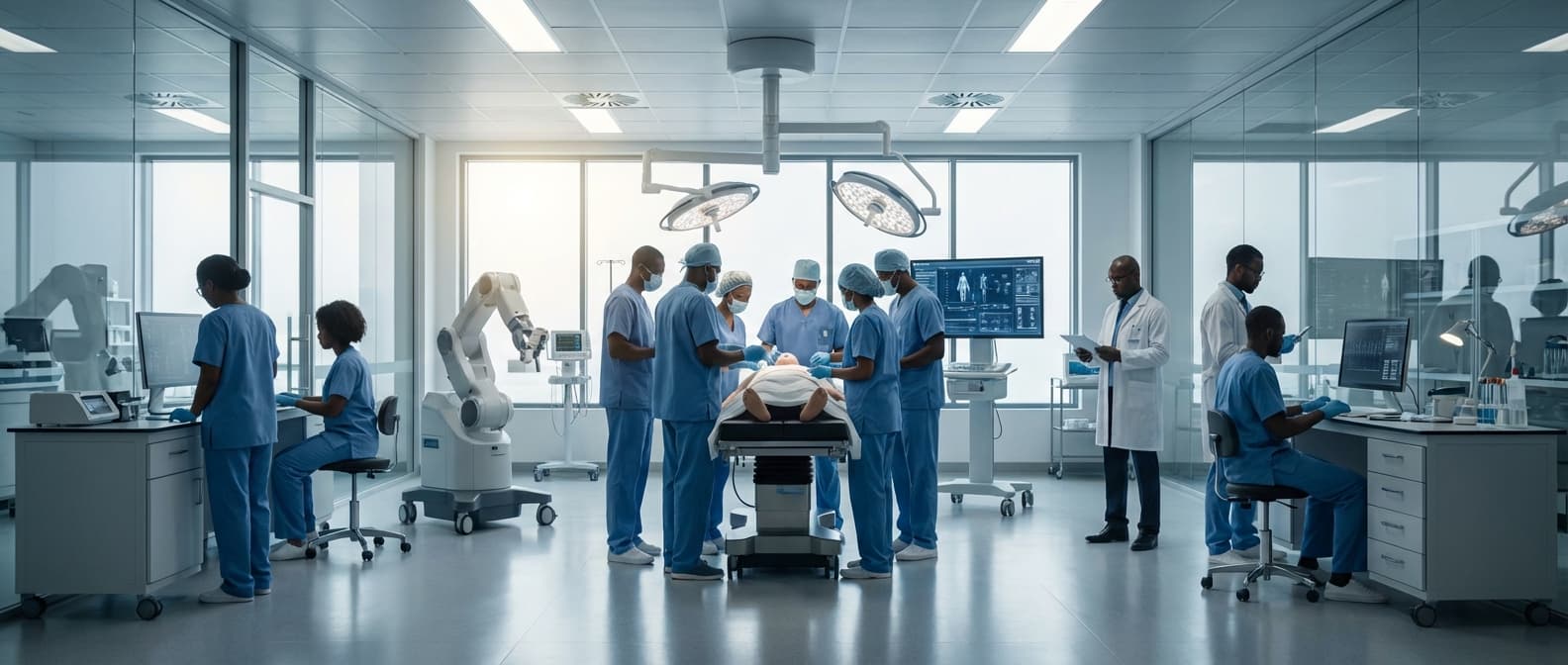
Biomedical Engineering Consulting in Tanzania
Engineering Excellence & Technical Support
Equipment selection, procurement and implementation consulting High-standard technical execution following OEM protocols and local regulatory frameworks.
Advanced Medical Device Integration & Calibration
We specialize in the seamless integration and meticulous calibration of advanced medical devices for healthcare facilities across Tanzania. Our expertise ensures optimal performance, patient safety, and compliance with international standards, enhancing diagnostic accuracy and treatment efficacy in diverse clinical settings.
Healthcare Facility Infrastructure Design & Optimization
Our biomedical engineers provide comprehensive consulting for the design, layout, and optimization of healthcare infrastructure. We focus on creating efficient, safe, and future-proof medical environments that meet the specific needs of Tanzanian healthcare providers, from rural clinics to specialized hospitals, ensuring optimal workflow and resource utilization.
Biomedical Technology Adoption & Training Strategy
We develop and implement tailored strategies for the effective adoption and sustainable use of new biomedical technologies in Tanzania. Our services include needs assessment, vendor selection, user training, and ongoing support, empowering local healthcare professionals to leverage cutting-edge innovations for improved patient care and operational efficiency.
What Is Biomedical Engineering Consulting In Tanzania?
Biomedical Engineering Consulting in Tanzania refers to the provision of specialized technical and strategic expertise to organizations and individuals involved in the healthcare sector, focusing on the application of engineering principles to medical devices, systems, and processes. This service encompasses a broad spectrum of activities aimed at optimizing the functionality, safety, efficacy, and cost-effectiveness of healthcare technologies and infrastructure within the Tanzanian context. Consultants analyze existing biomedical infrastructure, identify areas for improvement, and develop tailored solutions that align with national healthcare policies, regulatory frameworks, and resource availability. This often involves bridging the gap between technological advancements and practical implementation in diverse healthcare settings, from tertiary hospitals to rural clinics.
| Target Audience | Typical Needs | Use Cases |
|---|---|---|
| Public Hospitals and Clinics | Optimizing equipment utilization, establishing effective maintenance systems, ensuring regulatory compliance, training staff, upgrading outdated infrastructure. | Developing a national preventive maintenance schedule, advising on procurement of essential medical equipment for primary healthcare facilities, implementing a medical device tracking system. |
| Private Healthcare Providers | Strategic planning for technology acquisition, enhancing service quality, ensuring compliance with evolving regulations, optimizing operational efficiency, competitive positioning. | Selecting and integrating advanced diagnostic imaging equipment, developing a business plan for a new specialized medical center, advising on the implementation of a telemedicine platform. |
| Medical Device Manufacturers and Distributors | Navigating regulatory pathways, establishing after-sales service networks, understanding local market needs, developing localized support strategies. | Providing guidance on meeting Tanzanian Bureau of Standards (TBS) requirements for medical device registration, designing a training program for local technicians on a new medical device. |
| Non-Governmental Organizations (NGOs) and International Development Agencies | Procuring and deploying medical equipment for humanitarian projects, establishing sustainable healthcare infrastructure in underserved areas, impact assessment of technology interventions. | Managing the procurement and distribution of essential medicines and equipment for remote communities, conducting a needs assessment for a new health facility in a conflict-affected region. |
| Government Ministries and Regulatory Bodies | Developing national policies and standards for biomedical engineering, capacity building for regulatory agencies, strategic planning for national healthcare technology roadmaps. | Assisting in the development of the National Health Sector Strategic Plan related to medical equipment, advising on the establishment of a central medical stores management system. |
| Research and Academic Institutions | Advising on the selection and installation of research-grade equipment, facilitating the integration of biomedical engineering into curricula, developing research infrastructure. | Consulting on the setup of a new biomedical engineering laboratory, advising on the procurement of specialized analytical instruments for a research project. |
Key Components of Biomedical Engineering Consulting in Tanzania
- Needs Assessment and Gap Analysis: Evaluating current biomedical equipment inventory, maintenance protocols, and training needs to identify deficiencies and opportunities for enhancement.
- Equipment Procurement and Lifecycle Management: Advising on the selection, acquisition, installation, commissioning, and decommissioning of medical devices, ensuring compliance with standards and budget constraints.
- Maintenance and Repair Strategy Development: Designing and implementing robust preventive and corrective maintenance programs, including outsourcing strategies and in-house capacity building.
- Quality Assurance and Regulatory Compliance: Assisting in the development and implementation of quality management systems for biomedical equipment, and ensuring adherence to national and international regulations.
- Infrastructure Planning and Design: Providing expertise in the design and layout of biomedical departments, including power, ventilation, and safety considerations for medical equipment installation.
- Technology Implementation and Integration: Facilitating the adoption of new medical technologies, including their integration with existing hospital information systems and workflows.
- Training and Capacity Building: Developing and delivering training programs for clinical staff and biomedical technicians on the safe and effective use and maintenance of medical equipment.
- Risk Management and Patient Safety: Identifying and mitigating risks associated with medical device use, aiming to enhance patient safety and prevent adverse events.
- Feasibility Studies and Project Management: Conducting feasibility studies for new healthcare projects or technology upgrades, and providing project management services for their execution.
- Policy and Strategy Development: Contributing to the development of national policies and strategies related to biomedical engineering services, technology adoption, and healthcare infrastructure.
Who Needs Biomedical Engineering Consulting In Tanzania?
Biomedical engineering consulting in Tanzania is crucial for enhancing the quality, accessibility, and sustainability of healthcare services. The field bridges the gap between medical needs and technological solutions, offering expertise in a wide range of areas from equipment procurement and maintenance to facility design and regulatory compliance. Consultants play a vital role in ensuring that healthcare providers can effectively utilize and manage their medical technology, ultimately improving patient outcomes and operational efficiency.
| Target Customer | Key Departments/Needs Addressed by Consulting |
|---|---|
| Public Hospitals (National, Regional, District) | Procurement strategy, equipment lifecycle management, maintenance and repair services, technical training, facility planning and upgrades, infection control technology integration, medical device safety and quality assurance. |
| Private Hospitals and Clinics | Technology acquisition and selection, return on investment analysis, operational efficiency improvements, specialized equipment implementation, compliance with national and international standards, staff training. |
| Ministry of Health and other Government Health Agencies | National medical equipment policy development, centralized procurement frameworks, regulatory standards establishment, capacity building for local technicians, health technology assessment, infrastructure development planning. |
| Medical Device Manufacturers and Distributors | Market analysis and entry strategies, regulatory affairs and product registration, distribution channel optimization, after-sales service network development, user training and support. |
| Non-Governmental Organizations (NGOs) & International Development Partners | Needs assessment for medical equipment in specific programs, procurement and logistics support, project management for health infrastructure, capacity building for local healthcare workers, impact assessment of technology implementation. |
| Universities and Research Institutions | Curriculum development for biomedical engineering programs, establishment of research labs and facilities, guidance on research projects and grants, technology transfer initiatives, innovation and entrepreneurship support. |
| Insurance Companies | Technology assessment for coverage decisions, cost-effectiveness analysis of medical devices, fraud detection related to medical equipment claims. |
Who Needs Biomedical Engineering Consulting in Tanzania?
- Healthcare institutions seeking to optimize their medical technology infrastructure.
- Government health ministries aiming to develop robust national healthcare strategies and policies.
- Manufacturers and distributors looking for market entry and regulatory support.
- International development organizations and NGOs implementing health projects.
- Educational institutions developing biomedical engineering programs and research.
- Private investors and entrepreneurs in the healthcare sector.
Biomedical Engineering Consulting Process In Tanzania
Biomedical Engineering consulting in Tanzania follows a structured process to ensure client needs are met efficiently and effectively. This workflow typically begins with an initial inquiry, progresses through detailed needs assessment and proposal development, and culminates in project execution and post-project support. Each stage involves specific activities and deliverables tailored to the unique challenges and opportunities within the Tanzanian healthcare landscape.
| Stage | Key Activities | Deliverables | Typical Timeframe (Weeks) |
|---|---|---|---|
| Inquiry & Initial Contact | Client expresses interest, defines broad needs. Consultant provides introductory information and sets up initial meeting. | Initial meeting, preliminary scope understanding. | 0.5 - 1 |
| Needs Assessment & Site Visit | In-depth discussion with client, facility assessment, understanding existing infrastructure, identifying specific challenges and requirements. | Needs assessment report, detailed site survey findings. | 1 - 3 |
| Proposal Development & Negotiation | Consultant develops a comprehensive proposal outlining scope of work, methodology, timelines, budget, and deliverables. Negotiation with client. | Detailed technical and financial proposal, revised proposal based on feedback. | 2 - 4 |
| Contracting & Project Kick-off | Formal agreement signed. Project team assembled, and project kick-off meeting held to align all stakeholders. | Signed contract, project charter, project plan. | 1 - 2 |
| Design & Planning | Detailed engineering design, development of technical specifications, creation of implementation plans, risk assessment. | Design documents, technical specifications, procurement plan, installation plan. | 4 - 12 (depending on complexity) |
| Procurement & Installation | Sourcing and purchasing of equipment and materials. On-site installation and integration of systems. | Procured equipment, installed systems, site preparation. | 8 - 24 (depending on equipment lead times) |
| Testing, Commissioning & Training | Rigorous testing of installed systems to ensure functionality and safety. Commissioning and user training. | Test reports, commissioning certificates, training materials, trained personnel. | 2 - 6 |
| Project Handover & Documentation | Official handover of the completed project to the client. Provision of all relevant documentation. | Final project report, operation and maintenance manuals, as-built drawings, warranty information. | 1 - 2 |
| Post-Project Support & Evaluation | Ongoing technical support, troubleshooting, and performance evaluation as per contract. Feedback collection for continuous improvement. | Support services, performance reports, client satisfaction feedback. | Ongoing (as per contract) |
Biomedical Engineering Consulting Workflow in Tanzania
- Inquiry & Initial Contact
- Needs Assessment & Site Visit
- Proposal Development & Negotiation
- Contracting & Project Kick-off
- Design & Planning
- Procurement & Installation
- Testing, Commissioning & Training
- Project Handover & Documentation
- Post-Project Support & Evaluation
Biomedical Engineering Consulting Cost In Tanzania
Biomedical Engineering Consulting in Tanzania involves specialized expertise to address the unique healthcare infrastructure and technological needs of the country. The cost of these services is influenced by several factors, including the complexity and scope of the project, the experience and reputation of the consultant or firm, the duration of the engagement, and travel or logistical requirements within Tanzania. Pricing is typically presented in Tanzanian Shillings (TZS), with some international firms or specialized projects potentially quoting in USD or other major currencies, which would then be converted at prevailing exchange rates.
Factors influencing cost include:
- Project Scope and Complexity: A simple equipment maintenance plan will cost significantly less than a comprehensive hospital design and equipment procurement strategy, or a regulatory compliance audit for a new medical facility. Large-scale projects requiring in-depth analysis, planning, and implementation will command higher fees.
- Consultant Expertise and Experience: Highly experienced biomedical engineers with a proven track record, specialized knowledge (e.g., in imaging technologies, sterile processing, or health IT), and strong local network connections will charge premium rates. Junior consultants or those with less specialized experience will be more affordable.
- Duration of Engagement: Consulting fees can be structured hourly, daily, or on a project basis. Longer-term engagements, such as overseeing the installation and commissioning of major medical equipment or developing a hospital's entire biomedical infrastructure strategy, will naturally be more expensive.
- Travel and Logistics: If the consultant needs to travel extensively within Tanzania (e.g., to remote regions or multiple sites), these costs (transportation, accommodation, per diem) will be added to the overall fee. The remoteness and accessibility of the project location play a significant role.
- Firm Size and Overhead: Larger, established consulting firms often have higher overhead costs than independent consultants, which can be reflected in their pricing. However, they may offer a broader range of services and resources.
- Deliverables and Reporting: The level of detail and comprehensiveness of the final reports, presentations, and documentation required will also influence the cost. Highly detailed technical reports or complex implementation plans will take more time and expertise to produce.
- Urgency of the Project: Rush projects or those with extremely tight deadlines may incur premium charges due to the need for expedited services and potential reallocation of resources by the consulting firm or individual.
Pricing Ranges in Tanzanian Shillings (TZS):
It's important to note that these are indicative ranges and can vary significantly. Obtaining detailed quotes from multiple providers is crucial for accurate budgeting.
| Service Type (Indicative) | Estimated Range (TZS) - Daily Rate | Estimated Range (TZS) - Project-Based (Example) |
|---|---|---|
| Basic Equipment Assessment/Inventory | 500,000 - 1,000,000 | 2,000,000 - 5,000,000 (for a small clinic) |
| Equipment Maintenance Planning/Strategy | 750,000 - 1,500,000 | 4,000,000 - 10,000,000 (for a medium-sized hospital) |
| New Equipment Procurement Consultation (Specification & Selection) | 1,000,000 - 2,000,000 | 8,000,000 - 25,000,000 (depending on number & complexity of equipment) |
| Hospital Planning & Design (Biomedical Infrastructure Focus) | 1,500,000 - 3,000,000 | 30,000,000 - 100,000,000+ (highly variable, large-scale projects) |
| Regulatory Compliance & Audits | 800,000 - 1,800,000 | 5,000,000 - 20,000,000 (depending on facility size & scope) |
| Specialized Technical Consulting (e.g., Imaging, Sterilization) | 1,200,000 - 2,500,000 | 10,000,000 - 50,000,000 (depending on specialization & duration) |
| Training & Capacity Building (Biomedical Staff) | 600,000 - 1,200,000 (per session) | Negotiable, based on modules and duration |
Key Pricing Factors for Biomedical Engineering Consulting in Tanzania
- Project Scope & Complexity
- Consultant Expertise & Experience
- Duration of Engagement
- Travel & Logistics
- Firm Size & Overhead
- Deliverables & Reporting
- Project Urgency
Affordable Biomedical Engineering Consulting Options
Biomedical engineering consulting can be a significant investment, but there are ways to access expert advice without breaking the bank. By understanding value bundles and implementing cost-saving strategies, startups and established companies alike can leverage specialized knowledge effectively. Value bundles package multiple services at a reduced overall cost compared to individual engagements, offering comprehensive solutions. Cost-saving strategies focus on maximizing efficiency, minimizing waste, and utilizing resources wisely throughout the consulting process.
| Cost-Saving Strategy | Description | Potential Benefit |
|---|---|---|
| Clearly Define Project Scope | Establish precise objectives, deliverables, and timelines upfront. This prevents scope creep and unexpected costs. | Reduces wasted time and resources, leading to predictable budgeting. |
| Prioritize Core Needs | Focus consulting on the most critical aspects of your project that require external expertise. Avoid engaging consultants for tasks you can manage internally. | Optimizes budget allocation for maximum impact and ROI. |
| Phased Consulting Approach | Break down larger projects into smaller, manageable phases. Engage consultants for specific phases as needed. | Allows for greater control over spending and the ability to reassess needs between phases. |
| Utilize Existing Data and Research | Compile and present all relevant internal data, previous studies, and market research to the consultant. This reduces the need for them to start from scratch. | Saves consultant time and therefore, your project cost. |
| Leverage Technology for Communication and Collaboration | Utilize video conferencing, cloud-based document sharing, and project management tools to facilitate efficient communication and collaboration. | Reduces travel costs and improves overall project efficiency. |
| Seek Proposals from Multiple Consultants | Obtain detailed proposals from several consulting firms or individuals, comparing their services, methodologies, and pricing. | Ensures you are getting competitive rates and the best value for your investment. |
| Negotiate Payment Terms | Discuss payment schedules, milestones, and potential discounts for early payment or long-term commitments. | Can lead to more favorable financial arrangements. |
Affordable Biomedical Engineering Consulting Options
- Value Bundles: These are pre-defined packages of services designed to address common project needs at a more economical price. Bundles often combine areas like regulatory pathway assessment, design verification, or market analysis.
- Retainer Agreements: Committing to a longer-term relationship with a consultant can secure a lower hourly rate or a fixed monthly fee for ongoing support, providing consistent access to expertise.
- Project-Based Consulting: While sometimes more expensive per hour, clearly defined project scopes can prevent scope creep and ensure cost predictability.
- Offshore/Nearshore Consulting: Utilizing consultants in regions with lower cost of living can significantly reduce hourly rates while still providing access to skilled professionals.
- Specialized Niche Consultants: Focusing on consultants with very specific expertise relevant to your immediate need can be more cost-effective than generalists.
- Leveraging Freelance Platforms: Platforms connecting businesses with independent consultants can offer competitive rates and flexibility.
Verified Providers In Tanzania
In Tanzania's evolving healthcare landscape, identifying reliable and high-quality medical providers is paramount for both local citizens and international visitors. "Verified Providers" signifies a level of trust and assurance, indicating that these entities have met specific standards and undergone rigorous vetting processes. Among these, Franance Health stands out as a leading example, consistently demonstrating a commitment to excellence in healthcare delivery.
| Aspect | Franance Health's Commitment | Benefit to Patients |
|---|---|---|
| Credentialing Standard | Exceeds basic regulatory requirements, demonstrating adherence to international quality benchmarks. | Assurance of receiving care from a provider that meets high standards of safety and efficacy. |
| Medical Expertise | Employs specialists and general practitioners with extensive training and experience. | Access to knowledgeable professionals capable of diagnosing and treating a wide range of conditions. |
| Technological Infrastructure | Invests in advanced diagnostic and therapeutic equipment. | Benefit from accurate diagnoses and access to modern treatment modalities. |
| Patient Care Philosophy | Prioritizes empathy, clear communication, and a supportive environment. | A more comfortable and reassuring healthcare experience, with a focus on individual needs. |
| Accessibility | Offers convenient locations and streamlined appointment processes. | Easier and faster access to necessary medical consultations and treatments. |
Why Franance Health Represents the Best Choice for Verified Healthcare in Tanzania:
- Rigorous Credentialing and Quality Assurance: Franance Health's "Verified Provider" status is not merely a label. It is earned through a stringent vetting process that scrutinizes their facilities, medical professionals, equipment, and adherence to international best practices. This ensures that patients receive care that is safe, effective, and up-to-date.
- Comprehensive Range of Services: From primary care to specialized treatments, Franance Health offers a broad spectrum of medical services. This means patients can access a variety of needs under one trusted umbrella, reducing the complexity and potential stress of seeking care across multiple institutions.
- Experienced and Qualified Medical Professionals: The "Verified Provider" badge necessitates that Franance Health employs highly trained and experienced doctors, nurses, and support staff. They are often proficient in multiple languages, facilitating clear communication and understanding for diverse patient populations.
- State-of-the-Art Facilities and Technology: Commitment to quality is reflected in their investment in modern medical equipment and well-maintained facilities. This technological edge allows for accurate diagnostics and advanced treatment options, contributing to better patient outcomes.
- Patient-Centric Approach: Beyond clinical expertise, Franance Health prioritizes the patient experience. This includes efficient appointment scheduling, compassionate care, and a focus on patient comfort and satisfaction, setting them apart as a provider that truly cares.
- Ethical Practices and Transparency: Verified providers like Franance Health operate with a high degree of ethical integrity and transparency in their billing and treatment protocols. Patients can expect clear communication regarding costs and treatment plans, fostering trust and accountability.
Scope Of Work For Biomedical Engineering Consulting
This document outlines the Scope of Work (SOW) for a Biomedical Engineering consulting engagement. It details the objectives, key activities, technical deliverables, and standard specifications expected throughout the project lifecycle. The primary goal is to provide expert guidance and support in [Specify Project Area - e.g., medical device design, regulatory compliance, clinical trial support, technology assessment].
| Deliverable Name | Description | Format | Standard Specification/Reference |
|---|---|---|---|
| Project Proposal and Detailed SOW | Comprehensive document outlining project objectives, scope, timelines, resources, and expected outcomes. | PDF Document | Client-approved format |
| Technical Requirements Specification (TRS) | Detailed documentation of functional, non-functional, and performance requirements for the biomedical product or system. | Word Document / PDF | IEEE Std 830-1998 (Recommended Practice for Software Requirements Specifications), adapted for medical devices |
| Design Input Documents | Documents capturing user needs, intended use, and other critical inputs that drive the design process. | Word Document / PDF | ISO 13485:2016 Clause 7.3.3 (Design and development inputs) |
| Risk Management File (RMF) | Comprehensive documentation of all identified risks, their analysis, evaluation, control, and monitoring throughout the product lifecycle. | Digital Folder Structure / PDF Documents | ISO 14971:2019 (Medical devices — Application of risk management to medical devices) |
| Regulatory Strategy Report | Outline of the regulatory pathway, applicable standards, and necessary documentation for achieving market clearance/approval. | PDF Document | Relevant regulatory agency guidelines (e.g., FDA guidance documents, EU MDR/IVDR) |
| Verification and Validation (V&V) Plan | Detailed plan outlining the methods and protocols for verifying that the design outputs meet the design inputs and validating that the device meets user needs and intended uses. | Word Document / PDF | ISO 13485:2016 Clause 7.3.6 (Design and development verification), Clause 7.3.7 (Design and development validation) |
| Test Protocols and Reports | Specific protocols for conducting verification and validation tests, along with detailed reports of results and analysis. | Word Document / PDF | IEC 60601 series (Medical electrical equipment), IEC 62304 (Medical device software – Software lifecycle processes), relevant ASTM standards |
| Usability Engineering File | Documentation related to the user interface and interaction design, including user research, risk analysis of usability, and usability testing. | Digital Folder Structure / PDF Documents | IEC 62366-1:2015 (Medical devices – Part 1: Application of usability engineering to medical devices) |
| Technical File / Design Dossier (Draft) | Compilation of technical documentation required for regulatory submissions (e.g., for CE marking or FDA submission). | Digital Folder Structure / PDF Documents | Annex IX (EU MDR 2017/745) or relevant FDA submission guidelines (e.g., 510(k)) |
| Consulting Reports and Recommendations | Regular reports summarizing progress, findings, and expert recommendations on specific technical or strategic aspects. | PDF Document | Client-specified frequency and format |
| Training Materials | Documentation and presentations for client personnel on specific biomedical engineering topics or processes. | PDF, PowerPoint | Client-approved format |
Key Activities and Objectives
- Define project goals and scope with client stakeholders.
- Conduct technical feasibility studies and market analysis for new medical technologies.
- Develop and refine medical device design specifications and requirements.
- Provide guidance on regulatory strategy (e.g., FDA, CE marking, ISO 13485).
- Assist with the development of technical documentation for submissions.
- Evaluate and recommend appropriate testing methodologies and validation protocols.
- Support clinical trial design and data analysis from a biomedical engineering perspective.
- Perform risk management activities as per relevant standards (e.g., ISO 14971).
- Develop training materials and provide technical training to client personnel.
- Identify and assess potential technology partners or vendors.
- Review and provide feedback on existing biomedical engineering processes and infrastructure.
- Contribute to intellectual property strategy and patent filings.
Service Level Agreement For Biomedical Engineering Consulting
This Service Level Agreement (SLA) outlines the commitment of [Consulting Firm Name] (hereinafter referred to as 'Provider') to its clients (hereinafter referred to as 'Client') regarding the provision of biomedical engineering consulting services. This SLA specifically addresses response times to support requests and uptime guarantees for any platform or system managed or provided by the Provider as part of the consulting engagement.
| Support Request Priority | Initial Response Time Target (During Business Hours) | Escalation Procedure |
|---|---|---|
| Emergency | 1 Hour | Immediate internal escalation to senior engineering staff. Client notified within 30 minutes of initiation of response. |
| Urgent | 4 Business Hours | Escalation to dedicated support team lead. Client notified of progress within 8 business hours. |
| Routine | 1 Business Day | Assignment to appropriate engineering resource. Client provided with an estimated resolution time. |
Key Service Definitions
- Business Hours: Standard working hours as defined in the Master Services Agreement (MSA), typically Monday to Friday, 9:00 AM to 5:00 PM [Client's Time Zone], excluding public holidays.
- Emergency: A critical failure of a system or service that significantly impacts the Client's core operations or patient safety, requiring immediate attention.
- Urgent: A significant issue that impairs functionality but does not necessarily halt all operations or pose an immediate safety risk.
- Routine: A non-critical issue, such as a query, request for minor modification, or general technical assistance.
- Uptime: The percentage of time a specific system or platform, managed by the Provider, is operational and accessible to the Client. This excludes scheduled maintenance periods.
- Scheduled Maintenance: Planned downtime for system updates, upgrades, or preventative maintenance, communicated to the Client in advance.
Frequently Asked Questions

Ready when you are
Let's scope your Biomedical Engineering Consulting in Tanzania project in Tanzania.

Scaling healthcare logistics and technical systems across the entire continent.