
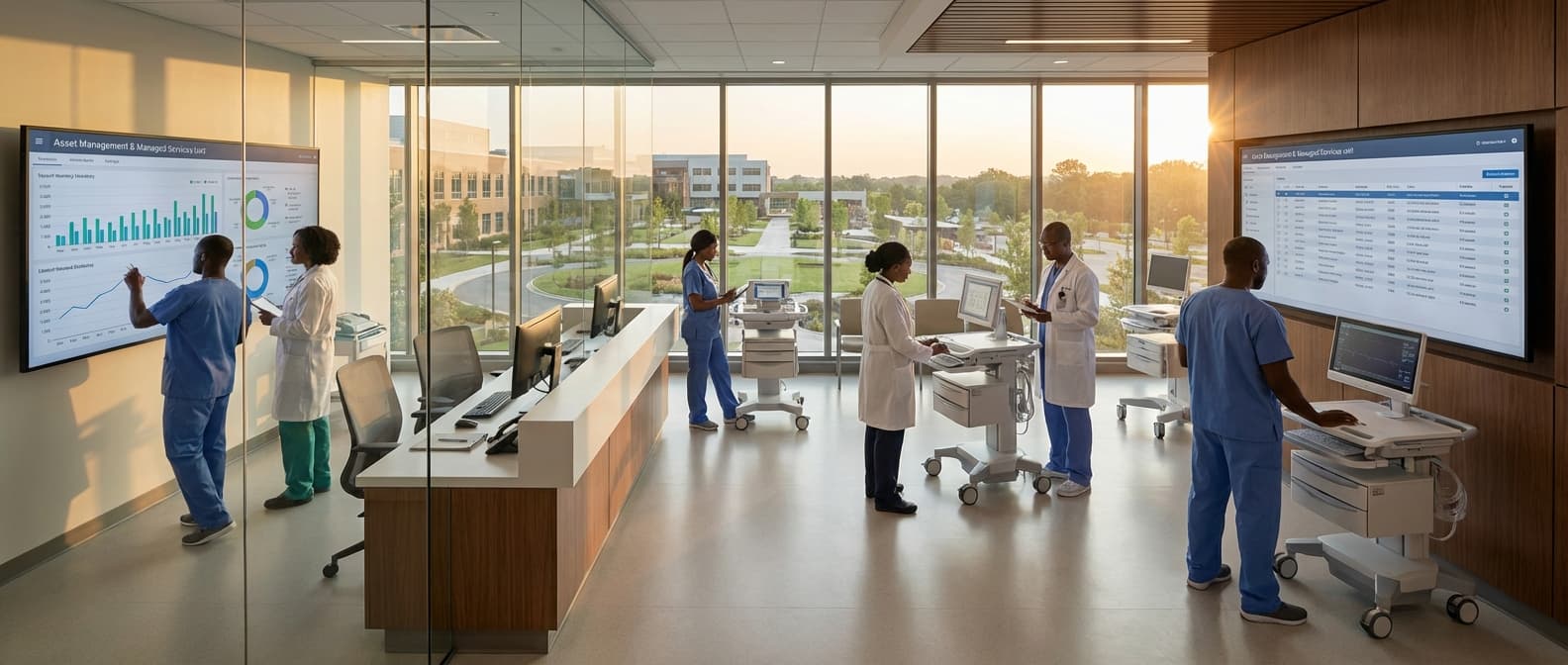
Maintenance KPI Reporting Service (Uptime/MTBF/MTTR) in Tanzania
Engineering Excellence & Technical Support
Maintenance KPI Reporting Service (Uptime/MTBF/MTTR) High-standard technical execution following OEM protocols and local regulatory frameworks.
Enhanced Uptime Visibility for Tanzanian Operations
Our service provides real-time, granular tracking of asset Uptime across your Tanzanian facilities. Gain immediate insights into operational status, pinpointing underperforming equipment and enabling proactive intervention to minimize costly downtime and maximize production.
Optimized Maintenance Scheduling with Accurate MTBF
Leverage our advanced Mean Time Between Failures (MTBF) analytics, tailored for the Tanzanian industrial landscape. By understanding historical failure patterns, you can transition from reactive to predictive maintenance, optimizing spare parts inventory and scheduling repairs before critical failures occur.
Reduced Repair Times with Actionable MTTR Insights
Our service delivers precise Mean Time To Repair (MTTR) metrics, specifically designed to identify bottlenecks in your Tanzanian maintenance workflows. Visualize repair durations, analyze root causes of delays, and implement targeted improvements to significantly shorten recovery times and boost overall operational efficiency.
What Is Maintenance Kpi Reporting Service (Uptime/mtbf/mttr) In Tanzania?
Maintenance KPI Reporting Service (Uptime/MTBF/MTTR) in Tanzania refers to a specialized offering focused on the collection, analysis, and presentation of key performance indicators (KPIs) related to the operational availability and reliability of physical assets and systems. This service is crucial for organizations in Tanzania aiming to optimize their maintenance strategies, minimize downtime, and enhance overall asset lifecycle management. The core of the service revolves around the calculation and reporting of Uptime (percentage of time an asset is operational), Mean Time Between Failures (MTBF - average time an asset operates before a failure), and Mean Time To Repair (MTTR - average time taken to restore a failed asset to operational status). The service typically involves data aggregation from various sources (e.g., SCADA systems, CMMS, IoT sensors, manual logs), robust data cleansing and validation, statistical analysis, and the generation of actionable reports and dashboards tailored to client-specific requirements. The ultimate objective is to provide data-driven insights that support informed decision-making regarding predictive, preventive, and corrective maintenance planning, resource allocation, and capital investment in asset renewal or upgrades.
| Use Case Category | Specific Application | KPI Focus | Benefits |
|---|---|---|---|
| Asset Reliability Improvement | Identifying root causes of recurring equipment failures in a manufacturing plant. | MTBF (to understand failure frequency), MTTR (to assess repair efficiency). | Reduced unplanned downtime, improved production yield, optimized spare parts inventory. |
| Operational Efficiency Enhancement | Monitoring the availability of critical machinery in a power generation facility. | Uptime (to ensure consistent power supply), MTTR (to minimize outage duration). | Increased grid stability, reduced revenue loss due to outages, improved service delivery. |
| Maintenance Strategy Optimization | Analyzing failure patterns of a fleet of delivery trucks to transition from reactive to predictive maintenance. | MTBF (to predict future failures), Uptime (to forecast service availability). | Lower maintenance costs, extended asset lifespan, improved fleet utilization. |
| Resource and Budget Allocation | Justifying investments in new equipment or maintenance technologies based on current performance metrics for a telecommunications network. | Uptime (to benchmark against SLAs), MTTR (to evaluate maintenance team performance). | Data-driven capital expenditure decisions, optimized allocation of skilled maintenance personnel. |
| Performance Benchmarking | Comparing the reliability of similar assets across different sites or against industry standards within a mining operation. | Uptime, MTBF, MTTR. | Identification of best practices, inter-site performance improvement initiatives. |
| Service Level Agreement (SLA) Compliance | Ensuring a hospital's critical medical equipment consistently meets uptime requirements. | Uptime. | Patient safety, avoidance of contractual penalties, enhanced reputation. |
Who Needs Maintenance KPI Reporting Service (Uptime/MTBF/MTTR) in Tanzania?
- Industrial Manufacturers (e.g., food and beverage, pharmaceuticals, textiles, mining)
- Energy and Utilities Companies (e.g., power generation, water treatment, oil and gas)
- Transportation and Logistics Providers (e.g., fleet management, rail operators)
- Telecommunications Infrastructure Operators
- Healthcare Facilities (e.g., hospitals with critical medical equipment)
- Mining and Extractive Industries
- Construction and Heavy Equipment Operators
- Large-Scale Agricultural Operations with automated systems
- Government Agencies responsible for public infrastructure (e.g., roads, bridges)
- Any organization with significant investments in physical assets where operational continuity and reliability are critical.
Who Needs Maintenance Kpi Reporting Service (Uptime/mtbf/mttr) In Tanzania?
In Tanzania's rapidly developing industrial landscape, efficient maintenance operations are paramount for business success and profitability. Businesses that rely on critical machinery, complex infrastructure, or provide essential services often face significant financial losses due to unexpected downtime, inefficient repair times, and a lack of data-driven decision-making in their maintenance departments. A specialized Maintenance KPI Reporting Service, focusing on key metrics like Uptime, Mean Time Between Failures (MTBF), and Mean Time To Repair (MTTR), is crucial for organizations aiming to optimize their asset management, reduce operational costs, and enhance overall productivity. These services provide the insights needed to move from reactive firefighting to proactive and predictive maintenance strategies.
| Target Customer Segment | Key Departments Benefiting | Why they need KPI Reporting (Uptime/MTBF/MTTR) |
|---|---|---|
| Manufacturing Plants | Production, Maintenance, Operations Management, Plant Management | Minimize unplanned downtime, optimize production schedules, reduce scrap/rework due to equipment failure, improve overall equipment effectiveness (OEE). |
| Mining Operations | Mine Operations, Maintenance Engineering, Health & Safety, Mine Management | Ensure continuous extraction, reduce costly downtime of heavy machinery, improve safety by identifying recurring failure patterns, optimize spare parts inventory. |
| Energy and Utilities | Operations, Technical Services, Grid Management, Asset Management, Customer Service | Guarantee consistent service delivery, minimize outages, optimize preventive maintenance schedules, extend asset lifespan, meet regulatory compliance. |
| Oil and Gas | Production, Drilling, Maintenance, HSE, Asset Integrity | Maximize production uptime, ensure safety of operations, reduce risk of catastrophic failures, optimize maintenance budgets, manage complex asset lifecycles. |
| Transportation & Logistics | Fleet Management, Operations, Maintenance Workshops, Logistics Management | Maximize vehicle/asset availability, reduce operational delays, optimize fleet performance, minimize fuel consumption through proactive maintenance, enhance customer satisfaction. |
| Hospitals & Healthcare | Biomedical Engineering, Facilities Management, Clinical Operations, Administration | Ensure critical medical equipment (MRI, CT scanners, ventilators) is always operational, minimize patient care disruptions, reduce repair costs, comply with medical equipment maintenance standards. |
| Commercial Real Estate | Property Management, Facilities Management, Engineering | Maintain building systems (HVAC, elevators, electrical) for tenant satisfaction and operational efficiency, reduce energy consumption, extend building asset life. |
Target Customers in Tanzania Requiring Maintenance KPI Reporting Service
- Manufacturing Plants (Food & Beverage, Textiles, Automotive, Pharmaceuticals, Cement, etc.)
- Mining Operations
- Energy and Utilities Companies (Power Generation, Water Supply, Telecommunications)
- Oil and Gas Exploration and Production
- Transportation and Logistics Companies (Fleet Management, Railway Operators)
- Construction Companies (Heavy Equipment Management)
- Hospitals and Healthcare Facilities (Medical Equipment Maintenance)
- Large-Scale Agriculture and Agro-Processing
- Commercial Real Estate and Facilities Management
Maintenance Kpi Reporting Service (Uptime/mtbf/mttr) Process In Tanzania
This document outlines the workflow for the Maintenance KPI Reporting Service, focusing on Uptime, Mean Time Between Failures (MTBF), and Mean Time To Repair (MTTR), within the Tanzanian context. The service aims to provide clients with accurate and actionable data on their asset maintenance performance, enabling them to optimize operations, reduce downtime, and improve overall equipment effectiveness.
| Phase | Key Activities | Responsible Party (Client/Service Provider) | Deliverables/Outputs | Notes/Considerations (Tanzania) |
|---|---|---|---|---|
| 1. Inquiry & Scoping | Initial contact from client expressing interest in maintenance KPI reporting. Understanding client's specific needs, assets, and existing data sources. Defining the scope of the reporting service (e.g., specific assets, reporting frequency, desired KPIs). Agreement on service level agreements (SLAs), pricing, and contractual terms. | Client (Inquiry), Service Provider (Clarification, Proposal) Both (Agreement) | Service Proposal, Service Level Agreement (SLA), Contract | Language barriers can be a consideration; use clear and concise communication. Cultural nuances in business interactions are important to respect. |
| 2. Data Collection & Integration | Identification of all relevant data sources (e.g., CMMS, SCADA, manual logs, sensor data). Establishing secure data transfer mechanisms (e.g., APIs, SFTP, direct database access). Data extraction and initial cleansing to identify inconsistencies or missing information. Integration of data from disparate sources into a centralized repository. | Client (Provide access/data), Service Provider (Develop integration, Extract, Cleanse) | Data Integration Plan, Extracted & Cleansed Data Set | Reliability of existing data systems varies; thorough data quality checks are crucial. Internet connectivity and bandwidth can be a challenge in remote areas; explore offline data collection methods if necessary. |
| 3. Data Processing & Analysis | Structuring and organizing the collected data for analysis. Performing detailed analysis of maintenance records, downtime events, and repair times. Identifying root causes of failures and recurring issues. Analyzing operational data to understand the context of equipment performance. | Service Provider | Processed Data, Initial Analytical Findings | Understanding local operational conditions (e.g., environmental factors, usage patterns) is vital for accurate analysis. |
| 4. KPI Calculation & Validation | Calculating Uptime (%), MTBF (Mean Time Between Failures), and MTTR (Mean Time To Repair) based on established formulas. Validating calculated KPIs against client's expectations and historical data. Cross-referencing with qualitative feedback from maintenance teams. Ensuring data integrity and accuracy of the calculations. | Service Provider (Calculation), Client (Validation) | Calculated KPI values, Validation Report | Clear definitions of 'failure' and 'repair' must be agreed upon to ensure consistent calculations. Collaboration with client's maintenance team is key for accurate validation. |
| 5. Reporting & Presentation | Generating comprehensive reports including dashboards, charts, and trend analysis. Summarizing key findings, insights, and actionable recommendations. Presenting reports to the client in a clear and understandable format (e.g., in-person meetings, webinars). Addressing client queries and providing explanations of the data and KPIs. | Service Provider (Reporting, Presentation), Client (Review, Feedback) | Maintenance KPI Report (e.g., monthly, quarterly), Presentation Slides, Executive Summary | Reports should be tailored to the audience, ranging from technical to executive levels. Consider using visual aids that are easily understood across diverse educational backgrounds. |
| 6. Follow-up & Continuous Improvement | Monitoring the implementation of recommended actions by the client. Gathering feedback on the usefulness and accuracy of the reports. Continuously refining data collection, analysis, and reporting processes. Identifying opportunities for further optimization of maintenance strategies. | Both | Action Item Tracking, Feedback Summary, Process Improvement Plan | Building long-term relationships through consistent support and visible value is crucial. Regular review meetings can help in adapting to evolving client needs and operational challenges. |
Service Workflow: Maintenance KPI Reporting (Uptime/MTBF/MTTR) in Tanzania
- Phase 1: Inquiry & Scoping
- Phase 2: Data Collection & Integration
- Phase 3: Data Processing & Analysis
- Phase 4: KPI Calculation & Validation
- Phase 5: Reporting & Presentation
- Phase 6: Follow-up & Continuous Improvement
Maintenance Kpi Reporting Service (Uptime/mtbf/mttr) Cost In Tanzania
Estimating the cost of a Maintenance KPI Reporting Service (Uptime, MTBF, MTTR) in Tanzania involves several key factors that influence pricing. These services are crucial for businesses aiming to optimize their operational efficiency, minimize downtime, and understand the reliability and maintainability of their assets. The pricing will generally be structured around the scope of work, the complexity of the assets being monitored, the frequency of reporting, the level of customization required, and the chosen service provider's expertise and overheads. In Tanzania, local currency (Tanzanian Shilling - TZS) pricing will reflect these global pricing drivers, with adjustments for the local economic landscape, availability of specialized skills, and the specific market dynamics within Tanzania. It's important to note that these are estimated ranges and actual costs can vary significantly.
| Service Tier/Scope | Estimated Monthly Cost (TZS) | Key Inclusions |
|---|---|---|
| Basic Reporting (Limited Assets, Standard Reports) | 500,000 - 1,500,000 | Monthly Uptime, MTBF, MTTR calculation for 5-10 assets. Standard dashboard. Basic data consolidation. |
| Standard Reporting (Moderate Assets, Customization) | 1,500,000 - 4,000,000 | Weekly/Monthly reports for 10-30 assets. Customizable dashboards. Basic trend analysis. Data integration support. |
| Advanced Reporting (Extensive Assets, Deep Analytics) | 4,000,000 - 10,000,000+ | Daily/Weekly/Monthly reporting for 30+ complex assets. Predictive analytics. Root cause analysis support. Integration with CMMS/SCADA. Dedicated account manager. On-site consultation (if required). |
| Project-Based / Consulting (Specific Initiatives) | Negotiable (per project or hourly) | Tailored for specific asset reliability improvement projects, system audits, or implementation of new KPI frameworks. Often involves deep analysis and strategic recommendations. |
Key Pricing Factors for Maintenance KPI Reporting Services in Tanzania
- {"title":"Scope of Services and Reporting Frequency","description":"The more KPIs tracked (Uptime, MTBF, MTTR, etc.), the more comprehensive the data collection and analysis required. Daily, weekly, monthly, or quarterly reporting will impact the workload and thus the cost."}
- {"title":"Number and Complexity of Assets Monitored","description":"Reporting on a single piece of equipment is vastly different from monitoring an entire factory floor, a fleet of vehicles, or complex infrastructure. The more assets, and the more intricate their operation, the higher the cost."}
- {"title":"Data Collection and Integration Methods","description":"Are you providing raw data, or does the service provider need to implement sensors, integrate with existing SCADA/CMMS systems, or perform manual data entry? The latter significantly increases complexity and cost."}
- {"title":"Level of Customization and Analytics","description":"Standardized reports will be less expensive than custom dashboards, predictive analytics, root cause analysis, or tailored recommendations for improvement."}
- {"title":"Service Provider Expertise and Reputation","description":"Established firms with a proven track record and specialized expertise in asset management and reliability engineering will command higher fees."}
- {"title":"Geographic Coverage and On-Site Requirements","description":"If the service involves on-site inspections, data validation, or troubleshooting in various locations within Tanzania, travel and logistical costs will be factored in."}
- {"title":"Software and Technology Used","description":"The provider's investment in sophisticated reporting software, analytics platforms, and data management tools will influence their pricing structure."}
- {"title":"Contract Duration and Commitment","description":"Longer-term contracts often come with volume discounts or preferential rates compared to short-term engagements."}
Affordable Maintenance Kpi Reporting Service (Uptime/mtbf/mttr) Options
Our Affordable Maintenance KPI Reporting Service provides essential visibility into your operational uptime, Mean Time Between Failures (MTBF), and Mean Time To Repair (MTTR). We offer flexible value bundles and cost-saving strategies to ensure you get the insights you need without breaking the budget. Understanding these critical metrics empowers you to proactively identify issues, optimize maintenance schedules, reduce downtime, and ultimately improve overall equipment effectiveness (OEE).
| Bundle Name | Key KPIs Included | Typical Use Case | Cost-Saving Strategy Application |
|---|---|---|---|
| Essential Uptime Monitor | Uptime Percentage, Downtime Duration | Basic performance tracking, identifying major outages. | Focuses on identifying major downtime events to prioritize immediate fixes, preventing cascading failures. |
| Reliability & Repair Essentials | Uptime, MTBF, MTTR | Understanding equipment reliability and repair efficiency, setting basic maintenance goals. | MTBF insights help predict future failures, allowing for scheduled maintenance over costly emergency repairs. MTTR reduction frees up technician time. |
| Proactive Maintenance Suite | Uptime, MTBF, MTTR, Trend Analysis, Root Cause Support, Alerts | Advanced operational improvement, proactive maintenance planning, and root cause analysis. | Detailed trend analysis and root cause support enable targeted preventative maintenance, drastically reducing unplanned downtime and associated costs. Customizable alerts prevent minor issues from escalating. |
Value Bundles for Maintenance KPI Reporting
- {"title":"Essential Uptime Monitor","description":"Focuses on core uptime reporting, identifying periods of operational availability and downtime. Ideal for businesses needing basic performance tracking."}
- {"title":"Reliability & Repair Essentials","description":"Includes Essential Uptime Monitor, plus MTBF and MTTR calculations. Crucial for understanding equipment reliability and the efficiency of your repair processes."}
- {"title":"Proactive Maintenance Suite","description":"Our most comprehensive bundle, encompassing Uptime, MTBF, MTTR, and additional trend analysis, root cause identification support, and customizable alert thresholds. Designed for businesses aiming for advanced operational excellence."}
Verified Providers In Tanzania
In Tanzania's evolving healthcare landscape, discerning patients and organizations seek assurance of quality and ethical practice. Verified providers stand out as beacons of trust, and Franance Health has consistently demonstrated a commitment to these principles, earning a reputation for excellence. This document outlines why Franance Health's credentials make them the superior choice for healthcare services in Tanzania.
| Credential/Aspect | Franance Health's Commitment | Why it Matters for Patients |
|---|---|---|
| Accreditation & Licensing | Fully compliant with all Tanzanian Ministry of Health regulations and holds relevant professional accreditations. | Guarantees adherence to established safety and quality standards, ensuring legal and ethical operation. |
| Medical Staff Expertise | Employs board-certified specialists and experienced general practitioners with continuous training. | Access to highly skilled professionals ensures accurate diagnoses and effective, evidence-based treatments. |
| Patient-Centric Approach | Prioritizes patient comfort, clear communication, and personalized care plans. | Fosters trust and confidence, leading to better patient satisfaction and improved health outcomes. |
| Technological Advancement | Invests in modern diagnostic and treatment equipment. | Enables more precise diagnoses, less invasive procedures, and faster recovery times. |
| Transparency & Ethics | Operates with full transparency regarding treatment options, costs, and potential risks. | Empowers patients to make informed decisions about their health and ensures fair and ethical treatment. |
| Commitment to Access | Strives to make quality healthcare accessible through various programs and outreach. | Ensures that more individuals in Tanzania can benefit from reliable and professional medical services. |
Key Credentials of Verified Providers like Franance Health:
- Official Accreditation and Licensing: Adherence to national and international standards for healthcare facilities and practitioners.
- Stringent Quality Assurance Protocols: Implementation of robust systems for patient safety, infection control, and clinical outcomes.
- Qualified and Certified Medical Professionals: Employment of highly trained doctors, nurses, and allied health staff with relevant certifications and ongoing professional development.
- Ethical Practice and Patient Rights Advocacy: Commitment to transparent communication, informed consent, and the patient's well-being.
- State-of-the-Art Infrastructure and Technology: Investment in modern medical equipment and facilities to ensure accurate diagnosis and effective treatment.
- Community Engagement and Social Responsibility: Active participation in public health initiatives and a dedication to serving the wider community.
Scope Of Work For Maintenance Kpi Reporting Service (Uptime/mtbf/mttr)
This Scope of Work (SOW) outlines the requirements for a Maintenance KPI Reporting Service, specifically focusing on Uptime, Mean Time Between Failures (MTBF), and Mean Time To Repair (MTTR). The service will provide regular reporting on these key performance indicators to enable proactive maintenance strategies, optimize asset reliability, and minimize operational disruptions. The technical deliverables will include defined data extraction, transformation, and loading (ETL) processes, visualization dashboards, and standard reporting formats. All aspects of the service will adhere to specified technical and data quality standards to ensure accuracy and actionable insights.
| Deliverable | Description | Technical Specification / Standard | Format |
|---|---|---|---|
| Data Source Identification & Access | Identification of all relevant data sources (e.g., CMMS, SCADA, IoT sensors, ERP) and establishment of secure access protocols. | Defined API endpoints, database connection strings, or secure file transfer protocols (SFTP). Data access permissions to be granted to the reporting service provider. | N/A |
| Data Extraction, Transformation, and Loading (ETL) Process | Development and execution of automated processes to extract raw data, transform it into a consistent format, and load it into a central data repository. | Data cleansing rules, validation checks, and data normalization standards. Error handling and logging mechanisms. Scheduled data refresh frequency (e.g., daily, hourly). | Automated scripts/workflows (e.g., Python, SQL scripts, ETL tools) |
| KPI Calculation Engine | Implementation of algorithms to accurately calculate Uptime, MTBF, and MTTR based on extracted and transformed data. | Clearly defined calculation logic for each KPI, including handling of exceptions, planned vs. unplanned downtime, and maintenance types. Precision requirements for time calculations (e.g., seconds, minutes). | Backend logic/scripts |
| Reporting Dashboard | Interactive visualization dashboard displaying current and historical KPI trends, breakdowns by asset, location, or maintenance type. | Real-time or near real-time data updates. Customizable views and filtering options. User role-based access control. Responsiveness across devices (desktop, tablet, mobile). | Web-based dashboard (e.g., Tableau, Power BI, custom web application) |
| Standard KPI Reports | Pre-defined, static reports summarizing KPI performance over specified periods (e.g., weekly, monthly, quarterly). | Standard report templates including executive summary, detailed KPI analysis, and identification of high-impact assets/issues. Data export functionality (e.g., CSV, PDF). | PDF, CSV, Excel |
| Data Quality Assurance Report | Regular reporting on data quality, including identified anomalies, missing data, and data validation results. | Metrics for data completeness, accuracy, and consistency. Root cause analysis for data quality issues. Recommendations for improvement. | PDF, CSV |
| API for Data Integration (Optional) | Provision of an API to allow external systems to access calculated KPI data. | RESTful API design, clear documentation, authentication and authorization mechanisms, rate limiting. | JSON |
| Technical Documentation | Comprehensive documentation of the reporting service, including data lineage, ETL processes, KPI calculation logic, and system architecture. | Up-to-date and easily navigable documentation. Version control for all documentation. | Digital format (e.g., Markdown, Confluence, PDF) |
Key Performance Indicators (KPIs) and Definitions
- Uptime: The percentage of time an asset or system is operational and available for use. Calculated as (Total Scheduled Operational Time - Downtime) / Total Scheduled Operational Time.
- Mean Time Between Failures (MTBF): The average time that elapses between one failure of a repairable system and the commencement of the next failure. Calculated as Total Uptime / Number of Failures.
- Mean Time To Repair (MTTR): The average time it takes to repair a failed asset or system, from the moment the failure is reported to the moment it is back in operational service. Calculated as Total Downtime / Number of Repairs.
Service Level Agreement For Maintenance Kpi Reporting Service (Uptime/mtbf/mttr)
This Service Level Agreement (SLA) outlines the terms and conditions for the Maintenance KPI Reporting Service, focusing on Uptime, Mean Time Between Failures (MTBF), and Mean Time To Repair (MTTR). It defines the expected performance levels, response times for issues, and uptime guarantees for the reporting platform itself. This SLA is designed to ensure the reliability and accuracy of maintenance performance data, enabling effective operational decision-making.
| Service Component | Uptime Guarantee | Response Time (for Service Incidents) | Target MTBF (Reporting System) | Target MTTR (Reporting System) |
|---|---|---|---|---|
| Maintenance KPI Reporting Platform | 99.9% per calendar month | Critical Incident: 1 hour<br>Major Incident: 4 hours<br>Minor Incident: 8 hours | = 720 hours | <= 4 hours (for Critical Incidents) |
| Data Ingestion & Processing | 99.8% per calendar month | Data Integrity Issue: 2 hours<br>Processing Delay: 6 hours | N/A (monitored via processing success rates) | N/A (monitored via resolution time of data issues) |
| Report Generation & Delivery | 99.9% per calendar month | Report Unavailability: 2 hours<br>Incorrect Report Data: 4 hours | N/A (monitored via report completion rates) | N/A (monitored via time to correct faulty reports) |
Key Definitions
- Uptime: The percentage of time the Maintenance KPI Reporting Service is available and operational for users to access and generate reports.
- Mean Time Between Failures (MTBF): A measure of the average time a system or component operates between failures. In the context of this SLA, it refers to the average time the reporting system is expected to be operational between significant service interruptions.
- Mean Time To Repair (MTTR): A measure of the average time it takes to repair a failed system or component and restore it to full operational status. For this SLA, it represents the average time required to resolve an incident affecting the reporting service.
- Service Incident: Any event that causes a disruption or degradation of the Maintenance KPI Reporting Service, impacting its availability, functionality, or accuracy.
- Downtime: The period during which the Maintenance KPI Reporting Service is unavailable.
- Target Uptime: The agreed-upon percentage of time the service is expected to be available.
- Response Time: The maximum time allowed for the support team to acknowledge and begin working on a reported Service Incident.
Frequently Asked Questions

Ready when you are
Let's scope your Maintenance KPI Reporting Service (Uptime/MTBF/MTTR) in Tanzania project in Tanzania.

Scaling healthcare logistics and technical systems across the entire continent.