
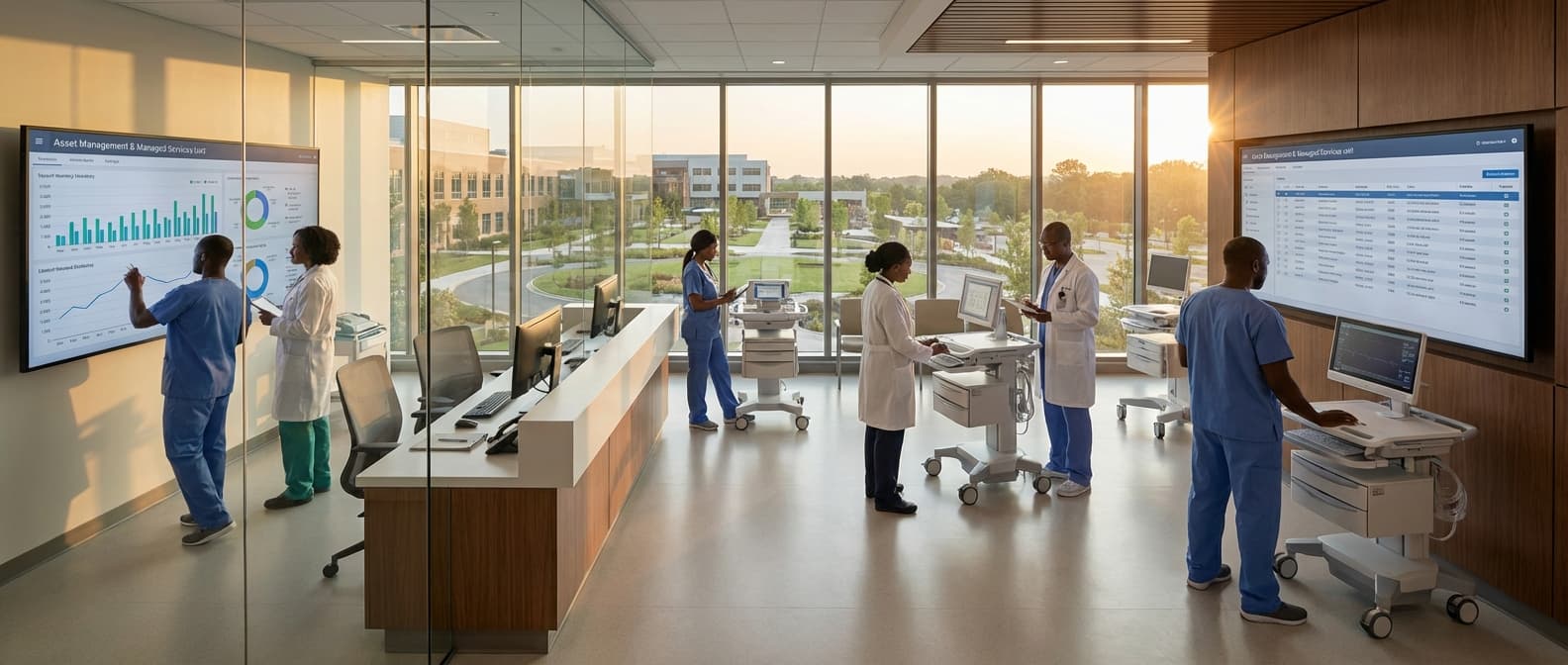
Equipment Fleet Standardization Consulting Service in Tanzania
Engineering Excellence & Technical Support
Equipment Fleet Standardization Consulting Service High-standard technical execution following OEM protocols and local regulatory frameworks.
Optimized Parts & Inventory Management
Leverage our expertise to standardize your fleet's spare parts inventory, reducing holding costs, minimizing downtime due to part unavailability, and streamlining procurement processes through consolidated purchasing power. We analyze usage patterns and recommend optimal stock levels for critical components across your diverse equipment fleet in Tanzania.
Predictive Maintenance & Reduced Downtime
Implement a standardized predictive maintenance framework tailored for Tanzanian operating conditions. By aligning maintenance schedules, tooling, and diagnostic procedures across your fleet, we significantly improve equipment reliability, predict potential failures before they occur, and maximize operational uptime, directly impacting your project timelines and profitability.
Enhanced Operator & Technician Skillsets
Standardizing your equipment fleet enables the development of targeted training programs for operators and maintenance technicians. This leads to improved proficiency, reduced errors, enhanced safety, and a more adaptable workforce capable of efficiently managing and maintaining a uniform range of equipment across various project sites in Tanzania.
What Is Equipment Fleet Standardization Consulting Service In Tanzania?
Equipment Fleet Standardization Consulting Service in Tanzania refers to a specialized advisory practice focused on optimizing the acquisition, deployment, maintenance, and disposal of an organization's mobile assets (e.g., vehicles, construction machinery, agricultural equipment) through the implementation of uniform specifications, operational protocols, and lifecycle management strategies. This service aims to enhance operational efficiency, reduce total cost of ownership (TCO), improve safety, and streamline maintenance and supply chain operations within the Tanzanian context, considering local regulatory frameworks, economic conditions, and infrastructure. The core objective is to move from a heterogeneous, often ad-hoc fleet composition to a more homogenous and strategically managed asset base.
| Who Needs Equipment Fleet Standardization Consulting Service in Tanzania? | Typical Use Cases |
|---|---|
| Large-scale agricultural enterprises requiring uniform fleets for crop cultivation, harvesting, and logistics across multiple farms. | Construction companies with diverse project requirements, seeking to rationalize equipment for improved interoperability and cost-effectiveness. |
| Mining and quarrying operations demanding robust and standardized heavy machinery for continuous extraction and material handling. | Logistics and transportation companies aiming to optimize their fleet for fuel efficiency, maintenance predictability, and driver familiarity. |
| Government agencies and parastatals responsible for public works, infrastructure development, and disaster response, requiring reliable and easily maintainable fleets. | Oil and gas exploration and production companies operating in challenging terrains, needing standardized vehicles and specialized equipment for remote operations. |
| Non-governmental organizations (NGOs) and humanitarian aid organizations operating in remote or resource-constrained areas, prioritizing ease of maintenance and parts availability. | Companies undergoing significant growth or expansion, looking to establish a strong foundation for their fleet management practices to avoid future inefficiencies. |
| Organizations facing increasing operational costs associated with fragmented and aging fleets, seeking to reduce expenditure on maintenance, fuel, and downtime. | Businesses looking to enhance safety records through standardized equipment, operator training, and predictable maintenance schedules. |
| Companies operating in sectors with strict regulatory compliance requirements related to vehicle emissions, safety, and operational standards. | Entities seeking to improve the resale value of their assets through consistent maintenance and the use of well-documented, standardized equipment. |
Key Components of Equipment Fleet Standardization Consulting Service
- Fleet Audit and Analysis: Comprehensive assessment of existing fleet, including asset types, ages, performance metrics, utilization rates, maintenance history, and operational costs.
- Needs Assessment and Requirements Definition: Identification of current and future operational requirements, driving the selection of standardized equipment categories and specifications.
- Standardization Strategy Development: Formulation of policies and procedures for equipment selection, procurement, deployment, operation, and disposal, emphasizing commonality in makes, models, and technical specifications.
- Technology Integration Planning: Recommendations for fleet management software, telematics, and other digital solutions to support standardization and data-driven decision-making.
- Procurement Process Optimization: Development of standardized procurement guidelines, tender specifications, and negotiation strategies to leverage economies of scale.
- Maintenance and Repair Optimization: Establishment of standardized preventative maintenance schedules, repair procedures, and spare parts inventory management, often favoring common platforms for reduced complexity.
- Driver/Operator Training and Safety Programs: Development of standardized training modules focused on the operation and maintenance of standardized equipment, enhancing safety and efficiency.
- Lifecycle Cost Analysis: Evaluation of the total cost of ownership for different equipment options, informing decisions on standardization and replacement cycles.
- Change Management and Implementation Support: Guidance in managing the transition to a standardized fleet, including stakeholder engagement, training, and phased rollout strategies.
- Performance Monitoring and Reporting Frameworks: Establishment of Key Performance Indicators (KPIs) and reporting mechanisms to track the effectiveness of the standardization initiative.
Who Needs Equipment Fleet Standardization Consulting Service In Tanzania?
Companies and organizations in Tanzania that operate and manage a fleet of vehicles, machinery, or other equipment face significant challenges in optimizing their operations, reducing costs, and ensuring compliance. Equipment fleet standardization consulting services are crucial for these entities to overcome these complexities and achieve greater efficiency. By standardizing equipment, businesses can streamline maintenance, improve driver/operator training, simplify parts procurement, and achieve better overall fleet utilization. This ultimately leads to cost savings, enhanced safety, and a more predictable operational environment.
| Target Customer Type | Key Departments Involved | Specific Needs Addressed |
|---|---|---|
| Mining Companies | Operations, Fleet Management, Maintenance, Procurement, Health & Safety | Standardizing heavy-duty machinery (excavators, haul trucks, loaders), optimizing parts inventory for critical equipment, ensuring safety compliance for all operational vehicles. |
| Construction Firms | Project Management, Fleet Operations, Workshop/Maintenance, Logistics | Standardizing construction vehicles (bulldozers, graders, cranes), rationalizing the number of equipment types, improving site accessibility and maneuverability, managing diverse machinery across multiple projects. |
| Logistics and Transportation Companies | Fleet Management, Operations, Driver Management, Maintenance, Procurement | Standardizing trucks, trailers, and delivery vans, optimizing fuel efficiency, streamlining driver training and certification, managing a large and dispersed fleet, ensuring regulatory compliance for commercial vehicles. |
| Agricultural Cooperatives and Large Farms | Farm Management, Operations, Mechanical Workshop, Procurement | Standardizing tractors, harvesters, and irrigation equipment, ensuring availability of spare parts, training operators on specific machinery, optimizing equipment usage during peak seasons. |
| Oil and Gas Exploration and Service Companies | Field Operations, Fleet Management, Maintenance & Reliability, HSE (Health, Safety, Environment) | Standardizing specialized vehicles (off-road trucks, ATVs), ensuring equipment suitability for harsh environments, managing complex maintenance schedules, adhering to stringent safety and environmental regulations. |
| Government Ministries and Agencies (e.g., Public Works, Transport, Agriculture) | Asset Management, Fleet Operations, Procurement, Maintenance, Compliance & Regulation | Standardizing vehicles for public service, optimizing procurement processes for efficiency, ensuring public safety and compliance, managing a diverse range of assets across various departments. |
| Telecommunications Companies (with field technicians) | Field Operations, Fleet Management, Technical Support, Procurement | Standardizing light commercial vehicles and specialized equipment for technicians, optimizing vehicle allocation and routing, ensuring technician safety in the field, managing maintenance for a mobile workforce. |
| Non-Governmental Organizations (NGOs) and Humanitarian Aid Organizations | Logistics, Field Operations, Fleet Management, Procurement, Program Management | Standardizing vehicles for diverse field operations (e.g., remote area access, medical outreach), ensuring reliability in challenging conditions, managing donor-funded assets, optimizing resource allocation. |
Who Needs Equipment Fleet Standardization Consulting Service in Tanzania?
- Organizations with diverse and unmanaged equipment fleets.
- Companies experiencing high maintenance and repair costs.
- Businesses struggling with inefficient parts inventory management.
- Entities facing challenges in training operators and maintenance staff.
- Organizations seeking to improve fleet safety and compliance.
- Businesses aiming to reduce fuel consumption and emissions.
- Companies looking to leverage technology for fleet management.
- Organizations undergoing expansion or mergers and acquisitions.
- Government agencies and parastatals managing public assets.
- NGOs and international development organizations with field operations.
Equipment Fleet Standardization Consulting Service Process In Tanzania
This document outlines the typical workflow for an Equipment Fleet Standardization Consulting Service in Tanzania, from the initial client inquiry to the final execution and handover. The process is designed to be comprehensive, ensuring client needs are met efficiently and effectively within the Tanzanian context.
| Phase | Key Activities | Deliverables | Tanzanian Context Considerations |
|---|---|---|---|
| Client expresses interest. Consultant conducts introductory meeting to understand client's fleet challenges, objectives, and scope. Site visits may be arranged. | Initial understanding of client needs, preliminary scope definition. | Building trust and rapport with local Tanzanian stakeholders. Understanding local business culture and communication styles. |
| Consultant develops a detailed proposal outlining scope, methodology, timelines, team, and fees. Negotiation of terms and conditions. | Formal proposal document, cost estimate, service level agreement (SLA). | Ensuring proposal language is clear and understandable in Tanzanian context. Understanding local pricing sensitivities and budget constraints. |
| Formal agreement signed. Project kick-off meeting with all relevant stakeholders to align on objectives, roles, and communication protocols. | Signed contract, project charter, detailed project plan. | Ensuring legal compliance with Tanzanian contract laws. Facilitating effective communication across diverse teams and potentially multiple project locations within Tanzania. |
| Gathering comprehensive data on the existing fleet: asset inventory, operational data (usage, maintenance, fuel consumption), costs, supplier information, regulatory compliance. | Fleet inventory database, operational performance metrics, cost breakdown reports. | Accessing and verifying data from remote or hard-to-reach locations in Tanzania. Navigating potential data quality issues and working with local operational staff. |
| Analyzing collected data to identify inefficiencies, redundancies, high-cost areas, compatibility issues, and areas for standardization. Benchmarking against industry best practices. | Fleet performance report, gap analysis report, risk assessment. | Understanding specific operational environments in Tanzania (e.g., road conditions, climate) that impact equipment performance. Considering availability of local maintenance and spare parts. |
| Developing recommendations for standardizing vehicle types, makes, models, specifications, spare parts, maintenance procedures, and fuel management. Defining criteria for new acquisitions. | Standardization strategy document, recommended fleet matrix, procurement guidelines. | Considering the availability of specific equipment brands and models in the Tanzanian market. Assessing local dealership networks and after-sales support. |
| Creating a detailed plan for implementing the standardization strategy, including timelines, resource allocation, budget, risk mitigation strategies, and change management approaches. | Implementation roadmap, resource plan, budget allocation, change management plan. | Developing realistic timelines considering potential logistical challenges and bureaucratic processes in Tanzania. Incorporating local labor availability and skills. |
| Testing the proposed standardization on a smaller subset of the fleet to validate the strategy and identify any unforeseen issues before full-scale rollout. | Pilot program report, lessons learned document. | Selecting a representative pilot location in Tanzania that reflects diverse operational conditions. |
| Executing the implementation plan, including procurement of standardized equipment, disposal of non-standard assets, and managing resistance to change through communication and engagement. | Implemented standardized fleet, updated asset registry, reduction in fleet complexity. | Managing the disposal of old equipment in compliance with Tanzanian environmental regulations. Engaging local communities and employees affected by changes. |
| Providing training to fleet managers, maintenance staff, and operators on new equipment, standardized procedures, and best practices for fleet management. | Training materials, training completion records, improved operational skills. | Tailoring training materials and delivery methods to suit the literacy levels and technical expertise of Tanzanian workforce. Offering training in local languages where appropriate. |
| Continuously monitoring the performance of the standardized fleet, tracking key performance indicators (KPIs), and providing regular reports to the client on progress and outcomes. | Performance dashboards, regular progress reports, evaluation of cost savings and efficiency gains. | Establishing reliable data collection mechanisms in challenging environments. Ensuring reporting formats are clear and actionable for Tanzanian management. |
| Final project review, documentation of lessons learned, handover of all project deliverables and knowledge to the client, and formal project closure. | Final project report, knowledge transfer documentation, client satisfaction survey. | Ensuring a smooth handover of responsibilities and empowering the client's internal team to sustain the standardization. Formal recognition of project completion within Tanzanian business customs. |
Equipment Fleet Standardization Consulting Service Workflow
- Inquiry and Initial Consultation
- Proposal Development and Negotiation
- Contract Signing and Project Kick-off
- Data Collection and Analysis
- Fleet Assessment and Gap Analysis
- Standardization Strategy Development
- Implementation Planning
- Pilot Implementation (Optional)
- Full-Scale Implementation and Change Management
- Training and Capacity Building
- Monitoring, Evaluation, and Reporting
- Project Closure and Handover
Equipment Fleet Standardization Consulting Service Cost In Tanzania
Providing cost estimates for equipment fleet standardization consulting services in Tanzania requires a nuanced understanding of various influencing factors. These services aim to optimize a company's fleet by standardizing equipment types, makes, models, and maintenance protocols. This leads to improved efficiency, reduced operating costs, enhanced safety, and simplified management. The cost is not a fixed figure but rather a dynamic one, heavily dependent on the scope of work, complexity of the fleet, duration of the project, and the experience and reputation of the consulting firm. In Tanzania, these services are typically quoted in Tanzanian Shillings (TZS), though international firms might also use USD. Key pricing factors include the size and diversity of the existing fleet, the level of detail required in the analysis (e.g., operational data, maintenance records, fuel consumption), the number of consulting hours dedicated, travel and accommodation expenses within Tanzania, and the specific deliverables expected (e.g., detailed reports, implementation plans, training materials).
| Service Component/Complexity | Estimated Cost Range (TZS) | Notes |
|---|---|---|
| Basic Fleet Assessment & Recommendation (Small to Medium Fleet, Limited Scope) | 15,000,000 - 40,000,000 TZS | Covers initial assessment, identification of common equipment types, and high-level recommendations. |
| Comprehensive Fleet Standardization Study (Medium to Large Fleet, Detailed Analysis) | 40,000,000 - 100,000,000 TZS | Includes in-depth data analysis, operational efficiency review, TCO (Total Cost of Ownership) analysis, and detailed implementation roadmap. |
| Strategic Fleet Overhaul with Implementation Support (Large, Complex Fleet, Full Lifecycle) | 100,000,000+ TZS | Encompasses full strategic planning, procurement strategy, change management, and ongoing support for implementation. Costs can escalate significantly based on project duration and complexity. |
| Hourly Consulting Rate (Expert) | 300,000 - 800,000+ TZS per hour | Applicable for ad-hoc advice, specific problem-solving, or extended projects where daily/project rates are not feasible. Rate depends on consultant's seniority and specialization. |
| Travel & Accommodation (Per Day/Project) | 150,000 - 500,000+ TZS | Covers flights, vehicle hire, accommodation, and meals for consultants on assignment within Tanzania. |
Key Factors Influencing Equipment Fleet Standardization Consulting Costs in Tanzania
- Scope of Work: The breadth and depth of the standardization process. This can range from a high-level assessment to a comprehensive overhaul of the entire fleet strategy.
- Fleet Size and Diversity: Larger and more varied fleets (e.g., trucks, excavators, loaders, specialized vehicles) will naturally incur higher costs due to the increased complexity of analysis and recommendations.
- Data Availability and Quality: The ease with which the consultant can access accurate and comprehensive data on the current fleet's performance, maintenance, and operational costs. Poor data quality can increase investigation time and cost.
- Consultant's Expertise and Reputation: Highly experienced and reputable consulting firms with a proven track record in Tanzania or similar African markets will command higher fees.
- Project Duration: The estimated time required to complete the assessment, analysis, recommendation development, and potential implementation support.
- Deliverables Required: The specific outputs expected from the consultancy, such as detailed reports, strategic plans, procurement guidelines, training modules, or ongoing support.
- Travel and Accommodation: If the consultants are based outside the client's primary location, costs associated with travel, accommodation, and per diems within Tanzania will be factored in.
- Technological Requirements: The need for specialized software or tools for data analysis, simulation, or reporting.
- Level of Client Involvement: The extent to which the client's internal team can participate in data collection, analysis, and decision-making can influence the consultant's time commitment.
Affordable Equipment Fleet Standardization Consulting Service Options
Our Affordable Equipment Fleet Standardization Consulting Service offers strategic guidance and implementation support to help businesses optimize their equipment fleets. By standardizing your equipment, you can unlock significant cost savings through reduced maintenance, improved operational efficiency, and streamlined procurement. We provide tailored solutions that fit your budget and business objectives, ensuring a strong return on investment. Our service focuses on identifying opportunities for consolidation, negotiating better purchasing power, and implementing best practices for equipment management and utilization.
| Cost-Saving Strategy | Description | Impact on Fleet |
|---|---|---|
| Reduced Maintenance Costs | Standardizing on fewer equipment models leads to simplified training for maintenance staff, reduced parts inventory, and bulk purchasing discounts for common parts. | Lower repair expenses, increased equipment uptime, and reduced labor costs for repairs. |
| Improved Operational Efficiency | Operators become proficient with a limited set of equipment, reducing training time and errors. Easier inter-fleet deployment and job sharing. | Faster task completion, reduced downtime due to operator unfamiliarity, and better resource allocation. |
| Streamlined Procurement & Negotiation | Consolidating purchases across fewer models and manufacturers allows for greater negotiation leverage with vendors, leading to better pricing and terms. | Lower acquisition costs for new equipment and potentially better service contracts. |
| Optimized Parts Inventory | Fewer unique parts are required, reducing the capital tied up in inventory, minimizing storage space needs, and decreasing the risk of obsolescence. | Lower inventory holding costs, reduced waste from expired or unused parts, and improved parts availability. |
| Simplified Training & Skill Development | Technicians and operators require less training on a wider variety of equipment, leading to faster onboarding and more versatile staff. | Reduced training expenses, increased workforce flexibility, and quicker deployment of personnel. |
| Enhanced Resale Value | Standardized equipment is often more recognizable and in higher demand on the used market, potentially leading to better resale values. | Increased capital recovery upon equipment disposal. |
Value Bundles
- {"title":"Basic Standardization Assessment","description":"An initial analysis of your current fleet to identify obvious standardization opportunities, potential cost savings, and a roadmap for implementation. Ideal for smaller fleets or those new to standardization.","price_point":"Entry-Level"}
- {"title":"Standardization & Procurement Optimization","description":"Includes the Basic Assessment plus strategic vendor negotiation, development of procurement policies, and recommendations for preferred equipment models. Aims to maximize purchasing power and reduce acquisition costs.","price_point":"Mid-Range"}
- {"title":"Full Fleet Standardization & Lifecycle Management","description":"A comprehensive package covering fleet assessment, standardization strategy, procurement optimization, maintenance program alignment, disposal strategies, and ongoing performance monitoring. Designed for businesses seeking complete fleet overhaul and long-term efficiency.","price_point":"Premium"}
- {"title":"Customizable Solutions","description":"We can tailor a service package to meet your specific needs, budget, and fleet size. Contact us for a personalized consultation.","price_point":"Variable"}
Verified Providers In Tanzania
In Tanzania, navigating the healthcare landscape to find verified providers is crucial for ensuring quality and trustworthy medical services. Franance Health stands out as a leading organization dedicated to credentialing and assuring the standards of healthcare professionals. Their rigorous vetting process and commitment to excellence make their accredited providers the best choice for individuals seeking reliable healthcare in Tanzania.
| Category | Franance Health Verification Process | Benefits for Patients |
|---|---|---|
| Licensing and Registration | Verification of current and valid medical licenses and registrations with relevant Tanzanian regulatory bodies. | Ensures providers are legally authorized to practice and meet national standards. |
| Educational Background | Thorough review of academic transcripts, degrees, and certifications from accredited institutions. | Confirms a strong foundation in medical knowledge and specialized training. |
| Professional Experience | Scrutiny of work history, practice affiliations, and peer references. | Validates practical skills and years of hands-on experience. |
| Continuing Professional Development | Assessment of ongoing training and participation in medical education programs. | Guarantees providers stay updated with the latest medical advancements and best practices. |
| Ethical Conduct and Disciplinary History | Checks for any past disciplinary actions or malpractice claims. | Protects patients by ensuring providers maintain high ethical standards and have a clean professional record. |
Why Choose Franance Health Verified Providers?
- Rigorous Credentialing: Franance Health employs a multi-faceted credentialing process that meticulously verifies the qualifications, licenses, and experience of healthcare professionals.
- Commitment to Quality Care: Their verification ensures providers adhere to high ethical and professional standards, prioritizing patient well-being and effective treatment.
- Enhanced Patient Safety: By choosing Franance Health verified providers, patients gain peace of mind knowing they are receiving care from individuals who meet established benchmarks for competence and safety.
- Access to Expertise: Franance Health's network includes a diverse range of specialists and general practitioners, ensuring patients can find the right expertise for their specific health needs.
- Trust and Reliability: The Franance Health accreditation serves as a mark of trust, signifying that a provider has undergone thorough scrutiny and consistently demonstrates a commitment to quality.
Scope Of Work For Equipment Fleet Standardization Consulting Service
This Scope of Work (SOW) outlines the consulting services to be provided for the standardization of the Client's equipment fleet. The objective is to develop and implement a comprehensive strategy for fleet standardization, focusing on technical specifications, operational efficiency, cost reduction, and improved maintenance practices. The consulting services will include assessment, analysis, recommendation, and documentation of standardized equipment types, models, and associated technical specifications.
| Phase | Activities | Deliverables | Timeline (Weeks) |
|---|---|---|---|
| Phase 1: Assessment and Analysis | Review current fleet inventory, usage patterns, and maintenance records. Identify existing equipment types, brands, and models. Analyze operational requirements and business needs for different equipment categories. Conduct stakeholder interviews (operations, maintenance, procurement). | Current Fleet Inventory Report. Usage Pattern Analysis. Stakeholder Needs Assessment Report. | 4 |
| Phase 2: Standardization Strategy Development | Define standardization criteria (performance, reliability, cost, safety, environmental impact). Research and identify preferred equipment categories, types, and models. Develop technical specification templates for each standardized equipment type. Evaluate potential vendors and their offerings. | Standardization Criteria Document. Preferred Equipment Categories and Models List. Technical Specification Templates (Draft). Vendor Research Summary. | 6 |
| Phase 3: Technical Specification Finalization | Refine and finalize technical specifications for each standardized equipment type. Incorporate feedback from stakeholders. Define performance metrics, maintenance requirements, and safety features. Develop a roadmap for phased implementation of the standardized fleet. | Finalized Technical Specifications for Each Equipment Type. Implementation Roadmap. Standardization Policy and Procedures Document. | 5 |
| Phase 4: Implementation Support and Documentation | Provide guidance on procurement processes for standardized equipment. Assist in developing training materials for operators and maintenance personnel. Develop a comprehensive fleet management plan incorporating standardization. Finalize all project documentation. | Procurement Guidance Document. Training Material Outlines. Final Fleet Management Plan. Project Closure Report. | 5 |
Key Objectives of Fleet Standardization
- Enhance operational efficiency through simplified training and maintenance.
- Reduce overall fleet acquisition and operating costs.
- Improve parts inventory management and reduce stock levels.
- Streamline maintenance procedures and increase equipment uptime.
- Facilitate better negotiation power with suppliers.
- Ensure compliance with safety and environmental regulations.
- Enable data-driven decision-making for future fleet investments.
Service Level Agreement For Equipment Fleet Standardization Consulting Service
This Service Level Agreement (SLA) outlines the commitment of [Consulting Firm Name] (hereinafter referred to as 'Provider') to its client, [Client Name] (hereinafter referred to as 'Client'), regarding the provision of Equipment Fleet Standardization Consulting Services. This SLA specifically addresses response times for support requests and guarantees regarding the availability and performance of delivered recommendations and plans.
| Service Element | Target Response Time | Definition & Scope | Uptime Guarantee / Performance Metric | Remedy for Failure |
|---|---|---|---|---|
| Acknowledgement of Support Request (Non-Emergency) | Within 4 business hours | Initial confirmation of receipt and assignment of a consultant for non-critical issues. | N/A | Escalation to senior consultant if not acknowledged within the specified time. |
| Response to Support Request (Non-Emergency) | Within 1 business day | Provision of an initial assessment, proposed next steps, or a request for further information to address the client's inquiry. | N/A | Client may request escalation. Provider will provide a dedicated point of contact for resolution. |
| Resolution of Critical Issues / Clarifications | Within 8 business hours | For urgent issues that directly impede the progress of the standardization project or require immediate clarification to proceed. This includes clarification of deliverables or critical project roadblocks. | N/A | If resolution is not achieved, a dedicated senior consultant will be assigned to expedite the process. Potential for additional advisory hours at a reduced rate if project delays are significant. |
| Availability of Developed Recommendations & Plans | 100% | The developed strategic documents, implementation plans, and associated deliverables will be accurate, comprehensive, and fit for purpose as defined in the project scope. | N/A | If a deliverable is found to be significantly inaccurate or incomplete due to Provider error, it will be revised and re-submitted at no additional cost within 5 business days of notification. |
| Timeliness of Scheduled Deliverables | As per Project Schedule | All agreed-upon milestones and deliverables will be submitted by their scheduled dates as outlined in the Project Plan. | N/A | Any delay exceeding 3 business days requires a written explanation and a revised delivery date. For delays exceeding 10 business days due to Provider fault, a 5% discount on the next invoice milestone will be applied. |
| Availability of Consultant for Scheduled Meetings | 100% | The designated consultant will be available and punctual for all pre-scheduled meetings. | N/A | If the consultant is more than 10 minutes late without prior notification, the meeting will be rescheduled at the consultant's earliest convenience, and the Client will receive priority scheduling for future meetings. |
Key Service Components
- Scope of Services: The Provider will deliver comprehensive consulting services aimed at developing and implementing a standardized equipment fleet strategy for the Client. This includes analysis, recommendation development, implementation planning, and documentation.
- Service Hours: Standard business hours are defined as Monday to Friday, 8:00 AM to 6:00 PM [Client's Time Zone], excluding national holidays.
- Support Channels: Client support will be primarily accessed via email and scheduled virtual meetings. Emergency support can be initiated via phone.
- Reporting: Regular progress reports will be provided as outlined in the Master Service Agreement (MSA).
- Confidentiality: Both parties agree to maintain strict confidentiality regarding all proprietary information exchanged during the engagement.
Frequently Asked Questions

Ready when you are
Let's scope your Equipment Fleet Standardization Consulting Service in Tanzania project in Tanzania.

Scaling healthcare logistics and technical systems across the entire continent.