
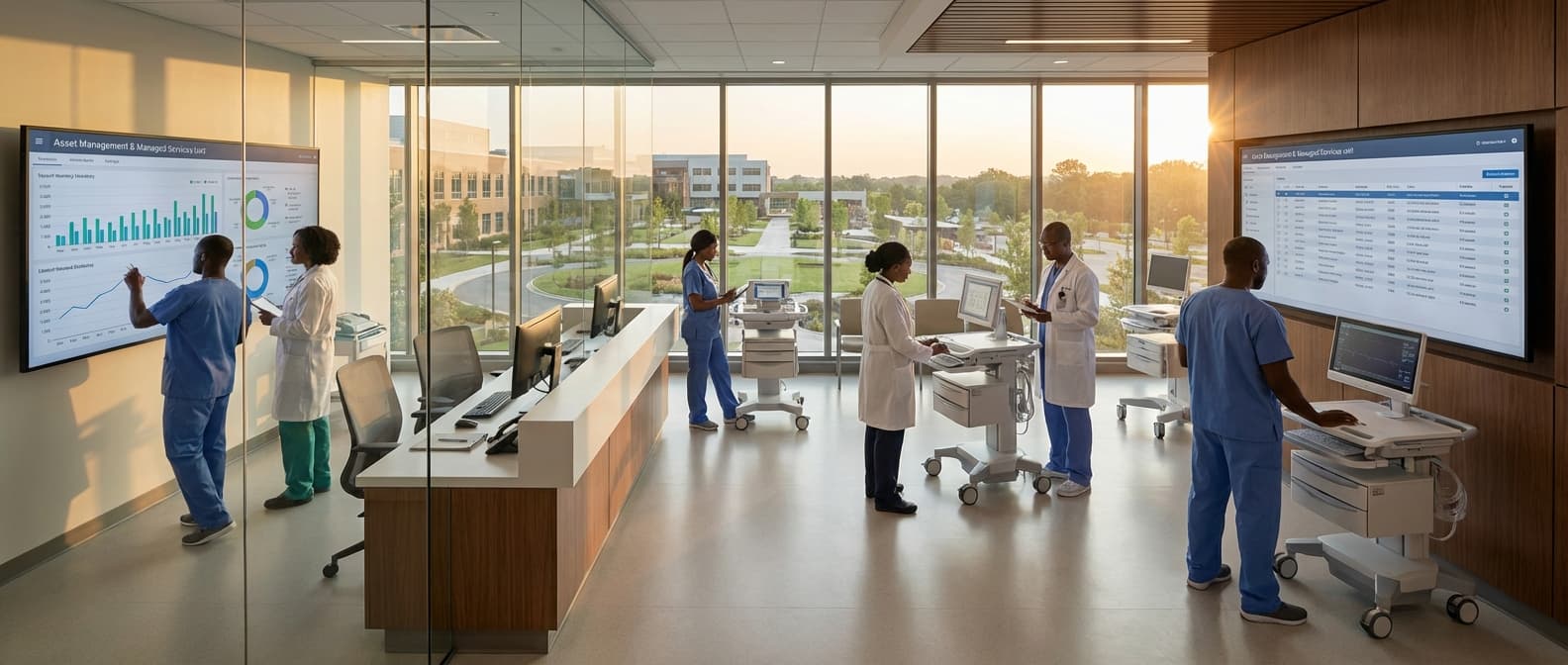
CMMS Setup & Configuration Service in Tanzania
Engineering Excellence & Technical Support
CMMS Setup & Configuration Service High-standard technical execution following OEM protocols and local regulatory frameworks.
Localized CMMS Integration & Data Migration
Tailoring CMMS to Tanzanian operational standards and industry regulations, ensuring seamless data migration from legacy systems with minimal disruption and maximum data integrity.
Customizable Reporting & Analytics Framework
Developing bespoke reporting dashboards and analytics modules within your CMMS to track key performance indicators (KPIs) specific to Tanzanian asset management needs, driving informed decision-making.
Scalable Cloud & On-Premise Deployment Options
Offering flexible CMMS deployment strategies, from secure cloud-based solutions optimized for Tanzanian internet infrastructure to robust on-premise installations, catering to diverse business requirements and budgets.
What Is Cmms Setup & Configuration Service In Tanzania?
A Computerized Maintenance Management System (CMMS) Setup & Configuration Service in Tanzania refers to the specialized professional service focused on the deployment, customization, and initial operationalization of a CMMS software solution within organizations located in Tanzania. This service is crucial for ensuring that a CMMS is not merely installed but is tailored to the unique operational workflows, asset inventories, maintenance strategies, and regulatory requirements prevalent in the Tanzanian industrial and commercial landscape. It encompasses a comprehensive approach to translate an organization's maintenance objectives into a functional and effective CMMS platform, facilitating optimized asset management, proactive maintenance scheduling, efficient work order management, and robust data-driven decision-making.
| Who Needs CMMS Setup & Configuration Service in Tanzania? | Typical Use Cases in Tanzania | |||||||
|---|---|---|---|---|---|---|---|---|
| Manufacturing & Industrial Plants: Facilities involved in production, processing, and assembly, requiring robust asset upkeep for machinery and production lines (e.g., food and beverage, textiles, mining, cement). | Oil & Gas Sector: Upstream, midstream, and downstream operations with critical infrastructure and high-risk assets requiring stringent maintenance protocols and safety compliance. | Energy & Utilities: Power generation plants (thermal, hydro, renewable), water treatment facilities, and distribution networks where asset reliability directly impacts public services. | Telecommunications: Management of cell towers, base stations, and associated infrastructure to ensure continuous service delivery. | Transportation & Logistics: Fleet maintenance for trucking companies, railway operators, and port authorities managing a large number of vehicles, vessels, and handling equipment. | Healthcare Facilities: Hospitals and clinics needing to maintain medical equipment, building systems, and infrastructure for patient safety and operational continuity. | Hospitality & Real Estate: Large hotels, commercial buildings, and residential complexes requiring efficient management of HVAC, plumbing, electrical systems, and building amenities. | Government & Public Sector: Municipalities, infrastructure agencies, and public works departments managing public assets and facilities. | Agricultural Sector: Large-scale farms and agro-processing plants managing agricultural machinery, irrigation systems, and processing equipment. |
| Implementing a New CMMS: Organizations transitioning from manual or spreadsheet-based maintenance tracking to a digital solution. | Upgrading or Migrating CMMS: Businesses moving to a newer version of their existing CMMS or migrating from one CMMS platform to another. | Optimizing Existing CMMS: Companies seeking to enhance the functionality and effectiveness of their current CMMS by refining workflows, improving data accuracy, or implementing advanced features. | Establishing Proactive Maintenance Programs: Setting up preventive and predictive maintenance schedules to minimize unplanned downtime and extend asset lifespan. | Improving Work Order Efficiency: Streamlining the work order process from initiation to completion to enhance technician productivity and response times. | Enhancing Inventory Control: Implementing robust spare parts management to reduce carrying costs and prevent stockouts of critical components. | Ensuring Regulatory Compliance: Configuring the CMMS to meet industry-specific safety, environmental, and operational regulations applicable in Tanzania. | Data-Driven Decision Making: Developing customized reports and KPIs to monitor maintenance performance, identify trends, and inform strategic asset management decisions. | Centralizing Maintenance Operations: Consolidating maintenance activities across multiple sites or departments into a single, unified system. |
Key Components of CMMS Setup & Configuration Service:
- Needs Assessment and Requirements Gathering: Detailed analysis of the client's current maintenance processes, asset register, departmental structure, reporting needs, and specific operational challenges in the Tanzanian context. This stage identifies critical functionalities and customization requirements.
- System Installation and Deployment: Installation of the chosen CMMS software on the client's infrastructure (on-premise) or cloud environment, ensuring compatibility with existing IT systems and adhering to security protocols.
- Asset Register Population and Structuring: Cataloging and inputting all relevant asset information, including asset hierarchy, location, criticality, warranty details, and historical maintenance data. This often involves data migration from existing spreadsheets or legacy systems.
- Preventive Maintenance (PM) Strategy Development and Configuration: Defining PM schedules based on asset type, manufacturer recommendations, usage, and operational history. This includes setting up task lists, required labor, parts, and frequency for recurring maintenance activities.
- Work Order Management Workflow Design: Configuring the system to align with the organization's specific work order lifecycle, including request initiation, approval processes, work assignment, execution, completion, and closure. This also involves defining priority levels and escalation procedures.
- Parts and Inventory Management Setup: Configuring the CMMS to track spare parts inventory, including stock levels, reorder points, supplier information, and costs. This facilitates efficient procurement and reduces downtime due to parts unavailability.
- User Role and Permissions Configuration: Defining different user roles within the CMMS (e.g., maintenance technicians, supervisors, managers, administrators) and assigning appropriate access levels and permissions to ensure data security and operational integrity.
- Reporting and Dashboard Customization: Designing and configuring custom reports and dashboards to provide actionable insights into maintenance performance, asset health, costs, and key performance indicators (KPIs) relevant to Tanzanian businesses.
- Integration with Existing Systems: Where applicable, integrating the CMMS with other enterprise systems such as Enterprise Resource Planning (ERP), SCADA, or Building Management Systems (BMS) to ensure seamless data flow and unified operations.
- User Training and Knowledge Transfer: Providing comprehensive training to end-users and administrators on how to effectively utilize the CMMS for their respective roles. This ensures user adoption and maximizes the return on investment.
- Testing and Validation: Thorough testing of all configured modules and workflows to ensure functionality, accuracy, and adherence to defined requirements before full deployment.
- Post-Implementation Support and Optimization: Offering ongoing support, troubleshooting, and periodic reviews to further optimize CMMS performance and adapt to evolving business needs.
Who Needs Cmms Setup & Configuration Service In Tanzania?
CMMS (Computerized Maintenance Management System) setup and configuration services are vital for organizations in Tanzania aiming to streamline their maintenance operations, reduce downtime, and optimize asset lifespan. This specialized service is crucial for businesses that recognize the limitations of manual or outdated maintenance tracking and are ready to invest in a robust digital solution. Our services cater to a diverse range of industries and departments that heavily rely on the continuous and efficient functioning of their physical assets.
| Department | Why CMMS Setup & Configuration is Essential | Key Benefits |
|---|---|---|
| Maintenance Department | Centralizes work orders, scheduling, and preventative maintenance tasks. Improves efficiency and reduces reactive repairs. | Reduced downtime, optimized workforce allocation, improved safety, better spare parts management. |
| Operations Department | Ensures asset availability and reliability, directly impacting production output and service delivery. | Increased uptime, consistent quality of service/product, reduced operational risks. |
| Engineering Department | Provides data for asset performance analysis, failure prediction, and life cycle cost management. | Informed decision-making, proactive maintenance strategies, extended asset lifespan, cost savings. |
| Procurement & Stores Department | Optimizes spare parts inventory, ensures availability of critical components, and tracks usage. | Reduced inventory costs, minimized stock-outs, efficient ordering processes. |
| Finance & Accounting Department | Tracks maintenance costs accurately, provides data for budgeting and ROI analysis of assets. | Accurate cost allocation, improved budgeting, justification for capital expenditures. |
| Health, Safety, and Environment (HSE) Department | Ensures compliance with safety regulations through documented maintenance procedures and inspections. | Improved safety records, compliance assurance, reduced risk of incidents. |
Target Customers in Tanzania:
- Manufacturing Plants (food & beverage, textiles, chemicals, etc.)
- Mining Operations (active mines and processing facilities)
- Power Generation and Utilities Companies
- Oil & Gas Exploration and Production Facilities
- Transportation and Logistics Companies (fleet management)
- Hospitality Sector (large hotels and resorts with extensive facilities)
- Healthcare Institutions (hospitals and clinics with complex equipment)
- Water Treatment and Wastewater Management Facilities
- Construction Companies (managing heavy machinery and project sites)
- Agricultural Cooperatives and Large-scale Farms (machinery and irrigation systems)
Cmms Setup & Configuration Service Process In Tanzania
This document outlines the standard workflow for our CMMS (Computerized Maintenance Management System) Setup & Configuration Service in Tanzania. It details the process from the initial client inquiry through to the successful execution and handover of the configured CMMS.
| Phase | Stage | Description | Key Activities | Deliverables/Outcomes | Typical Duration (Tanzania Context) | ||||||
|---|---|---|---|---|---|---|---|---|---|---|---|
| 1: Inquiry & Scoping | Initial Contact | The client expresses interest in CMMS setup and configuration services. | Receive inquiry (email, phone, website). Initial needs assessment discussion. Understand client's maintenance challenges, goals, and current systems. Identify key stakeholders. | Understanding of client's requirements. Preliminary scope definition. | 1-3 business days | ||||||
| 1: Inquiry & Scoping | Detailed Needs Analysis | In-depth understanding of the client's specific operational and maintenance requirements. | On-site or remote discovery sessions. Documenting existing workflows, asset inventory, spare parts management, work order processes, reporting needs, user roles and permissions. Identify any specific regulatory compliance requirements relevant to Tanzania. | Comprehensive Requirements Document. Asset Inventory Template. Workflow Maps. | 3-7 business days | ||||||
| 2: Proposal & Agreement | Proposal Development | Presenting a tailored solution based on the client's requirements. | Develop a detailed proposal outlining the scope of work, proposed CMMS features, customization plan, project timeline, team roles, pricing, and terms of service. Factor in local Tanzanian context for implementation challenges and opportunities. | Formal Project Proposal. | 3-5 business days | ||||||
| 2: Proposal & Agreement | Contract Negotiation & Signing | Formalizing the engagement and securing commitment. | Client review of proposal. Negotiation of terms. Signing of the Service Agreement/Contract. | Signed Service Agreement. | 2-5 business days | ||||||
| 3: Data Collection & Preparation | Data Gathering | Collecting all necessary data to populate the CMMS. | Client provides asset lists (make, model, serial number, installation date, location). Gathering information on spare parts inventory, maintenance procedures, historical maintenance data, vendor information, user details. Data cleansing and standardization is crucial, considering local language nuances if applicable. | Raw Data Files (spreadsheets, documents). | 5-15 business days (highly dependent on client's data readiness) | 3: Data Collection & Preparation | Data Import & Validation | Organizing and importing client data into the CMMS platform. | Data mapping and structuring. Importing data into the CMMS. Initial data validation to ensure accuracy and completeness. | Imported Data into Staging Environment. | 3-7 business days |
| 4: CMMS Configuration & Customization | System Setup | Initial setup of the CMMS environment. | Creating user accounts and assigning roles/permissions. Configuring basic system settings (language, currency, date formats - considering Tanzanian standards). | Configured User Accounts and Basic Settings. | 2-4 business days | ||||||
| 4: CMMS Configuration & Customization | Module Configuration | Tailoring core CMMS modules to client's workflows. | Configuring asset hierarchy, preventive maintenance schedules, work order types, labor resources, cost centers, and reporting dashboards. Customizing forms and fields to capture specific information relevant to Tanzanian operations (e.g., specific safety regulations, local terminology). | Configured Core CMMS Modules. | 7-15 business days | ||||||
| 4: CMMS Configuration & Customization | Customization & Integration (if applicable) | Implementing specific customizations or integrations. | Developing custom reports, workflows, or integrations with other existing systems (e.g., ERP, SCADA) if required. Ensuring compatibility with local IT infrastructure and regulations. | Customized Features and Integrated Systems (if applicable). | 5-20 business days (variable) | ||||||
| 5: Testing & Validation | User Acceptance Testing (UAT) | Client verifies the configured CMMS meets their requirements. | Client key users test the system functionality against predefined scenarios. Providing feedback on any issues or required adjustments. Ensuring the system is intuitive for Tanzanian users. | UAT Test Cases. UAT Feedback Log. | 5-10 business days | ||||||
| 5: Testing & Validation | Bug Fixing & Refinement | Addressing issues identified during UAT. | Resolving any bugs or defects reported during UAT. Making minor adjustments based on client feedback. | Resolved Issues. Refined CMMS Configuration. | 2-5 business days | ||||||
| 6: Training & Deployment | User Training | Empowering users to effectively utilize the CMMS. | Conducting training sessions for different user groups (operators, supervisors, administrators). Training materials developed considering local language preferences and literacy levels. Focus on practical application of CMMS features relevant to Tanzanian maintenance practices. | Trained Users. Training Manuals. | 3-7 business days | ||||||
| 6: Training & Deployment | Deployment & Go-Live Preparation | Finalizing the system for live operation. | Final data migration. System readiness checks. Communication plan for go-live. | Production CMMS Environment Ready. | 1-3 business days | ||||||
| 7: Go-Live & Post-Implementation Support | Go-Live | The CMMS becomes operational. | Official launch of the configured CMMS. Intensive support during the initial period. | Live CMMS System. | 1 day | ||||||
| 7: Go-Live & Post-Implementation Support | Post-Go-Live Support | Providing ongoing assistance and ensuring smooth operation. | Addressing any immediate post-go-live issues. Monitoring system performance. Providing ad-hoc support and answering user queries. Establishing a clear support escalation process. | Stable CMMS Operation. Resolved Post-Go-Live Issues. | 2-4 weeks (intensive phase) | ||||||
| 7: Go-Live & Post-Implementation Support | Handover & Ongoing Support | Formal handover and outlining long-term support. | Final project review. Handover of all documentation and access. Discussing ongoing support agreements and future enhancements. | Project Closure Report. Agreed Ongoing Support Plan. | 1 business day (closure) |
CMMS Setup & Configuration Service Workflow in Tanzania
- Phase 1: Inquiry & Scoping
- Phase 2: Proposal & Agreement
- Phase 3: Data Collection & Preparation
- Phase 4: CMMS Configuration & Customization
- Phase 5: Testing & Validation
- Phase 6: Training & Deployment
- Phase 7: Go-Live & Post-Implementation Support
Cmms Setup & Configuration Service Cost In Tanzania
Setting up and configuring a Computerized Maintenance Management System (CMMS) in Tanzania is a crucial step for businesses aiming to optimize their asset management and maintenance operations. The cost of these services can vary significantly due to several factors, making it essential for organizations to understand these elements when budgeting. This discussion will outline the key pricing factors and provide estimated cost ranges in Tanzanian Shillings (TZS).
| Service Component | Estimated Cost Range (TZS) | Notes |
|---|---|---|
| Basic CMMS Setup & Configuration (Small Business/Limited Assets) | 2,000,000 - 8,000,000 | Includes initial setup, basic asset entry, standard work order configuration, and introductory training for a few users. |
| Standard CMMS Setup & Configuration (Medium Business/Moderate Assets) | 8,000,000 - 25,000,000 | Covers more extensive asset management, preventive maintenance schedules, inventory integration, and comprehensive user training. |
| Advanced CMMS Setup & Configuration (Large Enterprise/Complex Operations) | 25,000,000 - 70,000,000+ | Involves complex integrations, custom workflows, extensive data migration, specialized module implementation, and tailored training programs. |
| Data Migration Services | 1,000,000 - 10,000,000+ | Varies based on the volume, complexity, and cleanliness of the data. |
| Custom Development/Integration | 3,000,000 - 20,000,000+ | Per project basis, depending on the scope and technical requirements. |
| User Training (per session/user) | 200,000 - 1,000,000 | Can be on-site or remote, group or individual. |
| Ongoing Technical Support (Annual/Monthly) | 1,500,000 - 10,000,000+ | Depends on the service level agreement (SLA) and the provider. |
Key Factors Influencing CMMS Setup & Configuration Costs in Tanzania
- CMMS Software Licensing/Subscription Model: The fundamental cost driver is the type of CMMS software chosen. Options range from perpetual licenses (a one-time purchase) to subscription-based models (monthly or annual fees). Cloud-based (SaaS) solutions are increasingly popular, offering flexibility but with ongoing costs. The number of users, modules required, and advanced features directly impact licensing fees.
- Implementation Complexity: The complexity of the setup and configuration is a major determinant of cost. This includes the number of assets to be managed, the intricacy of maintenance workflows, the need for custom integrations with existing systems (e.g., ERP, IoT devices), and the level of customization required for reporting and dashboards.
- Data Migration: If an organization is migrating data from a legacy system or spreadsheets, the effort involved in cleaning, formatting, and importing this data into the new CMMS can significantly add to the cost. The volume and quality of existing data play a crucial role.
- Customization and Development: Beyond standard configuration, if specific functionalities or reports need to be custom-developed to meet unique business requirements, this will incur additional development costs.
- Training and Support: The extent of training required for different user groups (technicians, supervisors, administrators) and the level of ongoing technical support needed will influence the overall service cost. This can include on-site training, remote sessions, and dedicated support packages.
- On-site vs. Remote Implementation: While remote implementation can sometimes be more cost-effective, on-site services might be preferred or necessary for certain aspects, especially for initial setup, complex integrations, or hands-on training. Travel and accommodation expenses for consultants would apply to on-site services.
- Provider's Expertise and Reputation: Experienced and reputable CMMS implementation partners in Tanzania may command higher fees due to their proven track record, specialized knowledge, and ability to deliver efficient solutions. Smaller or newer providers might offer more competitive pricing but could potentially have limitations in scope or expertise.
- Number of Modules and Features: Most CMMS software offers various modules (e.g., preventive maintenance, work order management, inventory control, asset tracking, reporting). The more modules and advanced features an organization requires, the higher the overall cost.
Affordable Cmms Setup & Configuration Service Options
Implementing a Computerized Maintenance Management System (CMMS) is crucial for optimizing maintenance operations, reducing downtime, and controlling costs. However, the initial setup and configuration can be a significant hurdle, especially for organizations with limited budgets. Our Affordable CMMS Setup & Configuration Service Options are designed to provide comprehensive support at a cost-effective price point. We offer flexible packages and value bundles to ensure you get the most out of your CMMS investment without breaking the bank. Discover how our tailored approach can streamline your setup process and unlock significant cost savings.
| Service Tier | Description | Key Features | Estimated Cost Range (USD) | Cost-Saving Strategy |
|---|---|---|---|---|
| Basic Setup | Core CMMS installation and fundamental configuration. | System Install, User Setup, Asset Entry (limited), Work Order Module. | $500 - $1,500 | Focuses on essential functionality to get you operational quickly, avoiding unnecessary complexity and cost. |
| Standard Value Bundle | Balanced configuration for growing organizations. | Basic Features + Asset Hierarchy, PM Scheduling, Basic Reports, Initial Training. | $1,500 - $3,500 | Bundled services offer a discount compared to individual component pricing. Pre-configured PM schedules reduce manual setup time. |
| Premium Comprehensive Bundle | Full-featured setup with advanced customization and integration. | Standard Features + Custom Reports, KPI Dashboards, Inventory Integration, Mobile CMMS, Dedicated Support. | $3,500 - $7,000+ | Maximizes ROI through advanced optimization and automation, leading to greater long-term savings. Customization ensures the CMMS perfectly fits your workflows, reducing workarounds. |
| On-Demand Support | Ad-hoc expert assistance for specific tasks. | Billed hourly or per project. | $75 - $150/hour | Avoids paying for a full-time consultant. Addresses specific needs efficiently, preventing costly errors or delays. |
| Data Migration | Assistance with transferring existing data. | Depends on data volume and complexity. | Varies ($300 - $2,000+) | Reduces risk of data loss and ensures data integrity, saving time and resources on manual data entry and cleanup. |
Our Affordable CMMS Setup & Configuration Service Options
- Basic Setup & Configuration: Ideal for smaller organizations or those with straightforward maintenance needs. Includes core system installation, user account creation, basic asset data entry, and initial work order module setup.
- Standard Value Bundle: A popular choice offering a balance of features and affordability. Includes all 'Basic' features plus advanced asset hierarchy, preventive maintenance scheduling, basic reporting, and initial training session.
- Premium Comprehensive Bundle: Our most inclusive package designed for organizations requiring extensive customization and advanced functionality. Includes all 'Standard' features plus custom report generation, KPI dashboard setup, spare parts inventory management integration, mobile CMMS configuration, and dedicated onboarding support.
- On-Demand Expert Support: Access to our CMMS specialists for specific configuration tasks, troubleshooting, or advanced feature implementation as needed. Pay only for the time you use.
- Data Migration Assistance: We can help migrate your existing maintenance data from spreadsheets or legacy systems into your new CMMS, ensuring accuracy and minimizing disruption.
Verified Providers In Tanzania
Finding reliable and ethical healthcare providers in any country can be a challenge. In Tanzania, while there are many dedicated medical professionals, navigating the system to find verified providers is crucial for ensuring quality care and avoiding potential pitfalls. Franance Health stands out as a leading entity in this regard, meticulously vetting and credentialing healthcare facilities and individual practitioners. This commitment to verification is what makes Franance Health's network the best choice for both local residents and international visitors seeking medical services in Tanzania.
| Verification Aspect | Franance Health's Approach | Benefit to Patients |
|---|---|---|
| Clinical Competence | Assesses qualifications, experience, and ongoing professional development. | Ensures diagnosis and treatment are based on up-to-date medical knowledge and skill. |
| Ethical Standards | Evaluates adherence to medical ethics, patient rights, and professional conduct. | Guarantees respectful and honest treatment, free from exploitation. |
| Facility Standards | Inspects infrastructure, equipment, hygiene, and safety protocols. | Provides a safe and well-equipped environment for medical procedures. |
| Patient Experience | Gathers feedback and assesses communication, accessibility, and satisfaction. | Leads to a more comfortable, understood, and positive healthcare journey. |
| Regulatory Compliance | Confirms adherence to all relevant Tanzanian health regulations. | Ensures legal and safe operation of healthcare services. |
Why Franance Health Providers are the Best Choice:
- Rigorous Vetting Process: Franance Health employs a comprehensive evaluation system that goes beyond basic licensing. They assess clinical expertise, patient care protocols, ethical practices, facility standards, and regulatory compliance.
- Commitment to Quality Standards: Providers associated with Franance Health are held to high, often internationally recognized, quality benchmarks. This ensures a consistent level of care, regardless of the specific facility or specialist.
- Patient-Centric Approach: The verification process emphasizes patient satisfaction and safety. Franance Health seeks out providers who demonstrate empathy, clear communication, and a dedication to patient well-being.
- Transparency and Accessibility: Franance Health aims to make finding trusted healthcare accessible. Their platform and network provide clear information about verified providers, their specializations, and their locations.
- Continuous Monitoring and Improvement: Franance Health doesn't just verify once; they engage in ongoing monitoring and encourage continuous improvement among their network providers, ensuring that standards remain high over time.
- Peace of Mind: For patients, choosing a Franance Health-verified provider offers significant peace of mind, knowing they are engaging with professionals who have met stringent criteria for competence and ethical conduct.
Scope Of Work For Cmms Setup & Configuration Service
This Scope of Work (SOW) outlines the services to be provided for the setup and configuration of a Computerized Maintenance Management System (CMMS). The objective is to establish a functional CMMS tailored to the client's specific maintenance operations, enabling efficient asset management, work order tracking, preventative maintenance scheduling, and reporting. This document details the technical deliverables and standard specifications for the successful implementation.
| Phase | Key Activities | Technical Deliverables | Standard Specifications |
|---|---|---|---|
| Requirement gathering, system assessment, data analysis, project kickoff, defining user roles and permissions. | Detailed Requirement Document, Project Plan, Data Migration Strategy, User Role Matrix. | Client representatives actively participate. Requirements documented in clear, measurable terms. Project timeline agreed upon. Data fields and formats defined. |
| Software installation (if applicable), system parameter setup, defining asset hierarchy, creating asset master data, configuring custom fields. | Installed CMMS instance, Configured System Parameters, Populated Asset Register, Defined Custom Fields. | System installed on agreed infrastructure (cloud/on-premise). Parameters match client's operational needs. Asset hierarchy reflects organizational structure. Data integrity maintained. |
| Data cleansing and validation, importing asset data, importing historical work order data (if applicable), importing spare parts inventory (if applicable). | Migrated Asset Data, Migrated Historical Work Order Data (optional), Migrated Spare Parts Inventory (optional). | Data validated for accuracy and completeness. Consistent data formatting. Successful import confirmed. Error logs documented. |
| Defining work order types and workflows, configuring approval processes, creating preventative maintenance (PM) templates, scheduling PM tasks, defining inspection checklists. | Defined Work Order Workflows, Configured Approval Processes, Developed PM Templates, Scheduled PM Tasks, Created Inspection Checklists. | Workflows align with client's maintenance processes. PM schedules based on asset criticality. Checklists comprehensive and easy to use. |
| Configuring standard reports, developing custom reports (as scoped), setting up key performance indicator (KPI) dashboards. | Configured Standard Reports, Developed Custom Reports (as scoped), KPI Dashboards. | Reports provide actionable insights. Dashboards visually represent key metrics. Data accuracy in reports is paramount. |
| Developing training materials, conducting user training sessions, user acceptance testing (UAT), system go-live, post-go-live support. | Training Materials, Trained Users, UAT Sign-off, Live CMMS Environment, Post-Go-Live Support Plan. | Training tailored to different user roles. UAT demonstrates system functionality. Smooth transition to live operation. Defined support channels and response times. |
Key Objectives
- To successfully install and configure the selected CMMS software.
- To migrate existing asset data and relevant historical maintenance information.
- To establish user roles, permissions, and workflows within the CMMS.
- To configure preventative maintenance schedules based on asset criticality and manufacturer recommendations.
- To develop standard operating procedures (SOPs) for CMMS usage and data entry.
- To provide comprehensive training to key CMMS users.
- To ensure the CMMS is aligned with the client's maintenance strategy and business goals.
Service Level Agreement For Cmms Setup & Configuration Service
This Service Level Agreement (SLA) outlines the response times and uptime guarantees for the Computerized Maintenance Management System (CMMS) Setup & Configuration Service provided by [Your Company Name] to [Client Name]. This SLA is an addendum to the Master Service Agreement (MSA) between the parties.
| Service Component | Response Time Guarantee | Uptime Guarantee | Notes |
|---|---|---|---|
| Critical Incidents (System Unavailability) | 1 Hour (during business hours, defined as [Start Time] - [End Time], [Time Zone]) | 99.5% during the configuration and setup phase. | Includes complete system inaccessibility preventing core functionality. Resolution target is 4 business hours. |
| High Priority Incidents (Significant Service Degradation) | 2 Business Hours | N/A (focus on rapid resolution during setup) | Affects a core module's functionality or a significant number of users. |
| Medium Priority Incidents (Minor Service Issues) | 4 Business Hours | N/A (focus on rapid resolution during setup) | Affects non-critical functionality or a limited number of users. |
| Low Priority Incidents (General Inquiries/Requests) | 8 Business Hours | N/A (focus on rapid resolution during setup) | Requests for information, minor configuration adjustments outside scope, or feature clarification. |
| New Feature/Module Configuration Requests (Post-Initial Setup) | As per Change Request process defined in MSA | N/A (handled as separate projects) | Any requests for new modules or significant feature additions beyond the initial scope will be addressed through a formal Change Request. |
Scope of Service
- Initial CMMS software installation and deployment.
- Configuration of core CMMS modules based on agreed requirements (e.g., asset management, work order management, preventive maintenance scheduling).
- Data migration assistance for initial data import (e.g., asset lists, user roles).
- User role and permission setup.
- Basic system customization as defined in the project scope.
- Initial user training on configured modules.
Frequently Asked Questions

Ready when you are
Let's scope your CMMS Setup & Configuration Service in Tanzania project in Tanzania.

Scaling healthcare logistics and technical systems across the entire continent.