
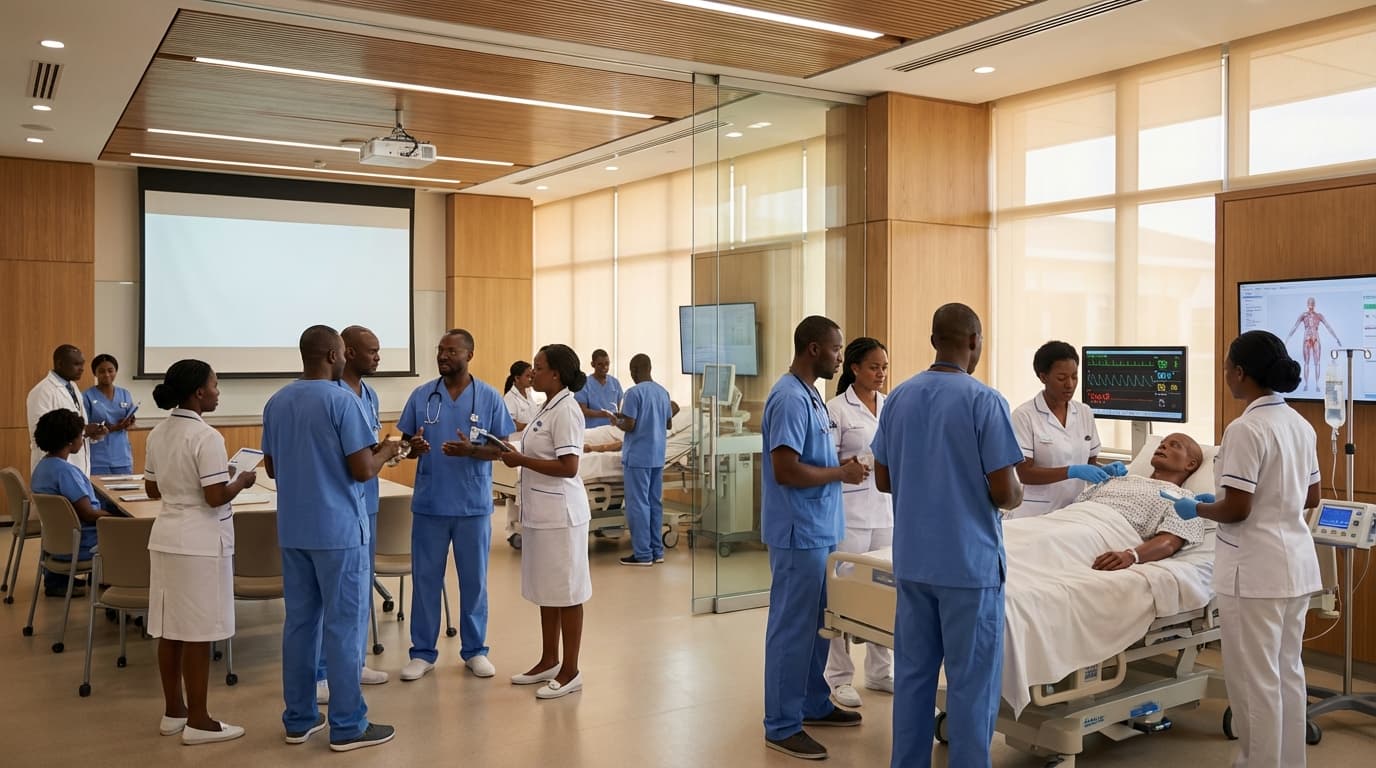
Equipment Training & Education in Sudan
Engineering Excellence & Technical Support
Comprehensive equipment training and certification programs High-standard technical execution following OEM protocols and local regulatory frameworks.
Interactive Equipment Simulators for Enhanced Practical Skills
Implementing advanced, realistic simulators for heavy machinery and critical operational equipment. This allows Sudanese trainees to gain hands-on experience in a safe, controlled environment, mastering complex procedures and troubleshooting without risking damage or injury, significantly accelerating skill acquisition and confidence.
Localized & Certified Digital Learning Modules for Accessibility
Developing and deploying comprehensive, culturally-relevant digital training modules accessible via mobile devices and low-bandwidth internet. These modules cover a wide range of equipment maintenance, operation, and safety protocols, offering certified training pathways for a dispersed workforce across Sudan, ensuring standardized knowledge and compliance.
Augmented Reality (AR) Guided Maintenance & Troubleshooting
Leveraging Augmented Reality technology to overlay real-time, step-by-step instructions and diagnostic information onto physical equipment. This empowers Sudanese technicians to perform intricate maintenance and repairs with greater accuracy and efficiency, reducing downtime and improving the longevity of vital machinery in challenging operational contexts.
What Is Equipment Training & Education In Sudan?
Equipment training and education in Sudan refers to the systematic provision of knowledge, skills, and practical experience necessary for the safe, efficient, and effective operation, maintenance, and repair of various types of machinery, tools, and systems. This service is critical for enhancing productivity, ensuring workplace safety, extending equipment lifespan, and reducing operational costs. It encompasses theoretical instruction, hands-on practice, simulation-based learning, and ongoing competency assessment. The objective is to equip individuals with the requisite understanding and abilities to interact with specialized equipment according to manufacturer specifications and industry best practices.
| Who Needs It? | Typical Use Cases | ||
|---|---|---|---|
| Industrial Workers & Technicians (Manufacturing, Oil & Gas, Mining) | Operation of heavy machinery (e.g., excavators, loaders, cranes, drilling rigs) | Maintenance and repair of production lines and processing equipment | Safe handling of specialized tools and testing apparatus |
| Healthcare Professionals (Doctors, Nurses, Technicians) | Operation and maintenance of medical diagnostic equipment (e.g., MRI, CT scanners, X-ray machines) | Use of life support systems and critical care devices | Sterilization and maintenance of surgical instruments |
| Agricultural Professionals & Farmers | Operation of tractors, harvesters, and irrigation systems | Maintenance and calibration of farm machinery | Safe use of pesticides and fertilizer application equipment |
| Construction Personnel (Engineers, Supervisors, Laborers) | Operation of construction equipment (e.g., concrete mixers, scaffolding, power tools) | Safety procedures for working with elevated platforms and heavy lifting gear | Installation and testing of building systems (electrical, plumbing) |
| IT Professionals & System Administrators | Installation, configuration, and maintenance of servers and networking hardware | Troubleshooting hardware failures | Deployment and management of specialized IT infrastructure |
| Logistics & Transportation Personnel | Operation of forklifts, cranes, and loading equipment in warehouses | Maintenance of commercial vehicles and fleet management systems | Use of specialized material handling equipment |
| Emergency Services Personnel (Firefighters, Paramedics) | Operation of specialized rescue equipment | Maintenance of emergency vehicles and communication systems | Use of medical equipment in pre-hospital settings |
Key Components of Equipment Training & Education in Sudan:
- Needs Assessment & Curriculum Development: Identifying specific training gaps and designing tailored programs.
- Theoretical Instruction: Covering principles of operation, safety regulations, troubleshooting methodologies, and maintenance procedures.
- Hands-on Practical Training: Direct engagement with equipment under supervised conditions.
- Simulation and Virtual Reality (VR) Training: Utilizing advanced technologies for risk-free practice in complex scenarios.
- On-the-Job Training (OJT): Integrating learning within the operational environment.
- Competency Assessment & Certification: Evaluating proficiency and issuing formal recognition.
- Refresher Courses & Continuous Professional Development (CPD): Ensuring knowledge remains current and skills are updated.
Who Needs Equipment Training & Education In Sudan?
Equipment training and education are crucial across various sectors and organizations in Sudan to ensure safe, efficient, and effective operation of machinery and technology. This training addresses the need for skilled personnel to operate, maintain, and troubleshoot diverse equipment, thereby enhancing productivity, reducing operational costs, minimizing safety risks, and promoting technological advancement.
| Sector/Industry | Target Customers (Organizations/Individuals) | Key Departments/Roles Requiring Training |
|---|---|---|
| Industrial & Manufacturing | Factories, Production Plants, Workshops | Machine Operators, Technicians, Supervisors, Maintenance Staff, Quality Control Personnel |
| Agricultural | Farms, Agricultural Cooperatives, Agribusinesses | Tractor Operators, Harvester Operators, Irrigation Technicians, Farm Managers, Maintenance Staff |
| Construction & Infrastructure | Construction Companies, Road Building Agencies, Real Estate Developers | Heavy Equipment Operators (excavators, bulldozers, cranes), Site Managers, Foremen, Safety Officers, Maintenance Engineers |
| Healthcare | Hospitals, Clinics, Diagnostic Centers, Laboratories | Radiology Technicians, Laboratory Technicians, Biomedical Engineers, Anesthesiologists, Nurses (operating specialized medical equipment) |
| Energy & Utilities | Power Generation Plants, Water Treatment Facilities, Oil & Gas Companies | Plant Operators, Technicians, Engineers (electrical, mechanical, chemical), Maintenance Teams, Safety Personnel |
| Transportation & Logistics | Shipping Companies, Airlines, Port Authorities, Warehousing Facilities | Forklift Operators, Crane Operators, Logistics Managers, Vehicle Maintenance Technicians, Air Traffic Controllers (equipment related) |
| Mining & Extractive Industries | Mining Companies, Oil Exploration Firms | Drilling Operators, Heavy Machinery Operators, Geologists (operating specialized geological equipment), Maintenance Technicians, Safety Supervisors |
| Information Technology & Telecommunications | Telecom Providers, IT Service Companies, Government IT Departments | Network Engineers, IT Technicians, System Administrators, Data Center Operators, Telecommunication Technicians |
| Educational Institutions & Research | Universities, Technical Colleges, Research Centers | Lab Technicians, Researchers (operating specialized scientific equipment), IT Support Staff, Workshop Instructors |
Target Customers & Departments in Sudan Requiring Equipment Training & Education
- Industrial & Manufacturing Sector
- Agricultural Sector
- Construction & Infrastructure Development
- Healthcare Sector
- Energy & Utilities Sector
- Transportation & Logistics
- Mining & Extractive Industries
- Information Technology & Telecommunications
- Educational Institutions & Research Facilities
Equipment Training & Education Process In Sudan
The equipment training and education process in Sudan, from initial inquiry to successful execution, follows a structured workflow designed to ensure effective knowledge transfer and skill development for users of various equipment. This process is crucial for maximizing equipment efficiency, ensuring safety, and minimizing operational downtime. The workflow typically involves several key stages, from understanding the client's needs to delivering comprehensive training and providing post-training support.
| Stage | Description | Key Activities | Deliverables |
|---|---|---|---|
| Inquiry & Needs Assessment | Understanding the client's specific training requirements for equipment. | Initial contact, consultation, site visits (if applicable), defining training scope and objectives. | Needs assessment report, training requirement specification. |
| Proposal & Curriculum Development | Designing a customized training program and outlining its components. | Developing training modules, lesson plans, practical exercises, and assessment methods. | Training proposal, detailed curriculum, training materials outline. |
| Logistics & Scheduling | Organizing all practical arrangements for the training delivery. | Booking venues, scheduling trainers and participants, arranging equipment and materials, travel and accommodation. | Training schedule, confirmed participant list, logistical plan. |
| Trainer Selection & Briefing | Ensuring the right expertise is available for effective training. | Identifying and selecting qualified trainers, conducting pre-training briefings. | Qualified trainer profiles, trainer briefing notes. |
| Training Execution | The actual delivery of theoretical and practical training sessions. | Lectures, demonstrations, hands-on practice, simulations, real-time operation. | Delivered training sessions, participant engagement. |
| Assessment & Evaluation | Measuring participant learning and gathering feedback. | Tests, practical evaluations, observation, participant feedback surveys. | Assessment results, participant evaluation forms. |
| Certification & Reporting | Formalizing the completion of training and documenting outcomes. | Issuing certificates, preparing training reports. | Training certificates, comprehensive training report. |
| Post-Training Support & Follow-up | Providing ongoing assistance and ensuring knowledge retention. | Q&A sessions, resource provision, refresher courses, follow-up visits. | Support documentation, follow-up meeting minutes. |
Equipment Training & Education Workflow in Sudan
- Inquiry & Needs Assessment: The process begins with an inquiry from a client (e.g., a company, government agency, or educational institution) seeking training for specific equipment. This is followed by a detailed needs assessment to understand the client's current knowledge base, the specific equipment in question, the target audience (skill levels, number of participants), desired learning outcomes, and any practical constraints like location or time.
- Proposal & Curriculum Development: Based on the needs assessment, a tailored proposal is developed. This proposal outlines the training objectives, curriculum content, training methodology (e.g., classroom lectures, hands-on practical sessions, simulations, on-site training), duration, required resources (trainers, equipment, facilities), and cost. The curriculum is then developed, ensuring it aligns with industry best practices, safety standards, and the specific operational context in Sudan.
- Logistics & Scheduling: Once the proposal is approved, the focus shifts to logistics. This includes scheduling training dates, booking appropriate training facilities (if not on-site), arranging for any necessary equipment or simulators, preparing training materials (manuals, presentations, handouts), and confirming participant registration and attendance. Travel and accommodation arrangements for trainers and, if applicable, participants are also finalized.
- Trainer Selection & Briefing: Qualified and experienced trainers are selected based on their expertise in the specific equipment and their ability to effectively deliver training. Trainers are thoroughly briefed on the client's specific requirements, the training curriculum, and any unique challenges or environmental factors relevant to Sudan.
- Training Execution: This is the core phase where the training is delivered. It typically involves a combination of theoretical sessions to cover principles, operations, safety procedures, and maintenance, followed by practical, hands-on sessions. Participants are given opportunities to operate the equipment under supervised conditions, troubleshoot common issues, and apply learned skills. Continuous assessment through quizzes, practical evaluations, and observation is conducted.
- Assessment & Evaluation: At the end of the training, participants are assessed to measure their comprehension and skill acquisition. This can include written tests, practical skill demonstrations, and feedback from trainers. Participant feedback on the training itself is also collected to identify areas for improvement in future sessions.
- Certification & Reporting: Upon successful completion of the training and assessment, participants may receive certificates of competence. A comprehensive report is provided to the client, summarizing the training conducted, participant performance, any issues encountered, and recommendations for further training or operational improvements.
- Post-Training Support & Follow-up: The process doesn't necessarily end with the delivery of training. Post-training support may include answering follow-up questions, providing access to resources, and in some cases, offering refresher courses or advanced training modules. Periodic follow-up assessments or site visits can also be arranged to ensure the sustained application of learned skills and to identify any new training needs.
Equipment Training & Education Cost In Sudan
Equipment training and education costs in Sudan are influenced by a variety of factors, including the type and complexity of the equipment, the duration and depth of the training, the qualifications of the instructors, and the location of the training. Due to the fluctuating economic conditions and currency exchange rates in Sudan, pricing can be highly variable and is often negotiated directly with training providers. The local currency is the Sudanese Pound (SDG).
| Training Type (Example) | Estimated Price Range (SDG) |
|---|---|
| Basic Office Software Training (e.g., Microsoft Office Suite) | 5,000 - 20,000 SDG per participant |
| Agricultural Equipment Operation (e.g., Tractors, Harvesters) | 15,000 - 40,000 SDG per participant |
| Industrial Machinery Operation (e.g., Manufacturing Equipment) | 30,000 - 80,000+ SDG per participant |
| Medical Equipment Operation (e.g., X-ray, Ultrasound) | 50,000 - 150,000+ SDG per participant (often includes manufacturer-specific training) |
| IT Networking & Server Administration | 40,000 - 100,000+ SDG per participant |
| Specialized Technical Skills (e.g., Welding, Electrical Installation) | 20,000 - 60,000 SDG per participant |
| Customized Corporate Training Programs | Negotiable, often on a per-day or per-project basis, potentially starting from 50,000 SDG and upwards |
Key Pricing Factors for Equipment Training in Sudan
- Equipment Type & Complexity: Training on specialized industrial machinery, medical equipment, or advanced IT systems will generally be more expensive than basic user training for common office equipment or agricultural tools.
- Training Duration & Depth: The length of the training program, from a few hours to several weeks, directly impacts the cost. Intensive, in-depth courses with hands-on practical sessions will command higher fees.
- Instructor Qualifications & Experience: Highly experienced and certified instructors, especially those with international expertise, will charge more for their services.
- Location of Training: Training conducted at the client's site may incur additional costs for travel and accommodation of instructors, while training at a provider's facility might be more standardized. Remote or online training options might also exist, with their own pricing structures.
- Training Provider Reputation & Accreditation: Established training institutions or companies with a strong reputation for quality and recognized certifications often have higher price points.
- Materials & Resources: The cost of training manuals, simulators, practical equipment usage, and any assessment or certification fees are usually factored into the overall price.
- Customization Needs: Tailored training programs designed to meet specific organizational requirements will likely be more expensive than generic courses.
- Market Demand & Competition: The availability of multiple training providers for a specific equipment type can influence pricing through competition.
- Economic Conditions & Currency Fluctuations: The prevailing inflation rate and the exchange rate of the Sudanese Pound against major foreign currencies significantly impact the cost, particularly for imported equipment or training materials.
Affordable Equipment Training & Education Options
Acquiring necessary equipment and ensuring your team is proficient in its use is crucial for operational efficiency and safety. Fortunately, numerous affordable training and education options exist. Understanding value bundles and implementing cost-saving strategies can significantly reduce overall expenses without compromising on the quality of learning. This guide explores these avenues to help you make informed decisions.
| Training Option | Typical Cost Range (per participant) | Cost-Saving Potential | Notes |
|---|---|---|---|
| Online Courses (Self-Paced) | $50 - $500 | High (No travel, flexible scheduling) | Best for theoretical knowledge, may require supplemental practical training. |
| Blended Learning (Online + In-Person) | $200 - $1000 | Medium-High (Reduces overall in-person time) | Offers a balance of theory and practical application. |
| On-Site Instructor-Led Training (Your Facility) | $500 - $2000+ (per day, group rate) | High (Eliminates travel for employees) | Ideal for group training and specific site requirements. |
| Manufacturer-Specific Training (Off-Site) | $300 - $1500 | Medium (Can be costly with travel) | Ensures training on proprietary features and best practices. |
| Train-the-Trainer Programs | $800 - $3000+ | Very High (Long-term cost reduction) | Requires a significant initial investment but yields long-term savings. |
| VR/Simulation Training | $100 - $800+ (per module/license) | High (Reduces wear and tear, risk, and material costs) | Best for complex or hazardous equipment where practice is essential. |
| Community College/Vocational School Programs | $200 - $1000+ | Medium (Often more affordable than private institutions) | Provides foundational and certification-level training. |
Key Cost-Saving Strategies for Equipment Training
- Leverage Online & Blended Learning: Combine self-paced online modules with shorter, in-person practical sessions. This reduces travel and instructor time.
- Group Discounts: Inquire about discounts for multiple participants from the same organization.
- Instructor-Led Training at Your Facility: Save on travel and accommodation costs for your team by having trainers come to you.
- Train-the-Trainer Programs: Empower internal staff to become qualified trainers. This is a significant long-term investment in reducing ongoing training costs.
- Government & Industry Grants: Research available grants or subsidies for workforce development and specialized training.
- Partnerships with Equipment Manufacturers: Many manufacturers offer training programs, sometimes at a reduced rate or as part of a purchase agreement.
- Simulation & Virtual Reality (VR): For certain equipment, VR simulations can provide realistic, risk-free training at a fraction of the cost of hands-on with actual machinery.
- Prioritize Essential Training: Focus on the most critical equipment and skills first, and scale training as needs and budget allow.
- Negotiate Package Deals: When purchasing new equipment, inquire about bundled training packages.
- Utilize Free Online Resources: While not a substitute for formal training, reputable manufacturers and industry associations often provide free introductory guides, webinars, and videos.
Verified Providers In Sudan
In Sudan, ensuring access to reliable and high-quality healthcare is paramount. Franance Health stands out as a beacon of trust, offering a network of meticulously verified healthcare providers. This verification process is not merely a formality; it's a rigorous evaluation of credentials, experience, and adherence to the highest ethical and professional standards. By choosing Franance Health, individuals are not just selecting a provider, but entrusting their well-being to a system designed for excellence and patient safety. Their commitment to transparency and quality assurance makes them the undisputed best choice for healthcare needs in Sudan.
| Credential Type | Verification Process | Franance Health Assurance |
|---|---|---|
| Medical Degrees & Licenses | Scrutiny of official documentation from recognized institutions. | Confirmation of validity and current standing with Sudanese medical councils. |
| Specialization Certifications | Verification of postgraduate training and board certifications. | Ensuring providers have the specific expertise required for various medical fields. |
| Professional Experience | Review of work history and peer references. | Prioritizing providers with proven track records and a commitment to continuous learning. |
| Ethical Conduct & Professionalism | Background checks and adherence to a strict code of conduct. | Maintaining a network of providers known for their integrity and patient-centered approach. |
| Continuing Medical Education (CME) | Verification of participation in ongoing professional development. | Ensuring providers are up-to-date with the latest medical advancements and techniques. |
Why Franance Health Credentials Matter
- Rigorous credential verification for all practitioners.
- Focus on experience and specialization.
- Adherence to international healthcare standards.
- Commitment to patient safety and ethical practices.
- Enhanced accessibility to trusted medical professionals.
- Building a foundation of trust and reliability in Sudanese healthcare.
Scope Of Work For Equipment Training & Education
This Scope of Work (SOW) outlines the requirements for comprehensive equipment training and education services. The objective is to ensure that designated personnel gain the necessary knowledge and skills to operate, maintain, and troubleshoot the specified equipment effectively and safely. This SOW covers the technical deliverables and standard specifications for the training program.
| Deliverable | Description | Standard Specification | Format | Quantity/Duration | Responsible Party |
|---|---|---|---|---|---|
| Training Curriculum Development | Detailed outline of training modules, learning objectives, and assessment methods. | Aligned with equipment manufacturer's specifications and industry best practices. Includes safety modules. | Document (PDF/Word) | 1 set per equipment type | Training Provider |
| Instructor-Led Training Sessions | Classroom and hands-on practical training delivered by qualified instructors. | Trainee-to-instructor ratio not exceeding 8:1 for practical sessions. Minimum 80% practical component. | Live Sessions | As per curriculum (e.g., 3 days) | Training Provider |
| Training Materials | Participant manuals, handouts, presentations, and any supporting visual aids. | Clear, concise language. Includes diagrams and illustrations. Professionally bound or digital. | Printed & Digital (PDF) | 1 per participant | Training Provider |
| Equipment Operation Manuals | Official user and operator manuals for the specified equipment. | Latest revision as provided by the equipment manufacturer. | Printed & Digital (PDF) | 1 set per training location | Client/Training Provider |
| Maintenance & Troubleshooting Guides | Documentation detailing routine maintenance schedules, procedures, and common troubleshooting steps. | Specific to the equipment models being trained on. Includes diagnostic flowcharts. | Printed & Digital (PDF) | 1 set per training location | Client/Training Provider |
| Practical Exercises & Simulations | Hands-on exercises and simulated scenarios to reinforce learning. | Realistic scenarios mimicking operational environments. Includes failure modes. | Live Practical Sessions | Integrated into training sessions | Training Provider |
| Competency Assessment | Evaluation of participant understanding and skill proficiency. | Includes written tests and practical skills evaluation. Passing score of 85% required for certification. | Written Exam & Practical Assessment | 1 per participant | Training Provider |
| Training Certificates | Formal documentation certifying successful completion of the training program. | Issued upon passing the competency assessment. Includes participant name, equipment trained on, and date. | Printed & Digital (PDF) | 1 per participant | Training Provider |
| Post-Training Support (Optional) | Limited period of remote support for follow-up questions or minor clarifications. | Email or phone support. Duration and scope to be mutually agreed upon. | Email/Phone | As per agreement | Training Provider |
Key Objectives of Training
- To impart theoretical knowledge regarding the equipment's design, principles of operation, and functionalities.
- To develop practical skills for safe and efficient operation of the equipment.
- To train personnel on routine maintenance procedures and basic troubleshooting techniques.
- To ensure understanding of safety protocols and emergency procedures related to the equipment.
- To equip participants with the ability to interpret technical documentation and manuals.
Service Level Agreement For Equipment Training & Education
This Service Level Agreement (SLA) outlines the guaranteed response times and uptime for our Equipment Training & Education services. This SLA is effective as of [Start Date] and remains in effect until superseded by a new agreement.
| Service Component | Uptime Guarantee | Response Time Guarantee (during Support Hours) | Resolution Target (for Critical & Major Issues) |
|---|---|---|---|
| Training Platform Availability (Core Functionality) | 99.5% Monthly Uptime | N/A (Focus on issue resolution) | Critical: Within 4 business hours. Major: Within 8 business hours. |
| Access to Training Materials & Modules | 99.5% Monthly Uptime | N/A (Focus on issue resolution) | Critical: Within 4 business hours. Major: Within 8 business hours. |
| User Account Management & Login | 99.5% Monthly Uptime | N/A (Focus on issue resolution) | Critical: Within 4 business hours. Major: Within 8 business hours. |
| New Training Module Upload/Deployment | N/A (Service Level applies to existing functionality) | 1 business day for confirmation/initial assessment. | N/A |
| General Inquiries & Support Requests | N/A | Within 8 business hours. | N/A |
Key Definitions
- Uptime: The percentage of time the training platform and its core functionalities are available and accessible to users.
- Downtime: The percentage of time the training platform or its core functionalities are unavailable to users.
- Response Time: The maximum time taken to acknowledge and begin addressing a reported issue or request.
- Critical Issue: An issue that renders the primary functionality of the training platform completely unusable, preventing users from accessing or completing essential training modules.
- Major Issue: An issue that significantly impacts the functionality of the training platform, affecting a substantial portion of users or preventing access to key features, but not rendering the entire platform unusable.
- Minor Issue: An issue that has a limited impact on the functionality of the training platform, affecting a small number of users or a non-critical feature, or a general query.
- Support Hours: [Specify days and times, e.g., Monday to Friday, 9:00 AM to 5:00 PM Local Time, excluding public holidays].
Frequently Asked Questions

Ready when you are
Let's scope your Equipment Training & Education in Sudan project in Sudan.

Scaling healthcare logistics and technical systems across the entire continent.