
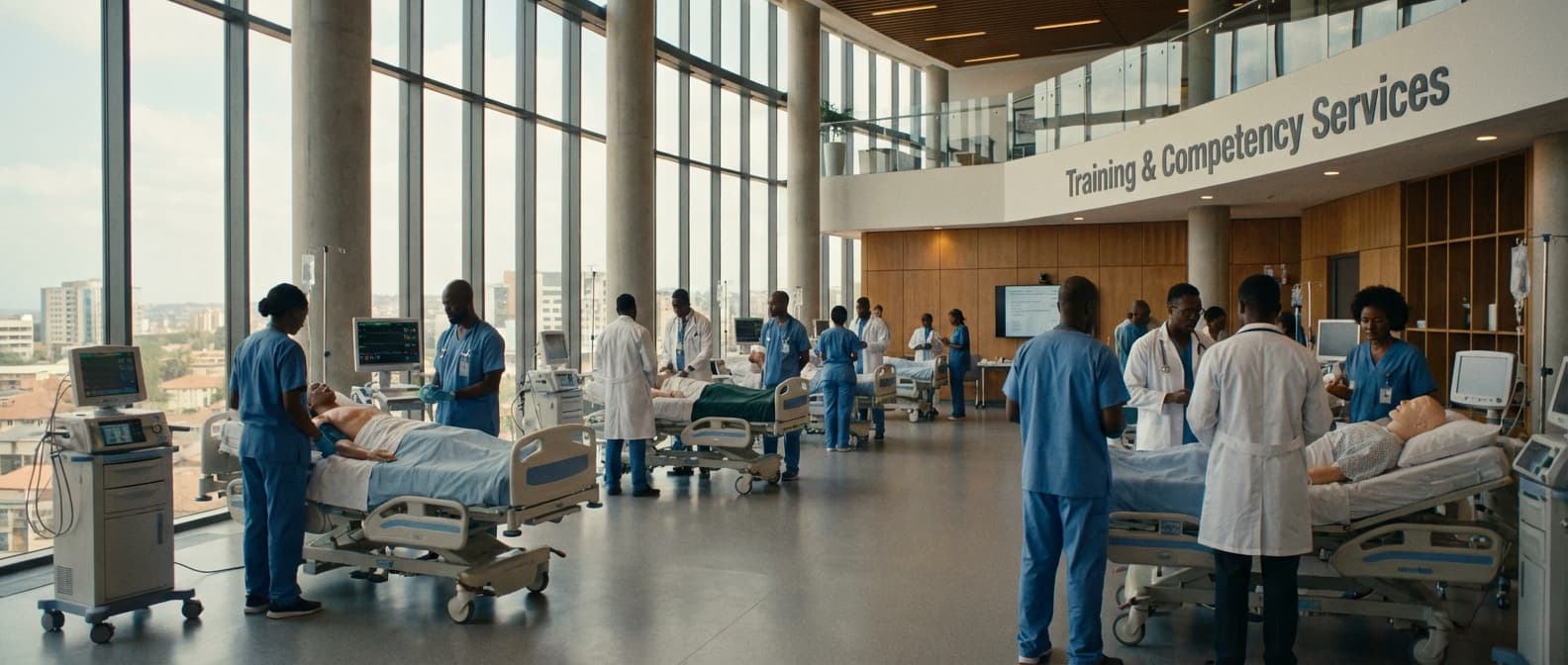
Ventilator User Training Service (Nurses) in Sudan
Engineering Excellence & Technical Support
Ventilator User Training Service (Nurses) High-standard technical execution following OEM protocols and local regulatory frameworks.
Advanced Ventilation Modes Mastery
Gain expert proficiency in operating and optimizing advanced ventilation modes (e.g., Pressure Support, Volume Control Plus, BiPAP) for diverse Sudanese patient populations. Learn to tailor settings to individual needs, improve oxygenation, and reduce patient-ventilator dyssynchrony. Emphasis on recognizing and managing potential complications specific to the local healthcare context.
Rapid Troubleshooting & Crisis Management
Develop critical skills in swiftly identifying and resolving common ventilator alarms and malfunctions under challenging resource conditions. This module focuses on practical, on-the-spot solutions, contingency planning for equipment shortages, and effective communication strategies with medical teams during emergent situations prevalent in Sudan.
Ventilator-Associated Pneumonia (VAP) Prevention & Control
Master evidence-based protocols for minimizing Ventilator-Associated Pneumonia (VAP) risk. Learn about optimal humidification strategies, circuit care, suctioning techniques, and the importance of strict aseptic procedures tailored for the Sudanese healthcare environment, contributing to improved patient outcomes and reduced hospital-acquired infections.
What Is Ventilator User Training Service (Nurses) In Sudan?
Ventilator User Training Service (Nurses) in Sudan refers to the provision of specialized education and practical instruction for registered nurses and other qualified healthcare professionals on the safe and effective operation, monitoring, and troubleshooting of mechanical ventilators. This service is crucial for ensuring optimal patient outcomes in critical care settings where respiratory support is required. The training aims to equip nurses with the theoretical knowledge and hands-on skills necessary to manage patients receiving ventilatory support, respond to alarms, adjust ventilator settings based on clinical assessment and patient response, and understand the principles of mechanical ventilation.
| Who Needs This Service | Typical Use Cases | ||||||||
|---|---|---|---|---|---|---|---|---|---|
| Registered Nurses working in Intensive Care Units (ICUs). | Management of patients with Acute Respiratory Distress Syndrome (ARDS). | Emergency situations requiring immediate respiratory support. | Post-operative patients requiring mechanical ventilation. | Nurses in emergency departments (EDs) or critical care response teams. | Management of patients with severe exacerbations of Chronic Obstructive Pulmonary Disease (COPD) or asthma. | Nurses in specialized units (e.g., neurocritical care, trauma units) where ventilators are commonly used. | Patients requiring prolonged mechanical ventilation. | Nurses involved in patient transport requiring ventilatory support. | Management of pediatric patients requiring mechanical ventilation (if the training covers pediatric ventilators). |
Key Components of Ventilator User Training Service for Nurses in Sudan:
- Theoretical foundation: Principles of respiratory physiology, gas exchange, mechanics of breathing, and different modes of mechanical ventilation.
- Ventilator hardware and software: Familiarization with the physical components, user interface, and operational features of various ventilator models.
- Patient assessment: Comprehensive evaluation of respiratory status, including vital signs, lung sounds, work of breathing, and arterial blood gas (ABG) interpretation.
- Initiation of ventilation: Understanding indications for mechanical ventilation, appropriate ventilator settings for different patient populations (e.g., ARDS, COPD exacerbation, post-operative patients), and initial setup procedures.
- Ventilator management and monitoring: Continuous assessment of patient-ventilator synchrony, recognition and management of alarms, monitoring of circuit pressures, volumes, and flow waveforms.
- Ventilator weaning: Principles and strategies for weaning patients off mechanical ventilation, including appropriate assessment criteria and gradual reduction of support.
- Troubleshooting and maintenance: Identification and resolution of common ventilator malfunctions, basic troubleshooting techniques, and understanding of infection control protocols related to ventilator circuits and equipment.
- Documentation: Accurate and timely recording of ventilator settings, patient response, interventions, and weaning progress.
- Ethical and legal considerations: Understanding patient rights, informed consent, and professional responsibilities in critical care.
Who Needs Ventilator User Training Service (Nurses) In Sudan?
Ventilator user training is crucial for healthcare professionals in Sudan to ensure safe and effective patient care, particularly in critical care settings. This training equips nurses with the knowledge and skills to operate, monitor, and troubleshoot ventilators, leading to improved patient outcomes and reduced complications. Sudan's healthcare system, like many in developing nations, faces challenges related to equipment availability and trained personnel. Therefore, targeted training is essential to maximize the utility of existing ventilator resources and build local capacity.
| Target Customer Group | Relevant Departments/Units | Rationale for Training |
|---|---|---|
| Registered Nurses (RNs) | Intensive Care Units (ICUs) Critical Care Units (CCUs) Emergency Departments (EDs) Surgical Wards (especially post-operative) Pediatric Intensive Care Units (PICUs) Neonatal Intensive Care Units (NICUs) | Direct patient management, ventilator setup, monitoring, weaning, and troubleshooting. Crucial for immediate response to patient needs. |
| Enrolled Nurses (ENs) | Intensive Care Units (ICUs) Critical Care Units (CCUs) Emergency Departments (EDs) Surgical Wards | Assist RNs in patient care, monitoring vital signs, and basic ventilator adjustments under supervision. Essential for support roles in critical care. |
| Specialized Nurses (e.g., Anesthetic Nurses, Respiratory Nurses) | Operating Theatres Respiratory Clinics (if applicable) ICUs/CCUs | Advanced understanding of ventilation modes, settings, and patient physiology. May be involved in more complex ventilation strategies or patient education. |
| Nurse Educators/Trainers | Hospital Training Departments Nursing Schools/Colleges | To cascade training to other nurses within their institutions and contribute to ongoing professional development programs. |
| Nurses in Resource-Limited Settings | Rural Hospitals Primary Healthcare Centers (with critical care capabilities) | To ensure basic ventilator management skills are available where specialist staff may be scarce, maximizing the impact of limited equipment. |
Target Customers and Departments for Ventilator User Training Service in Sudan
- Nurses are the primary recipients of ventilator user training due to their direct involvement in patient care and ventilator management.
- Training is essential for both newly qualified nurses and experienced nurses who may not have prior exposure to specific ventilator models or advanced ventilation techniques.
Ventilator User Training Service (Nurses) Process In Sudan
The Ventilator User Training Service for Nurses in Sudan is a crucial process designed to equip healthcare professionals with the necessary skills to operate and manage mechanical ventilators. This service ensures optimal patient care and efficient use of life-saving equipment, particularly vital in critical care settings. The workflow is structured to be comprehensive and responsive, guiding participants from initial interest to successful completion of the training.
| Stage | Description | Key Activities | Responsible Parties | Key Deliverables |
|---|---|---|---|---|
| Inquiry & Initial Contact | The process begins when a healthcare facility or individual nurse expresses interest in ventilator user training. | Receiving inquiries (phone, email, website form), providing preliminary information about the training program. | Training Provider (Sales/Inquiry Team), Healthcare Facility/Nurse | Acknowledged inquiry, basic program overview. |
| Needs Assessment & Consultation | Understanding the specific training needs of the participants and the facility. | Conducting discussions, questionnaires, or site visits to determine skill levels, existing equipment, and specific training requirements. | Training Provider (Consultant/Trainer), Healthcare Facility Management/Nursing Supervisors | Identified training gaps, specific learning objectives, customized training plan outline. |
| Proposal & Agreement | Formalizing the training engagement with a detailed proposal and contractual agreement. | Developing a comprehensive proposal outlining training content, duration, methodology, cost, and terms. Signing of a service agreement or contract. | Training Provider, Healthcare Facility/Sponsoring Organization | Formal training proposal, signed service agreement/contract. |
| Training Schedule & Logistics | Planning and coordinating all aspects of the training session. | Setting training dates and times, booking training venues, arranging for equipment (ventilators, simulation models), confirming trainer availability, communicating details to participants. | Training Provider (Logistics Coordinator/Trainer), Healthcare Facility | Confirmed training schedule, logistical arrangements in place, participant list. |
| Training Delivery (Theoretical & Practical) | The core of the service, where nurses acquire knowledge and skills. | Delivering theoretical sessions on ventilator principles, modes, settings, monitoring, and troubleshooting. Conducting hands-on practical sessions using simulators and actual ventilators. | Certified Trainers, Participating Nurses | Completed theoretical modules, demonstrated practical skills on ventilators. |
| Assessment & Evaluation | Measuring the participants' understanding and competency. | Administering theoretical tests (quizzes, exams) and practical skill assessments (scenarios, competency checks). | Trainers, Participating Nurses | Assessment results, documented competency of participants. |
| Certification & Follow-up | Acknowledging successful completion and providing ongoing support. | Issuing certificates of completion to successful participants. Providing post-training support, answering queries, and potentially offering refresher courses. | Training Provider, Participating Nurses | Certificates of completion, post-training support resources. |
| Feedback & Service Improvement | Gathering feedback to enhance future training programs. | Collecting feedback from participants and facilities through surveys or interviews. Analyzing feedback to identify areas for improvement in content, delivery, and logistics. | Training Provider, Participating Nurses, Healthcare Facility | Feedback reports, action plans for service enhancement. |
Workflow Stages of Ventilator User Training Service (Nurses) in Sudan
- Inquiry & Initial Contact
- Needs Assessment & Consultation
- Proposal & Agreement
- Training Schedule & Logistics
- Training Delivery (Theoretical & Practical)
- Assessment & Evaluation
- Certification & Follow-up
- Feedback & Service Improvement
Ventilator User Training Service (Nurses) Cost In Sudan
Providing ventilator user training services for nurses in Sudan involves several cost considerations. The pricing can fluctuate based on the provider's reputation, the depth and duration of the training, the number of participants, and the location within Sudan. Specialized trainers, potentially with international experience or advanced certifications, will command higher fees. Furthermore, the inclusion of practical, hands-on sessions with actual ventilator equipment, or simulations, will increase the overall cost. Travel and accommodation for trainers, if required for remote locations, also contribute to the expense. The current economic climate and currency exchange rates in Sudan will significantly influence the pricing in Sudanese Pounds (SDG).
| Training Component/Provider Type | Estimated Cost Range (SDG) | Notes |
|---|---|---|
| Basic Theoretical Training (Per Nurse/Per Day) | 2,000 - 5,000 | Covers fundamental ventilator principles and modes. Often bundled. |
| Intermediate Practical Training (Per Nurse/Per Day) | 4,000 - 8,000 | Includes hands-on sessions with basic ventilator settings and troubleshooting. |
| Advanced/Specialized Training (Per Nurse/Per Day) | 6,000 - 12,000+ | Focuses on complex modes, specific patient populations, or advanced troubleshooting. May involve simulation. |
| Training Delivered by Local Experts/Institutions (Per Day) | 15,000 - 40,000 | Cost for the entire training session, not per nurse. Varies based on provider and duration. |
| Training Delivered by International Experts (Per Day) | 50,000 - 150,000+ | Higher fees due to international travel, accommodation, and specialized expertise. Can be a package deal. |
| On-site Training (Additional Fee) | 5,000 - 20,000 | May apply if training needs to be conducted at a specific hospital/clinic location. |
| Training Materials & Certification | 1,000 - 3,000 | Often included in overall package, but can be a separate charge. |
Factors Influencing Ventilator User Training Cost for Nurses in Sudan
- Provider's Expertise and Reputation
- Duration and Intensity of Training Program
- Number of Participating Nurses
- Inclusion of Practical/Hands-on Sessions
- Trainer's Qualifications and Travel Expenses
- Location of Training within Sudan
- Availability of Training Equipment/Simulators
- Customization of Training Content
- Economic Conditions and Currency Exchange Rates
Affordable Ventilator User Training Service (Nurses) Options
This document outlines affordable ventilator user training options specifically for nurses, focusing on value bundles and cost-saving strategies. The goal is to provide nurses with the essential skills and knowledge to safely and effectively operate ventilators, while keeping training expenses manageable for healthcare facilities.
| Strategy | Description | Potential Cost Savings |
|---|---|---|
| Bulk Training Packages | Negotiate discounted rates for training multiple nurses or entire departments simultaneously. | Reduced per-participant cost, leveraging economies of scale. |
| Train-the-Trainer Programs | Empower experienced nurses within the facility to train their colleagues, reducing reliance on external trainers. | Significant long-term cost savings by internalizing training resources. |
| Online & Remote Learning Options | Utilize e-learning modules, webinars, and virtual simulation platforms for theoretical components and some practical demonstrations. | Lower travel costs, reduced facility rental for external trainers, and increased flexibility for nurses. |
| Partnerships with Medical Device Manufacturers | Collaborate with ventilator manufacturers for subsidized or complimentary training on their specific equipment. | Reduced or eliminated training fees for specific ventilator models. |
| Leveraging Existing Resources | Utilize hospital simulation centers, in-service rooms, and existing didactic materials to supplement training. | Minimizes the need for external facility rentals and material development costs. |
| Modular & Customizable Training | Offer training in smaller, more focused modules that can be tailored to specific unit needs, avoiding unnecessary content. | Prevents overspending on comprehensive courses that may not be relevant to all nurses. |
| Credentialing & Certification Alignment | Ensure training programs align with recognized professional certifications and accreditation bodies, potentially fulfilling continuing education requirements. | Reduces the need for separate, often expensive, certification courses. |
Value Bundles for Ventilator User Training (Nurses)
- {"title":"Core Competency Bundle","description":"This foundational bundle covers essential ventilator principles, modes of ventilation, patient assessment, and basic troubleshooting. It's ideal for nurses new to critical care or those requiring a refresher."}
- {"title":"Advanced Modes & Troubleshooting Bundle","description":"This bundle builds upon core competencies, delving into advanced ventilation modes (e.g., APRV, PAV), weaning strategies, and more complex troubleshooting scenarios. Suitable for experienced nurses or those in specialized units."}
- {"title":"Emergency & Transport Ventilation Bundle","description":"Focuses on rapid response, portable ventilator use, and management in emergent situations or during patient transport. Crucial for nurses in ER, ICU, and transport teams."}
- {"title":"Simulation-Based Training Bundle","description":"Integrates hands-on practice with high-fidelity patient simulators. This bundle offers a realistic and safe environment for skill development and decision-making under pressure."}
- {"title":"Blended Learning Bundle","description":"Combines online self-paced modules for theoretical knowledge with in-person practical sessions and simulation. Offers flexibility and can be more cost-effective."}
Verified Providers In Sudan
Ensuring access to reliable healthcare in Sudan is paramount, especially in regions where verified providers are scarce. Franance Health stands out as a beacon of trust, offering a comprehensive network of credentialed medical professionals and facilities. Their commitment to rigorous vetting processes and patient well-being makes them the optimal choice for individuals seeking quality healthcare. This document outlines Franance Health's credentials and elaborates on why they represent the best choice for healthcare services in Sudan.
| Credential Type | Verification Process | Importance for Patients in Sudan |
|---|---|---|
| Medical Licenses & Certifications | Cross-referenced with official licensing boards and professional organizations. | Guarantees that practitioners meet minimum educational and competency standards, essential for safe and effective treatment. |
| Educational Background | Verification of degrees and diplomas from recognized institutions. | Ensures providers have received adequate theoretical and practical training in their respective fields. |
| Professional Experience | Reference checks and validation of previous employment history. | Indicates a provider's practical application of knowledge and experience in treating various conditions. |
| Ethical Conduct & Disciplinary History | Background checks and reviews of professional conduct records. | Protects patients from malpractice and unethical practices, fostering trust and safety. |
| Facility Accreditation (for clinics/hospitals) | Assessment of facilities against national and international healthcare standards. | Ensures a safe, hygienic, and well-equipped environment for medical procedures and patient care. |
Franance Health Credentials and Value Proposition
- Rigorous Provider Vetting: Franance Health employs a multi-stage verification process for all its affiliated providers. This includes verification of medical licenses, professional certifications, educational backgrounds, and any disciplinary records. This ensures that only qualified and ethical practitioners join their network.
- Patient-Centric Approach: Beyond mere credentialing, Franance Health prioritizes patient satisfaction and outcomes. They actively collect patient feedback and use it to continuously improve the services offered by their network.
- Accessibility and Reach: Franance Health is dedicated to expanding access to healthcare across Sudan. They strategically partner with providers in both urban and rural areas, aiming to bridge geographical gaps in healthcare provision.
- Comprehensive Service Offering: The network encompasses a wide range of medical specialties, from general practitioners and pediatricians to specialists in cardiology, obstetrics, and more. They also partner with accredited diagnostic centers and pharmacies.
- Commitment to Ethical Practices: Franance Health upholds the highest ethical standards in healthcare. They promote transparency in billing, ensure patient privacy, and advocate for fair and equitable treatment for all patients.
- Technological Integration: Leveraging technology, Franance Health facilitates easier appointment booking, access to patient records (with consent), and streamlined communication between patients and providers.
Scope Of Work For Ventilator User Training Service (Nurses)
This Scope of Work (SOW) outlines the services for providing comprehensive training to nursing staff on the operation and maintenance of specified ventilator models. The training will ensure proficient and safe use of the equipment in clinical settings.
| Technical Deliverable | Standard Specification | Description | Verification Method |
|---|---|---|---|
| Training Curriculum Development | Comprehensive and model-specific modules | Detailed curriculum covering theoretical aspects, operational procedures, safety guidelines, and emergency responses tailored to each ventilator model. | Review and approval of curriculum by hospital clinical education department and lead respiratory therapist. |
| Training Manuals & User Guides | Clear, concise, and illustrated | Provision of high-quality, laminated, and user-friendly training manuals and quick reference guides for each ventilator model, in the hospital's preferred language. | Physical review of manuals for clarity, accuracy, and completeness. |
| Hands-on Practical Training Sessions | Minimum 8 hours per model per nurse | Instructor-led practical sessions using actual ventilator units, including simulated patient scenarios, alarm management, and troubleshooting exercises. | Completion of practical assessment checklist by instructor and participant. |
| Competency Assessment Tools | Objective and measurable | Development and administration of written and practical competency assessments to evaluate nurses' understanding and skill proficiency. | Review of assessment results and pass/fail rates. |
| Training Certificates | Formal and verifiable | Issuance of individual training certificates upon successful completion of the program, detailing the ventilator models covered. | Verification of issued certificates against attendance and competency assessment records. |
| Post-Training Support | Defined contact and response | Provision of limited post-training support for a defined period (e.g., 30 days) via phone or email for follow-up questions. | Tracking of support requests and resolution times. |
| Trainer Qualifications | Certified and experienced | All trainers must be certified by the ventilator manufacturer and possess a minimum of 3 years of experience in clinical respiratory care and ventilator training. | Verification of trainer certifications and resumes. |
| Training Equipment | Functional and up-to-date | Provider to supply functional ventilator units (matching the models in use at the hospital) for training purposes, along with all necessary accessories and simulation equipment. | On-site inspection of training equipment prior to commencement of sessions. |
Key Objectives of the Training Program
- To equip nurses with theoretical knowledge of ventilator principles and modes.
- To provide hands-on practical training on the setup, operation, and patient connection for each specified ventilator model.
- To train nurses on recognizing and responding to common ventilator alarms and troubleshooting basic issues.
- To educate nurses on routine cleaning, disinfection, and preventative maintenance procedures.
- To ensure compliance with hospital protocols and manufacturer guidelines for ventilator use.
- To enhance patient safety and optimize ventilator therapy outcomes.
Service Level Agreement For Ventilator User Training Service (Nurses)
This Service Level Agreement (SLA) outlines the terms and conditions for the Ventilator User Training Service provided to nurses. It defines the expected response times for support requests and the guaranteed uptime for the training platform. This SLA aims to ensure timely assistance and consistent access to training resources for all user nurses.
| Service Component | Uptime Guarantee / Response Time | Details / Scope |
|---|---|---|
| Ventilator User Training Platform Uptime | 99.5% Monthly Uptime | The training platform will be available for access by authorized users for at least 99.5% of the time during a calendar month. Planned maintenance will be excluded from this calculation and will be communicated with advance notice. |
| Critical Support Request Response Time | Within 2 business hours | For issues preventing access to the training platform or rendering it completely unusable (e.g., login failures, platform inaccessibility). Requests submitted via the designated support portal or email are considered critical. |
| Standard Support Request Response Time | Within 8 business hours | For issues related to content access, course completion errors, or minor technical glitches that do not prevent overall platform usage. Requests submitted via the designated support portal or email are considered standard. |
| Training Content Update Notification | Within 48 business hours of request | Acknowledgement of requests for updates or corrections to training content. The timeline for actual implementation of updates will be communicated separately. |
Key Service Components
- Ventilator User Training Platform Uptime
- Support Request Response Times
- Escalation Procedures
- Reporting and Review
Frequently Asked Questions

Ready when you are
Let's scope your Ventilator User Training Service (Nurses) in Sudan project in Sudan.

Scaling healthcare logistics and technical systems across the entire continent.