
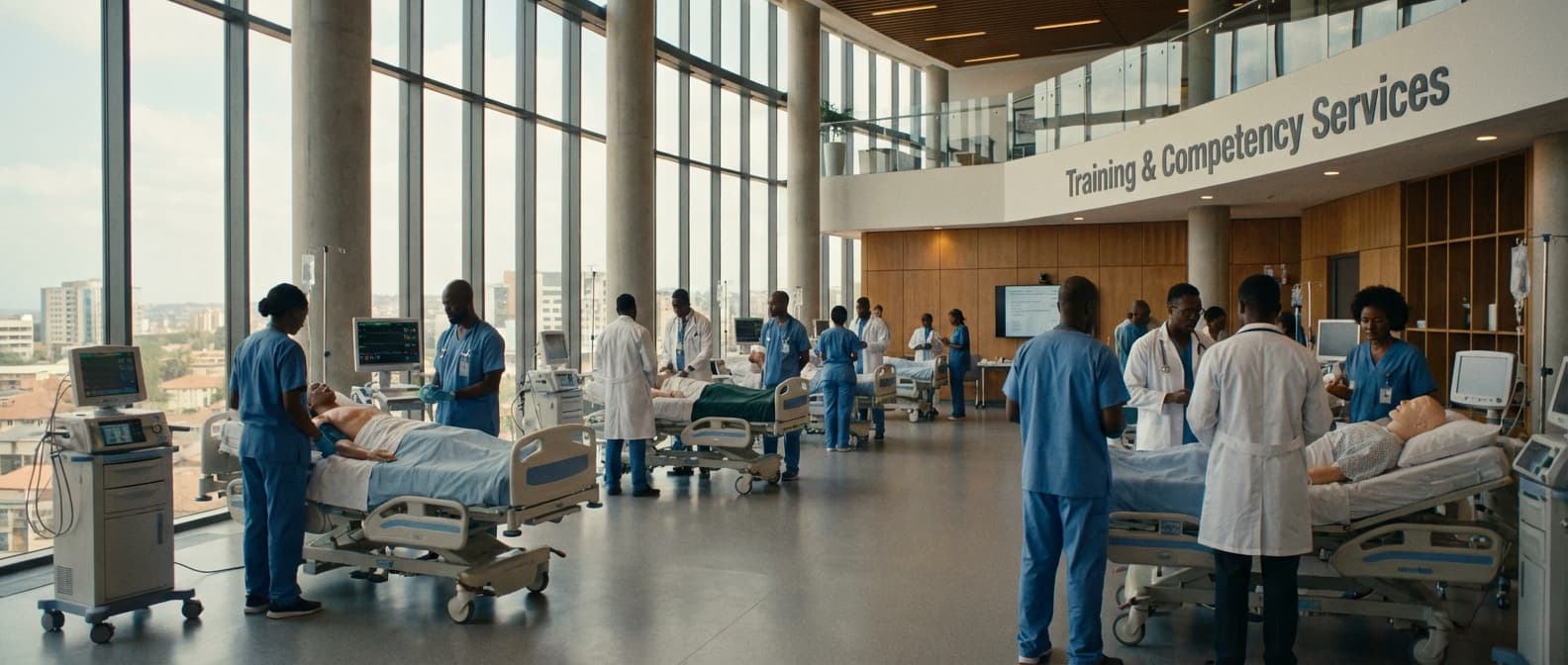
Ultrasound Application Training Service (Protocol-Based) in Sudan
Engineering Excellence & Technical Support
Ultrasound Application Training Service (Protocol-Based) High-standard technical execution following OEM protocols and local regulatory frameworks.
Standardized Protocol Mastery
Gain proficiency in advanced ultrasound protocols tailored for common Sudanese medical conditions. Our training ensures consistent, high-quality image acquisition and interpretation, leading to improved diagnostic accuracy.
Remote Learning & Support
Access expert-led ultrasound training modules and receive real-time remote technical support, overcoming geographical barriers in Sudan. Enhance your skills conveniently and efficiently, right from your own facility.
Clinical Case-Based Learning
Learn through practical application with a curriculum focused on real-world Sudanese patient scenarios. Our protocol-based training emphasizes critical thinking and problem-solving for diverse clinical presentations encountered in the region.
What Is Ultrasound Application Training Service (Protocol-based) In Sudan?
Ultrasound Application Training Service (Protocol-Based) in Sudan refers to a structured, curriculum-driven educational program designed to impart specialized knowledge and practical skills in utilizing ultrasound imaging for specific medical applications. This service adheres to established diagnostic and procedural protocols, ensuring standardized and evidence-based practice. It is crucial for enhancing the diagnostic accuracy, therapeutic guidance, and overall quality of ultrasound services within the Sudanese healthcare landscape. The 'protocol-based' aspect emphasizes training on standardized scanning techniques, image optimization, artifact recognition, and reporting frameworks tailored to distinct clinical scenarios and organ systems.
| Who Needs This Service? | Typical Use Cases | ||||||
|---|---|---|---|---|---|---|---|
| Radiologists: Seeking to specialize or refine skills in specific ultrasound applications, including advanced imaging techniques and interventional procedures. | Radiology Residents and Fellows: As part of their formal training curriculum to achieve competency in diagnostic ultrasound. | Sonographers (Diagnostic Medical Ultrasound Technologists): To acquire or enhance proficiency in specific ultrasound modalities and applications. | Medical Officers and General Practitioners: Especially in resource-limited settings, to gain foundational skills in point-of-care ultrasound (POCUS) for initial patient assessment. | Specialist Physicians (e.g., Obstetricians/Gynecologists, Cardiologists, Surgeons): To augment their diagnostic capabilities and procedural guidance using ultrasound. | Healthcare Institutions: Hospitals, clinics, and diagnostic centers aiming to establish or improve their ultrasound services and ensure standardized practice. | ||
| Routine Diagnostic Imaging: Abdominal (liver, kidneys, spleen, pancreas), Pelvic (gynecological and urological), Breast, Thyroid, Scrotal imaging. | Obstetrics and Gynecology: Antenatal scans (dating, anomaly, growth monitoring), Pelvic ultrasound for gynecological pathology (fibroids, ovarian cysts), infertility assessment. | Cardiology: Echocardiography for cardiac structure and function assessment. | Vascular Ultrasound: Assessment of peripheral arteries and veins, carotid arteries, renal arteries. | Musculoskeletal Ultrasound: Evaluation of joints, tendons, ligaments, and muscles. | Point-of-Care Ultrasound (POCUS): FAST (Focused Assessment with Sonography for Trauma) scans, basic cardiac and lung assessments in emergency settings, fluid assessment. | Interventional Ultrasound: Guidance for biopsies, aspirations, drainages, and local anesthetic injections. | Pediatric Ultrasound: Neonatal brain, abdominal organs, hips. |
Key Components of Ultrasound Application Training Service (Protocol-Based):
- Theoretical Instruction: Comprehensive lectures covering ultrasound physics, instrumentation, safety, anatomy, physiology, pathophysiology relevant to specific applications, and the theoretical underpinnings of established protocols.
- Protocol-Based Scanning Techniques: Hands-on training and demonstration of standardized scanning approaches for various organ systems (e.g., abdominal, obstetric, gynecological, vascular, cardiac, musculoskeletal) and specialized procedures (e.g., FAST scan, interventional ultrasound).
- Image Optimization and Artifact Management: Instruction on adjusting machine parameters for optimal image quality and recognizing/mitigating common ultrasound artifacts.
- Image Interpretation and Reporting: Training on the systematic analysis of ultrasound images, identification of abnormalities, and the generation of comprehensive, structured diagnostic reports adhering to established guidelines.
- Clinical Case Studies and Simulation: Application of learned knowledge to real-world scenarios through the review of diverse case studies and simulated scanning environments.
- Hands-on Practical Sessions: Extensive supervised practice on phantoms and, where ethically and logistically feasible, on human subjects under the guidance of experienced sonographers and radiologists.
- Quality Assurance and Continuous Improvement: Emphasis on the importance of adhering to protocols for quality control, audit processes, and ongoing professional development.
Who Needs Ultrasound Application Training Service (Protocol-based) In Sudan?
This document outlines the critical need for Ultrasound Application Training Services (Protocol-Based) in Sudan. Such training is essential for enhancing diagnostic accuracy, improving patient care, and empowering healthcare professionals with standardized and evidence-based ultrasound practices. The service focuses on equipping practitioners with the skills to perform and interpret ultrasounds according to established protocols, ensuring consistent quality and comparability of results across different facilities and practitioners.
| Customer Type | Department(s) of Interest | Specific Training Needs | Rationale for Training |
|---|---|---|---|
| Public Hospitals | Radiology, OB/GYN, Emergency | General ultrasound protocols, obstetric & gynecological imaging, trauma ultrasound, basic cardiac ultrasound | Improve diagnostic capabilities in resource-limited settings, standardize care, enhance patient outcomes, reduce referral burden. |
| Private Hospitals | Radiology, OB/GYN, Cardiology, Surgery | Advanced obstetric imaging (e.g., fetal anomaly scan), advanced gynecological imaging, cardiac ultrasound (echocardiography), interventional ultrasound guidance | Elevate service quality, attract more patients, ensure adherence to international standards, offer specialized diagnostic services. |
| Clinics and Diagnostic Centers | General Practice, OB/GYN, Internal Medicine | Basic abdominal ultrasound, obstetric scans, focused point-of-care ultrasound (POCUS) for specific conditions | Expand service offerings, provide early diagnosis, reduce reliance on larger hospitals for basic imaging, improve patient convenience. |
| NGOs | Primary Healthcare, Maternal & Child Health, Emergency Response | Essential obstetric and gynecological ultrasound, basic abdominal ultrasound, POCUS for rapid assessment in field settings | Strengthen primary healthcare delivery, improve maternal and child health outcomes in underserved areas, facilitate rapid diagnosis in humanitarian crises. |
| Medical Training Institutions | Radiology, OB/GYN, Internal Medicine, Surgery | Curriculum integration of protocol-based ultrasound, faculty training, provision of standardized training materials | Equip future healthcare professionals with essential skills, ensure a competent workforce, align education with current clinical practice standards. |
| Individual Healthcare Professionals | Various (depending on specialty) | Specialized modules in areas like musculoskeletal ultrasound, breast ultrasound, thyroid ultrasound, interventional procedures | Career advancement, skill enhancement, personal professional development, specialization in niche areas. |
Target Customers and Departments for Ultrasound Application Training Service (Protocol-Based) in Sudan
- {"items":["Public Hospitals (Federal and State)","Private Hospitals","Clinics and Diagnostic Centers","Non-Governmental Organizations (NGOs) providing healthcare services","Medical Training Institutions (Universities, Colleges of Health Sciences)","Individual Healthcare Professionals seeking specialized training"],"title":"Target Customers"}
- {"items":["Radiology/Medical Imaging Departments","Obstetrics and Gynecology Departments","Emergency Departments","Internal Medicine Departments (for point-of-care ultrasound)","Pediatrics Departments","Surgical Departments","Cardiology Departments","Anesthesiology Departments"],"title":"Target Departments"}
Ultrasound Application Training Service (Protocol-based) Process In Sudan
This document outlines the standard workflow for providing Ultrasound Application Training Services (Protocol-Based) in Sudan, from initial inquiry to successful execution. The process is designed to ensure clarity, efficiency, and effective knowledge transfer for participants.
| Phase | Stage | Description | Key Activities | Deliverables/Outcomes |
|---|---|---|---|---|
| 1 | Inquiry Received | Initial contact from potential client expressing interest in ultrasound training. | Client contacts training provider via phone, email, or website. | Acknowledgement of inquiry, initial information provision. |
| 1 | Initial Consultation | Discussion to understand client's general requirements and training objectives. | Brief meeting (in-person or virtual) to discuss needs, target audience, and desired outcomes. | Understanding of client's broad training goals. |
| 2 | Detailed Needs Assessment | In-depth analysis of the client's specific training needs, existing skill levels, and equipment availability. | Questionnaires, interviews with key personnel, observation (if possible). | Detailed report outlining skill gaps, learning objectives, and specific application areas. |
| 2 | Protocol Customization | Tailoring the training content and protocols to the identified needs and the client's specific ultrasound equipment. | Review and adaptation of standard ultrasound protocols, development of case studies, integration of specific equipment features. | Customized training protocol document. |
| 3 | Proposal Development | Creation of a comprehensive proposal outlining the training program, duration, costs, and schedule. | Inclusion of customized protocol, trainer profiles, learning objectives, assessment methods, and terms and conditions. | Formal training proposal. |
| 3 | Agreement and Contract | Formalization of the training agreement between the client and the training provider. | Negotiation and signing of a service agreement or contract. | Signed training contract. |
| 4 | Participant Identification and Registration | Client identifies and registers the participants for the training. | Client provides participant lists, contact information, and any pre-requisite qualifications. | Participant registration confirmation. |
| 4 | Logistics and Resource Arrangement | Booking of training venue, scheduling of trainers, arrangement of ultrasound equipment and materials. | Confirmation of venue availability, trainer travel and accommodation, equipment delivery/setup, printing of training manuals. | Confirmed training schedule and logistics. |
| 4 | Pre-Training Communication | Informing participants about the training schedule, venue, and any pre-reading materials. | Distribution of welcome packs, agenda, and preparatory documents. | Informed participants ready for training. |
| 5 | Training Delivery (Theory) | Lectures, presentations, and discussions covering the theoretical aspects of ultrasound principles and the specific protocols. | Interactive theoretical sessions, Q&A, case study discussions. | Understanding of theoretical foundations. |
| 5 | Training Delivery (Practical) | Hands-on practice sessions using ultrasound equipment and the customized protocols. | Guided scanning sessions, simulation exercises, supervised practical application. | Proficiency in applying protocols on ultrasound equipment. |
| 5 | Assessment and Feedback (During Training) | Ongoing assessment of participant understanding and skill development. | Observation of practical skills, quizzes, informal feedback. | Identification of areas needing further clarification. |
| 5 | End-of-Training Assessment | Formal evaluation of participants' knowledge and practical skills. | Written tests, practical skill evaluations, case scenario assessments. | Trained and assessed participants. |
| 6 | Post-Training Evaluation | Gathering feedback from participants and clients on the training effectiveness and satisfaction. | Feedback forms, post-training interviews. | Training evaluation report. |
| 6 | Certification (if applicable) | Issuance of certificates to participants who successfully complete the training and assessments. | Verification of assessment results and issuance of certificates. | Certified participants. |
| 6 | Follow-up Support | Providing ongoing support and answering any post-training queries. | Email/phone support, optional follow-up consultation sessions. | Continued learning and application support. |
| 6 | Reporting and Closure | Submitting a final report to the client summarizing the training outcomes and deliverables. | Final report including attendance, assessment results, evaluation feedback, and recommendations. | Project closure and client satisfaction. |
Ultrasound Application Training Service (Protocol-Based) Process in Sudan
- Phase 1: Inquiry and Initial Consultation
- Phase 2: Needs Assessment and Protocol Customization
- Phase 3: Proposal and Agreement
- Phase 4: Pre-Training Preparations
- Phase 5: Training Execution
- Phase 6: Post-Training Follow-up and Evaluation
Ultrasound Application Training Service (Protocol-based) Cost In Sudan
This document outlines the pricing factors and estimated cost ranges for Ultrasound Application Training Services (Protocol-Based) in Sudan, presented in local currency (Sudanese Pound - SDG). The cost of such specialized training is influenced by several key variables, impacting the overall investment for individuals or institutions seeking to enhance their ultrasound diagnostic skills.
| Training Type/Scope | Estimated Cost Range (SDG) | Notes |
|---|---|---|
| Basic Ultrasound Principles & General Applications (e.g., Abdomen, Pelvis) | 50,000 - 150,000 | Typically 3-5 days, covering fundamental protocols. May include hands-on practice with standard machines. |
| Obstetric Ultrasound (Routine & Advanced) | 70,000 - 200,000 | Can range from 5 days to 2 weeks, covering dating scans, anomaly scans, Doppler. Emphasis on protocol adherence. |
| Specialized Application Training (e.g., Echocardiography, Vascular, Small Parts) | 100,000 - 300,000+ | Often requires dedicated equipment and expert instructors. Duration can vary significantly based on complexity. |
| Comprehensive Protocol-Driven Training (Multiple Modalities) | 150,000 - 400,000+ | Longer duration programs (2 weeks or more) covering a broad spectrum of applications with a strong emphasis on standardized protocols. |
| Refresher/Advanced Protocol Update Courses | 40,000 - 100,000 | Shorter courses (1-3 days) for experienced practitioners to update knowledge on specific protocols. |
Key Pricing Factors for Ultrasound Application Training in Sudan
- Level of Specialization: Training focused on advanced or niche ultrasound applications (e.g., obstetric Doppler, interventional ultrasound) will generally be more expensive than general abdominal or basic obstetric training due to the need for highly specialized instructors and equipment.
- Duration of Training: The total cost is directly proportional to the length of the training program. Longer, more comprehensive courses covering multiple applications will command higher prices.
- Trainer Expertise and Credentials: The experience, qualifications, and reputation of the instructors play a significant role. Highly sought-after international or experienced Sudanese specialists will likely increase training costs.
- Training Venue and Facilities: Whether the training is conducted at a dedicated training center, a hospital, or remotely (online) can affect costs. Access to well-equipped simulation labs and high-quality ultrasound machines for hands-on practice is crucial and influences pricing.
- Equipment Provided/Used: If the training includes the use of advanced or specific ultrasound machines, or if participants are provided with personal learning kits, these costs will be factored in.
- Training Materials and Resources: The quality and comprehensiveness of provided materials, such as detailed protocols, lectures, case studies, and online resources, can impact the pricing.
- Certification: Programs offering recognized certifications upon completion often have higher fees to cover the examination and administrative processes.
- Group Size and Discounts: For institutional training, the number of participants can influence the per-person cost. Larger groups may benefit from volume discounts.
- Location within Sudan: While general national pricing trends exist, localized costs might vary slightly between major cities (e.g., Khartoum) and other regions due to differences in operational expenses.
Affordable Ultrasound Application Training Service (Protocol-based) Options
Our Affordable Ultrasound Application Training Service offers protocol-based instruction designed to equip healthcare professionals with essential sonographic skills. We understand the importance of cost-effectiveness in professional development, and our service is structured to provide maximum value. We offer flexible training options and cost-saving strategies to make high-quality ultrasound education accessible.
| Bundle/Strategy | Description | Potential Savings |
|---|---|---|
| Core Protocol Bundle (e.g., Abdominal) | Comprehensive training on a specific ultrasound application. | 15-20% off individual module pricing |
| Early Bird Registration | Discount for registering before a set deadline. | 10-15% off course fee |
| Group Training (5+ participants) | Discounted rates for organizational registrations. | Tiered discounts starting at 15%, increasing with group size |
| Annual Subscription | Unlimited access to all standard modules and updates for one year. | Equivalent to 6-8 individual module purchases, significant ongoing savings |
| Webinar Series Pass | Access to all live and recorded webinars for a defined period. | Up to 30% savings compared to individual webinar purchases |
| Referral Discount | Discount for referring a new paying customer. | 5-10% off next purchase/renewal |
| AI Learning Tools Integration | Enhanced self-paced learning and practice. | Reduces need for extended instructor time, saving ~5-10% on specific modules |
| Prior Learning Assessment | Assessment to identify existing competency. | Potential waiver of up to 2-3 foundational modules, saving significant time and cost |
Value Bundles and Cost-Saving Strategies
- Core Protocol Bundles: We've curated bundles focusing on specific ultrasound applications (e.g., Abdominal, OB/GYN, Vascular). These bundles offer comprehensive training at a discounted rate compared to individual module purchases.
- Early Bird Discounts: Register for training courses within a specified early registration period to receive a percentage off the standard course fee.
- Group Training Packages: Organizations sending multiple employees benefit from significant discounts on group registrations. The more participants, the greater the savings.
- Subscription-Based Access: For ongoing learning and access to a library of protocol updates and advanced modules, consider our subscription plans offering continuous training at a predictable monthly or annual cost.
- Webinar Series Pass: Purchase a pass to our entire series of live and recorded webinars, covering a broad range of ultrasound topics, for a cost-effective way to broaden your knowledge base.
- Referral Program: Refer a colleague and receive a discount on your next training module or subscription renewal. Both you and your referred colleague will benefit.
- AI-Powered Learning Tools: Leverage our integrated AI tools for interactive case studies and performance feedback, which can accelerate learning and reduce the need for additional instructor-led sessions.
- Prior Learning Assessment: For experienced sonographers, we offer a prior learning assessment to potentially waive certain foundational modules, saving you time and training costs.
Verified Providers In Sudan
Finding verified healthcare providers in Sudan is crucial for ensuring quality care and patient safety. Franance Health stands out as a leader in this regard, offering a robust system for credentialing and vetting healthcare professionals. Their rigorous process ensures that all listed providers meet high standards of competence, ethics, and professionalism. This commitment to verification not only builds trust but also empowers patients to make informed decisions about their health. By prioritizing verified providers, Franance Health is setting a benchmark for excellence in Sudan's healthcare landscape, making them the best choice for anyone seeking reliable and trustworthy medical services.
| Credentialing Aspect | Franance Health Approach | Patient Benefit |
|---|---|---|
| Professional Licenses & Certifications | Verification of all relevant medical licenses and board certifications. | Ensures providers are legally qualified and have specialized training. |
| Educational Background | Thorough review of academic records and institutional accreditation. | Confirms foundational knowledge and quality of education received. |
| Experience & Clinical Competence | Assessment of prior practice history and peer reviews where applicable. | Indicates practical skill and effectiveness in patient care. |
| Ethical Conduct & Professionalism | Background checks and adherence to a strict code of ethics. | Guarantees trustworthy and respectful patient interactions. |
| Continuous Professional Development | Encourages and tracks ongoing learning and skill enhancement. | Ensures providers stay updated with the latest medical advancements. |
Why Franance Health Credentials Matter
- Rigorous Vetting Process
- Commitment to Quality Standards
- Enhanced Patient Trust
- Informed Healthcare Decisions
- Setting Industry Benchmarks
- Promoting Professional Ethics
Scope Of Work For Ultrasound Application Training Service (Protocol-based)
This Scope of Work (SOW) outlines the requirements for a Protocol-Based Ultrasound Application Training Service, focusing on technical deliverables and standard specifications. The training will equip participants with the necessary skills and knowledge to effectively utilize ultrasound applications according to established protocols. This SOW details the objectives, scope, deliverables, methodologies, and acceptance criteria for the training program.
| Section | Description | Key Considerations |
|---|---|---|
| Definition of the specific ultrasound applications and corresponding protocols to be covered. This includes theoretical background and practical hands-on sessions. | Target audience, learning outcomes, duration, and proposed training schedule. |
| Detailed training materials, including presentations, user manuals, protocol guides, and case studies. Practical simulation sessions using phantom models or simulated patient scenarios. Assessment tools for knowledge and skill evaluation. | Clarity and accuracy of materials, relevance to clinical practice, standardization of assessment methods, and provision of feedback mechanisms. |
| Adherence to recognized ultrasound imaging standards (e.g., AIUM, EFSUMB guidelines). Use of high-fidelity ultrasound simulators or equipment. Instructor qualifications and experience. Participant-to-instructor ratio. | Competency of instructors, suitability of training equipment, and alignment with established best practices. |
| Blended learning approach combining lectures, demonstrations, supervised hands-on practice, and case-based discussions. Emphasis on interactive learning and immediate feedback. | Effectiveness of the chosen methods in achieving learning objectives, opportunities for skill reinforcement, and engagement of participants. |
| Pre- and post-training knowledge assessments. Practical skills evaluation through objective structured clinical examinations (OSCEs) or similar methods. Participant satisfaction surveys. | Reliability and validity of assessment tools, feedback on performance, and continuous improvement of the training program. |
| Summary report detailing training attendance, assessment results, and overall program effectiveness. Recommendations for further training or skill development. | Timeliness and comprehensiveness of the report, clear presentation of data, and actionable insights. |
Key Objectives of the Training Service
- To ensure participants can accurately and safely operate ultrasound equipment for specific clinical applications.
- To train participants on the correct application of standardized ultrasound protocols.
- To enhance diagnostic accuracy and image quality through proper technique and interpretation.
- To foster critical thinking and problem-solving skills in ultrasound examinations.
- To ensure compliance with relevant professional guidelines and regulatory standards.
Service Level Agreement For Ultrasound Application Training Service (Protocol-based)
This Service Level Agreement (SLA) outlines the performance standards for the Ultrasound Application Training Service (Protocol-Based). It defines the guaranteed response times for technical support and the expected uptime of the training platform. This SLA is an addendum to the main service agreement between [Your Company Name] and [Client Company Name].
| Metric | Severity Level | Target | Guarantee |
|---|---|---|---|
| Response Time | Critical (System Down/Inaccessible) | 1 hour | 1 hour |
| Response Time | High (Major Functionality Impaired) | 2 business hours | 2 business hours |
| Response Time | Medium (Minor Functionality Impaired/Informational) | 4 business hours | 4 business hours |
| Response Time | Low (General Inquiry/Feature Request) | 8 business hours | 8 business hours |
| Resolution Time | Critical (System Down/Inaccessible) | 4 business hours | 8 business hours |
| Resolution Time | High (Major Functionality Impaired) | 8 business hours | 16 business hours |
| Resolution Time | Medium (Minor Functionality Impaired/Informational) | 2 business days | 3 business days |
| Resolution Time | Low (General Inquiry/Feature Request) | 5 business days | 7 business days |
| Platform Uptime | N/A | 99.5% | 99.0% |
Key Performance Indicators (KPIs)
- Response Time: The maximum time allowed for the initial acknowledgment of a support request.
- Resolution Time: The target time to resolve reported issues, categorized by severity.
- Platform Uptime: The percentage of time the Ultrasound Application Training Platform is available and operational.
Frequently Asked Questions

Ready when you are
Let's scope your Ultrasound Application Training Service (Protocol-Based) in Sudan project in Sudan.

Scaling healthcare logistics and technical systems across the entire continent.