
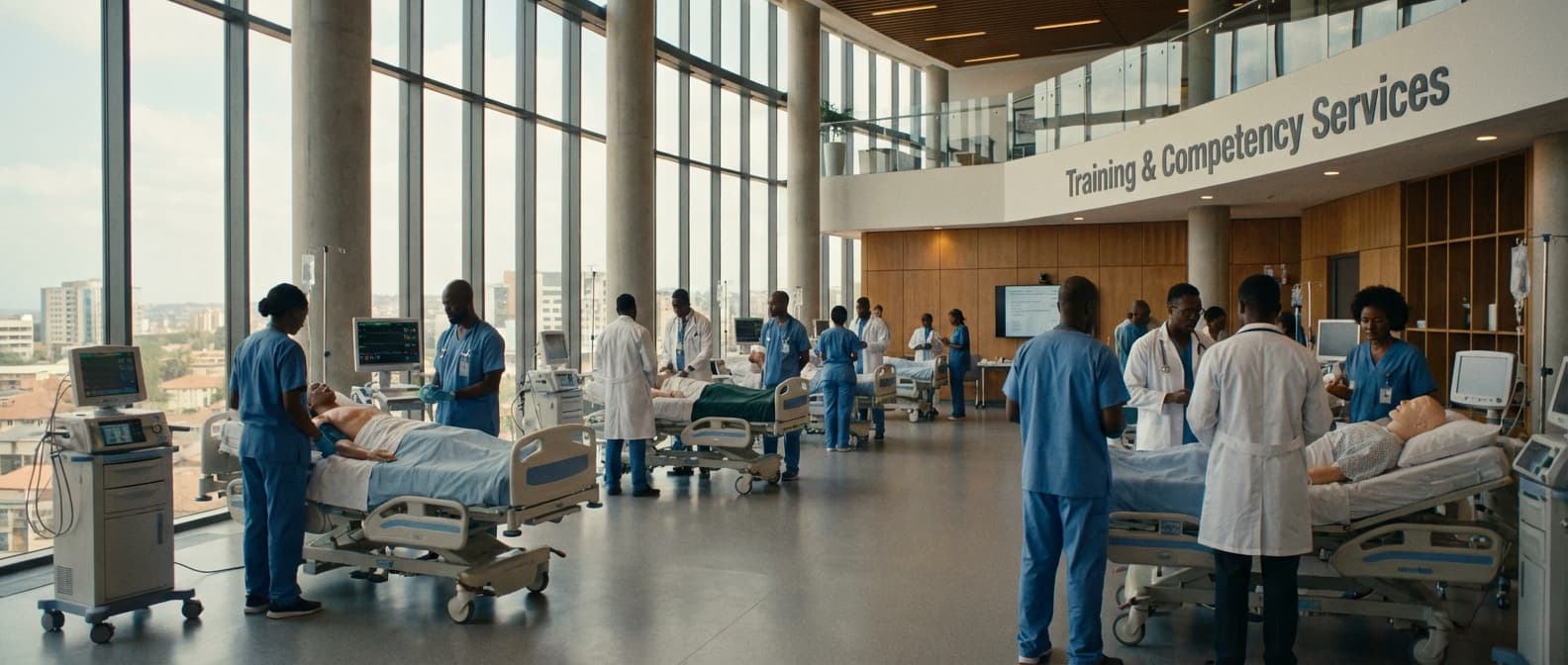
CT Operator Training Service (Radiographers) in Sudan
Engineering Excellence & Technical Support
CT Operator Training Service (Radiographers) High-standard technical execution following OEM protocols and local regulatory frameworks.
Enhanced Patient Safety Protocols
Focus on the latest international guidelines for radiation protection and patient positioning, ensuring optimal diagnostic imaging while minimizing patient dose exposure. Training includes practical sessions on dose management and emergency preparedness.
Advanced CT Scanner Operations & Troubleshooting
In-depth modules covering the operational intricacies of modern CT scanners, including image acquisition parameters, artifact reduction techniques, and basic preventative maintenance. Participants will gain hands-on experience with common troubleshooting scenarios.
Critical Image Interpretation & Quality Assurance
Training on the principles of diagnostic image quality assessment, including standardized protocols for image review and artifact identification. Participants will learn to critically evaluate images for diagnostic accuracy and implement quality assurance measures.
What Is Ct Operator Training Service (Radiographers) In Sudan?
CT Operator Training Service (Radiographers) in Sudan refers to specialized educational programs designed to equip radiographers and allied healthcare professionals with the knowledge and skills necessary to safely and effectively operate Computed Tomography (CT) scanners. This training is crucial for ensuring optimal image acquisition, patient safety, radiation dose management, and accurate diagnostic interpretation within the Sudanese healthcare landscape.
| Need For Service | Target Audience | Typical Use Cases | |||||||||
|---|---|---|---|---|---|---|---|---|---|---|---|
| To establish and maintain a competent workforce capable of operating modern CT imaging equipment. | Newly qualified radiographers and imaging technologists. | Diagnosis of acute and chronic conditions, including trauma, stroke, cancer staging, and vascular abnormalities. | To enhance diagnostic accuracy and reduce diagnostic errors. | Existing radiographers seeking to specialize in CT or update their skills. | Pre-operative planning and post-operative monitoring. | To ensure patient safety and minimize radiation exposure. | Radiology department managers and supervisors overseeing CT operations. | Interventional radiology procedures guided by CT. | To meet the growing demand for advanced imaging services in Sudan. | Physicians and medical personnel involved in interpreting CT scans (to understand imaging capabilities and limitations). | Research and clinical trials involving CT imaging. |
Key Components of CT Operator Training Service:
- Principles of CT Imaging: Theoretical foundation covering X-ray physics, CT gantry operation, detector technology, and image reconstruction algorithms.
- CT Scanner Operation: Hands-on training on specific CT scanner models, including system initialization, patient positioning, protocol selection, image acquisition parameters (kVp, mAs, slice thickness, pitch), and artifact reduction techniques.
- Patient Care and Safety: Protocols for patient preparation, contrast media administration (including contraindications and adverse reaction management), patient immobilization, and radiation protection measures for both patients and staff (ALARA principle).
- Image Quality Optimization: Techniques for achieving diagnostic image quality, understanding the impact of various parameters on image contrast, resolution, and noise.
- Radiation Dose Monitoring and Management: Familiarization with dose reduction strategies, understanding dosimetry metrics (e.g., CTDIvol, DLP), and compliance with regulatory standards.
- Quality Assurance and Maintenance: Basic understanding of CT scanner quality control procedures and routine maintenance checks.
- Ethical and Legal Considerations: Awareness of professional responsibilities, patient confidentiality, and relevant Sudanese healthcare regulations.
- Advanced CT Applications (Optional Modules): Training on specific advanced techniques such as multi-detector CT (MDCT), CT angiography (CTA), dual-energy CT (DECT), and iterative reconstruction.
Who Needs Ct Operator Training Service (Radiographers) In Sudan?
CT Operator Training Service for Radiographers in Sudan is a critical resource for enhancing the skills and knowledge of radiographers working with Computed Tomography (CT) scanners. This specialized training aims to ensure accurate image acquisition, optimal radiation dose management, and improved patient safety. The demand for such services stems from the increasing adoption of CT technology in healthcare facilities across Sudan and the ongoing need to maintain and upgrade the expertise of their technical staff.
| Department/Setting | Primary Need for CT Training | Specific Benefits |
|---|---|---|
| Radiology Department (General) | Basic and advanced CT scanning techniques, image interpretation fundamentals, radiation safety protocols. | Improved diagnostic accuracy, reduced repeat scans, enhanced patient and staff safety. |
| Emergency Department | Rapid CT acquisition protocols, trauma imaging, urgent scan interpretation (in collaboration with radiologists). | Faster diagnosis and treatment initiation in critical situations, improved patient outcomes in emergencies. |
| Oncology Department | CT for staging, treatment planning (radiotherapy), and response assessment. | Precise tumor localization and monitoring, optimized treatment delivery. |
| Surgical Departments (e.g., Neurosurgery, Orthopedics, Urology) | CT for pre-operative planning, intra-operative guidance, and post-operative assessment. | Enhanced surgical precision, reduced complications, better surgical planning. |
| Internal Medicine / Cardiology | CT for diagnosis of various conditions (e.g., pulmonary embolism, abdominal pathologies), cardiac CT imaging. | Comprehensive diagnosis of complex medical conditions, advanced cardiovascular assessment. |
| Pediatric Department | Pediatric CT protocols, dose reduction techniques, child-friendly imaging approaches. | Reduced radiation exposure to children, improved patient cooperation during scans. |
Target Customers and Departments for CT Operator Training Service in Sudan:
- Public Hospitals: These institutions often serve a large patient population and may have a mix of older and newer CT equipment. Training is essential for their radiographers to maximize the utility of existing technology and adapt to any upgrades.
- Private Hospitals and Clinics: With a growing private healthcare sector, these facilities are investing in advanced imaging equipment, including CT scanners. They require highly skilled operators to provide competitive and high-quality diagnostic services.
- Tertiary and Teaching Hospitals: These centers are involved in advanced diagnostics, research, and the training of future medical professionals. Their radiographers need advanced CT training to handle complex cases and contribute to medical education.
- Diagnostic Imaging Centers: Standalone centers that specialize in medical imaging will benefit from training to ensure they can offer a comprehensive range of CT-based examinations and maintain high operational standards.
- Military and Government Healthcare Facilities: These entities operate their own medical services and require trained personnel to manage their imaging departments effectively, often serving a diverse population.
- Non-Governmental Organization (NGO) Healthcare Projects: NGOs involved in providing healthcare in Sudan, especially in remote or underserved areas, may operate facilities equipped with CT scanners. Training ensures their staff can operate these vital machines safely and effectively.
- Ministry of Health and related regulatory bodies: While not direct operators, these bodies can benefit from understanding the training needs to establish standards and potentially subsidize or support such training initiatives for national healthcare improvement.
Ct Operator Training Service (Radiographers) Process In Sudan
This document outlines the workflow for the CT Operator Training Service (Radiographers) in Sudan, detailing the process from initial inquiry to the successful completion of the training program. The service aims to equip radiographers with the necessary skills and knowledge to operate CT scanners effectively and safely, adhering to international standards and local regulations.
| Phase | Stage/Activity | Description | Responsible Party | Key Outputs/Deliverables |
|---|---|---|---|---|
| Inquiry and Initial Contact | Initial Inquiry | Prospective clients (hospitals, clinics, radiographers) express interest in CT operator training. | Client/Individual | Inquiry message/email/phone call. |
| Inquiry and Initial Contact | Service Provider Response | The training service provider acknowledges the inquiry and provides initial information about the program. | Training Service Provider | Acknowledgement of inquiry, brochure/overview of services. |
| Needs Assessment and Proposal Development | Detailed Needs Assessment | Understanding the client's specific CT scanner models, current skill levels, and training objectives. | Training Service Provider, Client | Needs assessment report, list of required competencies. |
| Needs Assessment and Proposal Development | Proposal Formulation | Developing a tailored training proposal outlining curriculum, duration, methodology, trainers, and costs. | Training Service Provider | Formal training proposal. |
| Agreement and Scheduling | Proposal Review and Negotiation | Client reviews the proposal, negotiates terms if necessary. | Client, Training Service Provider | Agreed-upon proposal terms. |
| Agreement and Scheduling | Contract/Agreement Signing | Formalizing the training agreement with payment terms, dates, and responsibilities. | Client, Training Service Provider | Signed training contract/agreement. |
| Agreement and Scheduling | Scheduling and Logistics | Determining the exact training dates, location, and any logistical arrangements (e.g., accommodation, travel for trainers). | Training Service Provider, Client | Confirmed training schedule, logistical plan. |
| Pre-Training Preparations | Participant Identification and Registration | Client identifies and registers the radiographers who will attend the training. | Client | Participant list, registration forms. |
| Pre-Training Preparations | Curriculum Preparation | Finalizing training materials, presentations, and practical session plans. | Training Service Provider | Training curriculum, presentation slides, practical session guides. |
| Pre-Training Preparations | Resource Allocation | Ensuring availability of trainers, training venue, CT scanner for practical sessions, and necessary equipment. | Training Service Provider | Availability of trainers and resources. |
| Training Delivery (Theory and Practical) | Theoretical Sessions | Lectures, presentations, and discussions covering CT physics, anatomy, protocols, safety, and image interpretation. | Lead Trainer | Completed theoretical modules. |
| Training Delivery (Theory and Practical) | Practical Demonstrations | Trainers demonstrate CT scanner operation, patient positioning, scan parameter selection, and quality control. | Lead Trainer/Senior Radiographer | Demonstrated procedures. |
| Training Delivery (Theory and Practical) | Hands-on Practice | Participants operate the CT scanner under direct supervision, practice different protocols, and perform image acquisition. | Trainers, Participants | Acquired practical skills, practice scans. |
| Training Delivery (Theory and Practical) | Case Study Analysis | Reviewing and discussing real or simulated CT cases to enhance diagnostic skills and protocol selection. | Lead Trainer, Participants | Analyzed case studies. |
| Assessment and Evaluation | Theoretical Assessment | Written or online tests to evaluate understanding of theoretical concepts. | Training Service Provider | Test scores, theoretical knowledge assessment results. |
| Assessment and Evaluation | Practical Assessment | Observation of participants performing CT scans, assessing their competency in machine operation, patient handling, and protocol application. | Trainers | Practical skills assessment report. |
| Assessment and Evaluation | Overall Performance Evaluation | A comprehensive review of both theoretical and practical performance. | Training Service Provider | Overall participant performance evaluation. |
| Certification and Post-Training Support | Certification Issuance | Issuing certificates of completion to participants who meet the required standards. | Training Service Provider | Certificates of completion. |
| Certification and Post-Training Support | Post-Training Support | Offering limited follow-up support, answering queries, and providing access to resources. | Training Service Provider | Post-training support contact. |
| Feedback and Continuous Improvement | Participant Feedback | Collecting feedback from participants on the training content, delivery, and overall experience. | Participants | Participant feedback forms/surveys. |
| Feedback and Continuous Improvement | Trainer/Provider Review | Internal review of the training program effectiveness based on participant feedback and assessment results. | Training Service Provider | Training program review report. |
| Feedback and Continuous Improvement | Curriculum Update | Making necessary adjustments to the training curriculum and methodology for future cohorts. | Training Service Provider | Updated training materials and methodology. |
CT Operator Training Service Workflow in Sudan
- Inquiry and Initial Contact
- Needs Assessment and Proposal Development
- Agreement and Scheduling
- Pre-Training Preparations
- Training Delivery (Theory and Practical)
- Assessment and Evaluation
- Certification and Post-Training Support
- Feedback and Continuous Improvement
Ct Operator Training Service (Radiographers) Cost In Sudan
The cost of CT operator training (radiographers) in Sudan is influenced by several key factors. These include the reputation and accreditation of the training institution, the duration and intensity of the course, the level of expertise of the instructors, the specific CT technology and equipment covered, and the inclusion of hands-on practical training or simulation. Geographic location within Sudan might also play a minor role due to travel and accommodation expenses for instructors or trainees if the training is not locally accessible. Furthermore, any associated certification exams and the availability of specialized modules on advanced CT techniques can impact the overall price. While precise, up-to-date figures are difficult to ascertain without direct inquiry, general cost ranges can be estimated.
| Training Component | Estimated Cost Range (SDG) | Notes |
|---|---|---|
| Basic CT Operator Certification Course (e.g., 2-4 weeks) | 50,000 - 150,000 | Covers fundamental principles, operation, and safety. May include limited practical exposure. |
| Advanced CT Techniques/Specialization Module (e.g., 1 week) | 30,000 - 80,000 | Focuses on specific areas like CT angiography, cardiac CT, or interventional CT. |
| Comprehensive CT Operator Training (e.g., 1-2 months, including extensive practicals) | 100,000 - 300,000+ | Likely includes more in-depth theory, extensive simulation, and supervised practical sessions on actual equipment. |
| Refresher/Continuing Education Courses | 20,000 - 60,000 | Shorter courses for existing radiographers to update skills or learn about new technologies. |
| On-site Training (for a facility) | Varies significantly | Dependent on the number of trainees, duration, and customization required. Often negotiated directly. |
Key Pricing Factors for CT Operator Training in Sudan
- Institution Reputation & Accreditation
- Course Duration & Intensity
- Instructor Expertise
- CT Technology & Equipment Covered
- Hands-on Practical Training/Simulation
- Geographic Location (indirectly)
- Certification Exam Fees
- Specialized Module Availability
Affordable Ct Operator Training Service (Radiographers) Options
This guide outlines affordable CT operator training service (radiographer) options, focusing on value bundles and cost-saving strategies. Investing in comprehensive and cost-effective CT training is crucial for ensuring radiographer proficiency, patient safety, and operational efficiency. We explore various approaches that deliver high-quality education without breaking the budget, emphasizing practical application and long-term value.
| Value Bundle Option | Description | Key Cost-Saving Aspects | Ideal For |
|---|---|---|---|
| Basic CT Principles & Workflow (Online Module) | Covers fundamental CT physics, image acquisition, basic protocol selection, and safety protocols. Delivered entirely online. | Significantly lower cost due to no travel, accommodation, or instructor fees per participant. Scalable to many individuals. | New radiographers, refreshers, facilities with limited budgets for extensive training. |
| Blended CT Operator Certification | Combines online theoretical modules with a limited number of in-person practical lab sessions focusing on hands-on scanner operation and protocol management. | Reduces the duration and cost of in-person training compared to fully on-site programs. Maximizes efficiency of practical learning. | Radiographers needing hands-on experience but with budget constraints, facilities that can provide limited on-site access. |
| Advanced CT Applications & Protocol Optimization (Modular) | Focuses on specific CT applications (e.g., cardiac CT, interventional CT) and advanced protocol optimization techniques. Can be taken as individual modules. | Allows facilities to pay only for the specialized training needed, avoiding redundant general CT content. Shorter duration per module lowers overall cost. | Experienced radiographers seeking to specialize, facilities with diverse CT imaging needs. |
| CT Scanner Vendor Training Package | Training provided by the manufacturer of the specific CT scanner. Often includes operation, maintenance basics, and troubleshooting. | Potentially included in scanner purchase or offered at a competitive rate. Tailored to the specific equipment, ensuring optimal use. | Facilities that have recently purchased new CT equipment or are using a specific vendor's technology extensively. |
| Comprehensive CT Training Bundle (with Simulation Access) | A more extensive program including online theory, in-person practical sessions, and access to a CT simulator for practice and competency assessment. | Simulation reduces scanner downtime and radiation exposure during training. High-value for robust skill development, potentially with a per-user subscription for simulator access. | Facilities prioritizing high competency, patient safety, and efficient skill acquisition, willing to invest in advanced tools. |
Key Cost-Saving Strategies for CT Operator Training
- Leverage Online & Blended Learning: Online modules offer flexibility and reduce travel/accommodation costs. Blended learning combines online theory with in-person practical sessions for a cost-effective yet comprehensive approach.
- Group Discounts & Package Deals: Inquire about discounts for training multiple radiographers or for bundling CT training with other imaging modalities.
- Partnerships with Educational Institutions: Collaborate with universities or colleges offering radiologic technology programs for potential cost-sharing or access to training facilities.
- In-House Training Development: For larger organizations, developing in-house training programs (with external expert consultation) can be cost-effective in the long run. This requires upfront investment but offers greater control and customization.
- Focus on Specific CT Applications: Instead of general CT training, consider specialized courses tailored to the specific CT scanners and patient populations your facility serves. This avoids paying for irrelevant content.
- Utilize Vendor-Provided Training: Many CT scanner manufacturers offer training as part of the equipment purchase or as a separate, often more affordable, service. Evaluate these options carefully.
- Continuing Education (CE) Credits Integration: Ensure training programs offer accredited CE credits for radiographers. This fulfills mandatory requirements and adds value to the training investment.
- Simulation-Based Training: While potentially an initial investment, simulation can significantly reduce the cost of hands-on practice by minimizing scanner downtime and patient radiation exposure during the learning phase.
- Train-the-Trainer Programs: Empowering experienced radiographers to train new staff can be a cost-effective long-term strategy.
- Explore Government Grants & Subsidies: Investigate if any local, state, or federal grants or subsidies are available for professional development and workforce training in healthcare.
Verified Providers In Sudan
In Sudan, navigating the healthcare landscape can be challenging. Ensuring you're receiving care from qualified and trustworthy professionals is paramount. Franance Health stands out as a leading platform for verified healthcare providers, offering a robust credentialing process that guarantees expertise and reliability. This commitment to verification makes Franance Health the superior choice for individuals seeking quality medical services in Sudan.
| Credential Verification | Expertise Level | Provider Network | Patient Assurance |
|---|---|---|---|
| Franance Health's multi-stage vetting process includes checking medical degrees, professional licenses, and relevant certifications. | Providers on Franance Health are exclusively those who meet high standards of experience and demonstrable skill in their specialties. | A diverse network of doctors, specialists, and allied health professionals across various regions of Sudan. | Patients gain confidence knowing they are interacting with vetted and competent healthcare providers. |
Why Franance Health is the Best Choice for Verified Providers in Sudan:
- Rigorous Credentialing: Franance Health employs a stringent verification process for all its listed providers, meticulously checking qualifications, licenses, and certifications.
- Experienced Professionals: We prioritize connecting you with healthcare professionals who possess extensive experience and proven track records in their respective fields.
- Comprehensive Coverage: Access a wide range of medical specialties and services, ensuring you can find the right provider for any health need.
- Patient-Centric Approach: Our platform is designed with your well-being in mind, offering easy access to information and a seamless booking experience.
- Trust and Transparency: We believe in fostering trust through transparency, providing clear information about provider credentials and patient reviews.
Scope Of Work For Ct Operator Training Service (Radiographers)
This Scope of Work (SOW) outlines the requirements for providing CT Operator Training Services to radiographers. The objective is to equip radiographers with the necessary knowledge and practical skills to operate Computed Tomography (CT) scanners effectively, safely, and efficiently, adhering to established technical and standard specifications.
| Category | Technical Deliverables | Standard Specifications/Requirements |
|---|---|---|
| Theoretical Training | Comprehensive lectures and presentations covering CT physics, anatomy, pathology, contrast media, and radiation biology. | Content aligned with professional radiologic technology curricula and relevant medical imaging guidelines (e.g., ACR, ESR, ICRP). |
| Practical Hands-on Training | Supervised operation of CT scanners for various clinical examinations. | Demonstration and practice of patient positioning, gantry operation, scout imaging, and acquisition parameter setting. |
| Imaging Protocols & Optimization | Training on selecting and customizing CT protocols for different anatomical regions and pathologies. | Emphasis on ALARA (As Low As Reasonably Achievable) principle in dose optimization. Adherence to manufacturer-recommended protocols as a baseline. |
| Radiation Safety | Modules on radiation physics, biological effects, dose measurement, and regulatory limits. | Training on shielding, patient dose monitoring, and emergency procedures. Compliance with national and international radiation protection standards (e.g., ICRP Publication 103, NCRP Reports). |
| Image Processing & Post-Processing | Training on image reconstruction, windowing, leveling, and measurement tools. | Introduction to advanced visualization techniques (e.g., MPR, MIP, 3D reconstruction) and PACS integration. |
| Quality Assurance (QA) & Troubleshooting | Training on routine QA procedures and artifact identification. | Basic troubleshooting of common equipment malfunctions. Understanding of performance metrics. |
| Assessment & Certification | Written and practical examinations to assess competency. | Issuance of a Certificate of Completion upon successful demonstration of skills and knowledge. Training to be conducted by certified CT professionals. |
| Training Materials | Provision of training manuals, presentations, and relevant supplementary materials. | Materials to be up-to-date and in a clear, understandable format (digital or print). |
| Equipment & Environment | Access to functional CT scanner(s) of specific models (to be specified). | Training to be conducted in a safe, distraction-free clinical environment meeting all safety regulations. |
Key Objectives of CT Operator Training:
- To ensure radiographers understand the fundamental principles of CT imaging.
- To provide hands-on training on operating specific CT scanner models.
- To train on image acquisition techniques, including protocol selection and optimization.
- To emphasize radiation safety principles and best practices for both patients and staff.
- To cover image processing, manipulation, and post-processing techniques.
- To introduce troubleshooting common equipment issues and quality control measures.
- To ensure compliance with relevant medical imaging standards and regulatory requirements.
Service Level Agreement For Ct Operator Training Service (Radiographers)
This Service Level Agreement (SLA) outlines the response times and uptime guarantees for the CT Operator Training Service provided to Radiographers. This SLA is intended to ensure consistent quality and availability of the training platform and support.
| Service Component | Response Time Target | Uptime Guarantee | Notes |
|---|---|---|---|
| CT Operator Training Platform Access | 1 Hour for critical system access issues, 4 Business Hours for non-critical access issues | 99.5% Availability (calculated monthly) | Platform availability is monitored 24/7/365. Planned maintenance will be communicated with at least 48 hours' notice and will be scheduled during off-peak hours where possible. |
| Technical Support for Platform Issues | 4 Business Hours for initial acknowledgment and assessment of reported issues | N/A (Focus on response time for resolution) | Support is available via email and designated support portal during business hours (9 AM - 5 PM, Monday - Friday, excluding public holidays). |
| Scheduled Training Session Availability | 1 Business Day notice for rescheduling if provider-initiated | 100% for scheduled sessions, subject to unforeseen circumstances (e.g., trainer illness) | In the event of a session cancellation or significant delay, Radiographers will be notified immediately and offered alternative times. 'Unforeseen circumstances' for trainer unavailability will be managed proactively. |
Key Service Components
- CT Operator Training Platform Access
- Technical Support for Platform Issues
- Scheduled Training Session Availability
Frequently Asked Questions

Ready when you are
Let's scope your CT Operator Training Service (Radiographers) in Sudan project in Sudan.

Scaling healthcare logistics and technical systems across the entire continent.