
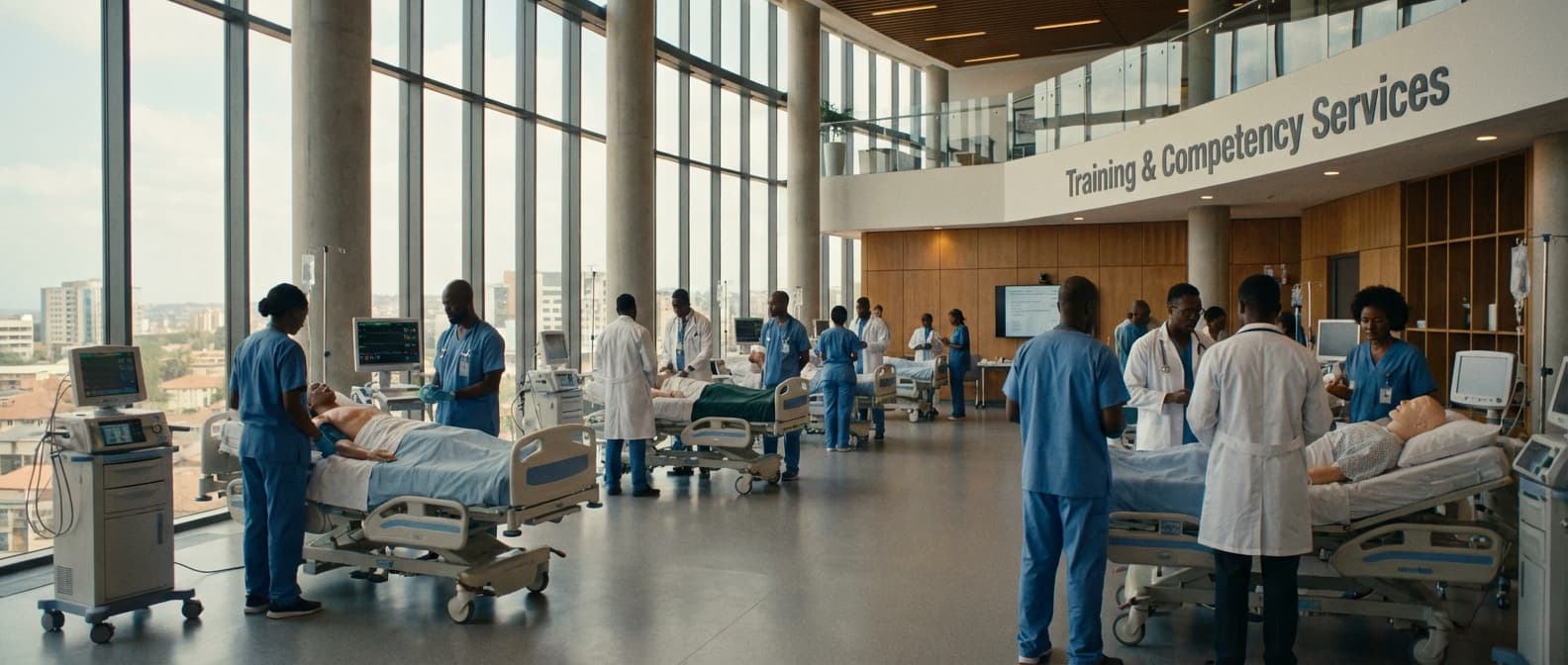
Anesthesia Workstation User Training Service in Sudan
Engineering Excellence & Technical Support
Anesthesia Workstation User Training Service High-standard technical execution following OEM protocols and local regulatory frameworks.
Optimized Workflow Simulation
Our training focuses on realistic simulations of the anesthesia workstation's workflow, from patient setup and induction to maintenance and emergence. Participants will master the sequence of operations, alarm management, and troubleshooting scenarios crucial for safe and efficient patient care in Sudan's diverse clinical environments.
Advanced Feature Mastery
Dive deep into the technical intricacies of your anesthesia workstation. Training covers advanced ventilation modes, integrated gas analysis, electronic record-keeping, and device connectivity. Gain hands-on experience to confidently utilize every feature, enhancing diagnostic capabilities and treatment precision, even with limited resources.
Preventive Maintenance & Basic Troubleshooting
Empower your biomedical teams and anesthesiologists with essential knowledge for routine preventive maintenance and rapid basic troubleshooting. Learn to identify common issues, perform simple calibrations, and implement best practices to maximize workstation uptime and reliability, ensuring uninterrupted critical care delivery across Sudan.
What Is Anesthesia Workstation User Training Service In Sudan?
Anesthesia Workstation User Training Service in Sudan refers to a specialized educational program designed to equip healthcare professionals with the knowledge and practical skills required to safely and effectively operate anesthesia workstations. This service ensures proficiency in the setup, calibration, patient monitoring, delivery of anesthetic agents, ventilation management, and emergency troubleshooting associated with these complex medical devices. The training emphasizes adherence to established protocols, risk mitigation, and optimization of patient care within the Sudanese healthcare context.
| Target Audience | Rationale/Need | Typical Use Cases |
|---|---|---|
| Anesthesiologists | To ensure safe and optimal use of advanced anesthesia delivery and monitoring technology, thereby enhancing patient safety and reducing anesthetic-related complications. | Routine surgical procedures (minor and major), critical care settings, obstetric anesthesia, pain management procedures. |
| Anesthesia Residents and Trainees | To build foundational competency and proficiency in the operation of anesthesia workstations as part of their formal education and clinical rotations. | Supervised practice during clinical training, simulation exercises, preparation for independent practice. |
| Anesthesia Nurses and Technicians | To enable effective preparation, setup, troubleshooting, and basic operation of the workstation under the supervision of an anesthesiologist, supporting the anesthesia team. | Pre-operative setup and checks, intra-operative assistance with monitoring and adjustments, post-operative handover and equipment shutdown. |
| Healthcare Facilities (Hospitals, Clinics) | To comply with regulatory standards, ensure optimal utilization of expensive medical equipment, and maintain a high standard of patient care by a well-trained workforce. | Acquisition and implementation of new anesthesia workstations, periodic retraining for existing staff, continuous quality improvement initiatives. |
Key Components of Anesthesia Workstation User Training:
- Workstation Anatomy and Physiology: Understanding the mechanical and electronic components, gas delivery systems, vaporizers, ventilators, and monitoring modules.
- Pre-use Checks and Calibration: Protocols for ensuring equipment functionality and accuracy before patient connection, including leak tests and sensor calibration.
- Patient Monitoring Integration: Connecting and interpreting data from integrated physiological monitors (e.g., ECG, SpO2, EtCO2, NIBP, invasive pressures).
- Ventilator Management: Setting up and adjusting mechanical ventilation modes, tidal volumes, respiratory rates, pressures, and triggering mechanisms.
- Anesthetic Gas Delivery: Accurate setting and control of volatile anesthetic agent concentrations, including agent identification and vaporizer management.
- Pharmacology Integration: Understanding how the workstation facilitates the safe delivery and monitoring of anesthetic drugs.
- Alarm Management and Troubleshooting: Recognizing, interpreting, and responding to system alarms and common equipment malfunctions.
- Emergency Procedures: Training on rapid response to critical events and appropriate use of workstation features during emergencies.
- Infection Control and Maintenance: Protocols for cleaning, disinfection, and routine maintenance of the workstation.
- Record Keeping and Documentation: Ensuring accurate recording of anesthetic parameters and events.
- Simulation-based Scenarios: Practical application of learned skills in realistic simulated clinical environments.
Who Needs Anesthesia Workstation User Training Service In Sudan?
Anesthesia Workstation User Training Service is crucial for healthcare facilities in Sudan to ensure safe and effective use of advanced anesthetic equipment. This training aims to equip medical professionals with the knowledge and skills to operate these complex machines, manage patient anesthesia, and respond to emergencies, ultimately improving patient outcomes and reducing medical errors. The service is particularly relevant given the increasing adoption of modern medical technologies in Sudan.
| Department | Primary Users | Key Training Needs |
|---|---|---|
| Anesthesiology Department | Anesthesiologists, Anesthesia Residents, Nurse Anesthetists | Core operation of the anesthesia workstation, ventilation modes, gas delivery systems, monitoring integration, emergency procedures, troubleshooting. |
| Surgical Departments (General Surgery, Orthopedics, Neurosurgery, Cardiac Surgery, etc.) | Surgeons (for awareness and basic understanding of anesthetic support) | Understanding the capabilities and limitations of the workstation, communication protocols with anesthesiologists, immediate post-operative considerations. |
| Intensive Care Units (ICUs) | Intensivists, ICU Nurses | Advanced ventilation strategies, weaning protocols, integration with other life support devices, monitoring of critically ill patients. |
| Operating Rooms (OR) / Surgical Theaters | All OR staff (including nurses, technicians) | Safe setup and disconnection of the workstation, basic troubleshooting, maintaining sterility, understanding workflow integration. |
| Biomedical Engineering Department | Biomedical Engineers, Technicians | Routine maintenance, calibration, advanced troubleshooting, repair of the anesthesia workstation. |
| Emergency Departments (ED) | Emergency Physicians, ED Nurses | Rapid deployment and use of portable anesthesia workstations (if applicable), initial airway management and ventilation in critical situations. |
| Pediatric Departments (especially those with surgical capabilities) | Pediatric Anesthesiologists, Pediatricians | Specific pediatric ventilation modes, low-flow anesthesia techniques, age-appropriate settings and monitoring. |
Target Customers and Departments in Sudan Requiring Anesthesia Workstation User Training
- Hospitals (Government and Private)
- Specialized Surgical Centers
- Teaching Hospitals and Medical Universities
- Maternity Hospitals and Centers
Anesthesia Workstation User Training Service Process In Sudan
This document outlines the Anesthesia Workstation User Training Service Process in Sudan, detailing the workflow from initial inquiry to the successful execution of training. The process is designed to ensure that healthcare professionals in Sudan receive comprehensive and effective training on the operation and maintenance of anesthesia workstations, thereby enhancing patient safety and quality of care.
| Phase | Stage | Key Activities | Responsible Parties | Deliverables | Timeline (Indicative) |
|---|---|---|---|---|---|
| Phase 1: Inquiry and Needs Assessment | Initial Contact | Healthcare facility or individual expresses interest in anesthesia workstation training. Information gathering on specific workstation models, number of trainees, and desired learning outcomes. | Client (Healthcare Facility/Individual), Service Provider (Training Company) | Initial inquiry documented, basic needs identified. | 1-3 Business Days |
| Phase 1: Inquiry and Needs Assessment | Needs Analysis | Detailed assessment of the client's current knowledge base, existing equipment, specific training requirements, and any challenges. May involve a site visit or remote consultation. | Service Provider, Client | Comprehensive Training Needs Assessment Report. | 3-5 Business Days |
| Phase 2: Proposal Development and Agreement | Proposal Generation | Development of a detailed training proposal outlining objectives, curriculum, methodology, duration, trainer qualifications, equipment requirements, and cost. | Service Provider | Formal Training Proposal. | 5-7 Business Days |
| Phase 2: Proposal Development and Agreement | Proposal Review and Negotiation | Client reviews the proposal. Discussions and negotiations to finalize scope, pricing, and terms. | Client, Service Provider | Agreed-upon Training Proposal. | 2-5 Business Days |
| Phase 2: Proposal Development and Agreement | Contract/Agreement | Formalization of the training agreement, including payment terms, cancellation policies, and service level agreements. | Service Provider, Client | Signed Training Contract/Agreement. | 3-7 Business Days |
| Phase 3: Training Material Preparation | Curriculum Design | Development or customization of training modules, presentations, practical exercises, and assessment tools tailored to the identified needs and specific workstation models. | Service Provider (Training Specialists) | Detailed Training Curriculum. | 7-14 Business Days (dependent on complexity) |
| Phase 3: Training Material Preparation | Material Development | Creation of training manuals, slide decks, videos, case studies, and any other supporting materials. | Service Provider (Content Developers, Designers) | Comprehensive Training Materials (digital and/or print). | 7-14 Business Days (concurrent with curriculum design) |
| Phase 4: Training Logistics and Scheduling | Trainer Allocation | Assignment of qualified and experienced trainers based on expertise in the specific anesthesia workstation. | Service Provider | Assigned Trainer(s). | 2-3 Business Days |
| Phase 4: Training Logistics and Scheduling | Logistics Planning | Arrangement of travel, accommodation (if required), training venue, and necessary equipment (workstations, simulators). | Service Provider, Client | Logistics Plan (venue confirmed, equipment secured). | 5-10 Business Days |
| Phase 4: Training Logistics and Scheduling | Schedule Confirmation | Finalization and confirmation of training dates and times with the client. | Client, Service Provider | Confirmed Training Schedule. | 1-2 Business Days |
| Phase 5: Training Execution | Pre-Training Briefing | Briefing for participants on training objectives, schedule, and expectations. Introduction of trainers. | Trainer, Client Representative | Kick-off Meeting. | Start of Training Day 1 |
| Phase 5: Training Execution | Theoretical Sessions | Delivery of lectures, presentations, and discussions covering workstation principles, functionalities, safety features, and troubleshooting. | Trainer | Interactive lectures and discussions. | As per schedule |
| Phase 5: Training Execution | Practical Demonstrations | Hands-on demonstrations of workstation operation, calibration, maintenance procedures, and emergency scenarios by the trainer. | Trainer | Live demonstrations. | As per schedule |
| Phase 5: Training Execution | Hands-on Practice | Trainees actively operate the anesthesia workstation under the guidance of the trainer, practicing various functions and scenarios. | Trainees, Trainer | Supervised practical exercises. | As per schedule |
| Phase 5: Training Execution | Q&A and Case Studies | Dedicated time for trainees to ask questions and discuss real-world case scenarios related to workstation use. | Trainer, Trainees | Problem-solving and knowledge reinforcement. | Throughout the training |
| Phase 5: Training Execution | Assessment | Evaluation of trainee understanding through practical assessments, quizzes, or observed performance. | Trainer | Completed Assessments. | End of Training |
| Phase 6: Post-Training Support and Evaluation | Feedback Collection | Gathering feedback from trainees and the client regarding the training content, delivery, and overall experience. | Service Provider, Trainees, Client | Training Feedback Forms. | End of Training |
| Phase 6: Post-Training Support and Evaluation | Certification | Issuance of certificates of completion to trainees who have successfully met the training objectives. | Service Provider | Certificates of Completion. | Within 5 Business Days of training completion |
| Phase 6: Post-Training Support and Evaluation | Post-Training Support | Provision of limited ongoing support (e.g., email, phone) for immediate queries or minor issues encountered after training. | Service Provider | Support provided as per agreement. | As per agreement (e.g., 30 days) |
| Phase 6: Post-Training Support and Evaluation | Service Evaluation and Reporting | Internal review of the training delivery, feedback, and outcomes. Preparation of a final service report. | Service Provider | Final Service Report. | 7-10 Business Days after training completion |
Anesthesia Workstation User Training Service Process in Sudan
- Phase 1: Inquiry and Needs Assessment
- Phase 2: Proposal Development and Agreement
- Phase 3: Training Material Preparation
- Phase 4: Training Logistics and Scheduling
- Phase 5: Training Execution
- Phase 6: Post-Training Support and Evaluation
Anesthesia Workstation User Training Service Cost In Sudan
Providing anesthesia workstation user training in Sudan involves a range of costs influenced by several key factors. These factors determine the final price for individuals or institutions seeking to equip their staff with the necessary skills to operate modern anesthesia machines safely and effectively. Understanding these elements is crucial for budgeting and selecting the most suitable training provider.
| Training Type/Scope | Estimated Cost Range (SDG) | Typical Inclusions |
|---|---|---|
Key Pricing Factors for Anesthesia Workstation User Training in Sudan
- {"title":"Trainer Expertise and Qualifications","description":"The experience level, certifications, and specialized knowledge of the trainers significantly impact the cost. Highly qualified instructors with extensive clinical experience and a proven track record in anesthesia technology training command higher fees."}
- {"title":"Training Duration and Depth","description":"The length of the training program, from introductory to advanced modules, directly affects the overall cost. Longer courses covering a wider range of functionalities, troubleshooting, and maintenance will be more expensive."}
- {"title":"Training Location and Logistics","description":"Whether the training is conducted at the client's facility or at a dedicated training center matters. On-site training may incur additional costs for travel, accommodation, and per diem for trainers. The geographical location within Sudan can also play a role in logistics expenses."}
- {"title":"Equipment Availability and Use","description":"The availability of functional anesthesia workstations for hands-on practice is essential. If the training provider needs to source or rent specific equipment for the training, this cost will be reflected in the price. The number of workstations available per trainee also influences the effectiveness and potentially the cost."}
- {"title":"Training Materials and Resources","description":"The quality and comprehensiveness of training materials, including manuals, presentations, simulators, and assessment tools, contribute to the overall cost. Digital resources might be included, while printed materials could incur additional printing costs."}
- {"title":"Certification and Assessment","description":"The inclusion of formal certification upon successful completion of the training, which often involves rigorous assessments, can add to the cost. The value and recognition of the certification itself will also be a factor."}
- {"title":"Group Size and Customization","description":"Training for larger groups might offer a lower per-person cost due to economies of scale. Customized training programs tailored to the specific needs and existing equipment of an institution will generally be more expensive than standardized courses."}
- {"title":"Provider Reputation and Accreditations","description":"Training providers with a strong reputation, accreditations from relevant professional bodies, and a history of successful training delivery may charge a premium for their services."}
Affordable Anesthesia Workstation User Training Service Options
Investing in proper user training for affordable anesthesia workstations is crucial for safe, efficient, and cost-effective patient care. This service focuses on equipping your clinical staff with the knowledge and skills to operate these essential devices optimally. We offer flexible training options designed to meet diverse institutional needs and budgets, emphasizing value and long-term cost savings through enhanced device utilization, reduced errors, and minimized downtime.
| Service Option | Description | Value Proposition | Cost-Saving Impact |
|---|---|---|---|
| Standard On-Site Training | Dedicated on-site sessions conducted by certified trainers at your facility. Tailored to your staff size and schedule. | Personalized instruction, hands-on practice, immediate Q&A, and direct engagement with equipment. | Reduces travel costs for staff, minimizes disruption to clinical operations, ensures all staff receive consistent training. |
| Remote/Virtual Training | Live, interactive training sessions conducted via video conferencing. Utilizes screen sharing and digital resources. | Flexible scheduling, accessibility from multiple locations, cost-effective for distributed teams. | Eliminates travel expenses, reduces time away from clinical duties, allows for repeatable sessions for new staff. |
| Train-the-Trainer Program | Empowers selected members of your internal staff to become certified trainers for future new hires or refresher courses. | Builds internal expertise, creates a sustainable training model, reduces reliance on external trainers. | Significantly lowers long-term training costs, ensures continuity of knowledge within the organization. |
| E-Learning Modules & Resources | Self-paced online courses, video tutorials, and digital user manuals accessible anytime, anywhere. | On-demand learning, review of specific topics, accessible for new staff onboarding or quick refreshers. | Cost-effective for basic understanding and supplementary learning, accessible for continuous improvement. |
Key Training Service Components
- Comprehensive Device Operation: In-depth training on all functions, modes, and features of the specific affordable anesthesia workstation model.
- Safety Protocols & Alarms: Thorough instruction on interpreting and responding to device alarms, patient monitoring integration, and emergency procedures.
- Maintenance & Troubleshooting Fundamentals: Basic understanding of routine maintenance, error code recognition, and initial troubleshooting steps to expedite issue resolution.
- Workflow Integration: Guidance on how to seamlessly integrate the workstation into existing clinical workflows for maximum efficiency.
- Certification & Competency Assessment: Verification of user proficiency through practical exercises and knowledge assessments.
Verified Providers In Sudan
In Sudan's evolving healthcare landscape, identifying trustworthy and credentialed medical providers is paramount for ensuring quality care. Franance Health stands out as a beacon of reliability, offering a network of verified healthcare professionals and facilities. Their rigorous credentialing process and commitment to patient well-being make them the optimal choice for those seeking medical services in Sudan.
| Franance Health Credentialing Component | What it Means for Patients | Example Providers/Facilities |
|---|---|---|
| License and Certification Verification | Confirms that providers hold valid and current medical licenses and are certified in their respective specialties by recognized authorities. | Dr. Ahmed Hassan (Cardiologist) - Verified Sudanese Medical Council License. |
| Professional Background Checks | Assesses the provider's history to ensure a clean record and absence of disciplinary actions or malpractice claims. | Dr. Fatima Ali (Pediatrician) - Thorough review of academic and professional history. |
| Clinical Experience Assessment | Evaluates the depth and breadth of a provider's practical experience in their area of expertise. | Dr. Omar Ibrahim (Surgeon) - Documented years of successful surgical procedures. |
| Peer Review and Reputation | Considers feedback from other healthcare professionals and patient testimonials to gauge a provider's standing and quality of care. | Al-Nour Hospital - Accredited by the Sudanese Ministry of Health, with positive patient feedback. |
| Adherence to Ethical Standards | Ensures providers are committed to patient confidentiality, informed consent, and ethical medical practices. | All Franance Health Network Providers - Bound by a strict code of conduct. |
Why Franance Health is the Best Choice for Verified Providers in Sudan:
- Uncompromising Verification Standards: Franance Health employs a multi-layered vetting process for all its affiliated providers. This includes comprehensive background checks, verification of medical licenses and certifications, and rigorous assessment of clinical experience and patient care philosophies.
- Commitment to Excellence: Beyond basic credentials, Franance Health prioritizes providers who demonstrate a consistent commitment to ethical practice, ongoing professional development, and patient-centered care. They actively seek out those who are leaders in their fields and dedicated to improving health outcomes.
- Comprehensive Network: Franance Health has cultivated an extensive network of doctors, specialists, hospitals, and clinics across Sudan. This ensures that patients have access to a wide range of medical services, from primary care to highly specialized treatments, all within a trusted framework.
- Patient-Centric Approach: Understanding the unique challenges of healthcare access, Franance Health focuses on empowering patients. Their platform provides clear information about providers, their specializations, and their verified credentials, enabling informed decision-making.
- Enhanced Trust and Safety: By partnering with Franance Health, individuals can be confident that they are engaging with healthcare professionals who have met stringent quality and ethical benchmarks, thereby enhancing safety and trust in medical encounters.
Scope Of Work For Anesthesia Workstation User Training Service
This Scope of Work (SOW) outlines the requirements for providing Anesthesia Workstation User Training Services. The objective is to ensure that end-users are proficient in the safe, effective, and efficient operation of the anesthesia workstation. This document details the technical deliverables and standard specifications for the training program.
| Deliverable | Description | Standard Specifications / Requirements | Format |
|---|---|---|---|
| Training Curriculum Development | Creation of a comprehensive training program tailored to the specific anesthesia workstation model(s). | Must cover basic operation, advanced features, ventilation modes, drug delivery, monitoring, patient safety, alarm management, troubleshooting, and infection control. Should be modular and adaptable to different user skill levels (e.g., novice, intermediate, advanced). | Digital document (PDF, DOCX) |
| Training Materials | Development of all necessary training materials for participants and instructors. | Includes user manuals, presentation slides, quick reference guides, case studies, hands-on practical exercises, and assessment tools. Materials should be clear, concise, visually appealing, and written in appropriate technical language. | Digital documents (PDF, PPTX, DOCX), printable handouts |
| Instructor-Led Training Sessions | Conducting interactive training sessions for end-users. | Sessions should be delivered by certified and experienced anesthesia device trainers. Includes theoretical modules, demonstrations, and supervised hands-on practice with the actual workstation. Ideal session size should be between 5-10 participants for effective engagement. | In-person or virtual live sessions |
| Hands-On Practical Training | Supervised practical sessions where participants operate the anesthesia workstation under guided instruction. | Participants will perform essential functions, simulate various clinical scenarios, and practice alarm response. Requires access to functional anesthesia workstations in a controlled environment. | In-person practical exercises |
| Competency Assessment | Evaluation of user understanding and practical skills after training. | Includes written/online quizzes to assess theoretical knowledge and practical skills assessment checklists to evaluate proficiency in operating the workstation. A passing score (e.g., 85%) must be achieved for successful completion. | Digital forms, printable checklists, online assessment platform |
| Training Report and Certification | Provision of a report detailing training conducted and issuance of certificates to successful participants. | Report should include number of sessions, participants trained, assessment results, and any feedback. Certificates should be personalized and confirm successful completion of the training. | Digital report (PDF), digital or physical certificates |
| Post-Training Support (Optional) | Limited availability of trainers for follow-up questions or clarifications. | Defined period (e.g., 30 days) after the completion of training. Support channels may include email or designated phone line. | Email, phone support |
Key Objectives of Training
- To equip users with the knowledge and skills to operate the anesthesia workstation according to manufacturer guidelines and best practices.
- To ensure users understand the various modes of ventilation, gas delivery, monitoring capabilities, and alarm management.
- To train users on proper pre-use checks, routine maintenance, and troubleshooting common issues.
- To emphasize patient safety protocols and emergency procedures related to anesthesia workstation usage.
- To familiarize users with the specific features and functionalities of the designated anesthesia workstation model(s).
Service Level Agreement For Anesthesia Workstation User Training Service
This Service Level Agreement (SLA) outlines the terms and conditions for the Anesthesia Workstation User Training Service, focusing on guaranteed response times for support requests and uptime for the training platform.
| Service | Uptime Guarantee | Response Time (Critical Issue) | Response Time (Standard Issue) | Resolution Target (Critical Issue) | Resolution Target (Standard Issue) |
|---|---|---|---|---|---|
| Anesthesia Workstation User Training Platform | 99.5% Monthly Uptime | 1 Hour | 4 Business Hours | 4 Business Hours | 2 Business Days |
| On-Demand Training Modules Access | 99.5% Monthly Uptime (Platform) | 2 Business Hours (Content Access) | 8 Business Hours (Content Access) | N/A (Content is accessible) | N/A (Content is accessible) |
| Live Virtual Training Sessions (Scheduling & Connectivity) | 99.9% Scheduled Session Availability | 30 Minutes (Pre-session Support) | 2 Business Hours (Pre-session Support) | N/A (Focus on ensuring session starts) | N/A (Focus on ensuring session starts) |
| Technical Support for Training Platform | N/A (Support is reactive) | 1 Hour | 4 Business Hours | 4 Business Hours | 2 Business Days |
Key Service Components
- Anesthesia Workstation User Training Platform Access
- On-Demand Training Modules
- Live Virtual Training Sessions
- Technical Support for Training Platform
- Performance Monitoring and Reporting
Frequently Asked Questions

Ready when you are
Let's scope your Anesthesia Workstation User Training Service in Sudan project in Sudan.

Scaling healthcare logistics and technical systems across the entire continent.