
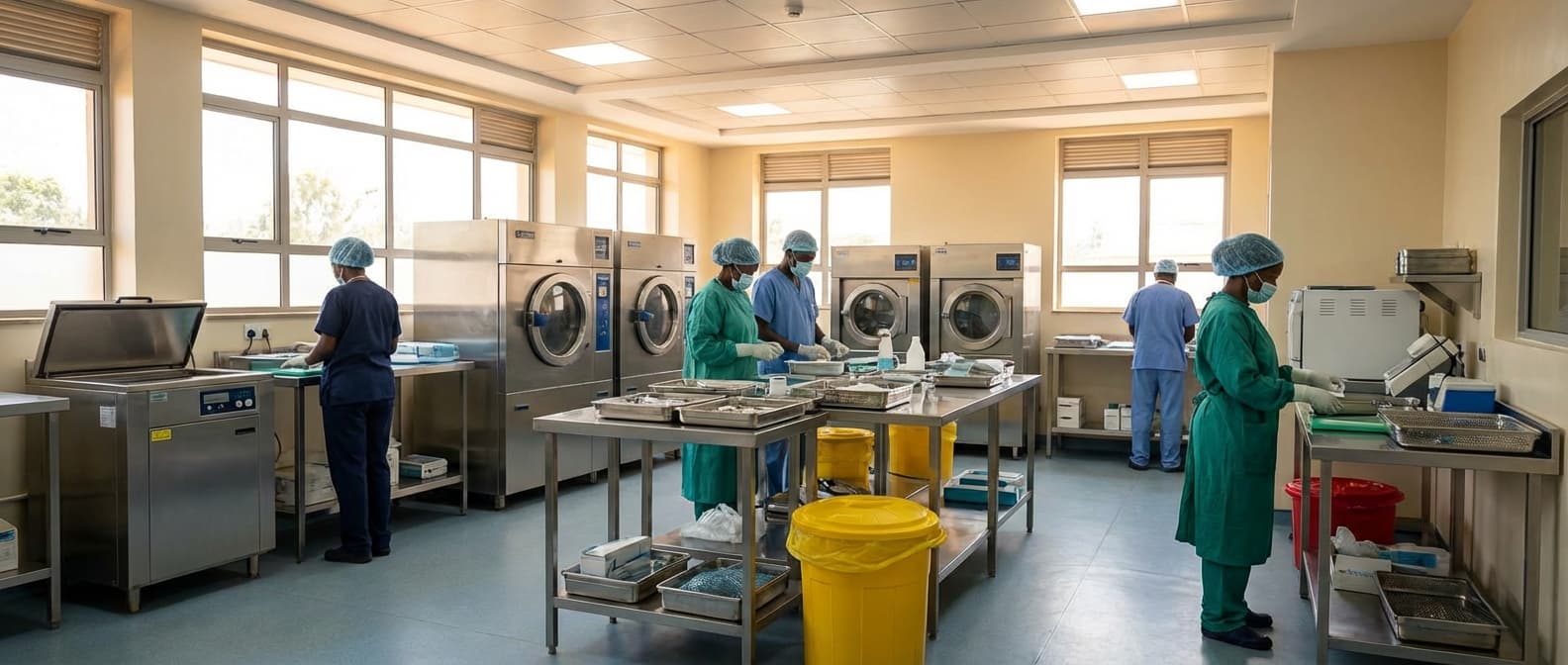
Medical Equipment Decontamination Service (Pre-Repair/Pre-Relocation) in Sudan
Engineering Excellence & Technical Support
Medical Equipment Decontamination Service (Pre-Repair/Pre-Relocation) High-standard technical execution following OEM protocols and local regulatory frameworks.
Certified Decontamination Protocols
Adhering to internationally recognized protocols for the safe and effective decontamination of medical equipment. Our rigorous multi-stage process ensures removal of all biohazards, pathogens, and contaminants, safeguarding personnel and preventing cross-contamination before repair or relocation in Sudan's healthcare facilities.
Advanced Sterilization Technologies
Leveraging state-of-the-art sterilization technologies, including high-level disinfection and terminal sterilization methods. Our approach guarantees comprehensive microbial inactivation, crucial for complex medical devices, thereby extending equipment lifespan and maintaining patient safety within Sudan's challenging environments.
Traceability & Documentation
Providing meticulous documentation and traceability for all decontamination services. Each piece of equipment receives a certification of decontamination, ensuring compliance, transparency, and peace of mind for healthcare providers and regulatory bodies across Sudan.
What Is Medical Equipment Decontamination Service (Pre-repair/pre-relocation) In Sudan?
Medical Equipment Decontamination Service (Pre-Repair/Pre-Relocation) in Sudan refers to the specialized process of cleaning, disinfecting, and in some cases, sterilizing medical devices and equipment prior to their submission for repair or relocation. This service is critical for ensuring the safety of both healthcare professionals and the environment by eliminating or reducing the presence of potentially infectious biological agents, chemical residues, and other hazardous materials that may have accumulated on the equipment during its operational use. The decontamination process adheres to established protocols and utilizes appropriate chemical agents, physical methods, and validated procedures to achieve a defined level of microbial reduction or elimination, thereby mitigating risks associated with biohazardous contamination.
| Who Needs This Service? | Typical Use Cases | |||
|---|---|---|---|---|
| Hospitals and Healthcare Facilities: All departments including Operating Rooms, Intensive Care Units (ICUs), Emergency Departments, Outpatient Clinics, and Diagnostic Imaging. | Repair Technicians and Biomedical Engineers: When equipment is sent for scheduled maintenance, unscheduled repairs, or component replacement, to protect them from biohazards. | Logistics and Relocation Teams: When medical equipment is being moved between departments, facilities, or to new construction sites, to prevent cross-contamination during transit. | Medical Device Manufacturers and Service Providers: As part of their service offerings or for equipment returned for refurbishment or disposal. | Government and Non-Governmental Organizations (NGOs): Operating healthcare facilities or mobile clinics in Sudan, particularly in areas with limited resources or post-conflict zones. |
| Pre-Repair/Pre-Maintenance: Ensuring that equipment submitted for repair or routine maintenance is free from biological contaminants that could pose a risk to service personnel or contaminate the repair environment. | Pre-Relocation/Transfer: Decontaminating equipment before moving it to a different ward, hospital, or even a temporary storage location to prevent the spread of infections between locations. | Post-Patient Use, Prior to Storage: When equipment is taken out of service temporarily or for long-term storage, it must be decontaminated to maintain its integrity and prevent microbial growth. | Equipment Returned from Loan or External Use: If equipment has been loaned out or used in external settings, it requires decontamination before reintroduction into the facility's inventory. | Routine Inventory Management: As part of a comprehensive infection control program, periodic decontamination of high-risk or frequently used equipment may be scheduled, even if not immediately scheduled for repair or relocation. |
Key Aspects of Medical Equipment Decontamination Service (Pre-Repair/Pre-Relocation)
- Scope of Decontamination: Encompasses the thorough cleaning and disinfection of all external surfaces, accessible internal components, lumens, and reservoirs of medical equipment. This includes the removal of gross soil, bodily fluids, and residual medications.
- Level of Decontamination: May range from high-level disinfection (HLD) to sterilization, depending on the equipment type, its intended use, and the specific decontamination protocol employed. HLD effectively inactivates vegetative bacteria, mycobacteria, fungi, and viruses, while sterilization achieves the destruction or irreversible inactivation of all microbial forms, including bacterial spores.
- Methodologies: Employs a combination of manual cleaning, automated washing and disinfection systems (e.g., washer-disinfectors), and chemical agents such as glutaraldehyde, peracetic acid, hydrogen peroxide, and chlorine-based solutions. Physical methods like steam sterilization (autoclaving) are also utilized for appropriate equipment.
- Validation and Verification: The decontamination process is often validated to ensure its efficacy in achieving the desired level of microbial reduction. Verification steps, such as biological and chemical indicators, may be employed to confirm the effectiveness of each cycle.
- Documentation and Traceability: Comprehensive documentation of the decontamination process, including the equipment identification, date and time of decontamination, agents used, and personnel involved, is essential for regulatory compliance and quality assurance.
- Safety Precautions: Requires trained personnel equipped with appropriate Personal Protective Equipment (PPE) to handle potentially hazardous materials and to ensure the safe use of decontamination agents. Proper ventilation and waste disposal protocols are also critical.
Who Needs Medical Equipment Decontamination Service (Pre-repair/pre-relocation) In Sudan?
Medical equipment decontamination is a critical, yet often overlooked, step before repairs or relocation of medical devices in Sudan. This service ensures the safety of technicians, prevents the spread of infectious agents, and maintains the integrity of the equipment itself. Identifying the key stakeholders and departments that benefit from this specialized service is crucial for its effective implementation and promotion within Sudan's healthcare landscape.
| Customer/Department | Specific Needs & Rationale | Examples of Equipment Requiring Decontamination |
|---|---|---|
| Hospitals (Public & Private) | High volume of diverse equipment, potential for widespread contamination. Essential for patient and staff safety during internal repairs or transfers between wards/floors. Compliance with infection control protocols. | Endoscopes, ventilators, anesthesia machines, surgical instruments, patient monitors, ultrasound probes, dialysis machines. |
| Clinics and Health Centers | Often have limited resources for in-house decontamination. Crucial for small clinics receiving equipment for minor repairs or relocating to new facilities. | Blood pressure monitors, centrifuges, ECG machines, diagnostic kits, small surgical tools. |
| Diagnostic Laboratories | Need to ensure no cross-contamination between samples and equipment. Essential for maintaining the accuracy of diagnostic tests. | PCR machines, centrifuges, incubators, microscopes, automated analyzers, sample collection devices. |
| Surgical Centers | Highest risk of biological contamination. Decontamination is paramount before any instrument servicing or relocation to prevent surgical site infections. | Surgical lasers, electrosurgical units, surgical microscopes, specialized surgical instruments, robotic surgery components. |
| Emergency Medical Services (Ambulances/Mobile Units) | Equipment used in critical, often contaminated environments. Decontamination is vital before transport for repair or upgrade. | Portable ventilators, defibrillators, portable ultrasound, patient monitors, stretchers with integrated equipment. |
| Medical Device Manufacturers & Distributors (Service Centers) | Internal service departments responsible for repairing equipment. Technicians require a sterile working environment. Prevents damage to sensitive components during repair. | All types of medical equipment serviced by the manufacturer/distributor, from simple diagnostic devices to complex imaging systems. |
| Research Institutions | Maintaining the integrity of experimental results is paramount. Prevents contamination that could skew research findings. | Specialized laboratory equipment, cell culture incubators, centrifuges, gene sequencers. |
| Non-Governmental Organizations (NGOs) | Often operate in remote or resource-limited settings. Reliable decontamination services are crucial for maintaining functionality and safety of donated or deployed equipment. | A wide range of equipment depending on the NGO's focus, including those listed for hospitals and clinics. |
Target Customers & Departments for Medical Equipment Decontamination Service (Pre-Repair/Pre-Relocation) in Sudan
- Hospitals (Public and Private)
- Clinics and Health Centers
- Diagnostic Laboratories
- Surgical Centers
- Emergency Medical Services
- Medical Device Manufacturers & Distributors (for service centers)
- Research Institutions
- Non-Governmental Organizations (NGOs) operating healthcare facilities
Medical Equipment Decontamination Service (Pre-repair/pre-relocation) Process In Sudan
This document outlines the standard workflow for the Medical Equipment Decontamination Service (Pre-Repair/Pre-Relocation) in Sudan, ensuring the safe handling and preparation of medical devices before they undergo repair or are moved to a new location. The process begins with an initial inquiry and culminates in the successful decontamination and handover of the equipment.
| Stage | Description | Responsible Party | Key Activities | Deliverables |
|---|---|---|---|---|
| The process begins when a healthcare facility or individual contacts the decontamination service provider. | Client (Healthcare Facility/Individual) & Decontamination Service Provider | Client submits inquiry detailing equipment type, condition, and reason for decontamination (repair/relocation). Provider conducts an initial assessment (remote or on-site) to understand scope and feasibility. | Acknowledgement of inquiry, preliminary assessment report. |
| Based on the assessment, a detailed quotation is provided and an agreement is established. | Decontamination Service Provider & Client | Provider prepares a comprehensive quotation including services, pricing, estimated turnaround time, and any specific requirements. Client reviews and approves the quotation. Formal agreement/contract is signed. | Formal quotation, signed service agreement/contract. |
| The equipment is safely collected from the client's location or brought to the decontamination facility. | Decontamination Service Provider & Client | Provider arranges for secure and appropriate transportation of equipment. Alternatively, the client transports the equipment to the designated decontamination facility. Proper labeling and inventory are conducted. | Secure transportation of equipment, signed receipt of equipment, initial inventory list. |
| The core stage involving the cleaning, disinfection, and/or sterilization of the medical equipment. | Decontamination Service Provider | Based on equipment type and manufacturer guidelines, appropriate cleaning agents, disinfection protocols (e.g., high-level disinfection), or sterilization methods are applied. This may involve manual cleaning, automated systems, or specific chemical treatments. Strict adherence to infection control standards and safety protocols. | Cleaned, disinfected, and/or sterilized medical equipment. |
| Comprehensive records are maintained, and a certificate of decontamination is issued. | Decontamination Service Provider | All steps of the decontamination process are meticulously documented, including dates, methods used, chemicals, personnel involved, and equipment IDs. A Certificate of Decontamination is issued, confirming the successful completion of the process and its compliance with relevant standards. | Detailed decontamination logs, Certificate of Decontamination. |
| The decontaminated equipment is returned to the client or prepared for relocation. | Decontamination Service Provider & Client | Provider facilitates the return of equipment to the client's facility, ensuring safe packaging and transportation. For relocation, the equipment is handed over to the designated relocation team or service. | Returned medical equipment, signed handover receipt. |
| Ensuring client satisfaction and continuous improvement. | Decontamination Service Provider & Client | Provider may follow up with the client to confirm satisfaction with the service. Client provides feedback on the process, which the provider uses for service enhancement. | Client satisfaction confirmation, feedback report. |
Key Stages of the Medical Equipment Decontamination Service Workflow
- Inquiry & Initial Assessment
- Quotation & Agreement
- Equipment Pickup/Drop-off
- Decontamination Process
- Documentation & Certification
- Equipment Release/Handover
- Follow-up & Feedback
Medical Equipment Decontamination Service (Pre-repair/pre-relocation) Cost In Sudan
The cost of medical equipment decontamination services in Sudan, particularly for pre-repair or pre-relocation purposes, is influenced by several key factors. These services are crucial to ensure the safety of technicians, prevent cross-contamination, and meet regulatory standards before equipment is handled. Pricing is typically determined on a case-by-case basis, considering the complexity of the equipment, the type of decontamination required, and the logistical challenges involved. Local currency, the Sudanese Pound (SDG), is used for all transactions, and exchange rate fluctuations can impact the final cost. It's important for healthcare facilities to obtain detailed quotes from reputable service providers.
| Equipment Type (Examples) | Estimated Decontamination Cost Range (SDG - Sudanese Pound) |
|---|---|
| Basic Diagnostic Tools (e.g., Stethoscopes, Blood Pressure Cuffs) | 5,000 - 15,000 SDG |
| Small Laboratory Equipment (e.g., Centrifuges, Pipettors) | 10,000 - 25,000 SDG |
| Imaging Equipment (e.g., Ultrasound Probes, X-ray Components) | 25,000 - 75,000 SDG |
| Surgical Instruments (per set) | 8,000 - 20,000 SDG |
| Large/Complex Medical Devices (e.g., MRI/CT Scanner Components, Ventilators) | 50,000 - 200,000+ SDG (highly variable) |
Key Pricing Factors for Medical Equipment Decontamination in Sudan
- Equipment Complexity and Size: Larger and more intricate medical devices often require more time, specialized tools, and expertise to decontaminate effectively.
- Type of Decontamination Required: Depending on the nature of contaminants (e.g., biological, chemical, radioactive) and the equipment's intended use, different decontamination methods will be employed, each with varying costs.
- Level of Contamination: The extent and nature of the contamination will dictate the intensity and duration of the decontamination process.
- Urgency of Service: Emergency or same-day decontamination services will generally command higher prices due to immediate resource allocation.
- Location and Accessibility: The geographical location of the equipment within Sudan and the ease of access for the decontamination team can influence logistical costs.
- Specialized Personnel and Equipment: The need for highly trained technicians or specific decontamination equipment (e.g., specialized chemical agents, UV-C devices) will add to the overall cost.
- Regulatory Compliance: Decontamination processes aimed at meeting specific international or national health and safety standards may require more rigorous procedures and documentation, potentially increasing costs.
- Provider's Reputation and Overhead: Established and reputable decontamination service providers with extensive overheads may charge more than smaller, less experienced operators.
Affordable Medical Equipment Decontamination Service (Pre-repair/pre-relocation) Options
Ensuring medical equipment is properly decontaminated before repair or relocation is crucial for patient safety, technician well-being, and regulatory compliance. Our affordable decontamination service offers flexible options designed to fit your budget and operational needs. We understand that cost is a significant factor, which is why we've developed value bundles and implemented cost-saving strategies to make this essential service accessible.
| Value Bundle | Included Services | Ideal For | Cost Savings | Starting Price |
|---|---|---|---|---|
| Basic Package | Standard Decontamination for up to 5 devices | Small clinics, individual practitioners, low-volume facilities | Bundled pricing offers 10% discount over individual service | $X per bundle |
| Clinic Plus Package | Standard Decontamination for up to 15 devices, plus priority scheduling | Medium-sized clinics, specialized practices, proactive maintenance | Volume discount of 15% and reduced wait times | $Y per bundle |
| Facility Wide Agreement | Customized decontamination plan for an entire facility, including regular scheduled services and emergency response options | Hospitals, large medical centers, healthcare networks | Significant cost savings (up to 25%), predictable budgeting, guaranteed availability | Custom Quote (based on facility size and volume) |
| Pre-Paid Service Credits | Purchase decontamination credits in advance at a discounted rate for use as needed throughout the year | Organizations with fluctuating equipment repair/relocation needs | Lock in current pricing, gain immediate cost savings of 5-10% on future services | Varies based on credit purchase amount |
Our Affordable Decontamination Service Options
- Standard Decontamination: A thorough cleaning and disinfection process using EPA-approved disinfectants effective against a broad spectrum of pathogens. Ideal for routine pre-repair or pre-relocation needs.
- Enhanced Decontamination: Includes standard decontamination plus specialized treatments for equipment with known bioburden risks or that has been exposed to specific infectious agents. May involve longer contact times or more potent agents.
- Bio-Hazard Decontamination: For equipment known to have been exposed to highly infectious materials or bio-hazardous agents. This is our most rigorous decontamination protocol, utilizing specialized equipment and protocols to ensure complete neutralization.
- Emergency Decontamination: Expedited service for urgent situations requiring immediate decontamination before repair or relocation.
Verified Providers In Sudan
In Sudan's evolving healthcare landscape, discerning the credibility and expertise of health providers is paramount. Franance Health stands out as a beacon of trust and excellence, offering a comprehensive network of verified healthcare professionals and institutions. This commitment to rigorous vetting ensures patients receive the highest standard of care, from routine check-ups to specialized treatments. Choosing Franance Health means prioritizing your well-being with providers who are not only qualified but also dedicated to ethical practices and patient-centered outcomes. Their credentialing process is designed to identify and endorse providers who consistently demonstrate clinical proficiency, adherence to best practices, and a commitment to patient safety and satisfaction. This meticulous approach makes Franance Health the definitive choice for reliable healthcare access in Sudan.
| Provider Type | Key Franance Health Verification Aspects | Benefits for Patients |
|---|---|---|
| Individual Doctors & Specialists | Medical Board Certification, Peer Reviews, Experience Verification, Specialization Accreditation | Access to highly skilled and experienced doctors, assurance of specialized knowledge, reliable treatment plans. |
| Hospitals & Clinics | Institutional Accreditation (e.g., Ministry of Health standards), Quality Assurance Protocols, Infection Control Compliance, Patient Feedback Mechanisms | Access to well-equipped facilities, safe and hygienic environments, standardized quality of care, transparent patient feedback. |
| Diagnostic Laboratories | Laboratory Accreditation, Equipment Calibration Records, Quality Control Procedures, Staff Qualifications | Accurate and reliable diagnostic results, confidence in test accuracy, timely identification of health issues. |
| Pharmacies | Pharmacy Licensing, Proper Drug Storage and Handling, Verified Product Authenticity, Pharmacist Credentials | Access to genuine medications, safe dispensing practices, expert pharmaceutical advice. |
Key Credentials and Qualities of Franance Health Verified Providers:
- Licensed and Accredited Professionals
- Specialized Medical Expertise
- Commitment to Continuing Medical Education
- Adherence to Ethical Standards and Patient Confidentiality
- Proven Track Record of Positive Patient Outcomes
- State-of-the-Art Facilities and Equipment (for partner institutions)
- Patient-Centric Approach to Care
- Accessibility and Responsiveness
Scope Of Work For Medical Equipment Decontamination Service (Pre-repair/pre-relocation)
This Scope of Work (SOW) outlines the requirements for medical equipment decontamination services to be performed prior to repair or relocation. The objective is to ensure that all equipment is rendered safe for handling, transport, and subsequent repair/relocation processes by removing biological, chemical, and radiological contaminants.
| Service Component | Description | Technical Deliverables | Standard Specifications / Methodology |
|---|---|---|---|
| Pre-Service Assessment & Planning | Initial evaluation of equipment type, potential contaminants, and required decontamination procedures. | Decontamination plan document outlining scope, methods, and safety protocols. | Assessment based on equipment manufacturer guidelines, material compatibility, and potential biohazards. Risk assessment conducted. |
| Surface Decontamination | Cleaning and disinfection of external and accessible internal surfaces of the medical equipment. | Log of decontamination agents used per equipment item. Visual inspection report. | Use of EPA-registered, hospital-grade disinfectants or sterilants appropriate for medical devices. Contact time and concentration verified. Wiping, spraying, or immersion methods as applicable. |
| Internal Component Decontamination (if accessible) | Decontamination of accessible internal components that may have come into contact with contaminants. | Detailed report of internal decontamination performed, including areas accessed. | Utilize validated cleaning solutions and procedures. Avoid damage to sensitive electronic or mechanical components. Compressed air or vacuum cleaning for dust/debris removal. |
| Specialized Contaminant Decontamination | Targeted decontamination for specific identified contaminants (e.g., bodily fluids, hazardous chemicals, radioisotopes). | Specific decontamination procedure documentation. Verification of contaminant removal (if applicable and feasible). | Use of specialized decontamination agents and techniques (e.g., enzymatic cleaners, chemical neutralizers, specific radioactive decay protocols) as per regulatory guidelines and safety data sheets. |
| Rinsing and Drying | Removal of decontamination agents and thorough drying of equipment surfaces and accessible components. | Equipment surfaces visibly free of residue. Moisture-free. | Use of sterile or filtered water for rinsing. Air drying or use of clean, lint-free cloths. Ensure complete drying to prevent microbial regrowth. |
| Waste Disposal | Proper collection, containment, and disposal of all contaminated waste materials generated during the decontamination process. | Manifest of hazardous waste disposal. Certificate of disposal. | Adherence to local, state, and federal regulations for biohazardous, chemical, or radioactive waste disposal. Use of appropriate containment bags and containers. |
| Documentation and Certification | Provision of comprehensive documentation confirming successful decontamination. | Decontamination Certificate for each equipment item. Decontamination Logbook/Report. | Certificate to include: equipment identification (model, serial number), date of service, decontamination agents used, personnel performing the service, verification of process completion, and responsible party signature. |
| Post-Decontamination Inspection | Visual inspection of equipment to confirm cleanliness and absence of visible contaminants after decontamination. | Inspection checklist signed by quality control personnel. | Standardized checklist covering all accessible surfaces and components. Any residual contamination noted for further action. |
Key Objectives and Deliverables
- Ensure the safety of personnel involved in repair, relocation, and subsequent use of the equipment.
- Prevent the cross-contamination of new environments or repair facilities.
- Comply with all relevant health, safety, and environmental regulations.
- Provide documented evidence of successful decontamination.
- Minimize downtime of critical medical equipment.
Service Level Agreement For Medical Equipment Decontamination Service (Pre-repair/pre-relocation)
This Service Level Agreement (SLA) outlines the response times and uptime guarantees for the decontamination of medical equipment prior to repair or relocation. This agreement is between [Your Company Name/Department] (the 'Client') and [Service Provider Name] (the 'Provider').
| Service Type | Response Time Target (Business Hours) | Uptime Guarantee | Notes |
|---|---|---|---|
| Scheduled Decontamination Request | Within 4 Business Hours of confirmed scheduling | 98% of scheduled decontamination appointments completed on time | Client to provide advance notice of at least [e.g., 48] business hours for scheduling. |
| Emergency Decontamination Request | Within 2 Business Hours of validated request | 95% of emergency decontamination requests addressed within 4 business hours | Client must clearly indicate the emergency nature and provide justification. Emergency requests take priority over scheduled requests. |
| Decontamination Completion (Standard Equipment - e.g., IV Pumps, BP Cuffs) | Within [e.g., 24] Business Hours of commencement | N/A (Completion time dependent on volume and equipment complexity) | Standard completion times are estimates and may vary. |
| Decontamination Completion (Complex Equipment - e.g., Endoscopes, Surgical Instruments) | Within [e.g., 48] Business Hours of commencement | N/A (Completion time dependent on volume and equipment complexity) | Requires specialized processes and extended turnaround times. |
Definitions
- Decontamination: The process of removing and killing or inactivating all forms of harmful microorganisms from medical equipment.
- Pre-Repair Decontamination: Decontamination performed on medical equipment before it is sent for repair.
- Pre-Relocation Decontamination: Decontamination performed on medical equipment before it is moved to a new location (within or between facilities).
- Response Time: The time elapsed from the initiation of a service request (e.g., phone call, email, online portal submission) to the time the Provider acknowledges the request and begins initial assessment or scheduling.
- Uptime Guarantee: The guaranteed availability of the decontamination service to meet scheduled or emergency decontamination needs.
- Business Hours: [Specify Business Hours, e.g., Monday to Friday, 8:00 AM to 5:00 PM Local Time, excluding public holidays].
- Emergency Decontamination Request: A request for decontamination deemed critical due to immediate infection control risk or operational necessity.
- Scheduled Decontamination Request: A request for decontamination that can be planned and scheduled in advance.
Frequently Asked Questions

Ready when you are
Let's scope your Medical Equipment Decontamination Service (Pre-Repair/Pre-Relocation) in Sudan project in Sudan.

Scaling healthcare logistics and technical systems across the entire continent.