
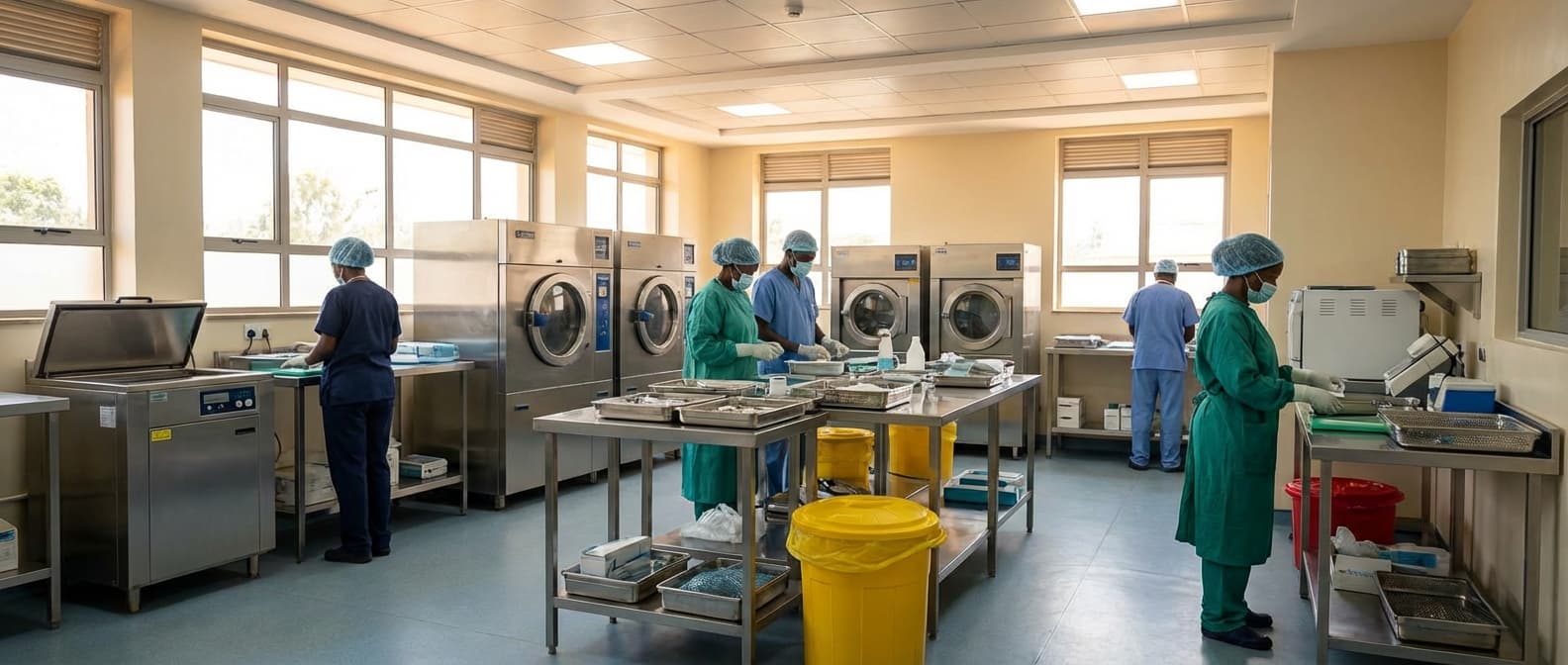
Infection-Control Readiness Support Service for Reusable Equipment in Sudan
Engineering Excellence & Technical Support
Infection-Control Readiness Support Service for Reusable Equipment High-standard technical execution following OEM protocols and local regulatory frameworks.
Advanced Sterilization Monitoring
Our service integrates real-time monitoring systems for autoclaves and other sterilization equipment, ensuring efficacy and generating auditable records to comply with international infection control standards, crucial for maintaining safe reusable medical devices in Sudan.
On-Site Validation & Training
We provide expert on-site validation of reprocessing workflows and comprehensive training programs for local healthcare personnel in Sudan. This empowers them with the knowledge and skills to consistently adhere to best practices in cleaning, disinfection, and sterilization of reusable equipment.
Data-Driven Risk Assessment
Leveraging robust data analytics, our service identifies critical control points in the reusable equipment lifecycle. This allows for proactive identification of potential breaches in infection control protocols, enabling targeted interventions and enhancing overall preparedness in healthcare facilities across Sudan.
What Is Infection-control Readiness Support Service For Reusable Equipment In Sudan?
Infection-Control Readiness Support Service for Reusable Equipment in Sudan refers to a comprehensive, multifaceted program designed to ensure that healthcare facilities adhere to stringent infection prevention and control (IPC) standards specifically for reusable medical devices. This service focuses on building and maintaining the capacity of Sudanese healthcare providers to safely and effectively decontaminate, sterilize, and store reusable equipment, thereby mitigating the risk of healthcare-associated infections (HAIs). It encompasses the entire lifecycle of reusable equipment management, from initial procurement and training to ongoing monitoring, evaluation, and quality improvement initiatives. The overarching goal is to establish robust and sustainable IPC systems that protect patients, healthcare workers, and the wider community from infectious agents transmissible via inadequately processed medical instruments.
| Target Audience | Service Involvement | Typical Use Cases |
|---|---|---|
| Public Hospitals and Healthcare Centers | Establishment of functional Central Sterile Supply Departments (CSSDs) or equivalent units; training of sterilization technicians; provision of chemical indicators and autoclaves; development of monitoring protocols. | Ensuring safe reprocessing of surgical instruments, endoscopes, and diagnostic equipment used in routine and emergency surgical procedures; preventing post-operative infections. |
| Private Clinics and Hospitals | Audit of existing reprocessing protocols; training on updated IPC guidelines; assessment of equipment efficacy; introduction of advanced sterilization techniques (e.g., low-temperature sterilization). | Maintaining high standards of care for elective surgeries and diagnostic procedures; compliance with national healthcare regulations; preventing transmission of blood-borne pathogens. |
| Maternal and Child Health Facilities | Training on safe reprocessing of delivery instruments (e.g., forceps, speculums); ensuring adequate disinfection of infant care equipment; availability of appropriate sterilization methods for reusable syringes and needles (where applicable). | Preventing puerperal infections and neonatal sepsis; safe management of obstetric emergencies. |
| Non-Governmental Organization (NGO) Healthcare Programs | Development of scalable IPC models for resource-limited settings; training local staff; establishment of community-based sterilization points for specific equipment; provision of portable sterilization units. | Providing essential surgical and diagnostic services in remote or underserved areas; supporting mobile clinics and emergency response operations; managing outbreaks requiring sterilization capacity. |
| Ministry of Health (MoH) and National IPC Committees | Development of national IPC guidelines for reusable equipment; capacity building for national trainers; support for national surveillance systems for HAIs; policy advocacy for resource allocation. | Standardizing IPC practices across the country; strengthening national health security; informing policy decisions related to healthcare quality and patient safety. |
Key Components of Infection-Control Readiness Support Service
- Needs Assessment and Gap Analysis: Evaluating existing IPC infrastructure, resources, and personnel capacity related to reusable equipment processing.
- Policy and Guideline Development/Adaptation: Establishing or refining national and facility-level IPC policies and standard operating procedures (SOPs) for reusable equipment.
- Infrastructure and Equipment Assessment: Reviewing the suitability and functionality of sterilization and disinfection units, including water quality, power supply, and ventilation.
- Procurement Support: Advising on the selection and acquisition of appropriate, high-quality decontamination, sterilization, and packaging equipment and consumables.
- Training and Capacity Building: Developing and delivering comprehensive training programs for healthcare workers involved in reusable equipment reprocessing, covering theoretical knowledge and practical skills.
- Supervision and Mentorship: Providing ongoing on-site supervision, coaching, and technical support to reinforce best practices and address emerging challenges.
- Quality Assurance and Monitoring: Implementing systems for routine monitoring of sterilization processes (e.g., using biological and chemical indicators), tracking infection rates, and conducting audits.
- Waste Management Integration: Ensuring proper segregation, handling, and disposal of biohazardous waste generated during reprocessing.
- Sustainability Planning: Developing strategies for long-term maintenance of equipment, procurement of consumables, and continuous training to ensure program longevity.
Who Needs Infection-control Readiness Support Service For Reusable Equipment In Sudan?
Infection-control readiness for reusable medical equipment is critical in Sudan to prevent healthcare-associated infections (HAIs). This readiness ensures that critical medical tools are safe for patient use, minimizing the spread of pathogens. Support services in this area are essential for maintaining high standards of hygiene and patient safety within the Sudanese healthcare system.
| Department/Unit | Key Responsibilities Related to Reusable Equipment | Specific Needs for Infection-Control Readiness Support |
|---|---|---|
| Sterilization and Central Supply Department (CSD) | Processing, sterilization, and storage of all reusable medical equipment. | Training on advanced sterilization techniques, equipment maintenance, validation of sterilization cycles, quality assurance protocols. |
| Operating Theatres (ORs) | Use and immediate post-operative cleaning of surgical instruments and reusable medical devices. | Guidance on decontamination protocols, sterile storage of instruments, rapid turnaround times while maintaining safety, training on handling specific instrument sets. |
| Intensive Care Units (ICUs) | Sterilization and disinfection of respiratory equipment, monitoring devices, and other critical patient care items. | Protocols for high-level disinfection of semi-critical items, management of reusable ventilators and other complex equipment, preventing cross-contamination. |
| Emergency Departments (EDs) | Rapid cleaning, disinfection, and sterilization of equipment used in emergency situations. | Streamlined processes for quick turnaround of essential equipment, ensuring immediate availability of safe instruments, training on efficient decontamination. |
| Outpatient Clinics and General Wards | Cleaning, disinfection, and appropriate storage of common medical instruments and equipment (e.g., stethoscopes, blood pressure cuffs, thermometers). | Standardized disinfection protocols for frequently used items, ensuring adequate supplies of disinfectants, staff training on basic infection control practices. |
| Laboratory Services | Cleaning and sterilization of glassware, instruments, and reusable diagnostic tools. | Protocols for biohazard containment, proper handling and sterilization of laboratory equipment, preventing sample contamination and staff exposure. |
| Maternity and Neonatal Units | Sterilization and disinfection of delivery instruments, infant care equipment, and feeding apparatus. | Strict protocols for preventing neonatal infections, specialized cleaning of incubators and feeding equipment, training on specific neonatal infection control needs. |
| Pharmacy Department (for certain reusable items) | Sterilization of reusable drug administration devices (e.g., syringes, nebulizer kits where applicable and appropriate). | Understanding of specific regulations for sterile compounding and administration equipment, ensuring sterility and preventing contamination. |
| Biomedical Engineering Department | Maintenance and repair of sterilization equipment (autoclaves, disinfectors). | Ensuring the functionality and calibration of critical sterilization machinery, preventative maintenance schedules, troubleshooting support. |
Target Customers and Departments for Reusable Equipment Infection-Control Readiness Support Service in Sudan
- {"title":"Public Healthcare Facilities","description":"These include the backbone of Sudan's healthcare infrastructure, often facing resource constraints and requiring robust infection control measures. Their need for support is paramount to ensure equitable access to safe healthcare."}
- {"title":"Private Hospitals and Clinics","description":"While often better resourced, private facilities also require specialized support to maintain international standards of infection control for their reusable equipment, ensuring patient trust and quality of care."}
- {"title":"Non-Governmental Organizations (NGOs) and Humanitarian Organizations","description":"Operating in diverse and often challenging environments, these organizations rely heavily on functional and safe medical equipment. Support services ensure their medical interventions are delivered safely, especially in remote or emergency settings."}
- {"title":"Specialized Medical Centers","description":"Facilities focusing on specific areas like surgery, pediatrics, or maternity require highly specialized attention to the infection control of their unique sets of reusable equipment."}
- {"title":"Training and Educational Institutions","description":"Medical schools and nursing colleges need to ensure their training equipment is properly sterilized and disinfected. Support in this area reinforces good practices among future healthcare professionals."}
Infection-control Readiness Support Service For Reusable Equipment Process In Sudan
This document outlines the workflow for the Infection-Control Readiness Support Service for Reusable Equipment Process in Sudan. The service aims to ensure that healthcare facilities in Sudan have the necessary protocols, training, and resources to safely reprocess reusable medical equipment, thereby preventing healthcare-associated infections (HAIs). The workflow begins with an initial inquiry from a healthcare facility or relevant authority and culminates in the successful implementation and ongoing support of infection control readiness.
| Stage | Key Activities | Responsible Parties | Expected Outcomes | |
|---|---|---|---|---|
| Healthcare facility/authority initiates contact. Initial discussion of needs, scope of service, and potential challenges. Preliminary identification of target facilities. | Healthcare Facility/Ministry of Health (MoH)/Implementing Partner | Understanding of the facility's/region's infection control challenges. Agreement on the potential scope of the support service. | |
| Detailed assessment of requirements based on inquiry. Development of a comprehensive service proposal (objectives, activities, timeline, budget). Review and negotiation of the proposal. Formal agreement/Memorandum of Understanding (MoU) signing. | Implementing Partner/Donors, Healthcare Facility/MoH | Clear understanding of the service scope, deliverables, and commitments. Formal commitment from all parties. | |
| Securing funding and necessary resources (personnel, materials, equipment). Development of a detailed implementation plan with specific milestones. Logistical planning for travel, training venues, and material distribution. | Implementing Partner/Donors | Adequate resources secured. Comprehensive and actionable implementation plan in place. | |
| Visit to target healthcare facilities. Assessment of current practices, infrastructure, and availability of resources for reusable equipment reprocessing. Collection of baseline data on infection rates related to reusable equipment. | Implementing Partner's Technical Team, Facility Staff | In-depth understanding of the current state of infection control readiness. Baseline data for measuring progress and impact. | |
| Development of tailored training modules on infection prevention and control (IPC) for reusable equipment. Conducting training workshops for healthcare workers (nurses, technicians, cleaning staff). Focus on sterilization, disinfection, handling, and waste management. | Implementing Partner's Trainers, Facility Staff | Enhanced knowledge and skills of healthcare workers. Improved adherence to IPC guidelines. | |
| Review and adaptation of existing national/international IPC guidelines for reusable equipment. Development of site-specific Standard Operating Procedures (SOPs). Assistance in the initial implementation of new or revised protocols. | Implementing Partner's IPC Specialists, Facility IPC Committee/Staff | Clear and practical SOPs for reusable equipment reprocessing. Successful integration of protocols into daily operations. | |
| Assessment of the condition and functionality of sterilization and disinfection equipment. Identification of any infrastructure gaps (e.g., ventilation, water supply). Recommendations for repair, replacement, or upgrades. | Implementing Partner's Technical Team, Facility Management | Functional and appropriate equipment for safe reprocessing. Adequate infrastructure to support IPC practices. | |
| Regular on-site supervision to observe practice adherence. Monitoring of compliance with SOPs and IPC guidelines. Data collection on key performance indicators (KPIs). | Implementing Partner's Supervisors, Facility IPC Focal Points | Continuous improvement of practices. Identification of ongoing challenges and areas for further support. | |
| Periodic evaluation of the service's impact against set objectives. Analysis of collected data and comparison with baseline. Preparation of progress and final reports for stakeholders. | Implementing Partner's Monitoring & Evaluation (M&E) Team, Donors, MoH | Evidence of the service's effectiveness and impact. Informed decision-making for future interventions. | |
| Development of strategies for long-term sustainability (e.g., local champions, ongoing training). | Continued provision of technical advice and remote support as needed. Facilitating peer-to-peer learning among facilities. | Implementing Partner, Facility Management, MoH | Sustained improvement in infection control practices. Empowered facilities to maintain readiness independently. |
Workflow Stages for Infection-Control Readiness Support Service
- Inquiry and Needs Assessment
- Proposal Development and Agreement
- Resource Mobilization and Planning
- On-Site Assessment and Baseline Data Collection
- Training and Capacity Building
- Protocol Development and Implementation Support
- Equipment and Infrastructure Assessment
- Supervision and Monitoring
- Evaluation and Reporting
- Sustainability and Follow-up Support
Infection-control Readiness Support Service For Reusable Equipment Cost In Sudan
Providing infection-control readiness support services for reusable medical equipment in Sudan involves a complex pricing structure influenced by several key factors. These factors range from the scope of services, the type and quantity of equipment, the geographical reach within Sudan, and the level of expertise required. Due to the economic landscape in Sudan, pricing is typically discussed and settled in Sudanese Pounds (SDG). A detailed breakdown of these pricing factors and their potential impact on cost ranges is crucial for accurate budgeting and service procurement.
| Service Component/Scope | Estimated Price Range (SDG) | Notes/Assumptions |
|---|---|---|
| Initial Infection Control Assessment (Per Facility/Department) | 500,000 - 2,500,000 SDG | Covers basic audit, protocol review, and initial recommendations. Varies by facility size and complexity. |
| Basic Training Module (e.g., Hand Hygiene, Basic Disinfection - Per Session/Group) | 200,000 - 800,000 SDG | For a group of 10-15 healthcare workers. Includes training materials and facilitator fees. |
| Advanced Training Module (e.g., Sterilization Techniques, Specific Equipment - Per Session/Group) | 400,000 - 1,500,000 SDG | Requires more specialized trainers and potentially hands-on practical sessions. Varies by equipment complexity. |
| SOP Development/Revision (Per Set of Protocols) | 750,000 - 3,000,000 SDG | Depending on the number of protocols and the level of customization required. Includes consultation and drafting. |
| Equipment Reprocessing Consultation (Per Instrument Type/System) | 300,000 - 1,200,000 SDG | Advice on cleaning, disinfection, and sterilization for specific medical devices. |
| On-site Supervisory Support (Per Day) | 300,000 - 1,000,000 SDG | Includes a qualified infection control professional. Excludes travel and accommodation for remote areas. |
| Comprehensive Service Package (e.g., 6-Month Support Contract) | 5,000,000 - 20,000,000+ SDG | A bundled service including assessments, regular training, and ongoing supervision. Highly customizable based on needs and duration. |
| Travel & Logistics (Remote Areas - Per Trip) | 500,000 - 2,000,000 SDG | Covers transportation (vehicle hire, fuel), accommodation, and potentially security. Highly variable. |
Key Pricing Factors for Infection-Control Readiness Support Service in Sudan
- {"title":"Scope of Services","description":"The breadth of support is a primary determinant. This can include: \n- Assessment and Auditing: Evaluating existing infection control protocols, equipment condition, and staff training.\n- Training Programs: Developing and delivering training on cleaning, disinfection, sterilization, and handling procedures for various reusable equipment.\n- Protocol Development/Revision: Creating or updating standard operating procedures (SOPs) for infection control.\n- Equipment Consultation: Advising on the selection, maintenance, and safe use of reprocessing equipment.\n- Supervisory Support: Ongoing monitoring and guidance to ensure adherence to protocols.\n- Emergency Response: Providing rapid support during outbreaks or critical infection control challenges."}
- {"title":"Type and Quantity of Reusable Equipment","description":"Different types of equipment require varying levels of expertise and resources for effective infection control. Complex instruments (e.g., surgical scopes, laparoscopic instruments) will command higher service costs than simpler items (e.g., forceps, scissors). The sheer volume of equipment to be assessed, trained on, and monitored directly impacts labor and time costs."}
- {"title":"Geographical Reach and Accessibility","description":"Services provided in major urban centers like Khartoum will generally be less expensive than those requiring travel to remote or conflict-affected regions. Transportation, accommodation, and security costs for personnel increase significantly with wider geographical coverage and difficult access."}
- {"title":"Level of Expertise and Staffing","description":"The qualifications and experience of the infection control specialists, trainers, and technicians deployed are critical. Highly specialized expertise, such as in advanced sterilization techniques or specific equipment reprocessing, will naturally lead to higher service fees. The number of personnel required also directly influences the overall cost."}
- {"title":"Duration and Frequency of Service","description":"One-off assessments will have a different cost structure compared to ongoing, long-term support contracts. The frequency of training sessions, audits, and supervisory visits will also contribute to the overall pricing. Longer-term engagements may allow for volume discounts."}
- {"title":"Existing Infrastructure and Resources","description":"The current state of the healthcare facility's infection control infrastructure, including the availability of cleaning agents, disinfectants, sterilization equipment, and trained local staff, can influence the scope and cost of the support service. If significant upgrades or initial setup are required, this will add to the overall expense."}
- {"title":"Regulatory Compliance and Reporting","description":"Ensuring services align with national and international infection control guidelines and any specific Sudanese Ministry of Health regulations can add complexity. The requirement for detailed reporting and documentation will also factor into the service cost."}
- {"title":"Currency Exchange Rate Fluctuations","description":"While services are priced in SDG, the cost of imported supplies, equipment, or specialized training from abroad will be subject to exchange rate volatility, which can indirectly impact pricing if the provider incurs foreign currency expenses."}
Affordable Infection-control Readiness Support Service For Reusable Equipment Options
This service provides comprehensive support for ensuring the highest standards of infection control for reusable medical equipment, offering cost-effective solutions for healthcare facilities. We understand the critical need for reliable reprocessing and the financial pressures faced by providers. Our service is designed to enhance preparedness, reduce operational burdens, and ultimately contribute to patient safety while optimizing budgetary constraints.
| Cost-Saving Strategy | Description | Value Proposition |
|---|---|---|
| Reduced Equipment Downtime: | Proactive monitoring and support minimize the risk of reprocessing errors, leading to less equipment being taken out of service for re-cleaning or re-processing. | Ensures greater availability of critical equipment, directly impacting patient care and revenue generation. |
| Optimized Staff Time: | Standardized protocols and effective training empower staff to perform reprocessing efficiently and correctly the first time, reducing rework and wasted labor. | Frees up valuable staff time for patient care activities and reduces overtime expenses associated with reprocessing errors. |
| Minimized Risk of Infections and Associated Costs: | Robust infection control practices significantly reduce the likelihood of healthcare-associated infections (HAIs). | Avoids substantial costs related to extended patient stays, additional treatments, legal liabilities, and reputational damage associated with HAIs. |
| Extended Equipment Lifespan: | Proper reprocessing and maintenance, guided by our expertise, can help prolong the functional life of reusable medical equipment. | Reduces the need for frequent capital expenditures on new equipment replacements. |
| Leveraging Existing Resources: | Our service focuses on optimizing current reprocessing processes and staff, rather than mandating expensive new technology purchases. | Maximizes the return on investment for existing infrastructure and personnel. |
| Scalable Service Model: | Our tiered bundle options allow facilities to select the level of support that aligns with their current needs and budget, with the flexibility to scale up or down as required. | Provides predictable and manageable expenses, avoiding large upfront investments and allowing for phased implementation. |
Value Bundles
- Essential Readiness Bundle: Includes initial equipment assessment, basic reprocessing protocol development, staff training on standard procedures, and access to a resource library for infection control guidelines. Ideal for facilities with established reprocessing capabilities seeking to enhance their existing framework.
- Proactive Preparedness Bundle: Builds upon the Essential Bundle by adding regular remote monitoring of reprocessing logs, quarterly virtual competency assessments for staff, and proactive identification of potential compliance gaps. This bundle offers a more hands-on approach to ongoing readiness.
- Comprehensive Assurance Bundle: Encompasses all features of the Proactive Preparedness Bundle, plus on-site support for complex equipment troubleshooting, customized protocol development for unique reprocessing challenges, and a dedicated infection control consultant for quarterly strategic planning sessions. This is our most robust offering for facilities requiring extensive support.
- Custom Solutions: Tailored bundles can be created to address specific facility needs, equipment types, or budget requirements. We work collaboratively to design a package that delivers maximum value.
Verified Providers In Sudan
In Sudan's healthcare landscape, identifying reliable and accredited medical facilities is paramount for ensuring quality patient care. Franance Health stands out as a beacon of trust, offering a network of verified providers committed to the highest standards of medical practice. This commitment to verification ensures that patients have access to skilled professionals, advanced facilities, and ethical treatment, making Franance Health a distinguished choice for healthcare needs in Sudan.
| Provider Type | Key Credentials Verified | Franance Health Benefit |
|---|---|---|
| Hospitals & Clinics | Accreditation by national health bodies, adherence to international safety standards, availability of specialized departments, qualified medical staff. | Access to comprehensive medical services, from routine check-ups to complex surgeries, in a safe and well-equipped environment. |
| Specialist Physicians | Valid medical license, board certification, proven track record in their specialty, participation in continuing medical education. | Expert diagnosis and treatment from highly skilled and experienced doctors in various medical fields. |
| Diagnostic Laboratories | Certification from regulatory authorities, use of calibrated and up-to-date equipment, quality control measures, qualified technicians. | Accurate and reliable diagnostic results crucial for effective treatment planning. |
| Pharmacies | Licensing by the pharmaceutical board, proper storage of medications, availability of qualified pharmacists, adherence to dispensing regulations. | Safe and reliable access to prescribed medications with professional guidance. |
Why Franance Health Providers are the Best Choice:
- Rigorous Credentialing Process: Franance Health implements a stringent vetting procedure for all affiliated providers. This includes verification of medical licenses, professional qualifications, experience, and adherence to ethical guidelines.
- Commitment to Quality Care: Verified providers are dedicated to delivering patient-centered care, emphasizing evidence-based medicine, continuous professional development, and patient safety.
- Access to Advanced Facilities: Franance Health partners with facilities equipped with modern medical technology and infrastructure, ensuring comprehensive diagnostic and treatment capabilities.
- Patient-Centric Approach: Providers within the Franance Health network are known for their compassionate approach, effective communication, and a focus on building trusting relationships with patients.
- Transparency and Accountability: The verification process ensures that Franance Health providers are accountable for their practices, offering patients peace of mind and a clear understanding of their healthcare journey.
Scope Of Work For Infection-control Readiness Support Service For Reusable Equipment
This Scope of Work (SOW) outlines the services to be provided for Infection-Control Readiness Support for Reusable Equipment. The service aims to ensure that healthcare facilities have robust infection control processes in place for the reprocessing and management of reusable medical devices, thereby minimizing the risk of healthcare-associated infections (HAIs). This SOW details the technical deliverables and standard specifications required to achieve these objectives.
| Deliverable | Description | Standard Specification/Requirement | Timeline (Indicative) |
|---|---|---|---|
| Current State Assessment Report | A comprehensive report detailing the facility's existing processes, equipment, staffing, and documentation related to reusable equipment reprocessing. | Includes process mapping, SWOT analysis of current practices, identification of compliance gaps against relevant guidelines (e.g., CDC, AAMI, ISO), and a risk assessment matrix. | Week 1-2 |
| Gap Analysis and Recommendations Report | An in-depth analysis of identified gaps and detailed, actionable recommendations for improvement. | Recommendations categorized by area (e.g., decontamination, cleaning, disinfection, sterilization, storage, documentation). Prioritization of recommendations based on risk and feasibility. | Week 3-4 |
| Updated Policy and Procedure Templates | Revised or new policy and procedure documents tailored to the facility's specific needs and best practices. | Documents aligned with national and international standards, including clear steps, responsibilities, and quality control measures. Specific protocols for high-risk items to be included. | Week 5-7 |
| Staff Training Materials | Development and delivery of training modules for relevant personnel. | Modules to cover principles of infection control, proper handling, cleaning, disinfection, sterilization, and documentation. Includes presentations, handouts, and practical demonstrations. | Week 8-9 |
| Training Session Delivery | Facilitation of training sessions for all relevant staff. | Interactive sessions with knowledge assessment (e.g., quizzes) to ensure understanding and competency. Record of attendance to be maintained. | Week 10-11 |
| Implementation Support and Monitoring Plan | A plan to support the facility in implementing the recommended changes and a framework for ongoing monitoring. | Includes phased implementation schedule, key performance indicators (KPIs) for monitoring, and a plan for periodic review and validation of processes. | Week 11-12 |
| Final Report and Close-out | A comprehensive report summarizing the project, including all deliverables, outcomes, and recommendations for sustained compliance. | Includes summary of implemented changes, achieved improvements in KPIs, and a roadmap for continuous improvement. | Week 12 |
Key Objectives
- Assess current infection control practices for reusable equipment.
- Identify gaps and areas for improvement in reprocessing workflows and protocols.
- Provide recommendations for enhanced infection control measures and best practices.
- Support the implementation of updated policies and procedures.
- Facilitate staff training on infection prevention and control related to reusable equipment.
Service Level Agreement For Infection-control Readiness Support Service For Reusable Equipment
This Service Level Agreement (SLA) outlines the response times and uptime guarantees for the Infection-Control Readiness Support Service for Reusable Equipment. This service ensures that critical reusable equipment is maintained in a state of readiness for infection control purposes, including proper cleaning, disinfection, sterilization, and functional testing.
| Service Component | Response Time Guarantee | Uptime Guarantee |
|---|---|---|
| Critical Equipment Failure (e.g., sterilization unit malfunction) | Within 2 hours | 99.5% uptime for critical sterilization equipment |
| Non-Critical Equipment Malfunction (e.g., diagnostic equipment requiring calibration) | Within 4 business hours | 98.0% uptime for non-critical support equipment |
| Technical Support Inquiry (non-critical) | Within 8 business hours | N/A (support is provided on demand) |
| Scheduled Preventive Maintenance | As per agreed schedule, with minimal disruption | N/A (maintenance scheduled to minimize impact) |
| Supply Chain Disruption (consumables) | Within 24 business hours for critical items | N/A (aim to maintain adequate stock levels) |
Service Scope
- Availability of technical support personnel for troubleshooting and guidance on infection control procedures for reusable equipment.
- Proactive monitoring of equipment status and scheduled maintenance to ensure operational readiness.
- Rapid response to equipment malfunctions or failures that compromise infection control standards.
- Documentation and reporting of all service activities, including maintenance, repairs, and sterilization cycles.
- Provision of necessary consumables and reagents related to cleaning, disinfection, and sterilization processes.
Frequently Asked Questions

Ready when you are
Let's scope your Infection-Control Readiness Support Service for Reusable Equipment in Sudan project in Sudan.

Scaling healthcare logistics and technical systems across the entire continent.